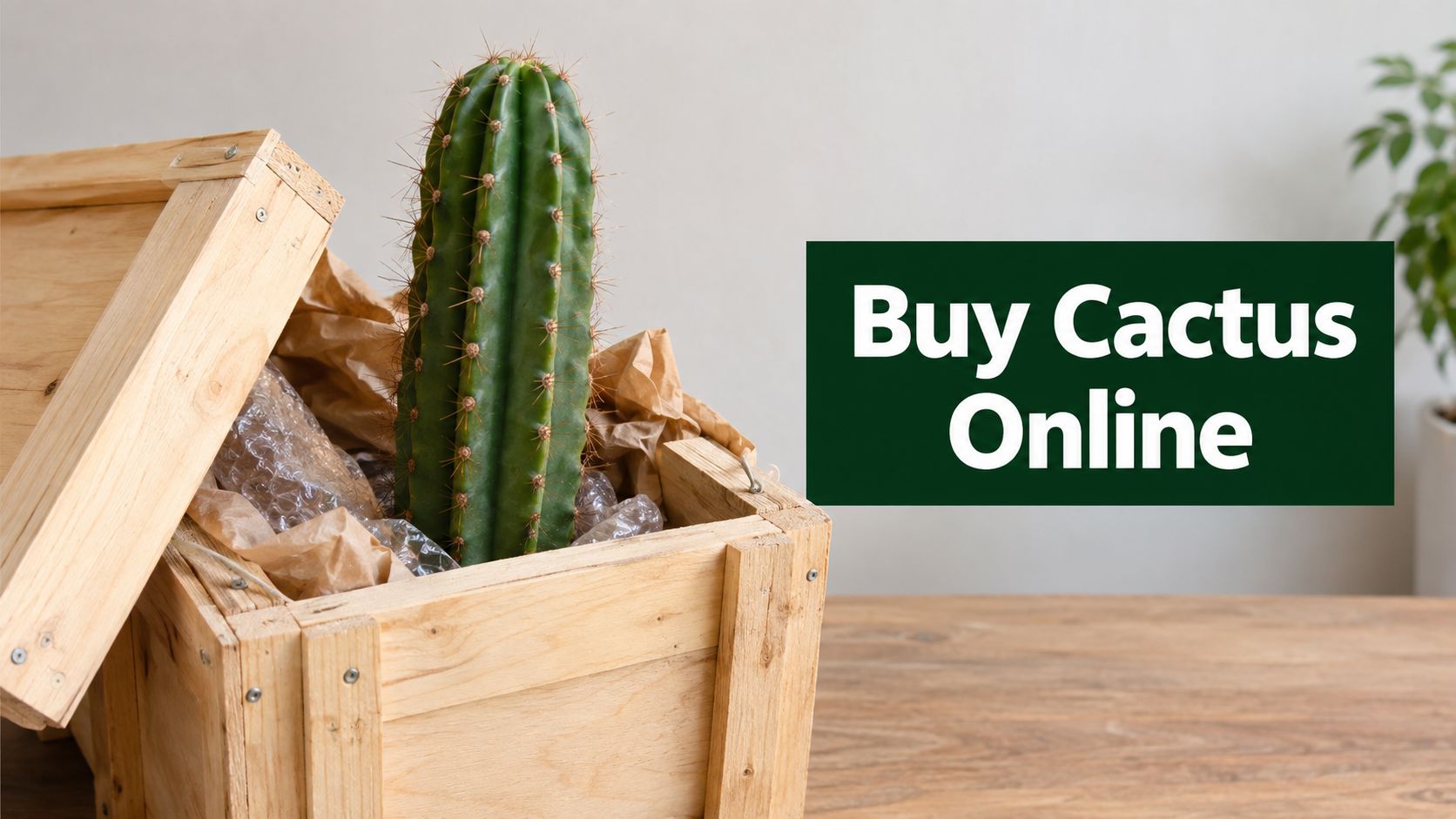


You're comparing two listings late at night. One offers a tall totem pole cactus at an unusually low price. The other is shorter, costs more, and comes from a specialty nursery. You're wondering whether the advertised height is honest, whether the column will arrive bruised or frozen, and whether it can survive your winter once the delivery truck leaves.
Those questions matter more with Pachycereus schottii f. monstrosus, the plant commonly sold as a totem pole cactus. This is a slow-growing, sculptural specimen, not a fast-fill ornamental. Online sales make specialty plants easier to find, but the category remains a focused niche. Tracked retailers generated about $19 million in aggregate online succulents and cacti sales in 2025, while revenue in that category fell 20% to 50% year over year, with another 10% to 20% decline forecast for 2026 according to Grips Intelligence's category analysis.
The right listing should answer the size, identity, climate, packaging, and first-week care questions before you pay. Use the filters below to decide whether a bargain is a bargain.
What You're Actually Buying When You Order a Totem Pole Cactus
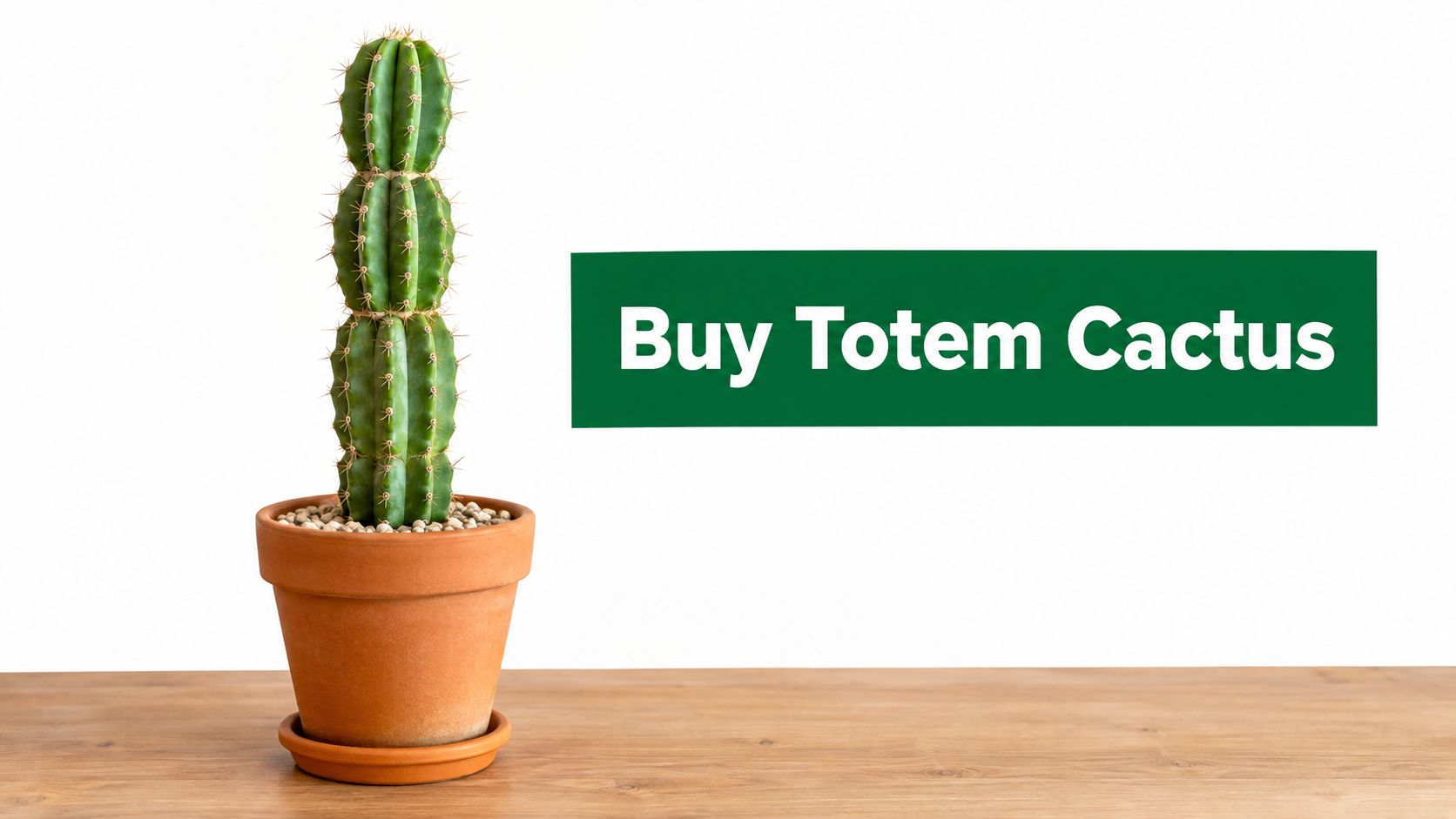
A legitimate totem pole cactus is a monstrous form of Pachycereus schottii, associated with Baja California. Its smooth, knobby columns and largely spineless surface give it the irregular, carved appearance buyers want. The form is often listed under the related name Lophocereus schottii, which creates confusion in online catalogs and makes scientific labeling especially important.
The plant you receive won't behave like a seasonal patio annual. It grows slowly, holds its shape for a long time, and earns much of its value from the size and character it already has. If you need an immediate architectural accent for a courtyard or design project, the shipped dimensions matter far more than a promise that the cactus will become large later.
Buying rule: Treat the height in the listing as the product, not as a temporary stage on the way to a quick upgrade.
Why the name on the listing matters
A serious listing should state the scientific identity clearly and distinguish the ordinary monstrous form from a crested, variegated, or otherwise unusual specimen. Those forms may differ in appearance, availability, price, and the care assumptions a seller makes. A vague title such as “rare cactus” tells you almost nothing about what will arrive.
Mislabeling also complicates hardiness decisions. A seller who confuses Lophocereus schottii monstrosus with Pachycereus schottii f. monstrosus may copy a description from another plant, use a photograph that isn't the actual specimen, or make cold claims that don't match the plant being shipped.
Look for firm, even tissue, a clean surface, and photographs that show the plant from more than one angle. Minor cosmetic marks can be part of a living specimen's character, but soft areas, unexplained dark patches, or a damaged base deserve a seller's explanation before purchase.
The totem pole cactus buying guide is useful for comparing the plant's sculptural role with the practical requirements of an online order. The original question at your screen is simple: is the shorter specialty-nursery plant a safer buy than the tall marketplace listing? The answer depends on identity, honest dimensions, climate fit, and delivery handling, not on the tallest number in a product title.
Size, Hardiness, and Growth Expectations
Order a totem pole cactus for the size you need at delivery, not the size it might reach years from now. Mature outdoor plants can reach roughly 15 to 20 feet in warm-climate settings, while care references commonly place them in USDA zones 9 to 11. Review this Totem Pole Cactus outdoor reference for scale and climate context before you approve a listing.
A container specimen will not reach that height quickly. Plant-care guidance describes growth as very slow, often only a few inches per year, and puts mature height at 5 to 10 years or more. The totem pole cactus lifecycle guide also notes that some online specimens arrive poorly rooted. After planting, visible growth may pause for a year or longer.
Designers and homeowners should build that delay into the project schedule. A listing that looks like a quick way to create a tall architectural feature usually is not.
Read the climate claim conservatively
Cold tolerance should determine where you buy and how you plan delivery. Horticultural references place the lower tolerance range near 20°F to 25°F, depending on conditions and establishment. The AMWUA plant profile rates it at 20°F, while a separate guide recommends frost protection and gives a limit near 25°F (Horticulture Unlimited plant guide).
Those figures do not make a wet, exposed winter safe. A dry, callused plant may handle a brief cold event better than a recently shipped specimen with damaged tissue or damp roots. If your winters are colder, wetter, or regularly frosty, move a container indoors or arrange serious protection. Treat a zone label as a broad guide, not a promise for a newly delivered cactus.
| Form | Typical Mature Height | USDA Hardiness | Sun Preference | Notes |
|---|---|---|---|---|
| Totem pole cactus, outdoor form | About 15 to 20 feet | Commonly zones 9 to 11 | Bright sun after acclimation | Best suited to warm, dry sites |
| Totem pole cactus, container form | Remains substantially smaller than an outdoor specimen | Protect from freezing conditions | Bright light, introduced gradually | Buy the shipped size for immediate impact |
| Crested or variegated listing | Seller-specific | Verify with the seller | Verify with the seller | Don't assume the standard form's description applies |
Make the timeline part of the budget
A small price difference means little if you need a large architectural feature this season. A smaller plant is easier to handle, but it will not quickly become a mature privacy screen or anchor. A large specimen costs more because you are paying for years of growth, additional handling, and the risk of moving a tall column that can scar during transit.
Choose a smaller plant for a container accent or a long-term project. Choose a larger, established specimen when the installation deadline matters. Slow growth changes the buying calculation. Upgrading later means paying again for size and accepting another shipping event. After delivery, keep the cactus dry while transit bruising and root disturbance settle, then introduce stronger sun gradually rather than planting it straight into its final spot.
How to Vet an Online Seller Before You Pay
A trustworthy seller makes evaluation possible before checkout. A risky listing forces you to trust a title, a stock photograph, and a vague promise that “healthy plants ship fast.” For a totem pole cactus, that isn't enough.
Start with species accuracy
The product page should name Pachycereus schottii f. monstrosus or clearly explain the accepted naming used by the nursery. It should also tell you whether the specimen is a standard monstrous form, a crest, a variegated plant, or another mutation. Avoid listings that only say “rare cactus,” “totem plant,” or “spineless column.”
The photographs should support the name. Smooth, knobby columns are part of the buying decision, so the seller should show surface texture, the base, the growing tip, and the overall silhouette. If the listing uses a stock photo sized for a broad view while selling a much smaller plant, the page should state that clearly.
Demand evidence, not adjectives
A seller doesn't need to photograph every plant individually if the listing represents a clearly identified batch. It does need to explain what the photograph represents. “Large” is not a measurement. Ask for the actual height, whether the measurement includes the pot, and whether the pictured plant is the one shipped.
A defined arrival policy matters just as much. Look for a stated inspection window, instructions for documenting damage, and a specific replacement or refund process. If the seller discusses cold or heat packs, the policy should explain when shipping is delayed rather than leaving the customer to guess.
Use this short screening list before paying:
- Scientific name: Reject generic labeling that doesn't identify the plant.
- Current photographs: Prefer the actual specimen or a labeled batch photograph.
- Surface and base views: Look for close-ups that reveal bruising, softness, or scars.
- Arrival policy: Confirm the claim period and required evidence.
- Independent reviews: Search beyond the marketplace for shipping photographs and recurring complaints.
Third-party reviews can expose patterns that product pages hide. Repeated reports of rot on arrival, frozen deliveries, broken columns, or unanswered claims are concrete warnings. So are identical recycled photographs, a missing policy page, and a seller history that appears only briefly before disappearing.
Sizing, Pricing, and Shipping Realities
A tall totem pole cactus can look like the fastest way to create impact, but size also raises handling risk. Choose based on your deadline, access to the planting site, and the seller's packing method. A smaller rooted specimen is often the safer online purchase because it places less strain on the carton and exposes less stem to bruising.
A trustworthy listing explains what drives the price: plant size, maturity, root condition, packing labor, and delivery method. Compare like with like. A tall column needs more bracing and protection than a small starter, so a simple price-per-inch comparison can mislead you.
Compare the purchase tiers
Prices vary by specimen and seller. Request a current quote for the actual plant and shipping method, rather than relying on a universal chart. Use the framework below to match size with handling demands.
| Tier | Height | Price Band (USD) | Packaging Required | Transit Risk | Best For |
|---|---|---|---|---|---|
| Small starter | Seller-stated small specimen | Ask for current plant-specific pricing | Secure internal padding and a rigid carton | Lower handling exposure, though cold remains a concern | Patio containers and patient buyers |
| Mid-size plant | Seller-stated intermediate specimen | Ask for current plant-specific pricing | Braced, protective packaging and clear stem support | Moderate risk from movement and pressure | Indoor features and smaller garden accents |
| Large specimen | Seller-stated large specimen | Ask for a freight quote | Specialized crating or freight protection as appropriate | Higher risk because size increases movement and handling challenges | Designers, contractors, and instant garden impact |
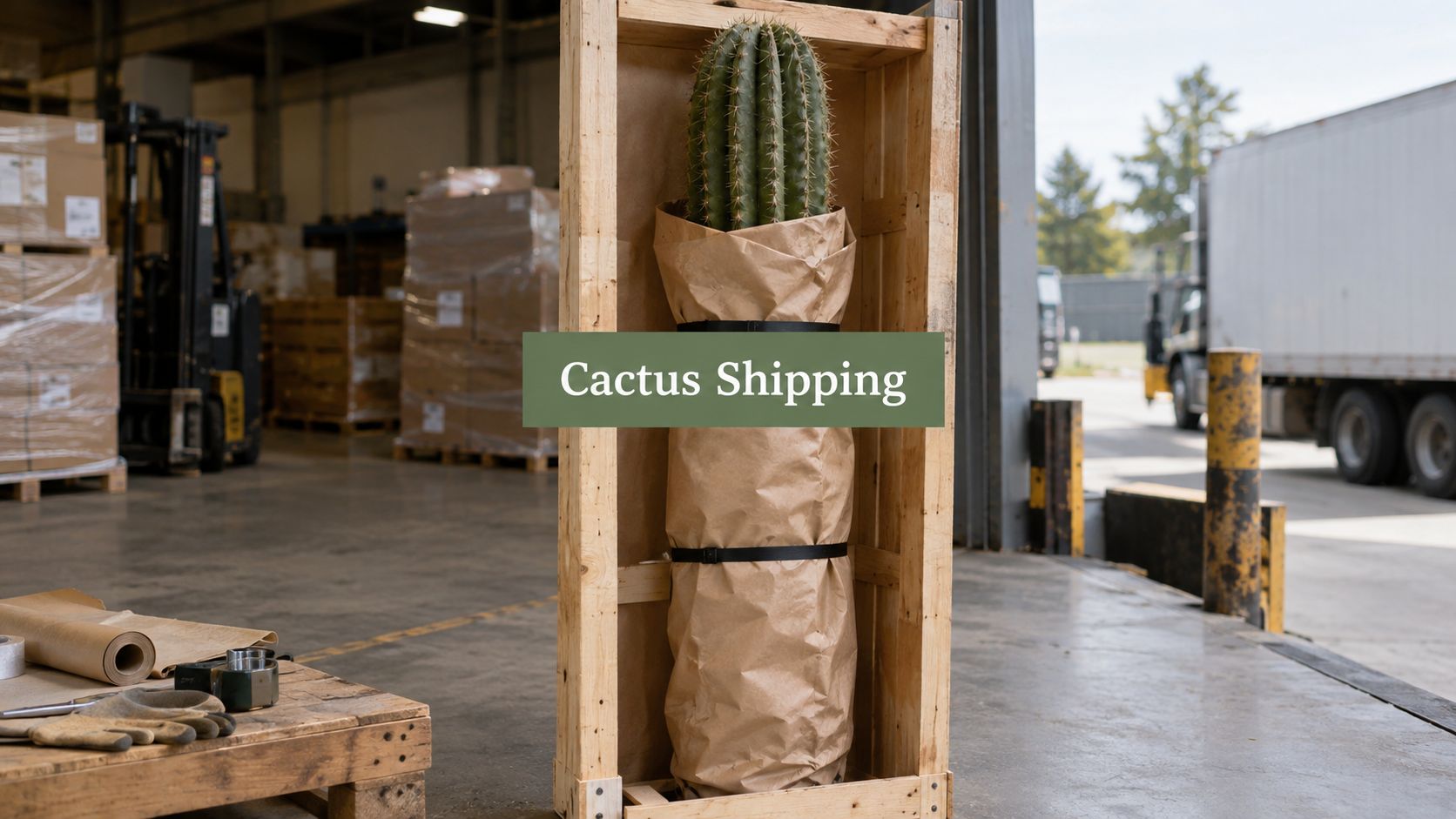
Treat a large cactus paired with ordinary parcel-shipping language as a warning. The seller should explain how the column is braced and whether the order needs freight handling, crating, or a delivery appointment. A greenhouse photograph proves little if the listing does not show or describe the packing method.
Transit conditions matter alongside box construction. A logistics guide reports 92% survival for properly dried succulents and cacti during 3 to 5 day transits, while a separate plant-delivery comparison lists 96.8% cactus shipping survival, 2.3 days average transit, and 99.1% species accuracy. These benchmarks appear in this plant-shipping comparison, but they cannot guarantee your order. Moisture left in the soil, sudden direct sun after delivery, and early repotting can still cause failure.
For a tall specimen, review the seller's large cactus shipping and delivery guidance before paying. It gives you a practical basis for judging whether the proposed packing and delivery method fits the plant's size. Slow growth also changes the buying decision. A small cactus may suit a patient homeowner, but designers and contractors working to a fixed installation deadline should confirm the shipped height rather than assuming the plant will fill out quickly.
Unboxing and Acclimation the Right Way
The first week isn't ordinary plant care. It's recovery from darkness, vibration, pressure, temperature changes, and possible micro-abrasions. A shipped cactus needs a controlled transition, not immediate watering and full outdoor sun.

Day 0 starts with documentation
Photograph the unopened box before you remove the plant. Capture crushed corners, punctures, wet packaging, and the shipping label. If the seller offers an arrival guarantee, those images create a record of the condition before handling.
Cut tape and padding away from the stem. Don't pull the cactus by a column or lift it from a pressure point. Inspect the surface for soft spots, split ribs, severe bruising, and loose or damaged roots, then place the plant upright in bright indirect light.
Do nothing else immediately. Don't water, fertilize, repot, or place it against a hot window.
Days 1 through 14 stay dry
A practical expert shipping guide recommends a 14-day no-water quarantine, followed by watering only after the substrate is fully dry and the plant has stabilized. See the Totem Pole Cactus shipping and care guidance for that dry-acclimation approach.
Keep the plant dry during the first week. Give it bright indirect light, avoid direct sun, and don't disturb the roots. The dry period gives shipping abrasions time to callus before moisture reaches vulnerable tissue.
Around days 8 through 14, assess the plant rather than following the calendar blindly. If the substrate is completely dry, the plant is firm, and the environment is warm and stable, give one careful watering at the base. Then allow the mix to dry fully again. Use fast-draining cactus soil and a container with drainage, and don't fertilize during the initial recovery period.
The garden care guide for totem pole cactus recommends porous, sandy, well-draining soil and a container only one size larger during repotting. That's sound shipping logic too. An oversized pot holds more moisture than a newly settled root system can use.
The plant may have spent years in a stable greenhouse before entering a dark box. Your job is to reduce the number of changes it faces on arrival.
Here's a short video demonstration to keep the handling sequence visible while you prepare your delivery.
Matching the Plant to Your Patio, Garden, or Project
Choose the plant size according to the job it must do on installation day. Patio buyers should prioritize manageable weight and a container they can move. Designers working toward a completion date should order an established specimen, because slow growth will not close an immediate design gap.
A covered patio in a warm zone can accommodate several sizes if the container drains well and the plant stays protected from freezing conditions. Wet climates demand more caution than dry desert settings, even when winter temperatures seem acceptable. Raise the pot, prevent waterlogged soil, and move it under cover when cold weather and rain arrive together.
| Use Case | Recommended Size | Container / Site | Key Constraint |
|---|---|---|---|
| Patio statement | Choose the largest manageable specimen | Heavy container with excellent drainage | Weight, winter movement, and cold protection |
| Designer garden installation | Established specimen sized to the finished design | Warm, dry in-ground site | Freight handling and immediate climate suitability |
| Indoor sculptural feature | Smaller plant | Brightest available window or strong supplemental light | Interior growth stays slower and more compact |
| Collector display | Individual specimen selected for form | Container that drains rapidly | Protect the surface during movement |
| Privacy planting | Not recommended as a fast-fill solution | Grouping only if climate fits | Slow growth will not deliver quick screening |
Do not order a totem pole cactus for privacy if you expect quick fill-in. Its strength is vertical sculpture, not instant density. A large container also cannot compensate for an unsuitable outdoor climate. The roots still require drainage, and the plant still needs protection from freezing temperatures.
For a comparison with another columnar option, read Mexican fence post cactus versus totem pole cactus. The distinction matters when a project calls for uniform posts, repeated forms, or a more irregular sculptural silhouette.
Homeowners in colder regions should plan to keep the plant in a movable container unless reliable winter protection is available. Contractors should confirm minimum site temperatures, drainage, delivery access, and installation timing before ordering a large specimen. Those checks determine whether the plant suits the project, not the product photo alone.
Why The Cactus Outlet Is a Smart Place to Buy
A specialty nursery has an advantage when the purchase depends on accurate identity, careful packing, and post-delivery support. That doesn't mean every specialty listing deserves automatic trust. It means the nursery's product page should make the four critical checks easier: species accuracy, current specimen information, arrival protection, and a clear response if transit causes damage.
The Cactus Outlet presents totem pole cactus products alongside other large cacti, agaves, aloes, euphorbias, and succulents. Its catalog includes named totem pole selections such as Totem Pole ‘Major’, Totem Pole ‘Minor’, and a Spiral Totem Pole Cactus listing. Use the individual product page to confirm the available plant, stated dimensions, delivery terms, and current care information before ordering.
What a responsible listing should show
The product page should tell you what the plant is, how large the shipped specimen is, and whether the photograph represents the actual plant or a batch. It should explain packaging in practical terms, especially for a spineless column that can bruise when it shifts inside a box.
Customer support also matters after delivery. A clear arrival process should tell you what to photograph, how quickly to report a problem, and what information the nursery needs to assess transit damage. Cold-weather holds or shipping-window decisions are particularly important for a warm-climate cactus.
Marketplaces can still contain good plants, but they also make it easier for unknown growers to reuse photographs, blur species names, and disappear after the sale. A slow-growing cactus can carry a scar from one rough shipment for years, so paying a reasonable premium for identifiable stock and accountable support is often the lower-risk decision.

Use this final checklist before checkout:
- Confirm identity: The listing names the plant clearly and distinguishes the form being sold.
- Confirm the specimen: Height, photographs, and container status match the plant you expect.
- Confirm shipping policy: Packaging, weather holds, transit timing, and arrival claims are stated.
- Confirm your acclimation plan: You have a dry, bright indirect-light location ready before delivery.
If the listing can't answer those questions, keep shopping. The cheapest tall cactus is not a good purchase if its identity, condition, or shipping method remains uncertain.
The Cactus Outlet offers named totem pole cactus selections and other large cacti for patio containers, warm-climate settings, and sculptural indoor displays. Visit The Cactus Outlet to review current product details, choose a size that fits your project, and prepare for a safer delivery.