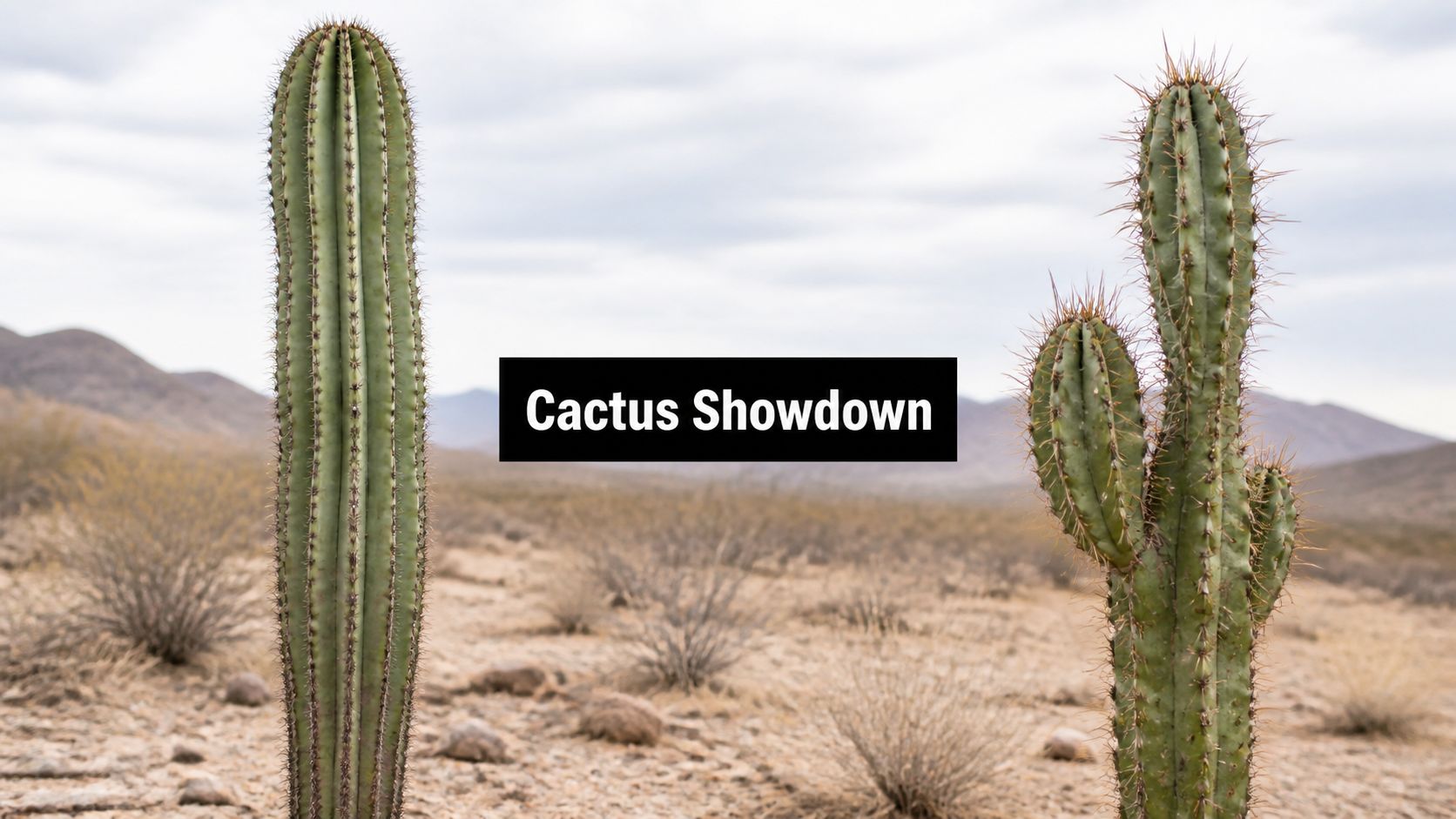


You're at checkout with two tall cacti that look almost interchangeable in the product photos. Both have upright green stems, both suit dry outdoor areas, and both can arrive on a pallet looking like a serious architectural purchase. The wrong choice won't necessarily kill the plant, but it can leave you with a poor privacy screen, an overcrowded patio, or a sculptural specimen placed where people keep brushing against it.
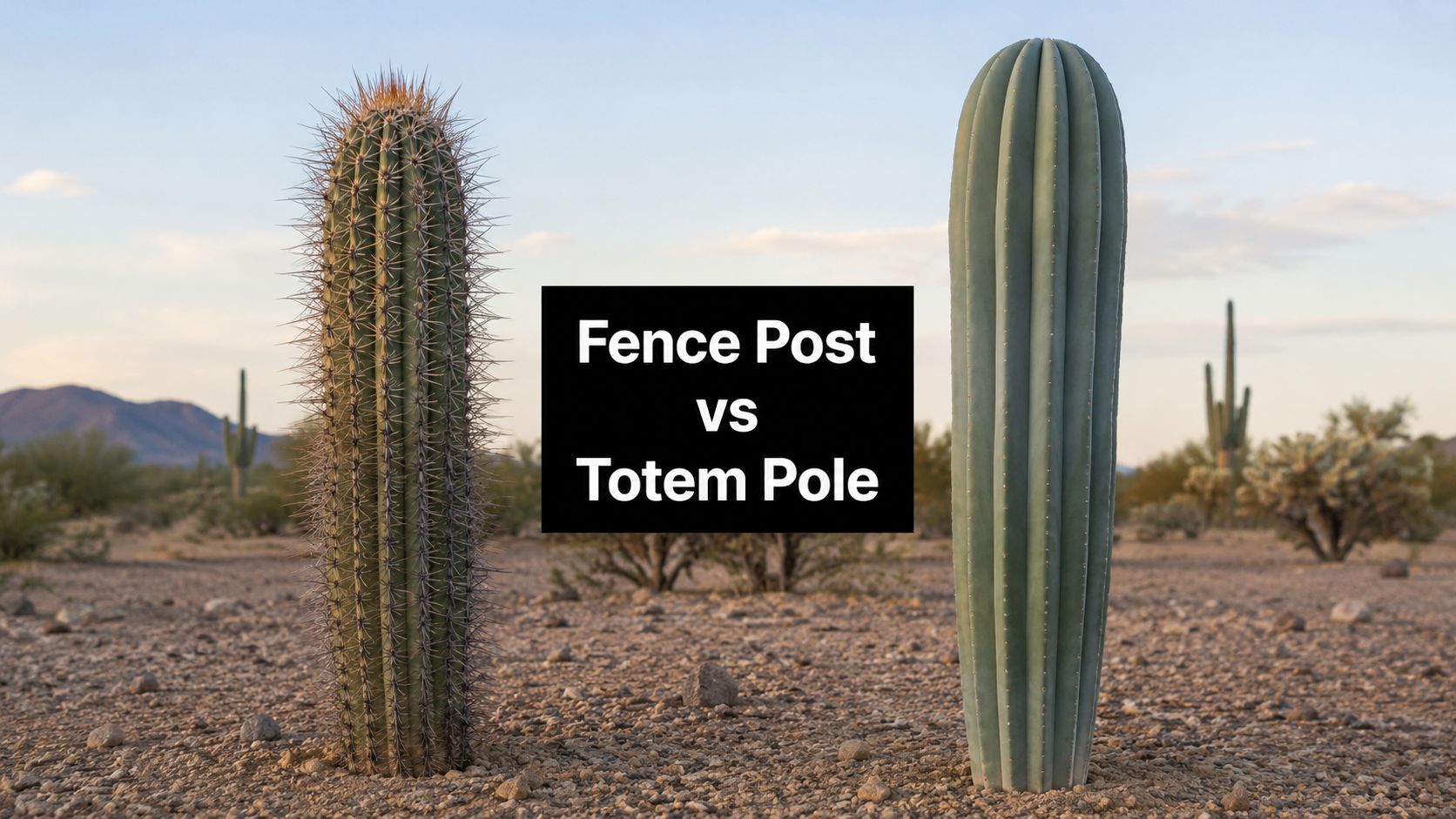
The practical choice in a Mexican fence post cactus vs totem pole cactus comparison is straightforward. Buy Mexican fence post cactus, Pachycereus marginatus, for a ribbed living barrier and orderly vertical planting. Buy totem pole cactus, the monstrose form of Pachycereus schottii, also treated as Lophocereus schottii, for a smooth, spineless specimen that works as living sculpture. I've shipped both, and customer yards confirm the same lesson repeatedly: decide by intended use first, then judge form, size, and care.
Two Columnar Cacti That Look Alike From the Cart Page
A buyer ordering a privacy row usually wants the Mexican fence post. A buyer furnishing a modern courtyard usually wants the totem pole. Those uses can overlap in photographs, but they separate sharply once the plants are installed and begin developing their mature character.
Mexican fence post is a dark-green, upright cactus with 5–7 ribs, and its short spines give each stem an armored, fence-like appearance. Its name reflects a practical role in Mexico, where it has been used as a living barrier. The species was first described in 1828 as Cereus marginatus, then moved through later classifications, including a 2009 reassignment to Lophocereus by Salvador Arias and Teresa Terrazas, as documented by the University of Arizona Arboretum taxon record. The classification history is interesting, but it shouldn't drive your purchase.
Totem pole is different at the structural level. It's a monstrose form, explicitly identified botanically as forma monstrosus, rather than a separate species. Its irregular mutation produces smooth, knobby, nearly spineless stems that look more like carved green columns than defensive fencing. The straight species ranges across mainland Mexico, Baja California, and the extreme south of Arizona, while the cultivated monstrose form is reported from a more restricted area northeast of El Arco in central Baja California, which is why collectors treat it as a rare genetic variant rather than another species.
My nursery rule: If the planting must stop people, choose fence post. If the planting must make people stop and look, choose totem pole.
The difference matters most in three settings:
- Privacy screen: Mexican fence post gives you repeated, ribbed columns with a stronger defensive presence.
- Specimen bed: Totem pole creates the more unusual focal point because every stem develops its own lumpy surface.
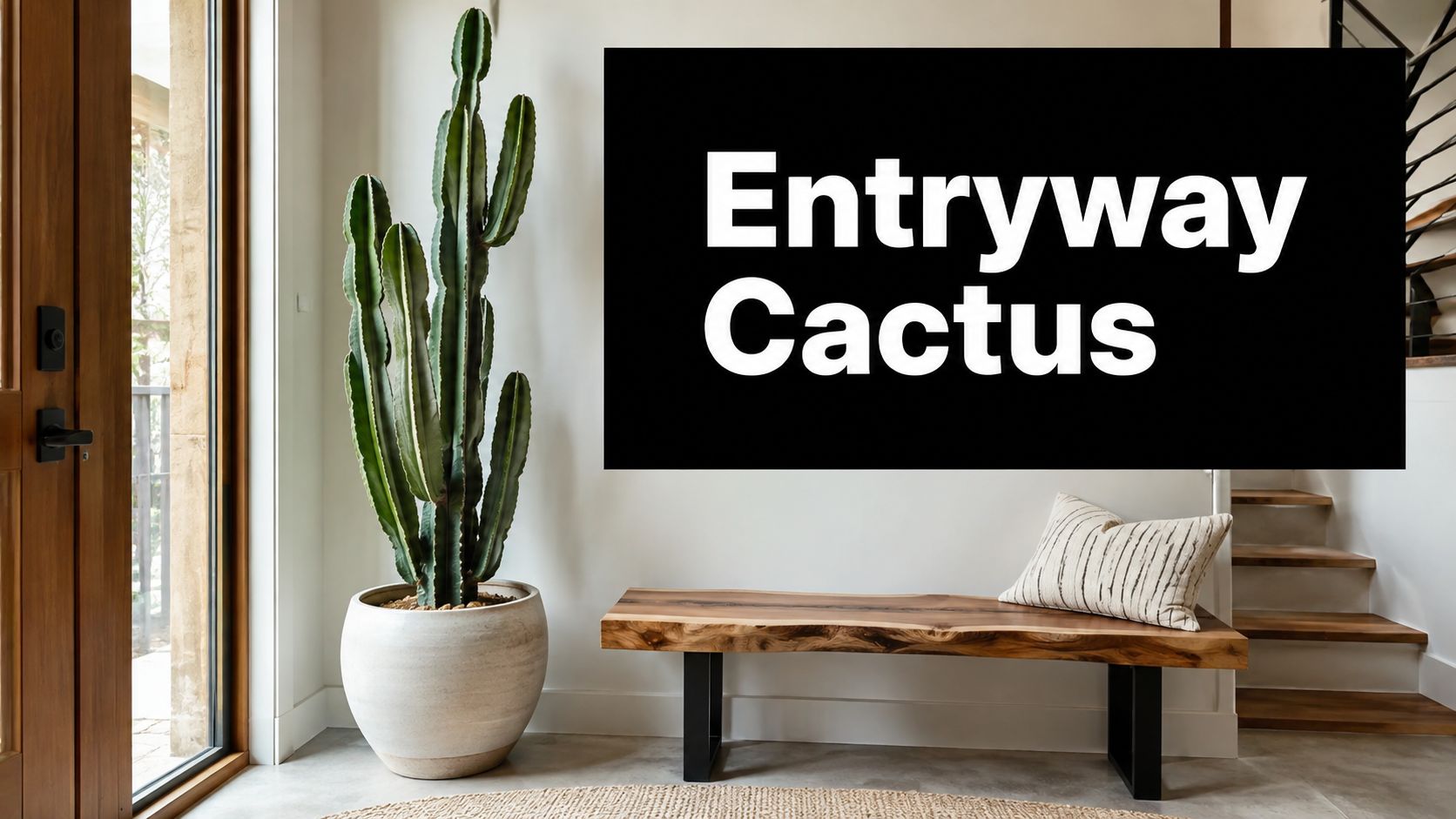
- Patio container: Totem pole is friendlier near seating because it's low-spine and often nearly spineless. Mexican fence post works better where the pot can sit away from traffic.
How to Tell Mexican Fence Post and Totem Pole Apart
Identify these plants the way a nursery worker checks a delivery pallet. Start with the ribs, then look at the spines, surface texture, and branching. You won't need a botanical key if you inspect those features in order.
Start with the ribs and areoles
Mexican fence post shows 5–7 clear ribs running in orderly lines down the stem. Short spine clusters sit along those ribs in tight rows. From a few feet away, the stems look striped and lightly armored, especially in full sun when the rib edges cast narrow shadows.
Totem pole usually gives you a smoother first impression. The stems are nearly spineless, with a waxier green surface interrupted by irregular bumps, bulges, and knobby growth. Its surface doesn't repeat with the same disciplined geometry. Instead of a comb-like line of spines, you see a sculptural series of lumps.
Check the base and lower stem
Mexican fence post generally holds a more upright, orderly habit. It may form a single column or a tight cluster, with basal branching contributing to a hedge-like effect. Totem pole commonly develops offsets around the base and lower stem, so the plant can look more clustered and irregular even when it's young.
Height-to-diameter proportion provides a secondary clue. Mexican fence post tends to read as tall and narrow. Totem pole looks stockier and more substantial because the knobby surface breaks the visual line and the stems often carry more visual mass.
| Feature | Mexican Fence Post | Totem Pole |
|---|---|---|
| Botanical identity | Pachycereus marginatus, a distinct species | Monstrose form of Pachycereus schottii, also treated as Lophocereus schottii |
| Ribs | 5–7 prominent ribs | Less visually regular because of the lumpy mutation |
| Spines | Short, comb-like clusters along the ribs | Low-spine to nearly spineless |
| Surface | Dark green, ribbed, orderly | Waxy green, knobby, irregular |
| Branching | Single column or tight cluster | Offsets often appear at the base and lower stem |
| Best role | Hedge, barrier, repeated vertical row | Specimen, focal point, ornamental container |
A simple arrival test works well: orderly ribs and visible spine rows point to Mexican fence post; smooth bumps and almost no spines point to totem pole. Low indoor light can flatten both plants into dark green silhouettes, so inspect the ribs and surface again outdoors in bright, indirect light before planting. For a closer look at the ornamental form, compare your plant with this totem pole cactus buying guide.
Mature Size and Growth Habit in Real Landscapes
Mexican fence post is the better choice when your garden needs height without much lateral drama. A neutral horticultural source reports that it can average about 50 feet in nature, with stems roughly 10–20 cm across, while cultivation guidance commonly places it around 10–12 feet tall and eventually about 20 feet, with stems around 3–4 inches in diameter. These figures vary with growing conditions, but the design message is consistent: it becomes a tall, narrow presence.
That shape makes fence post useful along a wall, driveway, or property boundary. A row can climb above a fence line while maintaining a relatively disciplined footprint. It won't behave like a perfectly uniform manufactured screen, but it's much easier to repeat in a narrow bed than a broad, branching cactus.
Totem pole occupies space differently. Published guidance describes mature plants at roughly 15 feet tall by 10 feet wide, while rooted or container trade sizes may be more compact, around 10–12 feet tall by 4–6 feet wide. That spread difference is important. Ask whether the listing describes the plant as sold or the expected mature footprint, then reserve space for basal offsets and the plant's irregular outline. The size guidance is summarized in this fence post cactus comparison.
Match the growth habit to the planting plan
Mexican fence post generally reads as one column or a tight group. Its basal branching can help a screen fill visually, but the main effect remains repeated vertical lines. Totem pole's offsets and knobby stems create a specimen silhouette, not a clean hedge. Planting several too close together can turn an intentional sculpture into a crowded cluster.
The first three to five years deserve honest planning. Mexican fence post is the more predictable choice when you need the planting to gain height and establish a row, but no responsible nursery can promise an identical growth schedule for every yard. Sun, drainage, starting size, irrigation, wind, and transplant timing all change the pace. Totem pole is typically slower and more collectible, so buyers should treat it as a long-term focal point rather than a quick privacy solution.
Design decision: Fence post fills a vertical line. Totem pole fills a visual conversation.
If your gap is beside a fence and the finished planting needs repeated columns, buy Mexican fence post. If the plant has room to stand alone in gravel, a courtyard, or a large patio container, choose totem pole.
Light, Soil, and Water Requirements Side by Side
Both cacti need bright light and fast drainage, but they aren't equally hands-off. Mexican fence post is the tougher choice for a lean xeriscape bed where irrigation is occasional. Totem pole rewards a more curated setup, especially in a container where heat can dry the root zone quickly and its spineless skin can show stress sooner.
Build the root zone before planting
Mexican fence post prefers full sun, mineral soil, and rapid drainage. Keep the mix lean rather than rich and water only after the root zone has dried. In summer, a practical starting interval is every 3–4 weeks, with winter watering kept close to dry, based on the care guidance from Consultaplantas. Adjust for rainfall and soil. Wet soil in a humid climate is more dangerous than dry soil in a hot one.
Totem pole also needs bright light, but light afternoon shade can help in desert lowlands. Give it a slightly richer but still sharply draining substrate, with pumice or decomposed granite mixed through the root zone. During peak heat, modest supplemental irrigation every 2–3 weeks can be appropriate, particularly when the plant is in a patio pot. That doesn't make it a thirsty plant. It means the smooth, spineless form may need more deliberate observation than fence post.
For container-grown specimens, use fast-draining cactus mix with 30–50% pumice, as outlined by EasyScape's Mexican fence post listing). A pot retains heat and moisture differently from open ground, so never transfer an in-ground schedule directly to a container.
| Requirement | Mexican Fence Post | Totem Pole Cactus |
|---|---|---|
| Light | Full inland sun | Bright light, with light afternoon shade useful in intense desert lowlands |
| Soil | Lean, mineral, sharply draining | Fast drainage with pumice or decomposed granite |
| Summer water | Deep watering about every 3–4 weeks, adjusted for weather | Modest supplemental irrigation about every 2–3 weeks in peak heat |
| Winter approach | Near-dry conditions | Low water, with careful monitoring in containers |
| Container mix | Cactus mix with 30–50% pumice | Cactus mix with 30–50% pumice |
| Landscape role | Hands-off xeriscape bed or screen | Curated specimen where the owner monitors moisture |
The rule is simple: fence post for hands-off xeriscape beds, totem pole for curated settings where you'll drag out the hose.
Cold Hardiness and Climate Suitability
Cold exposure changes the purchase decision more than most online photos reveal. Mexican fence post is commonly listed as cold hardy to about 20–25°F, with USDA guidance around zones 9–11, depending on the source, including the University of Arizona Arboretum hardiness record. Totem pole is generally recommended for USDA zones 9–10 and may tolerate brief lows around 18°F, but tip damage can begin below about 25°F, according to Gardenia's plant profile.
That doesn't mean you should treat either plant as freeze-proof. A dry, established cactus can handle a short cold event better than a recently planted specimen in wet soil. Totem pole's irregular, sculptural growth also makes damage more visible, particularly at the tips and exposed bumps.
Use the site's microclimate
A south-facing wall, covered patio, or under-eave location can reduce exposure compared with an open yard. Those placements help, but don't assume a microclimate automatically adds a fixed amount of protection. Wind, wet soil, duration of the freeze, and reflected heat determine the outcome.
For borderline sites, order Mexican fence post first. It offers the wider practical margin for warm-climate outdoor planting. Totem pole belongs in a protected location when frost is a recurring concern, and buyers should avoid sending it through cold transit when temperatures are unsuitable. Time delivery for a season with mild nights rather than asking a dormant or recently handled cactus to endure a freezing shipment.
Use frost cloth as a short-term shield when a brief cold snap threatens. A 2–4 ounce frost cloth can cover a vulnerable specimen, but it won't replace drainage, shelter, or proper placement. A rigid cold frame is more appropriate for a smaller container plant that needs a stable protected enclosure, not for a large in-ground column. Remove coverings when conditions improve so trapped moisture and poor airflow don't create a new problem.

Recommendation: In a warm but marginal setting, choose Mexican fence post for function and resilience. Choose totem pole only when you can give the specimen a protected placement and manage cold exposure actively.
Which Cactus Fits Which Buyer Best
A privacy-screen buyer shouldn't choose the prettier product photograph. That buyer needs a plant that repeats, occupies a narrow strip, and creates a barrier. Mexican fence post is the clear pick for property lines, security-minded planting, and rural boundaries where the ribbed stems and short spines discourage casual foot traffic.
It also suits homeowners who want a tall, narrow hedge beside a wall or driveway. The plant's orderly columns make it easier to build a consistent design than totem pole's irregular offsets. If an HOA requires a controlled planting profile, check the local rules and mature dimensions before ordering, then use fence post where the site gives the row enough room.
Match the buyer profile to the plant
- Privacy and security: Choose Mexican fence post. Its spiny, ribbed structure supports a barrier role better than a smooth ornamental form.
- Architectural specimen: Choose totem pole. Its nearly spineless, knobby stems bring the unusual surface that modern gravel gardens and courtyard designs need.
- Child- or pet-adjacent patio: Choose totem pole, while still keeping any cactus out of reach of curious animals and children.
- High-elevation or interior continental climate: Choose Mexican fence post only if the site can protect it from damaging freezes. Totem pole is the weaker choice in exposed cold.
- Coastal Southern California patio: Choose totem pole for sculptural form near seating. Choose fence post when the project needs function, repetition, or a visual boundary.
Totem pole is especially strong in a large container where the plant serves as a living sculpture. Its low-spine character makes it more comfortable near chairs, entries, and entertaining areas. The tradeoff is that it needs thoughtful placement and more periodic irrigation than many buyers expect from a cactus.

One buyer should pass on both: the cold-climate gardener without reliable frost protection who wants instant height. Neither cactus belongs in an exposed site where a hard freeze can undo years of growth, and neither is a sensible substitute for a genuinely cold-hardy plant.
Choosing the Right Size to Order
Order the largest practical specimen when the planting needs to look finished on installation day. A juvenile cactus can be a smart budget choice for a patient homeowner, but it often disappears in a large yard, especially beside a wall or pool. The right size depends on the planting role, the access route, the container weight, and whether you're prepared to stage the design over several growing seasons.
Mexican fence post shows a dramatic difference between small and established material. A 1-gallon plant around 12–18 inches works for groupings and gradual development, but it won't create immediate privacy. A 15–25 gallon specimen around 4–6 feet has enough presence to define a screen section on planting day, as described by the sizing guidance from Your Indoor Herbs. For installers, that larger class usually makes more sense when labor and finished appearance matter more than the lowest purchase price.
Totem pole follows a different sizing logic. A 12-inch cutting can become a sculptural focal point in a small container and remain visually useful for years. A 3–4 foot boxed specimen creates an immediate patio anchor, but buyers must account for the plant's eventual spread, protective packaging, and handling requirements.
| Size Class | Mexican Fence Post Outcome | Totem Pole Outcome |
|---|---|---|
| Small starter | Useful in groupings, limited immediate screen value | Strong small sculptural accent |
| Medium specimen | Begins defining a privacy row | Works as a patio or courtyard focal point |
| Large specimen | Creates immediate vertical structure | Becomes a major architectural anchor |
| Best buyer | Installer or homeowner needing impact now | Collector or designer choosing form and proportion |
Let access decide the purchase
A large plant can require specialized handling even when the root ball itself is manageable. Check gates, turns, overhead clearance, and the place where the pallet or box will be unloaded. Container weight and freight surcharges can change the economics of ordering tall, so compare delivered cost with local installation labor rather than judging only the plant price.
Choose tall Mexican fence post from day one when the project is a screen, commercial area, or completed home build. Choose a smaller totem pole when the container can showcase it immediately and you enjoy watching the form develop. Homeowners who can stage growth over 3–5 years have more flexibility, but they should still buy a size that fits the finished planting instead of hoping a hidden starter will become visible quickly.
Shipping, Acclimation, and First 30 Days
The first month begins when the box arrives, not when you plant. Large cacti may ship blanket-wrapped or pallet-boxed, while smaller plants can arrive in containers. Bare-root shipping can work well for both species when cuts are dry and callused, because removing wet soil reduces the chance of moisture staying against roots during transit.
Inspect before you plant
Open the package immediately and photograph the cactus, packaging, label, and any visible damage. Look for broken ribs, soft basal tissue, crushed tips, and mealybug nests in the areoles. Send the photos and order information to the seller within 48 hours if damage needs to be documented for a claim.
For extra packaging protection during a local move or temporary staging, use appropriately sized, double-wall cartons such as these large double wall removal boxes. Don't force a cactus into a box that presses against the ribs or tips. The container should protect the plant without creating new compression damage.
Buy columnar cactus online only after checking the intended planting site, arrival season, and the seller's product details. A large cactus needs a receiving plan, especially when the delivery arrives on a pallet and the plant can't remain boxed in heat or cold.

Acclimate in stages
Give the unboxed plant an airy, shaded rest before exposing it to intense sun. If it has lived in greenhouse conditions, totem pole deserves extra caution because its smooth skin can sunburn after an abrupt move outdoors. Mexican fence post also benefits from gradual exposure, particularly after a dark shipment.
A practical sequence is:
- Week one: Keep the cactus in bright shade with good airflow.
- Week two: Introduce morning sun, then return it to protection during the strongest afternoon heat.
- Week three: Increase exposure toward its final light level if the skin remains firm and unmarked.
- Week three or four: Give the first deep watering only after you see signs of new root growth or stable establishment.
Don't fertilize during this initial period. Let the plant recover from handling and begin rooting before you ask it to produce new growth. Stake a tall Mexican fence post specimen if it leans, ideally during the first growing season, because wind can turn a minor imbalance into a permanent angle. Totem pole may need support during handling as well, especially when its offsets create an uneven center of gravity.
The Cactus Outlet offers Mexican fence post and totem pole cacti for online buyers comparing large columnar plants, with product pages that help shoppers match specimen form to purpose. Visit The Cactus Outlet to compare available plants, choose the right size for your screen or patio, and order a cactus that fits the climate and function of your site.