

Looking to buy a cactus online? You're in the right place. The internet has completely changed the game, opening up a world of stunning, spiky plants that can be shipped right to your front door. Whether you're after a tiny succulent for your desk or a massive statement piece for your yard, the selection you'll find online is incredible. It’s never been easier to find the perfect cactus for your space and style.
Your Guide To Buying Cactus Plants Online
Think of this as your roadmap to finding the perfect living sculpture online. Buying a cactus isn't like picking up a gallon of milk; it's more like adopting a piece of architectural art that brings a bit of the desert's tough, beautiful spirit into your home or garden. It's no surprise that everyone from casual plant lovers to professional landscapers is now turning to online sellers. But what's behind this big shift?
Honestly, it boils down to two things: convenience and a mind-boggling selection. Your local garden center is great, but they just can't stock everything. Online, you can browse hundreds of different species—from the iconic Saguaro to the weird and wonderful Peruvian Apple Cactus—all from the comfort of your couch.
The Rise Of The Online Cactus Market
This boom in online cactus shopping isn't just a fleeting trend. The global market for these plants is huge and getting bigger. It was valued at around USD 5.18 billion in 2023 and is expected to jump to USD 6.85 billion in 2024. Projections show it could hit a staggering USD 15.08 billion by 2031.
North America is a huge part of this story, predicted to account for 39.71% of global revenue in 2025. If you're curious, you can dig into more insights about this expanding market and what's driving it.
So, what's fueling this growth? A few key things stand out:
- Wider Selection: Online shops are a treasure trove for rare and unusual species you’d be hard-pressed to find locally.
- Expert Sourcing: The best online nurseries are run by specialists who know how to grow and ship healthy, high-quality plants that are ready to go.
- Direct-to-Consumer Convenience: The whole process is simple. You browse, you click, and a perfectly packed plant shows up at your door. It just saves so much time and hassle.
Sifting through all the online shops offering cactus plants for sale can feel a bit daunting at first. The real trick is learning how to spot a great supplier. You want someone who ensures your new plant arrives healthy, well-packaged, and ready to settle into its new home.
This guide will walk you through everything you need to know to buy with confidence. We'll cover how to pick the right species—whether it's for an indoor pot, a big landscape project, or a unique gift—and get into the nitty-gritty of shipping and what to do when your new green friend arrives. By the end, you'll have all the know-how to make a great purchase and find the perfect cactus to liven up your space.
Choosing The Perfect Cactus For Your Space
Finding the right cactus online isn't about scrolling until you see one you like; it’s about making a smart match. The perfect plant for a sprawling desert garden will quickly fail in a small apartment pot, and a delicate, low-light variety would get fried in a sun-drenched yard. Your success story starts by pairing the plant’s natural needs with your specific environment and what you hope to achieve.
Think of yourself as a cactus talent scout. Are you looking for a quiet, low-maintenance desk buddy? A dramatic, architectural showstopper for your garden? Or maybe an easy-to-care-for gift that even a total beginner can keep alive? Each of these goals points you toward a completely different group of cacti, ensuring you pick a plant that’s set up to thrive from day one.
Match The Cactus To Its Mission
Before you even start looking at listings for cactus plants for sale, figure out what job you're hiring the plant to do. This one simple step filters out a ton of unsuitable candidates right away. A landscape designer in Arizona needs something completely different from a collector in a Seattle apartment, so getting clear on your purpose is key.
Start by thinking about these main uses:
- Indoor Decor: Plants destined for life inside need to handle lower light levels and be happy living in containers.
- Outdoor Landscaping: These cacti have to be tough enough to handle your local climate, from intense sun to potential frost.
- Gifting: The best gift cacti are usually forgiving, look great, and don't grow too quickly.
- Collecting: Collectors are often on the hunt for rare, unusual, or uniquely shaped specimens that demand specialized care.
Making this decision first helps you navigate the massive online market. This flowchart can help you visualize the path to finding your ideal cactus, whether you're starting your search online or heading to a local nursery.
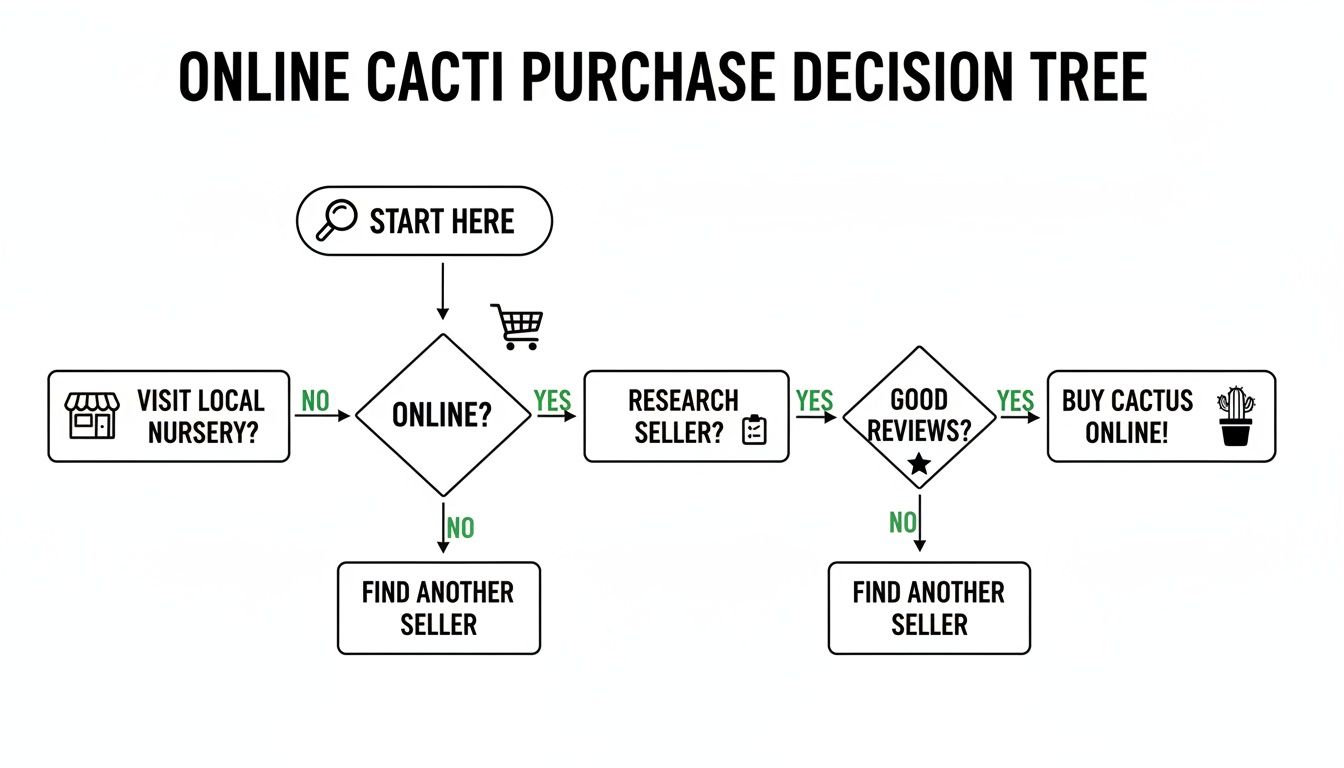
As the chart shows, the online route opens up a much wider selection, which is fantastic if you have specific landscaping needs or are searching for that one rare collector's item. The big takeaway here is to define your mission first—it makes sifting through the huge variety of online options so much easier.
A Quick Guide To Popular Cactus Species
Once you’ve got a goal in mind, you can start exploring specific types. For example, a Golden Barrel Cactus (Echinocactus grusonii) is a classic choice for a sunny, dry landscape, but it gets way too big for most indoor setups. On the flip side, a Christmas Cactus (Schlumbergera) loves the indirect light of a living room but would get scorched in direct outdoor sun.
Choosing a cactus is a bit like adopting a pet—you have to understand its mature size, personality, and needs for a happy, long-term relationship. That tiny, cute cactus in a 2-inch pot could eventually become a 15-foot monster, so always do your homework on its final form.
To help you find that perfect match, I've put together a table breaking down some popular options based on where they'll do best and what makes them special.
Cactus Selection Guide For Different Needs
This table compares some common cactus species to help you choose the right plant for your specific situation, whether it's for indoor decor, outdoor landscaping, or a thoughtful gift.
| Cactus Species | Ideal Use Case | Mature Size | Light Requirement | Key Feature |
|---|---|---|---|---|
| Saguaro (Carnegiea gigantea) | Outdoor Landscaping | Up to 40 ft tall | Full, direct sun | The iconic, slow-growing giant of the desert. |
| Golden Barrel (Echinocactus grusonii) | Outdoor Landscaping, Large Pots | 2-3 ft wide | Full, direct sun | A striking sphere with beautiful golden spines. |
| Peruvian Apple (Cereus peruvianus) | Indoor Statement Piece, Outdoor | Up to 30 ft tall | Bright, indirect to full sun | Fast-growing columnar cactus with night-blooming flowers. |
| Moon Cactus (Gymnocalycium mihanovichii) | Gifting, Indoor Decor | 2-4 inches tall | Bright, indirect light | Colorful, grafted top that can't handle direct sun. |
| Fairy Castle (Acanthocereus tetragonus) | Gifting, Indoor Decor | 1-2 ft tall | Bright, indirect light | A whimsical, multi-stemmed form that looks like a castle. |
| Prickly Pear (Opuntia) | Outdoor Landscaping, Edible Fruit | Varies (3-15 ft tall) | Full, direct sun | Known for its distinctive paddle-like pads and edible fruit. |
By using your space and your purpose as your main filters, you can browse the thousands of cactus plants for sale online with confidence. This focused approach means you’ll end up with a plant that not only looks great when it arrives but is perfectly suited to thrive in its new home for years to come.
How to Navigate the Online Ordering Process
Let's be honest: buying a living plant online, especially a big one with lots of spines, can feel like a bit of a gamble. But I'm here to tell you that good sellers have this down to a science. Once you know what to look for, the whole experience—from picking out your cactus to unboxing it—is surprisingly straightforward and secure.
Think of an online product listing as the plant’s personal resume. It's your job to read between the lines. Don't just get swept away by the pretty pictures; the real gold is in the details. This is where you separate a fantastic purchase from a "what did I just buy?" moment.
Decoding the Product Listing
A solid seller gives you more than just a plant name and a price tag. Their listings are full of specifics that help you know exactly what's coming to your door. If a description feels vague or sparse, that's your cue to be cautious.
Here's what a great listing should have:
- Precise Sizing: Look for clear height and width measurements in inches or feet. Some of the best sellers will even list the pot size, like a "5-gallon" plant, which gives you a great idea of how mature the root system is.
- Plant Age: This isn't always listed, but when it is, it's incredibly helpful. A slow-growing, 10-year-old Saguaro is a completely different kind of investment than a fast-growing, 2-year-old Peruvian Apple Cactus, even if they're the same size.
- Photos from Multiple Angles: One perfect, glamour shot can hide a lot. You want to see the whole plant, close-ups of its texture, and maybe even a photo with something in the frame for scale, like a soda can or a person.
As a quick but crucial aside, always make sure the website you're on has a valid SSL certificate. This is what keeps your personal and payment info safe. A secure site is a basic sign of a professional operation—don't buy from a site without it.
Shipping and Packaging Unpacked
This is the part that makes most people nervous. How on earth does a giant, prickly cactus travel across the country without ending up as a box of broken spines? Well, expert nurseries have developed some seriously clever packing methods to make sure your plant arrives safe and sound.
The process usually involves meticulously wrapping the entire cactus in protective layers like foam or bubble wrap. They'll secure the root ball so it doesn't bounce around and damage delicate parts. The whole thing is then nestled into a sturdy box, often with custom braces to keep it from shifting around in transit.
Reputable sellers treat shipping like an art form. They know a healthy plant can get stressed or damaged by a bumpy ride, so they don’t skimp on the materials and techniques needed to guarantee a safe journey from their greenhouse to your home.
Navigating Rules and Restrictions
Alright, just a few final logistics to consider before you hit that "buy" button. There are a handful of rules and limitations out there that are designed to protect both local ecosystems and the plants themselves.
Keep these common restrictions in mind:
- Seasonal Shipping Pauses: Many sellers in hot places like Arizona will stop shipping in the dead of summer (July-August) to keep plants from getting cooked in a hot truck. On the flip side, nurseries in colder climates might pause shipping during a deep freeze.
- State Agricultural Laws: Some states are very particular about what plants can be brought in. California, Florida, and Hawaii, for example, have strict rules to prevent the spread of pests. Always double-check that the seller ships to your state.
- Realistic Delivery Timelines: Remember, a living plant isn't an Amazon Prime order. The seller needs a few days to carefully prep and pack your cactus. Factor in that handling time plus the shipping transit to get a real sense of when it will arrive.
You can usually find all this information laid out clearly on the seller's website. Taking a moment to read up on a nursery's shipping and returns procedures can answer a lot of questions and give you real peace of mind. A little bit of homework here goes a long way in making sure you can buy the perfect cactus online, completely stress-free.
Unboxing and Acclimating Your New Plant
The moment your package arrives is always a thrill. After searching through countless listings for cactus plants for sale and picking out the perfect one, seeing that box on your doorstep feels like a real win. But what you do in the next few hours and days is absolutely crucial for your new plant's long-term health. Think of it like helping a traveler recover from a long, bumpy journey; they need time to rest, adjust, and settle in.
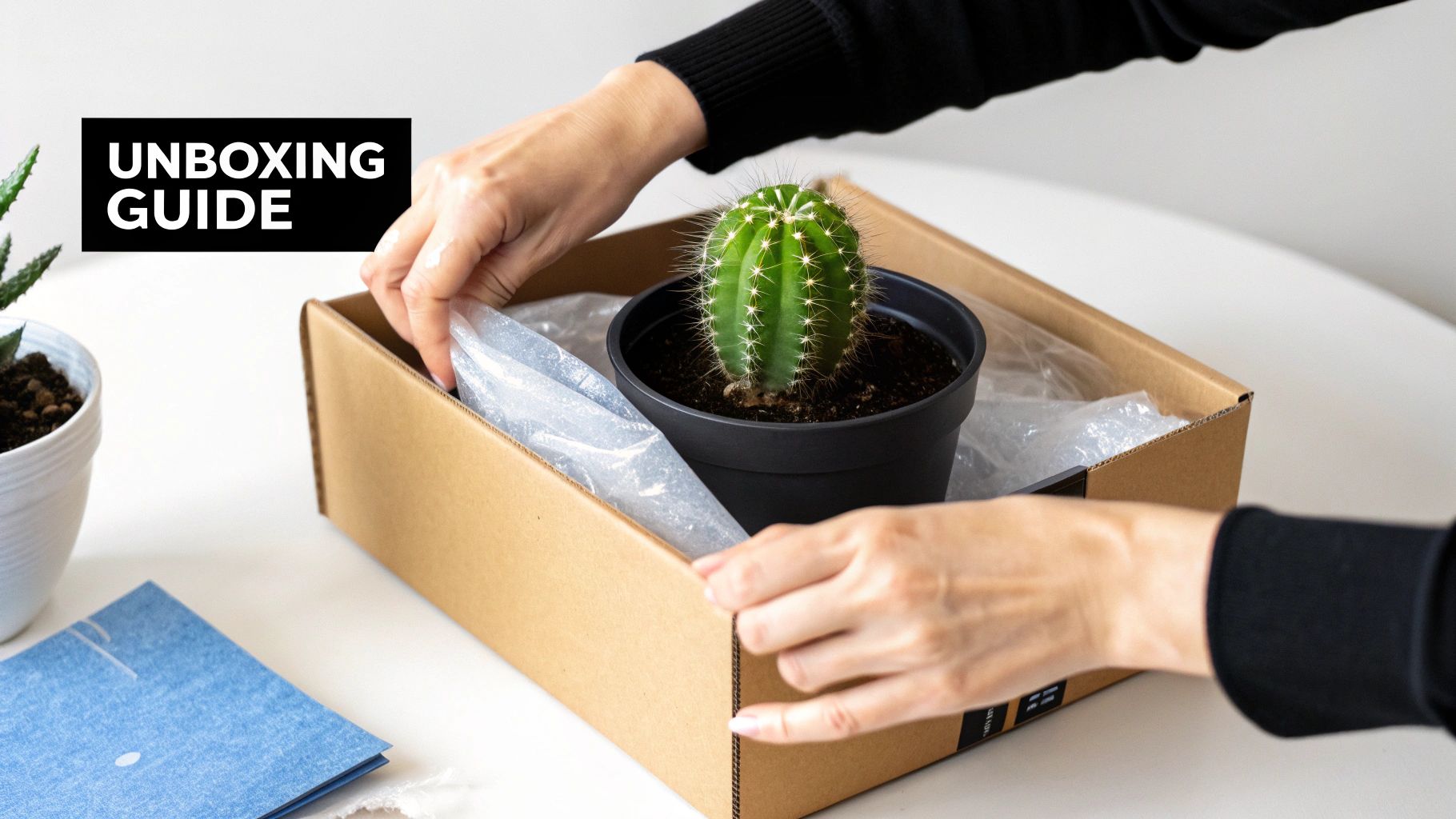
Resist the urge to immediately plop your cactus in a bright, sunny window. It just spent several days in a dark box, and a sudden blast of intense light is the plant equivalent of walking out of a dark movie theater into the blinding afternoon sun. It's jarring, and it can actually cause sunburn, which shows up as bleached, yellow, or scarred patches on the cactus’s skin.
The Gentle Art of Unboxing
Start by carefully opening the box. Good sellers pack their plants with plenty of cushioning, so take your time cutting tape and removing the padding. Once you can get to the plant, handle it gently—and maybe wear gloves if you’re dealing with a particularly spiny specimen.
Your first job is to play detective and give it a thorough inspection. Look the plant over from top to bottom.
- Check for Physical Damage: A few bent spines or minor scuffs from the trip are usually no big deal. What you're looking for are deep gashes, broken limbs, or any signs of mushy rot at the base.
- Inspect the Soil: Is the soil bone dry or still a little damp? This gives you a clue about how thirsty it might be.
- Look for Pests: It’s rare when buying from a reputable nursery, but it’s always smart to check for stowaways like mealybugs (they look like tiny white cottony spots) or scale insects (small brown bumps that don't move).
Don’t panic if your cactus looks a bit pale or "deflated." This is a completely normal sign of shipping stress and dehydration. With proper acclimation, most plants perk right back up within a week or two. Your goal right now is to provide a gentle, stable transition.
The Acclimation Process, Step-by-Step
Acclimation is just a fancy word for slowly getting your cactus used to its new home. If you rush it, you’ll stress the plant, making it an easy target for pests and disease. Patience is the name of the game here.
Here’s a simple, effective week-long plan to follow:
- Days 1-3 (The Recovery Zone): Find a spot for your cactus that gets bright, indirect light only. Think of a room with an east-facing window or a spot where the light is filtered. And whatever you do, do not water it yet! Let the roots settle down and recover from being bounced around in transit.
- Days 4-6 (A Gradual Introduction): Now you can move the plant somewhere it can get 1-2 hours of direct morning sun. The morning sun is much gentler than the harsh afternoon rays, which lets the plant adjust without getting scorched.
- Day 7 and Beyond (The Final Destination): If your cactus is looking happy and shows no signs of stress (like yellowing or sunburn spots), it's ready for its permanent home. Most desert cacti need at least 4-6 hours of direct sunlight every day to truly thrive.
After about a week has passed, it’s safe to give your cactus its first drink. Water it thoroughly until you see water coming out of the pot's drainage holes, then let the soil dry out completely before you even think about watering it again. For a deeper dive into watering, our complete cactus care guide has detailed advice for all kinds of species and climates.
Following this patient process is the best way to ensure your new living sculpture gets the best possible start in its new home.
What To Look For In A Reputable Online Seller
Your entire online shopping experience really boils down to the seller you choose. With so many shops popping up, it's more important than ever to tell the real experts from the weekend hobbyists. A great seller doesn’t just move inventory; they offer a clear, supportive, and dependable service every step of the way. It’s like picking a skilled artisan over a random street vendor—the quality and care are in a different league entirely.
The first thing I always look for is total transparency. This means everything is out in the open, with no sneaky surprises buried in the fine print. Check for clearly stated return policies and satisfaction guarantees right on their website. A seller who truly believes in the quality of their plants will make it easy to understand your options if something isn’t right.
Evaluating Product Listings and Photos
Vague descriptions and a single, blurry photo? That's a huge red flag for me. Good sellers know that an informed buyer is a happy buyer, so they put real effort into their product listings. Look for specifics like the plant's current size, pot dimensions, and maybe even its approximate age.
You absolutely need to see high-quality photos from multiple angles. This is the only way to get a true sense of the plant's health, color, and structure before you click "buy."
Beyond the plants themselves, what really separates the best sellers is their commitment to a first-class sales experience. This means you get smooth communication and helpful support from someone who actually knows their stuff.
The Importance of Customer Support and Reviews
What if you have a question before you order, or need a little guidance after your new cactus arrives? This is where customer support proves its worth. A reliable seller will have a knowledgeable team you can actually get in touch with. Having access to experts who can answer your questions provides incredible peace of mind.
Finally, let other customers be your guide. Reading through reviews gives you an unfiltered look into what you can expect in terms of plant quality, packaging, and service.
A few bad reviews are normal for any business, but you should be on the lookout for patterns. If you see multiple people complaining about sick plants or terrible customer service, that’s a clear sign to look elsewhere. On the flip side, glowing reviews that praise healthy arrivals and a helpful team are a great sign you've found a winner.
For a deeper dive into what separates the good from the great, check out our guide on how to find the best online cactus store. By keeping an eye on transparency, detailed listings, solid support, and good reviews, you can feel confident you’re buying a healthy, beautiful cactus from someone who cares.
Finding Value With Discounts And Bulk Options
Whether you're on the hunt for a single rare specimen or need to source dozens of plants for a big landscaping job, knowing where the value lies is key. The price tag on a cactus isn't just a random number; it's a reflection of things like rarity, size, and most importantly, age. Cacti aren't cranked out in a factory—they're grown, and time is always the biggest cost.
Think about it: a towering Saguaro or a perfectly round Golden Barrel represents years, sometimes decades, of patient cultivation. That slow, deliberate growth is precisely why larger, more mature plants command a higher price. You're not just buying a plant; you're buying all the years of sunlight, water, and expert care that helped it get that big.
Uncovering The Best Deals
Just because a mature cactus is a worthy investment doesn't mean you can't find a great deal. If you're a savvy shopper, a little patience and strategy can go a long way and lead to some serious savings. One of the easiest ways is to keep an eye out for seasonal sales.
Nurseries often run discounts at specific times of the year. Fall sales, for instance, are pretty common as growers try to clear out stock before the slower winter months set in. Another pro tip? Sign up for a seller’s email newsletter. That’s where you’ll often find exclusive promo codes and get a heads-up on sales before anyone else.
Why Bulk Buying Makes Sense
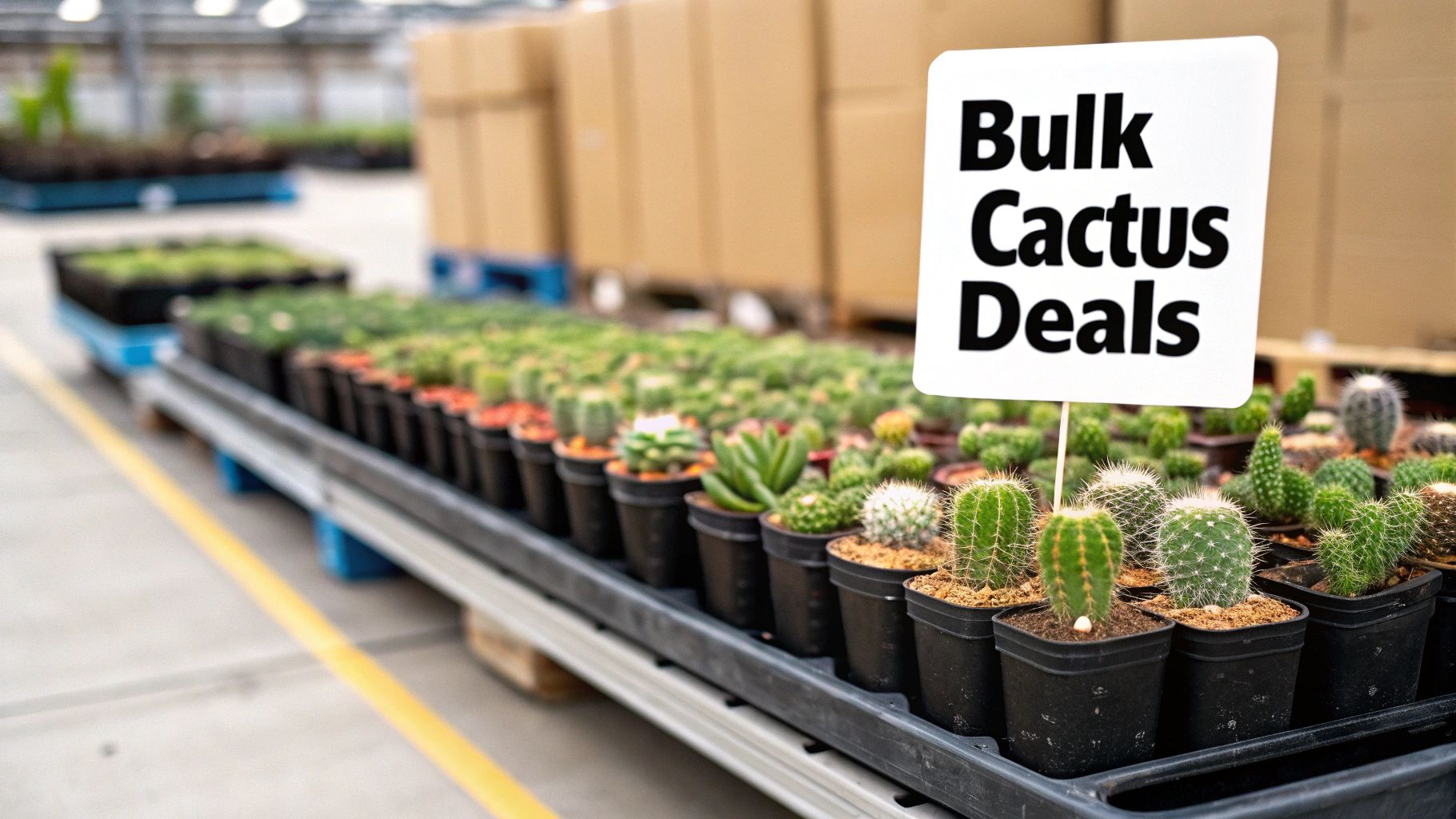
For landscape contractors, designers, or even just ambitious homeowners, buying cacti one at a time just isn't practical. This is where buying in bulk really shines, saving you money and ensuring your project looks consistent. When you place a large order, you can usually lock in a much lower price per plant, which makes your project budget stretch a whole lot further.
Plus, getting all your plants from a single, trusted supplier means you get a cohesive look. The plants will be of similar size, age, and quality—a critical detail for creating a polished, professional-looking design. It completely eliminates the headache of trying to mix and match plants from different places.
Buying in bulk isn't just for the pros. If you and a few neighbors are all planning to upgrade your yards, you can pool your orders to hit wholesale pricing minimums you wouldn't qualify for on your own. It's a clever way to get top-notch plants for less.
Strategic Sourcing For Professionals
If you're in the landscaping trade, finding a reliable source for cactus plants for sale in large quantities is a cornerstone of your business. Here’s what you should be looking for in a great bulk supplier:
- Inventory Depth: Do they have enough of the species and sizes you need, project after project? A solid supplier will have a deep bench to handle big orders without a problem.
- Wholesale Programs: Ask if they have a formal wholesale or contractor program. These are designed to offer tiered discounts—the more you buy, the more you save.
- Freight Shipping Options: For huge plants or massive quantities, standard parcel delivery won't work. A professional-grade supplier will have freight shipping sorted out to get your order to the job site safely and affordably.
By getting a feel for what drives pricing and knowing where to look for a deal, you can make smarter buys. Whether you’re after one perfect plant or an entire truckload, focusing on value ensures you get healthy, beautiful cacti that fit your vision and your budget.
Your Top Questions About Buying Cacti Online, Answered
Jumping into the world of online cactus shopping can feel a little daunting. How exactly does a giant, spiky plant get from a nursery to your doorstep in one piece? How do you know what you’re really getting when you can’t see it in person? These are totally normal questions, and we hear them all the time.
We've put together answers to the most common things people wonder about when they're looking for cactus plants for sale online. Think of this as your personal cheat sheet to help you click "buy" with confidence, knowing exactly what to expect.
Is It Really Safe To Ship a Large Cactus?
You bet it is—if you’re buying from someone who knows what they're doing. Shipping a big cactus isn't for amateurs; it’s a specialized skill that reputable growers have perfected. They don’t just stick it in a box and hope for the best.
Instead, they treat it like the delicate process it is. Here’s what that looks like:
- The entire plant is typically wrapped in layers of soft, protective material to cushion its body and keep every spine intact.
- The root ball is secured firmly in its pot, so it doesn't get jostled around and damage those vital roots.
- The plant is then placed in a heavy-duty, often custom-sized box with internal supports to keep it from moving an inch.
Good sellers are also weather-watchers. They’ll often hold off on shipping if there’s a brutal heatwave or a polar vortex on the route. It’s all part of a careful process to make sure your new cactus shows up healthy and ready for its new home.
How Can I Tell If a Plant Is Healthy From Just a Picture?
This is a fantastic question, and the answer comes down to one word: transparency. Since you can't be there to give the plant a once-over, you have to rely on the seller to show you everything. A great nursery will make this easy.
Look for product listings with plenty of clear, high-resolution photos from every conceivable angle. You want to see the whole plant—its shape, its color, any unique patterns or blemishes. A detailed description is just as important; it should spell out the plant's size, approximate age, and current condition.
Here's a pro tip: Customer reviews are your secret weapon. Scour them for comments about the health and quality of the plants upon arrival. If you see review after review praising how healthy and well-packed the plants were, you've likely found a winner.
What's The Best Time of Year To Order a Cactus?
Generally, the sweet spots for buying cactus plants for sale online are spring and fall. Why? The mild, moderate temperatures during these seasons are much gentler on live plants during their cross-country journey. This dramatically lowers the risk of your cactus getting cooked in a hot delivery truck or frozen on a cold tarmac.
In fact, many of the best growers will pause shipping altogether during the peak of summer and the dead of winter. It’s their way of protecting the plants. Before you buy, it’s always a smart move to check the seller's shipping policy page to see if they have any seasonal black-out dates.
Help! My Cactus Arrived Damaged. What Should I Do?
Even with the most careful packing, shipping carriers can have a bad day. If your cactus arrives looking worse for wear, don't panic. The first thing you need to do is document the situation immediately. Snap clear pictures of the damaged plant and the box it came in, making sure to capture any crushed corners or tears.
Then, reach out to the seller's customer service team right away. Any nursery worth its salt will have a clear guarantee or return policy in place. They’ll work with you to make it right, whether that means issuing a refund or sending a replacement. This is exactly why choosing a seller with great, responsive support is so important.
Ready to find the perfect cactus to bring a touch of the desert to your space? At The Cactus Outlet, we live and breathe cacti. We offer a huge selection of healthy, high-quality plants, from jaw-dropping statement pieces to rare collector's finds. Explore our collection and let us ship your new favorite plant right to your door.