

Most advice about the best prickly pear cactus for colorful gardens starts with the flower photo. That's backwards. A spectacular magenta bloom can last briefly, while the pads occupy your view through the rest of the growing season. If the plant has ordinary green pads, poor placement can turn an expensive color choice into a green, spiny shrub with one memorable afternoon.
I rank prickly pears by the color you'll see in your yard. That means pad color across changing conditions, flower and fruit contrast, mature form, climate fit, and how well the plant works in a real foundation bed, patio container, slope, or privacy planting. The right selection isn't necessarily the one with the loudest bloom. It's the one that keeps earning its space after the flowers fade.
What Colorful Really Means in a Prickly Pear
A colorful prickly pear has three visual jobs. Its pads provide the long-view structure, its flowers create seasonal impact, and its fruits can extend the display after flowering. Buyers often focus on the second job because flowers sell plants, but pad color is the dependable canvas.
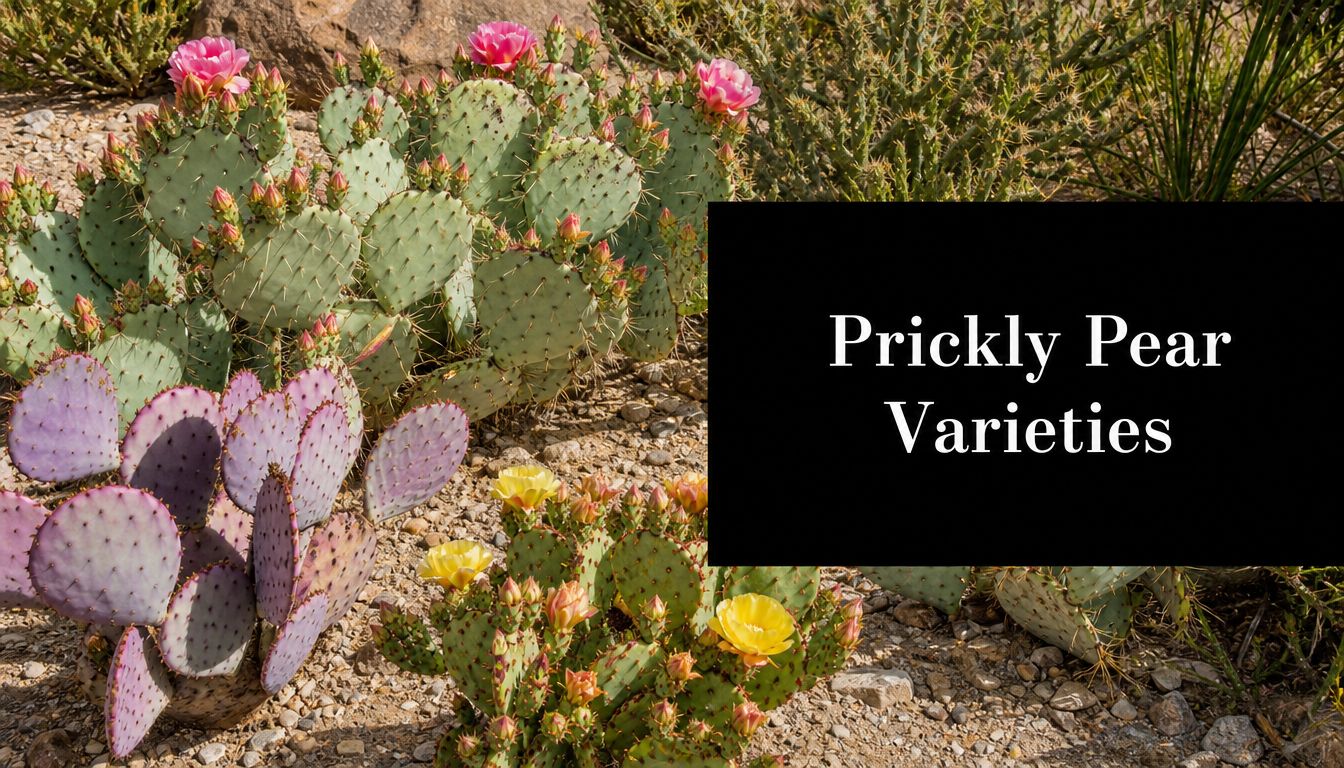
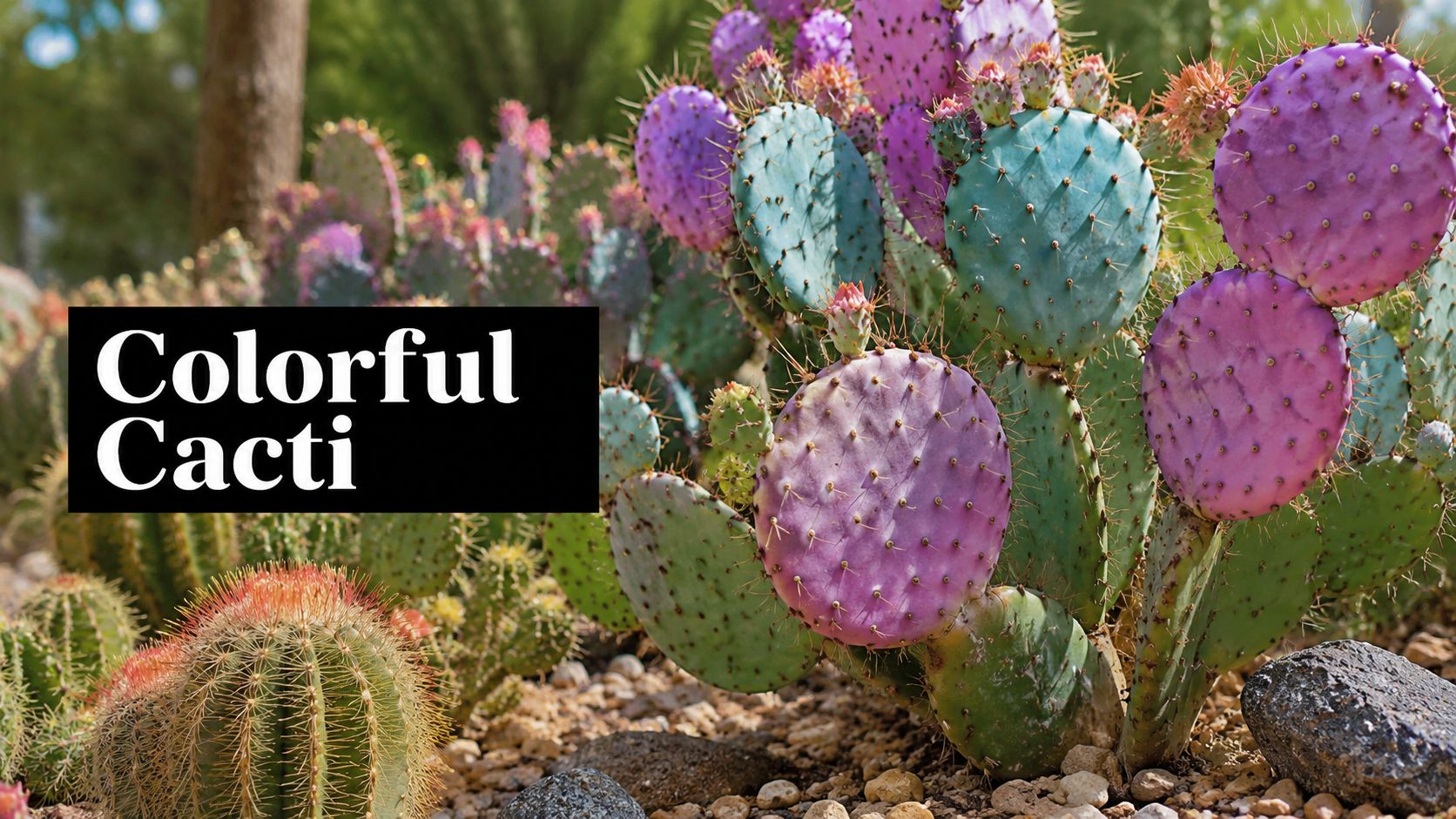
Purple Santa Rita selections are a strong example. Young pads can develop rich plum-purple pigmentation, and the plant shows its darkest color in full sun, according to Waterwise Garden Planner's guidance on Opuntia violacea var. santa-rita. That gives you a visible foliage accent even when the plant isn't blooming. By contrast, a green-padded beavertail can deliver a more dramatic flower display, but its day-to-day contribution comes mainly from form and seasonal flowers.
Judge the whole display
I use this practical ranking when advising a homeowner or designer:
- Pad hue: Is the plant blue, purple, gray-green, gold-edged, or just green for most of the year?
- Flower contrast: Do the flowers stand out against the pads, and does the plant produce more than a brief isolated flush?
- Fruit persistence: Do red, purple, yellow, or orange fruits remain visible after flowering?
- Placement reliability: Will the site provide enough sun, drainage, and seasonal stress for the advertised color to appear?
The most reliable colorful choice for a visible entry bed is usually a purple or blue-pad selection. You'll see that color from the window, driveway, and sidewalk without waiting for bloom season. A bloom specialist makes more sense where you want a seasonal focal point, especially in a gravel island or desert meadow where several plants can carry the display at different times.
Nursery rule: Buy for the plant's ordinary appearance, then treat flowers and fruits as bonuses.
Opuntia has a large species pool, with more than 300 prickly pear species documented in horticultural discussion, and Opuntia ficus-indica is associated with suitable annual rainfall of 200 to 600 mm in an agronomy review summarized by KUT's prickly pear background article. That range helps explain why these plants remain important in arid outdoor spaces, but it doesn't mean every colorful cultivar performs equally well in every yard. Climate and microclimate decide which color survives.
The Two Color Layers Buyers Overlook
Think of prickly pear color as two separate layers. Once you separate them, choosing becomes much easier.
The first layer is pad color. Pads form the plant's architectural background, and they're visible whenever you look at the planting. Purple Santa Rita types can show plum, blue-gray, and reddish-purple tones. Some selections become more intense under cold or drought stress, while summer growth may look more muted. That variability matters because catalog photos often capture the plant at its most dramatic moment rather than its average appearance. Horticulture Unlimited's Santa Rita reference specifically notes the seasonal shift between blue-gray summer pads and stronger reddish-purple color under cold or drought stress.
The second layer is flower and fruit color. Flowers can bring yellow, orange, pink, magenta, or red into the bed, while fruits may continue the display in purple, red, or yellow tones. These colors are intense, but they're seasonal. Treat them as fireworks, not as the background.

Choose the layer your site needs
Use pad color when the planting needs constant visual structure:
- Entry beds: Purple or blue-gray pads hold attention when viewed from indoors.
- Patios: A colored pad provides contrast against gravel, stucco, concrete, and dark containers.
- Modern designs: Blue and purple forms support a restrained palette without relying on flowers.
- Privacy groupings: Repeated pad color creates rhythm across a longer planting.
Choose flower and fruit color when the planting has room for seasonal drama:
- Gravel islands: Large blooms can act as a seasonal focal point.
- Desert-meadow drifts: Different varieties can spread the flowering display across the season.
- Slope plantings: Low-growing flowering forms add color without requiring lawn-level irrigation.
- Collector beds: Fruit and flower variation rewards close viewing.
The strongest design usually combines both layers. Pair a purple-pad Santa Rita with a yellow-flowering type, or use a blue-pad selection beside a red-fruited Opuntia. You'll get a stable color foundation and short periods of high contrast. Don't choose a bloom-only plant for a prominent year-round position unless you already like its pad form.
Top Prickly Pear Picks for Vivid Landscape Color
My first recommendation is Opuntia violacea var. santa-rita, also sold as Santa Rita prickly pear. It's the clear choice when foliage color matters most. Young pads can become plum-purple, and full sun produces the strongest growth and darkest color, as documented by Waterwise Garden Planner. Use it as a foundation accent, large container specimen, or repeated color note beside agaves and pale gravel. Its color is not constant, so buy it for seasonal purple and strong architecture, not for a permanently uniform tone.
Opuntia santa-rita and Opuntia macrocentra belong near the top for designers who want blue, purple, or red-tinged pads. They're more visually useful than a green species when the planting must look composed outside bloom season. In humid or coastal settings, confirm the exact plant's siting needs before committing. A protected, sharply drained position is safer than a wet, exposed bed.
Opuntia phaeacantha selections are the best all-around bloom-and-fruit performers in this group. ‘Mesa Sky' is described with blue pads, golden yellow flowers with red centers, and red fruits, while ‘Plum' can develop a purple cast in cool temperatures with peachy-plum flowers, long red spines, and red fruits. ‘Tahiti Sunrise' brings large yellow-to-orange flowers. North Carolina Extension's Opuntia phaeacantha reference is useful when comparing these cultivar-level differences.
For a low, cold-capable flowering plant, choose Opuntia humifusa, the eastern prickly pear. It's placed in USDA zones 4 to 9 and is reported to survive temperatures as low as 10°F (-12°C) in Gardenia's plant profile. Its bright yellow flowers make it a practical groundcover or slope accent where tender purple forms would be a gamble.
Opuntia basilaris, the beavertail prickly pear, is the bloom specialist. Its large magenta flowers suit a gravel island, dry slope, or low desert-meadow drift. Choose it for flower impact and compact architectural form, not for evergreen foliage color.
| Variety | Pad Color | Bloom / Fruit Color | Mature Size | Best Use |
|---|---|---|---|---|
| Opuntia violacea var. santa-rita | Plum-purple, blue-gray, reddish-purple under stress | Seasonal flowers and fruits vary by selection | Confirm the cultivar listing | Foundation accent or container thriller |
| Opuntia macrocentra | Blue to purple-tinged | Seasonal flowers and fruits vary | Confirm the cultivar listing | Protected xeric accent |
| Opuntia phaeacantha ‘Mesa Sky' | Blue | Golden yellow flowers with red centers, red fruits | Confirm the cultivar listing | Mixed border focal point |
| Opuntia phaeacantha ‘Plum' | Purple cast in cool conditions | Peachy-plum flowers, red fruits | Confirm the cultivar listing | Seasonal color contrast |
| Opuntia humifusa | Green pads | Bright yellow flowers | Roughly low-growing, selection-dependent | Cold-hardy groundcover |
| Opuntia basilaris | Blue-gray to green | Large magenta flowers | Confirm the cultivar listing | Slope or desert-meadow accent |
For a broader comparison before ordering, review prickly pear cactus varieties for landscaping. The right purchase depends less on having the rarest name and more on matching the plant's strongest color layer to the place where you'll see it.
Matching Variety to Climate and Microclimate
USDA zone is a starting point, not a planting plan. A prickly pear that survives winter temperatures can still decline in a site that stays cold and wet, sits in a frost pocket, or receives strong wind through the pads.
Opuntia humifusa is the safest in-ground recommendation for colder regions because it's widely described as cold hardy through USDA zones 4 to 9 and capable of surviving 10°F (-12°C) according to Gardenia's eastern prickly pear profile. Opuntia phaeacantha is another strong choice for cold, dry sites. Opuntia engelmannii suits hot, arid inland settings better than a wet northern exposure.
| Variety | USDA Zone | Cold Tolerance | Best Siting Strategy |
|---|---|---|---|
| Opuntia humifusa | 4 to 9 | Strong cold tolerance | In-ground on a sunny slope or raised bed |
| Opuntia phaeacantha | Verify the selected form | Cold-capable in suitable dry sites | Full sun with winter drainage |
| Opuntia engelmannii | Verify the selected form | Best suited to hot, dry regions | Open inland bed with reflected heat |
| Opuntia macrocentra | Verify the selected form | Protect from prolonged wet freezes | Lean soil, airflow, and full sun |
| Opuntia violacea var. santa-rita | Verify the selected form | Better as a protected showpiece in borderline climates | Container or warm, dry microclimate |
| Tender purple and blue selections | Verify the selected form | Sensitive to cold, wet exposure | Moveable container or sheltered courtyard |
Purple-pad Santa Rita and blue selections need more discipline in borderline climates. Put them near a south-facing wall that reflects heat, or grow them in a container you can move into a dry sheltered area. One hardiness guide for prickly pear places tender prickly pear types mainly in USDA zones 9 to 11 and describes them as vulnerable below about -5°C, while the eastern species guide places O. humifusa much farther north. That's exactly why species-level and cultivar-level buying matters.
Read the microclimate
Winter rain is often more dangerous than winter cold. A frost pocket at the bottom of a slope can hold cold air, while a raised bed can shed water and improve survival. Summer monsoons create another problem, especially when heavy rain follows hot weather and the root zone stays saturated.
Elevation, wind exposure, rainfall pattern, and reflected heat can all change the result. In coastal areas, O. littoralis and suitable O. macrocentra selections deserve closer consideration than tender desert showpieces, but drainage still comes first. For a borderline site, use a tender colorful type in a container and choose a very hardy form for permanent in-ground structure.
Placement, Soil, and Companion Planting Ideas
Give colorful prickly pear the brightest practical position. Full sun to light afternoon shade usually produces the strongest pad color, while morning sun supports flowering. Santa Rita's purple response is especially tied to full sun, so don't hide it beneath a tree or place it where a wall blocks the useful light.

Build drainage before adding plants
Use a gritty, fast-draining mineral mix with a target soil pH around 6.0 to 7.5. In wet-winter regions, plant on a slope or raised bed rather than trying to rescue a flat, compacted site with extra gravel on top. Established prickly pears generally need little organic amendment. Rich, moisture-retentive soil encourages soft growth and creates a poor winter environment.
For a practical reference on choosing the growing medium, use The Cactus Outlet's cactus and succulent soil mix guide. The important purchase decision is not the fanciest amendment. It's whether excess water can leave the root zone quickly.
Three design patterns work repeatedly:
- Gravel-mulched xeric island: Set one purple or blue-pad prickly pear against boulders, then repeat a smaller form nearby. Keep the rock palette restrained so the plant supplies the color.
- Mediterranean mixed border: Combine prickly pear with agaves, dasylirion, red yucca, salvia, and penstemon. Add ornamental grasses to soften the spines without hiding the pads.
- Desert-meadow drift: Group three to five varieties with different pad and flower colors. Use the low-growing O. humifusa or O. basilaris toward the front and taller forms behind.
Space plants according to mature spread, not the size of the pot. Leave enough room for pads to develop without tangling and for a worker to reach irrigation, remove fallen segments, and inspect the base without brushing against spines. Keep walkways, gates, and sight lines clear.
Thoughtful placement also affects the wider yard. If you're reviewing how plant arrangement influences movement and nuisance activity around a home, this guide to landscaping to reduce pests offers useful context.
A simple planting video can help you visualize the installation sequence before you order:
Fire Risk, Maintenance, and Site Trade-Offs
Drought tolerance doesn't make prickly pear automatically suitable for every fire-prone site. Opuntia tissues hold substantial water and may resist ignition while fresh, but research shows the plants aren't fire tolerant. One study recorded a 46.6% reduction in savannah prickly pear cover after fire, and USDA fire ecology references describe aboveground tissues as easily killed, with some segments surviving and regrowing and mortality sometimes exceeding 50% or appearing after a delay. See the peer-reviewed fire ecology study for the documented fire response.

That creates a clear trade-off. A vivid, dense planting can look excellent in a courtyard but become a difficult maintenance zone near a home, access route, or wildfire buffer. Check local fire codes and defensible-space rules before installing large or tightly packed Opuntia near structures. The safest choice isn't always the most colorful one.
Plan for physical maintenance
Glochids are the small irritants that make careless handling unpleasant. Keep prickly pear away from children's play areas, pet routes, narrow paths, and locations where pruning crews must squeeze between the plant and a wall. HOA rules may also limit spiny plants or require clearance from sidewalks and shared boundaries.
Late-season fruit and dropped pads need cleanup. Annual pruning may be necessary to remove damaged or leaning segments, and a mature plant can place significant weight on a retaining wall or raised edge. Low, well-spaced O. humifusa and O. basilaris are easier to manage than a dense, tall arrangement, but both still need access.
Safety check: If a worker can't reach the irrigation valve without touching the pads, the plant is too close to the service route.
Buying, Sizing, and Acclimating Your Prickly Pear
Buy the plant that solves your visual problem now. A multi-pad cluster creates immediate visual presence and makes sense for a foundation bed, commercial entry, or large gravel island. A smaller single-pad cutting costs less and gives you a gradual establishment project, but it won't provide the same immediate composition.
Read the nursery description carefully. “Purple” may refer to pad color, while “magenta” may refer only to flowers. Look for the named cultivar, pad description, mature spread, container information, and any climate notes. Mature Opuntia entries can range from roughly 2 to 3 feet tall and wide, to 3 to 5 feet tall by 4 to 8 feet wide, and 4 to 6 feet tall by 6 to 10 feet wide, depending on species, as shown in Leaf Landscape Supply's Opuntia listings. Treat those ranges as planning guidance, not a guarantee for every individual plant.
Use this ordering checklist
- Choose the visual payoff: Order a blue or purple-pad selection for persistent foliage color. Choose O. basilaris or O. humifusa when flowers are the priority.
- Select the right format: Use a cluster for instant impact. Use a single-pad plant where budget, space, or gradual growth matters more.
- Prepare the arrival site: Have the gritty, fast-draining soil and final sunny position ready before delivery.
- Inspect immediately: Check for soft spots, major bruising, unexpected discoloration, and broken pads. Photograph any shipping damage before planting.
- Acclimate gradually: Move a plant from greenhouse shade or protected shipping conditions into stronger sun over time. Sudden exposure can scorch pads.
- Water cautiously: New cuttings need restraint while roots form. Wet soil around an unrooted pad is more dangerous than a short dry interval.
- Watch the base: Firm tissue and stable pads suggest progress. Softening, spreading discoloration, or persistent collapse signals decline.
Bare-root and potted plants also require different handling, so confirm the listing before ordering. Cold exposure during transit can damage tender purple and blue selections, especially when the plant arrives during a freezing weather window. Warranty terms, sizing disclaimers, and shipping policies vary by seller, and you should read them before checkout rather than after a problem appears.
Color may become more impressive after the plant settles into the ground and experiences its local seasons. Don't judge a healthy new arrival solely by its first appearance. The plant needs a suitable root environment and the right exposure before its strongest seasonal color can develop.
For care and selection context, see The Cactus Outlet's prickly pear cactus guide. The Cactus Outlet offers prickly pear selections and other large cacti and succulents for outdoor, patio, and container projects, so compare the available plant description with your site before placing the order.
Visit The Cactus Outlet to compare prickly pear options alongside agaves, aloes, euphorbias, and other large succulents for your outdoor space. Choose a pad color and mature form that fit your climate, then order the size that gives your yard the visual impact you want from the first season.