

The popular advice is simple: choose a cactus labeled full sun, place it in the brightest spot available, and let it handle the rest. That advice is how expensive specimens get scorched after delivery, weakened on reflective patios, or lost to wet soil in a hot area. The best large cactus for full sun isn't chosen by species name alone. It's chosen by matching the plant's maturity, planting method, site intensity, and transition into sunlight.
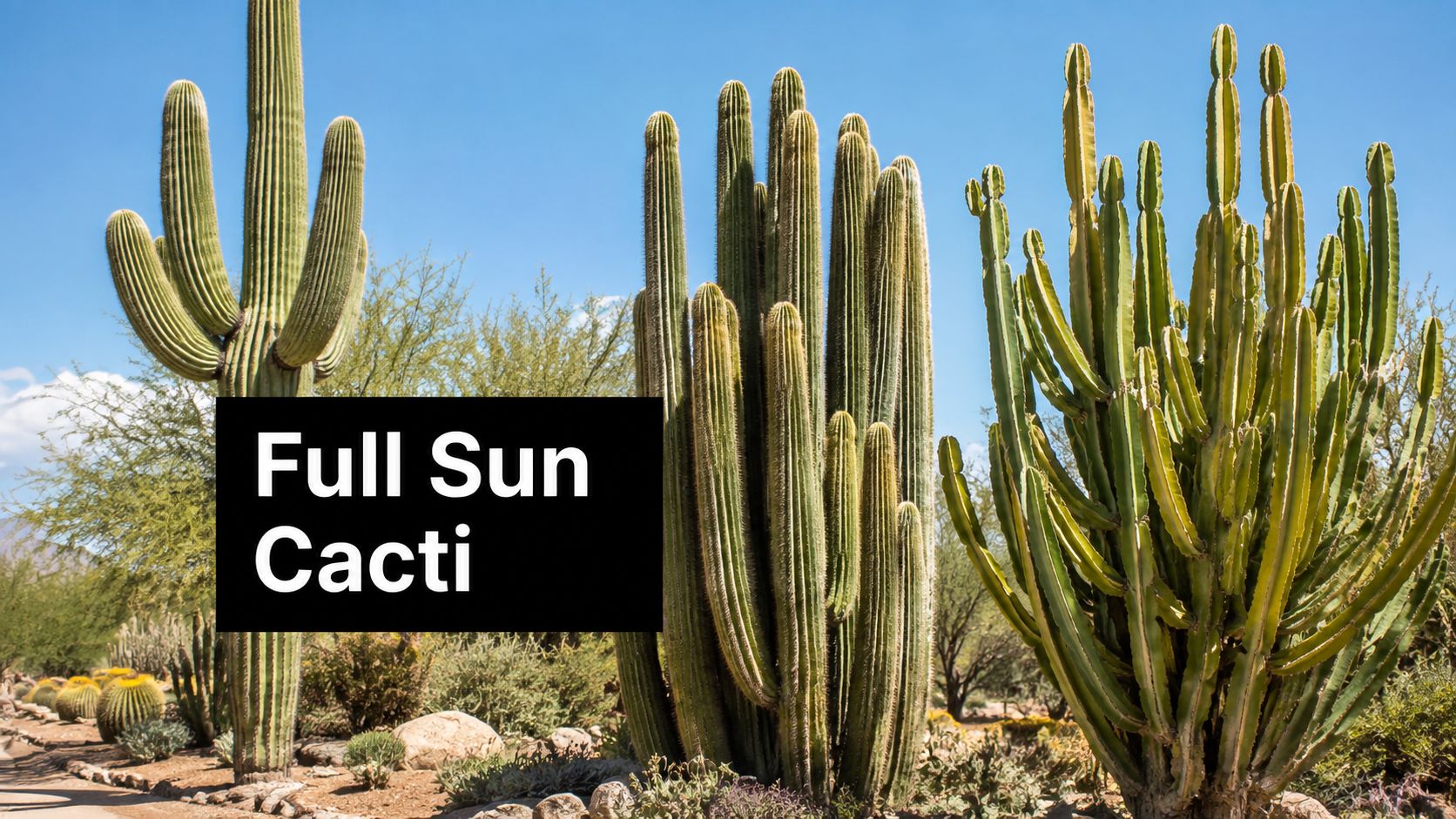
For open desert yards, a mature Saguaro can provide the unmistakable vertical structure most buyers want. For faster visual impact in suitable climates, Peruvian Apple Cactus is a practical alternative. Large columnar forms, Agaves, Aloes, and selected Euphorbias can also earn their space, especially when the design calls for a privacy screen, architectural silhouette, or substantial patio container.
Why Full Sun Tolerance Is More Complicated Than Species Lists Suggest
A sun-tolerant cactus can still burn the week it arrives. Shipping places a plant in darkness or reduced light, and moving it directly into harsh afternoon exposure can cause epidermal sunburn, even when the final planting site is appropriate. The correct buying question isn't “Which species takes full sun?” Ask instead, “Can this specimen establish safely in my exact exposure?”
A cactus growing in an open desert yard receives strong light with natural air movement and relatively little reflected heat. A cactus placed beside a south-facing wall, pale paving, or a rooftop surface faces a harsher microclimate. Containers add another variable because the roots sit above ground, where the pot and surrounding surfaces can heat rapidly. A large specimen may tolerate the eventual location, while a newly shipped or recently transplanted plant needs a controlled transition.

Sun tolerance changes with establishment
Research on large columnar cacti shows why mature performance and early survival shouldn't be treated as the same thing. For Saguaro, lower-than-average seasonal rainfall combined with higher-than-average temperatures increases evaporative loss and can reduce survivorship among recent germinants. Full-sun siting therefore needs excellent drainage and careful early establishment management, not irrigation-heavy soil. The relationship between drought and heat is documented in research indexed by PubMed's study on Saguaro establishment.
The same principle applies to purchased specimens. A mature cactus has a different stress profile from a young plant, and an in-ground plant has a different stress profile from one in a dark container on a paved patio. A research discussion of columnar cactus recruitment also describes a counterintuitive tradeoff, full sunlight supported higher seedling growth while reducing recruitment success, which makes “more sun is always better” a poor buying rule. Pacific Horticulture's discussion of cactus establishment and sunlight provides useful context for that distinction.
For practical background on evaluating exposure before you buy, use this cactus sunlight guide. The strongest choice is the specimen that can transition into your site without suffering avoidable shock.
Matching Cactus Species to Your Specific Sun Exposure
Start with the site, not the catalog. Count the hours of direct sun, then look at everything that adds heat beyond the sunlight itself. A cactus beside concrete, stone, glass, or a painted wall may experience much more stress than one planted in an open bed with similar direct exposure.
Four site checks that matter
Sun hours establish the baseline. Peruvian Apple Cactus is documented to thrive with at least 6–8 hours of direct sun daily when grown in appropriate outdoor conditions, as described in this Peruvian Apple Cactus growing guide. That doesn't mean every patio receiving the same number of hours is equally suitable.
Reflected heat changes the equation. A south-facing wall or bright paving can throw heat back onto the plant, especially during afternoon exposure. Enclosed courtyards and rooftops often need more careful placement than open yards because surfaces retain and reflect heat around the plant.
Airflow helps a site shed heat. An open area generally offers better movement than a narrow patio corner. Sheltered locations aren't automatically wrong, but they demand closer attention to pot heat, irrigation, and sun transition.
Microclimate includes the container itself. A dark pot in direct sun can heat the root zone more aggressively than in-ground soil. Large containers provide more physical stability and root volume, but they still need drainage and enough separation from heat-reflective surfaces. The nursery guidance on cacti in outdoor containers recommends matching exposure to species and plant size, with container-grown cacti ranging from full sun to 50% shade depending on those factors.

Use the location to narrow the purchase
For an open desert yard, prioritize mature columnar cacti and other large forms that can create vertical structure without competing with reflective hardscape. For a patio, choose a specimen whose mature form suits the container and give it room for airflow. If the plant has just arrived, don't judge its full-sun readiness by its eventual species tolerance.
A rooftop or enclosed courtyard deserves the most conservative placement. Move the pot away from walls where possible, use a surface that doesn't intensify root heat, and introduce direct exposure gradually. The full-sun succulent plant selection guide is useful when you're comparing cacti with Agaves, Aloes, and other architectural succulents for the same site.
Top Large Cactus Species for Full Sun Settings
Species lists do not decide whether a large cactus survives full sun. Establishment stage, container heat, root development, and post-shipping exposure matter just as much. For a permanent garden anchor, a fast vertical accent, or a patio specimen, choose the plant and the setting together.
Large full-sun cactus species comparison
| Species | Mature Height | USDA Zones | Daily Sun Needed | Best Use Case |
|---|---|---|---|---|
| Saguaro, Carnegiea gigantea | 20–50 ft, with some very old specimens approaching 60 ft | 8–11 | At least 8 hours | Desert focal point, landmark specimen, large-scale gardens |
| Peruvian Apple Cactus, Cereus repandus | Large columnar form, size varies by growing conditions | 9–11 | At least 6–8 hours | Faster vertical structure, open gardens, large container |
| Columnar Cereus types | Large vertical forms, size varies by species and specimen | Varies by species | Open, high-light exposure | Privacy screens, architectural rows, dramatic backdrops |
| Trichocereus and Echinopsis types | Large upright forms, size varies by species and specimen | Varies by species | Full sun after acclimation | Sculptural groupings and collector-focused compositions |
| Large Agaves, Aloes, and Euphorbias | Size varies by species and specimen | Varies by plant | Exposure depends on species and container size | Structural alternatives, patio compositions, low-water designs |
The Saguaro earns its place when the project needs a permanent desert statement. Gardenia's Saguaro plant profile lists a typical mature height of 20–50 feet, with some very old specimens approaching 60 feet, along with USDA zones 8–11 and at least 8 hours of direct sun daily. Buy it for a lasting focal point, not a quick patio accent. Large saguaros also require careful handling and orientation after transplanting, because establishment stress can undermine an otherwise sun-tolerant specimen.
Peruvian Apple Cactus is my practical choice for buyers who want a strong columnar silhouette sooner. It handles 6–8 hours of direct sun daily and is commonly recommended outdoors in USDA zones 9–11, as noted in the previously linked Peruvian Apple Cactus reference. Give it an open, bright position. In inadequate light, stems can elongate and weaken, while a newly shipped or recently transplanted plant still needs a controlled transition before receiving the harshest afternoon exposure.
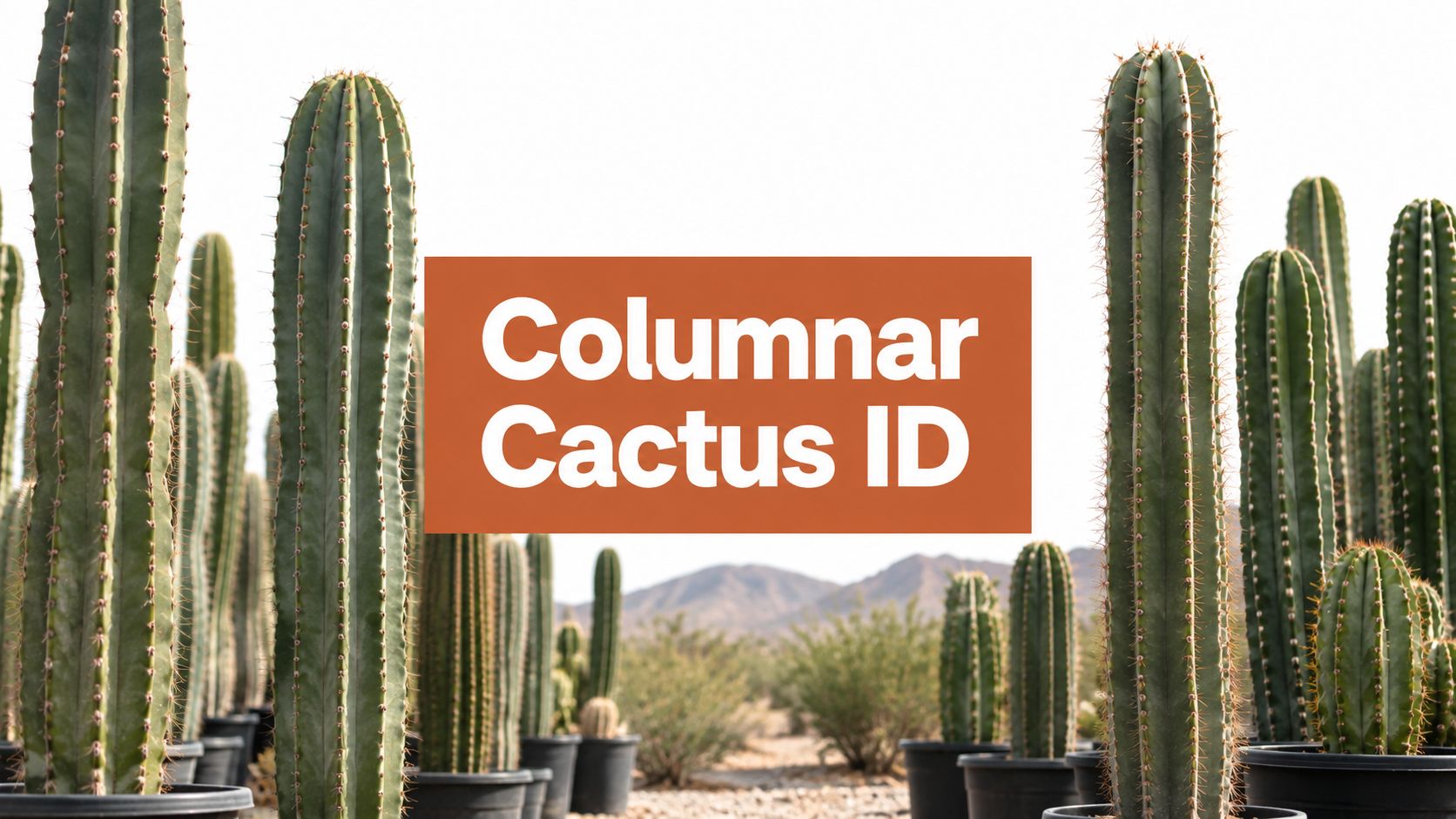
Columnar Cereus types work well for vertical rhythm, boundary screening, and modern xeriscape compositions. Plant them in the ground when you want permanent height and stronger root support. Use a large container when placement, drainage, or winter protection matters more than maximum growth. Compare available forms and care requirements in this guide to large cactus types before ordering.
Trichocereus and Echinopsis types bring stronger sculptural variation, especially in grouped plantings. They are good choices for buyers who value form over a single landmark trunk, but full sun should follow acclimation rather than immediate placement.
Large Agaves, Aloes, and Euphorbias are not cacti, yet they fill similar design roles. Choose them for rosettes, foliage contrast, mass, or patio structure instead of a tall column. Their light and cold tolerance vary by species and container size, so evaluate each plant on its own requirements.
Acclimating Shipped Cacti to Full Sun Without Sunburn
A cactus that arrives after time in a shipping box shouldn't go straight onto a south-facing patio. The epidermis needs time to adjust, and a sudden transition into intense light can leave permanent brown or pale scars. Large specimens deserve a slower hand because replacing a damaged architectural plant is costly and the injury won't disappear as the cactus grows.
A safe post-delivery sequence
- Unbox and inspect. Remove packaging carefully and check the plant for physical damage. Set it in bright light without direct sun while it settles.
- Use a bright-shade period. Allow 3–5 days in bright shade or filtered light before introducing direct exposure, following the staged handling guidance from Cactus Art's acclimation recommendations. Keep the location airy, but avoid a sudden blast of afternoon sun.
- Begin with morning light. Introduce direct morning sun gradually over the following 1–2 weeks, then add stronger afternoon exposure only after the plant is responding well. Morning light is easier to manage than west-facing heat because the intensity builds more slowly.
- Inspect the surface regularly. Watch for new discoloration, bleached patches, or tissue that looks stressed. If the plant shows damage, move it back to filtered light rather than trying to push through.

Preserve the plant's original orientation
Saguaro anatomy makes orientation more than a cosmetic detail. Arizona Cooperative Extension guidance explains that the west side receives the hottest afternoon sun, the south side gets strong winter sun, and the east side receives warming morning light. Because each side experiences different solar intensity, a transplanted saguaro must not be rotated. Newly moved saguaros going from shade into sun should be wrapped with 30% shade cloth, which still permits 70% of sunlight through, as described in the University of Minnesota cactus and succulent guidance.
The same orientation discipline makes sense for other large columnar specimens, even when their side-specific exposure isn't as pronounced. Mark the sun-facing side before moving the plant, keep that side facing the same direction, and don't let delivery-day excitement override the acclimation plan.
Use the following video as a visual supplement before handling a shipped specimen:
Planting and Long-Term Care in Full Sun Environments
Full sun doesn't compensate for poor drainage. Heat increases evaporative loss, and research on Saguaro establishment links hot, dry conditions with reduced survivorship among recent germinants, so the planting bed must move water away from the roots rather than hold it around them. The research record on Saguaro drought and heat supports pairing bright exposure with drainage and disciplined establishment care.
Build the planting site around drainage
Choose a raised or naturally free-draining location. Avoid low pockets where irrigation or stormwater collects, and don't bury the stem deeper than it was positioned in its original container or root ball. Keep the base dry and stable, with no mulch piled against the plant.
A gritty cactus mix can work in containers, while in-ground beds should be loosened enough to drain freely without creating a water-holding basin. Don't turn a full-sun cactus bed into an irrigation-heavy soil profile. The roots need access to moisture after watering, followed by a period in which excess water can leave.
Planting rule: A sunny site with slow drainage is more dangerous than a slightly less intense site with a fast-drying root zone.
Water thoroughly enough to settle the planting area, then allow the soil to dry before watering again. The exact interval depends on season, rainfall, temperature, container volume, and plant size, so a calendar-only schedule is unreliable. Check the root-zone condition instead of watering because the surface looks dusty.
Container care needs its own plan
Use a container with a drainage opening, a stable footprint, and enough weight to support the mature form. Patio buyers should leave space around the pot for airflow and avoid placing it directly against a heat-reflective wall. Containers can be grown from full sun to partial shade depending on plant size and species, as outlined in the container cactus guidance from SummerWinds Nursery.
For long-term success, inspect the drainage opening, keep the pot from sitting in runoff, and repot when the plant has clearly outgrown its container or the growing medium has compacted. Don't fertilize or water aggressively to force quick size. Large cacti earn their place through durable structure, not soft growth produced by excess moisture.
Recognizing and Fixing Common Full Sun Cactus Problems
Most problems show up first on the side facing the harshest conditions. Look at the pattern, location, and texture of the damage before changing the watering routine or moving the plant.

Separate exposure damage from root trouble
Sunburn usually appears on the most exposed surface, often as yellowing, bleaching, or a dry discolored patch on the west-facing side. Move a recently delivered plant back into filtered light and restart acclimation more slowly. Permanent scarring may remain, but stopping further exposure damage protects new growth.
Frost damage can also discolor tissue, but it follows cold exposure rather than a directional sun pattern. Don't cut damaged tissue immediately if cold weather continues. Wait until the extent of the injury is clear, then remove dead material with a clean tool.
Overwatering and rot are associated with soft tissue, especially at the base, a foul or collapsing area, or a plant that loses firmness despite wet soil. Stop irrigation, improve drainage, and assess whether the planting depth or container setup is holding moisture against the stem. A bright location won't rescue roots sitting in saturated soil.
Underwatering more often produces wrinkling, shrinking, or loss of firmness without a soft, wet base. Check the soil thoroughly before watering, then give the plant a thorough drink rather than repeated shallow splashes. If the medium stays wet for too long, the issue is drainage, not a lack of water.
Inspect stressed plants for insects
Mealybugs and scale insects can take advantage of plants already weakened by transport, abrupt light changes, or poor watering. Look along joints, protected folds, and the underside of pads or stems. Remove isolated insects manually and correct the environmental stress before reaching for treatment.
A clean site evaluation prevents most of these failures. The cure is usually not more shade or more water in isolation. It's the right exposure, a stable root zone, and a controlled transition.
Buying and Transporting Large Cactus Specimens
Full-sun success depends on how a cactus is bought, moved, and established, not only on its species label. Online purchasing works when the seller prepares the plant properly and provides clear specimen details. Local pickup can create equal or greater risk if a tall, heavy, spine-covered cactus travels without support. Protect the growing points, keep the plant stable, and plan for a gradual transition after delivery.
Select the plant for the site
Review product photos for firm tissue, an upright form, healthy color, and a clear central structure. Ask for the documented size, species, cold-hardiness information, and care guidance. A large cactus that suits a desert bed may be a poor choice for a hot container, where roots heat and dry faster.
Prepare the planting bed or container before arrival. Confirm drainage, access, support equipment, and a bright-shade location for the initial rest period. Do not leave site preparation until the delivery truck arrives.
The Cactus Outlet sells large cacti along with Agaves, Aloes, Euphorbias, and other succulents online. Its product descriptions and care information help buyers compare specimens before ordering. Review the available large cactus collection while matching the plant to your exposure and design requirements.
Mature specimen or younger plant
A mature specimen provides immediate structure and suits a focal point or privacy screen. Its greater mass also raises transport and transplant risk, particularly if the cactus has spent years adapted to its previous position.
A younger plant usually settles into a new container or bed more readily, though it will not provide instant scale. As noted in the establishment research above, age, delivery stress, and establishment phase belong in the purchase decision. Full sun may suit an established cactus while stressing a recently shipped plant or a specimen with disturbed roots.
Ask how the cactus was grown, how it will be secured, and which side faced the strongest light. Preserve that orientation after delivery. Give the plant time in bright shade before increasing exposure, and inspect it before planting.
Buyers who prepare the site first avoid rushed handling and reduce transplant shock. The right specimen still needs a stable root zone and a controlled introduction to brutal sun.
Choose the cactus by site, not by label alone. Shop The Cactus Outlet for large Saguaro, Peruvian Apple, columnar cactus, Agave, Aloe, and Euphorbia options, then prepare your planting location and acclimation space before delivery. Visit The Cactus Outlet to compare available specimens and select a full-sun plant that fits your patio or container plan.