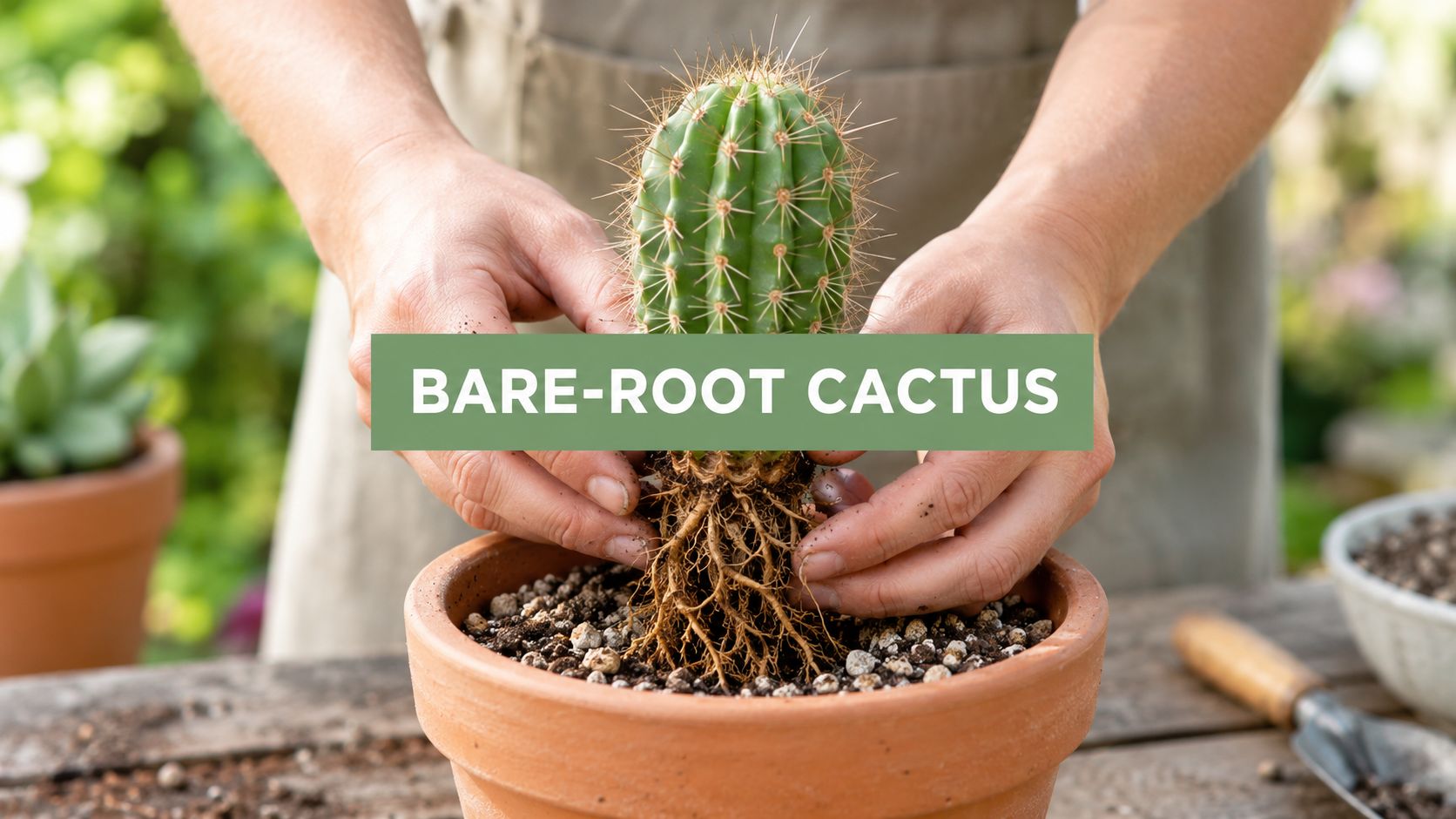

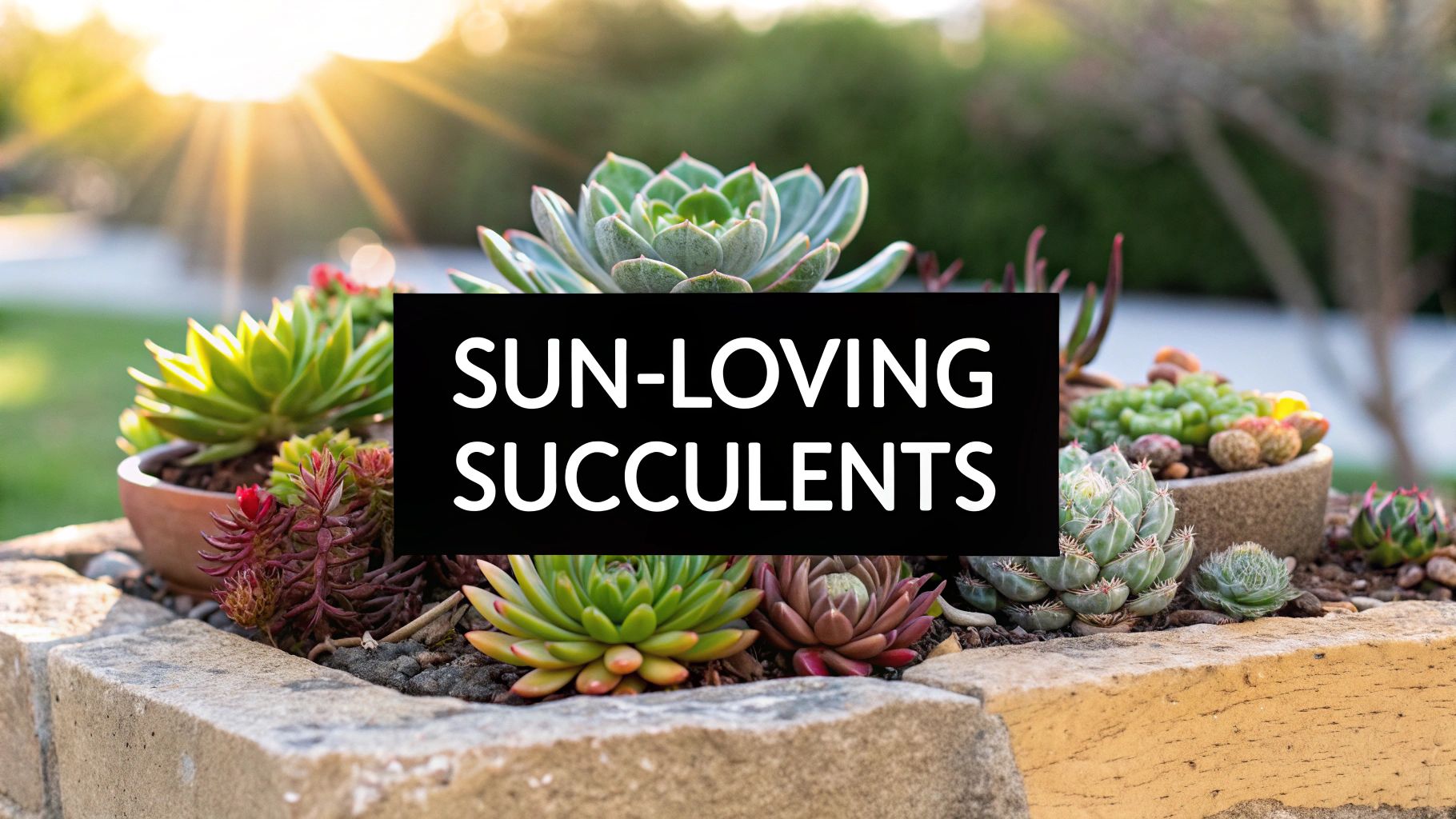

Dreaming of a vibrant garden that thrives in the brightest, hottest spots of your yard? While many plants wilt under intense sunlight, succulents are uniquely adapted to flourish. But not all succulents are created equal. Choosing the right varieties is the key to a stunning, low-maintenance landscape that withstands summer's peak without constant worry. This guide dives deep into the best succulents for full sun, showcasing 10 resilient and beautiful options that transform sun-drenched areas from challenging to breathtaking.
We'll move beyond generic advice and explore the specific features that make each plant a sun-loving champion. You will learn actionable care tips tailored for high-light environments and see how to select the perfect specimen for your space, with standout examples available from The Cactus Outlet. For those passionate about plant care and cultivation, you might consider taking your interest further and pursue a certificate in horticulture to gain comprehensive expertise in the field.
This curated list is designed to give you the confidence to cultivate a garden that's as tough as it is beautiful. Prepare to embrace the sun and discover the perfect succulents to make your landscape shine.
1. Aloe Vera
Aloe vera is a quintessential succulent, celebrated for its dual role as a striking ornamental plant and a source of medicinal gel. Its thick, fleshy leaves are more than just visually appealing; they are sophisticated water-storage organs that allow the plant to withstand intense heat and prolonged drought. This resilience makes Aloe vera one of the best succulents for full sun, particularly in arid climates where it can truly flourish.
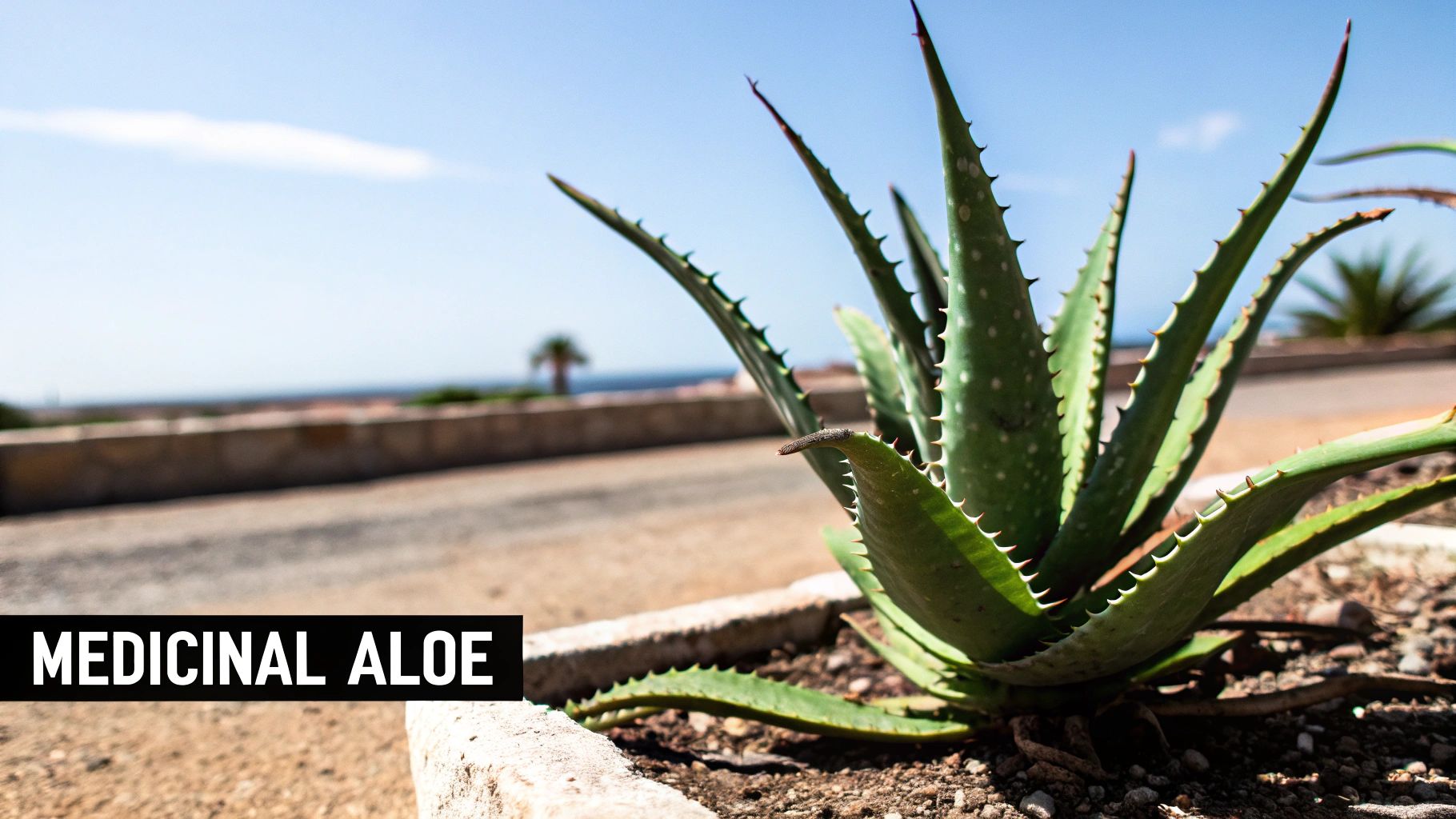
When given enough direct sunlight, mature plants produce stunning spikes of tubular yellow or orange flowers, adding a vertical element and a splash of color to any garden design. Its adaptability makes it a staple in diverse settings, from Mediterranean-inspired xeriscapes to sunny windowsill collections.
Cultivation and Care
To ensure your Aloe vera thrives, mimic its native desert environment. Proper drainage is non-negotiable to prevent root rot, a common issue for this species.
- Sunlight: Provide at least six hours of direct, bright sunlight daily.
- Soil: Use a cactus or succulent-specific soil mix that drains quickly.
- Watering: Water deeply but infrequently. Allow the soil to dry out completely between waterings, typically every 2-3 weeks during summer and less often in winter.
- Potting: Always use a container with drainage holes.
Pro Tip: While Aloe vera loves the sun, a young plant or one moved from indoors may need to be acclimated gradually to full sun to prevent scorching. For a deeper dive into its specific light needs, you can explore detailed guides. Learn more about Aloe vera's ideal sun exposure on cactusoutlet.com.
2. Echeveria
Echeveria is a genus of rosette-forming succulents native to semi-arid regions, celebrated for its stunning color variations and compact growth habit. The tightly packed leaves, often resembling fleshy flowers, store water efficiently, making Echeveria one of the best succulents for full sun. Their diverse forms and colors, ranging from pastel blues and pinks to deep burgundies, intensify with ample sunlight, making them a favorite among collectors.
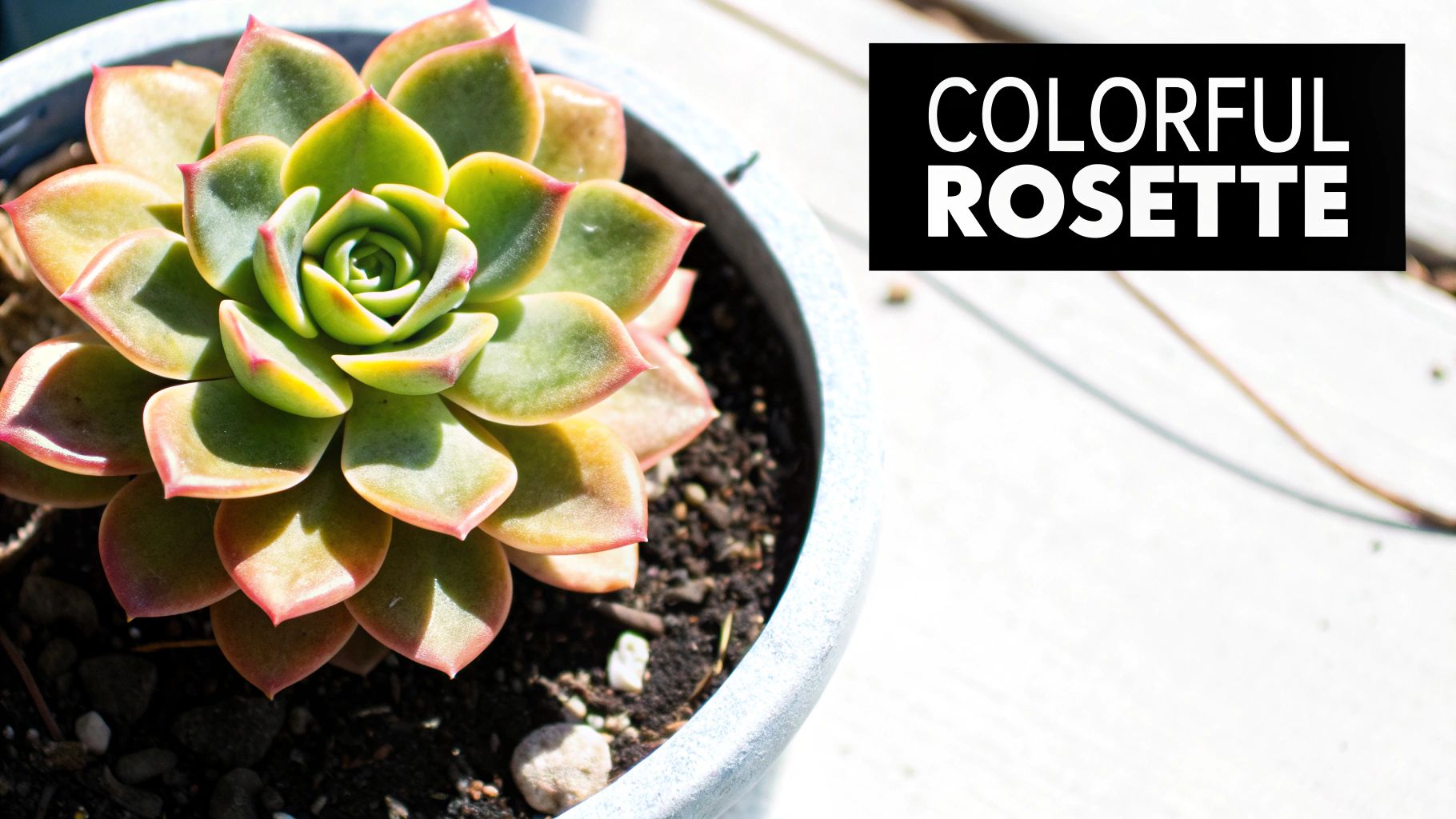
Popularized by succulent hobbyists and event designers, these plants are perfect for adding texture and color to rock gardens, container arrangements, and even wedding bouquets. When mature, many Echeveria varieties send up delicate stalks with bell-shaped flowers, adding another layer of charm to their sun-drenched displays.
Cultivation and Care
To maintain their vibrant colors and compact shape, Echeverias need conditions that replicate their native sunny, dry habitats. Excellent drainage is the most critical factor for their health.
- Sunlight: Aim for at least six hours of direct morning sun. In extremely hot climates, provide some afternoon shade to prevent leaf scorch.
- Soil: Use a gritty, well-draining cactus or succulent mix. Shallow containers are often ideal.
- Watering: Water thoroughly only when the soil is completely dry. Reduce watering significantly in the winter months.
- Temperature: Echeverias are not frost-hardy and should be brought indoors or protected when temperatures drop near freezing.
Pro Tip: To encourage new growth and maintain a tidy appearance, promptly remove dead flower stalks after the blooms have faded. You can also easily propagate Echeverias from leaf cuttings or by dividing overcrowded rosettes every few years. Explore a wide variety of stunning Echeverias available at The Cactus Outlet.
3. Sedum (Stonecrop)
Sedum, commonly known as Stonecrop, represents one of the most diverse and resilient genera, with over 400 species ranging from low-profile ground covers to taller, shrub-like varieties. These plants are exceptionally hardy and are considered among the best succulents for full sun due to their ability to thrive in harsh conditions with minimal attention. Their wide array of forms, textures, and colors makes them incredibly versatile for any sun-drenched garden.
When exposed to intense sunlight, many sedum varieties develop richer, more vibrant hues, from deep burgundies to bright chartreuses. Their star-shaped flowers are a favorite of pollinators, making them a fantastic choice for supporting local bee populations. Sedums are frequently used in rock gardens, xeriscapes, and even on green roofs, where their drought tolerance and sun-loving nature are put to excellent use.
Cultivation and Care
Caring for Sedum is remarkably straightforward, as these plants are adapted to neglect. The key is to provide conditions that mirror their native rocky, sun-exposed habitats.
- Sunlight: Thrives in six or more hours of direct sunlight per day.
- Soil: Requires well-draining, even gritty or sandy, soil to prevent root decay.
- Watering: Water sparingly once established. The soil should dry out completely between waterings. They are highly drought-tolerant.
- Maintenance: Trim back leggy growth in the spring to encourage a more compact, dense shape and deadhead spent flowers.
Pro Tip: For a dynamic, low-maintenance ground cover, mix different creeping sedum varieties. The contrast in color and texture creates a living tapestry that suppresses weeds and looks stunning year-round.
4. Agave
Agave species are impressive statement plants, creating dramatic architectural forms that thrive in intense, full sun. Prized for their sculptural leaves and slow-growing nature, these succulents are champions of arid landscapes. Their ability to withstand extreme heat and drought makes them one of the best succulents for full sun, ideal for transforming a garden into a bold, water-wise oasis.
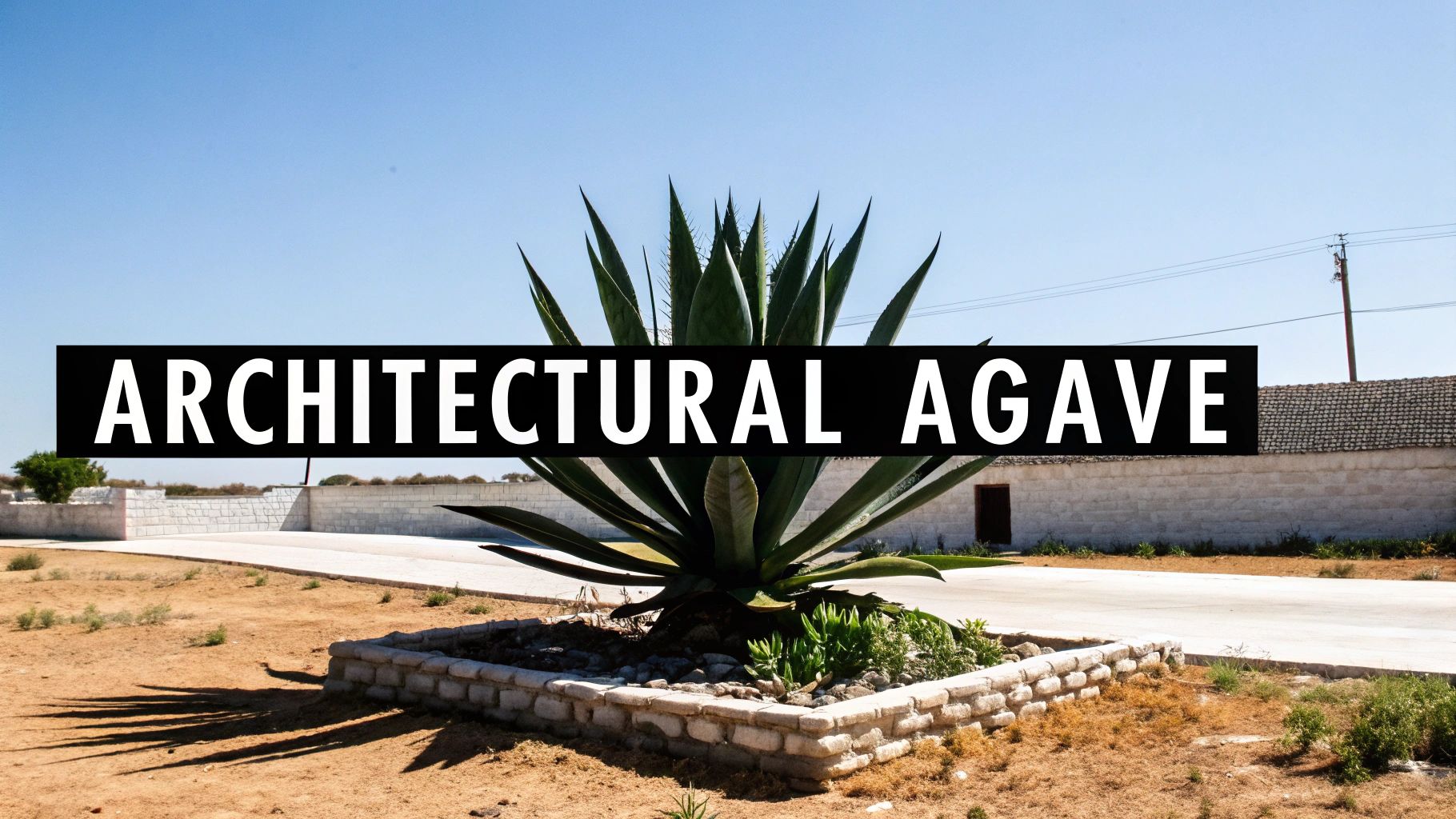
When basking in direct sunlight, the colors of many agave varieties intensify, ranging from blue-gray to deep green with striking variegation. Their powerful, symmetrical rosettes serve as stunning focal points in Southwest-style xeriscapes, modern architectural projects, and Mediterranean gardens, proving their versatility and dramatic impact.
Cultivation and Care
To grow a healthy agave, you must replicate its native, sun-drenched, and dry conditions. Excellent drainage is the most critical factor in preventing root rot and ensuring long-term success.
- Sunlight: Requires a minimum of six hours of direct, intense sunlight daily.
- Soil: Plant in a sandy, gritty, or cactus-specific mix that drains exceptionally well.
- Watering: Water infrequently. Once established, most agaves are highly drought-tolerant and rarely need supplemental watering.
- Placement: Position away from high-traffic areas due to their sharp leaf tips.
Pro Tip: Agaves are monocarpic, meaning they flower only once before dying. However, they produce "pups" or offsets around their base, which can be replanted to continue the plant's legacy. For detailed guidance on caring for these iconic plants, you can explore in-depth resources. Learn more about Agave 'Century Plant' care on cactusoutlet.com.
5. Sempervivum (Houseleeks)
Sempervivum, Latin for 'always living,' are renowned for their incredible resilience and intricate beauty. Often called Houseleeks or Hens and Chicks, these succulents form tight, ground-hugging rosettes of fleshy leaves that come in a dazzling array of colors, from deep burgundies to bright greens, often tipped with contrasting shades. Their ability to withstand not just intense sun but also frost makes them one of the most versatile and best succulents for full sun in a wide range of climates.
These plants are famous for their monocarpic nature, where the main rosette (the 'hen') sends out offsets ('chicks') before flowering once and then dying, leaving the new generation to continue the colony. This growth habit makes them perfect for creating a low-maintenance, living carpet in rock gardens, alpine troughs, and even green roofs.
Cultivation and Care
Sempervivum thrive on neglect and are perfectly suited for gardeners looking for a set-it-and-forget-it plant. Their primary need is excellent drainage to prevent crown rot, especially in cooler, wetter climates.
- Sunlight: At least five to six hours of direct sunlight daily to maintain compact growth and vibrant colors.
- Soil: A gritty, sandy, or gravelly soil mix is essential. Avoid rich, organic soils that retain too much moisture.
- Watering: Water sparingly once established. They are extremely drought-tolerant and susceptible to overwatering.
- Propagation: The 'chicks' can be easily separated and replanted to start new colonies or fill in bare spots.
Pro Tip: When planting Sempervivum, add a top dressing of gravel or small stones around the base of the rosettes. This simple step improves drainage around the crown and prevents rot, ensuring the plant remains healthy.
6. Crassula (Jade Plant & Varieties)
Crassula species, particularly the well-loved Jade Plant (Crassula ovata), are icons of resilience and good fortune. Their sturdy, woody stems branch out to create a miniature tree-like structure, making them a fantastic architectural element in any garden or container arrangement. This robust form is not just for show; it supports the plant's ability to thrive in direct sunlight, where its fleshy, oval leaves often develop beautiful red or bronze edges as a sign of healthy sun stress. This coloration and hardy nature solidify their spot as one of the best succulents for full sun.
When mature and given ample light, Jade Plants can produce clusters of small, star-shaped pink or white flowers in late winter or early spring, adding a delicate contrast to their bold foliage. Their classic look makes them incredibly versatile, fitting perfectly into everything from Feng shui patio arrangements to modern office décor and sunny rock gardens.
Cultivation and Care
Caring for a Crassula is straightforward, focusing on providing conditions that mimic its native South African habitat. Excellent drainage and proper sunlight are the keys to a long-lived, happy plant.
- Sunlight: Aim for at least four to six hours of direct sun daily for the best color and compact growth.
- Soil: A well-draining cactus or succulent mix is essential to prevent root rot.
- Watering: Water thoroughly when the top two inches of soil feel dry. Reduce watering significantly in the winter dormant period.
- Pruning: Prune in the spring to encourage bushier growth and maintain a desired shape.
Pro Tip: Rotating your Jade Plant monthly ensures all sides receive equal sun exposure, preventing lopsided growth and promoting a balanced, tree-like form. For those interested in unique varieties, you can explore options like the Crassula 'Gollum'. Learn more about the Crassula 'Gollum' on cactusoutlet.com.
7. Kalanchoe
Kalanchoe is a diverse and beloved genus of succulents, prized for its vibrant, long-lasting flower clusters and uniquely shaped foliage. These sun-loving plants are prolific bloomers, offering a stunning display of color that can brighten gardens and containers for extended periods. This ability to produce abundant flowers under intense light makes Kalanchoe one of the best succulents for full sun, adding cheerful, low-maintenance color to any bright space.
When exposed to ample sunlight, Kalanchoes respond with more compact growth and an explosion of blooms in shades of red, pink, orange, yellow, and white. Their versatility makes them perfect for various applications, from mixed succulent beds and pollinator gardens to sunny patio containers and indoor windowsills that receive direct light.
Cultivation and Care
To get the most vibrant blooms and healthiest foliage from your Kalanchoe, provide conditions that mirror its sunny, arid origins. Excellent drainage is crucial to prevent root issues.
- Sunlight: Aim for at least six hours of direct sunlight per day. More sun encourages more flowers.
- Soil: Use a fast-draining cactus and succulent mix to keep the roots dry.
- Watering: Water thoroughly only when the soil has completely dried out. Reduce watering significantly during the dormant winter months.
- Maintenance: Pinch back growing tips to promote a bushier plant and deadhead spent flowers to encourage a longer blooming season.
Pro Tip: While Kalanchoes thrive in heat and sun, they are not frost-tolerant. If you live in a colder climate, bring them indoors or provide protection when temperatures drop, ensuring they still receive bright, indirect light. Learn more about caring for Kalanchoe at cactusoutlet.com.
8. Graptopetalum (Ghost Plant)
Graptopetalum, particularly the species Graptopetalum paraguayense known as the Ghost Plant, is a stunning rosette succulent admired for its remarkable color-shifting abilities. Its powdery, opalescent leaves are sophisticated water-storage systems that make it exceptionally resilient. This hardiness, combined with its dramatic visual appeal, solidifies its place as one of the best succulents for full sun, where its true beauty is unlocked.
When given intense sunlight, the plant undergoes a spectacular transformation, its leaves blushing from a ghostly blue-gray to shades of soft pink, yellow, and lavender. Its trailing growth habit makes it a perfect "spiller" in mixed container gardens, hanging baskets, and rock walls, adding a touch of ethereal color and soft texture.
Cultivation and Care
To encourage the most vibrant colors, provide conditions that mimic its native rocky habitats. Excellent drainage and ample sunlight are the keys to a thriving Ghost Plant.
- Sunlight: At least six hours of direct sunlight are needed to bring out its pastel hues.
- Soil: A well-draining succulent or cactus mix is essential to prevent root rot.
- Watering: Water thoroughly when the soil is completely dry. Reduce watering significantly in the winter months.
- Potting: Use shallow containers or pots with multiple drainage holes to accommodate its spreading nature.
Pro Tip: The powdery coating on the leaves, called farina, protects the plant from sunburn and should not be wiped off. Handle the rosettes gently to preserve this natural, beautiful barrier.
9. Opuntia (Prickly Pear Cactus)
Opuntia, commonly known as Prickly Pear Cactus, is a versatile and iconic genus celebrated for its distinctive flat, paddle-shaped stems called cladodes. These sun-loving plants are masters of arid conditions, storing water efficiently in their paddles to endure intense heat and drought. Their hardiness and unique silhouette make them one of the best succulents for full sun, creating bold, sculptural statements in any landscape.
When provided with ample direct sunlight, Opuntia produces stunning, vibrant flowers in shades of yellow, orange, and red, which later develop into edible fruits known as "tunas." This dual offering of ornamental beauty and edible produce makes it a staple in xeriscaped gardens in the American Southwest and a key feature in Mediterranean-inspired designs.
Cultivation and Care
To cultivate a thriving Prickly Pear, you must replicate its native desert habitat, focusing on excellent drainage and maximum sun exposure.
- Sunlight: Requires a minimum of six to eight hours of direct, unfiltered sunlight daily for robust growth and fruit production.
- Soil: Use a very sandy, well-draining cactus mix. Amending garden soil with sand or perlite is often necessary.
- Watering: Water new plants occasionally to establish roots. Once established, they are extremely drought-tolerant and require minimal watering.
- Handling: Always wear thick, protective gloves when handling, as the plant is covered in large spines and tiny, hair-like glochids.
Pro Tip: Due to its sharp spines, position your Opuntia away from high-traffic areas, walkways, or play areas. Its natural defensive features make it an excellent choice for creating a living security border or fence. For a complete guide to growing this desert gem, you can explore detailed cultivation advice. Learn more about how to grow a Prickly Pear Cactus on cactusoutlet.com.
10. Lithops (Living Stones)
Lithops are remarkable succulents, often called "Living Stones" due to their uncanny resemblance to pebbles on a desert floor. This incredible mimicry is a survival adaptation that protects them from being eaten by animals. These fascinating, low-growing plants are some of the most unique and best succulents for full sun, prized by collectors for their unusual form and behavior.
When basking in sufficient sunlight, Lithops surprise observers by splitting open to reveal a new pair of leaves or producing beautiful, daisy-like flowers that emerge from the fissure between the leaves. Their compact size makes them ideal for rock gardens, container collections on sunny windowsills, and specialty botanical displays where their unique characteristics can be appreciated up close.
Cultivation and Care
Caring for Lithops requires understanding their unique growth cycle, which is closely tied to the seasons in their native southern African habitat. Proper care is all about minimal intervention.
- Sunlight: Provide at least five hours of direct, bright sunlight daily.
- Soil: Use a very gritty, sandy, and well-draining soil mix specifically for succulents.
- Watering: Water sparingly, and only when the leaves begin to show slight wrinkling or shriveling. Avoid water entirely during their winter dormancy and when the old leaves are splitting.
- Potting: Use deep pots to accommodate their long taproots, and ensure excellent drainage.
Pro Tip: Overwatering is the most common cause of death for Lithops. Their watering schedule is opposite to most succulents; they need water in spring and fall but should be kept dry through summer and winter. This careful management helps them complete their natural life cycle. For more on these captivating plants, check out The Cactus Outlet's collection of rare succulents.
Top 10 Full-Sun Succulents Comparison
| Plant | 🔄 Implementation complexity | ⚡ Resource requirements | 📊 Expected outcomes (impact) | 💡 Ideal use cases | ⭐ Key advantages |
|---|---|---|---|---|---|
| Aloe Vera | 🔄 Low — simple pot/bed care | ⚡ Low — minimal water, full sun | 📊 Medicinal + ornamental, steady growth ⭐⭐ | Xeriscapes, windowsills, medicinal gardens | ⭐ Drought tolerant; medicinal gel; easy offsets |
| Echeveria | 🔄🔄 Moderate — needs careful watering/light | ⚡ Low — small footprint, bright light | 📊 High ornamental value; vivid color & blooms ⭐⭐⭐ | Containers, rock gardens, bouquets | ⭐ Compact, colorful, easy leaf propagation |
| Sedum (Stonecrop) | 🔄 Low — hardy, low-maintenance | ⚡ Low — poor soil OK, minimal water | 📊 Great groundcover; long bloom; pollinator-friendly ⭐⭐ | Green roofs, rock gardens, pollinator beds | ⭐ Very hardy; cold-tolerant; spreads quickly |
| Agave | 🔄🔄🔄 High — slow, large, safety concerns | ⚡ High — lots of space, long-term care | 📊 Strong focal impact; long-lived but slow to mature ⭐⭐ | Bold xeriscapes, focal points in large landscapes | ⭐ Dramatic architecture; extreme drought resistance |
| Sempervivum (Houseleeks) | 🔄 Low — simple propagation, tough | ⚡ Low — minimal water, cold-hardy | 📊 Reliable alpine/rock performance; colorful rosettes ⭐⭐ | Rock gardens, alpine troughs, green roofs | ⭐ Extremely cold-hardy; produces offsets easily |
| Crassula (Jade) | 🔄🔄 Moderate — pruning/repotting needed | ⚡⚡ Moderate — space as it matures | 📊 Long-lived specimen; good indoor/outdoor focal ⭐⭐ | Bonsai, indoor décor, patios | ⭐ Tree-like form; long lifespan; sun-enhanced color |
| Kalanchoe | 🔄 Low — easy care, occasional pruning | ⚡⚡ Moderate — bright light for blooms | 📊 Long, showy bloom periods; high visual impact ⭐⭐⭐ | Containers, mixed beds, greenhouse production | ⭐ Extended flowering; easy propagation |
| Graptopetalum (Ghost Plant) | 🔄🔄 Moderate — prune to avoid legginess | ⚡ Low — small, container-friendly | 📊 Strong seasonal color shifts; graceful habit ⭐⭐ | Hanging baskets, mixed containers, bright windowsills | ⭐ Dramatic sun-driven color; easy propagation |
| Opuntia (Prickly Pear) | 🔄🔄 Moderate — handling & placement | ⚡⚡⚡ High — space, protection, harvesting | 📊 Rapid growth; edible fruit; barrier functions ⭐⭐⭐ | Natural fences, xeriscapes, fruit production | ⭐ Edible tunas; extreme heat/drought tolerance |
| Lithops (Living Stones) | 🔄🔄🔄 High — precise watering & dormancy care | ⚡⚡ Moderate — little water/space but high attention | 📊 Unique collectible specimens; slow-growing impact ⭐⭐ | Collector displays, sunny containers, rock gardens | ⭐ Space-efficient; striking mimicry; drought-tolerant |
Ready to Cultivate Your Sun-Drenched Oasis?
Choosing the best succulents for full sun is the critical first step toward creating a landscape that is as resilient as it is beautiful. We've explored a diverse lineup of sun-worshipping plants, from the architectural grandeur of Agave and the whimsical pads of Opuntia to the delicate rosettes of Echeveria and the ground-covering tenacity of Sedum. Each of these succulents offers a unique aesthetic, but they all share a remarkable ability to transform intense sunlight into stunning displays of color, texture, and form.
The key to a thriving sun-drenched garden isn't just selecting the right plants; it's about understanding the core principles that allow them to flourish. Mastering these concepts moves you from a plant owner to a skilled succulent cultivator, capable of creating a self-sustaining and water-wise environment.
Your Path to Succulent Success
The journey from inspiration to implementation is paved with a few essential takeaways. Remember these foundational pillars as you begin your project:
- Acclimatization is Non-Negotiable: Never move a succulent from a shaded nursery directly into scorching, all-day sun. Gradual exposure over one to two weeks is crucial to prevent sunburn and shock, ensuring a healthy transition.
- Soil is the Foundation: Standard potting soil is a death sentence for most succulents. Your success hinges on using a gritty, fast-draining cactus and succulent mix that prevents water from lingering around the roots, which is the primary cause of rot.
- Water Wisely, Not Weakly: The "soak and dry" method is your guiding principle. Water deeply and thoroughly, allowing the soil to become completely saturated. Then, wait until the soil is bone-dry before watering again. This mimics their natural desert environment and encourages robust root growth.
Embracing these sun-loving succulents is more than just a gardening choice; it's a commitment to a sustainable and low-maintenance landscape. By leveraging plants that are naturally adapted to harsh conditions, you create a garden that conserves water, requires minimal intervention, and provides year-round visual interest. To envision how these sun-loving plants can transform your home's exterior, explore some inspiring DIY front yard landscaping ideas, including xeriscaping principles perfect for succulents.
Ultimately, your sun-drenched oasis is a canvas for your creativity. Whether you are designing a vibrant container garden for a scorching patio or a sprawling xeriscape rock garden, the right plants are waiting. You now have the knowledge to select the perfect varieties and the practical skills to help them not just survive, but truly put on a show.
Ready to find the perfect statement piece for your sunny garden? Explore the hand-picked collection at The Cactus Outlet, where you’ll find large, healthy specimens of many of the sun-loving succulents featured in this guide. Start building your vibrant, water-wise paradise today by visiting The Cactus Outlet.