


You're standing in a garden center, or scrolling through a nursery website, looking for one tall plant that can handle a bright patio without turning into a maintenance project. The cactus looks perfect in the product photo, but the harder question is: which columnar cactus will stay upright, dry out properly, and still look intentional in its pot years from now?
The best columnar cactus for pots isn't just the tallest or fastest-growing option. It's the plant whose stem, roots, growth speed, pot size, soil, and patio exposure work together. San Pedro gives you fast architectural impact, Mexican fence post offers disciplined vertical form, and totem pole cactus delivers a slower statement piece. The wrong combination, however, creates a top-heavy plant in a moisture-holding container.
Why Columnar Cacti Belong in Pots
Columnar cacti solve a space problem better than most drought-tolerant plants. They grow upward instead of spreading across the floor, so a single pot can add height to a narrow patio, balcony, entry, or courtyard without consuming the footprint of a broad shrub. Their ribbed stems also provide structure in every season. You're buying a living sculpture, not a plant that disappears when flowers fade.

The container advantage
Slow growth is a major reason columnar forms work so well in containers. At Organ Pipe Cactus National Monument, some columnar cacti are described as taking about 10 years to grow 1 inch in height. Some may not produce arms until roughly 90 years old, after reaching about 10 to 15 feet of growth. That pace lets a grower keep an impressive upright specimen in a patio pot for many years before it demands a larger setting.
This doesn't mean every columnar species grows slowly. San Pedro and Peruvian apple can put on much more noticeable growth in warm, bright conditions, while Mexican fence post and totem pole cactus hold their proportions longer. The useful distinction is simple: choose growth speed according to your container limit, not just your appetite for instant height.
Stability is part of the appeal
Columnar cacti carry their weight along a vertical stem, and a heavy terracotta or clay container can counterbalance that form. A leafy plant with a similar height often catches wind across a much larger surface, while a cactus presents a narrower silhouette. That makes columnars especially useful for exposed patio corners, though no tall plant should be placed where strong gusts can repeatedly strike an unstable pot.
Practical rule: Buy the plant and the container as one design problem. A tall cactus in a light pot is unfinished, even if the cactus itself is healthy.
Columnar roots also tolerate confinement better than many woody plants. In a pot, the goal isn't to recreate an in-ground root run. It's to provide enough room for anchoring roots, fast drainage, and a stable moisture cycle. That's why this guide focuses on real container behavior, including which species suit a privacy accent, a narrow entry, a fast-growing patio specimen, or a slow architectural display.
What Makes a Cactus Columnar
A columnar cactus has one dominant vertical stem, or a small number of upright branches, that grow skyward rather than forming a rosette, trailing over an edge, or staying low and rounded. The stem may be ribbed, fluted, blue-green, chalky, or heavily spined, but its defining feature is the vertical architecture.
That silhouette alone doesn't tell you whether a plant belongs in a pot. Container performance depends on how the plant balances height, diameter, roots, spines, and branching.
Stem proportions decide toppling risk
A thick stem gives a tall cactus a better mechanical base than a narrow, elongated one. This is why a compact, sturdy column often performs better on a windy patio than a taller plant with weak proportions. Look for a firm stem with consistent width and no stretched sections between areoles. Etiolated growth, caused by insufficient light, creates a thinner and less stable upper section.
The ribs also matter. Deep ribs allow the stem to expand as it stores water, while a smoother, less pronounced surface gives you a different visual effect and may make stress less obvious. In either case, the stem should feel solid, not soft or sunken.

Branching changes the pot's job
A single-stem species is easier to position in a narrow container and gives a cleaner entryway look. A plant that branches near the base needs more lateral room and a wider visual anchor. The research on Pachycereus pringlei) shows that branching can be delayed until the plant reaches 6 meters or more in particularly arid environments. That illustrates how strongly climate affects columnar architecture.
In container culture, limited root volume and restrained watering can help a specimen remain upright and single-stemmed for an extended period. Don't treat that as a promise of permanent non-branching. Treat it as a reason to choose the species and pot arrangement according to the look you want now.
Roots and spines affect handling
Shallow, fibrous roots generally adapt more easily to moderate pot depth than a cactus with a strong deep-rooting habit. For columnar specimens, roots also need enough downward room to anchor the plant. A broad, shallow container may suit a globular cactus, but it can leave a tall column with insufficient ballast.
Spine density determines whether the plant belongs near a walkway, seating area, or children's play zone. A heavily spined column may be excellent for a boundary or privacy screen, but a smoother species is easier to handle during delivery and repotting. These traits explain why the comparison below ranks species by container behavior, not appearance alone.
Top Columnar Cactus Species for Pots
The shortlist below is built for buyers who want a column that looks good in a real container, not just in a photograph. Height ranges are intentionally qualitative because final size depends on the specimen you buy, the pot, light, climate, and growing season. Where a source provides a hardiness rating, that rating is linked directly.
Top Columnar Cactus Species for Pots Compared
| Species | Potted Height (5-10 yrs) | Growth Rate | Light | Water Frequency (growing season) | Min Pot Size | Soil Lean | Watch Out For |
|---|---|---|---|---|---|---|---|
| San Pedro, Echinopsis pachanoi | Medium to tall | Fast | Strong direct light | Water only after the root zone dries fully | Heavy, deep container sized close to the root ball | Mineral-rich, fast draining | Can outgrow a patio pot within 3 to 5 years |
| Mexican fence post, Pachycereus marginatus | Medium to tall | Slow to moderate | Full sun | Allow complete drying between soakings | Weighted pot with meaningful depth | Very gritty and lean | Narrow stems can become unstable if the pot is too light |
| Peruvian apple, Cereus repandus | Tall | Fast | Full sun | Deep watering after full drying | Large, heavy container | Lean mineral mix with strong drainage | Outgrows small decorative pots quickly |
| Blue candle, Pilosocereus pachycladus | Medium to tall | Moderate | Bright direct light | Let the entire mix dry before watering | Heavy pot with good depth | Gritty, rapidly draining | Hates cold and should be treated as a warm-climate specimen |
| Lady finger, Echinocereus pentalophus | Short to medium | Moderate | Bright sun | Sparse watering after drying | Smaller, stable pot | Mineral mix with modest organic content | Better as a compact accent than a dominant column |
| Totem pole cactus, Lophocereus schottii forma monstrosus | Medium | Slow | Full sun to very bright light | Conservative watering after drying | Heavy decorative pot | Extremely free draining | Slow to fill a large container, so oversized pots stay wet |
| Euphorbia ingens, non-cactus alternative | Medium to tall | Moderate to fast | Bright light, with patio acclimation | Dry thoroughly between waterings | Heavy, deep container | Lean, fast-draining mix | It's a euphorbia, not a cactus, so handle and place it accordingly |
My ranking for actual buyers
San Pedro is the fast-impact choice. It gives a strong vertical presence and suits buyers who want a substantial patio specimen without waiting for a slow architectural form to develop. The weakness is obvious: if you buy a tall plant and place it in a modest pot, you'll be repotting sooner than expected.
Mexican fence post is the disciplined choice. Its straight, repeating form works especially well beside walls, driveways, and privacy screens. It's my first recommendation when the buyer wants order, rhythm, and a cactus that won't immediately become a sprawling focal point.
Totem pole cactus is the slow statement piece. Its unusual surface makes it valuable as a sculptural accent, and its slower pace rewards a carefully chosen decorative planter. Don't put it in a huge pot because the container looks impressive. The extra soil can stay wet longer than the plant needs.
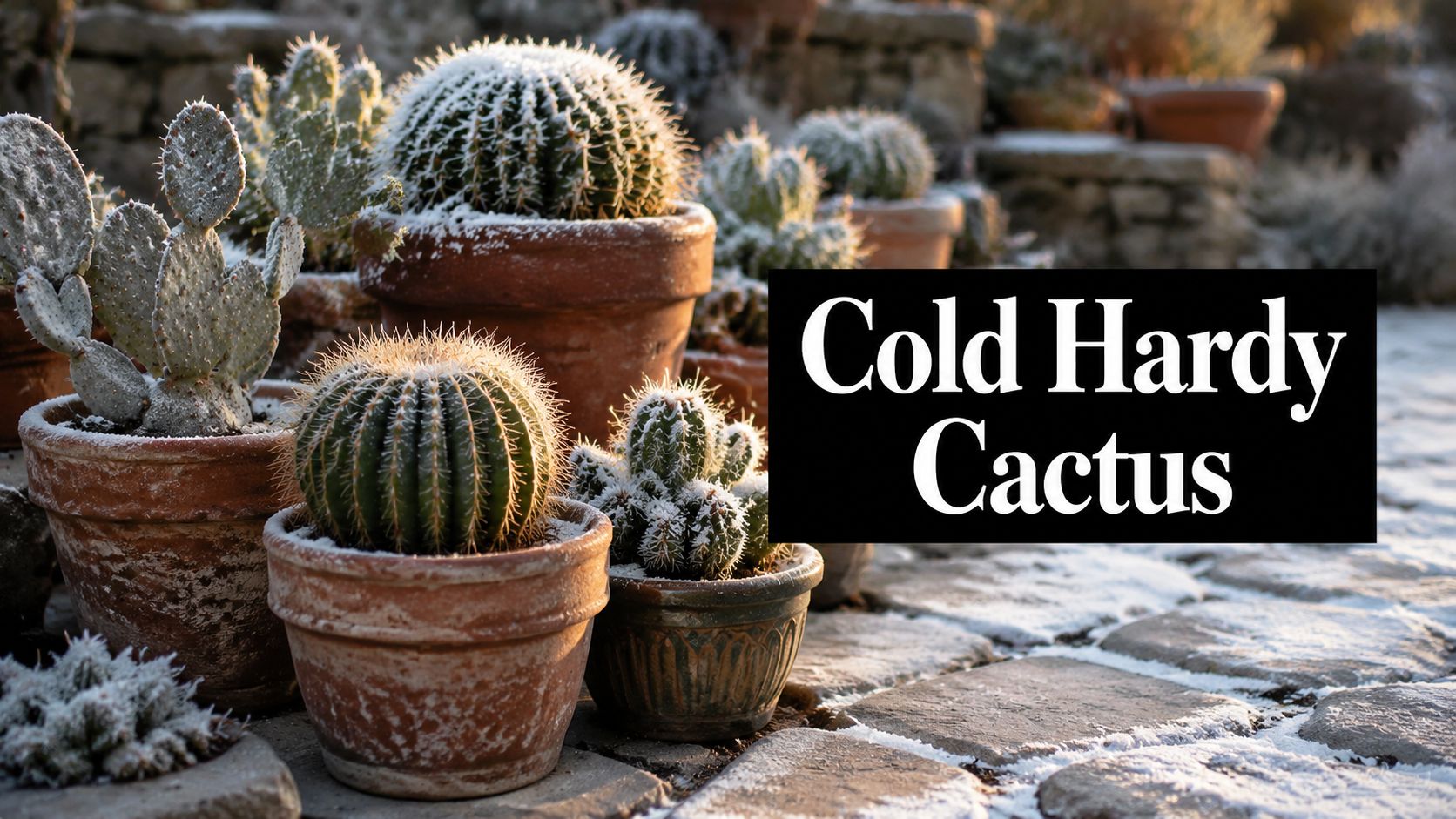
For cold-tolerant buying, start with a general column cactus rated for USDA zones 9 to 11, as listed by GetGrowli's column cactus hardiness guide. For a blue candle specimen, use the stricter zones 10 to 12 rating and bring it indoors below 10°C, according to GetGrowli's Blue Columnar Cactus guidance. Check your location against the current USDA Plant Hardiness Zone Map, which was updated on August 23, 2026, before ordering a large outdoor container plant.
Choosing the Right Pot and Soil Mix
A tall cactus doesn't need the biggest pot available. It needs the right balance of depth, width, weight, and drying speed. The common advice to use a pot only slightly wider than the root ball is useful for root control, but columnar forms add another requirement: the container must resist tipping.
Depth versus width
Neutral container guidance recommends drainage holes, a pot roughly as tall as it is wide, and about 10 to 15 cm of free space on all sides of the cactus. For a typical columnar cactus 10 to 15 cm wide, that works out to a pot about 30 to 40 cm wide, as described by Cactus Culture Australia. That isn't a command to use one universal size. It's a useful starting point for avoiding both root restriction and a soggy excess of substrate.
Other guidance recommends a pot diameter only 1 to 2 inches wider than the root ball, with terracotta favored for faster drying, as explained by Lawn Gear Lab. These recommendations look different because they solve different problems. The snug approach manages moisture, while the deeper, heavier approach manages stability.
For a tall specimen, I favor depth equal to or greater than width, provided the soil drains quickly and the container has a broad, heavy base. Avoid a very wide, shallow bowl for a narrow column. It may look stylish, but it can leave the plant vulnerable to wind and create a large horizontal layer of soil that dries unevenly.

Build the mix around the stem
A standard bagged cactus mix is often too moisture-retentive for a tall San Pedro in a 12-inch terracotta pot. I'd use a predominantly mineral blend built from pumice and lava rock, with only a small bark fraction for structure and limited organic content. The faster the grower, the more important it is to maintain drainage as roots expand. A slower specimen such as totem pole cactus can use a similarly lean mix, but it should never be placed in an oversized container that stays damp.
Read the full guide to the best soil for potted cactus before mixing your substrate. The rule is practical: water should move through the root zone, air should return quickly, and the base should never sit buried in wet material.
Container rule: If you need more stability, add weight to the pot and improve its proportions. Don't solve toppling by adding moisture-holding soil around the stem.
Terracotta is the safest default for growers who tend to water too soon. Glazed ceramic holds moisture longer but offers stronger decorative impact and can work when the mix is gritty and the patio is hot and dry. Fiberglass is light and therefore a poor choice for a tall exposed column unless you add ballast or use it inside a heavier outer container.
A gravel top-dress can improve the finished appearance and add modest surface weight, but it isn't a substitute for a properly sized pot. For design-led patios, you can also explore American Goose planters when you want a decorative container with enough visual presence to support an architectural cactus.
This video shows the handling and container logic visually. Watch it before moving a large specimen into a finished planter.
Repotting and Pruning Columnar Cacti
A newly shipped columnar cactus shouldn't go straight into full sun, a wet pot, and an oversized container. The plant has already been handled and transported, so your first job is to protect the roots and growing tip while it settles.
Move from shipping to the patio carefully
Prepare the permanent pot before opening the package. It needs a drainage hole, a dry mineral-lean mix, and enough depth to support the column without burying the stem. Use folded newspaper, foam, towels, or cactus gloves to grip the plant. Don't squeeze the stem, twist it by the tip, or lift it by a branch.
Unwrap the root crown and inspect it. Trim only damaged, dead, or visibly compromised roots with a clean tool. Set the cactus at the same soil line it had before shipping, keeping the base above the area that will remain damp after watering. If the plant arrives in already damp soil, don't water immediately after repotting. Expert container guidance also recommends avoiding immediate watering when the substrate is wet, as noted by Lawn Gear Lab's cactus pot guidance.

Don't force the plant upright with a stake
A temporary stake can hold a newly potted cactus while roots settle, but a permanently leaning tip often deserves a cleaner solution. If the upper section has stretched, damaged, or developed a poor angle, cut it cleanly and allow the cutting to callus before rooting it in dry, gritty mix. Keep the cut surface protected from rain and standing moisture.
Pruning can also create a multi-column arrangement, but cut for structure, not impulse. Use clean tools, make decisive cuts, and keep water away from fresh wounds until the tissue has dried and sealed. A small gravel top-dress can help finish the surface and reduce soil movement, but it won't compensate for a loose root crown.
For the full handling sequence, use The Cactus Outlet's repotting guide. Keep the first container move conservative. Up-potting two sizes at once gives roots too much wet substrate and makes a tall plant harder to anchor. Let the cactus acclimate in bright shade, then increase exposure gradually. Delay the first thorough watering until the root zone and any disturbed roots are dry and settled.
Watering and Stability in Containers
“Water once a month” is too blunt for a tall columnar cactus living in a patio pot. A six-foot specimen in a 14-inch pot behaves differently from a small Mexican fence post in a cool entry container, and neither follows a calendar as reliably as it follows soil moisture.
Read the container, not the date
Watering rhythm changes with pot material, mineral content, sun, wind, and growth rate. A terracotta pot in direct sun may dry faster than a glazed ceramic planter in a sheltered corner. A fast grower such as San Pedro or Trichocereus generally uses available moisture sooner than a slow totem pole cactus. A dense mix slows drying regardless of species.
One recent guide argues that container specimens may need 20 to 30% more frequent watering because pots experience stronger thermal fluctuation and provide less root volume, while another emphasizes watering only when the entire root zone is bone-dry. The useful conclusion is not to follow either figure blindly. Check below the surface, lift the pot when possible, and water thoroughly only after the root zone has dried throughout.
The useful test: If the center and lower part of the pot are still damp, wait. A dry surface doesn't prove that the cactus needs water.
During active growth, a fast-growing Trichocereus may need attention more often than Mexican fence post, but the interval still depends on the container and weather. In winter dormancy, reduce watering sharply and protect cold-sensitive species according to their zone requirements.
Stop the tipping before it starts
A tall, narrow cactus in a light plastic pot is a wind hazard. If the pot can be moved easily with one hand while the plant catches gusts above it, the setup lacks ballast. Use a weighted terracotta, stone, or thick ceramic container with a stable base. Avoid placing a tall column where a narrow walkway or repeated foot traffic can knock it sideways.
You can improve stability without ruining the design:
- Use ballast: Place suitable weight in the lower part of the container without blocking the drainage path.
- Top-dress carefully: Add gravel around the surface to reduce soil movement and provide a finished, anchored look.
- Group containers: Cluster compatible pots so each plant gains protection from the others.
- Stake temporarily: Support a freshly repotted specimen until roots hold, then remove the stake when the plant stands securely.
A pot is too small when the cactus leans repeatedly, the root crown shifts, or the container can't counterbalance the above-ground mass. Move up gradually, not dramatically. Stability comes from proportion and weight, while healthy roots still need a mix that dries fully.
Styling Columnar Cacti on Patios and Entries
Treat the container as part of the plant's architecture. A tall San Pedro in a narrow, lightweight pot looks unfinished because the eye sees the height without seeing the anchor. A wide terracotta or stone trough gives the same cactus authority and makes the entire arrangement feel intentional.
Match form to placement
Use San Pedro or Mexican fence post in a broad container beside a wall, on a patio corner, or near a privacy screen. Their upright silhouettes create a strong vertical rhythm without requiring a broad planting bed. Place a lighter Cereus repandus against a solid wall where the background reduces visual distraction and helps the column read as a single sculptural line.
For entries, choose a narrower planter and a more compact plant. Myrtillocactus geometrizans and Echinopsis terscheckii suit door-flanking arrangements when you want height without a dense cluster. Keep the container heavy enough that opening a door, passing visitors, or ordinary wind won't disturb the composition.
Build rhythm with contrast
Three containers at staggered heights create an immediate architectural grouping. Use one dominant column, one supporting plant, and one lower succulent or agave rather than filling every gap. The cactus should remain the focal point.
Finish matters too. A glazed blue planter can sharpen the blue spine color of Pilosocereus pachycladus, while matte clay brings out the chalky surface of Espostoa lanata. Use lighter Cereus against a solid wall, and rotate containers periodically so the columns don't lean toward one light source. The goal is a straight silhouette viewed from the street, the patio, and inside the home.
Buying Checklist for Potted Columnar Cacti
Before you buy a large columnar cactus online, check the whole container system rather than judging the plant photograph alone.
- Match the species to the height limit: Choose a slow statement piece for a permanent decorative pot, or accept that a fast grower will need more space later.
- Check plant-to-pot proportion: A container should look capable of supporting the plant above it, not merely fit around the current root ball.
- Confirm drainage: The pot needs a bottom drainage hole, and the soil should dry fully through the root zone rather than only at the surface.
- Prepare stability: Have a heavy container, temporary support, or clean gravel top-dress ready before the cactus arrives.
- Review the microclimate: Compare your outdoor conditions with the species' cold tolerance and use the current USDA zone map rather than relying on a broad regional label.
- Inspect the arrival: Look for a firm root crown, a sound growing tip, and compact growth without stretched sections between areoles.
- Set up before delivery: Keep gloves, newspaper or foam wrap, dry mix, and a pre-drilled pot ready so the plant can settle without rushed handling.
For a more purchase-focused review of species, specimen selection, and online ordering, use this guide to buying columnar cactus online. The best choice is the one that fits your patio's light, wind, temperature, pot weight, and long-term height limit.
The Cactus Outlet offers a dedicated columnar cactus collection for buyers choosing large architectural plants for containers, patios, and entries. Review the available specimens and care information, prepare a properly drained heavy pot before delivery, and visit The Cactus Outlet to choose a columnar cactus that fits your space.