

Most advice about buying a cactus online is too soft. It treats the plant as the product and the checkout button as the hard part, when the risk starts after payment, during packing, transit, and the first month at home. If you want a columnar cactus that earns its space in a patio, entryway, or desert area, treat the purchase like a survival test, not a decor click.
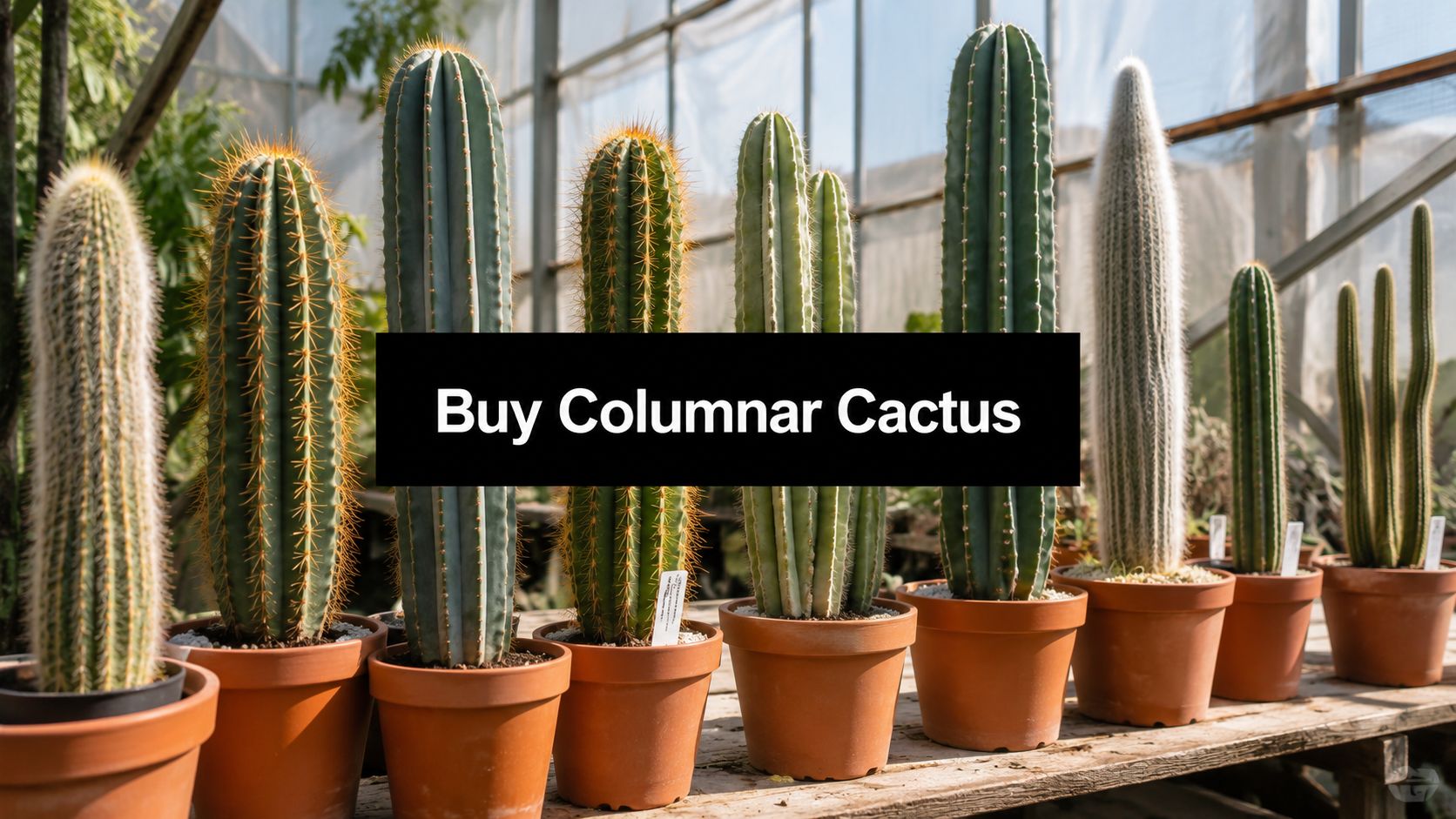
The phrase buy columnar cactus online sounds simple, but the market is full of mislabeled listings, tiny seedlings sold as mature specimens, and sellers who never disclose whether the plant is rooted, dry-shipped, or even the exact specimen you'll receive. A serious buyer has to demand measurable height, rooting status, and seller credibility before anything else. That is the difference between a plant that settles in and one that becomes an expensive shipping loss.
Do your species homework before you order. A clear guide to common large cactus types, such as the one from The Cactus Outlet's guide to popular large cactus types, helps you match the plant to the space and avoid buying a columnar form that outgrows the site or arrives stressed.
Shipping details matter just as much as the listing. Dry soil, secure packing, and a seller who can explain how they handle cold or heat exposure are part of the purchase, not extras. If you are planning a larger planting area or a water-wise border, North Georgia water smart gardening is the kind of practical mindset you should bring to the order, because the plant has to survive delivery before it can establish in the ground or a container.
A real buying decision starts with survival, not style. Inspect the listing, confirm the specimen, and assume the first 30 days will decide whether the cactus becomes a strong outdoor plant or a refund request.
Why Most Online Cactus Purchases Fail

The mistake is treating “large” as if every seller means the same thing. In practice, many online listings use that word loosely, while buyers need a plant that is tall, rooted, and ready to handle shipping stress. If the listing does not spell out size, rooting status, and whether the photo shows the exact plant, you are not buying a specimen. You are buying a promise.
What the bad listings hide
Bad listings rely on stock photos, vague claims, and a low price that makes the plant look like an easy win. They often hide the fact that the cactus is a small seedling, unrooted, or shipped by a seller with no useful inventory proof. That is a setup for disappointment, and for a tall cactus, it becomes a 30-day survival problem the moment the box arrives.
Practical rule: if the seller will not show measurable height, rooting status, and a real inventory image, do not assume the plant matches the listing.
A serious nursery tells you exactly what large means in inches. It also tells you whether the plant is fully rooted and whether the image shows the exact specimen or a representative plant. If that information is missing, the seller is asking you to trust a glossy listing instead of a living plant that has to endure packing, transit, and recovery.
What legitimate sellers disclose
The strongest buying signal is plant size transparency and seller credibility. For homeowners making a high-ticket purchase, that means measurable height, verified rooting status, and clear nursery credentials. If a seller cannot give you those three things, keep shopping.
Use how to find the best online cactus store as a screening standard, not a sales pitch. Compare stores by exact dimensions, real photos, and rooted stock only. If you are also comparing the broader online plant market, the partner guide on products to sell on Etsy is a reminder that sellers can look polished while still selling weak inventory.
Choosing the Right Columnar Species for Your Space
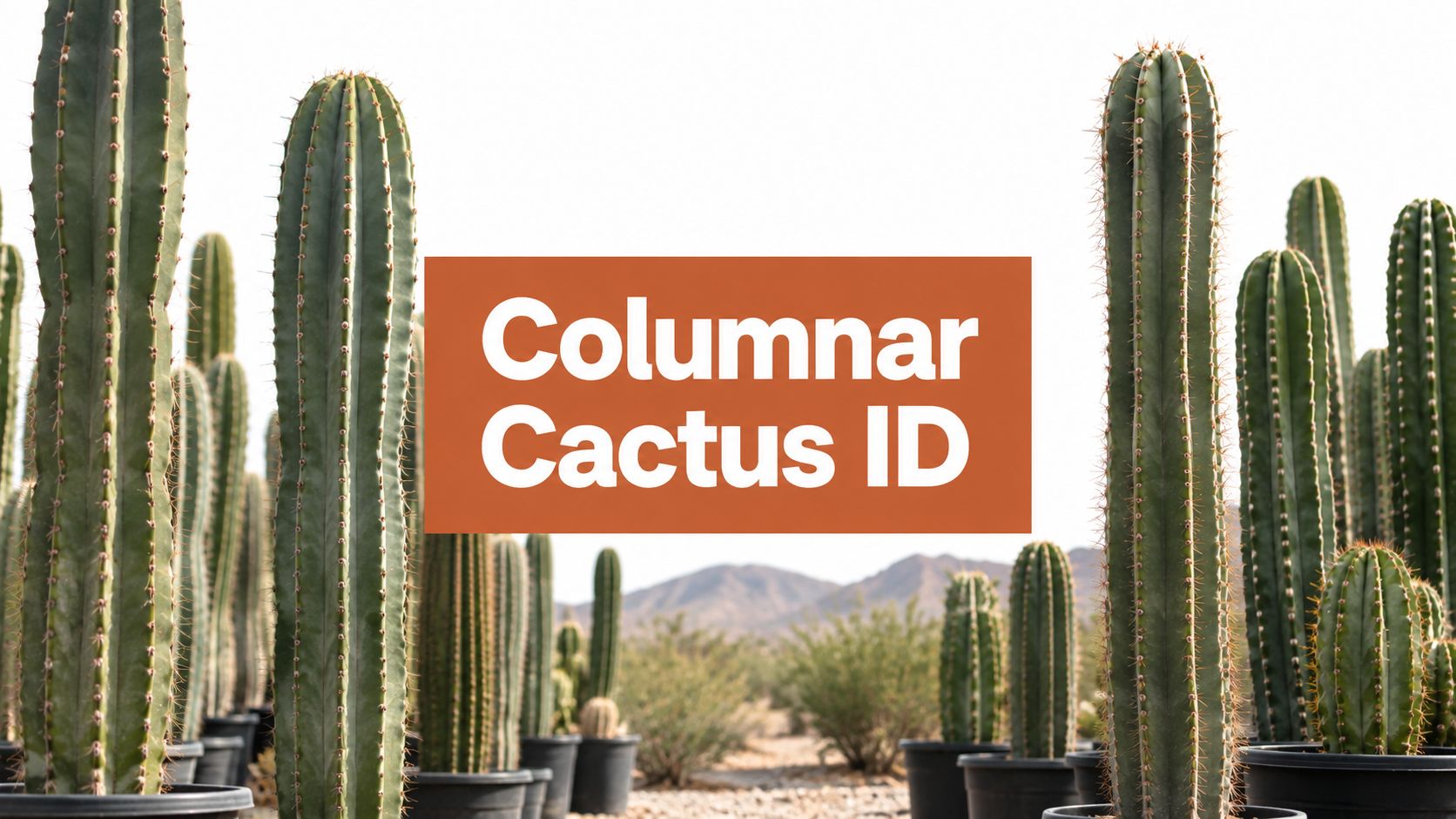
Columnar cacti are not one plant, they are a growth form, and that is where buyers get burned. A cactus that looks right in a thumbnail can be wrong for your climate, wrong for your patio, or far too large for the bed you had in mind. If you are buying for a statement planting, the species choice is the purchase.
Compare species by use case, not just appearance
Cold temperatures limit the range of true columnar cacti in the United States, and only a few large columnar types occur there naturally, including saguaro, senita, and organ pipe cactus in Arizona, as noted by Spadefoot Nursery in the verified data. That makes regional suitability the first decision, not an afterthought. A buyer in a mild inland climate can think about a dramatic in-ground specimen. A buyer with winter exposure or a compact courtyard should be looking harder at container use and protected placement.
| Columnar Cactus Species Comparison | Mature Height in Cultivation | Cold Hardiness | Best Use Case |
|---|---|---|---|
| Saguaro | Large specimen in a garden setting, slow and substantial | Limited by cold temperatures | Architectural focal point, arid setting |
| Organ pipe cactus | Large columnar form | Limited by cold temperatures | Warm-region in-ground planting |
| Peruvian Apple cactus | Large upright form | Best in warm, protected settings | Privacy screen, accent planting |
| Pilosocereus pachycladus | Smaller in cultivation than native habitat suggests | Best treated as frost-sensitive unless seller states otherwise | Patio container, premium specimen |
Pilosocereus pachycladus is especially useful for buyers because the species can reach up to 33 feet tall in its native habitat, but is typically smaller in cultivation, according to Plantae Paradise in the verified data. That is exactly the kind of distinction that prevents a bad online purchase. The plant may be impressive, but it will not behave like a wild specimen in a suburban yard.
Match the species to the job
For a privacy screen, look for upright form and enough rooting mass to establish in place. For a patio container, choose a species that stays manageable in cultivation and can handle a deep, fast-draining pot. For a drought-tolerant xeriscape, focus on regional cold tolerance and mature scale, not on whichever cactus looks the most dramatic today.
If you want a broader species reference before you narrow the shortlist, the internal comparison at a guide to the most popular large cactus types is worth reading alongside any product page. If you are designing around water restraint, the North Georgia water smart gardening resource from Barefoot Organics is a practical companion for planning a low-water garden.
Buy for the plant's final job in your yard, not for the most impressive photo. That is how you avoid a cactus that outgrows the space or sulks in the wrong climate.
Evaluating Online Sellers and Listing Quality
A cactus seller is not automatically a nursery just because the website looks polished. Real buyers need to check the business the same way a contractor checks a supplier. Licensing, propagation disclosure, specimen photos, and shipping-state compliance all matter before checkout.

The vetting sequence I'd use
First, verify the seller's nursery licensing through an official agricultural portal. Then confirm the plant's propagation method, whether it's seed-grown, offset-produced, or graft-raised. After that, inspect the listing for species identity, photos of the exact specimen, and shipping-state compliance before you pay.
The propagation method matters because graft-raised plants can grow faster, but they may be less stable long-term than seed-grown or offset-propagated specimens, per the verified data. That's not a minor detail for a premium purchase. If you want a cactus that will stand upright for years and integrate into an outdoor space, stability matters more than a quick retail look.
Red flags that should end the purchase
A listing should make you comfortable, not suspicious. I'd reject any product page that uses only stock photos, hides the base of the plant, or describes size in fuzzy terms like “nice” or “substantial.” Sellers with very few reviews deserve extra caution too, especially when the plant is supposed to be large or rare.
If you sell or compare products online in other categories, the same discipline shows up in any serious marketplace. A resource like products to sell on Etsy from MerchLoom is useful as a reminder that clear product presentation, trust signals, and specific descriptions are what separate a real listing from a throwaway one.
The video below is worth a watch if you're comparing how sellers present live plants and what details matter.
What a strong listing looks like
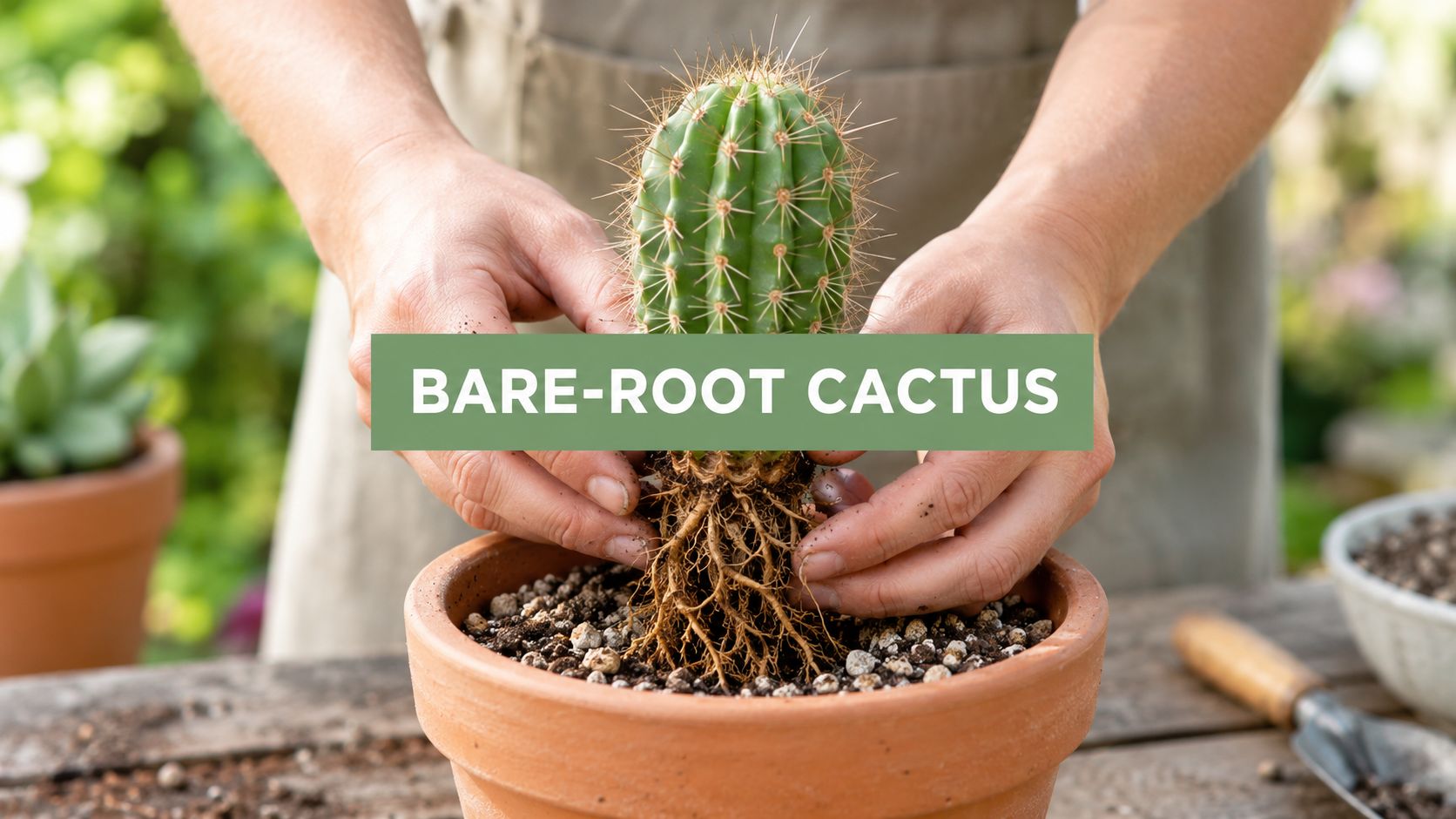
A good page gives you more than a pretty top shot. It shows the exact cactus, measurements that mean something, and clear shipping details. It also tells you whether the plant is bare-root, potted, or dry-shipped, because that changes how you'll handle it when it arrives.
If the seller won't show the base, won't name the propagation method, and won't state whether the photo matches the shipped plant, the listing isn't premium. It's vague.
For a retailer comparison point, how to find the best online cactus store is a useful internal reference when you're screening vendors beyond a single product page. And if you're browsing The Cactus Outlet, use the same standard, exact specimen photos, rooted stock, and measurable dimensions or nothing.
Preparing for Shipment and Inspecting on Arrival
Shipping is where a lot of columnar cactus purchases fail, because the box sees conditions the buyer never sees. A tall cactus can be healthy on the nursery bench and still get wrecked by excess moisture, loose crating, or rough transit. If you're serious about buying online, treat shipping prep as part of the purchase.
What should happen before the box leaves the nursery
For large columnar cacti, reputable pre-shipment handling means stopping irrigation 10 to 14 days before transit, and 18 days for large specimens such as Carnegiea gigantea cuttings, according to the verified data. The root zone should be confirmed dry with a 4-inch moisture-meter probe, not guessed from the surface. That matters because internal moisture is the rot trigger that shows up later, after the box has already been delivered.
The seller should also package the plant so it can't slam around in the carton. Tall stems need brace support, and the plant should be dry enough to tolerate a sealed box. If it's sent recently watered, you're already behind.
What to inspect the moment it arrives
Open the box promptly and inspect the cactus before you move it around. Check for intact spines, firm bases, and any shipping damage against the seller's documentation. If the plant is leaning badly or the base feels unstable, document that immediately with photos.
Then quarantine the plant for 14 days in bright indirect light with no watering, no repotting, and no fertilizing, per the verified data. That pause is not overcautious. It gives the cactus time to settle before you touch the root zone.
Use this short arrival checklist:
- Base firmness: A solid base is a good sign. Mushy tissue is not.
- Spine condition: Broken spines suggest transit abrasion or rough handling.
- Brace support: If the plant shifted in the box, document it before any adjustment.
- Moisture clue: Damp packing around the root zone is a warning, not a convenience.
- Isolation: Keep it away from the rest of your collection until the quarantine window ends.
The internal shipping guide at buy cactus online is a smart cross-check if you want a broader review of seller handling before you order. For tall specimens, though, the main question is simple. Did the nursery ship a stable plant, or did it ship a stress event?
Acclimation and First 30 Days of Care
The first month decides whether the cactus adapts or decays. Buyers who rush watering, repotting, or sun exposure usually create the failure they were trying to avoid. The plant doesn't need enthusiasm. It needs restraint.
Water less than you think
After the quarantine window, don't water on a calendar. Use a dry-skewer test and water only when the root zone has dried out, as noted in the verified data. The Royal Horticultural Society says most cacti and succulents do best in very free-draining, gritty compost, and indoor cacti should be watered thoroughly only when the surface of the compost feels dry, according to the RHS guide cited in the brief.
For outdoor placements, the bar is even firmer. Water only when the top 3 to 4 inches of soil are completely dry and air temperatures exceed 65°F for three consecutive days, per the verified data. That's the standard I'd use for container cactus that's been delivered from a nursery and is trying to settle into a new environment.
Use the right container and mix
A high-mineral mix beats rich potting soil every time for this kind of plant. The benchmark from the verified data is 50% coarse mineral aggregate, 30% sharp silica sand, and 20% low-organic amendment. That mix drains fast, which is exactly what a columnar cactus needs after shipping stress.
Pick an unglazed clay pot if you can, and skip saucers that trap runoff. Bottom watering, spray bottles, and ice cubes are bad habits here because they create perched water tables and raise basal rot risk, as noted in the verified data. If a seller tells you to baby a columnar cactus like a tropical foliage plant, ignore that advice.
Practical rule: the cactus should dry through before the next drink. If you're guessing, wait longer.
A simple 30-day cadence
During the first week, keep the plant in bright indirect light and leave it alone. In week two, check firmness and overall color, but don't disturb the roots unless the medium is clearly wrong. In weeks three and four, move toward the plant's final light level gradually, then begin watering only after the dry-skewer test confirms the root zone is ready.
A cheap moisture meter can misread salinity, so calibration against a skewer test is recommended monthly, per the verified data. That detail matters more than the tool itself. The goal is not to water on schedule. The goal is to keep a shipped cactus from staying wet too long.
Your Columnar Cactus Buying Checklist
Buy the species for your climate first, then the seller, then the listing. If any one of those three is weak, the purchase is weak too. A strong online cactus order starts with exact dimensions, verified rooting, and traceable nursery credentials, then moves through dry shipping, arrival inspection, and a strict quarantine.
Keep these mistakes out of the cart:
- Buying on price alone: cheap listings often hide seedlings or vague stock.
- Skipping quarantine: new arrivals need a calm window before you touch them.
- Watering too soon: shipping moisture and eager watering are a bad mix.
- Ignoring species fit: a cactus that suits a warm desert yard may be wrong for a patio pot.
- Accepting stock photos: exact specimen photos save money and frustration.
If you follow the checklist, you stop shopping like an impulse buyer and start buying like a homeowner who expects the plant to survive the first 30 days. That's the standard that keeps a tall cactus from becoming an expensive box story.
If you want a large columnar cactus that's meant for real use, not just a glossy page, shop with the same standards used by professionals. Visit The Cactus Outlet to compare outdoor-ready cacti, read the product details closely, and choose a specimen that fits your space, your climate, and your patience for the first month after delivery.