

You've chosen the concrete, the gravel, and the clean-lined planter. Then the plant list turns into a problem. One cactus looks perfect in a product photo, another promises dramatic height, and a third is labeled drought tolerant. None of that tells you whether the plant will block a walkway, outgrow a patio, survive your winter, or still look intentional after several seasons.
The best cactus for modern landscaping depends on the job it must perform. A tall columnar specimen should create a vertical focal point, not become an awkward hedge. A prickly pear can repeat color across a gravel bed, but its pads need room and its glochids make placement important. A container cactus must suit the pot, the exposure, and the way you'll move or protect it. The recommendations below treat each plant as a design component, not an interchangeable desert ornament.
What Modern Cactus Landscaping Actually Looks Like
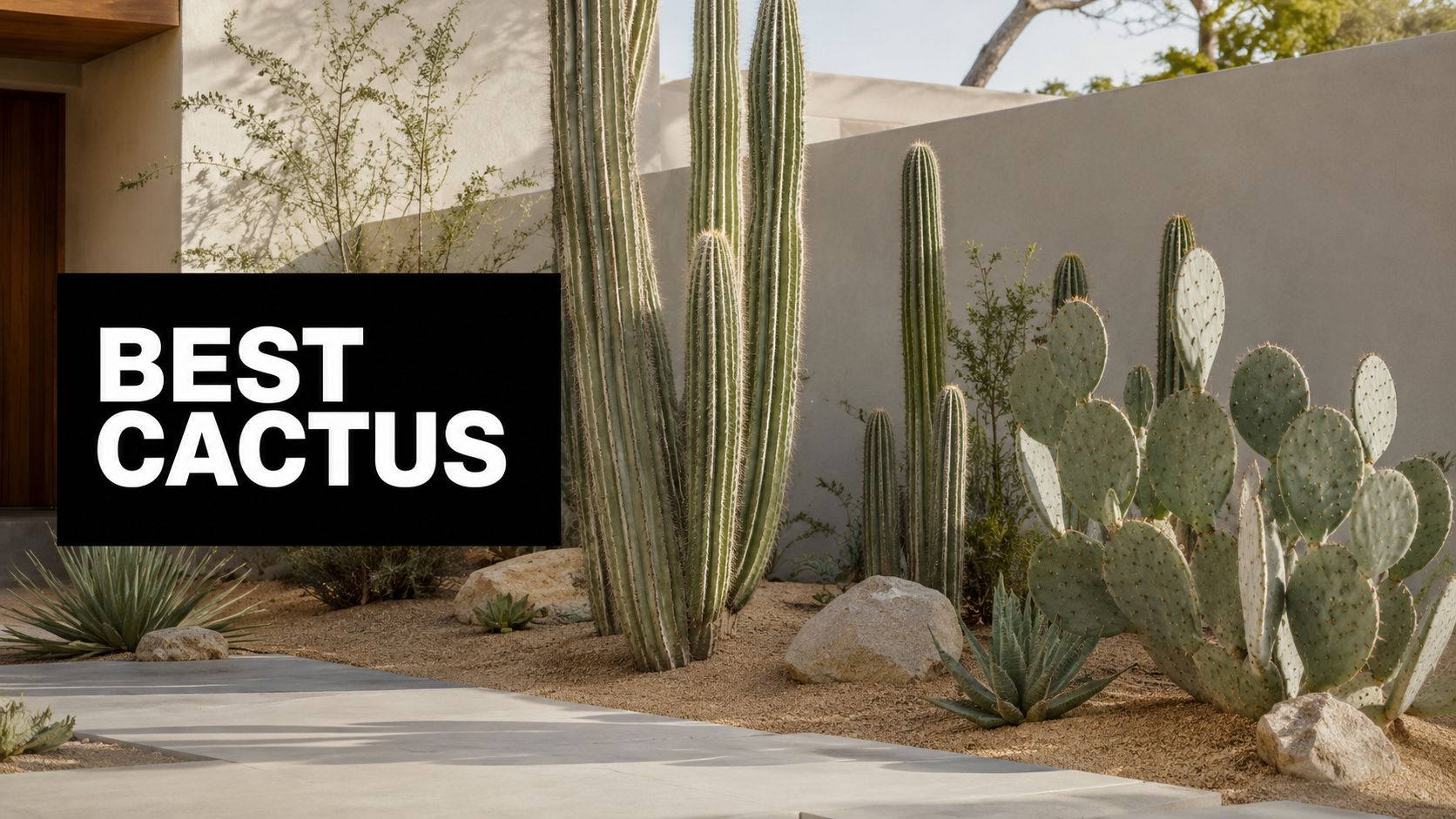
Modern cactus landscaping starts with restraint. The strongest compositions usually rely on a limited palette of sculptural plants, hard surfaces, and open space. Poured concrete, decomposed granite, steel edging, and pea gravel create a deliberate setting where each cactus reads as a distinct form rather than disappearing into a crowded planting bed.
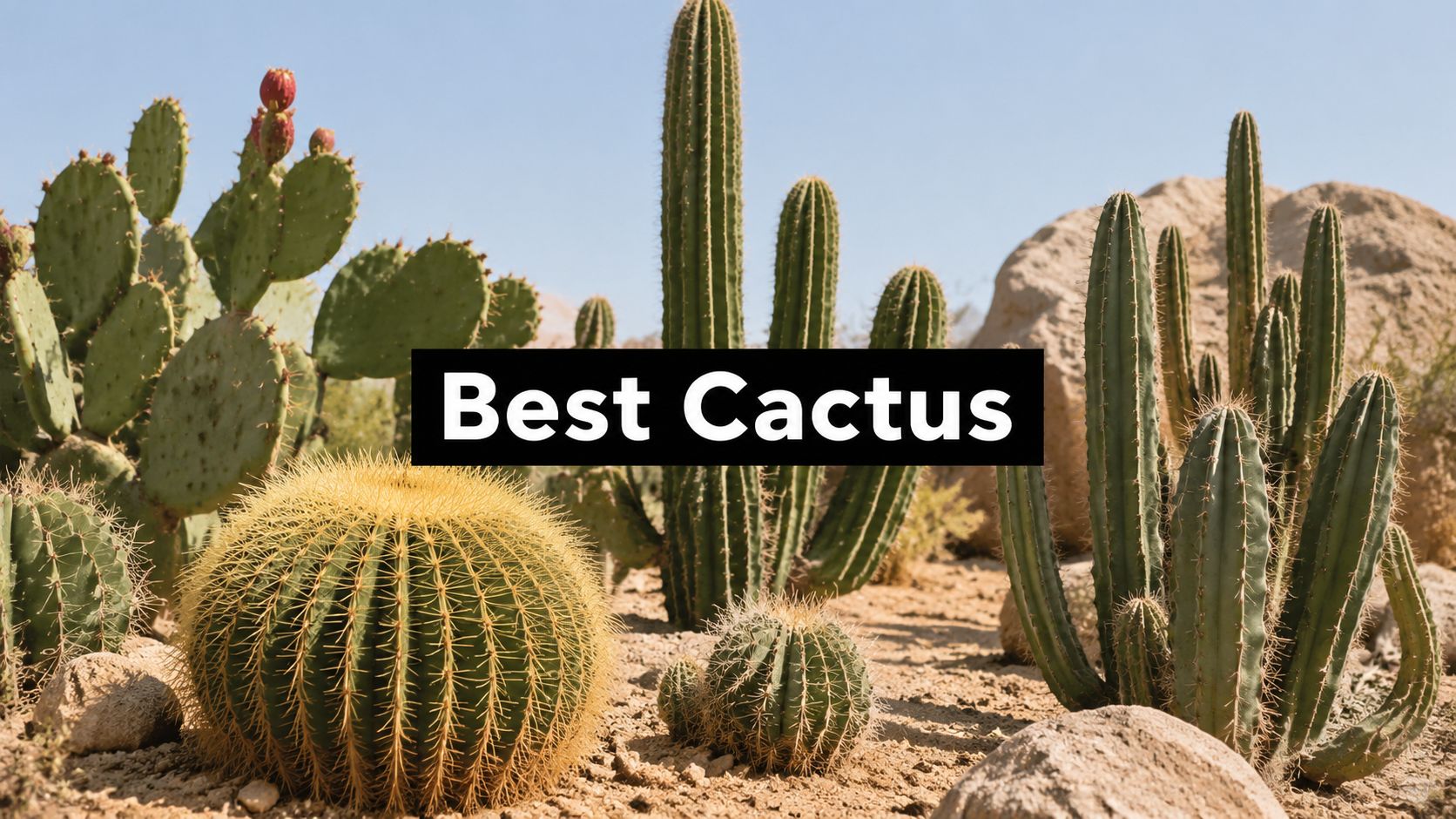
Use one to three dominant species, then repeat them with purpose. Columnar cacti establish vertical lines beside walls and entryways. Globular plants punctuate broad gravel fields. Paddle-form plants provide graphic planes and layered silhouettes. The flowers are secondary. In a modern composition, the outline, color, and mature structure carry the design.

Build the composition around negative space
Leave enough visual breathing room for every specimen. A plant that looks elegant in a spacious nursery yard can look cramped when placed beside a path, window, or retaining wall. Measure the mature radius before you finalize the planting position, then account for access around the plant for irrigation checks, cleaning, and eventual removal.
Color should stay controlled. Sage, blue-gray, and matte green foliage work well against pale stucco, dark gravel, weathered steel, or warm concrete. A single purple prickly pear or blue-gray branching cactus can act as an accent, but a collection of unrelated colors often makes the bed look more like a collector's garden than an architectural composition.
Design rule: If every plant competes for attention, the bed has too many focal points.
Separate modern structure from rock-garden clutter
A modern yard isn't defined by using cacti alone. It's defined by how deliberately you place them. Avoid filling every empty area with small specimens, decorative stones, and unrelated succulents. Instead, group plants by function: architectural focal points, low groundcover, patio accents, and living screens.
For additional layout direction, use these succulent garden design ideas as a source of composition prompts, then edit aggressively. The finished setting should have a clear visual hierarchy, accessible paths, and enough open gravel or hardscape to make the planting feel intentional.
Selection Criteria Every Buyer Should Run First
Run every candidate through four filters before you add it to the cart. The order matters. Form tells you what the plant will do visually, hardiness tells you whether it belongs outdoors, mature size determines whether the design can contain it, and maintenance tells you whether the composition will remain clean.
Start with form
Choose the silhouette before the species name. Columnar plants anchor vertical architecture and work beside entry walls or tall windows. Globular plants create punctuation in a low gravel field. Clumping or paddle-form plants fill horizontal space and can create a screen when planted in a disciplined rhythm.
A narrow planting strip usually rules out broad, offset-producing plants. A large open yard can support branching or multi-stemmed forms. If the design rendering shows a single strong vertical line, don't substitute a sprawling mound because it's available.
Verify the cold floor
The USDA Plant Hardiness Zone Map is based on average annual minimum winter temperature and divides the country into 10°F zones, as summarized in this cactus hardiness guide. Use the lowest expected temperature for your site, not a broad label such as “desert plant.”
Cold tolerance varies sharply by species. One guide rates Opuntia fragilis for USDA Zones 3–8, Pediocactus simpsonii for Zones 4–7, and Coryphantha missouriensis for Zones 4–8 (comparison source). Those ratings make cold-hardy selections more useful for rock gardens and open-ground installations outside hot desert regions.
Check mature size before buying a large specimen
A plant's current height is only part of the purchase decision. Saguaro grows slowly, but the Tucson Cactus & Succulent Society notes that it may take 50 years to reach 15–20 feet (source on saguaro maturity). That makes a mature specimen valuable when you need immediate structure, but it also means the planting location must account for the eventual scale.
Calculate the maintenance load
Spine density, glochid production, offsetting, and leaning determine how much work the bed will require. A barrel cactus is generally easy to keep visually contained, but it offers less variation in form. A paddle cactus creates stronger repetition, yet fallen pads and glochids can become a problem beside seating or children's play areas.
| Filter | What to Check | What It Rules Out |
|---|---|---|
| Form | Columnar, globular, paddle-based, or clumping silhouette | Plants that fight the design geometry |
| Hardiness | USDA zone and the site's coldest expected conditions | Outdoor placements with unsuitable winter exposure |
| Mature size | Height, width, branching, and root-zone clearance | Plants that crowd paths, walls, or utilities |
| Maintenance | Spines, glochids, offsets, leaning, and cleanup | Specimens that create avoidable hazards or visual disorder |
Architectural Focal Points for Clean Lines
A focal-point cactus must read as sculpture from a distance. I look for a strong axis, a predictable growth habit, and a base that can sit inside the intended planting area without swallowing the bed. The plant should reinforce the architecture, not compete with it.
The Mexican fence post, Pachycereus marginatus, is the most disciplined choice for repeated vertical lines. Its ribbed columns suit narrow beds and entry approaches. Blue myrtle cactus, Myrtillocactus geometrizans, gives you a blue-gray branching silhouette with more movement, so it belongs where the planting area can accommodate lateral growth.
Totem pole cactus, Lophocereus schottii var. monstruosus, is a specimen choice rather than a mass-planting choice. Its irregular sculptural surface works best against a simple wall or in a large architectural container. Organ pipe cactus, Stenocereus thurberi, creates a broader multi-stemmed statement and needs a larger footprint than a single column.
| Species | Mature Height | Footprint | Min. Zone | Best Placement |
|---|---|---|---|---|
| Pachycereus marginatus | Confirm by cultivar and specimen listing | Narrow to moderate columnar base | Confirm before purchase | Repeated entry lines, walls, and formal beds |
| Myrtillocactus geometrizans | Confirm by specimen listing | Moderate branching spread | Confirm before purchase | Open courtyards and gravel focal beds |
| Lophocereus schottii var. monstruosus | Confirm by specimen listing | Moderate sculptural spread | Confirm before purchase | Sheltered courtyard or statement container |
| Stenocereus thurberi | Confirm by specimen listing | Broad multi-stemmed base | Confirm before purchase | Large yards and expansive privacy compositions |
The table intentionally leaves site-specific height and zone decisions to the plant listing. Cactus hardiness is species-specific, and a nursery should document the exact plant rather than force every specimen into a generic rating.
A focal point needs empty space around it. If the plant touches the visual boundaries of the bed, it's no longer functioning as a focal point.
Use this columnar cactus landscaping guide to compare vertical forms before you choose a specimen. For a premium modern yard, I'd rather see one properly scaled Mexican fence post or blue myrtle cactus than a crowded mix of five unrelated columns.
Groundcover and Container Accents
Groundcover and container accents solve a different design problem than focal points. They fill the horizontal plane, repeat a silhouette, and keep gravel beds from looking empty without adding excessive height. The right choice depends on whether the plant will spread through open ground or remain contained in a raised planter.
Opuntia santa-rita, commonly called purple prickly pear, is the strongest color-led option in this group. Its mature spread can reach 3–4 feet, so give it room to develop instead of placing it directly beside a walkway. The purple pads provide contrast against pale gravel, but glochids make it a poor choice beside seating or narrow circulation routes.
Echinocereus triglochidiatus, or clumping hedgehog cactus, works better where you want a low, repeated mound. It can occupy a rock garden or raised bed without creating the same broad paddle planes as Opuntia. Its clumping habit still needs monitoring, because offsets can eventually push the original rhythm beyond the intended planting zone.
Match the plant to the container
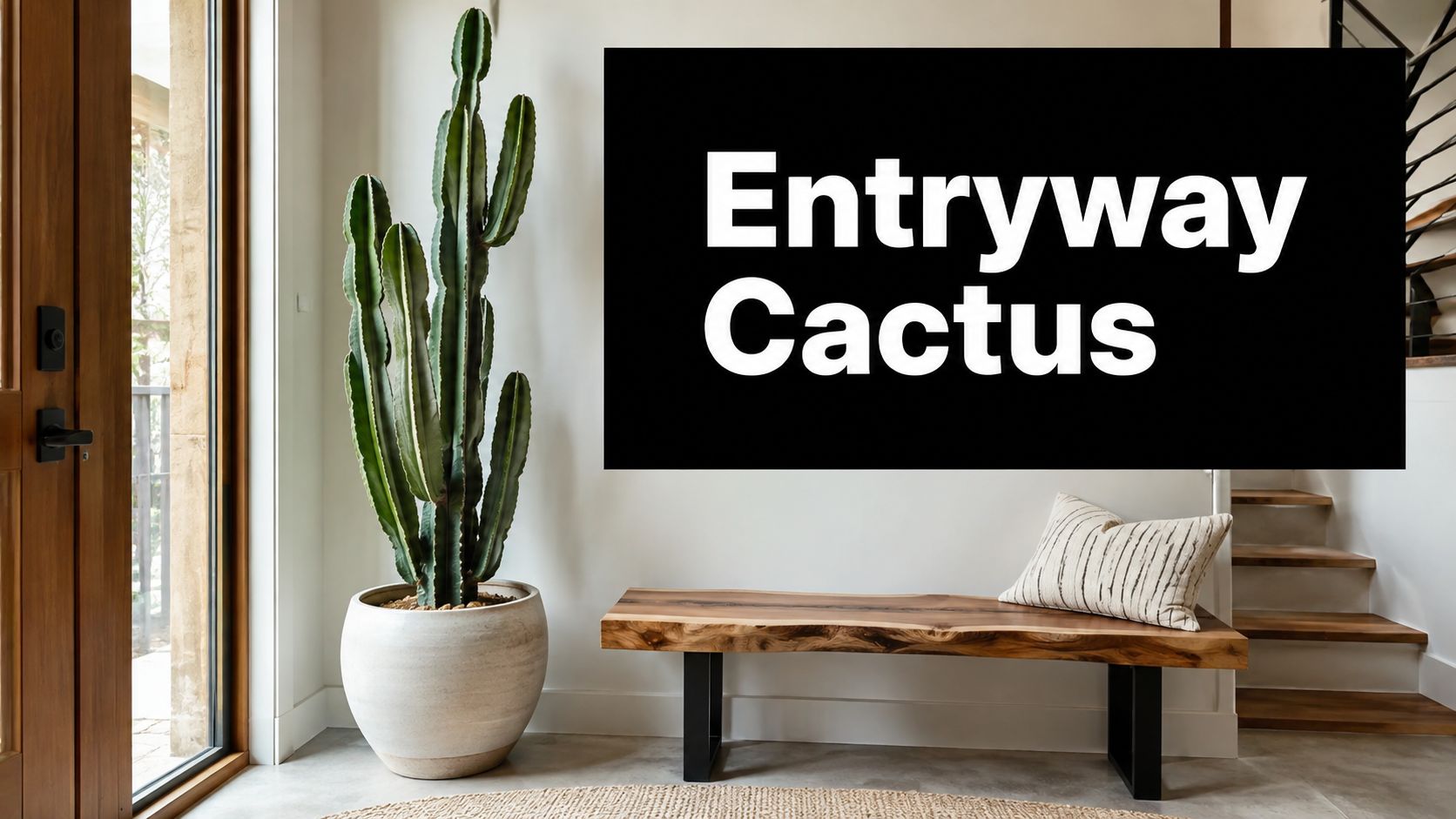
A 12- to 24-inch raised planter changes the design calculation. Select a plant with a clear central form if the container sits near a door or patio furniture. Taller Trichocereus or Soehrensia specimens provide vertical emphasis without requiring an in-ground bed, but the pot must be stable enough for the plant's height and weight.
| Species | Mature Spread | Growth Rate | Best Use | Thorn Risk |
|---|---|---|---|---|
| Opuntia santa-rita | 3–4 feet | Confirm by specimen and site | Open-ground color block or broad raised bed | High near paths due to glochids |
| Echinocereus triglochidiatus | Confirm by specimen listing | Clumping habit | Low groundcover and rock gardens | Moderate, varies by form |
| Trichocereus or Soehrensia species | Confirm by specimen listing | Taller accent form | Patio container or raised architectural planter | Confirm species and specimen |
For patios, review the best cactus for patio containers before buying. The deciding factor isn't just whether a cactus fits the pot today. It's whether the mature spread, spine profile, and visual weight will continue to suit the space.
Privacy Screens and Living Barriers
A privacy cactus must do more than look tall in a listing photo. It needs enough height and density to interrupt a sightline, predictable branching, and a manageable relationship with fences, seating, and maintenance access. A six-foot plant doesn't automatically create an eight-foot privacy wall.
Organ pipe cactus, Stenocereus thurberi, is the strongest choice for a broad, architectural screen in a suitable warm climate. Its basal branching creates density, but the plant needs substantial room and shouldn't be squeezed against a fence. Mexican fence post, Pachycereus marginatus, gives a cleaner, more formal barrier when planted in repetition.
Tree cholla, Cylindropuntia imbricata, can create a looser vertical screen with a more irregular outline. That irregularity suits naturalistic modern compositions, but its thorn profile makes it a poor choice beside a seating zone. Trichocereus pachanoi is useful in temperate settings where its climate fit is confirmed, especially when the goal is a tall, repeating row rather than a dense thorn hedge.
| Species | Mature Height | Density | Thorn Length | Best Zone |
|---|---|---|---|---|
| Stenocereus thurberi | Confirm by specimen listing | High with basal branching | Confirm species form | Warm, dry climates |
| Pachycereus marginatus | Confirm by specimen listing | Moderate to high in repeated planting | Confirm specimen | Warm, dry climates |
| Cylindropuntia imbricata | Confirm by specimen listing | Irregular, open branching | Noticeable thorn hazard | Confirm local hardiness |
| Trichocereus pachanoi | Confirm by specimen listing | Repeating columnar density | Confirm specimen | Suitable temperate climates |
Privacy design should also account for the household and the surrounding property. If you're comparing a cactus barrier with a conventional structure, this practical guide to a privacy screen for Ottawa homes helps frame the broader questions around sightlines, fence placement, and usable outdoor space.
Rank these plants by actual screening need. Use a columnar row for formal separation, a branching organ pipe for a sculptural boundary, and thornier cholla only where people won't brush against it.
Planting and Acclimating After Delivery
Delivery day isn't planting day by default. Large cacti have been protected from the shipping environment, and their roots need inspection before you commit them to the outdoor setting. Remove nursery soil carefully, check for damaged roots, and keep the plant dry while you prepare the site.
Dig a hole no deeper than the root ball and two to three times wider. Backfill with a mineral-heavy mix built around pumice or decomposed granite and only minimal organic material. Set the crown slightly above grade so water can't collect around the base.

Follow a deliberate first-season sequence
Withhold deep irrigation for the first 7–10 days while damaged roots callus and the plant settles. Then water only when the root-zone soil is fully dry. Arizona Cooperative Extension recommends deep, infrequent irrigation for cacti, with the soil allowed to dry between waterings. In hot desert conditions, established younger plants may need water about every two weeks in summer, while older plants may need only once or twice per month. Cooler seasons may require no supplemental irrigation when rainfall is normal (Arizona Cooperative Extension guidance).
Sun exposure needs an equally controlled transition. Use shade cloth for 2–4 weeks on south or west exposures, then increase direct exposure gradually. Pale bleached pads indicate sun stress, stretched growth indicates insufficient light, and softening at the base points to wet soil and poor drainage.
Plant during an active growth window rather than winter dormancy. For containers that must remain outdoors through cold, wet weather, use a seasonally appropriate setup. One cold-climate guide recommends near-freezing, frost-free dormancy storage at 32–40°F (0–4°C) and warns that winter success depends on preventing root rot from cold, wet soil (cold-climate cactus guidance).
Use the following video as a visual planting and acclimation reference:
Long-Term Maintenance and Design Integrity
A modern cactus composition usually fails through drift, not sudden collapse. By the third growing season and beyond, columnar plants can lean toward paths, Opuntia pads can extend beyond the intended bed, and clumping species can lose the clean outline that made them attractive at purchase.
Treat maintenance as part of the original design. Trichocereus columns may need support or selective removal when they move into circulation space. Opuntia requires careful pad cleanup, especially where glochids can reach seating or children. Echinocactus grusonii can lose its spherical silhouette once offsets develop, so decide whether you'll retain the cluster or replace the specimen when the geometry changes.
Audit the landscape by season
- Late winter inspection: Check for frost injury, leaning, cracked tissue, and drainage problems before active growth begins.
- Mid-summer review: Look for irrigation runoff, sun scorch, and branches or pads moving toward paths.
- Fall cleanup: Remove dead pads and damaged growth before they become part of the bed's permanent visual clutter.
Agave deserves separate attention in family spaces. Agave attenuata can develop brittle tips that break into circulation areas, even without the same spine profile as many cacti. Place it where the soft architectural form is visible but the plant isn't exposed to repeated contact.
Minimalism requires editing. Prune, stake, relocate, or replace a specimen before one uncontrolled form compromises the entire composition.
What to Confirm Before You Buy
Ask five questions before checkout. These questions prevent the most expensive modern-planting mistake, buying a visually impressive specimen that doesn't fit the site.
- Does the mature size fit the rendered footprint? Confirm height, spread, branching habit, and clearance from walls, paths, windows, and overhead utilities.
- Does the hardiness rating match the coldest expected conditions? Don't accept a vague “cold hardy” label. Ask for the species-specific USDA zone and compare it with your site.
- Does the root system suit the planting method? Confirm the container dimensions, root condition, and whether the plant is intended for immediate ground planting or container installation.
- Does the spine and glochid profile suit the household? A beautiful Opuntia is the wrong purchase beside a narrow walkway or active seating area.
- What is the specimen's growing and acclimation history? Ask whether it was field-grown or greenhouse-raised and whether it has been hardened off for full sun.
Request the pot diameter, plant age, current height, and base width. Ask for a scale reference in photographs. Listings that show only close-up flowers or pads make it difficult to judge the actual specimen, and a plant's current size can't tell you whether its mature form will suit the design.
Be cautious with vague USDA claims, winter bare-root shipping, and plants that arrive without clear acclimation guidance. For commercial installations, document each plant's intended placement before delivery so the crew doesn't improvise around a root ball or move a heavy specimen into an unsuitable exposure.
The Cactus Outlet offers large cacti and succulents for individual or bulk purchase, including columnar cacti, prickly pear, barrel cactus, agave, aloe, and euphorbia, with product details and care information available for purchase planning. The cheapest large specimen rarely provides the best value when one oversized or poorly matched plant breaks the geometry of an otherwise disciplined design.
Choose the cactus by design job, confirm its mature footprint and cold tolerance, then order the specimen that fits the site rather than the photograph. Visit The Cactus Outlet to compare large landscape-ready cacti and succulents for focal points, patios, containers, and structured outdoor compositions.