

You've found the agave that makes the patio look finished. It has the right shape, the right color, and the presence you want beside the entry or pool. Then winter arrives, the pot stays wet, and the plant begins to soften at the base. By spring, an expensive architectural specimen is no longer a focal point.
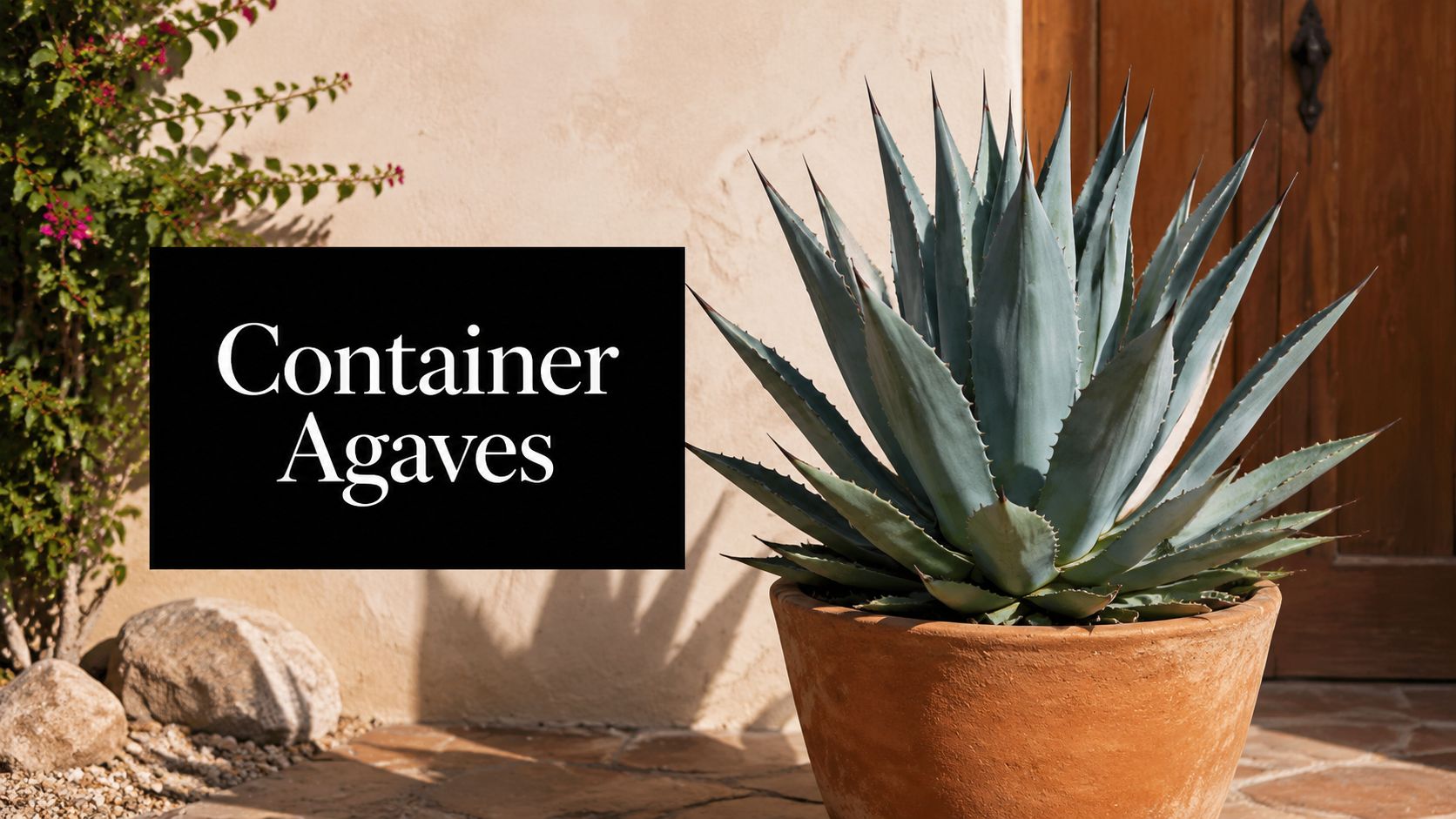
The best agave for outdoor containers isn't the largest or most dramatic plant. It's the species that matches your winter minimum, fits the mature pot footprint, and can dry quickly after irrigation. For buyers comparing patio plants, large planters, and cold-hardy specimens, those three decisions matter more than appearance alone.
Why Container Agaves Fail and How to Avoid It
A homeowner often creates the same failure without realizing it. They place a newly purchased agave in a decorative pot with no drainage hole, add ordinary potting soil, and position the container where rain collects. The plant may look fine for a while, but the root zone remains wet, the crown loses oxygen, and the lower leaves begin to collapse.

The pot changes the risk
In-ground agaves benefit from the surrounding soil's thermal mass and broader drainage area. A container exposes the root zone on every side, so temperature changes reach the roots faster. The pot also offers less room for water to disperse, and a poorly chosen mix can stay damp around the crown long after the surface appears dry.
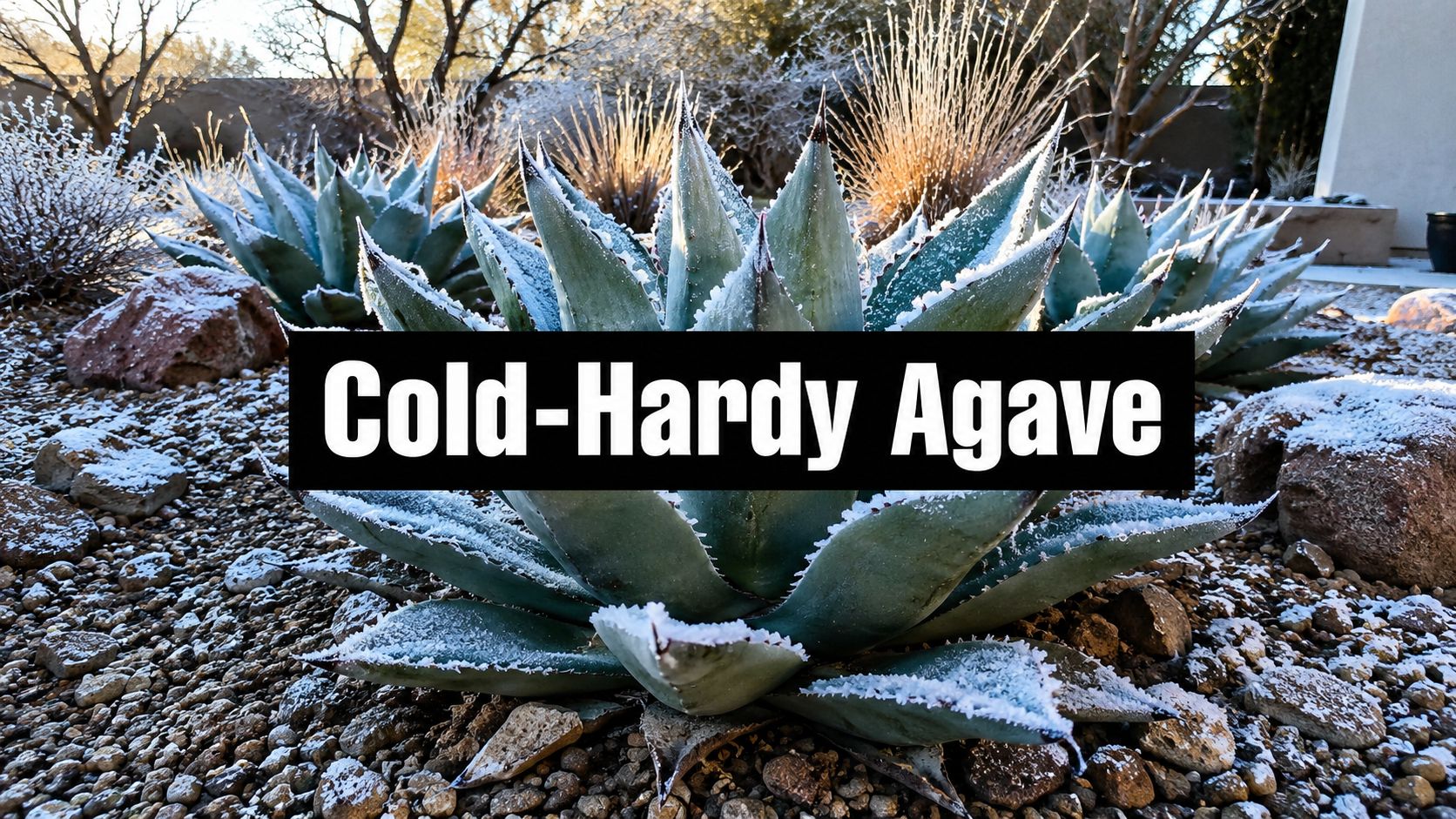
That difference becomes serious during winter. Published guidance places many agaves in USDA Zones 8a through 9b, approximately 10 to 30°F, or -12.2 to -1.1°C, while a few species, including Agave parryi, can reach USDA Zone 5a, around -20°F, or -28.9°C (University of Florida IFAS). Those ratings are useful, but a pot-grown plant still has an exposed root system that needs more careful protection than a plant established in the ground.
Practical rule: Treat the published zone as a starting point, not permission to leave every container outside during a freeze.
Choose survival before drama
Large species can look spectacular in a spacious garden bed, but they're harder to stabilize in wind, shelter from winter rain, and move when a hard freeze approaches. Compact or slow-growing agaves usually make better patio purchases because they remain manageable and place less stress on the pot and root zone.
The first buying questions should be simple:
- Winter minimum: What is the lowest temperature your patio normally faces?
- Exposure: Will the pot sit in full sun, reflected heat, wind, or winter rain?
- Mature footprint: Can the container accommodate the rosette at maturity?
- Drainage: Does the pot have a real drainage hole, and will water escape freely?
- Mobility: Can you shift the plant under cover before freezing weather?
A good-looking tender agave can still be the wrong purchase for an exposed northern patio. A smaller, cold-hardy species often delivers better long-term value because it survives the conditions that exist at your home.
What Makes an Agave Suitable for Outdoor Containers
Three traits separate a dependable container agave from a risky impulse purchase: cold hardiness, mature size, and drainage tolerance. Ignore one of them and the plant may fail even when sunlight and watering appear reasonable.

Cold hardiness must match the exposed root zone
Agave hardiness varies widely by species and selection. Many agaves are best treated as plants for Zones 8a to 9b, while a small group extends into colder regions. Container buyers should compare the local winter minimum with the plant's listed threshold, then leave room for the added exposure created by a pot.
A container doesn't provide the same insulation as surrounding ground. The exact temperature difference depends on pot material, wind, moisture, container size, and placement, so there isn't a reliable universal number to subtract from the outdoor forecast. That's the practical gap many buying guides skip. They say to move an agave before frost, but they rarely explain that the root zone may be at greater risk than the air reading suggests.
Mature size determines whether the purchase remains practical
A rosette that fits a nursery pot may eventually become too broad for a narrow patio. Agave parryi reaches about 1.5 feet tall by 2 feet wide, making it a strong compact choice for patio containers (Alibaba Life Tips). Agave ovatifolia grows to about 3 feet tall by 5 feet wide, so it belongs in a large outdoor planter where its mature spread can remain visible and stable (Desert Garden).
The pot should support the plant without swallowing it. An oversized container holds more wet medium than the root system can use, while a slightly root-restricted setup dries more predictably.
Drainage protects the crown
Agaves need a fast-draining, mineral-forward substrate and a pot with a drainage hole. Mineral grit, pumice, lava rock, or a comparable coarse component creates air space and encourages rapid dry-down. That matters because persistently wet conditions reduce oxygen around roots and increase the risk of crown rot.
Clay and terracotta help moisture leave the container through their porous walls. Saucers should be avoided outdoors or emptied immediately after rain and irrigation, because standing water keeps the root zone wet. Use full sun where the species and climate allow, but don't compensate for poor drainage with extra light.
Top Agave Species for Patio and Container Planting
A container can expose an agave to colder conditions than the same plant in the ground. Soil around an in-ground root system buffers temperature, while a pot chills from every side. Choose the species by winter exposure first, then match its mature size to the patio.
| Species | Mature Size | Cold Hardiness | Best Container Use |
|---|---|---|---|
| Agave parryi | About 1.5 feet tall by 2 feet wide | USDA Zone 5 to 10, with Zone 5a references around -20°F, or -28.9°C | Compact patio pots and colder markets |
| Agave victoriae-reginae | Compact, selection-dependent | Commonly suited to warmer temperate zones | Formal entry pots and small architectural containers |
| Agave bracteosa | Compact to medium, selection-dependent | Favored for temperate container settings | Sheltered patios and repeat container groupings |
| Agave ovatifolia | About 3 feet tall by 5 feet wide | Roughly 5 to 0°F | Large outdoor focal containers |
| Agave attenuata | Large, selection-dependent | Tender, generally better in Zone 9 or warmer | Frost-free patios and protected architectural displays |
| Agave americana | Large, selection-dependent | Tender compared with compact cold-hardy choices | Spacious warm-climate containers with managed winter exposure |
Best compact choice for cold exposure
Agave parryi is my first recommendation for a container that must face real winter cold. Its compact form is easier to stabilize, cover, and move than a broad specimen. Compact agaves are also listed with thresholds ranging from 10°F to 25°F, or approximately -12°C to -3.9°C, depending on species (Houzz). Treat those figures as a starting point, not a guarantee. A container remains more exposed than garden soil, especially when wind reaches the pot.
Best formal selections for moderate climates
Choose Agave victoriae-reginae for a controlled, geometric rosette at an entry, courtyard, or seating area. Agave bracteosa has a softer profile and suits patios where a heavily armed agave would feel too severe. Both remain more manageable than a large architectural species, but neither should be your first choice for an exposed, cold-winter container.
Best large statement plant
Agave ovatifolia belongs in a broad patio or a large outdoor container. Its mature size of about 3 feet tall by 5 feet wide creates strong focal presence, yet the spread requires a stable pot and generous clearance. Select it for a warm site, or for a home with a practical winter-protection plan.
Agave attenuata and Agave americana are warm-climate purchases. Their large mature size and tender growth make them poor choices for exposed cold patios, even when a young nursery specimen looks perfectly manageable.
Coordinate the pot with paving, seating, and outdoor furniture. Lott's guide to designing your patio helps define the agave's visual role before you commit to a large container.
For a blue-toned selection, consult this Agave Blue Glow care guide before ordering. It helps you compare color, form, and placement requirements with the conditions on your patio.
Potting Setup and Soil Requirements for Container Agaves
Start with the container, not the soil. A premium agave can't compensate for a sealed decorative pot or a medium that holds water around the crown.
Choose a pot that dries predictably
Terracotta and unglazed clay are the safest default for outdoor agaves because their porous walls help reduce moisture persistence. Glazed ceramic can work if the drainage hole is generous and the mix dries rapidly, but plastic retains moisture longer and demands more disciplined irrigation.
Select a container that's only modestly larger than the root ball. Slight root restriction keeps the plant stable and limits the volume of wet soil. An oversized pot may look impressive at purchase, but it creates a damp reservoir beneath a relatively small root system.

Build the mix around air and rapid drainage
Use a cactus or succulent mix with a strong mineral component. A practical blend shown in the supplied potting guidance uses 50% mineral grit and 50% potting soil, while the most important principle is that the finished medium drains quickly and dries between irrigations. Pumice, lava rock, coarse grit, and similar materials help maintain air space around roots.
Avoid burying the crown. Set the agave at the same level it occupied in its nursery container, or slightly high if the medium may settle. Keep leaves and the central growing point clear of soil and wet mulch.
Follow these setup steps:
- Inspect the hole: Water must exit from the bottom without obstruction.
- Use the mineral-forward mix: Combine the gritty component thoroughly rather than placing a thin layer of rocks beneath dense soil.
- Set the root ball high enough: The crown must remain dry and visible.
- Firm the sides: Press the medium around the roots to stabilize the plant, but don't compress it into a dense mass.
- Top-dress selectively: Gravel can improve the finished appearance and keep leaves away from damp soil, but it shouldn't prevent the medium from drying.
A deep drainage layer at the bottom is included in some container layouts, but it doesn't replace a porous, well-mixed growing medium. The hole and the soil texture do the essential work.
For larger decks and raised entertaining areas, these deck planter box ideas can help you position heavy agave containers safely and maintain clear access around them. For broader soil guidance, see The Cactus Outlet's best soil for potted cactus.
Cold Climate Container Survival and Overwintering Strategy
A wet root zone during freezing weather poses the greatest risk to container agaves. Pots lose heat from their sides as well as their tops, so roots can face colder conditions than those of an established in-ground plant. Wind, saturated soil, and repeated freeze-thaw cycles widen that gap. A mature container may also be too heavy to move near a bright window, making species selection and winter timing more important than last-minute rescue.

Build a buffer around the listed rating
USDA hardiness information describes a climate range, but it does not provide a reliable container threshold for every species. A pot offers less insulation than the ground, particularly when exposed to wind. Do not treat a Zone 8 rating as a guarantee for an uncovered container.
For cold markets, choose Agave parryi ahead of a tender species. Its listed Zone 5 to 10 range and compact form give it a stronger starting point than large, warm-climate agaves (Alibaba Life Tips). Other compact agaves may carry published thresholds around 10°F, 15°F, 20°F, or 25°F, but those figures apply to the specific species and selection, not to agaves as a group.
Match the plant to the winter it will face. Use this cold-hardy agaves guide to compare species when winter survival matters more than maximum size.
Move before the dangerous combination
Keep container agaves nearly dry once temperatures fall below 60°F, then move them under cover before freezing nights, following the care guidance from World of Succulents. A dry plant handles a brief cold spell better than one sitting in saturated medium.
A sheltered garage, covered porch, greenhouse, or bright unheated structure usually works better than a warm living room. Protect the plant from freezing temperatures while maintaining air movement and a dry root zone. Leave space between plants, and avoid locations where condensation stays on the leaves.
Use this winter sequence:
- Before the forecast turns cold: Stop routine watering and check for trapped moisture.
- Before a freeze: Move tender or borderline species under cover.
- During storage: Keep the plant dry, ventilated, and in the brightest suitable light available.
- In spring: Reintroduce direct sun gradually instead of moving a dimly stored plant straight into intense exposure.
Seasonal Care Routines for Healthy Container Agaves
Container agaves stay healthy when watering, light, and handling follow the plant's growth and the weather, not a rigid schedule. Soak the root zone thoroughly, then wait until the potting medium dries before watering again. In cool, humid conditions, a damp pot can remain wet for too long.
Adjust irrigation to the season
During warm, bright weather, inspect the container more often because evaporation increases. As temperatures cool, reduce watering sharply. Below 60°F, keep container agaves nearly dry, especially when growth slows and sheltered placement limits evaporation.
Rain counts as irrigation. Set pots where excess water can drain freely, and empty saucers after storms. Soft tissue at the base, persistent spotting, dying leaf tips, or a sour-smelling medium indicates a moisture or drainage problem. Check the root zone before adding more water.
Manage light after delivery
A newly delivered agave needs time to adjust to outdoor exposure. Place it first in bright, indirect light or gentle morning sun, then increase direct exposure gradually. Sudden full sun can scorch leaves, even on species that eventually require strong light.
After acclimation, use the brightest practical position suited to the local climate. In extreme heat, limited afternoon shade can protect leaf quality. Deep shade, however, produces weaker, less compact growth in sun-loving agaves.
Keep feeding and repotting restrained
Agaves need little fertilizer. Feed lightly with a succulent-appropriate product during active growth, rather than applying fertilizer repeatedly. Repot only when the plant has outgrown the container, the pot has become unstable, or the medium no longer drains well.
Keep the winter transition in mind during routine care. A plant that is easy to move while small can become hazardous once the pot is heavy, so choose a stable work surface and wear thick gloves when handling spined leaves. Large specimens require help before lifting, and the final placement should be decided before moving becomes difficult.
Choosing and Buying Your Container Agave with Confidence
Start with your USDA zone and winter minimum, then assess the actual patio. A sheltered wall, covered entry, or movable pot gives you more flexibility than an exposed deck, but every container still needs fast drainage and a realistic winter plan.
Match the plant to the space:
- Compact patio pot: Choose Agave parryi or another compact selection.
- Formal entry display: Consider Agave victoriae-reginae for a controlled geometric profile.
- Large architectural planter: Choose Agave ovatifolia only when the mature width and winter protection plan make sense.
- Warm, frost-free placement: Tender forms such as Agave attenuata can work where cold exposure is limited.
When buying online, inspect the product description for mature dimensions, placement guidance, and the plant's stated hardiness. Look for firm leaves, a solid crown, and a container that can be handled safely after delivery. After arrival, unpack carefully, check the root zone, and acclimate the plant to its final light level instead of placing it directly into harsh sun.
The Cactus Outlet's agave collection gives container buyers a focused place to compare agave plants and related care information before ordering. Select the species for your climate first, then choose the largest practical specimen that your pot, patio, and winter storage plan can support.
The Cactus Outlet offers agaves and other drought-tolerant plants for homeowners planning patio containers, architectural landscaping, and cold-climate collections. Visit The Cactus Outlet to compare agave options and choose a specimen that fits your container, placement, and winter strategy.