
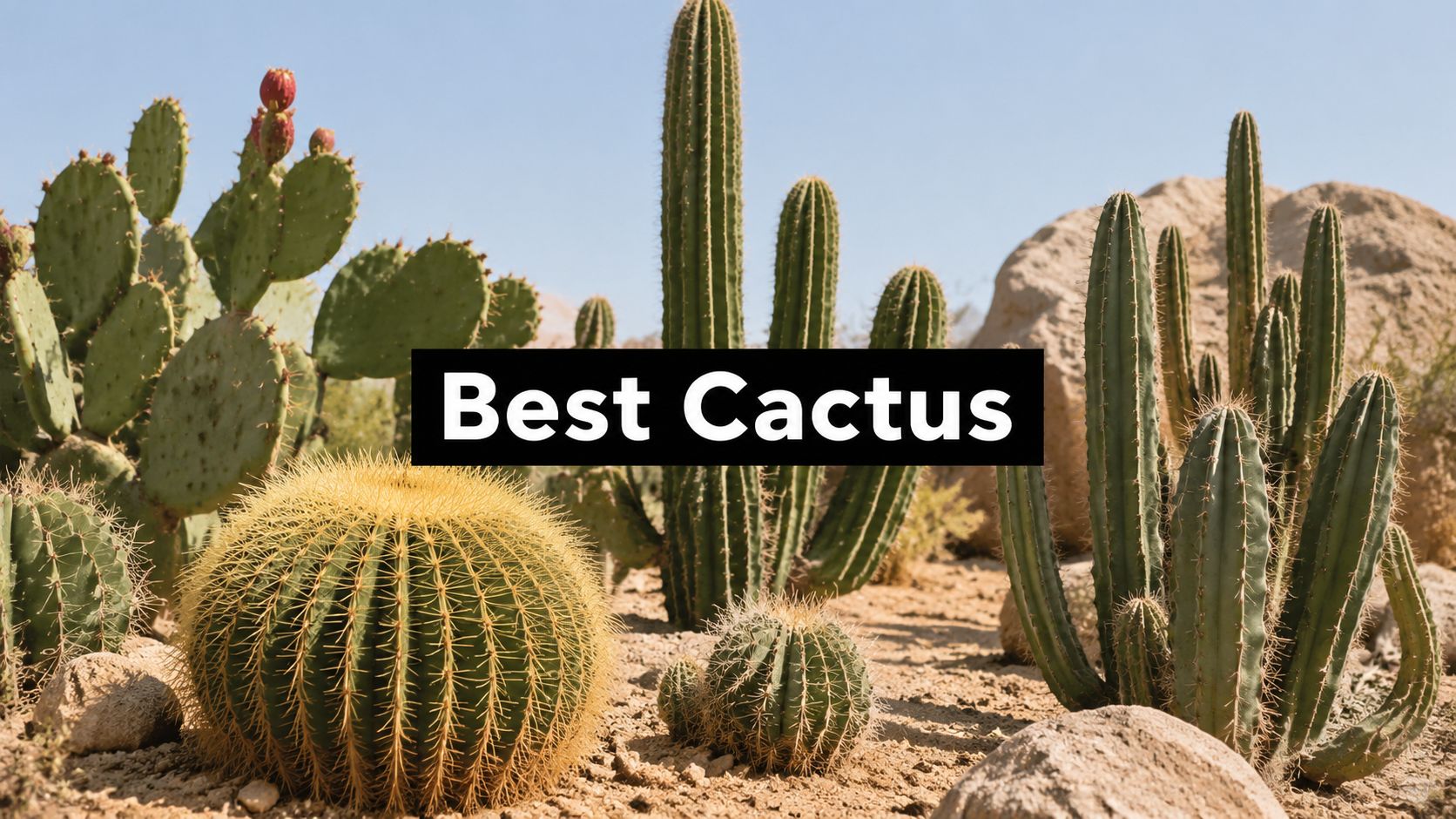

The most popular advice about the best cactus for desert landscaping is often wrong. A dramatic saguaro or golden barrel may look perfect in a magazine, yet the right purchase depends on your USDA zone, soil drainage, water budget, mature footprint, and even HOA view-corridor rules. A cactus that thrives in one desert yard can become an expensive replacement project in another.
Treat this as a buying decision, not a popularity contest. Large specimen cacti need to survive your specific combination of summer heat, reflected light, winter cold, monsoon moisture, and available planting space. The strongest design usually combines one or two structural cacti with agaves, yuccas, aloes, ornamental grasses, and other drought-tolerant plants rather than filling every bed with cactus alone.
Why the Best Cactus Is Not Always the Most Iconic
Saguaro is the obvious choice for a desert statement plant, but obvious doesn't mean practical. Carnegiea gigantea grows slowly, is sensitive to frost, and may face legal restrictions when sourced from native populations. A large specimen also demands careful delivery access, a stable planting site, and enough room for its mature silhouette.
Mexican giant cardon presents a different problem. Pachycereus pringlei is the tallest known cactus in the world. The University of Arizona records one specimen at 63 feet, while typical mature plants reach 20 to 30 feet (University of Arizona Arboretum). That scale makes it an impressive estate anchor, but a poor fit for a compact suburban lot or a narrow side yard.
Blue columnar cacti can also disappoint when buyers focus on color instead of exposure. Summer monsoon humidity, heavy soil, and poor drainage create a very different risk profile from a dry, raised desert bed. The same plant may perform well in a sharply drained gravel garden and decline in a flat lawn conversion where irrigation reaches the root zone too often.
The buying rule: Choose the cactus that remains viable after your worst seasonal conditions, not merely the plant that looks best on delivery day.
Three filters matter before you compare varieties. Size tells you whether the specimen belongs in a foundation bed, courtyard, privacy screen, or open acreage. Hardiness separates heat tolerance from cold tolerance, a distinction that matters when winter freezes follow long hot summers. Water behavior determines whether your irrigation routine supports the plant or slowly damages it.
Cacti have an unusually broad range of forms because the family has diversified over a very long period. Sources estimate that the cactus family began diversifying about 30 million years ago, with major expansion between 5 and 10 million years ago as drought intensified in South America. Modern taxonomic estimates place the family at about 1,750 known species, with roughly 75% classified as true cacti (Coachella Valley Water District landscape guide). That diversity is useful to a buyer, but it also makes one-size-fits-all plant lists unreliable.
A mixed desert palette gives you more control. Use a cactus as the architectural accent, then surround it with plants that add foliage, seasonal texture, pollinator value, and visual balance. Agaves, yuccas, aloes, and succulents can share a water-wise design without forcing the yard to resemble a cactus collection.
Choosing by Size, Hardiness, and Water Needs
Before adding a large cactus to your cart, run it through three selection lenses. These filters eliminate unsuitable plants early and keep a beautiful specimen from becoming a poor outdoor investment.
Measure the mature footprint
Nursery pot size tells you what arrives, not what the plant will eventually occupy. Measure the planting area from foundations, walkways, gates, windows, play areas, and service access. A round barrel may remain compact enough for a courtyard, while a columnar cactus needs vertical clearance and a wider safety perimeter as it develops.
Don't buy a plant for an empty space without checking its mature form. A tall, narrow cactus can anchor a rear bed, but it may overwhelm a low patio. A spreading opuntia can create excellent color and structure, yet it needs room away from foot traffic.
Separate heat tolerance from cold tolerance
A Phoenix yard and a Tucson foothill yard can expose the same cactus to different winter conditions. USDA hardiness is only one filter, because a protected south-facing wall, reflected heat from masonry, wind exposure, and local drainage can all alter the result.
For colder regions, University of California guidance identifies Opuntia, Ferocactus, Echinocereus, Escobaria, Coryphantha, and some Cereus and Mammillaria species among cold-hardy cacti for outdoor planting (University of California Agriculture and Natural Resources). Those genera give buyers a stronger starting pool than just picking a familiar desert icon.
Match water to your actual routine
Cacti are low-water plants, but newly planted specimens still need establishment irrigation. Mature native cactus plants in Arizona generally need no irrigation except during prolonged summer drought. During southern Arizona summers, mature plants may need water only once to twice per month, while normal rainfall can eliminate irrigation from late fall through early spring (University of Arizona Cooperative Extension).
That doesn't mean every desert-look plant belongs on the same schedule. Some companion plants need more regular irrigation, and a cactus planted beneath a lawn sprinkler will receive water it can't use safely.
| Lens | What to Measure | Reject If… |
|---|---|---|
| Mature size | Height, width, root-zone space, and clearance from structures | The mature silhouette won't fit the bed or access route |
| Hardiness | USDA zone, winter exposure, wind, reflected heat, and frost pockets | The species is marginal for your coldest site conditions |
| Water needs | Irrigation frequency, rainfall pattern, and soil drying time | Your routine or irrigation system keeps the root zone wet |
Use a simple self-filter: Does it fit the lot, survive the zone, and tolerate the water schedule? If the answer is no to any one of those questions, remove the species before comparing color or price.
Top Cactus Species for Desert Landscaping
The right cactus is the one that survives your yard's heat, soil, and cold exposure. Appearance comes after those tests. Build the planting around a few reliable structural plants, then add agaves, yuccas, aloes, grasses, and drought-tolerant shrubs so the garden has contrast instead of becoming a cactus-only display.
| Species | Mature Size | Hardiness Zone | Water Needs | Best Landscape Use |
|---|---|---|---|---|
| Saguaro, Carnegiea gigantea | Slowly reaches about 50 feet tall and up to 30 inches in diameter | USDA Zone 9 | Low once established, with careful establishment watering | Structural focal point |
| Mexican giant cardon, Pachycereus pringlei | Typically 20 to 30 feet, with a documented specimen at 63 feet | Site-dependent, best for warm desert climates | Low once established in fast-draining soil | Large-site anchor |
| Golden barrel, Echinocactus grusonii | Compact rounded specimen, selected by mature width | USDA Zones 9 to 11, with cold sensitivity | Very low in suitable dry soil | Color accent, courtyard, container |
| Blue yucca, Yucca rigida | Upright architectural rosette | Climate-dependent | Low after establishment | Companion focal plant |
| Soaptree yucca, Yucca elata | Tall trunk-forming yucca | Cold-tolerant in suitable regions | Low after establishment | Background structure, privacy rhythm |
| Santa Rita prickly pear, Opuntia santa-rita | Spreading pad-forming cactus | Suitable for many warm and colder desert sites, verify the local climate | Low once established | Massing, edge, purple contrast |
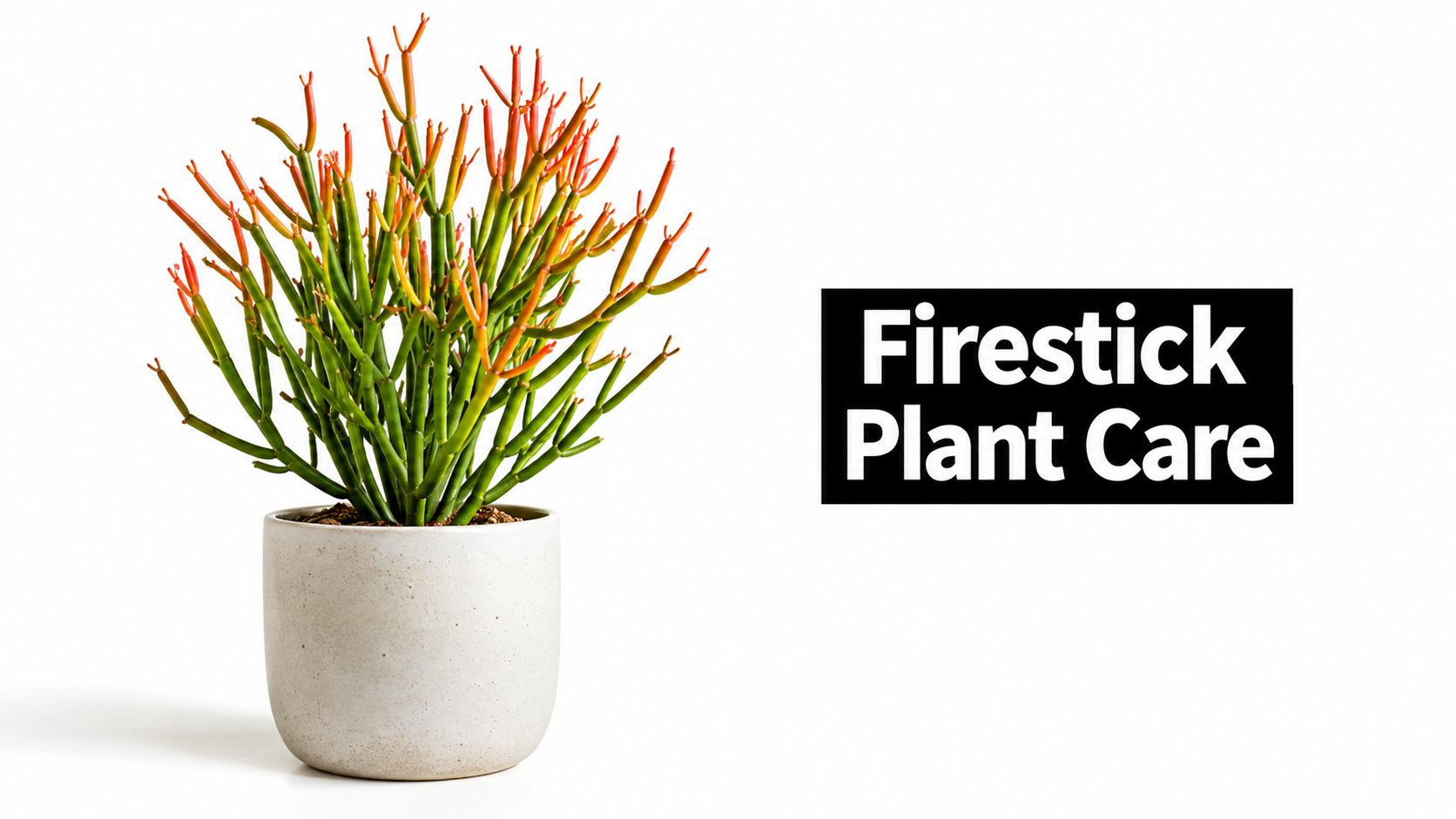
| Candelilla, Euphorbia antisyphilitica | Upright clustered stems | Warm, dry climates | Very low with excellent drainage | Textural filler, mass planting |
| Claret cup hedgehog, Echinocereus triglochidiatus | Low clumping form | Cold-hardy option for Zone 7 | Low after establishment | Rock garden, front edge, container |
| Teddy Bear cholla, Cylindropuntia bigelovii | Upright branching cholla | Cold-hardy option for Zone 7 | Low after establishment | Sculptural mass, dry edge |
The large structural choices
Choose a saguaro only when the property has sufficient room and the climate supports it. Oregon State University describes Carnegiea gigantea as growing slowly to about 50 feet tall and as much as 30 inches in diameter, with hardiness to USDA Zone 9 (Oregon State University Landscape Plants). It creates strong vertical identity, but it is a poor choice for quick privacy or a cramped side yard.
Mexican giant cardon suits a large, open property that can accommodate a taller specimen. Use it where its eventual scale is an asset. Keep it away from narrow driveways, utility lines, and tight foundation beds.
The smaller accents and companions
Golden barrel earns its place in compact courtyards, raised-bed corners, rock gardens, and large containers. Its rounded form supplies a clear color and shape accent, while its cold sensitivity limits where it belongs. Barrel cacti are highly drought-tolerant and suited to xeriscaping in USDA hardiness zones 9 to 11, provided they have very fast-draining soil and protection from prolonged freezing (Gardenia barrel cactus guide).
Santa Rita prickly pear is the stronger choice when you need broad coverage and pad color. Pair its purple pads with blue-green agave or pale gravel mulch so the contrast looks deliberate. Candelilla fills open spaces with narrow upright stems. Repeat it through a bed for texture rather than isolating one plant as a specimen.
Blue yucca and soaptree yucca broaden the palette beyond round and branching cactus forms. Blue yucca works as an architectural accent, while soaptree yucca adds height and repeated vertical rhythm in a background planting. Both need a climate and soil that support dry roots after establishment.
For colder sites, claret cup hedgehog and Teddy Bear cholla are practical choices for rocky edges, raised beds, and containers with controlled drainage. Their cold tolerance does not excuse poor placement. Check the local exposure, especially in frost pockets, before committing to a specimen.
Use this guide to large cactus types for landscape roles to compare mature forms before choosing a focal plant. Native-harvest species may be regulated, so confirm lawful sourcing and local permit requirements before buying or relocating an iconic native cactus.
Designing a Desert Yard That Holds Together
A desert yard should look composed, not like a cactus museum. Start with one large structural cactus, such as a saguaro, cardon, or large opuntia, then build layers around it with agaves, yuccas, aloes, smaller cacti, ornamental grasses, and drought-tolerant shrubs.
Place the tallest plant toward the back or at a key sightline. Low-growing prickly pear and hedgehog cactus belong near the front of a bed, where their forms remain visible without blocking windows or paths. Cacti should create rhythm and punctuation, while companion plants keep the space from becoming visually repetitive.

Build the composition in layers
Keep large cacti at least 6 to 10 feet from foundations, walkways, and play areas. That clearance protects people, preserves maintenance access, and gives the plant room to read as a specimen rather than a hazard beside the house.
Cluster smaller specimens in groups of three to five, using odd-number groupings instead of straight lines. Vary height, pad shape, leaf form, and color. A purple Santa Rita opuntia beside a blue agave and a claret cup hedgehog creates more depth than three identical barrels spaced evenly across a bed.
Use boulders to break up repeated plant shapes. Raised beds improve drainage on flat lots, while swales can direct stormwater away from cactus root zones. Decomposed granite mulch gives the installation a finished surface, but it shouldn't replace proper soil preparation.
A useful visual target is a 30 to 40 percent evergreen ratio in the planting composition. That keeps the yard from looking bare in winter while leaving enough open gravel and negative space for a desert character. For homeowners who want to test paths, sightlines, and mature silhouettes before ordering, landscape design software for homeowners can help preview a layout. For broader palette ideas, compare this approach with drought-tolerant landscape design.
Planting, Watering, and Seasonal Care
A large cactus doesn't need elaborate planting, but it does need correct drainage and careful acclimation. Dig the hole only as deep as the root ball and two to three times wider. Use a backfill blend of 50/50 native soil and pumice or decomposed granite, and avoid straight compost, which can hold excess moisture around roots.
Set the cactus at the same depth it occupied in its container. Don't bury the stem. Firm the soil gently, stabilize the plant if necessary, and keep mulch away from the base so air can circulate and water doesn't collect against the tissue.

Handle bare-root and shipped plants carefully
Bare-root opuntias and columnar types need a callused planting surface. Let fresh cuts dry for 7 to 14 days before setting them into the ground. A dry callus reduces the chance that moisture enters an open cut during the first stage of rooting.
For shipped cacti, begin in bright shade or filtered light rather than placing the plant immediately in intense sun. Independent nursery guidance recommends avoiding immediate watering and waiting about 2 to 5 days before repotting. Another acclimation approach uses 3 to 5 days in bright shade, followed by gradual sun exposure over 1 to 2 weeks (Cactus Art care guidance).
Shipping rule: A cactus that arrives dry should stay dry while it adjusts to its new light and temperature conditions.
Water deeply, then let the soil dry
Water at planting, then use a soak-and-dry pattern. During the first summer, water every 10 to 14 days, allowing the root zone to dry between applications. By the second year, taper toward monthly watering or rainfall-only conditions, depending on the plant, soil, and local weather.
Skip irrigation in winter when soil temperatures fall below 50°F. Fertilize lightly in spring only, using a low-nitrogen 5-10-5 formulation. Protect sensitive species during the first hard frost with frost cloth and Christmas lights, keeping the lights safely arranged and away from wet materials.
For a practical outdoor planting walkthrough, use this guide to planting succulents outdoors. You can also review the process visually below.
Common Problems and How to Prevent Them
Most cactus failures trace back to a mismatch between species and site. Heat, cold, and wet roots affect different plants in different ways, so the fix should target the plant and the exposure rather than applying one universal care routine.
Heat stress and sun scald
Young or newly transplanted columnar cacti can suffer sun scald when their tissue hasn't adjusted to intense exposure. Use 30 to 50 percent shade cloth during the first summer and avoid west-facing exposures above 110°F. Gradually increase direct sun as the plant establishes.
Saguaros and other iconic species also deserve a heat-risk review. Recent research on saguaro health found a persistent legacy from the 2020 to 2021 heat-and-drought anomaly, with repeated surveys showing markedly reduced current health and survival in the northern Sonoran Desert (PubMed). Routine drought tolerance doesn't guarantee resilience after abnormal heat events.
Cold damage and winter exposure
Golden barrel and Peruvian apple cactus can suffer in marginal climates. In USDA Zone 7 and below, favor cold-hardy prickly pears, claret cup hedgehogs, and other suitable Echinocereus rather than relying on emergency protection every winter. South-facing stone walls can act as radiant heat banks, but they don't erase a poor hardiness match.
Root rot and heavy soil
Heavy clay and frequent irrigation trap water around roots. Plant on a 6 to 12 inch berm when drainage is poor, install a French drain upslope if runoff moves toward the bed, and follow the soak-and-dry schedule from the planting plan. Fast drainage matters more than adding rich organic material.
| Problem | Signs | Most Affected Species | Prevention |
|---|---|---|---|
| Heat stress or sun scald | Pale, bleached, or damaged tissue on exposed sides | Young or newly transplanted columnar cacti | Shade cloth, gradual sun exposure, and careful west-side placement |
| Cold damage | Softened, discolored, or collapsed tissue after freezing | Golden barrel and Peruvian apple cactus in marginal climates | Select cold-hardy substitutes or use protected microclimates |
| Root rot | Soft base, declining color, and slow collapse | Cacti in heavy clay or overwatered beds | Berms, drainage control, and dry intervals |
| Cochineal scale | White cottony clusters on opuntia pads | Opuntia | Inspect pads and respond with species-appropriate cleaning or treatment |
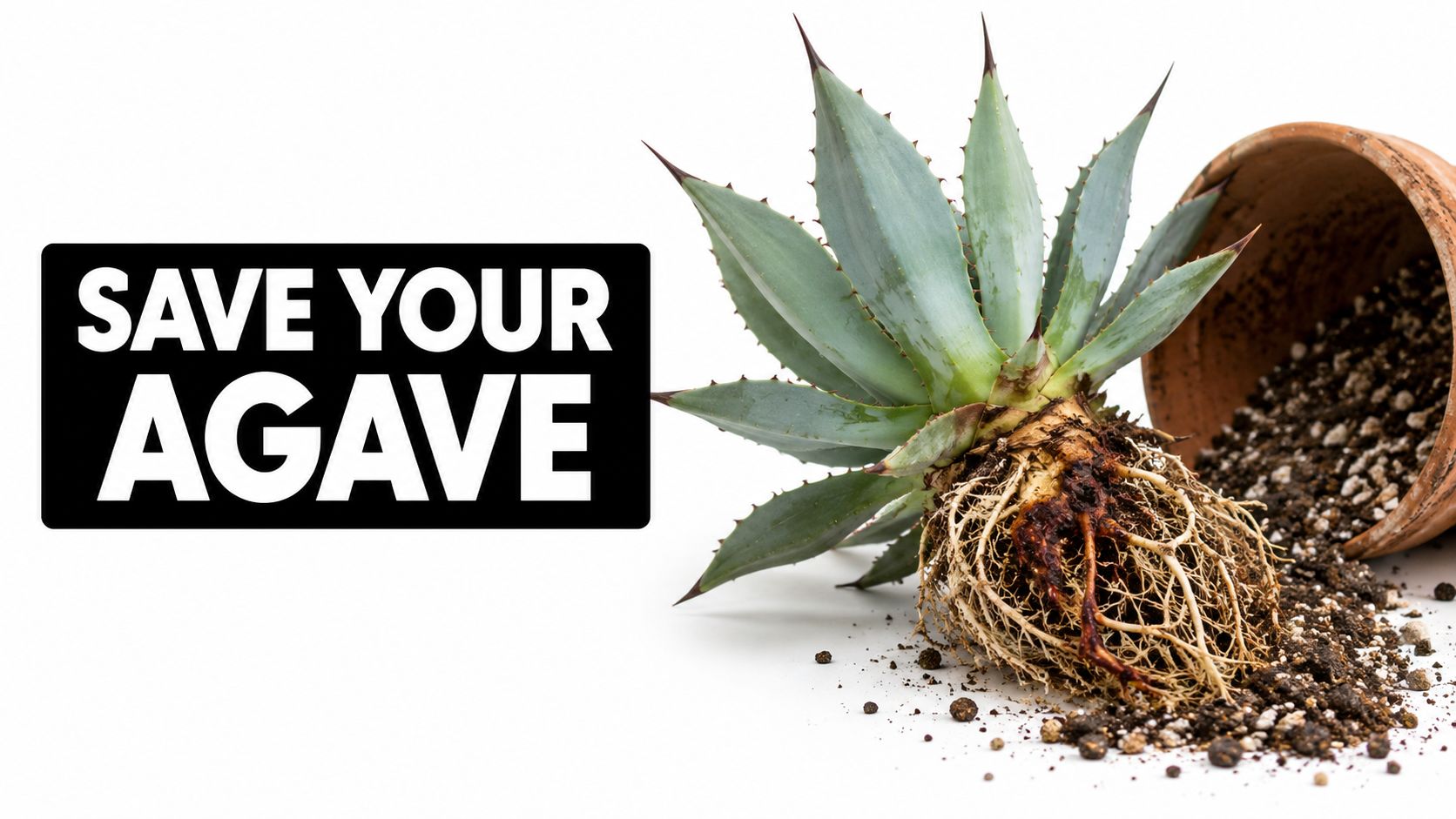
| Agave snout weevil | Decline around the crown of agaves | Agave companions | Inspect incoming plants and isolate concerns before planting |
A Practical Pre-Purchase Checklist
Before you order a large cactus online, confirm the site rather than trusting the product photo. The plant should pass a hardiness check, a footprint check, and a drainage check before you compare color or shape.
- Verify the zone and microclimate: Record the USDA zone, frost exposure, wind, reflected heat, and nearby masonry.
- Measure the mature footprint: Compare the plant's expected height and width with foundations, paths, gates, windows, and utility access.
- Test drainage: Identify heavy clay, low spots, irrigation overspray, and stormwater flow before choosing a specimen.
- Confirm delivery access: Measure gates, driveway clearance, turning space, and the route from unloading point to planting bed.
- Arrange labor and equipment: Have thick gloves, protective clothing, suitable tools, and a planting crew ready for a large or heavily spined specimen.
- Prepare backup species: Keep alternatives in the same functional role in case your first choice isn't available.
- Plan acclimation: Reserve a bright-shade area and delay immediate watering for newly delivered plants.
The next generation of desert landscaping will focus less on iconic appearance and more on ultra-heat-resilient native species, hybrid spineless opuntias, and climate-adapted agaves that work alongside traditional cacti. That shift makes sense for homeowners investing in mature specimens. A plant that survives your actual heat, soil, and cold profile is a better purchase than a fashionable species that needs constant protection.
The Cactus Outlet offers large cacti along with agaves, aloes, euphorbias, and succulents for desert scenery, patios, containers, and mixed water-wise beds. Review the species descriptions and care information, compare your site against the mature plant's requirements, and visit The Cactus Outlet to choose a specimen that fits your yard rather than merely matching a trend.