

You can spot the problem before you even pick up the plant. A patio cactus starts failing when the pot is too large, too dense, or too pretty to drain properly. That's why the key question isn't just which cactus looks good on a terrace, it's which one can live happily in the container you'll use.
For most homeowners, the best cactus for patio containers is the one that stays compact, tolerates a snug pot, and doesn't punish you for the normal dry-down cycle between waterings. The container sets the rules. Species choice matters, but only after you get the pot size, material, drainage, and climate match right.

Why Container Choice Matters More Than Species Selection
A lot of patio cactus failures start with a decorative planter that looks great in the showroom and performs terribly once it's outside. Oversized containers hold too much wet mix around a small root ball, and that's exactly where rot starts. The practical rule is simple, use a snug pot rather than a generous one. One container guide recommends pots 1 to 3 inches wider than the root ball, while another says just 1/4 to 1/2 inch wider than the root mass, and both are saying the same thing in plain English, don't give a cactus excess soil it can't dry out fast enough. Container-sizing guidance for cactus pots
The pot should fit the roots, not the furniture
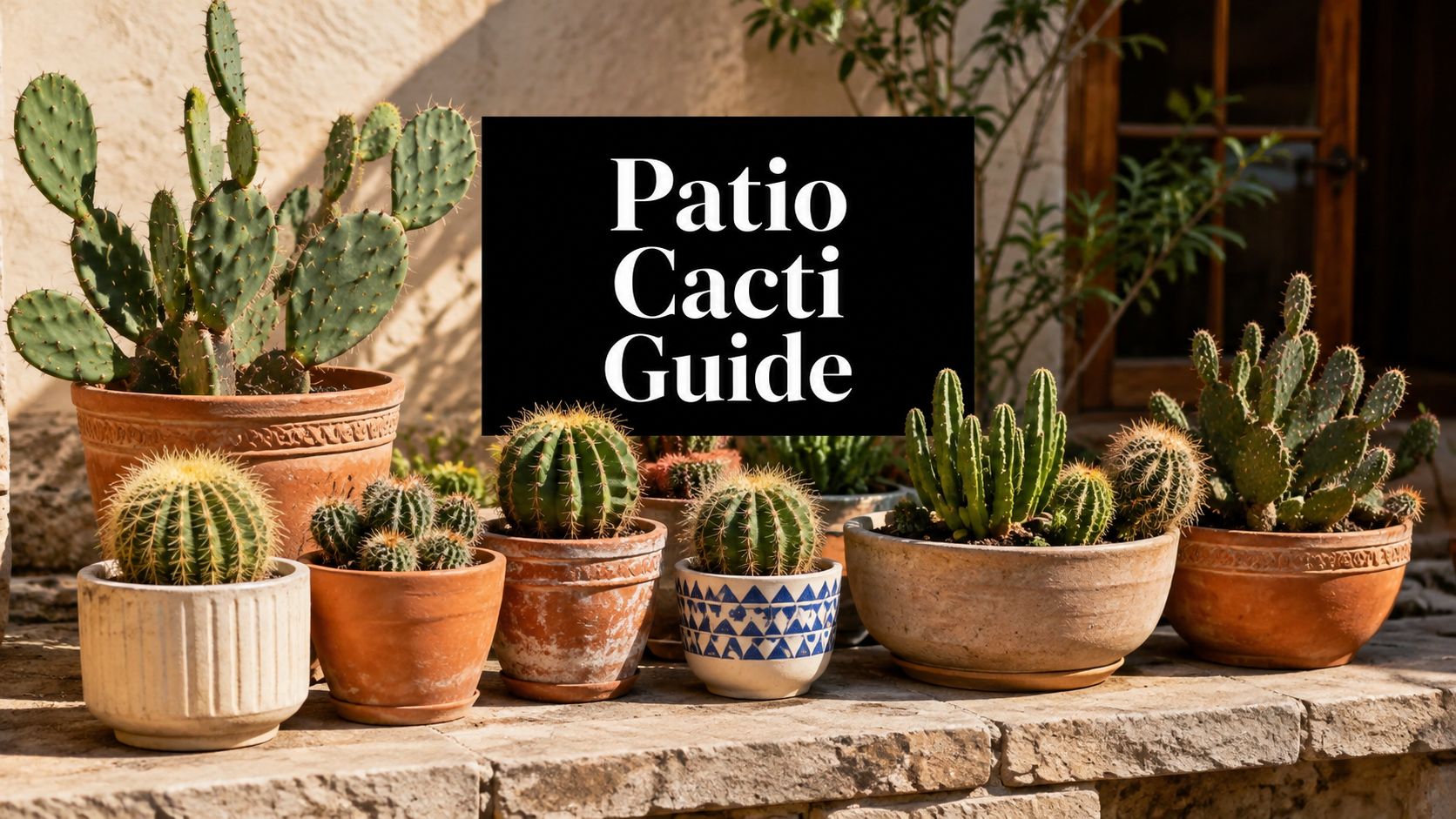
If you're shopping for a patio cactus, start with the container you want to use, not the plant you hope to cram into it. A broad, shallow planter can work well for compact cacti, but a big decorative bowl often holds moisture too long unless the plant is already sizable and the mix is extremely gritty. The same source stresses drainage holes, bright light, and a free-draining mix, not rich potting soil, because patio cacti are especially vulnerable when roots sit wet.
Terracotta usually gives you the safest margin because it dries faster than glazed ceramic or plastic. That matters more in humid or coastal climates, where a pot that seems fine in a dry desert yard can become a slow rot chamber elsewhere. Container and material trade-offs for patio cacti
Practical rule: If the pot looks large enough to be “future proof,” it's usually too large for a cactus.
Patio design should follow moisture, not just style
A cactus on a sunny patio is not the same as a cactus on a sheltered porch. Wind, reflected heat, rain exposure, and nighttime cooling all change how long the soil stays damp. That's why nursery advice repeatedly points back to container fit and drainage instead of treating every patio the same. The plant survives because the pot supports dry roots between waterings, not because the species name sounded rugged.
Four Selection Criteria for Patio Container Cacti
A patio cactus fails or thrives because of four simple checks, and every one of them matters. Start with the mature size relative to the pot, because a plant that outgrows its container becomes unstable fast. Then match the light level to the exposure you have, not the bright tag language on the nursery bench. After that, judge the climate carefully, especially cold nights and winter moisture. Finish by choosing a growth rate that fits how often you are willing to repot.

Mature size tells you whether the plant belongs in a container
A patio cactus should still look in proportion after it settles in, not only on the day you bring it home. Horticultural guidance says to repot when the plant fills the pot or starts to tip, and to move up only one pot size at a time every 2 to 4 years or when roots fill the container. Container stability and repotting guidance That tells you everything you need to know about size. A cactus that is too large for the planter turns top-heavy, and a cactus that is too small for the planter sits in excess wet mix that stays damp too long.
Light and climate should drive the purchase
“Full sun” is too vague for patio buying. A bright, open terrace is one situation. A west-facing balcony that bakes in afternoon heat is another. Hot, sunny container advice treats cacti and succulents as strong patio plants, but performance depends on actual exposure and the container, not just the species label. Hot, sunny container guidance
Climate decides whether the plant stays healthy through the year. A cactus that tolerates dry heat can still fail if your patio gets cold at night or stays wet in winter. Choose for the weather you have, not the weather you wish you had.
Growth rate matters because containers punish impatience
Fast growers look good in a nursery photo, then crowd a planter before the season is over. Slower growers are the smarter buy for premium patio containers because they hold their shape longer and are easier to keep dry. A cactus that outgrows its pot quickly forces you into a larger container, and larger containers hold more moisture than most homeowners expect. That extra wet mix is where trouble starts.
Maintenance should match your watering habit
If you water on a schedule, choose a cactus and pot combination that can handle a clean dry-down between waterings. If you travel, pick a compact plant in a breathable container, not a thirsty arrangement in a glossy pot. The right choice is the one that fits your routine, because patio success comes from consistency, not rescue work.
| Patio Container Cactus Comparison | Species | Mature Size | Min Pot Size | Cold Hardy To | Water Frequency |
|---|---|---|---|---|---|
| Compact focal point | Golden barrel cactus | Qualitatively compact for containers | Small snug container | Qualitatively less tolerant of cold, protect in winter | Water only after the mix is almost completely dry |
| Sculptural upright choice | Organ pipe cactus | Larger, upright presence | Deep, stable container | Not a casual cold-climate patio plant | Dry-down watering, less often in cool weather |
| Patio statement plant | Peruvian apple cactus | Tall and columnar | Deep pot for stability | Better for warm patios | Soak and dry, with longer gaps in larger pots |
| Texture for mixed planters | Parry's agave | About 2 feet tall and 2 feet wide at maturity | Large, deep pot | Use with winter caution in colder areas | Allow the mix to dry almost completely |
| Smaller mixed-container option | Compact mammillaria types | Qualitatively small and clustering | Shallow to standard pot, depending on form | Better in protected patio settings | Dry thoroughly between waterings |
| Architectural collector plant | Joshua Tree type material available at The Cactus Outlet | Best in very large, stable containers | Large, deep pot | Best for warm-climate patio use | Infrequent watering after full dry-down |
If you want a broader design reference for plants that add texture to yards, it helps show where a sculptural cactus will carry the composition instead of fighting it.
Potting Soil and Container Setup for Long-Term Health
The soil under a patio cactus should be boring in the best possible way. It needs to drain quickly, hold very little excess moisture, and stay airy enough that roots can breathe after watering. That's why cactus mix is the baseline, not a luxury.
Use a gritty mix, not a rich one
A free-draining cactus medium is the standard, and every container guide points in the same direction. The core logic is simple, cactus roots need oxygen and fast dry-down. If you use a dense general-purpose potting soil, you trap moisture where the roots live. The internal guide on cactus soil at The Cactus Outlet covers this setup in more detail, and it's worth reading before you repot a patio specimen. Best soil for potted cactus
For premium container planting, I'd rather see a slightly too-gritty mix than a slightly too-rich one. That's because a cactus can recover from modest underfeeding far more easily than it can recover from a soggy root zone. The mix should feel open, crumbly, and fast-moving when you water it.
Choose pot material by climate, not by trend
Unglazed terracotta dries fastest, so it's the safest default in humid or rainy places. Glazed ceramic and plastic hold moisture longer, which can be helpful in hot, dry weather but risky anywhere humidity lingers. That same material trade-off is why a pot that works in Arizona may fail in Florida or near the coast.
A cactus pot should help you recover from imperfect watering, not magnify every mistake.
Drainage has to be real
A drainage hole is not decorative. It is the exit route that keeps water from pooling below the root ball. Container guidance also warns against oversized pots, because more soil means more retained moisture around roots. For fibrous-rooted cacti and agaves, a large, deep pot can be useful when the plant needs the volume, but the pot still has to be chosen for excellent drainage first. Container recommendations for cacti and agaves
The safest setup is a pot with holes, a gritty mix, and a plant placed high enough that it isn't buried in wet substrate. If you need a visual walk-through, the planting video below shows the mechanics of a clean, stable setup.
Placement Strategy and Seasonal Care Adjustments
The same cactus can thrive on one patio and rot on another, even when the label looks identical. Placement usually explains the difference. Sun angle, reflected heat, wind, and rain exposure all change how fast a container dries, so the smart move is to put the plant where it can shed moisture between waterings without cooking the roots.
Put the plant where the container can dry
A hot, bright patio corner can be right for an arid climate and punishing in a humid one. A sheltered overhang can block rain, but it can also trap moisture if airflow is poor. The better rule is simple. Match the container to the climate, then place it where the pot can breathe and dry at a steady pace.
For broader outdoor patio inspiration, a cactus container can work as a clean visual anchor without crowding seating or walkways.
Water less aggressively when nights cool down
Container cacti do not use water the same way through the year. In hot, dry conditions, watering may need to be regular, while larger pots can hold moisture longer and need less frequent attention. Once nights cool, the risk shifts fast, because wet soil and low temperatures are a bad pair. Climate-sensitive container watering guidance backs up that seasonal approach, so cut back hard when the pot dries slowly.
Adjust for summer heat and winter moisture
Summer heat reflected off stone, brick, or concrete can dry a pot faster than you expect. That can help in dry inland climates, but it can also stress a cactus that already gets full afternoon sun. If the pot sits on a blazing surface, move it a little farther from the hottest reflection or give it morning sun and afternoon protection.
Winter is the opposite problem. Cool nights and damp soil are a bad combination, especially if rain keeps hitting the container. Pull pots under cover when weather turns wet and cold, and do not keep the same watering rhythm you used in August. The patio may look unchanged, but the plant is dealing with a very different root-zone environment.
For a clearer sun-exposure plan, the internal guide on how much sunlight a cactus needs is the right next read.
Troubleshooting Common Container Cactus Problems
Most patio cactus problems show up early if you know what to look for. Softness at the base, color change, a plant leaning after rain, or a dry shrivel that doesn't improve after watering all point to a container issue before they point to a species issue. The plant is usually telling you that the pot, soil, or exposure is wrong.
Root rot starts with a wet root zone
Soft tissue, darkening at the base, and a plant that stays limp after watering are classic warning signs. The fix is drainage, not more water. Remove the cactus, inspect the roots, cut away damaged tissue, and reset it in a breathable container with a drier mix. That's the only response that makes sense when the root zone has stayed wet too long.
Sunburn comes from sudden exposure
A cactus that was grown under greenhouse shade can scorch fast on a bright patio. Bleached or browned patches are a sign the plant needs a slower transition. Move it to partial shade first, then increase light over time. Sudden exposure is the mistake, not the sun itself.
Cold damage and moisture often arrive together
The risky combination isn't just low temperature; it's low temperature plus wet soil. If nights are dropping and the pot hasn't dried, move the plant to protection. Patio cacti in cooler or coastal climates need more attention here than the generic care tag suggests.
Pests and dehydration need different responses
Inspect for pests with a close look at crevices and woolly spots, then treat only what you find. If the cactus is wrinkled instead, the issue may be dehydration, not insects. In that case, use a deep, infrequent watering pattern and let the mix dry fully before you water again.
For broader design and remediation ideas, professional landscape design alternatives can help you rethink a failing patio setup before you replace the plant.
If a cactus is failing because the pot is wrong, replacing the plant without changing the container just repeats the same problem.
Buying Premium Cacti and Successful Acclimation
Buy the plant you can establish, not the one that only looks impressive on arrival day. A healthy patio cactus should have firm tissue, a stable root ball, and no sign that it was forced into a pot that's too large or kept too wet. If you're ordering online, ask about how the plant is potted and whether the nursery uses a container sized for the root mass.
The Cactus Outlet's buy a cactus online guide is a useful place to start if you want to compare buying and delivery basics before you choose a specimen. Buy a cactus online
Inspect the plant before it meets your patio
Once the plant arrives, check the base, the crown, and the pot weight. A cactus that feels loose in the container or arrives in a soaking-wet mix is not ready for direct patio exposure. Treat shipping recovery and acclimation as part of the purchase, not an afterthought.
Move it into sun slowly
A premium cactus can still suffer if you drop it into full patio light too quickly. Start it in bright shade or filtered sun, then increase exposure gradually over several days. That step protects the skin, keeps stress low, and gives the root system time to settle after transit.
Ask yourself one blunt question before you buy, will this cactus still fit the container you're willing to maintain next year? If the answer is no, choose a smaller or slower-growing plant instead. That single decision keeps you from buying a specimen that looks ready for the patio but fails in the first wet spell.
If you want a cactus that's chosen for patio life, not just for a product photo, shop The Cactus Outlet for container-ready cacti, agaves, aloes, euphorbias, and succulents that match real outdoor spaces. Start with the plant size you can pot, then build the right container around it, because that's how patio plantings last.