
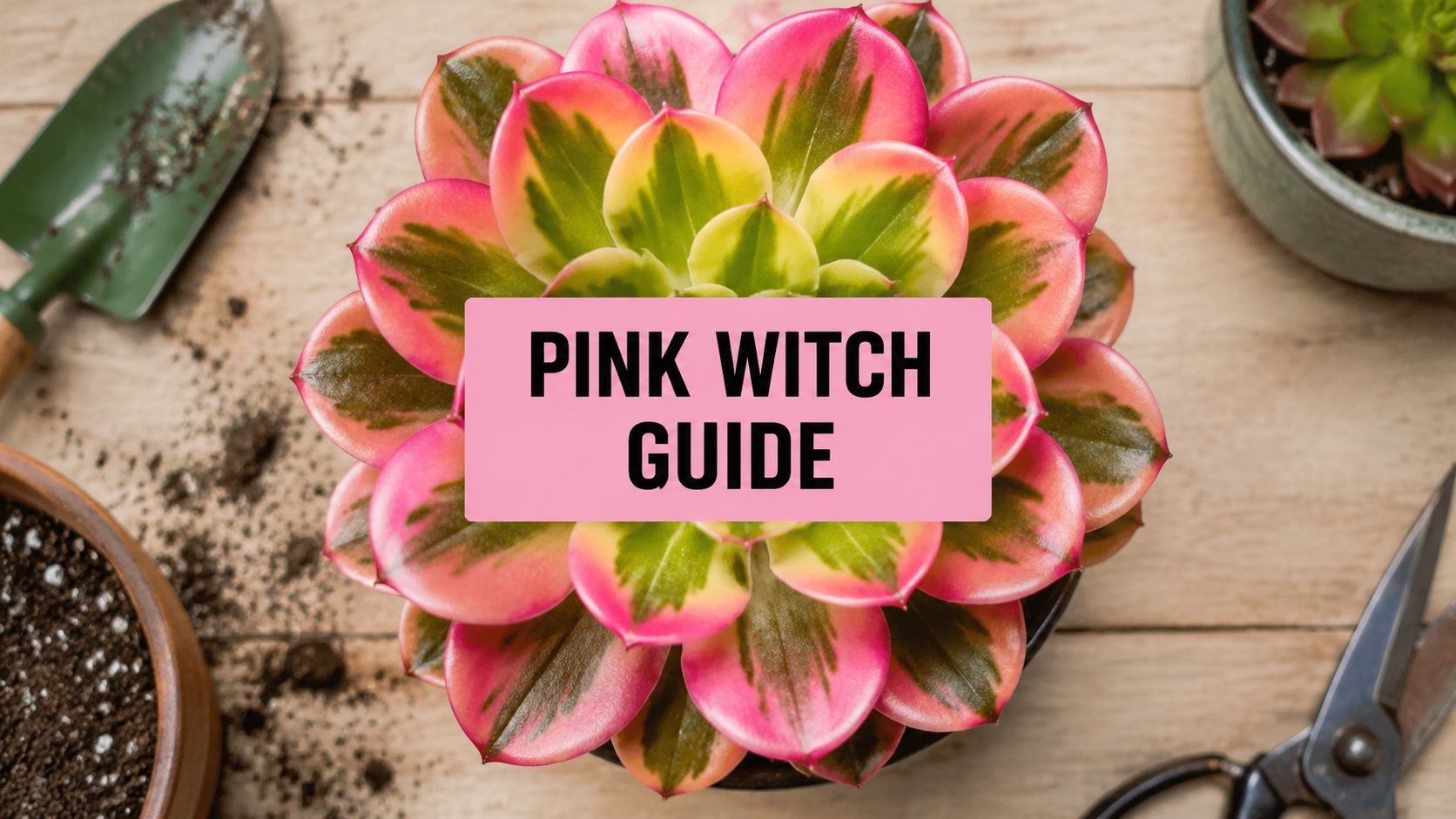

The first time I unpacked an Aeonium Pink Witch, I stopped mid-bench and turned the pot in my hands twice just to make sure the colors were real. The rosettes looked painted, with lime green and bubblegum pink swirling together in a way that doesn't look natural because, in a very real sense, it isn't.
Introducing the Enchanting Aeonium Pink Witch
Some succulents win you over slowly. Aeonium Pink Witch doesn't bother with that. It grabs your attention the moment you see those rosettes, especially when the pink is strong and the center looks almost dusted with sherbet tones.
Collectors love it for the same reason nursery owners do. It doesn't blend into a tray of common succulents. It stands apart. The plant forms clumps of rosettes and develops a small shrub-like shape over time, so even a young specimen has presence.
What makes it especially satisfying to grow is that it teaches you something. This isn't a plant you treat like every other succulent on the shelf. If you water it heavily in the wrong season, or leave it baking in hot summer sun because you assume “succulent equals heat lover,” it will tell you quickly that it has its own rhythm.
Practical rule: If you want the best color and the healthiest structure, learn the plant's seasons first and its watering second.
That's where most growers get tripped up. They understand light in a general sense, but they miss dormancy, summer stress, and what normal post-shipping recovery involves. Once you understand those two pieces, this rare cultivar becomes much less mysterious and much more enjoyable to grow.
What Is Aeonium Pink Witch Its Origin and Allure
The first time a customer sees Aeonium Pink Witch in person, they usually pause. Photos catch the color, but they rarely explain the effect of the plant as a whole. The rosettes stack and branch in a way that makes even a young plant look established, and the pink shifts with light like blush on ceramic.

How to recognize it
Pink Witch stands out by combining several traits at once. Look for branching, multi-headed rosettes, a compact clumping habit, and leaves marked with pink, cream, and green variegation that become more vivid under strong light. Specialty sellers also note that mature plants can develop into a fuller small shrub-like specimen rather than staying as a single rosette, which explains why it looks so decorative in containers and mixed displays (Etsy listing).
That growth pattern matters. A lot of succulents are admired one rosette at a time. Pink Witch creates a whole silhouette. For growers, that means the plant has presence before it reaches a large size, and for buyers, it means a shipped plant may arrive looking slightly lopsided or relaxed without being unhealthy. Variegated aeoniums often show stress faster than plain green types, so understanding the shape you are aiming for helps you judge recovery more calmly after delivery.
If you want a wider baseline for succulent setup before fine-tuning this cultivar, this succulent plant care guide helps explain the basics of light, drainage, and watering.
Why it feels so special
Part of the appeal is visual, but the bigger reason is horticultural. Aeonium Pink Witch is a cultivated ornamental developed in nursery production rather than a species collected from a natural habitat. The Royal Horticultural Society cultivar registration confirms that background, which helps explain why growers sometimes struggle to pin its care to one simple “native conditions” rule.
That distinction clears up a common point of confusion. With a wild species, you can often trace care back to a specific climate and soil pattern. Pink Witch behaves more like a refined garden cultivar. You still use the general rhythm of aeoniums, especially their cool-season growth and summer slowdown, but you also watch the plant itself closely because variegation changes how it handles heat, direct sun, and stress.
That is part of the allure for collectors. It feels rare because it is not just uncommon in shops. It is also the result of careful breeding and selection, more like a prized nursery introduction than a plant pulled from a hillside. For online buyers, that backstory matters after unboxing too. A Pink Witch that arrives with softer outer leaves or dulled color is not automatically in decline. It is often reacting like a pampered cultivar that has just been boxed, shifted in temperature, and moved away from light for several days.
The Ultimate Care Guide for a Thriving Plant
I tell customers to treat Aeonium Pink Witch the way you would treat a talented performer with delicate stage makeup. It wants bright conditions and fresh air around the roots, but rough handling shows fast. That balance is what keeps the rosette full, the variegation clean, and the pink tones from fading or scorching.
This care graphic gives a quick overview before you fine-tune the details.

Light that keeps color without scorching
Light is the engine behind this plant's color. Give Pink Witch too little, and the rosette stretches and loses some of its contrast. Give it too much harsh sun too quickly, and the pale areas can burn before the plant has time to adapt.
Bright light with some protection from intense afternoon heat usually works best. Morning sun is often ideal. If your plant arrived by mail, came from a shaded greenhouse, or has been sitting indoors, increase sun exposure in stages over a week or two. That slow adjustment matters because variegated tissue has less chlorophyll, so it cannot handle sudden stress the way a plain green aeonium often can.
Watch the leaves closely. Firm growth and strong color usually mean the light level is close to right. Bleached patches, dry tan spots, or a papery surface mean the change was too fast.
Soil that stays airy after watering
Root health decides everything with aeoniums. A potting mix that stays soggy invites rot, but a mix that dries into a hard block can make watering uneven and stressful for the roots.
One experienced grower source, cited for soil mix, watering rhythm, and cold tolerance, recommends a blend of one part potting soil, half part coconut coir, one part vermiculite, and one part pumice in this community grower care post. The recipe makes sense in practice. Potting soil and coir hold enough moisture for active growth, while pumice keeps air pockets open so roots can breathe after a soak. Vermiculite helps buffer drying, which is useful because Pink Witch often responds poorly to repeated swings from drenched to bone dry.
If you want the simple version, aim for a mix that drains fast but still has a little body. After watering, the root zone should feel like a wrung-out sponge, not a swamp and not a brick.
For potting and drainage basics, this succulent plant care guide for containers, soil, and watering setup is a helpful reference.
Watering that follows the season
Watering is where many collectors get nervous, especially after buying a rare plant online. The safest routine is still soak and dry, but Pink Witch is not a plant to water by habit alone. It changes pace through the year.
During active growth, many growers use the source-backed rhythm of watering about every 7 to 10 days. During dormancy, that spacing often stretches to about 14 to 21 days. Use those numbers as a starting point, not a timer. A small clay pot in dry air may need water sooner than a larger plastic pot in a cool room.
Here's the nursery trick I teach first. Lift the pot.
If it still feels heavy, wait. If the mix has dried and the pot feels noticeably lighter, water thoroughly until the entire root ball is moistened. Then let excess water drain away fully. This method works because aeonium roots prefer a full drink followed by airflow, not frequent small splashes that keep only the top layer damp.
That seasonal shift matters even more with Pink Witch than with many common succulents. In its active period, it uses moisture well and can respond with fuller growth and better color. In its slower periods, especially as heat builds, the same watering schedule can keep roots wet longer than the plant can use.
Temperature and feeding
Pink Witch handles mild conditions well but dislikes hard cold. Protect it from frost and from temperatures below 0°C (32°F). If you grow it indoors, place it where it gets bright light and decent air movement rather than tucking it into a dark corner.
Feed lightly during active growth only. A balanced fertilizer can support new leaves, but only in small amounts. Too much fertilizer pushes soft growth and will not correct weak light, poor drainage, or stress from heat. Healthy roots and the right season always come first.
| Care Aspect | Requirement |
|---|---|
| Light | Bright light, full to partial sun, with gradual acclimation |
| Soil | Fast-draining mix with potting soil, coconut coir, vermiculite, and pumice |
| Water | Soak and dry approach, more often in active growth and less during dormancy |
| Temperature | Protect from frost and cold below 0°C (32°F) |
| Fertilizer | Light feeding during active growth only |
Some growers like to watch another plant owner handle the plant in real time before changing their routine. This video is helpful for that kind of visual learner.
Managing Seasonal Changes and Dormancy
This is the part most generic succulent guides miss. Aeonium Pink Witch often enters summer dormancy. That means the plant can look like it wants less attention right when many gardeners feel the urge to water more.

Why summer can be the danger season
Many succulents push hard in warm weather. Aeoniums often do the opposite. Verified guidance notes that aeoniums often enter summer dormancy and should be moved to shade, with watering reduced significantly and sometimes even paused if the leaves curl inward in this seasonal care note for Aeonium Pink Witch.
That's why this plant feels counterintuitive. A grower sees bright color and assumes the plant wants relentless sun. Then a hot spell hits, the rosette tightens, the leaves curl inward, and the plant stops using water at the normal rate. If you keep watering like it's spring, the roots can sit in moisture the plant no longer needs.
What dormancy looks like in real life
Dormancy doesn't always mean dramatic leaf drop or collapse. More often, the plant changes posture and pace.
Watch for signs like these:
- Rosettes tightening up instead of opening freely
- Leaves curling inward during heat
- Slower drinking after a watering
- Less obvious new growth even when the plant still looks alive and firm
None of those signs automatically mean something is wrong. They often mean the plant is conserving energy.
In hot weather, a resting aeonium can suffer more from kindness than neglect.
How to adjust your care
Your job in dormancy is protection, not stimulation. Move the plant into a brighter-but-gentler spot. Morning sun can be fine, while harsh afternoon exposure may be too much in hotter inland areas. Coastal growers often have a wider margin for sun tolerance, while inland growers usually need to be more conservative.
A simple summer routine looks like this:
- Shift the plant out of peak heat if your current location gets intense afternoon sun.
- Reduce watering sharply once growth slows and the rosettes begin to close.
- Pause feeding until the plant resumes active growth.
- Check the center and lower stem for signs of trapped moisture or rot instead of assuming wilt equals thirst.
That last point matters. Heat stress and thirst can look similar at a glance. The difference is timing and context. If the plant is in summer rest, more water isn't automatically the answer.
Color changes through the year
Pink Witch's color can shift with light and season, and that change often worries new owners. The plant may look more vivid under stronger suitable light and less saturated in lower light or while recovering from stress. That doesn't mean the variegation is gone. It means the plant is responding to conditions.
A steady hand helps more than constant repositioning. Pick a location with strong light, protect it during severe heat, and let the plant settle into its yearly cycle.
How to Propagate Your Aeonium Pink Witch
The first time a customer asks about propagating Pink Witch, there is usually a little fear in the question. They have finally found this rare variegated aeonium, they do not want to ruin it, and the idea of cutting a healthy rosette feels backwards. I understand that hesitation. With Pink Witch, careful propagation is less like forcing the plant to perform and more like pruning a rose bush so it can grow with better structure.
Stem cuttings are the best choice for most growers because this aeonium branches naturally. A healthy head already carries the pattern for new growth. Your job is to give that cutting time to seal, then root, in that order. That sequence matters more than any rooting powder or fancy pot.
A fresh cut on an aeonium works like a scraped knee. If it stays wet, trouble starts fast. If it dries and forms a protective layer, the plant can begin the next stage safely.
Start with the right cutting
Choose a firm rosette with a short section of stem attached. Avoid tissue that looks translucent, floppy, or stressed from recent heat or shipping. If your plant just arrived by mail, give it time to settle before taking cuttings. A Pink Witch that is still recovering from transit needs to regain balance first, especially if leaves are curled or slightly bruised.
Use a clean, sharp blade and make one tidy cut. Ragged cuts heal more slowly, and slow healing gives rot more opportunity.
Let the cut callous before planting
This is the part new growers rush, and it is where many losses begin. Set the cutting in a dry place with good airflow and keep it out of harsh sun while the cut end hardens. Once that surface feels dry and sealed, plant it in a gritty, fast-draining mix.
Then wait.
Do not water right away. An unrooted cutting has no working root system to pull moisture from the soil, so wet mix around the cut stem can turn a healthy propagation into a rotting one. If you want a broader walkthrough of timing, soil, and aftercare, this guide to propagating succulents from cuttings is a helpful companion.
A practical method that works well
- Select a healthy rosette with enough stem to plant securely.
- Cut with a sterile blade to keep the wound clean.
- Leave the cutting out to dry until the cut end forms a firm callous.
- Pot it into dry succulent mix with plenty of air around the stem.
- Place it in bright, gentle light while roots begin to form.
- Water only after rooting starts or when you feel resistance from new root growth.
That last step confuses people. They want proof that something is happening under the soil. Pink Witch rewards patience more than checking. If you tug on the stem every few days, you can break the tiny roots just as they begin.
Offsets, branching, and timing
If your plant produces offsets, you can separate them once they are large enough to handle without tearing the stem. Small offsets are tempting, but larger ones have more stored energy and usually recover faster.
Season also matters here. Aeoniums do their best rooting during their active season, not during summer dormancy. If Pink Witch is resting in heat and the rosettes are tighter and slower, hold off on major propagation work until growth resumes. That one adjustment saves a lot of frustration, because a cutting taken during dormancy often sits still for longer than growers expect.
A calm approach works best. Clean cut, dry healing, airy soil, gentle light, and patience. That is the recipe.
Troubleshooting Common Problems and Shipping Recovery
The hardest moment for many new owners happens before care really begins. You open the box, see a few curled leaves or a scuff on the outer rosette, and your mind jumps straight to rot, pests, or decline. With Aeonium Pink Witch, that first impression is often misleading. Travel stress can make a healthy plant look tired for a short time, especially after days in darkness with little airflow.
A shipped Pink Witch behaves a bit like a person stepping out of a long flight. It may look drawn in, a little rumpled, and slower to respond, but that does not mean something is seriously wrong. What matters is the condition of the stem and crown. Firm tissue usually means the plant still has a solid foundation.
What normal shipping stress looks like
A plant that has been boxed and handled may show:
- Slight leaf curl from moisture loss during transit
- Minor bruising or scuffing on outer leaves
- A tighter rosette after time in low light
- Temporarily muted color while it adjusts back to normal conditions
Those changes are cosmetic more often than dangerous. Outer leaves are the plant's buffer. They often take the hit so the center stays protected.
Real trouble looks different. A mushy stem, bad smell, blackening at the crown, or collapse that spreads quickly points to damage that needs action right away.
A recovery plan that keeps things simple
New buyers often make the same mistake. They try to fix everything on day one. Fresh soil, a heavy watering, strong sun, and a decorative pot all at once can push a stressed plant further.
Use a steadier approach instead.
- Unpack it carefully. Remove paper and packing around the leaves without tugging at the rosette.
- Inspect for firmness. Gently check the stem base and center. Firm is good. Soft spots need closer attention.
- Give it bright, indirect light first. After a dark box, sudden harsh sun can scorch leaves that are already stressed.
- Hold off on watering right away if the soil is still damp or the plant was shipped bare root and needs a day or two to settle. Aeoniums recover better from mild dryness than from a wet, damaged root zone.
- Wait before repotting unless the mix is soggy, sour-smelling, or clearly unsuitable.
That pause matters. Pink Witch often improves faster with stability than with intervention.
Problems people misread
Aeonium Pink Witch confuses growers because its stress signals overlap with its seasonal behavior. In active growth, a thirsty plant may relax quickly after proper watering. In summer dormancy, the same plant can hold tighter, stop pushing new growth, and use less water for weeks. If you treat dormancy like a problem, overwatering usually follows.
This is the counterintuitive part of owning aeoniums. A resting summer plant can look like it wants more attention, when it needs less. If your Pink Witch is dormant and the stem remains firm, resist the urge to keep changing the routine.
Watch for patterns instead of reacting to one leaf. A few tired outer leaves after shipping are common. A firm plant that looks slightly dull can still recover well. A plant with spreading softness is the one that needs immediate action.
If you are still comparing sellers and want to avoid some of that post-purchase stress, this guide to the best place to buy cactus online is a useful starting point.
Pests can happen, too. Check the leaf axils, the center of the rosette, and along the stem if growth looks distorted or sticky. Still, start with the simplest explanation first. Shipping stress and seasonal dormancy account for many of the symptoms people mistake for a crisis.
Styling and Buying Your Plant from The Cactus Outlet
Aeonium Pink Witch earns its keep as both a collector plant and a design plant. In a simple ceramic pot, it reads like living sculpture. In a mixed container, it works beautifully as the focal point because the rosettes pull the eye upward and outward at the same time.
It also pairs well with cleaner textures. Gravel topdressing, muted pottery, and low-growing companions make the color stand out more. If you like a restrained look, give it room and let the variegation do the talking. If you prefer bolder arrangements, use it as the central feature in a succulent grouping where greener plants frame the pink.

Buying online becomes much less intimidating when you know what normal transit stress looks like and how to manage recovery once the plant arrives. That's one reason many collectors now prefer specialist sellers over general marketplaces. A focused nursery usually gives you better plant selection, clearer care information, and stronger packing standards.
If you're comparing shops, this roundup on the best place to buy cactus online offers a practical starting point for evaluating plant quality, shipping, and service.
A healthy Pink Witch doesn't need gimmicks. It needs thoughtful handling, bright conditions, and a grower who understands that summer rest isn't neglect. Get those right, and this cultivar becomes one of the most rewarding aeoniums to own.
If you're ready to add a rare, nursery-crafted succulent to your collection, The Cactus Outlet is a strong place to start. They specialize in cacti and succulents, ship with care, and offer the kind of detailed plant selection that makes shopping for standout specimens like Aeonium Pink Witch much easier.