

You've found two tall columnar cacti that look close enough in a nursery photograph, and now you're trying to decide which one belongs along your property line, beside the driveway, or in a large patio pot. That decision matters. Mexican fence post cactus and Peruvian apple cactus create very different outdoor spaces once they mature, even though both bring strong vertical form and desert character.
The practical choice is simple. Choose Mexican fence post cactus, Pachycereus marginatus, for a disciplined row, narrow privacy planting, or formal architectural hedge. Choose Peruvian apple cactus, Cereus repandus, when you want a larger specimen with branching structure, fragrant night flowers, and edible fruit. The better plant isn't the one that looks most impressive in a product photo. It's the one that produces the outcome you want.
| Buying factor | Mexican Fence Post Cactus | Peruvian Apple Cactus |
|---|---|---|
| Botanical name | Pachycereus marginatus or Stenocereus marginatus in horticultural references | Cereus repandus |
| Best landscape role | Formal hedge, privacy screen, repeated vertical row | Large specimen, focal point, fruiting accent |
| Visual character | Dark green, narrow, orderly columns | Blue-gray to sage, thicker, branching and sculptural |
| Rib structure | Typically 5–7 ribs | Commonly described with a looser rib pattern |
| Mature scale | About 4 m in cultivation, up to 15 m in the wild, with landscape listings varying by growing conditions (Horticulture Unlimited) | Commonly 15–30 feet, with larger records and supported growth reported (Gardenia) |
| Fruit and flowers | Primarily valued for structure and fencing | Edible Peruvian apple fruit and fragrant nocturnal flowers (Pacific Southwest Nursery) |
| Strongest buyer fit | Homeowner needing predictable geometry | Collector or designer wanting scale and drama |
Which Cactus Is Right for Your Project
Choose the finished planting first, then choose the cactus.
For a tight strip beside a property line, driveway, or stucco wall, buy Mexican fence post cactus. Its stems create a clean vertical rhythm, and its long association with living fences reflects that strength (Horticulture Unlimited). In a modern yard, a repeated row reads as architecture, not as a loose collection of specimens. Choose it when consistent spacing and a narrow profile matter more than branching or seasonal features.
For a front entry, pool deck, courtyard, or broad gravel bed that needs one commanding plant, choose Peruvian apple cactus. It develops greater visual mass and a more tree-like form, so its thick stems can anchor the entire planting. Night-blooming flowers and fruit add ornamental and edible interest that Mexican fence post does not provide in the same role (Pacific Southwest Nursery).
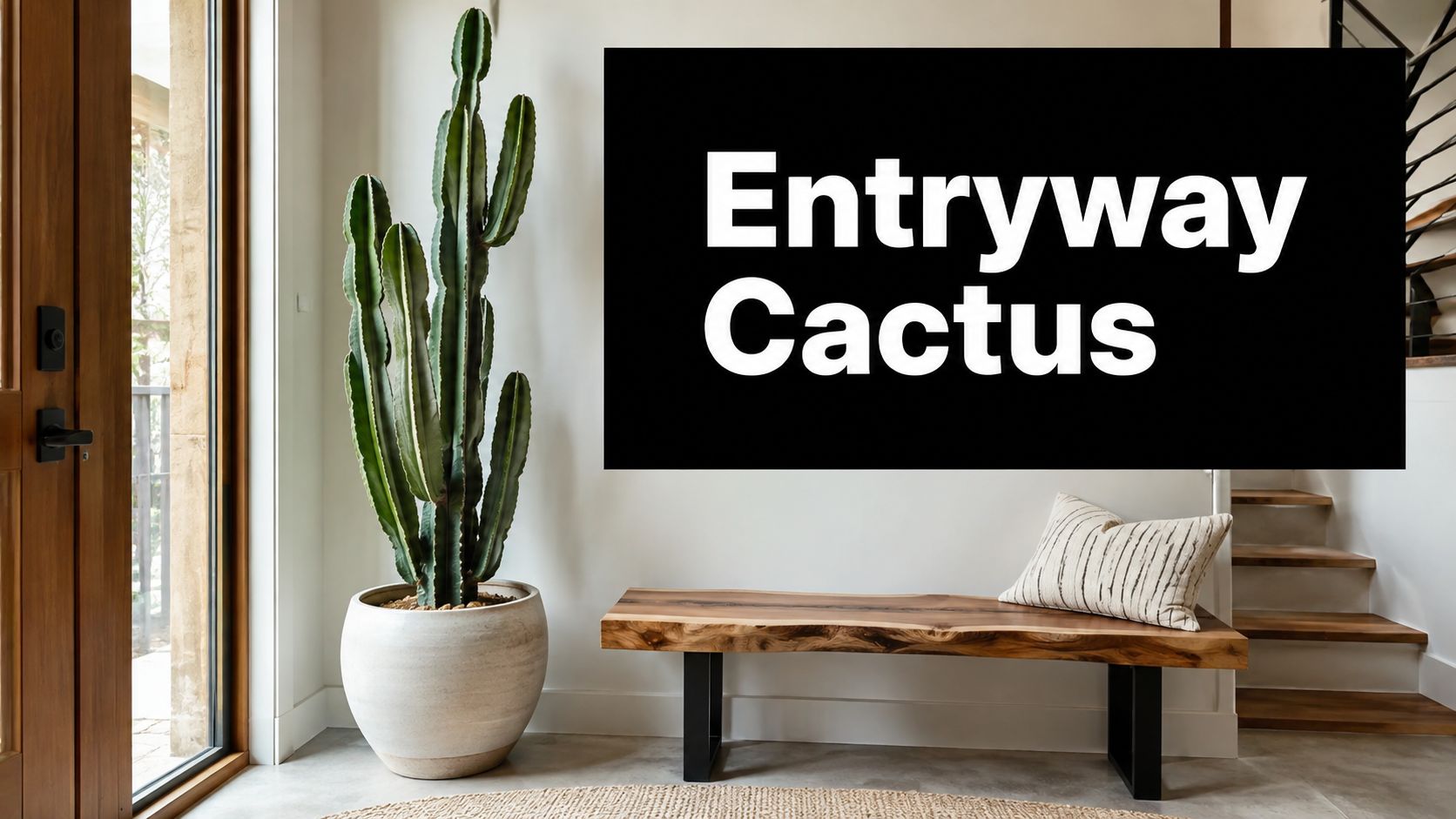
A container requires a separate decision. Use Mexican fence post when the pot must remain visually narrow and upright. Use Peruvian apple when the container can be substantial and you want branching volume rising above it. A small pot paired with a broad, branching cactus will look crowded, while a tall narrow pot can make Mexican fence post look deliberate and architectural.
Match the cactus to the finished scene
- Formal boundary or repeated screen: Mexican fence post gives you orderly vertical structure.
- Single focal plant: Peruvian apple supplies more scale and branching character.
- Narrow patio accent: Mexican fence post fits better where width is limited.
- Large container with flowers or fruit: Peruvian apple earns the space.
Buying rule: Match the cactus to the shape and function of the finished planting, not to the most impressive online photograph.
The practical choice is straightforward. Select Mexican fence post for repeatable geometry, controlled spacing, and a formal planting role. Select Peruvian apple for specimen scale, branching structure, flowers, and fruit. If the project depends on a clean row, the first cactus is the right purchase. If it depends on one plant carrying the composition, choose the second.
How to Tell Them Apart at a Glance
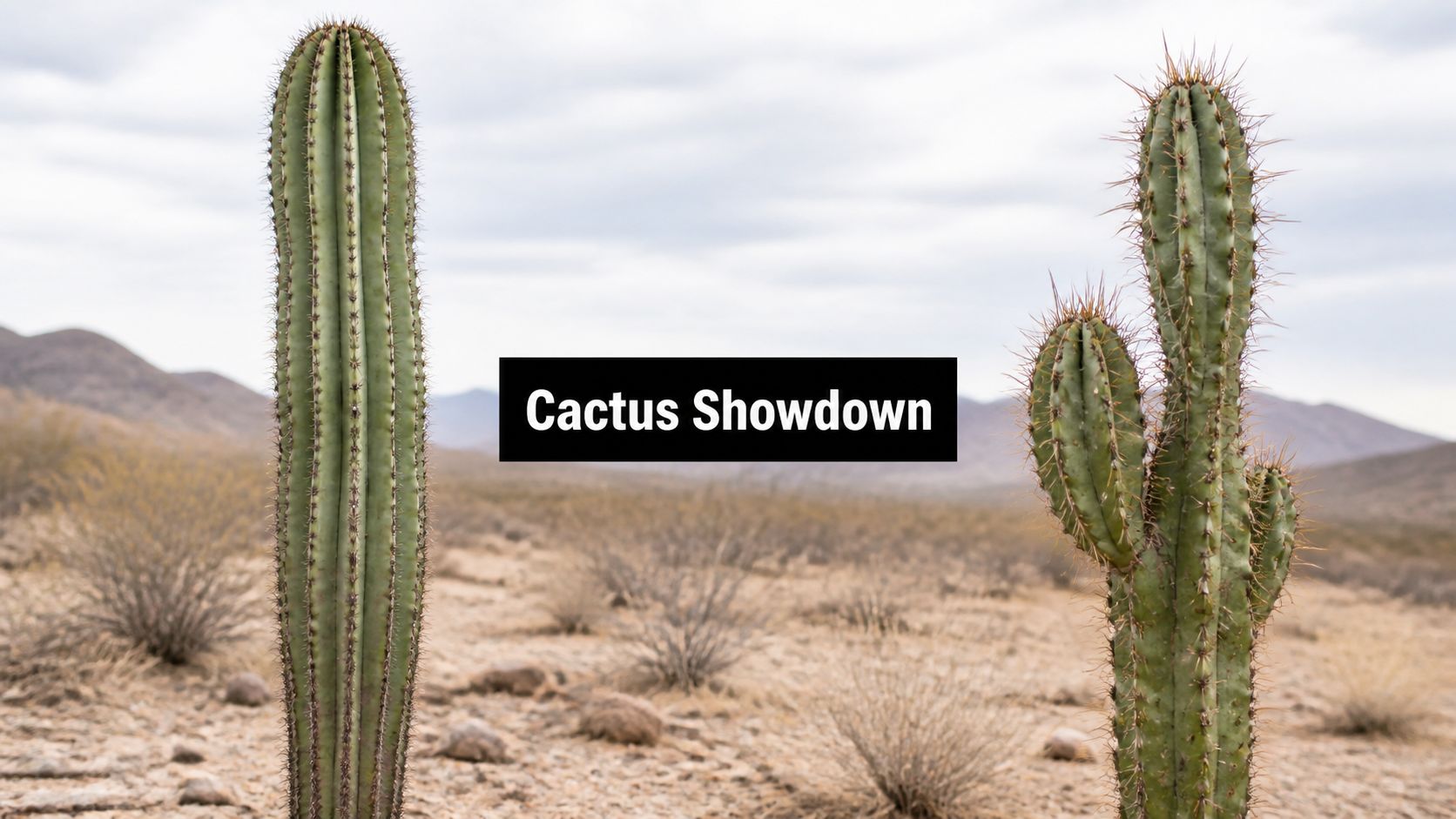
At delivery, check the plant's structure before judging its height. Young columnar cacti can look nearly identical, particularly in online photographs that show only one side of the stem. Stem color, rib arrangement, spine visibility, and branching habit provide a more dependable identification.
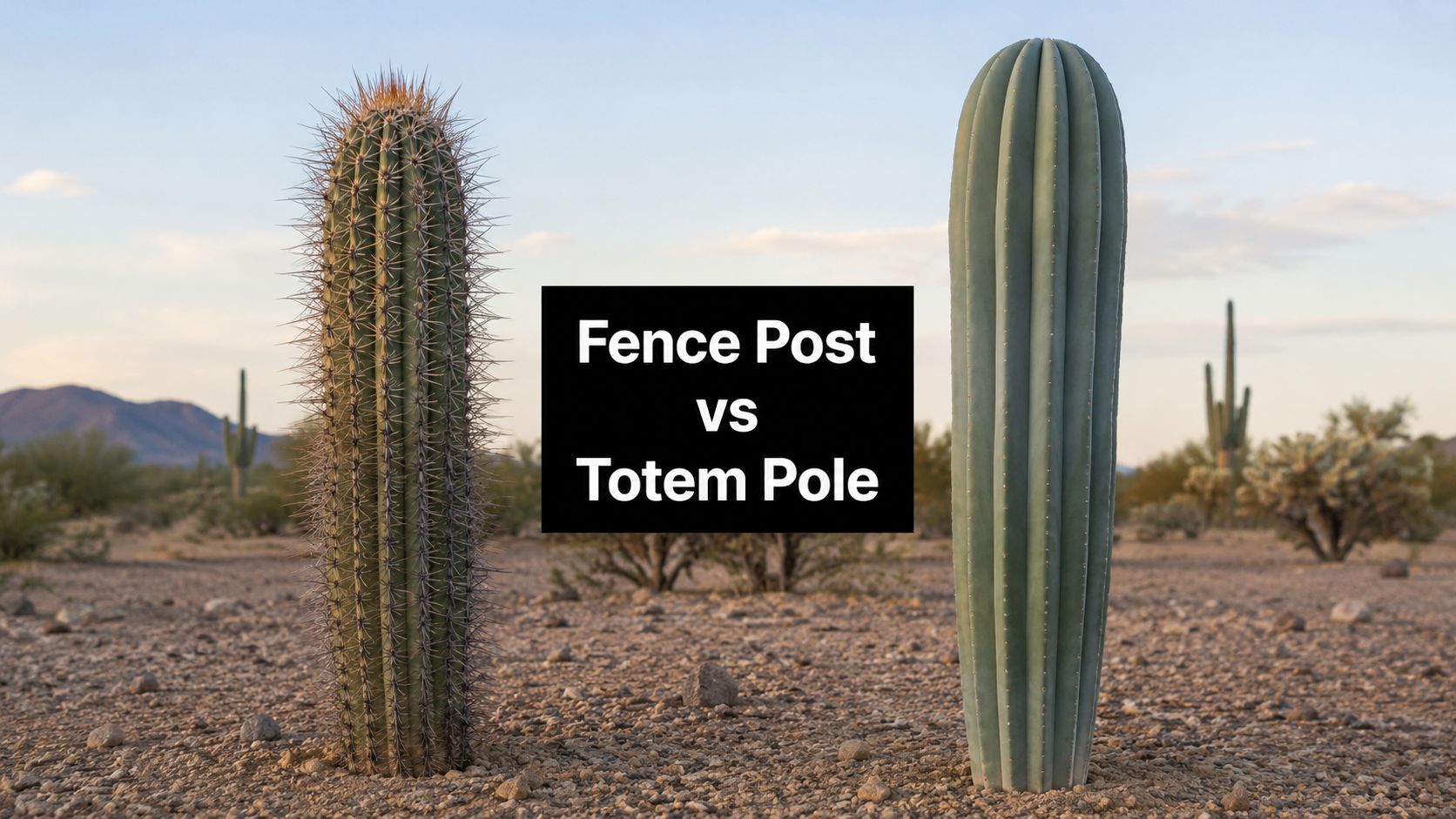
Mexican fence post cactus is usually deep green with a strongly columnar form. It commonly has 5–7 ribs, with short spines set along each rib in a neat, continuous pattern (Cactus Outlet). The result is orderly and architectural. Grouped stems create repeated vertical stripes, making this species the clearer choice for a formal row or tightly controlled planting.
Peruvian apple cactus generally shows blue-gray, sage, or green-gray stems and a looser, more tree-like habit. It branches from a thicker central structure instead of maintaining the same repeated geometry. Established plants may also produce large white flowers that open at night and round, apple-shaped fruit, often magenta when mature. Those features confirm the identification more readily than stem color alone.
| Feature | Mexican Fence Post (Pachycereus marginatus) | Peruvian Apple (Cereus repandus) |
|---|---|---|
| Stem color | Deep green | Blue-gray, sage, or green-gray |
| Overall posture | Straight, narrow, tightly vertical | Larger, looser, and more tree-like |
| Rib pattern | 5–7 prominent ribs | Rib structure appears less repetitive and more open |
| Areoles and spines | Areoles line the ribs in an orderly pattern, with short spines | Spines tend to be more visible on thicker, branching growth |
| Mature visual effect | Regimented row or formal column | Sculptural specimen or branching backdrop |
| Flowers | Not the main buying feature | Large white flowers that open at night |
| Fruit | Not the primary planting feature | Round, apple-shaped edible fruit, commonly called Peruvian apple or pitaya |
The mental picture that helps
Green, tightly repeated ribs point to Mexican fence post. Blue-gray stems with branching, tree-like growth point to Peruvian apple. That distinction matters more than a minor difference in stem thickness because it indicates how each plant will occupy the finished design.
For online listings, compare the product photographs with this cactus identification guide, then confirm that the seller names the botanical species. A listing labeled only “fence cactus” does not provide enough information for a formal row.
Young plants cause the most confusion. Before branching develops, spacing between ribs, spine visibility, and stem color are the cleanest clues. Choose Mexican fence post for repeated vertical order. Choose Peruvian apple when the finished planting needs branching character, flowers, and a stronger specimen presence.
Mature Size, Growth Rate, and Cold Hardiness
A formal hedge, a dramatic specimen, and a patio container need different cacti. Mexican fence post keeps a narrower, more orderly footprint. Peruvian apple cactus demands more room and eventually becomes a branching focal point. Measure from paths, walls, windows, and overhead structures before buying a large plant. A cactus that fits today may crowd the design after basal branches or broader upper growth appear.
Mexican fence post reaches about 4 m in cultivation and up to 15 m in the wild. Nursery listings also give typical ranges of 5–12 feet or 10–20 feet, depending on growing conditions and the reference consulted (Gardenia, Southern Nevada Water Authority). These figures describe a tall column that can stay visually controlled instead of becoming a broad, tree-like centerpiece.
Peruvian apple is the larger commitment. One botanical reference gives 15–30 feet tall and 6–8 feet wide, with stems 4–8 inches in diameter. Another records growth to about 110 feet when supported (Pacific Southwest Nursery). Those upper figures do not suit an ordinary patio, but they explain why this species belongs in an open courtyard or large planting bed.
Compare growth and winter risk
| Attribute | Mexican Fence Post | Peruvian Apple |
|---|---|---|
| Growth profile | Moderately fast and more controlled | Faster bulk growth and greater eventual mass |
| Reported growth rate | About 1–3 feet per year in cultivation references ([Reddit horticulture discussion](https://www.reddit.com/r/cactus/comments/1qe4p7p/can someone help me identify this cactus is it a/)) | Up to about 2 feet per year in ideal conditions |
| Cold guidance | Around 24–25°F for short periods, with a USDA zone listing of 9b–11b (Gardenia, Southern Nevada Water Authority) | Needs a warm planting site and protection from damaging freezes |
| Best footprint | Narrow strips, repeated columns, formal rows | Broad beds, open courtyards, large containers |
Do not buy according to a promised height after a fixed number of years. Warmth, irrigation, drainage, starting size, and exposure all change the result. Use the mature dimensions to reserve space, then treat growth-rate descriptions as planning guidance rather than a schedule.
For a formal row, choose Mexican fence post. It gives the buyer a more predictable vertical rhythm and handles a borderline winter site better, with published short-period tolerance around 24–25°F (Gardenia). That tolerance does not make it frost-proof. A newly shipped plant needs acclimation before harsh exposure.
Choose Peruvian apple for warm sites where branching mass is part of the finished design. Its larger size cannot offset a poor winter location. If freezing conditions are common, use a movable container only when genuine shelter is available. Otherwise, select a cactus suited to the site's cold exposure rather than forcing this species into the wrong project.
Light, Water, Soil, and Container Needs
A cactus beside a hot wall, in a patio pot, or in open garden soil needs the same foundation: strong light and rapid drainage. The buying decision turns on structure. Mexican fence post stays narrow and upright, while Peruvian apple develops a larger branching canopy that demands more root space, a wider footprint, and better pot stability.
Give Mexican fence post full sun for straight, compact growth. It tolerates reflected heat beside south- and west-facing walls when water can drain quickly. Peruvian apple also needs abundant light, though afternoon protection helps in especially intense low-desert conditions. Keep enough direct sun on the plant to maintain firm stems and strong architectural form.
Build the root zone for drainage
Use a fast-draining cactus medium instead of ordinary garden soil. A practical blend is 50% pumice and 50% cactus soil, providing more air around the roots than a plain sandy mix. The aim is not instant dryness. Excess water must leave the root zone before saturation causes rot.
Water thoroughly during active summer growth, then let the mix dry before watering again. A commonly used schedule is a deep soak every 10–14 days in summer, with no routine watering from November through February. Reduce watering during summer monsoons. Treat those intervals as starting guidance: a pot in humid shade dries more slowly than an in-ground cactus in hot, open exposure.
| Care factor | Mexican Fence Post Cactus | Peruvian Apple Cactus |
|---|---|---|
| Light | Full sun, including hot reflected exposure when drainage is good | Full sun, with some afternoon protection useful in intense low-desert conditions |
| Watering | Deep summer soak, then allow the root zone to dry | Same basic pattern, with extra caution around a larger branching base |
| Soil | Sharp drainage is essential | Sharp drainage is essential |
| Useful mix | 50% pumice and 50% cactus soil | 50% pumice and 50% cactus soil |
| Container character | Narrow profile and easier to keep visually controlled | Larger canopy and greater need for a broad, stable pot |
| Pot recommendation | Heavy, tip-resistant base once the plant passes 4 feet | Glazed ceramic or squat fiberglass, at least 24 inches wide for a substantial specimen |
Container choice should follow the mature structure, not the plant's appearance at purchase. Peruvian apple cactus can tip or crack an unsuitable unglazed terracotta container above 15 gallons. For a substantial patio specimen, use glazed ceramic or squat fiberglass at least 24 inches wide, with enough weight to support the branching canopy.
Mexican fence post remains easier to control in a container because its profile is narrower. Once the column exceeds 4 feet, however, use a heavy, tip-resistant base. For more detailed handling of the larger species, follow this Peruvian apple cactus care guide. The practical rule is firm: drainage and pot stability matter more than decorative pot style.
Top Garden and Patio Uses for Each Cactus
Choose the plant according to the result you want after several growing seasons. Mexican fence post creates a controlled vertical rhythm, while Peruvian apple becomes a branching focal point. Treating them as interchangeable columns leads to cramped beds, awkward spacing, and unnecessary pruning.
Mexican fence post suits a property line, entry wall, or narrow side passage where repeated columns need to read as one composition. For a dense living fence, start plants about 3 feet on center. Adjust that distance for the plants' purchase size, the width of the bed, and how quickly you want the row to visually connect. A detailed reference for its form and planting behavior is available in this Mexican fence post cactus guide.

Use low, spreading companions to keep a Mexican fence post row visually clean. Gravel, agaves, blue hesperaloe, and compact groundcovers reinforce its upright form without competing for the same vertical space. Keep paths clear of the mature spines, and maintain a consistent gravel or mineral-mulch band so fallen debris is easy to remove.
Peruvian apple works better where the planting can expand outward. Give it room beside a pool, at the end of a driveway, or in an entry court, then pair it with agaves and blue hesperaloe to echo its branching silhouette. Fragrant night-blooming flowers and edible fruit add seasonal interest, so place the specimen where evening seating or a frequently used path can benefit from it.
A large container can support the same composition on a sunny driveway or patio. Use one substantial Peruvian apple as the anchor, then keep companion plants low and well away from the branching arms. Mexican fence post is easier to repeat in several containers, especially when matching pots create a formal rhythm.
Maintenance follows the layout. Mexican fence post mainly requires alignment checks, removal of damaged columns, and clearance pruning near paths. Peruvian apple demands more attention to branch spread, overhead clearance, and fruit or flower cleanup around paved areas.
Design decision: Buy Mexican fence post for a measured row or narrow architectural planting. Buy Peruvian apple for a spacious specimen setting where branching form and seasonal interest can carry the composition.
Matching the Cactus to the Buyer
For a commercial installation, judge the order as a system rather than as a collection of individual plants. Mexican fence post suits repeated procurement because its single-column form makes spacing, height, and replacement planning easier to standardize. Before approving a large order, confirm the seller's plant identity, container size, mature dimensions, and replacement or return terms in writing. A row that arrives uneven or damaged can create added labor long after delivery.
Peruvian apple deserves a different purchasing test. Inspect the branching structure, trunk condition, and available clearance before accepting a specimen. The plant earns its space through form, flowers, and fruit, so reject a crowded or poorly trained specimen if the site depends on a strong focal point. Confirm how the nursery handles transit damage, soft stems, broken arms, and plants that arrive materially different from the listing.

Evaluate the plant after delivery
- Mexican fence post order: Check that columns are upright, evenly developed, and free of soft areas. Minor cosmetic spine damage is less important than a stable stem and intact root ball.
- Peruvian apple order: Check branch junctions, arm damage, leaning, and any wounds that could admit rot. A balanced structure matters more than a perfectly unmarked surface.
- Large specimen purchase: Photograph the plant and packaging immediately. Keep the invoice, product description, and seller instructions until the cactus shows stable growth.
- Container purchase: Confirm that the pot drains freely and that the plant is not planted in permanently wet mix. A decorative pot without drainage is a poor long-term setup.
The Cactus Outlet offers both species for buyers comparing large plants online. Use the product identity, mature form, intended placement, and return terms as screening criteria. Function should decide the purchase. Select Mexican fence post when consistent plant dimensions simplify a repeated installation. Select Peruvian apple when the individual specimen must justify its footprint through distinctive structure and seasonal interest.
Buying, Shipping, and First-Year Care
Choose spring or early fall for shipping whenever possible. Severe summer heat and winter frost add avoidable stress. A containerized, established plant is the better purchase when available, since an intact root ball usually gives the cactus a steadier start than a recently disturbed specimen.
Open the package promptly. Check the stem for broken spines, soft spots, leaning, and other shipping damage. Set the cactus in bright shade for one to two weeks, then move it into full sun. Hold fertilizer for the first three months. Nursery mix may already contain nutrients, and forcing new growth after transit can increase stress.
Water lightly every 10–14 days during the first summer, then reduce toward monthly watering in the second year as the plant settles. Adjust for weather, soil, and drainage. Delay major transplanting until the root ball has completed one full growing season, so the column can anchor before wind stresses it.
Interstate plant orders may involve state and federal compliance rules. Review Ship Restrict plant seed compliance before ordering across state lines, and confirm the seller's current terms for your destination.
The Mexican fence post is the practical buy for a formal hedge, narrow privacy screen, or uniform architectural row. Choose Peruvian apple for a spacious specimen, substantial container, or placement where flowers and fruit matter alongside structure.
The Cactus Outlet lists both species for online comparison. Check mature form, available planting space, product identity, packaging, and return terms before ordering. Photograph the plant and box on arrival, and keep the invoice and care instructions until the cactus shows stable growth.