

Finding the perfect plant in a San Pedro cactus sale can feel a bit like a treasure hunt. It's easy to get drawn in by a low price, but what you’re really looking for is a healthy, well-cared-for cactus that’s set up to thrive for years to come. The goal isn't just to buy a plant—it's to bring home a vibrant, sturdy specimen from a seller you can trust.
Finding the Perfect Plant in a San Pedro Cactus Sale
Jumping into the world of San Pedro cacti is one of the most rewarding moves a gardener or collector can make. These aren't just any cacti; they're famous for their impressive growth speed and striking columnar shape. As horticulturalist Ralph Moran points out, they're also incredibly easy to propagate—you can often just take a cutting, let it callus over, and plant it. This forgiving nature makes them a fantastic entry point for anyone new to columnar cacti.
But before you click "buy," it's crucial to know what separates a thriving plant from a risky purchase. Your focus should always be on the plant's health, its structure, and the seller's reputation above all else.
What Makes a Great San Pedro Cactus
A quality San Pedro gives you clear visual signals about its health. You want to see vibrant, deep green skin that feels firm when you gently touch it. The cactus should stand straight and have a solid, symmetrical form. Watch out for any skinny, stretched-out sections (called etiolation), as that’s a dead giveaway it hasn't received enough sunlight.
A healthy cactus is a long-term investment. Focusing on quality from the start prevents future problems like rot or pest infestations, ensuring your new plant has the best possible chance to flourish.
Think of it like picking out fresh produce at the market. You're looking for something that looks plump, has good color, and is free of weird blemishes. You'll want to avoid any plants with soft spots, yellowing skin, or visible pests. Those are all red flags that could signal big trouble down the road.
To make it even easier, here's a quick checklist to run through when you're looking at a San Pedro cactus for sale.
Quick Buyer's Checklist for San Pedro Cactus
| Attribute | What to Look For | Red Flags to Avoid |
|---|---|---|
| Color & Skin | Deep, vibrant green; smooth and consistent texture. | Yellowing, browning, or pale, washed-out green. |
| Firmness | Firm to the touch from base to tip. | Soft, mushy spots, especially near the base (potential rot). |
| Shape | Symmetrical, straight, and robustly columnar. | Skinny, stretched-out growth (etiolation); leaning or bent shape. |
| Surface | Clean skin, free of webs, white fluff, or spots. | Visible pests (mealybugs, scale), scarring, or black spots. |
| Roots (if visible) | Healthy, white or light-colored roots. | Brown, black, or mushy roots; no roots at all on a potted plant. |
Using this checklist will help you quickly size up a plant's health and avoid bringing home a project that's more trouble than it's worth.
Why the Seller Matters Most
Honestly, starting with a reputable seller is the single most important decision you can make. An established nursery or a trusted online store like The Cactus Outlet offers much more than just a plant; they provide peace of mind. These sellers put time and effort into cultivating their stock, making sure every cactus is healthy, correctly identified, and ready for its new home.
A good seller will always provide:
- Healthy, Pest-Free Plants: Their entire reputation is built on delivering high-quality, clean specimens.
- Accurate Labeling: You’ll know for sure what species or specific cultivar you are buying.
- Expert Support: They can answer your questions about how to care for and acclimate your new cactus.
While you're browsing a San Pedro cactus sale, you might even come across other fascinating varieties, like the quirky Yellow Bunny Ears Cactus. A knowledgeable seller can guide you through their diverse selection. At the end of the day, choosing the right source gives you the confidence that you're making a smart and satisfying investment in your collection.
Identifying Popular San Pedro Varieties
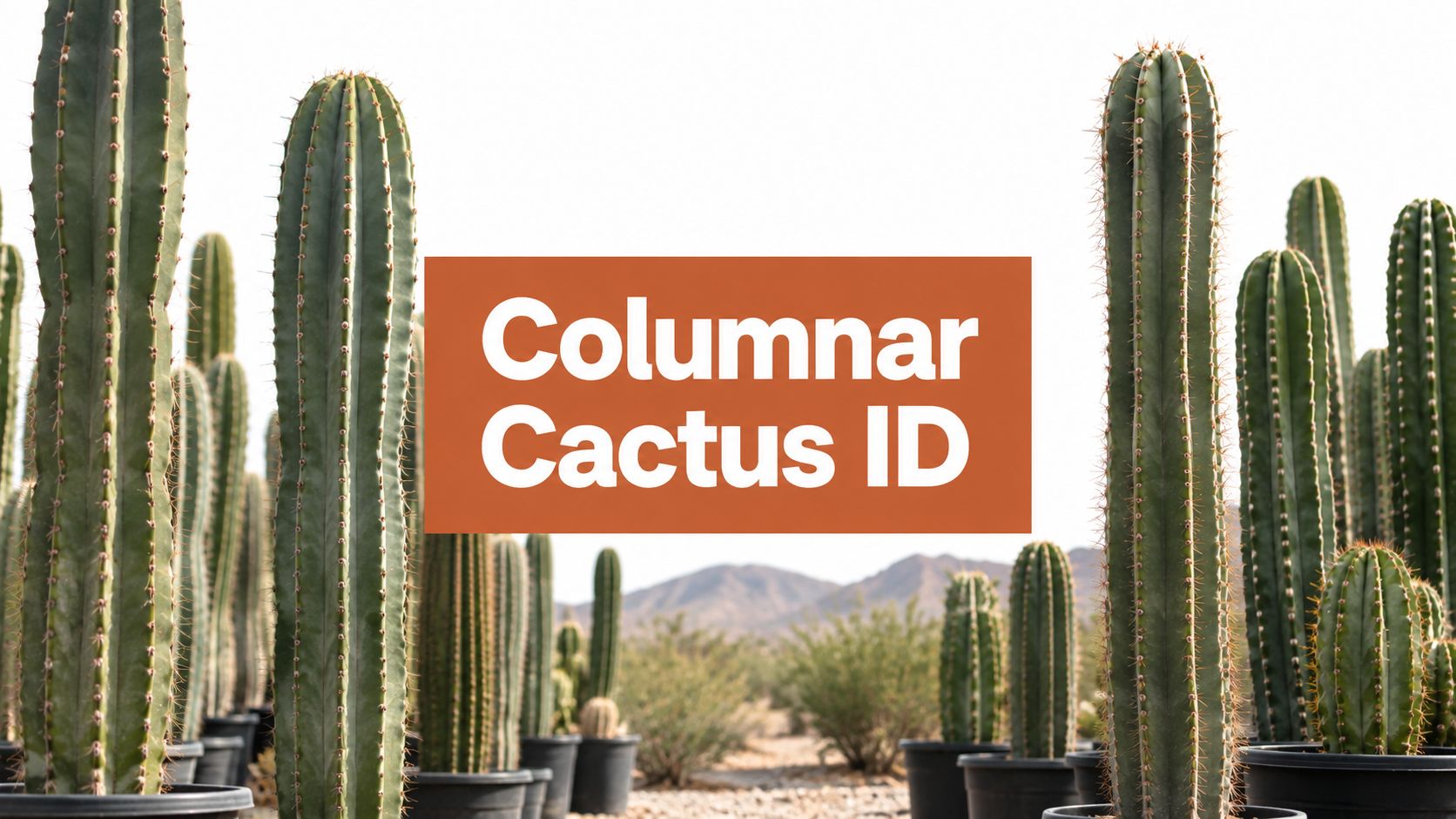
When you start looking at a San Pedro cactus sale, you’ll quickly find that "San Pedro" isn't just one single plant. It’s more of a family name for a whole group of beautiful columnar cacti from the Trichocereus genus (which botanists have now reclassified into Echinopsis). Getting to know the main players is the key to picking a cactus with the look and growth style you'll really love.
It's a bit like choosing a pine tree for your garden. Sure, they're all "pines," but a towering Eastern White Pine has a completely different vibe than a rugged Scots Pine. Each San Pedro variety has its own unique personality, too.
The Classic San Pedro (Echinopsis pachanoi)
This is the one most people think of when they hear "San Pedro." Echinopsis pachanoi is famous for its fast growth and beautiful, deep green, sometimes almost blue-green, skin. Its spines are usually tiny and sparse, and on older columns, they can practically vanish, which makes handling them a whole lot easier.
Because of its classic, mostly uniform shape and smooth-looking skin, it's a huge favorite for landscaping and adding a dramatic vertical element to a collection. If you want that iconic San Pedro look, this is where you should start.
The Peruvian Torch (Echinopsis peruviana)
If the classic pachanoi is the friendly giant, the Peruvian Torch (Echinopsis peruviana) is its wilder, more dramatic cousin. You can spot this one by its much more formidable spines—they're often long, sharp, and range from honey-colored to brown. They erupt from very distinct V-shaped notches above the areoles, giving the cactus a rugged, almost fierce appearance.
The skin often has a powdery, grayish-green hue (we call this glaucous) that makes those bold spines pop. For anyone who appreciates a cactus that makes a statement, the Peruvian Torch is a fantastic choice.
This flowchart breaks down the buying journey, focusing on what truly matters to get a great plant.

As you can see, it all begins with a seller you can trust. From there, it's about checking the cactus's health and, finally, picking a shape and form that you find appealing.
The Bolivian Torch (Echinopsis bridgesii)
Sometimes called Achuma, the Bolivian Torch (Echinopsis bridgesii) has a distinct charm all its own. It tends to grow a bit slimmer than the others and has fewer, more widely spaced ribs. This gives it a sharper, more angular look.
Perhaps the biggest giveaway for an E. bridgesii is its signature long, golden spines. They can reach up to four inches and often form clusters near the growing tip, creating a stunning crown. It’s a real showstopper that many serious collectors hunt for.
Once you learn to spot these key differences, you can walk into any San Pedro cactus sale with confidence. Whether you're drawn to the clean lines of a pachanoi or the spiny attitude of a Peruvian Torch, you'll know exactly what you're looking for. To learn more about caring for the classic variety, check out our in-depth guide to Echinopsis pachanoi cactus care.
How to Assess Cactus Health, Size, and Value

So, you've found a San Pedro cactus sale. How can you tell if you're looking at a fantastic deal or just buying someone else's problem? Learning to spot a healthy, valuable cactus is the most important skill you can develop as a buyer. It’s what separates a thriving addition to your collection from a plant that will need intensive care from day one.
Think of it like being a cactus detective. The very first thing you should do is check its physical integrity. A healthy San Pedro needs to be firm and solid all the way from its base to the growing tip. If you find any soft, mushy spots—especially near the soil line—that's a huge red flag. It’s a classic sign of rot, and you should walk away immediately.
Decoding Visual Health Cues
A cactus tells you almost everything you need to know through its appearance. A healthy plant will have a rich, vibrant color. You want to see a deep, consistent green or even a beautiful blue-green hue. The skin should also look clean, without any weird spots, webbing, or fuzzy white stuff, which are telltale signs of pests like mealybugs or scale.
Here’s a quick checklist for what to look for versus what to avoid:
- Vibrant Color: A rich, even green shows the plant has been getting the right amount of sun. A pale, washed-out color usually means it's been starved for light.
- Flawless Skin: The surface should be clean. While a few old scars can just be cosmetic battle wounds, widespread discoloration or black spots can point to fungal problems or severe sunburn.
- Solid Base: Where the cactus meets the soil, it should feel strong and firm. Any give or weakness right there is a serious warning sign.
On the other hand, be wary of skinny, stretched-out growth that looks pale. This is a condition called etiolation, and it's a dead giveaway that the cactus hasn't received enough light. While you can correct the conditions and get healthy new growth, that thin, weak section will be there forever.
A healthy plant is a long-term investment. By prioritizing a strong, disease-free cactus from the start, you're setting yourself up for success and avoiding the frustration of nursing a struggling plant back to health.
Connecting Size, Girth, and Value
When it comes to price, size is obviously a big deal. But it's not just about height. The girth, or thickness of the column, is just as important for gauging a cactus's age and overall value. In many cases, a short but really thick cactus is older and more valuable than one that's tall and skinny.
San Pedro is famous for its vigorous growth, and it's not uncommon for healthy columns to reach an impressive 8 to 12 inches in diameter. This fast growth rate is a big reason why they are so widely available in cultivation compared to much slower-growing species. That's a good thing, because wild populations in Peru are under serious pressure—all native species have been listed as endangered or threatened for over 15 years. You can get a deeper dive into these market factors by checking out cactus industry market reports.
Ultimately, once you learn to spot the signs of good health—firmness, rich color, and a pest-free surface—and understand how size and girth contribute to value, you can browse any San Pedro cactus sale with confidence, knowing you can pick a winner with a bright future.
Understanding San Pedro Prices and Finding Deals
Figuring out what a San Pedro should cost can feel like a bit of a guessing game. But once you know what to look for, you can spot a fair price and a great deal from a mile away. The price of a San Pedro cactus sale isn't just about its height; it's a combination of its species, its actual size, and whether you're buying a common variety or a special, named clone. Knowing the difference is what separates a casual browser from a confident buyer.
For example, you might see a small cutting of a rare clone like 'Sharxx Blue' that costs more than a huge, mature column of a standard Echinopsis pachanoi. It's all about supply and demand. Named cultivars are hand-picked for specific traits—maybe an incredible blue color, funky spines, or a unique rib pattern—and are only propagated by cloning, which makes them far scarcer.
What Drives San Pedro Pricing
So, what's behind the price tag on these amazing plants? It really boils down to a few key things. Getting a feel for these will help you see the real value in a cactus, not just its price.
- Species and Cultivar: Your standard E. pachanoi is usually the most budget-friendly. Rarer species like E. bridgesii or coveted named clones with unique genetics will always fetch higher prices because collectors are actively seeking them out.
- Size (Height and Girth): While height is easy to measure, girth is often a better indicator of age and maturity. A thick, heavy one-foot cutting came from a much more robust mother plant than a skinny two-foot cutting, making it more valuable.
- Cuttings vs. Rooted Plants: Unrooted cuttings are the more affordable option because you’re taking on the task of getting them to root. Rooted plants cost more because the grower has already put in the time and effort, and you get an established plant with a much lower risk of failure.
This price difference gets even more dramatic when you look at the global market. The journey from harvester to you involves a massive jump in value. For instance, companies might buy dried San Pedro from local harvesters for about $3 USD per kilo. By the time that same kilo reaches international online auctions, it can sell for over $200. If you're curious about the biocultural sustainability of this trade, you can explore the research on San Pedro's journey from harvest to market.
Remember, the price doesn't just cover the plant itself. It reflects the grower’s expertise, time, and the resources it took to grow a healthy, beautiful cactus. A pest-free plant from a trusted source is an investment that always pays off.
How to Find the Best Deals
Getting a great deal isn’t just about finding the cheapest plant—it’s about getting the most value for your money. Your two best friends here are timing and quantity.
Many sellers, including us here at The Cactus Outlet, run sales in the late fall and winter. The growing season slows down, and it's the perfect time to snag some excellent discounts. It's our way of clearing space for the next season, and your chance to buy low.
Buying in bulk is another fantastic way to save, especially if you're a landscaper or a serious collector. Look for "cactus packs" or wholesale deals that bundle multiple plants together. When you’re ready to see what's out there, take a look at our regularly updated selection of cactus for sale. A little bit of strategy goes a long way in building an impressive collection without breaking the bank.
First Steps for Your New San Pedro Cactus

There’s nothing quite like the excitement of unboxing a new plant after a San Pedro cactus sale. But hold on for just a moment. What you do in these first few hours and days is crucial for getting your cactus off to a great start. Think of it this way: your plant just took a long, dark road trip, and it needs a little help settling into its new environment.
Most of our cacti ship bare-root, which simply means we've removed the soil before packing. We do this for a few key reasons: it's lighter, cleaner, and, most importantly, it's the safest way to transport cacti without risking root damage or rot during the journey.
Unpacking and Inspection
First things first, let's get that cactus unwrapped. Be gentle—those spines can be sneaky! Give the whole plant a once-over. We pack everything securely, but it's always smart to check for any dings or bruises from shipping. The cactus should feel firm to the touch, and its skin should be a nice, healthy green without any new soft spots.
Now, take a look at the base. If you ordered a cutting, the end should have a dry, tough, woody-looking "scab." That's the callus, and it's exactly what you want to see. It acts as a barrier against rot. If you have a rooted plant, the roots should look dry and feel firm, not mushy or black.
Potting Your New Cactus
Once you’ve given it a clean bill of health, it's time to pot it up. The biggest rookie mistake is picking a pot that's way too big. Stick with a container that's only 1-2 inches wider than the cactus itself. A snug fit keeps the soil from staying wet too long, which is the fastest way to cause root rot.
Soil choice is just as important. Never use straight-from-the-bag potting mix; it holds way too much moisture. You'll want to create a gritty, fast-draining blend. Here’s a tried-and-true recipe:
- 50% high-quality cactus and succulent soil
- 50% inorganic grit like pumice, perlite, or lava rock
This kind of mix encourages strong root growth by making the roots work for their water. Of course, a good diet is also key for long-term health. If you're looking for recommendations, this article on the best fertilizer for succulents in 2026 is a great resource.
This next part is critical: Do not water your cactus right after potting. Give it at least a week to settle in. This lets any tiny roots that were bumped or broken during potting heal over. Watering too soon is a recipe for rot.
Acclimation and Ongoing Care
Your cactus just spent days in a dark box. Blasting it with direct sun now would be like walking out of a movie theater into the bright afternoon—painful and damaging. It can actually get a sunburn.
Start your cactus in a spot with plenty of bright, indirect light. Over the next week or two, gradually move it into a sunnier spot. This slow introduction lets the plant adjust without getting stressed or scorched.
After that initial week-long waiting period, it's finally time for its first drink. Water it thoroughly until you see water coming out of the drainage hole, then let the soil dry out completely before you even think about watering it again. Following this simple playbook will help your San Pedro transition smoothly and set it up for a long, healthy life.
For an even deeper dive into long-term care, check out our complete guide on San Pedro cactus care.
Why Choose a Reputable Cactus Seller
The internet is flooded with places to buy cacti. You've got hobbyists on social media, anonymous sellers on auction sites, and everything in between. When you search for a San Pedro cactus sale, it can feel like navigating the Wild West. You’re not just buying another houseplant; you're bringing a living sculpture into your home that you hope to enjoy for years.
This is where buying from an established, customer-focused nursery like The Cactus Outlet really pays off. Think of it like this: you could buy a used car from a stranger on the internet and just hope it runs, or you can go to a trusted dealer who has inspected it, stands behind it, and is there to help if something goes wrong. We believe the same principle applies to these incredible plants. Our reputation is on the line with every single cactus we send out.
The Value of Expertise and Quality Control
A great seller isn't just a shopkeeper. They’re growers and genuine plant experts. We're hands-on with our cacti from the moment we source them until they're packed and shipped to you. This means every plant is correctly identified, healthy, and thriving. That same care goes into our shipping process—we've perfected our packing methods to make sure your new cactus arrives at your door safe and sound.
When you buy from a knowledgeable source, you're getting more than just a plant. You're getting:
- Honest Communication: The photos you see are the plant you get. We provide clear descriptions so there are no surprises.
- Real Support: We have a team of people who actually grow these plants and are ready to answer your questions about potting, watering, and long-term care.
- Peace of Mind: You can be confident that your cactus is healthy, pest-free, and doesn't have any hidden issues like root rot.
A reputable seller isn’t just making a sale; they are building a relationship. They aim to be a long-term partner in your growing journey, supporting your passion from the moment you purchase.
At the end of the day, choosing a trusted retailer like The Cactus Outlet turns what could be a risky online gamble into a secure and rewarding experience. You get a far superior plant and the expert support you need to help it flourish for years to come.
Your San Pedro Questions, Answered
Thinking about buying your first San Pedro? It's natural to have a few questions. We get asked these all the time, so we've put together some straight-to-the-point answers to help you feel confident as you start your cactus journey.
Is It Legal to Buy San Pedro Cactus?
Let's clear this one up right away: Yes, it is 100% legal to buy, sell, and grow Echinopsis pachanoi and other related cacti within the United States.
You’ll find them sold openly in nurseries and online for their intended purpose—as beautiful ornamental plants for your garden or home. The only legal line is drawn when it comes to extracting their natural alkaloids for consumption, which is against the law.
Should I Buy a Cutting or a Rooted Plant?
This is a classic question, and the best answer really comes down to your patience and experience level.
- Cuttings: These are sections of a mature "mother" plant that have yet to grow their own roots. They're a budget-friendly option, but you'll be responsible for the rooting process, which can take time and isn't always a sure thing.
- Rooted Plants: These are cuttings that have already done the hard work of establishing a healthy root system. They cost a little more upfront, but they are ready to start growing the moment you get them, making them a far more reliable choice for beginners.
Expert Tip: If you want a faster, more rewarding experience with less risk, we always recommend starting with a rooted plant. You get to skip the tricky rooting phase and start enjoying new growth right away.
How Fast Does San Pedro Grow?
One of the best things about San Pedro is how quickly it grows. In fact, it's one of the fastest-growing columnar cacti you can find.
Given the right conditions—plenty of sun, the right well-draining soil, and a good watering schedule during its growing season—it's not uncommon for a healthy San Pedro to shoot up 12 inches or more in a single year. This rapid growth makes it an incredibly satisfying plant to watch over.
Ready to start your collection with a healthy, beautiful cactus? At The Cactus Outlet, we offer a wide variety of expertly grown, ready-to-ship San Pedro plants. Shop our full collection today and find the perfect addition for your home or garden.