
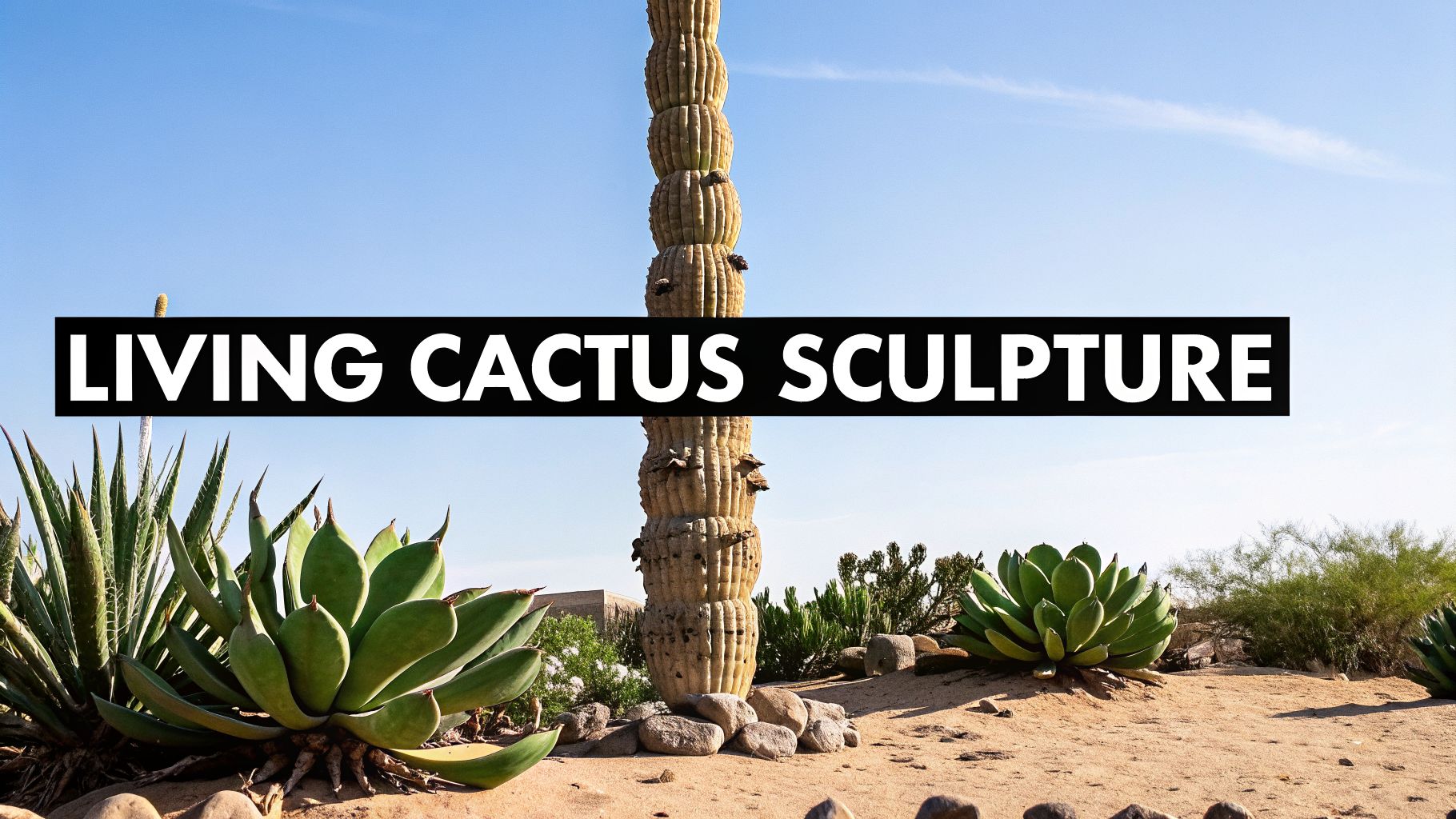

When you first see a totem pole cactus, you might not even think it’s a real plant. It looks more like a lumpy, bumpy piece of modern art—a living sculpture carved by some unseen, whimsical hand. It's this wonderfully weird, irregular form that makes it such a showstopper for anyone tired of the usual houseplants.
What Makes the Totem Pole Cactus a Living Sculpture
Think about a traditional, hand-carved totem pole where each figure is stacked to tell a story. The totem pole cactus does something similar, but it’s nature itself doing the carving. Its growth isn't neat or predictable. Instead, it pushes out new knobby, cylindrical arms that stack on top of each other, creating a silhouette that is genuinely unique to each plant.
This bizarre shape comes from a natural mutation. The plant’s scientific name is Lophocereus schottii 'Monstrose', though you’ll often see it listed as Pachycereus schottii f. monstrose. It’s a columnar cactus, but this "monstrose" version is famous for its lumpy, finger-like growths. This unusual form is precisely why it’s become a favorite among collectors and designers looking to bring a distinct desert vibe into their spaces, a trend reflected in the booming interest in unique cacti.
Unlike its spiny cousins, the totem pole cactus is almost completely smooth. This is because its "monstrose" growth habit is erratic and abnormal, resulting in a lumpy, bumpy texture that you can actually touch without fear of getting pricked.
This lack of spines is a huge part of its appeal. It completely changes the game, turning what would be a hands-off specimen into an approachable piece of living art you can safely place in a busy hallway or next to a sofa.
A Story in Every Lump
Every new knob or arm that sprouts on a totem pole cactus adds another layer to its personality. These are slow-growing plants, so their shape changes gradually over many years, almost like a story unfolding in super slow motion. You can’t predict how it will grow, and that’s what gets people hooked. No two totem pole cacti will ever look the same.
The plant’s real charm is in its rejection of perfect symmetry. While other cacti might grow in orderly columns or predictable pads, the totem pole is a celebration of imperfection. Its waxy, green skin, which can have subtle shifts in color, only adds to its sculptural feel.
It's no surprise that landscape and interior designers have fallen for its organic form.
- It’s an instant focal point. The vertical, sculptural shape creates a dramatic statement in any room or garden bed.
- It’s surprisingly versatile. It looks just as good in a minimalist, modern home as it does in a rustic or bohemian-styled space.
- It’s low-maintenance art. You get all the visual punch of a high-end sculpture but with the straightforward care of a tough-as-nails succulent.
In the end, a totem pole cactus is so much more than just a plant. It’s a dynamic, ever-changing piece of art. Its unusual form, smooth skin, and quirky personality make it a must-have for anyone wanting to add a touch of natural wonder and sculptural beauty to their home or garden.
How to Identify a Genuine Totem Pole Cactus
Walking through a nursery, it’s easy to feel overwhelmed by all the tall, green cacti that seem to look alike. But when you’re hunting for a true Totem Pole Cactus, there are a few dead giveaways that make it stand out from the crowd. The secret isn't its overall shape, but its skin.
A genuine Totem Pole Cactus (Pachycereus schottii 'Monstrose') is almost entirely spineless. Its surface is uniquely smooth, bumpy, and waxy to the touch. You’ll notice lumps, knobs, and organic-looking bulges all over it—almost like melted candle wax. This sculptural, bumpy texture is its most iconic feature.
What Does 'Monstrose' Mean?
This strange and beautiful form isn't a separate species. It's actually a natural mutation of the standard Senita Cactus (Pachycereus schottii). The term 'Monstrose' simply describes this abnormal, unpredictable growth pattern. The plant's growing points go haywire, creating bumpy, stacked arms instead of the straight, ribbed columns of its parent.
Think of it this way: The regular Senita Cactus grows by following a strict architectural blueprint, resulting in organized ribs and spines. The 'Monstrose' form, on the other hand, has tossed the blueprint out the window and is just free-forming its shape. That's why every single Totem Pole Cactus is a one-of-a-kind living sculpture.
This flowchart can help you quickly determine if what you're looking at is the real deal. It walks you through the key features to check.

As you can see, the combination of a smooth, lumpy stem without any defined ribs or major spines is the definitive sign of a Totem Pole. If you spot prominent spines or clear, straight ribs, you're looking at a different cactus.
Totem Pole Cactus vs. Common Lookalikes
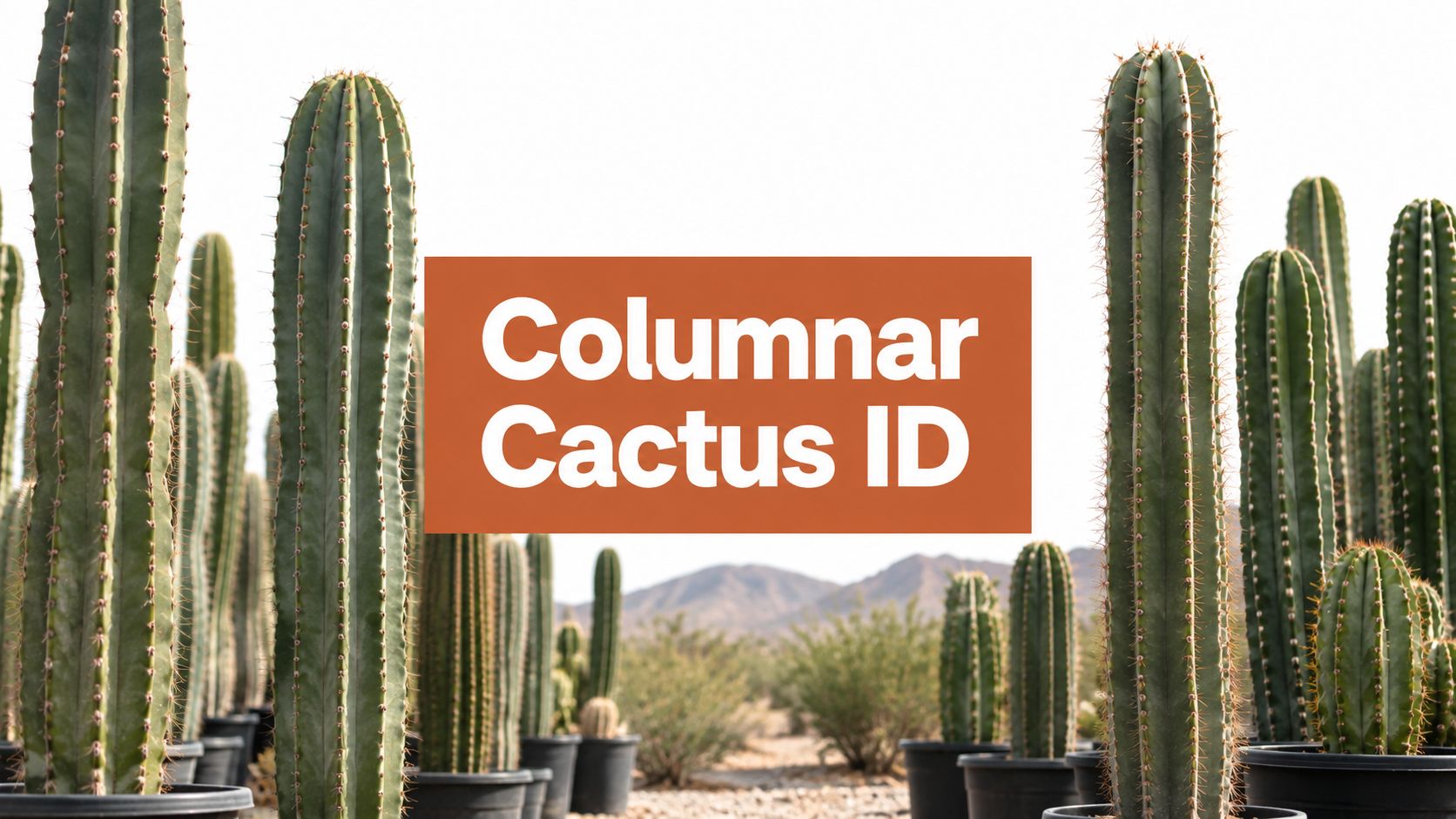
A common point of confusion arises because other cacti can also have 'Monstrose' variations. The two most frequent lookalikes are the Totem Pole's own parent species and the Peruvian Apple Cactus 'Monstrose'. Knowing what to look for makes telling them apart simple. For a deeper dive into different species, our complete cactus identification guide covers even more ground.
To help you distinguish them, here’s a direct comparison of their features.
Totem Pole Cactus vs Common Lookalikes
| Feature | Cactus Totem Pole (P. schottii 'Monstrose') | Senita Cactus (P. schottii) | Peruvian Apple Cactus (C. repandus 'Monstrose') |
|---|---|---|---|
| Spines | Almost completely spineless; may have a few tiny, hair-like bristles. | Has prominent spines, with long, bristly gray "hairs" near the top. | Features scattered, sharp spines, though fewer than its regular form. |
| Stem Texture | Smooth and waxy with random, organic-looking lumps and bumps. | Has clearly defined, uniform vertical ribs from top to bottom. | Lumpy and club-like, but you can often still see faint, irregular ribs. |
| Color | A rich, waxy green, sometimes with grayish-green tones. | Generally a paler, more muted grayish-green. | Varies from a distinct blue-green to a brighter, truer green. |
| Growth Habit | Forms unpredictable, stacked arms that create a clumping look. | Grows in straight, organized, and upright columns. | Irregular and clumping, but the segments are often much thicker and more club-shaped. |
By zeroing in on the skin texture and the presence—or absence—of spines, you can confidently pick out a true Totem Pole Cactus. That smooth, lumpy surface is its signature, setting it apart from its spiny relatives and making it a prize in any collection.
Your Essential Guide to a Thriving Totem Pole

The best part about owning a Totem Pole Cactus is that its stunning, sculptural form requires surprisingly little fuss. This means you get to spend less time worrying and more time simply enjoying your living work of art. Let's walk through everything you need to know to keep your cactus healthy and growing strong.
It's no surprise the Totem Pole is so popular. With its quirky, multi-armed shape that brings to mind ancient desert sentinels, it's a go-to for gift-givers and collectors alike. This trend is part of a much larger movement; the global succulent and cactus market is projected to hit an incredible $21.4 billion by 2025, growing at a 4.85% CAGR from 2025-2033. You can read more about this boom from an in-depth industry analysis.
Finding the Perfect Light
Like most cacti, the Totem Pole craves sun, but it’s a bit of a Goldilocks—it needs the light to be just right. Give it too little, and you'll see slow, pale growth. But blast it with intense, direct sun all day, and its gorgeous green skin will scorch.
Think of it as the difference between a healthy glow and a nasty sunburn. A little "sun stress" is actually a good thing and can produce lovely reddish or purple tones. But if you see white, yellow, or brown patches, that’s a burn. Move it to a spot with less direct sun right away.
- Indoors: A south-facing window is usually the sweet spot, offering bright light for most of the day. An east-facing window with gentle morning sun is another great option.
- Outdoors: If you're in a hot climate like Arizona, giving it some shade in the afternoon is key. Planting it under the dappled light of a taller tree, like a Palo Verde, is a perfect way to shield it from the harshest rays.
Building the Ideal Soil Foundation
Getting the soil right is probably the single most important thing you can do for your cactus. These plants evolved in rocky, dry places where rain drains away almost immediately. Their roots simply aren't designed to sit in soggy, dense soil.
Think of it like this: you're giving your plant's roots a pair of lightweight running shoes instead of heavy cement boots. A fast-draining mix lets the roots breathe and prevents them from suffocating, which is what causes root rot.
You can grab a pre-made cactus and succulent mix, but whipping up your own is easy and often better. Here’s a recipe that works wonders:
- Start with a base of regular potting soil (about 50%).
- Add an inorganic material like pumice or perlite for drainage (about 40%).
- Mix in coarse sand or small gravel for extra aeration (about 10%).
This simple blend guarantees water flows through freely, keeping those roots happy and dry. For a deeper dive into creating the perfect base, our complete cactus care guide has you covered.
The Art of Watering Your Cactus Totem Pole
The best advice I can give you is to throw out any strict watering schedule. The only rule you need is the "soak and dry" method. This approach perfectly copies the infrequent but heavy downpours of their native desert habitat and forces you to pay attention to your plant's actual needs.
When you do water, be generous. Completely drench the soil until you see water flowing out of the pot's drainage holes. This ensures the entire root system gets a thorough drink.
Now for the most important part: let the soil dry out completely before you water again. You can check by sticking your finger or a chopstick a couple of inches into the soil. If you feel even a hint of moisture, step away from the watering can and wait.
Overwatering is the number one killer of cacti. If you're ever in doubt, it's always safer to wait a little longer.
Temperature and Hardiness
As a desert native, the Totem Pole Cactus loves warmth and feels right at home in typical indoor temperatures. If you're growing it outdoors, it’s hardy down to about 25°F (-4°C) for short spells, putting it in USDA Zone 9b and warmer.
For those in colder climates, keeping your cactus in a pot is a must. This makes it easy to bring it inside before the first frost hits. During its winter dormancy, your cactus will go into a sort of hibernation and will need far less water—maybe once a month. Just find a bright, cool spot for it and let it rest until spring arrives.
How to Propagate Your Cactus Totem Pole
One of the best parts of owning a Cactus Totem Pole is realizing just how easy it is to create new plants from the one you already have. Propagating these guys is a simple and rewarding project that can turn your single living sculpture into a whole family in no time.
You'll be propagating your Totem Pole through cuttings. While the process isn't complicated, your success really comes down to patience and following a couple of non-negotiable rules. For the best results, plan to take your cuttings during the plant's active growing season in late spring or early summer. This is when it has the most energy to heal and push out new roots.
Taking and Preparing the Cutting
First, you need to decide where you're going to make the cut. Look for a healthy, firm arm that’s at least a few inches long. Grab a clean, sharp knife and make a swift, decisive slice at the base of the arm where it joins the main stem. It's crucial that your tool is sterile; this prevents nasty bacteria from infecting the fresh wounds on both the mother plant and your new cutting.
Now, you'll have a fresh cutting in your hand, and your first instinct might be to stick it straight into a pot of soil. This is the single biggest mistake you can make. Before it ever touches dirt, the cut end needs time to heal over and form a callus.
Think of this 'callousing' phase like letting a scab form on a cut. This dry, hardened seal is the cutting's best defense against rot, which is the number one killer of new cactus propagations.
Set your cutting aside in a dry, shady spot with good air circulation. Depending on how thick the cutting is and the humidity where you live, this can take anywhere from one to three weeks. You'll know it's ready when the cut end feels dry, firm, and looks like a tough, pale callus.
Planting Your Calloused Cutting
Alright, now that your cutting has its protective "scab," it's finally ready for soil. Get a small pot and fill it with a well-draining cactus mix. A simple blend of potting soil, pumice, and sand is perfect—it gives new roots room to grow without staying soggy.
Gently push the calloused end about one to two inches deep into the soil, just enough so it can stand up on its own. If you have a taller or top-heavy cutting, you can prop it up with a few small rocks or bamboo stakes to keep it stable until the roots take hold.
Here comes another critical step: do not water your new cutting yet! I know it feels wrong, but watering a rootless cutting is the fastest way to make it rot. It has no way to absorb any moisture, so the stem will just sit in damp soil and decay.
Wait about two to three weeks before giving it the tiniest bit of water. For the next couple of months, water very sparingly, and only when the soil is completely bone-dry. To check for progress, give the cutting a very gentle tug. If you feel resistance, congratulations! Your new Cactus Totem Pole has rooted and is officially on its way to becoming a brand new plant.
Styling Your Totem Pole for Maximum Impact

Think of the Cactus Totem Pole as less of a plant and more of a piece of living sculpture. With its wonderfully lumpy, spineless form, it's a natural work of art that can single-handedly define a room or garden space. The trick is to style it in a way that lets its unique personality shine.
The great thing about this cactus is its versatility. Its organic shape works just as well against the clean, sharp lines of a modern home as it does with the soft, layered textures of a bohemian space. The key is giving it room to breathe and treating it like the focal point it is.
Styling Your Indoor Totem Pole
Indoors, the totem pole cactus is an incredible vertical accent. It has a knack for drawing the eye upward, which can make a room with high ceilings feel even grander or add a surprising sense of height to a smaller room. Your first and most important decision is the pot, as it completely sets the tone.
- For a minimalist or modern look: Go for simple, geometric pots. Think concrete, fiberstone, or matte black ceramic. These materials create a sleek, understated anchor that lets the cactus's unusual shape do all the talking.
- For a bohemian or rustic vibe: You can't go wrong with classic terracotta. Its warm, earthy color beautifully complements the cactus's green skin for a relaxed, natural feel. A woven basket also works wonders for adding a softer, textural touch.
- For an artistic statement: Don't be afraid to go bold with a colorful, glazed ceramic pot. This can turn your plant into a vibrant, eye-catching conversation starter.
Where you place it matters just as much. Find a spot near a source of bright, indirect light, like next to a large window or in a well-lit corner. Positioning it beside furniture—a sofa or an armchair, for example—helps integrate it into the room and makes it feel like part of the decor.
Creating an Outdoor Xeriscape
Out in the garden, the totem pole cactus really comes into its own, especially in xeriscapes and rock gardens. Its strong vertical form and serious drought tolerance make it a perfect anchor plant. I like to think of it as the centerpiece of a living, desert-inspired painting.
When you're designing an outdoor space, use the totem pole to create layers of height and texture. Grouping it with other succulents that have different shapes and habits is how you build a visually stunning, low-maintenance garden that looks fantastic all year.
To get that dramatic, architectural effect, pair your totem pole with other bold succulents. Here are a few companion plants that work beautifully:
- Agaves: The sharp, rosette form of an agave, like the compact Agave parryi 'truncata', creates a fantastic structural contrast against the lumpy, upright cactus.
- Aloes: The spiky, starburst shape of a variety like 'Blue Elf' Aloe adds another layer of texture. As a bonus, its colorful flower spikes will bring in the hummingbirds.
- Golden Barrel Cactus: Nothing beats the sight of round, golden globes of the Golden Barrel (Echinocactus grusonii) planted near the base of a tall totem pole. The contrast in both shape and color is just stunning.
By being thoughtful about your pots and companion plants, you can elevate your Cactus Totem Pole from a simple plant to a standout design feature. It's all about celebrating its unique form to enrich your home or garden with natural, sculptural beauty.
What to Expect When Buying Your Cactus Online
Let's be honest: buying a big, sculptural plant like a cactus totem pole online can feel like a gamble. Will it show up looking like the picture? How could it possibly survive being tossed around in a box? These are totally fair questions. But once you understand how a good grower preps your plant for its journey, that worry quickly turns into excitement.
When you're browsing, pay close attention to the photos. You want to see clear, bright pictures from a few different angles. A healthy cactus should have firm, plump arms and a rich, waxy green color. Steer clear of any plants with mushy spots, yellowing, or a lot of scarring—these can be red flags for poor health or old pest problems.
How Your Cactus Is Packed for Shipping
Getting a lumpy, spined plant safely across the country involves more than just some packing peanuts. Experienced growers have this process down to an art. Your cactus will almost always be shipped bare-root. This simply means it's gently taken out of its pot, and all the old soil is carefully brushed away from the roots.
Why ship it naked like that? It’s the industry standard for one huge reason: it’s the single best way to prevent root rot in transit. A pot of damp soil in a dark box is a recipe for disaster. Shipping it dry and soil-free ensures the roots arrive healthy and ready for their new home.
Once the roots are clean, the careful wrapping begins. The entire cactus, especially those knobby arms, gets swaddled in soft padding like paper or poly-fil. This creates a custom cushion that stops it from getting bruised or broken on its trip to you.
Unboxing and Acclimating Your New Arrival
Once that box lands on your doorstep, your job begins. The first few days are all about helping your cactus settle into its new environment. Whatever you do, resist the urge to immediately pot it up and douse it with water. A little patience right now is the key to avoiding transplant shock and setting your plant up for a long, happy life.
Follow this simple checklist for a smooth transition:
- Carefully Unpack: Gently remove all the layers of wrapping. Give your new cactus totem pole a good look-over for any dings or dents that might have happened during shipping.
- Let It Rest: Find a dry, shady spot and let the bare-root cactus just sit out for a day or two. This little breather helps it recover from the stress of travel before you plant it.
- Pot It Up: Grab a pot with good drainage holes and fill it with a fast-draining cactus mix. Settle your cactus in, planting it at the same depth it was growing before.
- Wait to Water: This is the most important step of all. Do not water your newly potted cactus for at least a week, maybe even two. Its roots have tiny, unavoidable breaks from being handled, and they need time to heal. Watering too soon invites rot.
- Introduce Light Slowly: For the first couple of weeks, place your potted cactus somewhere with bright, indirect light. Keep it out of intense, direct sun, which can easily cause a nasty sunburn on a stressed plant.
Navigating the world of online plant shopping really can be simple and rewarding. If you're looking for more pointers, our guide on the best place to buy cactus online has even more tips. By following these steps, you can confidently bring home a stunning cactus totem pole and watch it thrive for years to come.
Common Totem Pole Cactus Questions Answered
Even after you've learned the basics, plants have a way of throwing you a curveball. As your living sculpture gets settled, you might notice something that makes you go, "Hmm, is that normal?" This section is for those moments.
We've gathered some of the most common questions and worries we hear from fellow cactus lovers. Let's clear up the confusion so you can get back to enjoying your unique plant.
Why Is My Totem Pole Cactus Turning Yellow and Mushy?
This is the big one, the question that sends a shiver down every cactus owner's spine. When you see your cactus turning yellow and getting soft at the base, the cause is almost always overwatering. That mushy feeling means the roots are drowning, and root rot has begun.
You need to act fast.
- Stop watering. Right now. Don't give it another drop until you've sorted this out.
- Assess the soil. If it feels wet or soggy, gently slide the cactus out of its pot.
- Perform surgery. Carefully brush off the old, wet soil. Inspect the roots and trim off any that are black, mushy, or have a foul smell.
- Repot into dry soil. Get a fresh batch of fast-draining cactus mix and repot your plant.
- Give it time to heal. Wait at least a week—maybe longer—before you even think about watering it again.
When in doubt, let it dry out. A totem pole would much rather be thirsty than waterlogged.
How Fast Does a Cactus Totem Pole Grow?
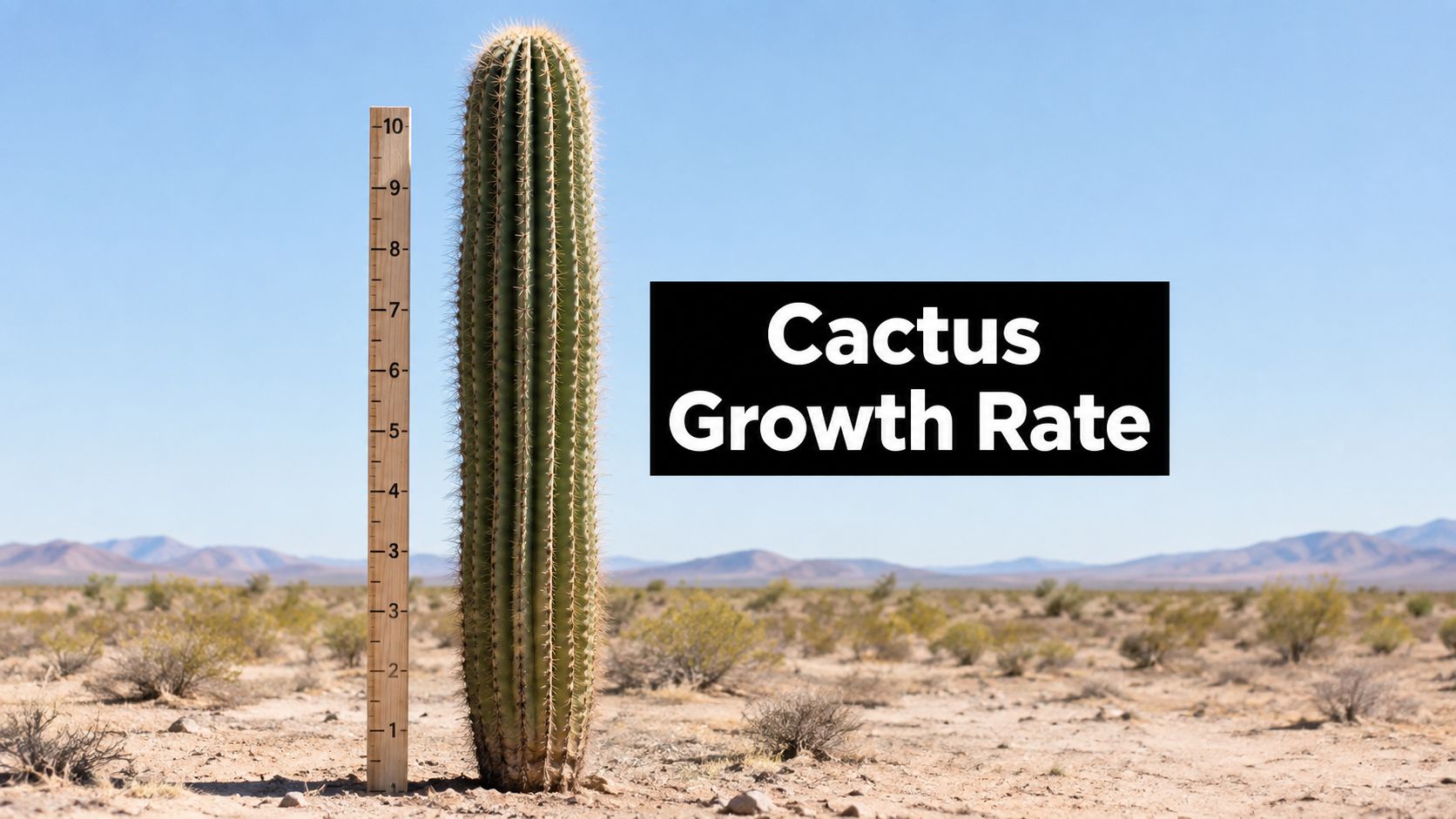
Don't hold your breath. The totem pole cactus is a very slow grower. Even in perfect conditions, you’d be lucky to see a few inches of new height in a year.
Its "monstrose" growth is what makes its development so wonderfully strange. It doesn’t just shoot straight up. Instead, it slowly pushes out new bumps, knobs, and arms at its own unhurried pace. This is a huge part of its appeal—each new formation is a milestone, and no two plants will ever look the same.
The slow, unpredictable growth is exactly what makes each totem pole a one-of-a-kind living sculpture. You aren't just raising a plant; you're watching a unique work of art slowly take form over many years.
Is the Totem Pole Cactus Toxic to Pets?
This is a fantastic question for anyone with furry family members. The good news is that the parent species, Pachycereus schottii, is listed by the ASPCA as non-toxic to cats, dogs, and horses. Since the totem pole is just a spineless variety, it's considered safe as well.
That said, "non-toxic" doesn't mean "edible." A curious pet might still take a nibble of its bumpy arms, which could cause some minor tummy trouble. It's always best to place your cactus on a high shelf or in a room your pets don't usually visit, just to be safe.
Can I Grow a Totem Pole Cactus in a Cold Climate?
You absolutely can, but with one major rule: it has to live in a pot. The totem pole cactus is not frost-tolerant. It can only survive outdoors year-round in warm climates like USDA Zone 9b or higher, where temperatures stay above 25°F (-4°C).
For everyone else in cooler regions, it's all about the seasonal shuffle.
- Start with a container. Pick a pot with great drainage that's a manageable size for you to move.
- Bring it in for winter. Before the first frost hits your area, it's time for your cactus to come inside.
- Find a sunny spot. Place it by your brightest window, usually one that faces south.
- Cut way back on water. It will go dormant indoors and needs very little to drink—maybe just a splash once a month to keep it from shriveling.
Once spring arrives and all danger of frost is gone, you can move it back outside to soak up the sun. This simple in-and-out routine makes it possible for anyone, anywhere, to grow this desert masterpiece.
At The Cactus Outlet, we provide healthy, high-quality cacti that are ready to become the centerpiece of your collection. Explore our stunning selection of sculptural plants today.