

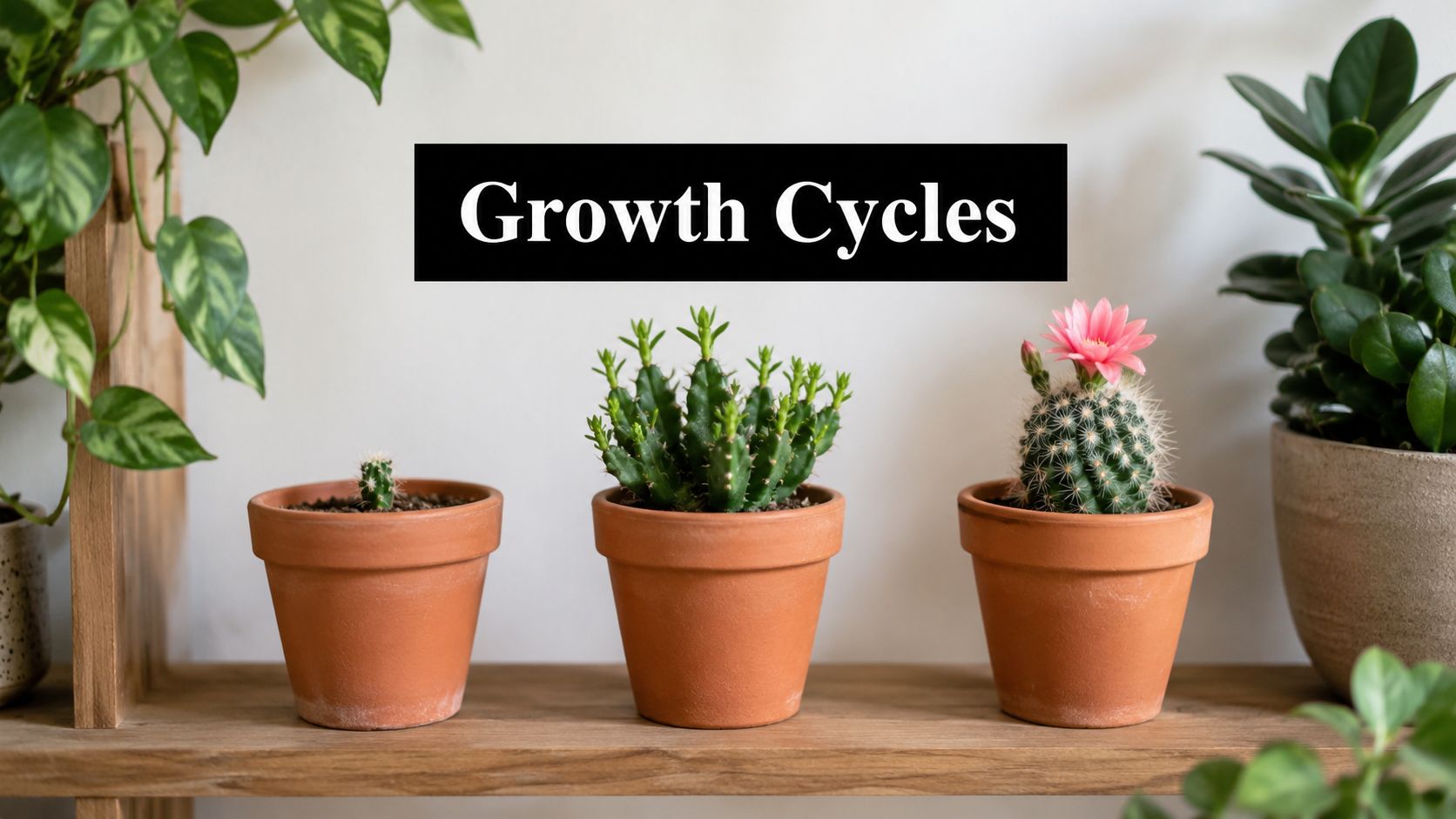

You bring home a cactus you love. You set it in a bright spot, water carefully, and then wait for something to happen.
A week passes. Then a month. It still looks almost exactly the same.
That's the moment a lot of new growers think they're doing something wrong. Usually, they aren't. Cacti and succulents don't grow on the same visible schedule as a pothos on a kitchen shelf. Their timing is quieter, slower, and far more tied to season, light, temperature, and internal rhythm than typically expected.
If you understand that rhythm, care gets much easier. You stop asking, “Why isn't it doing anything?” and start asking the better question: “What stage is it in right now?”
Understanding Your Cactus Clock
A cactus has a kind of internal clock. You can't see it directly, but you can see the results. One month it pushes out a fresh pad, a new spine pattern, or a burst of roots. Another month it seems to pause completely. That pause often worries beginners more than any pest or blemish.
Most of the time, the plant isn't stuck. It's following its growth cycle.
That's especially true with desert plants. Cacti and many succulents evolved in places where good growing conditions come in short windows. They don't waste energy the way softer, leafy plants might. They wait, then move when conditions line up. That's why a Peruvian Apple cactus may suddenly stretch upward in one season and then appear almost frozen in the next.
A simple way to think about it is this. Your cactus isn't lazy. It's selective.
Practical rule: If a cactus looks stable, firm, and healthy but isn't visibly changing, assume timing before assuming trouble.
Readers often get confused because they expect “growth” to mean obvious size increase. But growth can also mean root work, tissue thickening, preparing flower buds, or shifting into rest. A plant may be busy without looking busy.
That's one reason patience matters so much with these plants. If you've ever wondered why progress feels slow, this guide on how long succulents take to grow helps set realistic expectations.
What your plant is really responding to
Your cactus is watching cues more than calendars:
- Light length affects whether it stays active or slows down.
- Temperature often tells it when to grow and when to hold back.
- Moisture helps decide whether new tissue is worth building.
- Plant age influences whether it can focus on flowers or only body growth.
Once you start reading those cues, the “mystery” starts to disappear. The rest of this guide turns that invisible clock into something you can use all year.
The Five Core Plant Growth Stages
A new cactus owner often sees only two modes. Growing, or not growing. The plant is doing much more than that.
Botanists divide development into a small set of repeatable stages. The names sound technical, but the idea is practical. At any given time, your cactus is usually focused on one main job. Starting life, building structure, preparing flowers, making seed, or resting. Once you can identify that job, care decisions get simpler.

The five stages most growers need to know
Germination or propagation is the starting point. Seeds sprout, or a cutting forms roots and begins to establish itself.
Vegetative growth is the construction stage. The plant adds pads, stems, roots, spines, leaves on succulent types, and water-storing tissue. For cacti, this stage also shapes the plant's architecture. A column may gain height, a clustering cactus may add offsets, and a rosette succulent may widen instead of rising.
Reproductive growth begins when the plant shifts energy toward buds and flowers. This change often surprises beginners because the plant may slow body growth while it prepares to bloom.
Fruiting or seeding follows flowering in plants that are pollinated successfully. Some cacti make obvious fruits. Others put their effort into seeds with little show.
Dormancy is the quiet season. Metabolism slows, water use drops, and visible change may pause for weeks or months.
These stages are easy to name and harder to spot. A cactus can look still while roots are extending. A succulent can keep its shape while thickening tissue or setting hidden buds. That is why patience matters so much with these plants.
Why this matters more with cacti and succulents
Cacti and succulents do not move through these stages on a neat houseplant schedule. Their timing is tied closely to light, temperature, moisture, and age. Two plants of the same species can behave differently if one is grown outdoors in dry heat and the other sits on a cool windowsill.
Their shape adds another layer. Growth is not just about speed. It is also about direction. An opuntia decides whether to make another pad or thicken an old one. A barrel cactus may spend a season widening more than rising. An echeveria may tighten into a compact rosette under strong light or stretch when light is weak. Reading stages well means watching structure, not only size.
That is also why feeding should match the stage you are seeing. During active building periods, a plant can use nutrients productively. During slow periods, fertilizer often sits in the soil longer than the plant can use it. If you are unsure what to use, this guide to fertilizer for succulents and cacti helps you match feeding to the plant's pace.
Pests can also blur the picture. A plant that should be pushing new growth may stall because mealybugs or scale are draining energy. For treatment basics, The Green Advantage pest control advice is a useful reference.
A simple way to read the stage
Ask four questions.
Is it establishing roots?
New cuttings and seedlings often spend energy below the soil line before they show much on top.
Is it building body structure?
Look for new pads, thicker stems, fresh spine growth, tighter rosettes, or new offsets.
Is it preparing to reproduce?
Watch for buds, changes at the crown, or a pause in body growth while the plant redirects energy.
Is it conserving resources?
Firm but inactive plants, especially in cooler or darker periods, are often resting rather than struggling.
This framework turns general botany into a care calendar you can use. Instead of asking, “Why isn't it growing?” you start asking, “What job is it doing right now?” That question leads to better watering, better feeding, and fewer panic adjustments.
Active Growth The Vegetative Stage
A cactus in active growth can change faster than a new grower expects. One week the plant looks still. A little warmth, longer daylight, and a proper drink later, a Mammillaria starts setting fresh spines, an Opuntia swells at the pad joints, or an Aloe begins stacking new leaves from the center. That shift matters because this is the stage when your care choices shape both growth rate and form.

Vegetative growth is the body-building phase. The plant is putting energy into roots, stems, pads, leaves, and spines. For a cactus grower, that means you are not only watching for bigger size. You are also watching how the plant is arranging itself, because healthy growth has a pattern. A compact rosette, a straight column, or a balanced clump tells you the plant is using light and water well.
USDA guidance explains that plant growth often follows an S-shaped curve. It begins slowly, speeds up, and then eases as the plant matures. The same guidance also explains why watering and feeding work best when the plant is actively using them, not sitting idle. You can read more in this USDA plant growth guidance.
What active growth looks like
Some signals are loud. Others are quiet enough that you only notice them after you know where to look.
- Fresh color often looks cleaner or lighter on new tissue.
- Expansion shows up as swelling pads, taller stems, thicker bodies, or fuller succulent leaves.
- New spines, areoles, or leaf pairs may appear before the plant looks much larger.
- Faster drying soil often points to stronger root activity.
- Tighter, more deliberate form can mean the plant is growing well under good light rather than stretching.
That last point trips people up. Growth is not always dramatic. An Agave may widen by adding leaf after leaf in a tight spiral. A Haworthia may stay nearly the same height while becoming denser and firmer. A young columnar cactus may add only a little length but thicken enough to support future height.
How to care for a cactus in this stage
Match your care to what the plant is spending energy on right now.
| Care area | What to do in active growth |
|---|---|
| Water | Water thoroughly, then wait until the mix dries before watering again |
| Light | Give bright light suited to the species so new growth stays compact and balanced |
| Feeding | Feed lightly and only while you can see active growth |
| Repotting | Repot during this stage if needed, because active roots recover faster |
Feeding deserves special care. During active growth, cacti and succulents can use nutrients to build new tissue, but more fertilizer does not mean better growth. Too much nitrogen can push soft, weak growth, especially in low light. A practical guide to fertilizer for succulents and cacti can help you choose a product and timing that fit the plant's actual season.
Pests also cause confusion here because damaged new growth can look like a watering problem. Mealybugs, scale, and mites often go after tender tissue first. If a plant should be growing but seems stalled, inspect the crown, areoles, leaf axils, and roots before changing your whole care routine. For growers who want a broader reference, The Green Advantage pest control advice is a useful supplemental read.
Growth is also about shape
Many articles treat vegetative growth as a question of size alone. With cacti and succulents, shape tells just as much of the story.
Plant architecture is the way growth is arranged in space. Which direction does a stem push. How wide does the clump spread. Does the plant stay upright, branch, offset, or lean. Those are growth traits, not cosmetic details. They tell you how the plant is responding to light, gravity, stored water, and the space available for roots.
For everyday cactus care, that idea explains several common puzzles:
- A column that bends toward a window is changing direction to chase light.
- An Opuntia that branches unevenly may be responding to stronger light on one side.
- A rosette that opens too loosely often needs brighter conditions.
- A plant with modest top growth after repotting may be putting effort into roots first.
A healthy cactus is not always trying to get bigger as fast as possible. Often it is trying to build a stable shape for the next season of growth.
The Bloom The Reproductive Stage
You have a cactus that looked steady for months. Then one morning, near an areole you have passed a hundred times, there is a small bump with a different kind of promise. That moment feels sudden to the grower, but the plant has been preparing for it for a long time.

Flowering is the reproductive stage, but for cacti and succulents it is also a reading of the calendar. The plant is asking, "Have I stored enough energy. Did I get the seasonal cue I was waiting for. Am I mature enough to spend resources on seed-making instead of body-building?" If those answers line up, buds form. If they do not, the plant keeps investing in stems, pads, ribs, or roots.
That helps explain a common beginner puzzle. Two plants can sit on the same shelf, get the same water, and still behave differently. One may bloom while the other stays purely vegetative because flowering depends on stored reserves, age, genetics, and the quality of the previous rest period, not just what happened this week.
For many desert cacti, bloom is tied to contrast in the year. A cool, drier rest acts like a winter pause in a piece of music. The brighter, warmer return of the growing season tells the plant it is time to push the next movement. Keep the plant warm, damp, and heavily fed all year, and it may continue making green tissue without ever switching to flowers.
What budding looks like before it looks like blooming
Buds rarely announce themselves with a full flower shape at the start. On globular and columnar cacti, they often begin as tiny woolly or pointed growths near the areoles. On rosette succulents, the center may tighten first, then send up a stalk. On branching succulents, one tip may stop making ordinary leaves and begin building a flower stem instead.
Architecture matters here too. Reproductive growth changes where the plant directs its effort.
- A bud at the crown or upper areoles shows the plant is allocating energy to exposed, well-lit growth points
- A rosette sending a central stalk upward is changing from compact leaf production to vertical reproduction
- Side growth slowing while buds swell means resources are being rerouted, much like a plant shifting its budget from expansion to flowering
That shift is easy to misread. A grower may see slower stem growth and assume the plant needs more nitrogen. In many cases, the plant is changing jobs.
Adjust care to support flowers, not just foliage
During budding and bloom, the goal is steady support. Strong light still matters. Stable watering still matters. What usually hurts most is excess. Too much nitrogen can push soft vegetative growth at the exact moment the plant is trying to hold buds and develop flowers. Repotting can interrupt the process. Big swings in moisture can lead to bud drop in some succulents.
A simple working rule helps:
- Ease off heavy nitrogen feeding once buds are visible
- Keep watering measured and consistent rather than trying to force bigger blooms
- Maintain bright, stable light so the plant can afford the energy cost of flowering
- Leave the roots alone if possible until blooming is finished
A budding cactus is like a grower putting all attention into one major project. It can still handle normal life, but it does better without extra disruptions.
Age still sets the floor. A young plant may be vigorous, well rooted, and beautifully shaped, yet still be years away from flowering. That is normal. Maturity is part of the cactus clock.
Here's a helpful visual if you want to see blooming cues and growth habits in context:
When buds fail or flowers never show up
If your cactus has not bloomed, check the pattern across the whole year rather than searching for one magic fix.
- It may not be mature yet. Healthy growth and flowering are not on the same timetable.
- The rest season may have been too warm or too wet. Many species need that seasonal contrast to trigger buds.
- Light may have been adequate for survival but too weak for reproduction. A plant can stay alive in dimmer conditions without storing enough energy to flower.
- Feeding may have favored continued stem growth. High nitrogen often keeps the plant focused on building body rather than blooms.
Flowers are less a reward for one good week of care and more the result of a full season done in the right order. That is why experienced growers pay attention to the yearly rhythm, not just the moment a bud appears.
The Quiet Season Dormancy Explained
You check your cactus in January and it looks smaller than it did in October. The skin is a little less glossy. Nothing new is growing. For a new grower, that can feel like the start of a problem. For many cacti and succulents, it is the quiet part of the year.
Dormancy is the plant's low-power mode. It slows growth to match conditions that are poor for building new tissue. In many desert cacti, that rest period comes with shorter days and cooler temperatures. In some succulents, especially those from climates with harsh summer heat, the pause happens during the hottest months instead.
The hard part is that dormancy does not always look tidy. A resting plant can look less full, less colorful, and less eager than it did during active growth. That change is normal if the plant still feels firm enough, stays structurally sound, and shows no signs of rot.
Signs that it's rest, not decline
A dormant plant usually changes in an orderly way. Problems tend to look messy.
Look for this pattern:
- Growth pauses and the shape stays the same for weeks or months
- Soil dries more slowly because the roots are taking up less water
- Color softens a bit without turning translucent, brown, or black
- The body draws in slightly as stored water is used carefully
- The plant keeps its structure even if it looks less plump
That last point helps with a common confusion. A dormant cactus may shrink a little, but it should still look like itself. The ribs, pads, or rosette remain organized. Collapse, mushiness, or a yellowing base points to trouble, not rest.
Why watering during dormancy causes so many losses
A resting cactus works like a workshop closed for the season. Supplies are not moving out the door, so new deliveries pile up. Water in cool or low-light conditions does the same thing in the pot. The roots are not processing moisture at their growing-season pace, so damp soil lingers around tissue that is already taking a break.
That is why experienced growers water for the season, not for the grower's anxiety.
A little softness can be normal in dormancy. Soil that stays wet is the larger warning sign.
Dormancy affects shape, not just speed
This part gets overlooked. Growth cycles are not only about whether a plant is getting taller or making new leaves. They also affect plant architecture, the way a cactus holds its form, where it directs energy, and how it preserves balance through the year.
During rest, a columnar cactus may hold itself rigid rather than push upward. A clustering plant may pause offset production and keep resources in the main body. A rosette succulent may stay compact instead of stretching into loose, weak growth. In other words, dormancy helps protect the plant's design. It is maintenance season, not construction season.
That is why forcing water or fertilizer at the wrong time often changes shape for the worse. Growth can come in pale, thin, or tilted because the plant is being pushed when light and temperature do not support solid structure.
Two dormancy patterns to recognize
Winter rest is common in many desert cacti. Short days and cooler temperatures slow metabolism, so watering should become sparse and careful.
Summer slowdown shows up in some succulents that cope poorly with intense heat. They may pause during the hottest stretch, then resume stronger growth when temperatures ease.
Knowing which rhythm your plant follows changes care from guesswork into timing. Once you know its quiet season, you can stop trying to make it look busy and start helping it rest well.
Cactus and Succulent Growth Calendar
You bring home a cactus in March, water it like your leafy houseplants, and by July it looks taller but somehow weaker. The problem usually is not effort. It is timing. A cactus or succulent follows a yearly clock, and your care works best when it matches that rhythm.
Use this calendar the way you would use a weather forecast. It helps you prepare, but you still look out the window before leaving the house. A Peruvian Apple cactus and an Echeveria may both be in spring, yet one may be ready to push upward while the other is focused on tighter rosette growth and new roots.
Seasonal Care Calendar for Cacti & Succulents
| Season | Typical Growth Stage | Watering Frequency | Feeding Guide | Key Actions |
|---|---|---|---|---|
| Spring | Wake-up and active vegetative growth | Increase gradually as soil dries fully between waterings | Resume feeding during clear active growth, using a vegetative-leaning formula for plants building stems and roots | Increase light carefully, inspect roots, repot if needed, watch for fresh growth and balanced new form |
| Summer | Strong growth for many cacti, mixed behavior for some succulents | Water deeply but only after full dry-down | Continue feeding active plants, but skip feeding for plants slowing in intense heat | Protect from scorch if needed, monitor for pests, support airflow, watch whether growth stays compact or starts stretching |
| Fall | Slowdown and transition | Reduce frequency as temperatures and day length shift | Taper feeding so plants can firm up instead of staying soft | Stop pushing growth, watch for bud set in mature plants, prepare brighter and drier rest conditions |
| Winter | Dormancy for many cacti, slower growth for many indoor plants | Keep watering sparse and cautious | Hold fertilizer for resting plants | Keep bright light, avoid cold wet soil, and delay repotting unless there is a clear problem |
How to read the calendar correctly
This table is a guide for decisions, not a preset schedule.
Start with the season. Then check the plant in front of you. Soil dryness matters, but shape matters too. A healthy plant in active growth usually adds firm tissue, stronger color, and growth that follows its natural architecture. A columnar cactus should build sturdy vertical sections. A rosette succulent should stay compact rather than open up and reach.
Three quick readings help:
- Dry soil plus fresh, firm growth usually means the plant can use water
- Dry soil plus a paused plant in its rest period usually means wait and recheck
- Pale, stretched, or tilted new growth points to weak light or mistimed watering, even if the soil routine seems careful
Color belongs in the same conversation. If your plant starts losing its normal tone, use a symptom-specific guide such as why a cactus may be turning yellow before changing everything at once.
Matching the calendar to plant type
Plant form changes how the calendar plays out through the year. A tall columnar cactus often has one main structural goal during active months: add strong upward sections without becoming thin. A clustering aloe may divide its energy between new leaves and offsets. An Echeveria often shows its season in shape before size. In bright, well-timed growth it stays tight and symmetrical. In poor timing or poor light, it loosens and leans.
That is why a care calendar works best when you pair season with architecture. You are not only asking, "Is it growing?" You are also asking, "Is it growing in the right direction, with the right density, for this species?"
The Cactus Outlet lists species such as Saguaro, Peruvian Apple, Euphorbia, Agave, and Aloe, which can help you compare how different plant forms behave in your space and climate.
Learn the pattern first. Then let the plant confirm the timing.
Quick Troubleshooting Guide
A few questions come up again and again. Most of them make sense once you connect them to plant growth cycles.
Why isn't my cactus growing at all
It may be dormant, recently transplanted, adjusting to new light, or putting energy into roots instead of visible top growth. If the plant is firm and stable, don't rush to fix what may be a rest period.
Check light, season, and temperature before changing water or fertilizer.
Why is my succulent growing long and stretched
That's usually a light problem during active growth. The plant is reaching instead of growing compactly. Move it to brighter conditions gradually so new growth forms tighter and stronger.
Is it safe to repot in winter
Usually, it's better to repot when the plant is active. Roots recover more reliably when the plant is growing. Winter repotting can work in some indoor conditions, but it's not the easiest timing for a beginner unless there's a real need.
Why did my cactus stop drinking water
In many cases, growth slowed and the plant's demand dropped. Cooler conditions and lower light often mean the roots aren't pulling moisture as quickly. That's a cue to water less, not more.
Why is my cactus leaning
Leaning can come from directional light, structural habit, or growth form. Some cacti naturally branch or angle as part of their architecture. Others lean because they're reaching for stronger light.
My cactus is yellowing. What now
Yellowing can come from watering stress, light stress, aging tissue, or other care issues. A focused guide on why a cactus turns yellow can help you sort out the likely cause before you react.
Most cactus problems get worse when the grower acts before identifying the stage the plant is in.
Once you start reading the rhythm, you'll make fewer random corrections. That's the actual skill. Not perfect watering. Not secret fertilizer. Good timing.
If you're building your collection or replacing a plant that wasn't suited to your conditions, The Cactus Outlet offers a range of cacti and succulents with care information that can help you choose a plant whose growth habits fit your space and climate.