

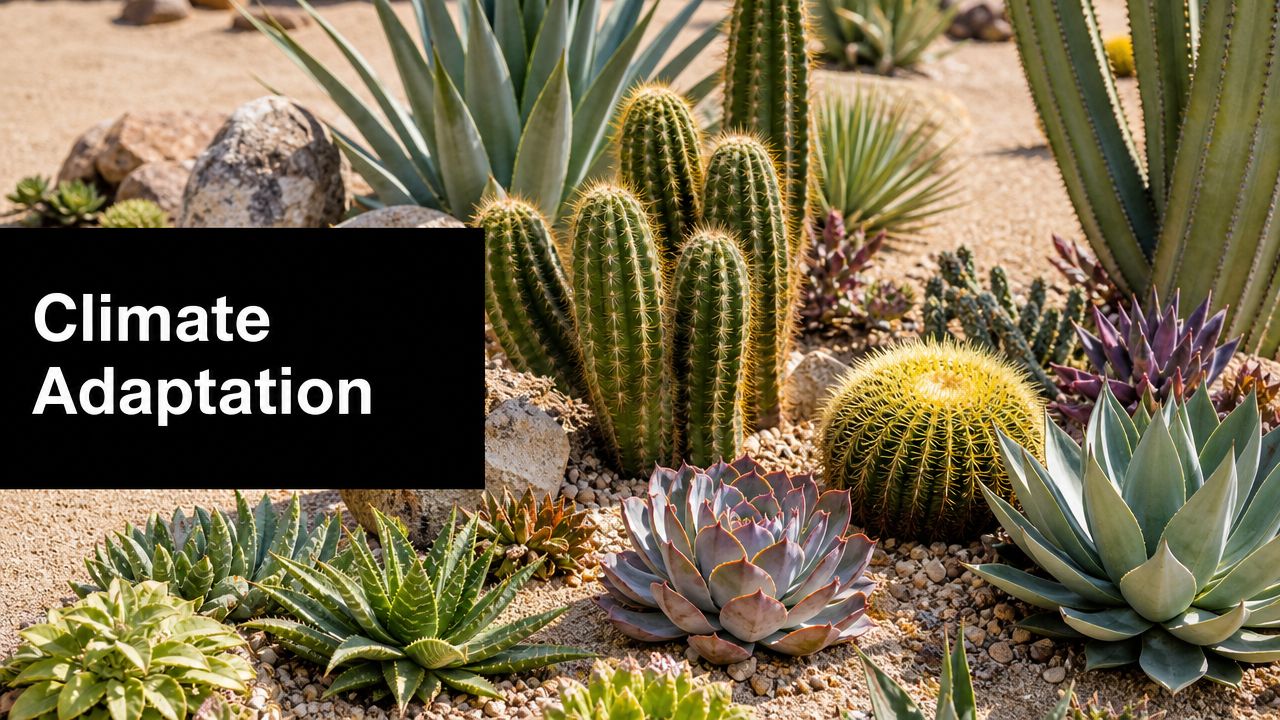

You can feel it in the plants before you have a neat name for it. A cactus bed that cruised through summer for years suddenly gets hammered by a humid heat spell. A hardy agave shrugs off drought, then rots after one stretch of warm rain. A favorite aloe pushes soft growth during an oddly mild week, then gets burned by a sharp cold snap that arrives right after.
That's the new gardening reality for a lot of us. The old rhythms still matter, but they don't arrive as reliably, and they don't stay as long. If you grow cacti and succulents, that matters because these plants are tough, not invincible. They're built for stress, but usually for a particular kind of stress.
Climate adaptation sounds like policy language. In the garden, it means adjusting how you choose plants, build soil, manage water, and respond to extremes so your collection can handle the weather you're currently getting, not the weather you used to expect.
Your Garden Is Changing Is It Ready
A gardener I know had the kind of yard people envy. Gravel mulch, sculptural agaves, barrel cactus, aloes, a few tall columnar accents. It looked stable because it had been stable. Then one season delivered a brutal sequence: long dry heat, a surprise burst of humidity, then rain that sat in planting pockets longer than it should have. The losses didn't come from one dramatic event. They came from mismatch. Right plant, wrong place. Good soil, wrong drainage for that week. Sensible watering, wrong for that month.
That's what catches people. Gardening isn't failing because you forgot how to grow plants. The conditions shifted, and the old assumptions shifted with them.
The bigger climate picture explains why this isn't just a local fluke. The UN says 3.6 billion people are highly vulnerable to climate impacts, and it estimates that every $1 billion invested in coastal-flooding adaptation can prevent about $14 billion in economic damages, which is why adaptation is increasingly treated as a practical investment rather than a cleanup cost (UN climate findings).
Adaptation pays when it reduces damage before the damage arrives.
In a cactus garden, the same logic holds. Spending time to improve drainage, selecting a tougher species, or keeping shade cloth and frost cloth ready is cheaper than replacing mature plants after a bad week.
What adaptation looks like in a cactus bed
It usually isn't dramatic. It's the gardener who stops treating all succulents as “low water” and starts separating desert species from summer-rain growers. It's the plant professional who raises the crown of an agave slightly above grade because pooled water is the primary threat. It's the collector who notices that reflected heat from a west wall helps one species and cooks another.
A climate-adapted garden doesn't chase perfection. It reduces avoidable losses.
The shift that matters most
The old style of reacting after damage isn't enough anymore. If your collection includes Saguaro, Peruvian Apple cactus, Euphorbia, Aloe, Agave, Echinocactus, or Opuntia, you need a working system for stress testing your site. Which plants take wet feet badly? Which ones scorch under reflected afternoon heat? Which ones survive cold but not cold plus damp soil?
Those are adaptation questions. Once you ask them, your garden starts getting sturdier.
What Climate Adaptation Means for Gardeners
For gardeners, climate adaptation isn't a grand theory. It's a repeatable loop. You watch the site, identify the weak points, make a change, then see whether the change helped.

The most useful framework I've found is the simple cycle described in a technical adaptation framework: assessment, planning, implementation, and monitoring/evaluation. Applied to the garden, that means you first identify climate risk, then design a response, then put it in place, then track what happened (adaptation taxonomy framework).
Use this loop: Assess. Plan. Implement. Monitor. Then repeat.
Assess the real hazards
Start with the stresses your garden faces. For cacti and succulents, the list usually includes:
- Heat spikes: Brief but punishing periods of sun and hot wind that scar pads, bleach epidermis, or stall roots.
- Cold snaps: Not just low temperature, but fast drops after warm periods.
- Humidity and warm rain: Often more dangerous than drought for desert species.
- Waterlogging: A drainage issue that gets exposed during intense storms.
- Wind: It can desiccate tender growth and destabilize tall columns.
Don't assess the whole yard as one uniform place. A south-facing block wall, an open gravel bed, and a sheltered patio corner are different climates.
Plan for the plant, not the label
A “drought tolerant” tag doesn't tell you enough. A plant can tolerate low rainfall and still fail in humid heat. Another can survive cold and still collapse if winter soil stays wet. Planning means matching species traits to site conditions, then deciding what support that site needs.
A good plan usually answers four questions:
| Question | What to check |
|---|---|
| Where will this plant sit? | Slope, reflected heat, runoff, winter exposure |
| What is the main risk? | Rot, scorch, frost, humidity stress, wind |
| What site change helps most? | Raised planting, gravel topdress, shade cloth, frost cover |
| How will you know it worked? | New growth, firm tissue, less scarring, better recovery after stress |
Implement small, then monitor honestly
Gardeners often overcorrect. They see one burned aloe and move the entire bed into too much shade. They lose one agave to rot and stop watering thoroughly enough for anything to root well. Adaptation works better when changes are specific and measured.
Try one change at a time. Raise one planting area. Shift one watering zone. Trial one tougher species. Then monitor outcomes that matter: root establishment, leaf firmness, tip burn, rot after rain, and recovery after a weather swing.
The goal isn't to make your garden stress-free. It's to make it recoverable.
Start with the Right Plants Choosing Resilient Species
Plant choice is where most climate adaptation succeeds or fails. If the species is badly matched to your site, no irrigation tweak or fancy soil recipe will fully save it.

The broad principle is well established. Core adaptation measures include crop diversification and using plant varieties with specific resilience traits such as drought tolerance and pest tolerance. For our world, that translates into building cactus and succulent plantings with a wider mix of forms and tolerances instead of betting everything on one look or one genus.
Look past the phrase drought tolerant
That label is too blunt. For cacti and succulents, I'd rather sort plants by the type of failure they resist best.
Some examples:
- Heat-hardened structural plants: Many agaves and larger desert cacti handle relentless sun well once established, but they still need excellent drainage and enough root space.
- Cold-capable choices: Some Opuntia and certain hardy succulents can handle winter better than many collectors expect, especially when kept on the dry side.
- Humidity-tolerant growers: Some aloes, euphorbias, and subtropical succulents are better choices in places with warm nights and summer moisture.
- Fast-recovering fillers: Ground-hugging succulents and dependable secondary plants help a garden recover visually even if one marquee specimen takes damage.
That mix matters. A bed planted with ten similar agaves can look clean and strong, but it also concentrates risk. If one weather pattern hits that genus hard, the whole design suffers at once.
Match plant traits to the site
I've seen gardeners lose good plants because they chose for appearance first and climate fit second. Tall blue agaves in a low pocket. A tender aloe in a frost funnel. A barrel cactus set beside a wall that throws back fierce afternoon heat. The plant didn't “randomly fail.” The placement was wrong.
Use this decision filter before you plant:
- For the hottest exposure: Favor species with proven sun tolerance, thick cuticles, and forms that won't trap water around the crown.
- For winter-wet beds: Choose plants that hate standing water less, or build the bed so the crown stays raised and drains fast.
- For frost-prone sites: Keep tender species mobile in containers, or reserve in-ground space for tougher selections.
- For mixed plantings: Pair cacti and succulents with regionally appropriate woody plants. If you're designing a broader dry garden, this guide to landscaping with low-water trees in Arizona is useful for thinking about structure, shade, and water-wise plant combinations.
For readers comparing options across desert-style plantings, this overview of best drought-tolerant plants is a practical starting point.
Diversity is a resilience tool
Collectors sometimes resist diversity because they want a tighter aesthetic. I understand that. But in a changing climate, diversity isn't visual clutter. It's insurance.
A planting that combines columnar cactus, cold-capable pads, heat-tough agaves, and carefully chosen aloes has more ways to succeed than a monoculture does. If one species stalls during a rough season, the whole garden still holds together.
A quick visual example helps here:
What doesn't work
Three mistakes come up constantly:
- Buying by label only. “Full sun” and “low water” are not enough information.
- Planting all specimens at the same grade. Crown height matters. Slight elevation can be the difference between a thriving agave and a rotted one.
- Treating every succulent as desert-native. Many succulents come from climates with different rainfall patterns and different temperature rhythms.
A resilient planting starts with species selection, but it only becomes resilient when the species matches the exact stress pattern of the site.
Smart Soil and Water Strategies for a Changing Climate
Cacti and succulents don't just need less water. They need water managed correctly. That distinction matters more now because many gardens are dealing with both longer dry stretches and harder bursts of rain.

The smartest soil work I see in the field isn't about making everything drain as fast as possible. It's about building a root zone that drains well, breathes well, and still supports steady establishment.
Build soil for roots and rainfall
In pure mineral beds, water can move through quickly but root development may stay shallow if irrigation is too frequent. In heavier soils, roots may sit in dangerous moisture too long after storms. The fix depends on the starting soil.
For many succulent plantings, useful materials include coarse sand, pumice, grit, decomposed granite, and carefully chosen organic matter in moderation. The goal isn't a universal recipe. The goal is a profile that avoids perched water around the crown while still allowing roots to explore.
If you're revisiting your mix, this guide to cactus and succulent soil mix gives a good practical baseline.
Stop following rigid watering calendars
One of the least helpful habits in modern dry gardening is the fixed schedule that never changes. Tuesday and Saturday might have worked in a stable pattern. It won't always work when heat, cloud cover, humidity, and storm timing swing around.
Instead, water according to three factors:
- Plant stage: New transplants need different support than rooted specimens.
- Soil response: Probe the root zone. Don't guess from the dry top inch.
- Weather pattern: Heat plus wind dries a bed differently than heat plus humidity.
Deep, infrequent watering usually creates stronger root behavior than light daily watering. Shallow sipping encourages shallow rooting and unstable plants.
If a cactus or agave is always living on surface moisture, it never learns to use the deeper profile.
Use irrigation that can be measured and adjusted
Adaptation finance discussions often favor projects with measurable risk reduction, and drip irrigation is a good garden-scale example because it ties water use to a clear practical result: less waste and more targeted delivery (UN climate reports on adaptation).
For cactus and succulent beds, that means:
| Method | Where it helps | Common problem |
|---|---|---|
| Drip emitters | Individual specimen watering | Too close to crown |
| Inline drip | Broad succulent borders | Uniform output on non-uniform plants |
| Hand watering | Containers and close monitoring | Inconsistency |
| Overhead spray | Limited use in this context | Encourages wet crowns and wasted water |
Drip works best when you place emitters out toward the root zone instead of right at the plant base. For large agaves and columnar cactus, watering slightly away from the crown often encourages safer rooting.
Mulch carefully, not automatically
Mulch advice gets sloppy in succulent gardening. Organic mulch can moderate soil temperature and reduce evaporation, but piled against the crown of a desert plant it can also trap moisture where you don't want it. Mineral mulch such as gravel often suits cacti and agaves better around the neck of the plant.
A practical approach is layered use:
- Mineral mulch near the crown: Keeps the base drier and cleaner.
- Organic mulch farther out where appropriate: Helps the broader bed hold condition and reduce crusting.
- No mulch volcanoes: Never bank material up against stems or rosettes.
Prepare for drought and downpour at once
A good climate-adapted succulent bed can absorb a deep irrigation, shed a hard rain, and still leave oxygen in the root zone afterward. That often means slight mounding, runoff planning, and paying attention to where water collects from roofs, paving, or neighboring beds.
What doesn't work is designing only for drought. In many places, rot now arrives through the storm event you didn't respect.
Advanced Techniques Managing Microclimates and Extremes
A professional garden designer I know maintains several dry gardens where the biggest challenge isn't average weather. It's the bad week. The summer week with blast-furnace afternoon exposure. The winter night when temperature drops fast after a mild stretch. The storm that pushes water toward the same low corner every time.
His best plantings don't survive by luck. They survive because the site is managed in layers.
Use microclimates on purpose
Every property already has microclimates. The question is whether you're reading them clearly.
A masonry wall can store daytime heat and reduce cold damage overnight. A covered patio edge can protect sensitive succulents from winter rain. A slight slope can keep crowns drier than flat grade. Overhead lattice or seasonal shade cloth can lower plant stress during punishing sun windows without sacrificing the bright conditions cacti still need.

The rule for plant arrangement is simple: expensive or slow-growing plants get the best real estate. Tough filler plants absorb the rougher edges.
Tools that earn their place
For years, some gardeners treated shade cloth and frost blankets like emergency gear. They're better used as planned seasonal tools.
Here's where they help most:
- Shade cloth: Useful for newly installed succulents, tender aloes, nursery-grown specimens moving into harder sun, and west-facing exposures during severe heat.
- Frost cloth: Valuable for protecting soft growth, reducing radiational heat loss on clear cold nights, and buying time during short freezes.
- Rain shelters or temporary covers: Helpful for prized plants that can tolerate cold better than winter wet.
- Container mobility: One of the strongest adaptation tactics for collectors. Pots let you move vulnerable plants ahead of an event instead of merely hoping.
Forecasts are part of the growing system
The adaptation lesson from public early warning systems is practical at garden scale too. The UNDP notes that more than 3 million people are now covered by enhanced climate information and early warning systems, and gardeners can apply the same idea by using forecasts to deploy frost cloths or shade structures before damage begins (UNDP on climate adaptation).
That means checking more than the daytime high. Look at overnight low, wind, cloud cover, consecutive hot days, and the chance of rain after heat stress. Plants often get injured by combinations, not by one simple number.
Watch sequences, not single forecasts. Heat followed by storm, warmth followed by freeze, or drought followed by saturation are the combinations that do the damage.
A practical example from a winter-sensitive bed
In one mixed planting, the gardener grouped hardier Opuntia and tougher agaves in the open, then placed more cold-sensitive aloe and euphorbia near a wall with overhead protection from winter rain. When a cold event was forecast, he covered only the vulnerable zone, not the whole bed. That saved labor and reduced unnecessary humidity under cover.
If you're sorting plants by winter survivability, this roundup of cactus that can survive winter helps identify which plants deserve the protected spots and which can take a more exposed position.
What fails under extremes
The usual problems are predictable:
| Mistake | Why it fails |
|---|---|
| Covering too late | Tissue is already stressed before protection goes on |
| Using dense plastic directly on plants | Traps moisture and can worsen damage |
| Treating the whole yard the same | Wastes effort and ignores site differences |
| Forgetting runoff paths | Storm water overwhelms the lowest planting pockets |
Good microclimate management is selective. You don't need to baby every plant. You need to know which plants are one event away from trouble and which intervention changes that outcome.
Building Your Resilient Garden Next Steps
The hardest part of climate adaptation for gardeners isn't understanding the concept. It's resisting the urge to do everything at once. You don't need to rebuild the entire garden this month. You need to remove the most obvious weak points and make the next good decision.
That's how resilient cactus gardens are built. One better planting choice. One drainage correction. One irrigation adjustment. One shade strategy ready before the heat arrives.
There's also a useful lesson from broader adaptation work. Not every intervention helps in every setting. Some adaptation choices create trade-offs if they're poorly matched to local conditions. Gardens work the same way. More shade can prevent scorch but invite stretch. More frequent watering can reduce stress in a container collection but cause root problems in a heavy in-ground bed. Good adaptation is local, specific, and tested in practice.
Start with these actions this week
- Walk the garden after irrigation or rain: Find where water stands, where it races, and where crowns stay wet too long.
- Tag your vulnerable plants: Mark the specimens most likely to suffer from frost, reflected heat, or humidity, then assign each one a response.
- Test one microclimate move: Shift a container, install a small shade panel, or raise one plant on a slight mound and watch the difference.
- Audit your watering method: If you're still watering by habit instead of plant condition and weather pattern, change that first.
- Add diversity on purpose: The next plant you buy should solve a risk problem, not just fill a space.
Keep learning from practical sources
For contractors or serious DIY gardeners working beyond the succulent bed itself, a broader sustainable landscaping guide for contractors can help when hardscape, runoff control, and surface permeability are part of the project.
Local extension offices, regional cactus and succulent societies, and experienced growers in your climate are also worth your time. They usually know which plants fail after wet winters, which aloe varieties burn first, and which agaves handle local cold without drama. That kind of grounded knowledge saves money.
A resilient garden isn't a static garden. It's a garden you keep tuning until the plants and the site work together under the conditions you live with now.
If you're ready to build a tougher, better-looking cactus garden, browse the plant selection and care resources at The Cactus Outlet. Whether you're choosing a statement specimen, comparing resilient succulents, or planning a full dry garden, their range and guidance can help you make smarter climate adaptation choices from the start.