
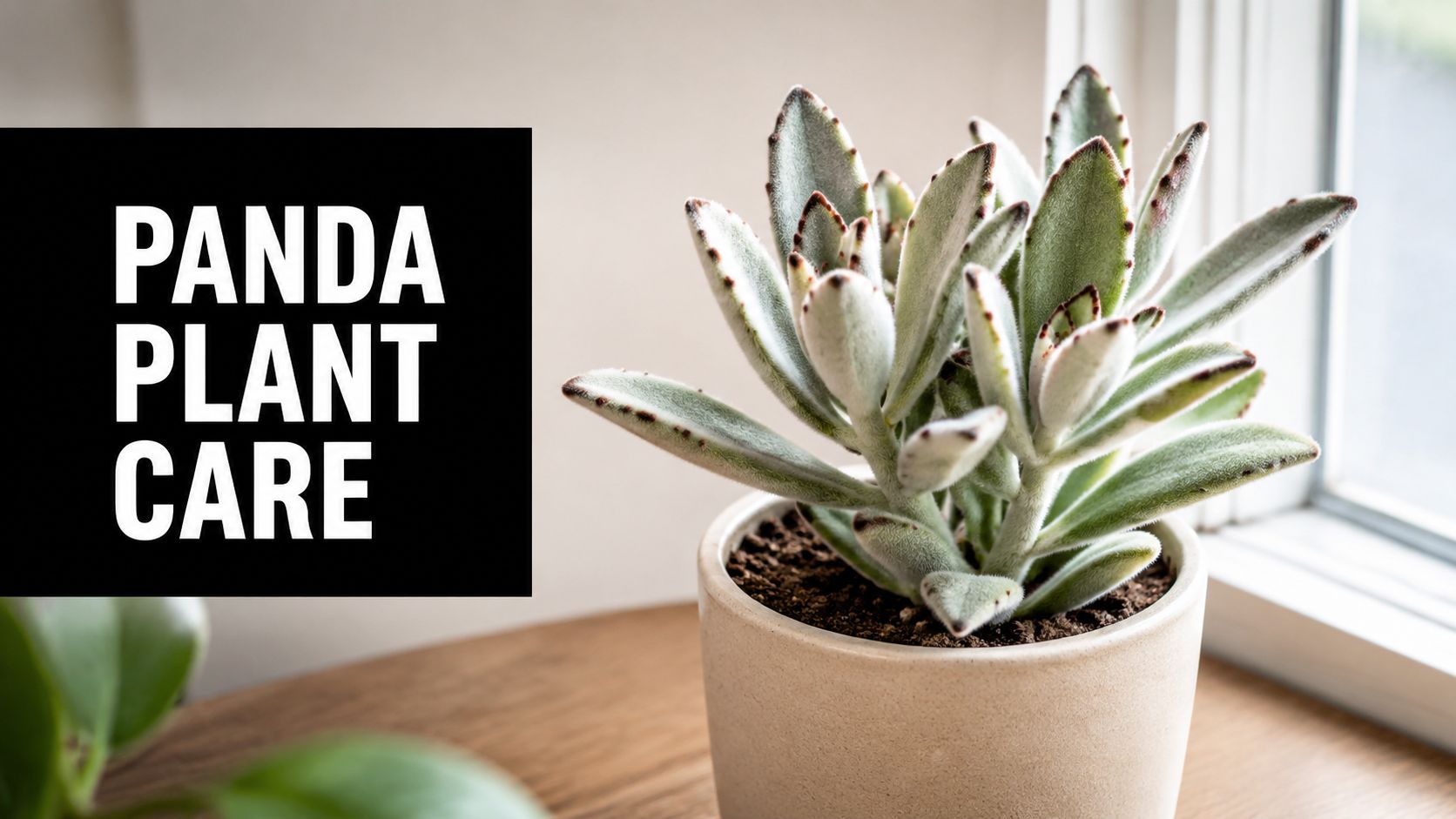

You bring home a Panda Plant because it looks like a tiny sculpture. The leaves are soft, silvery, and edged like they were outlined with cocoa powder. Then the second thought hits: this thing is fuzzy. Am I supposed to water it like a succulent, baby it like a tropical, or leave it alone and hope for the best?
That uncertainty is normal. Panda plants look playful, but they confuse a lot of growers because their care sits in the details. Generic succulent advice gets you part of the way there. Good panda plant care comes from understanding what those thick leaves and dense hairs are doing for the plant, and how that changes watering, humidity, light, and propagation.
I've seen plenty of people lose one because they treated it like every other succulent on the shelf. The good news is that this plant isn't difficult once you know its habits. It's more like learning one pet's personality than memorizing a rulebook.
An Introduction to the Fuzzy Panda Plant
A customer once picked up a Panda Plant at my nursery, ran a finger just above the leaves, and said, “It looks soft enough to need extra water.” That's exactly the trap. Its velvety look makes people think it's delicate in the wrong way.
In reality, this is a succulent that stores water in its leaves and prefers a dry rhythm. Its fuzz isn't decoration. It changes how moisture behaves on the plant, which is why a Panda Plant often struggles when someone mists it, top-waters carelessly, or tucks it into a humid corner.
That's also why panda plant care is easier when you stop thinking of it as “just another cute succulent” and start treating it as a species with a few strong opinions. It likes bright light, gritty soil, and patience between waterings. It doesn't like wet roots, damp leaf surfaces, or vague propagation advice.
A Panda Plant usually declines slowly at first. If you know the early signs, you can turn it around before it collapses.
If you've got one on a windowsill right now and you're wondering whether the leaves should be this firm, this fuzzy, or this close together, you're in the right place.
Meet Kalanchoe Tomentosa Your Panda Plant
Kalanchoe tomentosa is the botanical name behind the common Panda Plant, a Madagascar native first formally described in 1864. Growers value it for more than its looks. This species carries its care instructions right on its leaves.

What makes it special
At a glance, Panda Plant looks soft and almost plush. Up close, those silvery hairs are a practical survival tool. Botanists call them trichomes. They act like a light blanket over the leaf surface, helping the plant slow water loss and cope with bright, dry conditions.
The leaves also store moisture, which is classic succulent behavior. The difference is that Panda Plant does not behave exactly like a smooth-leaved jade or echeveria. Its fuzzy coating changes how water sits on the plant. A droplet can cling to that surface more like it would on velvet than on glossy plastic. That small detail explains why this species dislikes wet leaves and stale, damp air more than many beginners expect.
The care clues hidden in its background
Its native pattern helps explain its preferences indoors. Panda Plant stays happiest where warmth, strong light, and fast drainage work together. In cultivation, it is commonly grown outdoors in USDA zones 9a to 11b and prefers slightly acidic to near-neutral soil, around pH 5.8 to 6.6, with bright light for much of the day, according to Planet Desert's Panda Plant growing guide.
That background gives you a better way to read the plant. If growth stays compact and the leaves sit close together, conditions are usually on track. If the stems lengthen and the gaps between leaves widen, the plant is spending energy searching for better light instead of building a sturdy frame.
If you grow several succulents together, a broader succulent plant care guide can help you compare which ones tolerate the same shelf or windowsill. Panda Plant often wants a slightly more careful approach because that fuzzy leaf surface changes how it handles moisture.
Quick ID checklist
- Leaf texture: Fuzzy, soft-looking, silver-green
- Leaf edges: Often tipped or edged with chocolate-brown markings
- Growth habit: Upright and compact in good conditions
- Overall character: A drought-tolerant succulent with a coat that looks cuddly but works like protective gear
The easiest way to remember Panda Plant is this. It is not fragile, but it is specific. Treat the fuzz as part of its survival design, and the rest of its care starts making much more sense.
The Perfect Habitat Light and Temperature Needs
Set a Panda Plant on the wrong windowsill and it will tell on you within weeks. The stems start reaching, the leaf spacing widens, or the fuzzy edges develop dry, scorched patches. Set it in the right place, and it keeps the tidy, upright shape that makes this species look so polished.
Light matters a little differently here than it does for a smooth-leaved succulent. Those soft hairs act a bit like a velvet sweater. They help buffer the leaf surface, but they also make the plant less suited to long hours of harsh, blasting sun through hot glass. Panda Plant likes brightness with some restraint.
What bright indirect light really looks like
For many homes, the best spot is near an east-facing window or a few feet back from a south-facing one. Morning sun is usually gentle enough. Strong afternoon exposure through glass can be too intense, especially in summer.
If “bright indirect” feels vague, use a simple room test. The area should stay clearly lit for a good part of the day, without the plant sitting under fierce midday rays for hours. A shelf with bright ambient light often works better than the very hottest part of the sill.
If you keep several succulents together, this succulent plant care guide from The Cactus Outlet can help you compare which plants enjoy the same window and which ones need a different placement.
Reading your plant like a nursery grower
Panda Plant gives clearer signals than many beginners expect.
- Compact growth with close leaf spacing: Light is probably in the right range.
- Longer stems and wider gaps between leaves: The plant needs more light.
- Faded areas or crispy brown patches on the side facing the window: The light is too direct or too hot.
Those shape changes matter because they show how the plant is spending energy. In good light, it builds a stout frame. In weak light, it spends that energy stretching toward a better source.
Temperature that keeps it steady
Panda plants do best around 60°F to 75°F (15°C to 24°C). That lines up with the temperatures that feel comfortable in most homes, which is one reason they adapt well indoors.
Steady conditions are better than dramatic swings. A cold draft from a winter window, a blast from a heater vent, or a radiator shelf that heats up every afternoon can stress the plant even if the room seems fine overall. Succulents store water in their leaves, and sudden temperature shifts can upset that balance faster than many growers realize.
The fuzzy leaf coating also explains why this species appreciates moderate indoor air rather than muggy conditions. The hairs slow moisture movement at the leaf surface, so a stuffy, damp corner is not as friendly to Panda Plant as bright air circulation and stable warmth.
Good placements and risky placements
| Spot | Usually a good choice | Why |
|---|---|---|
| East-facing windowsill | Yes | Gentle morning light suits the plant well |
| Bright shelf near south window | Yes | Strong light without constant harsh exposure |
| Dark hallway table | No | Light is too weak for compact growth |
| Cold single-pane winter window ledge | Risky | Chilling stress can build up |
| Directly above heater vent | Risky | Dry blasts and heat swings stress the plant |
One more practical note from the shop floor. If you want a visual reminder of the kind of dry, sunny environment this plant comes from, an arid soil art print fits nicely near a succulent shelf and reinforces the care logic. Bright light, warm room temperatures, and no harsh extremes keep Panda Plant looking like itself.
The Art of Watering and Ideal Soil Mix
A Panda Plant usually declines for one simple reason. The roots stay wet longer than this species can handle.
That catches plenty of careful plant owners off guard because Kalanchoe tomentosa looks soft and thirsty. Those fuzzy leaves work more like a velvet sweater than a thin tropical leaf. They help the plant slow moisture loss, so the plant can wait longer between drinks than its cozy appearance suggests.

Why this species needs more caution than a generic succulent
Many succulents dislike soggy roots. Panda Plant adds a second risk. Its leaf fuzz can hold droplets against the surface longer than a smooth leaf would, which gives rot and fungal issues a better opening if water splashes onto the foliage.
That is why I treat this plant a little differently from a standard jade or echeveria. Bottom-watering is often the tidier option, especially indoors. It lets the root ball drink without wetting the fuzzy leaves.
Humidity matters here too. As noted earlier, Panda Plant is safer in drier indoor air than in a muggy room because that fuzzy coating slows drying at the leaf surface. If the air already feels heavy, avoid misting, avoid crowding the plant into a tight corner, and keep water off the leaves.
How to water without causing rot
Use the soil as your signal, not the calendar.
Here is the rhythm that works best:
- Check the full root zone. The top can look dry while the lower half is still damp. A wooden skewer, chopstick, or your finger near the drainage hole gives a better read.
- Water thoroughly. Give the mix a full soak so all the roots have access to moisture.
- Let the excess drain away completely. Never leave the pot sitting in a saucer of water.
- Wait for full dryness before watering again. Panda Plant handles a dry pause better than a wet one.
In active growth, that often means watering every couple of weeks indoors. In winter, the gap usually stretches longer, sometimes much longer, because lower light slows the plant's use of water. This species-specific point trips people up all the time. A room that feels warm to you can still be dim enough for the soil to stay damp for weeks.
If you are unsure, wait another few days and test again. Slight underwatering wrinkles a Panda Plant. Repeated overwatering gradually damages roots.
A quick visual can help lock that in:
The soil has one job
The mix needs to dry fast and keep air around the roots. Ordinary moisture-holding potting soil stays wet too long for Panda Plant, especially in plastic pots or low-light rooms.
A simple rule from the nursery bench is this. Use a gritty base with mineral drainage, then adjust based on your home. If your room is cool or your pot is large, add more pumice, perlite, or coarse grit. If your home is hot and bright, the mix can be slightly less mineral without staying wet too long.
For a broader explanation of what makes a succulent mix drain well, this cactus and succulent soil mix guide from The Cactus Outlet is a helpful reference.
I also like using visual reminders around a plant shelf. An arid soil art print fits that role nicely because it reinforces the care logic behind this species. Dry roots, airy mix, bright conditions.
Wet roots and damp fuzzy leaves create the problem pair. Prevent that pairing, and Panda Plant care gets much easier.
Feeding Potting and Maintenance Routines
A healthy Panda Plant usually needs restraint more than attention. Once light, watering, and soil are working, your job is to avoid turning good care into too much care.
Feeding without overdoing it
Panda Plant is a slow grower, so fertilizer should act like a light snack, not a heavy meal. Too much feeding often pushes soft, weak growth that does not match the plant's naturally compact habit. On a fuzzy-leaved succulent, that matters. Dense, plush foliage is part of its drought strategy, and fast, lush growth can be more sensitive to stress.
Feed lightly during active growth, usually in spring and summer, with a diluted cactus or succulent fertilizer. If your plant is holding steady and not producing much new growth, you can feed less often or skip it. In fall and winter, pause feeding in most homes.
If you plan to root offsets or cuttings later, this guide to propagating succulents from cuttings pairs well with a lighter feeding routine, because overfed parent plants often produce softer tissue that is less predictable to propagate.
Pot choice and repotting habits
The pot changes how quickly the root zone dries. Terracotta works like a clay canteen turned inside out. It lets moisture escape through the pot walls, which gives Panda Plant an extra margin of safety if you water a little too generously.
A drainage hole is required. Without one, water collects at the bottom of the pot and keeps part of the root ball damp long after the surface looks dry.
Repot when roots are crowding the container, the mix has started to compact, or the plant is drying out much faster than it used to. Choose a pot only one size up. A large jump gives the roots a big ring of unused soil, and unused soil stays wet longer. For Panda Plant, that is a common way good intentions turn into root trouble.
A maintenance routine that fits the species
This species benefits from dry, simple grooming because its leaf fuzz changes how moisture behaves. The hairs act a bit like a velvet sweater. They slow water loss, which helps the plant in dry conditions, but they also hold onto droplets longer than a smooth leaf would. That is why washing the leaves is usually less helpful than people expect.
A simple routine works well:
- Refresh old soil: Replace tired mix when it starts to break down and pack tightly around the roots.
- Remove spent lower leaves: Clear dry leaves from the base so air can move freely and debris does not collect.
- Dust with a soft brush: Use a makeup brush or artist's brush to lift dust without flattening the leaf hairs.
- Rotate the pot occasionally: A quarter turn every week or two helps keep growth more even in a bright window.
Brush, don't wash. Panda Plant leaves prefer dry cleaning.
Day-to-day grooming
Skip leaf shine, misting, and regular rinses. Panda Plant is not built like a glossy tropical houseplant. Its charm comes from that soft, matte coat, and rough handling can rub it away.
Check the crown and lower stem now and then. If dead leaves are tucked against the base, remove them gently with dry fingers or tweezers. That small habit improves airflow, keeps the plant looking tidy, and helps you spot pests or stem problems before they spread.
Propagation Secrets for More Panda Plants
Generic advice often causes many failures. You'll often hear, “Take a leaf and let it callus for a few days.” For Panda Plants, that's often too vague to be useful.
The species has a thick, moisture-holding leaf base. That means it needs a longer drying period before it touches soil.

The callus timing that matters
For successful leaf propagation, Kalanchoe tomentosa requires a callus period of 5 to 7 days, not just a vague “few days.” Leaves placed on soil with less than 3 days of callusing often rot because the thick leaf base retains moisture and hasn't sealed well enough against soil-borne bacteria.
That's the detail many growers miss. A Panda Plant leaf doesn't fail because propagation is hard. It fails because the wound went into soil before it had a proper barrier.
A leaf method that gives you a better chance
- Twist off a healthy leaf cleanly. A damaged or torn base is less reliable.
- Place it somewhere dry and bright, out of harsh sun.
- Wait the full 5 to 7 days for the end to callus.
- Lay it on top of dry, gritty succulent soil. Do not bury it too far down.
- Start very lightly once roots begin to form. Stay restrained.
That longer callus window is the secret. Patience prevents rot.
For a broader look at cutting methods across different succulents, this guide to propagating succulents from cuttings at The Cactus Outlet can help you compare leaf and stem approaches.
Stem cuttings are often easier
If your Panda Plant has become leggy, stem cuttings can be the cleaner option. Cut a healthy stem, remove any lower leaves that would sit near the soil line, and let the cut end dry thoroughly before placing it in a gritty mix.
Leaf propagation is satisfying, but stem propagation usually gives you a stronger head start because you're beginning with more stored energy and an established growing point.
Common propagation mistakes
- Rushing the callus: This is the classic cause of rot.
- Using wet soil from day one: Freshly cut tissue and wet soil are a bad combination.
- Burying the leaf: The base needs airflow as roots and baby growth begin.
- Expecting speed: Panda Plant propagation rewards patience more than fussing.
If a leaf turns mushy, the issue usually started before planting. The cut surface likely needed more drying time.
Troubleshooting Common Panda Plant Problems
When a Panda Plant starts looking strange, the symptom usually points straight back to one part of its care. You don't need a complicated diagnosis. You need to match the sign with the habit that caused it.

What the plant is telling you
| Symptom | Likely issue | What to do |
|---|---|---|
| Yellowing, mushy leaves | Too much moisture | Stop watering, check roots, improve drainage |
| Wrinkled leaves | Not enough water | Rehydrate thoroughly, then return to full dry-down cycles |
| Leggy growth | Light is too weak | Move to brighter indirect light |
| Brown crispy patches | Sun is too intense | Pull back from harsh direct exposure |
| White cottony pests | Mealybugs or similar pests | Isolate and spot-treat carefully |
Problems that confuse beginners
Mushy leaves make people think, “It must need less humidity” or “Maybe I should fertilize.” Usually the simpler answer is excess moisture around the roots or lingering moisture where it shouldn't be.
Wrinkled leaves confuse people too, because they can appear after long dry periods or after root trouble. If the soil has stayed wet and the plant still looks thirsty, damaged roots may not be taking up water properly. In that case, adding more water makes the problem worse, not better.
Pests in fuzzy leaves
Mealybugs and similar pests can hide where the fuzz and leaf joints give them shelter. Inspect close to the stem and where leaves meet each other. A cottony white patch is often easier to see than the insects themselves.
Use a careful hand when treating pests. The fuzz can hide residue, so avoid soaking the leaves unnecessarily.
The fastest way to diagnose a Panda Plant is to ask two questions. How much light is it getting, and how long is the soil staying wet?
Once you start reading the plant this way, panda plant care becomes much less mysterious. Most problems come back to one of four things: light, wet roots, damp leaves, or impatience during propagation.
If you're ready to add more succulents to your collection, The Cactus Outlet is a solid place to browse healthy cacti and succulent plants, compare varieties, and pick up care ideas for your next windowsill or patio favorite.