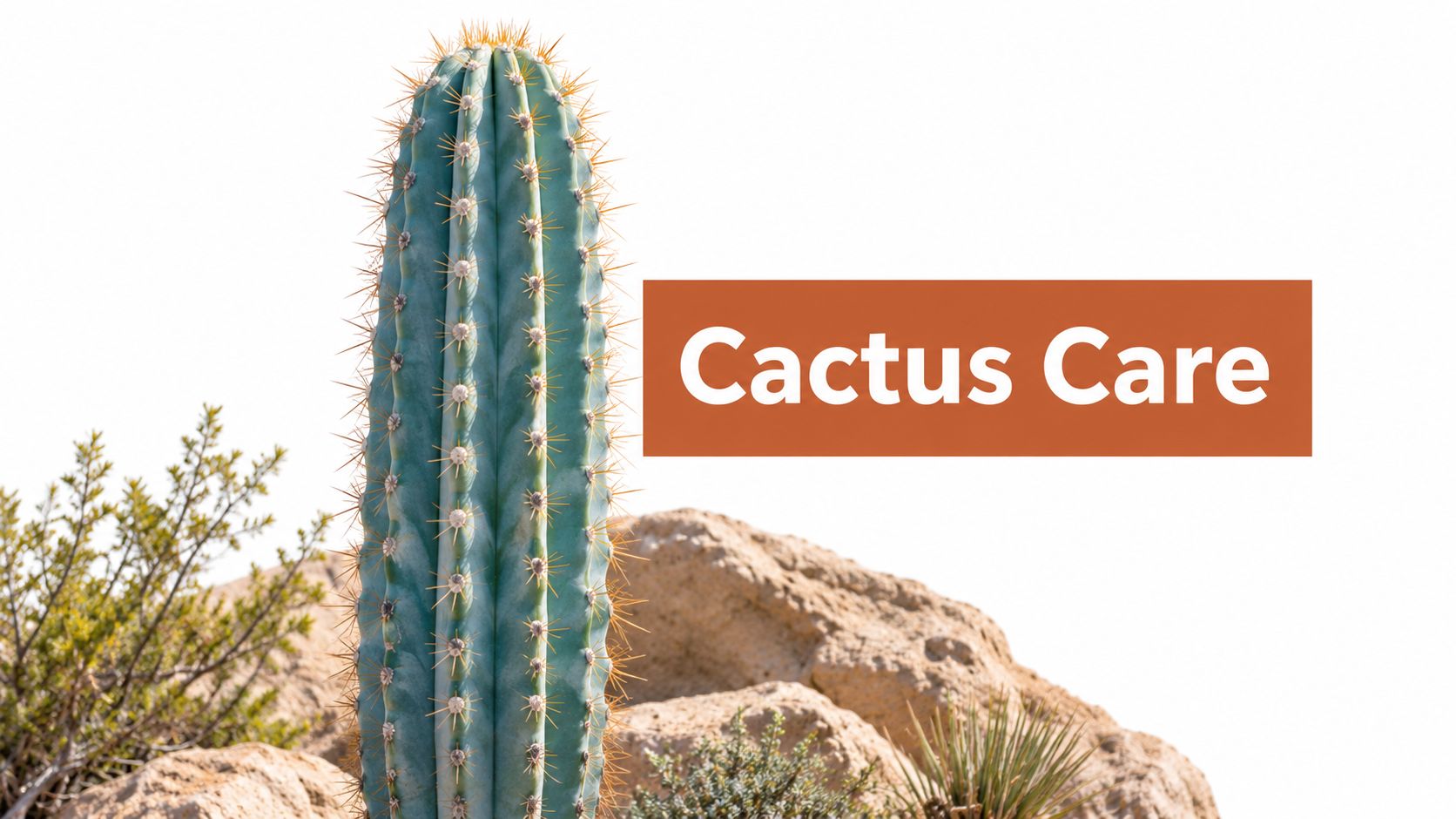

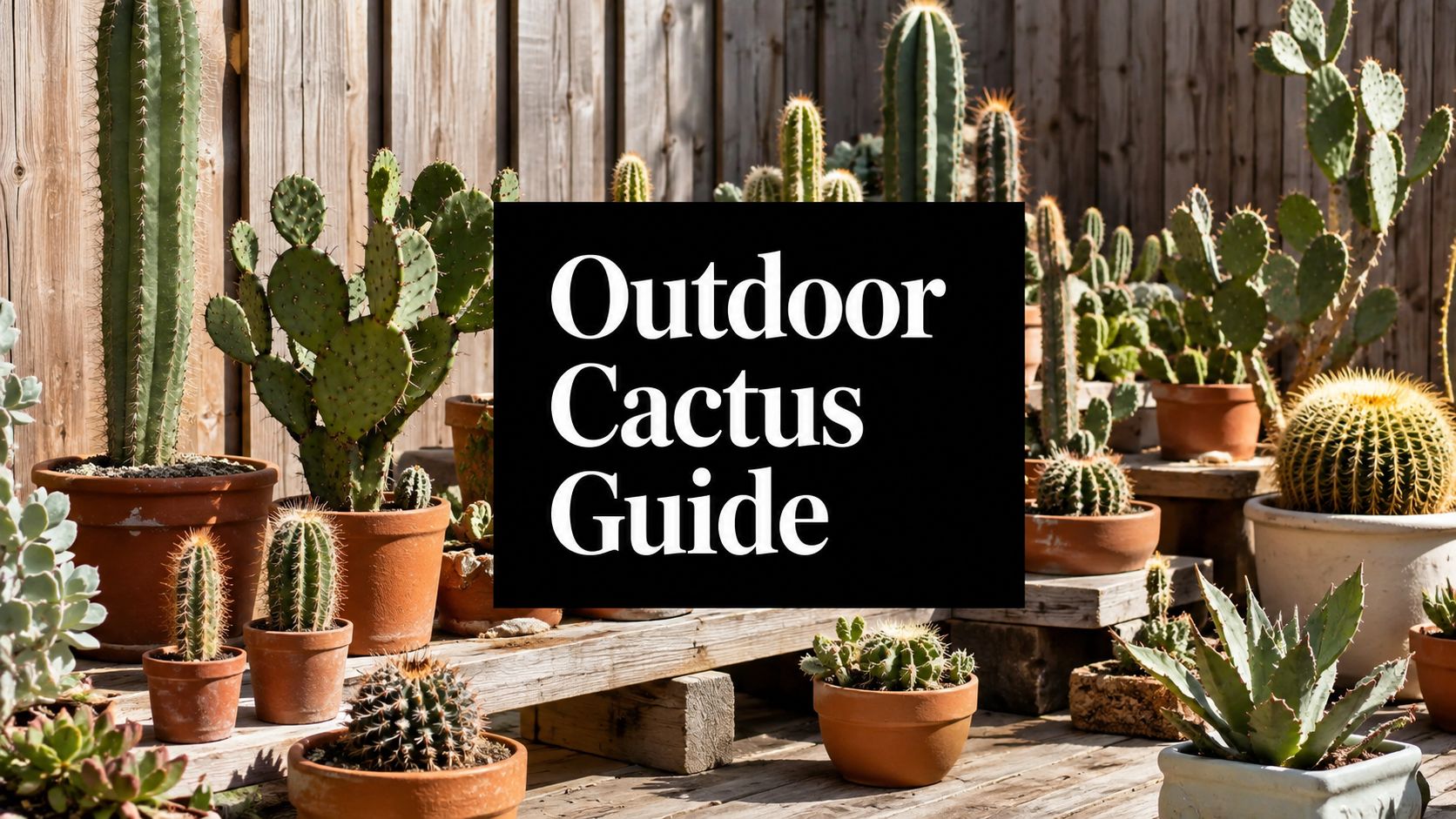

You're standing in the yard with a credit card in your hand, looking at a cactus that would make the whole space feel finished. Maybe it's a tall column for the fence line, maybe a round specimen for a patio corner, maybe a heavyweight plant that looks too good to ignore. The hard part isn't wanting it. The hard part is knowing whether that outdoor cactus for sale is the right plant for your climate, your soil, and the way you live.
Buy the plant by filtering, not by impulse. The four filters that matter are climate fit, mature size, intended use, and source reliability. A plant can look perfect and still be wrong if it outgrows the site, hates your winters, or arrives with weak roots and poor structure. The opposite is true too. A plain-looking specimen with the right architecture and the right seller can outperform a flashy one that was chosen on appearance alone.
The market is moving in a direction that rewards better buying decisions. One industry estimate places the global cactus plants market at USD 5.18 billion in 2024 and projects USD 15.08 billion by 2032, with a 16.37% CAGR over that period, while another projects USD 6.85 billion in 2024 to USD 23.84 billion by 2034 at a 16.24% CAGR (Verified Market Research). That growth matters because it explains why buyers now expect shipping-ready plants, bigger selections, and better size information before checkout.
Standing in the Yard With a Credit Card
A buyer who gets this right usually starts with the yard, then works backward to the plant. I've watched people fall for a specimen, bring it home, and then discover winter wind, afternoon scorch, or poor drainage waiting in the exact spot they picked. That turns a good purchase into an expensive mistake, because the plant was fine and the site was wrong.
The four filters that decide the purchase
Climate fit comes first. If a cactus cannot handle your winter lows, nothing else matters. Mature size comes next, because a plant that looks easy to place in a pot can become a heavy, permanent structure outdoors. Intended use matters just as much, since a privacy screen, patio accent, and anchor specimen all ask the plant to do different work. Source reliability closes the loop, because a well-grown plant with firm roots and clean handling is worth more than a cheap listing with vague details.
Practical rule: if a listing does not give you the plant's mature scale, you are not buying a landscape specimen, you are buying a surprise.
The shift is from collecting names to matching a living structure with a real site. A tall column can work beautifully where a rounded barrel would read too small, but the column also needs room, footing, and wind awareness. A lower, wider plant can anchor a patio or container bed without turning into a hazard or crowding the space.
Trade history explains why provenance matters. The CITES working paper recorded 60 Mexican genera and 569 Mexican species being offered online, and it identified sought-after species such as Echinocereus triglochidiatus (173 listings), Turbinicarpus schmickeckeanus (120), Ariocarpus retusus (115), Echinocereus reichenbachii (98), and Echinocereus viridiflorus (94). Serious buyers ask where a plant came from before they ask what it looks like.
Climate Fit and Growth Form

A cactus that survives the nursery bench and fails in your yard was the wrong buy from the start. Climate fit comes first, because winter low temperatures decide whether the plant stays alive outdoors. Hardiness zones describe winter survival limits, while summer heat tolerance depends on the site, drainage, reflected heat, and how long the plant sits wet after rain. If your winters are outside the plant's range, stop there and pick something else. No amount of mulch fixes a hard mismatch.
Read the plant by its architecture
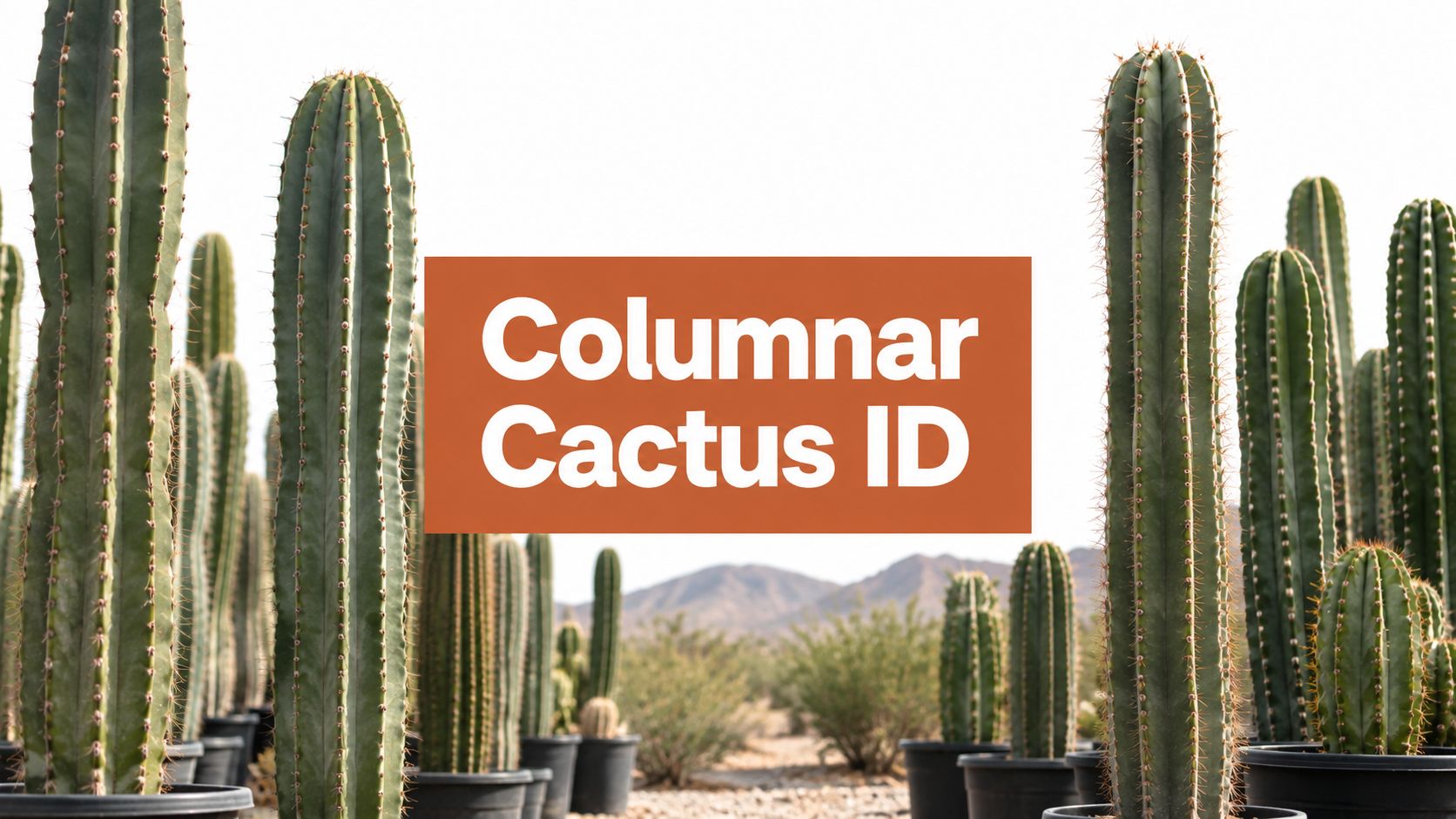
Shape tells you how the cactus will behave outside. Columnar types grow tall and narrow, so they bring strong vertical presence but catch more wind and need more spacing. Globular types stay lower and heavier in profile, which makes them easier to place in patios and smaller garden pockets. Spreading types use width instead of height, so they can fill a bed or soften a hard edge without blocking sightlines.
That is why mature size matters more than the pot it arrives in. The tag on a bench plant tells you very little about its future footprint. For example, Mexican fence post cactus is listed with a mature height of about 2 to 4 m and a spread around 3 m, while saguaro can reach 4 to 8 m with a spread near 5 m (Green Souq). Those numbers are siting decisions. A narrow, upright plant needs room and some shelter so it does not batter itself in the wind or crowd nearby stems. A broad specimen needs open space and drainage that clears water away from the base fast.
If you are building a dry-climate planting plan, use the plant's job in the yard as the filter, not just the species name. I would rather pair a cactus with other heat-tough structure plants than force one cactus to carry every visual role by itself. A useful reference for broader dry-lot combinations is Prestonwood Commercial Landscape Services' Texas heat-tough plant varieties, especially if you are building a cohesive outdoor composition instead of buying one isolated plant.
For buyers who want a year-round outdoor cactus, the practical reading is The Cactus Outlet's guide to cactus that can survive winter, because the plant belongs outside only when the site and the cold tolerance line up.
What to look for on the tag
You want mature height, mature spread, and the plant's growth habit. If the label only says “outdoor cactus,” keep walking. Good tags let you compare a columnar plant to a barrel and a spreader without guessing. That is the difference between a decorative impulse buy and a planting decision.
A quick placement filter
Put the tall plant where it gets air movement and the low plant where it can hold a bed visually.
That rule keeps you from forcing every cactus into the same role. The right outdoor plant is the one that fits the job your yard is asking for.
What Size and Price to Expect
Price jumps fast in cactus retail, and first-time buyers usually underestimate how fast. A tiny starter cutting and a mature specimen are not the same category just because they're both cacti. The plant size changes the labor, the years of growth behind it, the shipping risk, and the final impact in your yard.
| Outdoor cactus size and price bands | Typical Price | Best Use |
|---|---|---|
| 2 to 3 inch starter cuttings | About $3 to $10 | Trial plantings, collectors, very small starts |
| 5 to 8 inch juveniles in an 8-inch pot | About $10 to $30 | Small patio accents, early landscape planning |
| Typical houseplant-sized cacti | About $15 to $50 | Containers, mixed displays, modest outdoor features |
| Mature landscaping specimens over 5 feet tall | About $500 to $1,000+ | Anchor specimens, instant landscape presence |
Those bands line up with pricing guidance that points to species, age, rarity, and source of purchase as the main drivers of cost (The Pricer). That matches what I see on the shipping bench. A larger plant is not just bigger. It has spent more seasons being grown on, handled carefully, and kept stable enough to reach sale readiness.
Don't compare sizes like they're interchangeable
A small plant in a large pot can look impressive online and still be cheap for a reason. A mature specimen has trunk, structure, and root development that a starter does not. That is why the price curve feels steep. You are paying for time, survival, and years of careful growing before the plant reached sale readiness.
Use the price band to match the job
A patio buyer usually does not need a five-foot specimen. A contractor building a front entry focal point often does. A homeowner wanting a low-risk introduction to outdoor cactus should start smaller, then scale up once they know where the plant will sit and how their climate behaves.
My rule of thumb: if the listing price feels high, check whether you are looking at a true mature specimen or just an ordinary plant sold with a dramatic photo.
For buyers comparing finished plants, the Cactus Outlet buying guide frames species by use and mature size, which is the right way to judge value rather than fixating on sticker price.
The First 48 Hours After Delivery
The danger starts after the box opens. A shipped cactus usually takes more damage from the buyer's first choices than from the freight itself. Extra sun, extra water, and an immediate repot can weaken a strong plant fast. I have seen healthy cacti fail because someone treated arrival day like planting day.
Check the box and the plant before you worry about where it will live in the yard. Look for broken spines, soft tissue, bruised stems, or wet spots near the base. If the plant looks sound, move it to a bright, sheltered holding area instead of putting it straight into full sun. The plant needs a buffer between freight and open garden beds.

What to do before you plant it
- Inspect the stem and base. Look for damage, discoloration, or any sign the plant stayed wet too long in transit.
- Acclimate to indirect light. Give it a few days in bright shade or filtered sun before full exposure.
- Hold off on water unless the mix is bone dry. Wet roots after shipping set up rot fast.
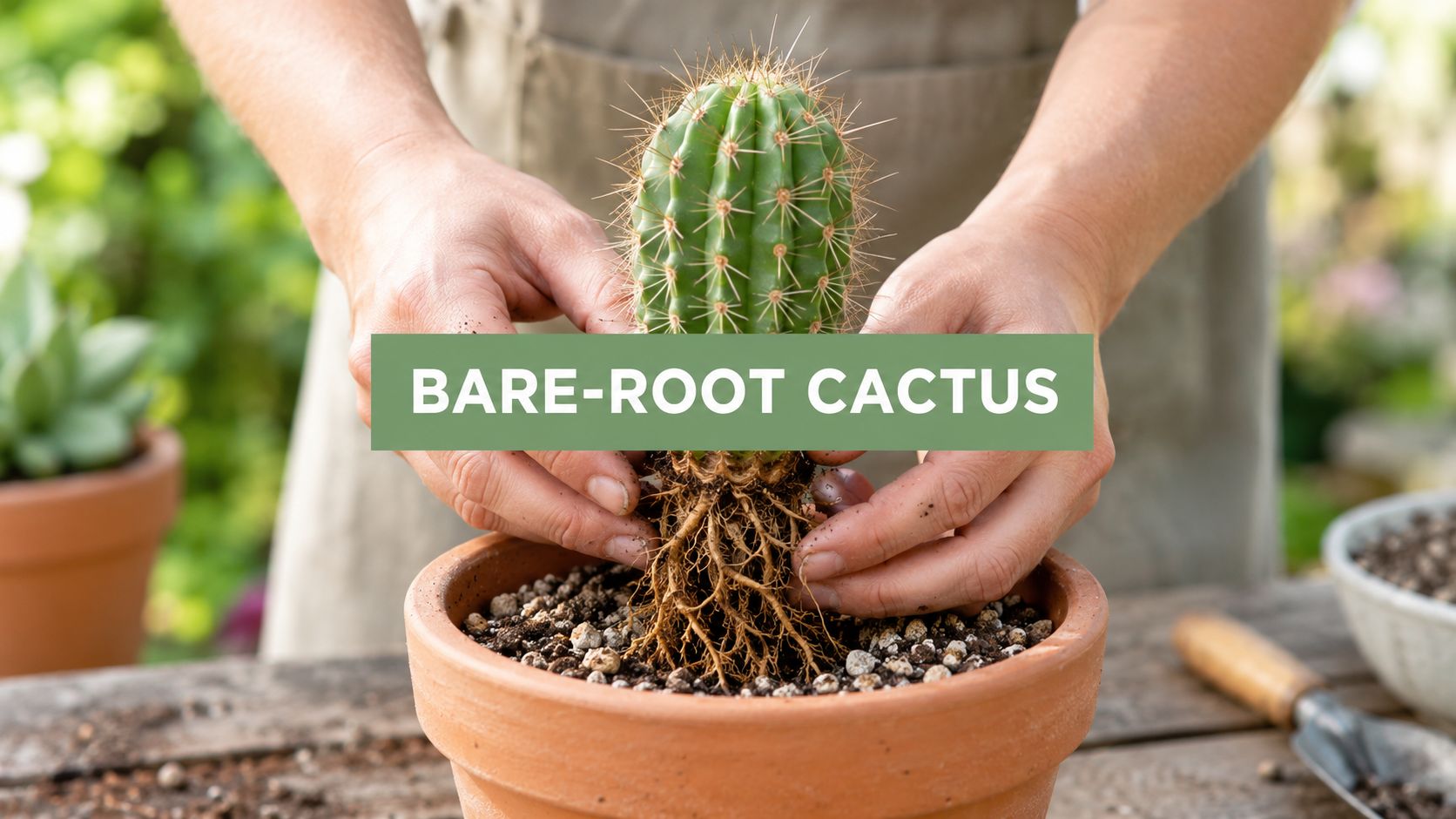
- Don't repot immediately. Let the plant settle before you disturb the root ball.
That sequence matters because large cacti are not houseplants in transit. They are structural plants with stress points. Move them from packing foam to harsh sun in one afternoon, and you invite sunburn and transplant shock at the same time.
The common mistake is watering to “help” recovery. Most cactus failures after delivery come from excess moisture, not drought. Fast-draining, gritty soil is the standard here, not rich, moisture-holding mix. If the new plant came from a nursery that grows it under strong light and lean conditions, keep that same setup in mind when you choose its first location.
My practical cutoff is simple. If the cactus looks firm, dry, and intact, leave it alone long enough to show you what it needs. The first move is restraint, not intervention.
Matching the Plant to the Place
A cactus can look right and still fail in the wrong spot. Buy for the job the site needs. A privacy screen, a patio anchor, a container centerpiece, and a slope plant all call for different sizes and different growth habits.

Use the mature size to solve the yard problem
The Cactus Outlet's buying guide lists a Saguaro (Carnegiea gigantea) for outdoor landscaping with a mature size of up to 40 ft tall, and a Golden Barrel (Echinocactus grusonii) for outdoor landscaping and large pots with a mature size of 2 to 3 ft wide (Cactus Outlet buying guide). That contrast is the key decision point. A saguaro works as a vertical anchor over time. A golden barrel reads as a lower, broader object that fits cleanly in a pot or a structured bed.
If you need a living boundary, choose columnar plants you can repeat. If you need a patio focal point, a rounded specimen in a substantial container usually does the job better. For a slope or dry bank, choose plants with enough spread and mass to hold the visual line without becoming awkward as they mature. Mixed with agaves and aloes, the right cactus gives the planting backbone instead of novelty.
Don't ignore legality
Outdoor cactus buying is not universal. Some species cannot be sold freely everywhere, and that matters before you build a design around one. An Australian report notes that certain cactus types are illegal to buy, sell, and swap in some states, and one invasive cactus is illegal to sell on Gumtree, eBay, Facebook Marketplace, at market stalls, in nurseries, or anywhere else in Queensland (Home to Love report). If you are buying for a project, check the rules first and do not build around a plant your jurisdiction will not allow.
Read the plant as a site object
A mature cactus is a spatial object first and a plant second. That is the level buyers need to use. A good purchase solves a job. A bad one just fills a cart.
Bulk Buying, Trade Orders, and Shipping Signals
A trade order is not a houseplant cart with extra zeros. Contractors buy for install dates, site access, and repeatability, and they should be specific about it. If you want a usable quote, give the seller species, size range, count, and where the plants are going. “Need a few big cacti” invites guesswork. Clear specs get you real pricing.
Shipping signals matter because cactus sourcing has a long record of pressure and enforcement. Buyers still need to ask where the plants were grown, how they were held, and whether the seller can document the path from nursery to shipment. That question is more important than brand language or a pretty product photo.
What a shipping-grade cactus should look like
You want a plant with a firm stem, a healthy root ball, and no obvious etiolation. Stretched growth from poor light usually reads badly in a finished install, and it rarely improves once the plant is in the ground. You also want packaging that stops heavy stems from shifting inside the box or crate. Once a cactus is big enough to travel by freight, handling is part of the product, not an afterthought.
For buyers who need larger quantities or repeat installs, The Cactus Outlet's wholesale cactus and succulents page is a practical starting point because it keeps the discussion on scale, availability, and order handling instead of single-plant browsing.
What professionals should ask for
- Species confirmation. Do not accept “assorted cactus” for a design-spec order.
- Size by measurement. Ask for height and width, not just pot size.
- Root status. These three root statuses require different evaluation criteria.
- Packing method. The seller should explain how the plant will be stabilized.
- Availability window. Large stock does not always move on the same timetable as smaller plants.
If the seller cannot explain how the plant is prepared for shipment, the plant is not ready for shipment.
Warranties, Arrival Guarantees, and Returns
A seller's guarantee shows how much confidence they have in packing and shipping large cacti. A live plant can arrive stressed, and a cactus is no exception. The question is whether the policy gives you a clear path to a remedy when something goes wrong.
A solid arrival guarantee states the condition it covers, the proof it requires, and how quickly the seller will respond. If the policy sounds friendly but never explains the claim process, it functions as marketing rather than protection. A buyer should know exactly what photos to take at delivery and how soon to send them.
The exclusions matter just as much. Buyer neglect, weather delays outside the seller's control, and planting a cactus into the wrong climate are normal exclusions. That is fair. What is not acceptable is a guarantee that exists on paper while every replacement path is buried under vague wording and slow replies.
A policy worth trusting usually does three things
It names the arrival standard. It explains the evidence process. It gives a practical timeline for replacement or credit. A policy that skips any of those parts is just selling confidence, not coverage.
A seller who ships large cacti should be plain about what happens if a box arrives damaged. If the plant is expensive, bulky, or tied to a project deadline, the policy should read like an operating procedure, not a legal trap. That matters even more when you are buying online and cannot inspect the root ball before payment.
Read the return language before you fall for the photo. Good plants matter. Clear policies protect the money after checkout.
Your Pre-Checkout Buying Checklist
Before you click buy, run the plant through four checks. Climate fit first, because winter tolerance decides whether the cactus can stay where you plan to put it. Mature size second, because a plant that fits today can still be wrong in two years. Price band and age third, because you should know whether you're paying for a starter, a juvenile, or a true specimen. Arrival policy last, because the seller should stand behind the way the plant was packed and shipped.

Use this exact filter on the product page
- Zone match: Does the plant belong in your climate, or will it need protection?
- Size match: Does the mature height or width fit the patio, bed, or fence line?
- Value match: Does the price make sense for the plant's age and final scale?
- Policy match: Do you understand how arrival claims are handled?
If the answer to any of those is fuzzy, slow down. That's not a “maybe later” signal. That's a warning that the listing is asking you to guess.
The Cactus Outlet organizes its product information around large cacti and ready-to-plant specimens, which is why buyers looking for a cactus for sale online should start with a seller that already publishes mature sizing and use-case information. For a practical next step, the guide at best place to buy cactus online is a useful companion because it helps you compare sellers with the same discipline you'd use on the plant itself.
Buy the cactus that fits your climate, your site, and your patience. If you want a large specimen or a plant ready for your yard, visit The Cactus Outlet and compare the mature sizes, outdoor uses, and shipping details before you commit. The right plant is the one that arrives ready for your yard, not the one that needs a rescue plan.