

You're standing in a backyard or on a patio, looking at a screen full of cacti, and the wrong choice is obvious only after the box arrives. The giant column you loved in a photo is a climate mistake. The tiny “easy” cactus you bought for a dim apartment window stretches into a sad green pencil. The best cactus to buy online is not the prettiest one, it's the one that matches your light, space, climate, and patience.
The good news is that cacti are a broad commercial category, not a single plant type. The cactus family, Cactaceae, includes roughly 1,500 to 1,800 species in about 127 to 130 genera, which is why online buyers can choose anything from compact indoor plants to large outdoor specimens Desert Museum. That range is exactly why smart buying matters. If you start with your real conditions first, you stop shopping for a fantasy plant and start buying something that can live where you put it.
Why the Best Cactus Depends on Where You're Planting It
A homeowner falls in love with a giant saguaro photo, orders too fast, and then discovers the plant is a significant outdoor commitment, not a casual patio accent. A renter buys a tiny cactus for a north-facing window, waters it like a houseplant, and watches it reach for the glass. Both buyers made the same mistake, they chose the image before they chose the site.
If you want the best cactus to buy online, ignore plant names until you answer one question, where is it going. A cactus that looks perfect in a desert yard may be a disaster on a balcony. A small collector piece may be elegant indoors but pointless if you need height, privacy, or curb appeal outside.
A practical guide helps here because outdoor placement changes everything. A Sonoran Desert landscaping guide shows how desert-style planting is really about site fit, not just species choice. That same logic applies to online cactus shopping.
Practical rule: buy for the place, not for the photo.
The rest of this guide follows that rule. First comes a decision framework, then the cactus types that fit common buyer situations. If you skip the context question, you tend to waste money on a plant that never settles in. If you answer it first, you usually end up with something you'll keep for years.
For buyers who want a climate-specific follow-up, this guide pairs naturally with winter survival guidance for cactus buyers, because cold exposure changes the purchase decision as much as style does.
The Four Filters That Decide Your Right Cactus

Light level
Start with the spot, not the species. A cactus that sits in a bright patio can handle a very different life than one stuck in a dim interior corner, and light is usually the first reason a plant stretches, weakens, or stalls. If your site does not get strong sun, shop for a cactus that can tolerate that reality instead of pretending it will adapt on its own.
Size and space
Measure the space, not the fantasy version of it. A compact tabletop cactus and a floor specimen solve different problems, and the difference shows up fast once the plant settles in. Renters should check pot diameter limits, doorway clearance, and whether the plant will still fit after a year of growth. Mature size matters more than the shipping box.
Safety
If you have pets, toddlers, or a dog that investigates everything, spines matter more than novelty. Some homes can handle a spiny plant with careful placement, but others need a form that stays out of the traffic lane and out of reach. In those cases, the right cactus is the one with a manageable shape and a clear plan for where it will live, not the one with the most dramatic outline.
Climate and cold hardiness
Outdoor cactus shopping has to respect temperature reality. USDA zone thinking matters, and microclimates matter too, because a warm wall, a protected patio, or an exposed bed can change what survives. A cactus that thrives in one part of a yard may fail in another part of the same yard once cold and wind show up.
Match the plant to the coldest night, not the warmest afternoon.
Intended use
The last filter is purpose. A beginner needs recovery margin. A collector wants a specific form. A garden designer wants scale. A gift buyer wants a plant that does not punish inexperience. Once you can write a one-sentence profile for yourself, shopping gets simple, for example, “bright patio, large container, no pets, warm climate, statement piece” or “small apartment, indirect light, beginner, gift.”
Top Cactus Picks Matched to Real Buyer Profiles
| Buyer Profile | Best Cactus Archetype | What to Look For |
|---|---|---|
| Beginner indoor buyer | Compact, slow-growing cactus | Exact species name, strong shape, fast drainage |
| Pet-conscious home | Smaller, less intrusive cactus forms | Placement options, manageable spination, sturdy pot |
| Large patio statement | Mature specimen or columnar cactus | Shipping format, root condition, pot size clarity |
| Cold-prone landscape | Outdoor-tolerant, site-appropriate cactus | Climate fit, sheltered location, winter plan |
| Drought-tolerant patio | Container-friendly cactus | Bright light, drainage, modest watering needs |
| Collector | Distinctive species or unusual form | Botanical binomial, provenance, recovery plan |
| Gift buyer | Easy, forgiving cactus | Clear care notes, stable shape, simple repotting |
The table is the fast answer. A story is the better answer when you're still deciding. A city apartment buyer with a bright sill should lean toward a compact cactus that won't outgrow its space or demand constant attention. A patio buyer with room, sun, and good drainage can shop larger, more architectural forms and stop worrying about table-top scale.
For a collector, the appeal isn't “rare” in the abstract. It's the combination of shape, form, and precise species identity. For a garden or design project client, the question is simpler and harsher: does the plant solve the design problem without creating a maintenance headache?
Planet Desert says it sells over 500 Types of Cactus Varieties, which tells you how broad online selection can be when you're comparing real options rather than browsing one nursery shelf Planet Desert. Cactusenligne makes an equally direct selection claim, calling itself the retailer with the biggest variety of cacti plants online in Canada Cactusenligne. That kind of breadth matters because your ideal archetype may live in a very different collection than your first search term.
Buyer rule: if you can't describe your use case in one sentence, don't buy yet.
The Cactus Outlet fits into that same comparison framework because its assortment covers large cacti, agaves, aloes, euphorbias, and succulents, which gives shoppers room to match a plant to the actual setting instead of forcing one species to do every job. That's the right way to shop when you're choosing between patio scale, collector appeal, and giftability.
How Online Cactus Shipping Actually Works

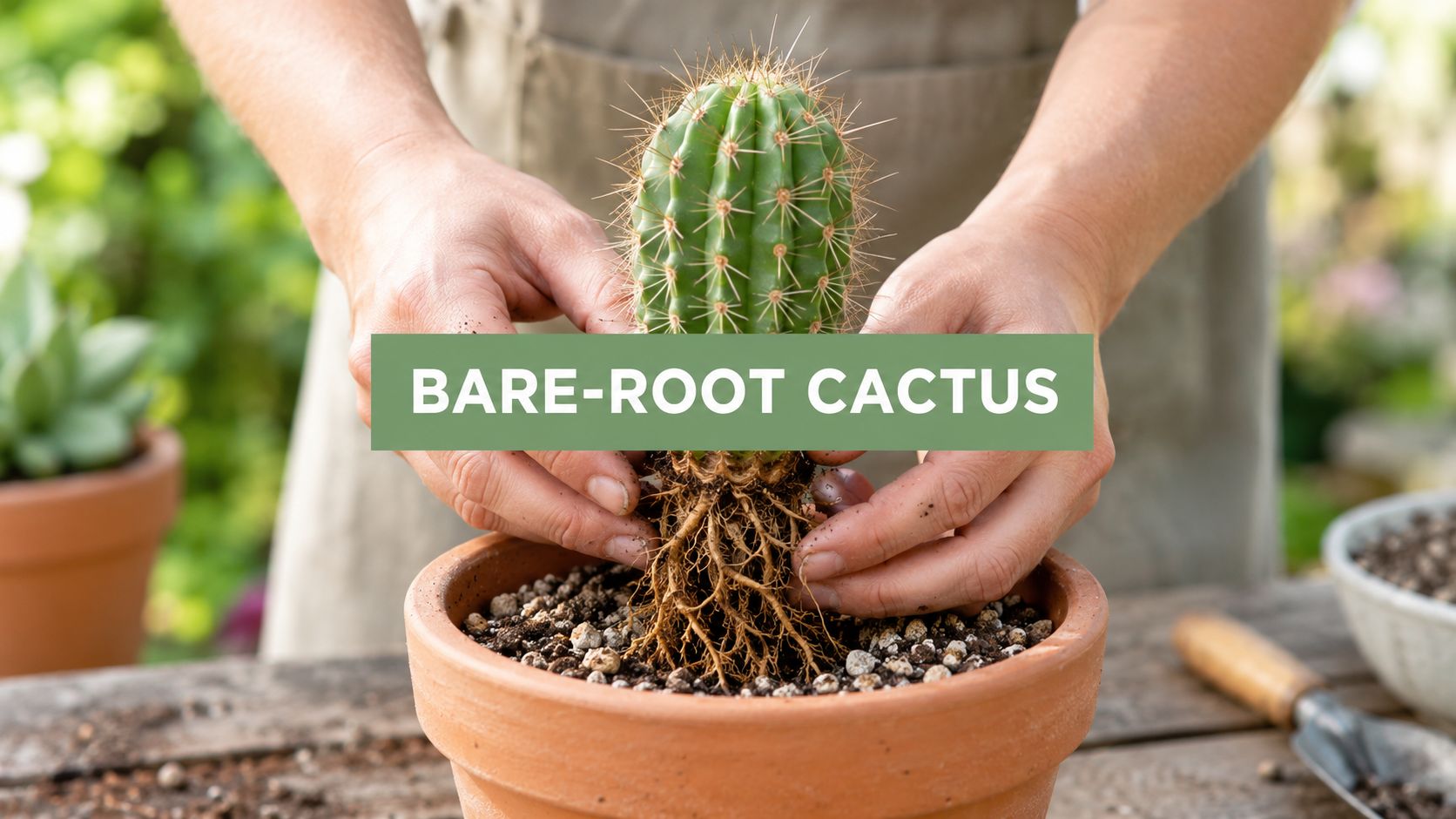
A good online cactus order is already set up before the box leaves the nursery. The plant should ship bare-root or in a very dry, gritty medium, because moisture-heavy peat holds water too long and can wreck cactus roots in transit. Cacti have shallow roots, so they travel better when extra moisture is kept away from them.
What a real listing should tell you
A serious product page gives you the exact botanical name, the root condition, the media type, and the shipping window. If a listing hides those basics, the seller is asking the buyer to guess. That is how people end up with the wrong plant and the wrong expectations.
Plant size and pot size are different things. A so-called “gallon” listing does not automatically mean a one-gallon plant, and shipping photos can make a cactus look larger or smaller than it really is. Read the dimensions, not the marketing copy.
How good packing protects the plant
Spines, pads, and stems have to survive vibration, not just sit in a box. Good sellers wrap the plant so it cannot bounce, shift, or puncture itself during transit. For larger orders headed to patios or design projects, packaging has to protect several contact points, because a big specimen is easier to bruise than a small one.
The Home Sprouts says buyers should look for exact species names, bare-root inspected, and fast-draining media such as 70% pumice in listings that are serious about cactus shipping, and it warns that peat-retentive media is a bad fit for these plants The Home Sprouts. As noted earlier, cacti need bright sun and should never sit in saturated soil, so shipping format and drainage after arrival matter a lot.
For readers who want a clear buying framework, The Cactus Outlet's online cactus store guidance keeps the focus on the actual order, not just the product photo. That is the right way to shop for a cactus online.
First 30 Days of Care After Delivery

- Day 1 to 3, unbox and inspect. Cut the packaging away carefully and handle the plant by the pot or root ball, not the spines or top growth. Check roots and stems for obvious transit damage before you do anything else.
- Day 4 to 7, acclimate in indirect light. Don't toss a shipped cactus straight into full sun if it came from a darker holding area. Give it a controlled transition so the plant can recover from shipping stress without getting scorched.
- Week 2, water only if the mix is bone dry. The common mistake is watering immediately. Wait until the plant and its media are dry, then water thoroughly and let it drain completely.
- Week 3 to 4, observe instead of feeding. Watch for firmness, color, and any sign that the plant is settling in. Skip fertilizer in the first month. The cactus doesn't need an early push, it needs stability.
Short rule: light first, water second, fertilizer much later.
A fast-draining mix is essential. The plant has just come through shipping, so its roots need oxygen and a stable root zone more than they need nutrition. This is why the species archetype matters even during acclimation. A compact indoor cactus, a patio specimen, and an outdoor garden plant all recover on slightly different timelines, but they all need the same discipline at the start.
Troubleshooting the Three Post-Ship Warning Signs
If a cactus looks wrong in the first 60 days, don't panic and don't improvise. The problem is usually one of three things, and each one tells you what to do next.
Yellowing or softening at the base
This usually points to overwatering or a root system that was damaged before the plant ever reached you. A simple test is to lift the pot and check whether the mix still feels heavy and damp when it should be dry. The fix is to stop watering, increase airflow, and let the plant dry down before you touch it again. If the roots were damaged, more water won't help.
For deeper recovery steps, use root rot treatment guidance for cacti rather than guessing.
Wrinkled or shrunken stems
Wrinkling can mean the plant needs water, but it can also mean the roots aren't functioning yet after shipping. Press gently near the base. If the cactus feels firm but thirsty, give it a proper soak only after the mix is dry. If it feels hollow or unstable, check the roots before watering again.
Stretching or pale new growth
That's etiolation, and it means the plant isn't getting enough light. Move it to a brighter spot in stages, not all at once, so it can adapt. A cactus that came from a dim retailer shelf or a shaded packing area needs a gradual move into stronger light, especially if it's one of the compact indoor archetypes discussed earlier.
The point is simple. Yellowing says back off on water. Wrinkling says check whether the roots can use water. Stretching says increase light. Once you can read those signals, you stop treating every problem like a mystery.
How The Cactus Outlet Supports Each Type of Buyer
The Cactus Outlet's homepage confirms the brand exists as an online cactus retailer offering large cacti, agaves, aloes, euphorbias, and succulents for individual and bulk purchase nationwide The Cactus Outlet. That matters because different buyers need different plant categories, not the same cactus in a different pot.
Its category setup is useful for collectors, patio buyers, and gift shoppers who want to compare plant types without guessing from search photos. The site also presents detailed product descriptions, care information, customer reviews, promotional discounts, and support for inquiries, which helps solve the three biggest online buying problems: shipping anxiety, plant-size confusion, and decision fatigue.

For someone buying a statement plant, the large-cactus and bulk-purchase framing is the draw. For someone outfitting a patio or container space, the mixed succulent and desert-plant assortment gives more ways to match light and scale. For a new plant owner, the decision support is as important as the plant itself, because the wrong fit is what turns a nice delivery into a dead one.
Your One-Page Buying Recap
Start with the four filters, light, size, safety, and climate. Then add intended use, because that's what separates a gift cactus from a garden cactus or a collector specimen. Don't buy the rarest plant you find, buy the one that fits your spot and your experience level.
Before checkout, verify the listing says the exact species, the root condition, and the media type. On delivery day, unbox carefully, inspect the roots, and leave the plant alone long enough to settle. During the first month, keep light controlled, keep water conservative, and skip fertilizer.
The best cactus to buy online is the one that matches your real home, not the one that photographs best. Once you've defined your buyer profile, browse the relevant collections at The Cactus Outlet and choose the plant that fits your patio, container, or design plan.
If you're ready to buy, start with the collections that match your space, not the flashiest listing. The Cactus Outlet offers large cacti and related desert plants that fit patio, container, and outdoor use, with the product detail you need to shop with confidence. Visit The Cactus Outlet and choose the cactus that matches your light, climate, and space.