

You're standing in a lawn that demands water every week, watching the sprinklers run while local restrictions make every cycle feel wasteful. The yard may be green, but it doesn't feel efficient, resilient, or particularly easy to live with. Replacing turf with cacti can solve part of that problem, but only if the design is treated as a drainage and infrastructure project first.
Successful cactus yard design depends less on finding a fashionable specimen than on matching plants to the site. Sun, slope, soil, seasonal moisture, mature size, access, and safety all matter. Get those decisions right, and a cactus yard can become a durable outdoor room rather than a collection of plants struggling in decorative gravel.
Why Cactus Landscaping Makes Sense Now

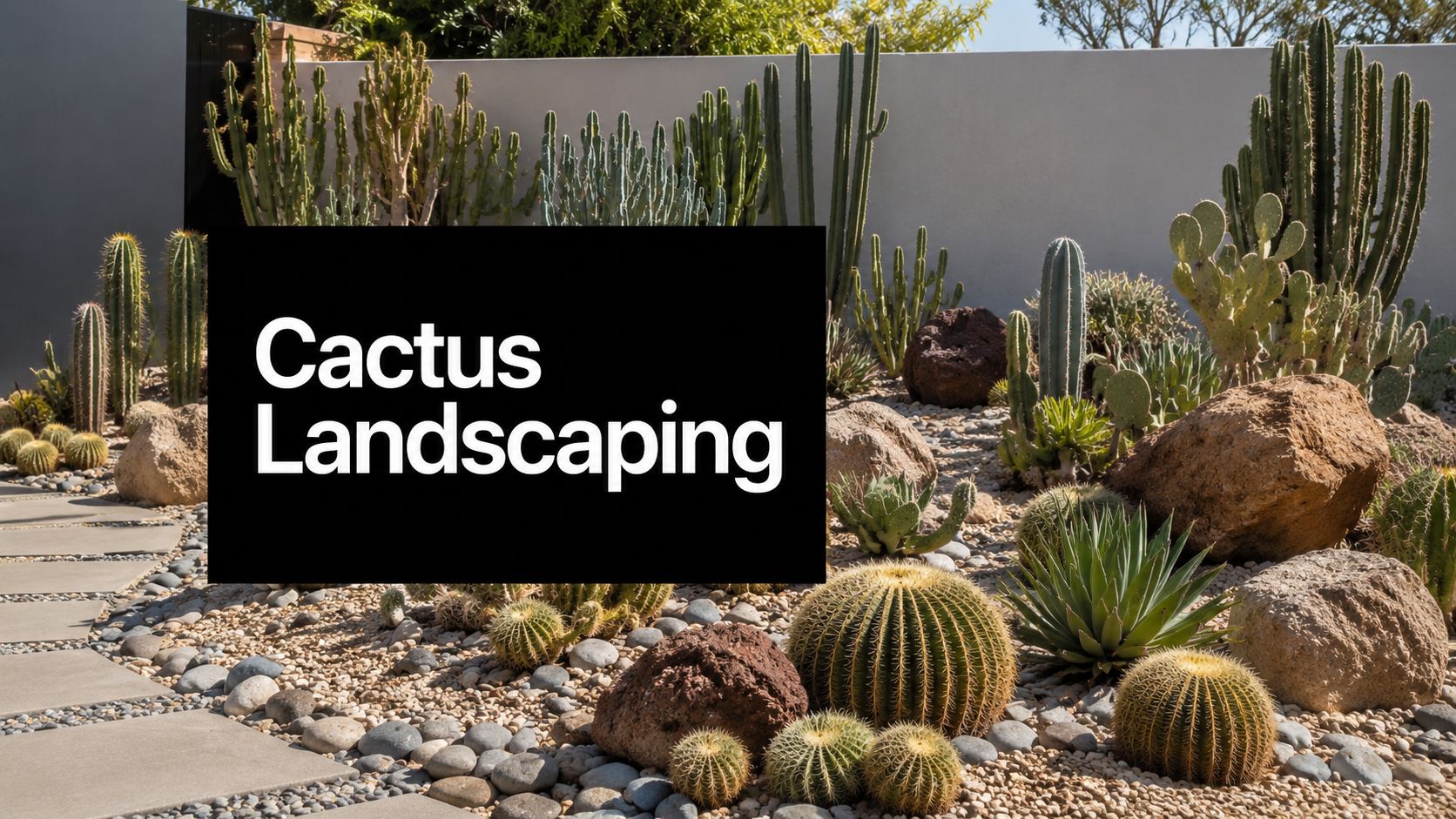
A cactus yard earns its place through more than water conservation. It can reduce mowing, simplify seasonal maintenance, create strong curb appeal, and turn a difficult hot, dry area into a deliberate design feature. The look can be spare and architectural, with bold columns against pale gravel, or layered and lush, using agaves, aloes, euphorbias, boulders, and flowering accents.
The common objection is that cactus gardens look barren. That usually happens when a designer plants isolated specimens in a flat field of rock without considering rhythm, scale, or usable space. Repeated forms create visual mass, large cacti provide vertical structure, and open gravel areas give the planting enough negative space to feel intentional. A pathway, low wall, seating area, or carefully placed boulder can make the garden feel welcoming rather than defensive.
For homeowners comparing yard options, the water case is substantial. A review of xeriscaping studies reports typical outdoor water savings of 20% to 50%, while another summary states that water-wise yard care can reduce use by at least 50% compared with conventional yard care, as documented in this review of water-use studies. A Southern Nevada turf-to-xeriscape conversion study found an average 30% reduction in total annual residential water consumption, equal to about 96,000 gallons per home per year, or 55.8 gallons per square foot annually, from the same source.
Design reality: The plant list matters, but the foundation decides whether the investment survives.
Cactus landscaping can also improve how a property functions. A front yard with defined paths and carefully placed specimens needs less routine attention than turf, while a patio planted with containers can provide privacy and shade without committing the entire yard to one style. Still, I treat the “80% site preparation, 20% plant selection” rule as a useful working principle. Most expensive failures begin with water trapped below the roots, not with a disappointing plant choice. The drought-tolerant landscape plant guide can help expand the palette, but it shouldn't replace a site plan.
Reading Your Site Before You Buy a Single Plant
A cactus that thrives in one part of a property can fail a short distance away. Before you buy a large specimen online or reserve a group of ready plants, map the site as if you were preparing a small construction project.
Start with sun and heat
Track shadows from morning through late afternoon, then repeat the observation as the seasons change. A simple method is to mark the edge of a building or tree shadow on a site sketch at several points during the day. This reveals full-sun zones, afternoon shade, winter shade, and areas where reflected heat from stucco, concrete, or glass may intensify conditions.
Most outdoor cactus placements need strong light, but “hot” isn't the same as “suitable.” A south- or west-facing wall can create a useful warm pocket in a cool climate, while the same reflected heat can scorch a recently delivered plant that hasn't acclimated to direct exposure. Use the cactus sunlight guide when comparing the light requirements of prospective purchases.
Follow water after rain
Visit the property during or soon after a substantial rain. Look for puddles, dark soil that stays wet, sediment lines, and water moving toward foundations or gates. Low spots, downspout outlets, compacted paths, and lawn edges often reveal drainage problems that aren't visible during dry weather.
For a basic percolation check, dig a test hole in the proposed planting area, fill it with water, allow the soil to drain, and fill it again. Watch how quickly the second filling disappears. The exact timing isn't as important as comparing several areas and identifying places that remain saturated. Cacti fail far more often from excess moisture than from drought, so a slow-draining location deserves a raised bed, berm, or redesign rather than a deeper planting hole.

Record the hidden conditions
Note frost pockets, wind corridors, roof overhangs, tree root competition, irrigation overspray, and access for maintenance equipment. Walls can protect cold-sensitive plants, while open corners may expose tall specimens to wind. Existing trees can create seasonal shade and absorb water from the same soil volume.
This assessment prevents a costly pattern: buying large plants first, discovering the site is wrong, then paying for removal, soil replacement, and replacements. A garden designer or drainage contractor makes sense when water crosses the property, the grade directs runoff toward a structure, or excavation would affect utilities and retaining walls.
Choosing Species That Match Your Climate and Design Goals
Plant selection should answer three questions in order. Can the plant handle the site's cold and moisture conditions? Will its mature form fit the space? What job should it perform in the composition? A premium specimen is a poor purchase if it needs protection you can't provide or grows into a walkway.
Cold hardiness depends on more than a regional zone label. A protected courtyard beside a warm wall may support a plant that fails in an exposed front yard, while wet winter soil can damage a cactus that would otherwise tolerate cold. Colorado State University Extension guidance recommends beneficial irrigation during the growing season on better-draining soils, followed by stopping irrigation in fall and keeping plants dry through winter, with early-spring watering only when the season remains dry, as summarized in this cold-climate cactus growing guidance.
Some desert-mountain-prairie cacti, including Opuntia, Coryphantha, Neobesaya, Echinocereus, Pediocactus, and Sclerocactus, can tolerate temperatures as low as -20°F under full sun, good air circulation, and excellent drainage, according to Walter Reeves' hardiness guidance for these cactus groups. Some Opuntias can tolerate -40°F under those conditions. Treat these figures as plant-and-site guidance, not a guarantee for every cultivar or exposed installation.
| Design Role | Climate Zone | Mature Size | Example Species |
|---|---|---|---|
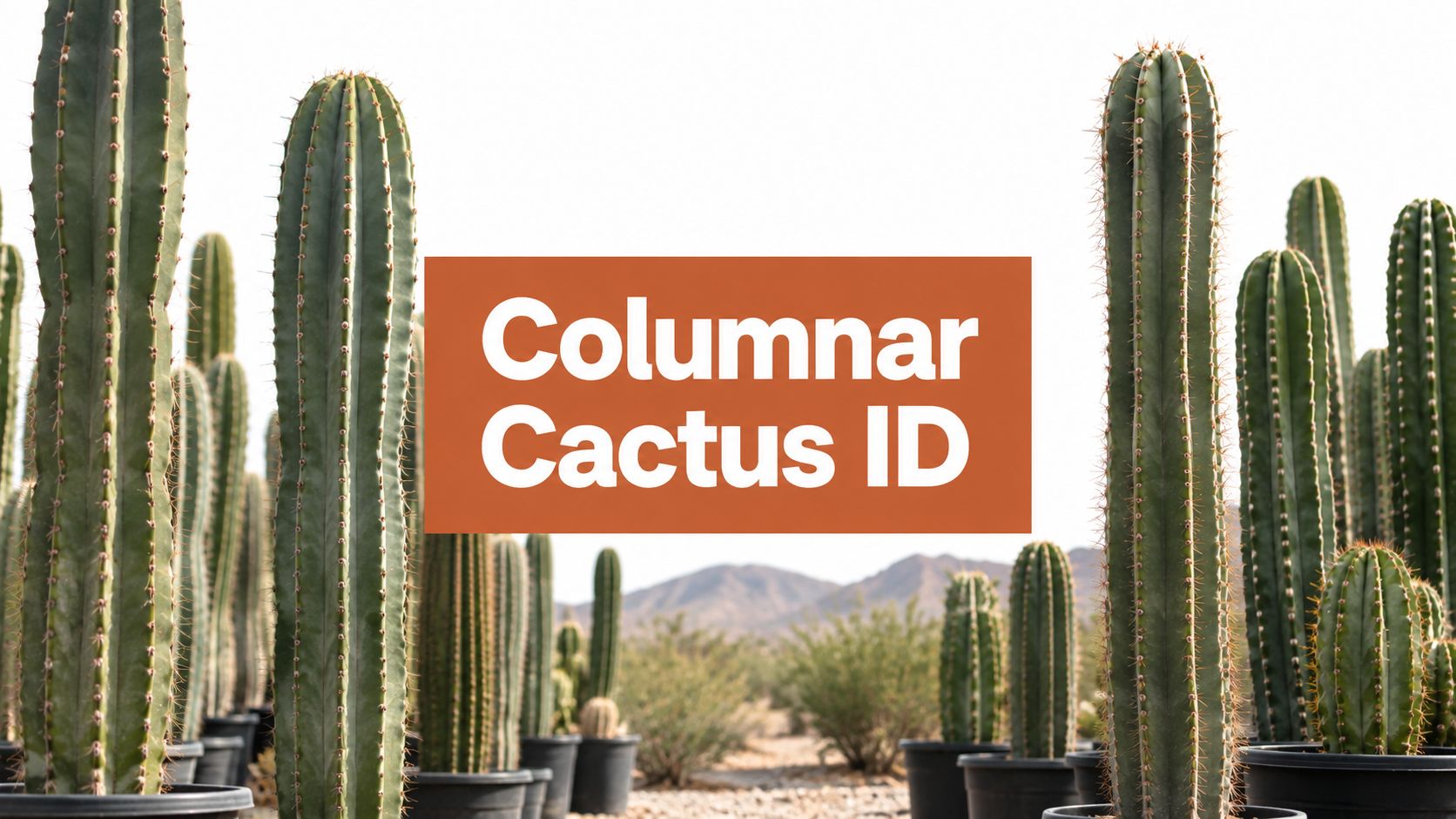
| Architectural focal point | Warm, frost-free or protected climates | Large, upright | Saguaro or Peruvian Apple cactus |
| Defensive privacy screen | Warm climates with adequate setback | Tall and spreading | Large columnar cactus combined with agave |
| Cold-hardy structure | Cold regions with dry winter soil | Low to medium, clustering or upright | Opuntia or Echinocereus |
| Rosette massing | Warm to moderate climates, depending on species | Medium to large | Agave with Aloe companions |
| Container accent | Patios and movable installations | Controlled by container and selection | Compact cactus, aloe, or euphorbia |
Mature size deserves the same attention as hardiness. Large cacti work best as architectural elements, but they need clearance from paths, windows, vehicles, utilities, and rooflines. Smaller clustering species can fill the foreground without blocking sightlines. Slow-growing premium specimens usually offer strong form and long-term presence, while faster-growing plants establish a composition sooner but may demand earlier spacing decisions.
A dependable palette often mixes vertical cactus forms with the geometric rosettes of agaves and the softer, repeatable shapes of aloes. The 2025 review of drought-tolerant succulents emphasizes that CAM plants respond to changing soil moisture through nocturnal gas exchange and rapid root responses. That resilience still depends on the actual substrate and watering pattern, which is why species matching must follow site assessment rather than replace it.
Engineering the Soil and Drainage Foundation
Native soil rarely provides the combination of support and rapid drainage that a cactus root system needs. Clay holds water around the crown, compacted fill sheds water sideways, and organic-heavy mixes can remain wet long after the surface looks dry. Treat the planting zone like a small engineered foundation.
Build elevation into the design
On clay or poorly drained ground, create a raised planting zone or berm rather than digging a deep pocket and hoping amendments will solve everything. Extension guidance recommends shallow planting, keeping the crown high, blending native soil with coarse drainage material, and shaping the finished grade so water moves away from the plant, as described in this cactus drainage guidance.
A practical starting mix is roughly one part native soil to one part coarse mineral material, such as crushed rock and sand. The goal isn't to create a fluffy potting medium. The goal is to reduce water retention, preserve stability for large specimens, and prevent the planting crown from becoming a basin.
Avoid the bathtub hole
A common DIY mistake is excavating a hole that is wider and deeper than the root ball, filling it with amended soil, and leaving the surrounding clay untouched. The amended pocket becomes a container buried in the ground. Water enters from irrigation or rain, then remains trapped because it can't move into the dense surrounding soil.
Grade the entire bed so surface water travels away from crowns and structures. Use a raised mound where necessary, and consider subsurface drainage only when the system has a clear outlet. A pipe that ends inside the same saturated soil doesn't solve the problem.
Construction mindset: If you can't explain where rainwater goes after it reaches the bed, the drainage plan isn't finished.
Preparation costs vary with excavation access, imported mineral material, disposal, grading, and whether drainage infrastructure is needed. I won't attach a made-up price to that work. Get written estimates for soil removal, aggregate delivery, grading, and disposal separately, then compare them with the replacement cost of mature plants. Bring in a professional when the site has foundation risk, retaining walls, significant slope, recurring runoff, or a drainage outlet that requires permitting.
The cactus and succulent soil mix guide can help you evaluate materials for containers and planting beds. For large outdoor installations, however, the mix is only one part of the system. Elevation, grade, crown height, and runoff control matter just as much.
Design Principles That Create Visual Impact
A front yard can begin with a random collection of expensive plants and still look unfinished. I've seen large cacti placed at equal intervals across a gravel bed, each one competing for attention. The same plants become far more convincing when the designer creates hierarchy.
Turn repetition into mass
Group several compatible specimens rather than scattering every plant as a lone accent. Repetition gives the eye a pattern to follow and makes smaller plants feel intentional. A cluster of rounded Opuntia forms can anchor one side of a path, while a contrasting agave supplies a clear focal point near the entry.
For a before-and-after comparison, consider a blank rectangular bed beside a driveway. In the first version, one tall cactus sits in the center, surrounded by unrelated small succulents. In the stronger version, the tall cactus moves toward the rear third of the composition, medium-height forms create a transition, and a broad gravel opening preserves visibility from the drive.
Give the eye somewhere to rest
Negative space isn't unused space. It frames sculptural plants, protects circulation, and makes maintenance easier. Decorative rock, decomposed granite, or a restrained gravel field can separate plant groups while reinforcing the geometry of the architecture.
Hardscape should support the planting rather than compete with it. Boulders can echo the mass of a mature cactus, and a pathway can direct visitors away from spines while making the garden approachable. For patios and outdoor rooms, coordinate the ground plane with the home's materials. A resource such as the 2026 outdoor tiles buyer's guide can help compare exterior tile choices when a cactus planting is being integrated with a tiled terrace or entertaining area.
Seasonal interest comes from form, color, and texture, not only flowers. Upright cactus silhouettes remain visible through dormant periods, agave rosettes provide persistent structure, and aloe foliage can soften a hardscape edge. Place the largest specimen where it can mature without becoming a future obstruction. Use lower clustering plants near paths, but keep thorny forms away from seating, children's routes, and pet access.
Planting Techniques That Prevent Early Failure
The first 90 days establish the conditions that determine whether a cactus settles into the surroundings or begins a slow decline. The planting sequence should protect the plant from physical damage, excess moisture, and abrupt changes in light.
Prepare before the plant arrives
Finish the bed, set the grade, stage gloves and tools, and identify the plant's intended orientation before opening the shipment. Large spiny specimens need thick gloves, protective sleeves, eye protection, and a second person when their weight or shape makes handling unstable. Don't lift a cactus by its top growth, and don't drag it across hardscape.
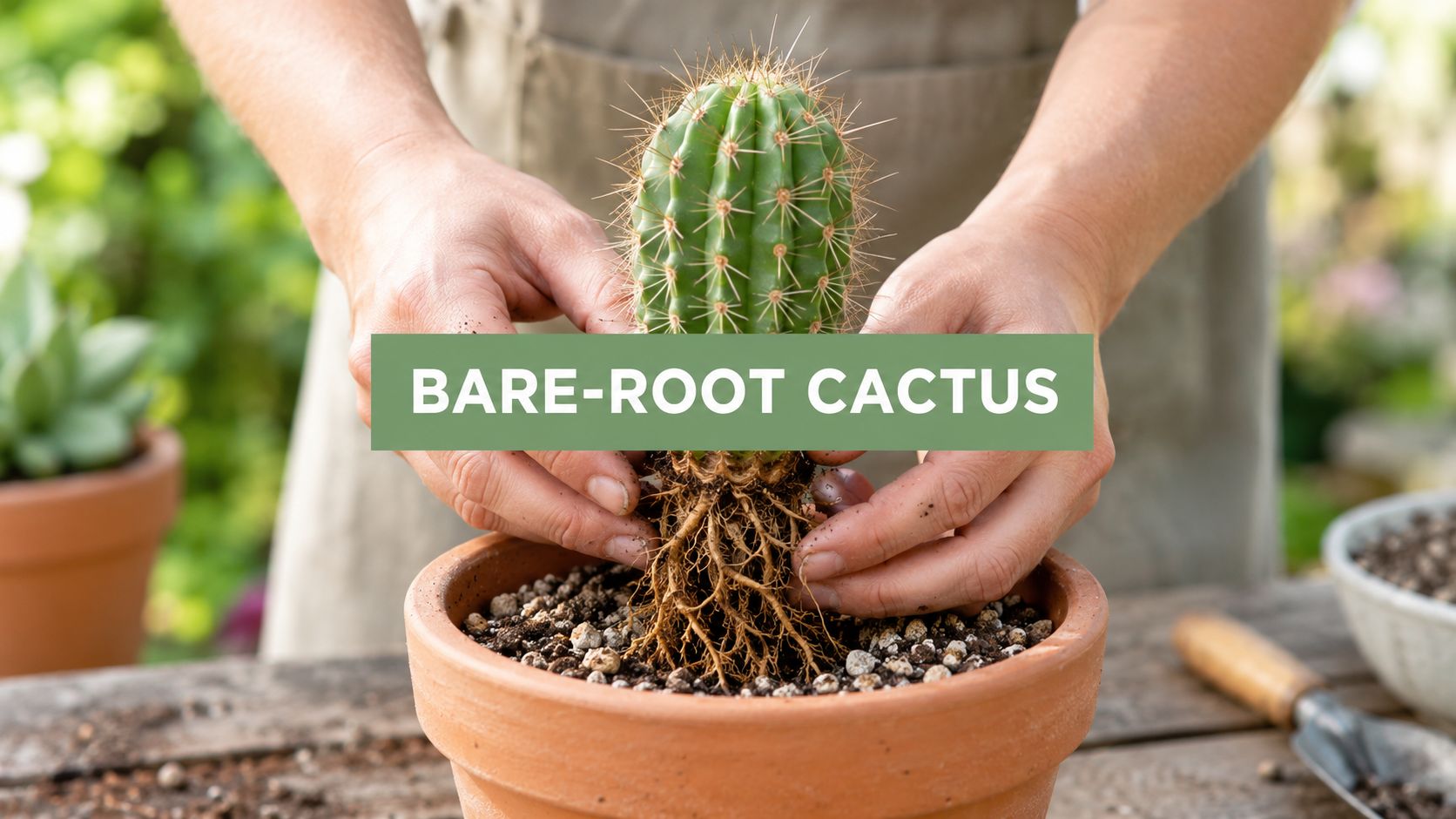
The Cactus Outlet's shipping information states that plants are shipped bare root, with the root system intact and minimal to no soil, rather than in nursery containers, as described on this shipping discussion and guidance page. Bare-root plants need careful unpacking and a clean, prepared planting area. Inspect roots, remove damaged material with a clean tool, and allow any handling wounds to dry according to the plant's condition and the nursery's care guidance.
Set the crown high
Place the root system shallowly and keep the crown higher than the surrounding grade. Backfill without burying the stem, then firm the soil enough to eliminate large air pockets without compacting the bed. A recessed crown is an invitation for water to collect where the plant is most vulnerable.
After planting, water thoroughly once so the root zone settles, then allow the amended soil to dry before watering again. A strict soak-and-dry rhythm is safer than frequent light irrigation. One irrigation trial reported that plants watered weekly died by 128 days after planting, illustrating how early success can mask damage from sustained moisture, as documented in this cactus irrigation study. Another study of Opuntia ficus-indica reported 98% survival across irrigation treatments, which reinforces that survival depends on the interaction between plant, substrate, and irrigation design rather than on a single watering rule from the same source.
Spring planting usually gives roots more time to establish before difficult winter conditions, especially in climates with cold or wet falls. Nursery-grown plants may also need gradual exposure to intense outdoor sun. Use temporary shade when foliage shows stress, then increase exposure as the plant acclimates. Hire professional installers for large specimens near buildings, overhead wires, public paths, or delicate hardscape.
Long-Term Care and Avoiding the Neglect Myth
Cactus gardens aren't plant-and-forget installations. They need less routine irrigation than turf, but they still require strategic observation, particularly during the first two years.
Use a soak-and-dry cycle. Water enough to wet the root zone, then wait until the soil dries before repeating. Reduce supplemental irrigation during cool, wet, or humid periods. Yellowing, soft tissue, a collapsing base, or persistent damp soil points toward excess moisture. Shriveling and loss of firmness can indicate stress from insufficient water, but watering on a fixed schedule without checking the soil creates its own risk.
Feed sparingly during active growth with a product appropriate for cacti and succulents. Inspect for scale, mealybugs, and cactus moth activity, especially where plants touch or dense clusters restrict visibility. Remove dead material, manage offsets when they crowd paths, and review mature spacing as the garden develops over the next several years.
Frost damage may appear after the cold event rather than immediately. Avoid cutting affected tissue until the extent of damage is clear, then remove soft or collapsing sections with clean tools. Leaning can result from weak light, unstable roots, wind exposure, or soil movement, so staking alone may conceal a foundation problem.
A well-designed bed may need only periodic inspection, seasonal debris removal, and occasional pruning, but large specimens and thorny privacy screens can justify professional maintenance. The aim isn't neglect. It's planned intervention, with water, access, and mature growth considered before the plants become difficult to correct.
The Cactus Outlet offers large cacti, agaves, aloes, euphorbias, and succulents for online purchase, including plants suited to appropriate container applications. Review the plant descriptions and care information, then visit The Cactus Outlet to choose specimens that match your prepared site, climate, and design plan.