
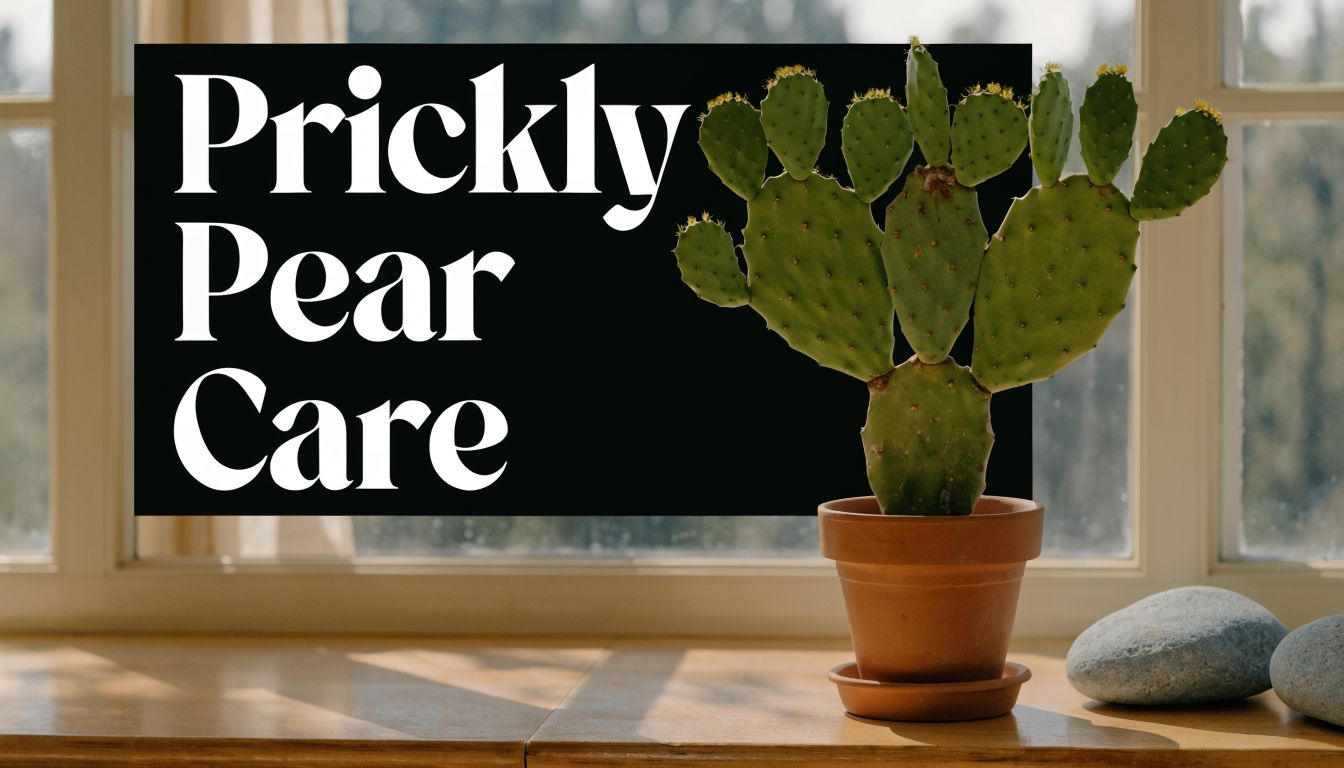

A lot of people read up on opuntia ficus indica care after the same moment. The box is open, the packing paper is off, and now there’s a paddle-shaped cactus on the table that looks sturdy enough to survive anything. Then you notice the fine spines, the pads, the weight of it, and you realize this plant doesn’t need generic houseplant advice. It needs the right handling from day one.
That’s especially true with shipped prickly pears. A plant can arrive healthy and still get into trouble fast if it’s watered too early, set in weak light, or grabbed bare-handed. Most failures I see don’t come from neglect. They come from good intentions applied in the wrong way.
Your Guide to the Remarkable Prickly Pear Cactus
When a new Opuntia ficus-indica arrives, the first job isn’t watering. It’s observing. Check the pads, look for any soft spots from transit stress, and decide where it will live before you start moving it around too much. This cactus handles dry conditions well, but it doesn’t appreciate being fussed with every day.

Why this cactus gets so much attention
Opuntia ficus-indica has staying power because it works in more than one setting. It can read as architectural in a container, relaxed in a Mediterranean-style planting, or practical in a dry outdoor area where you want a plant that won’t demand constant irrigation. If you’re interested in edible pads and fruit, the nopal cactus guide gives useful background on that side of the plant.
Its history also explains why growers keep returning to it. Originating from Mexico, Opuntia ficus-indica has been domesticated for millennia and can grow up to 16 feet tall. Its fruits contain 25–30 mg vitamin C per 100g, which mattered historically in preventing scurvy, as noted in the Wikipedia entry on Opuntia ficus-indica.
Practical rule: Treat a new prickly pear less like a delicate houseplant and more like a dryland specimen that rewards restraint.
What makes it rewarding to grow
This is one of those cacti that gives you a lot back if you get the basics right. The pads have strong shape. The flowers are showy in season. Mature plants can become large, sculptural specimens. It also suits different buyers for different reasons.
- Home growers like it because it’s low maintenance once established.
- Decorators use it for bold form and clean lines in bright spaces.
- Garden planners value it in dry gardens where drainage and sunlight are already part of the plan.
- Collectors appreciate that it has real presence, even when young.
The first mindset shift
A prickly pear is tough, but it isn’t indestructible. It wants bright exposure, sharp drainage, and a grower who knows when to leave it alone. That’s the core of good opuntia ficus indica care. The rest is just applying that principle consistently.
Creating the Ideal Prickly Pear Habitat
Placement decides whether this cactus stays compact and healthy or stretches, weakens, and starts declining slowly. Light and drainage are essential. If either one is off, the plant tells you, but usually after the damage has already started.

Light, temperature, and the basic environment
For reliable growth, Opuntia ficus-indica needs at least 8 hours of direct, bright sunlight daily, performs best in USDA hardiness zones 8-12, and thrives in well-drained sandy soil with a pH around 6.5. It should also be repotted every 2-3 years, according to the cultivation notes at EarthOne’s Opuntia ficus-indica plant profile.
That tells you most of what matters. Strong sun is not optional. Good drainage is not optional either. If you’re building or refreshing a mix for a patio specimen, this guide on the best soil for potted cactus is useful.
A few practical growing points matter just as much as the formal specs:
- Container choice matters. A pot with a drainage hole is the baseline. Terracotta is often easier for beginners because the mix dries more predictably.
- Airflow helps. Bright sun with stale, trapped air can still create trouble around the base if the mix stays wet too long.
- Don’t bury the crown. Set the plant at the same soil level it was growing at before.
Container growing
Containers suit growers who want control. You can shift the plant for seasonal light, monitor moisture closely, and keep growth in scale with a patio, balcony, or bright room. The trade-off is that a container plant depends entirely on your timing. It can’t go looking for better drainage or more sun.
A good container setup usually looks like this:
| Container growing factor | What works | What causes problems |
|---|---|---|
| Light | Direct bright sun for most of the day | Bright shade or weak window light |
| Soil | Sandy, fast-draining cactus mix | Dense, moisture-retentive potting soil |
| Pot | Drainage hole, stable base | Decorative cachepot with no exit for water |
| Placement | South-facing exposure or sunny outdoor spot | Interior corner away from direct light |
A prickly pear in a pot can live a long time in the wrong soil. It just won’t look good while it does it.
In-ground landscape growing
In the ground, opuntia ficus indica care becomes simpler once the site is right. The plant can size up more naturally and often develops a stronger presence than it does in a container. The trade-off is that bad siting is harder to fix.
Use in-ground planting when you have:
- Full-sun exposure for most of the day
- Loose or amended soil that won’t stay soggy after watering
- Room to spread without crowding paths or entryways
- A dry-climate planting plan where low water use fits the rest of the design
Avoid low pockets where water collects. Avoid heavy sites that stay cold and wet. If your soil tends to hold moisture, raise the planting area or amend aggressively toward a sandier, looser profile.
Indoor versus outdoor reality
Indoors, the biggest issue is almost always insufficient light. Outdoors, the biggest issue is usually drainage or overwatering. It's often assumed a cactus will forgive both. It won’t. If you give it direct sun, a fast-draining root zone, and enough room, you’ve already solved most problems before they start.
A Practical Watering and Fertilizing Schedule
Most prickly pear losses start at the roots. Not from drought. From water that lingers too long in the mix, especially when the plant isn’t actively growing. If you want a simple rule, water thoroughly and then wait longer than your instincts tell you to.
How to water without causing rot
The reliable method is soak and dry. In the growing season, water only when the top 5 cm of soil is fully dry, then water thoroughly. The formal recommendation for this plant is every 7-10 days during active growth, with a 5-10-10 fertilizer every two months in spring and summer, and no fertilizing in winter, as outlined in The Cactus Outlet’s Opuntia ficus-indica care notes.
The schedule matters less than the dry-down. If the top layer still feels cool or damp, wait. A prickly pear tolerates waiting much better than it tolerates a root zone that never dries.
Use this sequence instead of watering on autopilot:
- Check the soil first. Push a finger down to the top 5 cm. Dry means dry, not slightly damp.
- Water the soil, not the pads. Direct water at the base so it moves through the root zone.
- Let excess moisture leave. Never leave the pot standing in trapped runoff.
- Wait for the next full dry cycle. Don’t add a small top-up in between.
Fertilizer that supports growth instead of forcing it
Prickly pears don’t need heavy feeding. Too much fertilizer can produce soft, awkward growth that looks fast at first and poor later. A mature plant responds better to a low-nitrogen bloom-oriented formula than to aggressive feeding.
For most growers, a simple seasonal approach works:
- Spring and summer are the feeding months.
- Low-nitrogen 5-10-10 is the useful choice when you want to support flowering.
- Winter is a pause. Don’t fertilize then.
Feed lightly. If you’re trying to rescue weak growth with more fertilizer, the real problem is usually light or drainage.
The trade-offs new growers miss
A thirsty-looking cactus isn’t always under-watered. Pads can wrinkle a bit from normal dry-down. That’s not the same thing as systemic stress. On the other hand, constantly moist soil gives a false sense of care while the roots deteriorate out of sight.
Two habits work against beginners:
| Habit | Why people do it | Why it backfires |
|---|---|---|
| Frequent small watering | Feels safer than a full soak | Keeps the upper root zone damp too often |
| Routine feeding | Seems like it will speed growth | Pushes weak tissue if light isn’t strong enough |
The plant does best when water and fertilizer support a strong environment rather than compensate for a bad one.
Pruning, Propagating, and Handling Your Cactus Safely
A mature prickly pear eventually needs hands-on work. You may want to shape it, remove a damaged pad, start a new plant, or move it without filling your fingers with glochids. This is the part many care guides rush through, even though it’s where most growers get injured or lose a cutting to rot.

Pruning for shape and control
Pruning isn’t complicated, but it should be deliberate. Remove pads that are damaged, crowded, or growing in a direction that makes the plant unstable. Make clean cuts where the pad joins the segment below it.
Use thick gloves and a tool that gives distance. Tongs work well for smaller pieces. For larger pads, grip gently and support the weight so you don’t tear the joint.
Good pruning usually has one of three goals:
- Correcting damage after shipping, weather stress, or accidental knocks
- Managing size before the plant crowds a walkway or container
- Improving form by removing awkward or crossing pads
Don’t prune just because a plant looks busy. Prickly pears naturally develop layered structure. Remove what’s unhealthy or inconvenient, not every pad that sticks out.
A quick visual helps if you’re planning to prune or root pads:
Propagating from pads
Pad propagation is the most practical way to make more plants. It’s straightforward if you respect the drying stage. Most failures happen because growers rush the cutting into soil before it has sealed properly.
For successful propagation, choose a pad that is at least 6 months old and allow it to callus in a dry, shaded place for 2-4 weeks. That callusing step is critical and helps prevent basal rot, which affects 70-80% of pads that aren’t properly calloused before planting, according to the propagation guidance at Teeninga Palmen’s Opuntia indica cutting guide. If you want a broader walkthrough, this article on how to propagate cactus from cuttings is a useful companion.
The clean version of the process looks like this:
- Select the right pad. Use one with enough age and firmness, not a very young segment.
- Make a clean cut. Avoid crushing the tissue.
- Let the cut end dry fully. Shade and airflow matter more than warmth alone.
- Plant shallowly in a fast-draining mix. Don’t bury the pad far down.
- Hold back water at first. A fresh cutting needs time to root, not constant moisture.
Handling glochids without making a mess
This is where online shoppers need practical advice, especially after unboxing. Many care guides overlook glochids, the tiny spines that cause skin irritation and are a common complaint among new owners. They also help spread the plant in the wild and require specific handling and removal techniques, as noted in this video discussion of prickly pear glochids and handling issues.
Glochids are worse than obvious spines because they’re easy to miss. You brush a pad lightly, then minutes later your wrist or fingertips are full of nearly invisible barbs. Handle every pad as if it has them.
What works in real life:
- Use thick gloves when lifting, repotting, or unpacking.
- Use tongs or folded paper to steady pads instead of bare fingers.
- Work over a surface you can clean rather than fabric or carpet.
- Brush loose debris away carefully after unpacking so you don’t spread spines indoors.
If you think a pad “doesn’t look that spiny,” that’s usually the one that leaves glochids in your skin.
If you do get them on you, stop rubbing. Rubbing pushes them in deeper. Lift what you can with adhesive tape, repeating gently rather than pressing hard. Then wash the area carefully and avoid dragging a towel across the skin.
Seasonal Care Adjustments for Year-Round Health
Prickly pears don’t need the same treatment all year. A steady routine sounds neat, but it’s not how this cactus grows best. Seasonal shifts matter, especially if you keep one in a pot and move it between indoor and outdoor conditions.
Seasonal care calendar
| Season | Watering Frequency | Fertilizing | Key Actions |
|---|---|---|---|
| Spring | Resume careful watering as the plant starts active growth and the mix dries fully between soakings | Begin feeding during active growth | Check for winter damage, repot if needed, and reintroduce stronger sun gradually if the plant spent winter indoors |
| Summer | Water more attentively during active heat, but only after the soil has dried properly | Continue seasonal feeding on schedule | Watch for stress in containers, maintain strong light, and make sure drainage stays fast after each watering |
| Autumn | Start spacing waterings farther apart as growth slows | Taper off feeding and stop as the cool season approaches | Clean up damaged pads, prepare outdoor plants for cooler nights, and avoid pushing fresh soft growth late in the season |
| Winter | Keep watering sparse and let the plant stay on the dry side | Do not fertilize | Respect dormancy, protect from prolonged cold and wet conditions, and keep potted plants in the brightest spot available |
Why the schedule changes
Spring is the reset point. That’s when you assess roots, shape, and pot space. If the plant has outgrown its container, this is the sensible time to repot rather than forcing the issue during winter rest.
Summer is active, but it’s also when growers overcorrect. Heat doesn’t automatically mean daily thirst. It means you need to watch the soil more carefully, especially in terracotta and small pots that dry faster than larger containers.
Dormancy makes the next season easier
Autumn and winter are where restraint pays off. Growth slows, and the cactus uses less water. If you keep feeding and watering like it’s still midsummer, the plant can’t use those inputs properly.
This matters for flowering too. A plant that gets a proper cool, drier winter rest generally performs better than one kept in a warm, wet, constantly-fed cycle. Outdoor plants often manage this naturally. Indoor plants need the grower to create that pause.
Winter care is mostly about what you stop doing.
If you live where cold snaps are possible, pay attention to exposure. A prickly pear can handle some chill, but wet roots and cold together are much harder on it than dry roots and cool air.
Troubleshooting Common Prickly Pear Problems
People often say prickly pears are problem-free. They aren’t. They’re problem-resistant when grown correctly. When something does go wrong, the plant usually gives a visible signal. The trick is reading the signal accurately instead of reaching for more water or more fertilizer every time a pad changes color or texture.
Glochids after contact
The owner-side problem often comes before the plant problem. Glochids can linger in skin, clothing, packing paper, and work surfaces. If you’ve handled the plant and now feel a patch of itching or sharp irritation, assume the fine barbed spines are still present.
Do this instead of rubbing the area:
- Use adhesive tape carefully to lift surface glochids.
- Wash gently afterward rather than scrubbing hard.
- Change or shake out work gloves if you used them during unpacking or repotting.
- Clean the work area so the spines don’t transfer later.
The mistake is treating them like dust. They don’t brush off cleanly once embedded.
Yellowing pads and soft tissue
Yellowing means different things depending on the texture. If a pad is yellow but still firm, look at light, age, or normal stress. If it’s yellowing and getting soft near the base, suspect root trouble first.
Common causes include:
| Symptom | Likely cause | What to do |
|---|---|---|
| Yellow pad, firm tissue | Environmental stress or natural aging | Improve conditions and monitor before cutting |
| Yellow pad, soft base | Excess moisture around roots | Unpot, inspect roots, remove rot, and reset in dry fast-draining mix |
| Pale, stretched growth | Not enough direct sun | Move gradually to stronger light |
| Scarred or bleached patches | Sun exposure after abrupt change | Acclimate more gradually next time |
Rot doesn’t usually start because the plant “got too much love.” It starts because water stayed in the root zone too long.
Weak growth and odd shape
If pads are narrow, stretched, or leaning hard toward a window, the plant is asking for more direct light. That isn’t a fertilizer issue. It’s a placement issue. Feeding a light-starved cactus only makes the growth less stable.
When growth form starts looking wrong:
- Move the plant to stronger direct exposure.
- Rotate container plants only if one side is badly compensating for weak indoor light.
- Hold fertilizer until the light issue is fixed.
- Prune misshapen pads later if needed, not immediately.
Surface pests and residue
You may also find white, cottony, or crusty buildup on pads. Treat that as a sign to inspect closely rather than panic. Isolate the plant from nearby specimens, remove what you can physically, and improve airflow and cleanliness around the plant. A healthy prickly pear in strong sun and dry conditions is usually easier to keep clean than one in a dim, crowded corner.
Frequently Asked Questions About Prickly Pear Care
Is Opuntia ficus-indica toxic to pets or people
It’s considered non-toxic to pets and humans, which makes it easier to place in family spaces. The primary hazard isn’t poisoning. It’s the spines and glochids, so placement still matters.
How big can it get
In the right climate and with room to grow, it can become a large specimen. If you’re growing it in the ground, plan for a plant with real spread and height over time. In containers, growth stays more controlled, but it still needs periodic pruning and repotting.
Can I grow it indoors
Yes, but only if you can give it strong direct sun. A bright room isn’t always enough. Most indoor problems come from weak light paired with routine watering.
When should I repot it
Repot in spring, and don’t do it just because you bought it. Repot when the plant needs more room, the mix has broken down, or drainage has become unreliable. Handle the pads carefully and keep the fresh repotting mix on the dry side at first.
Will it survive cold weather
It handles some cold better than many people expect, but the combination to avoid is cold and wet. If winter weather in your area stays damp or dips hard, container growing gives you more control.
How soon will a pad cutting become a full plant
That depends on conditions and patience. The main thing is not to rush the rooting phase. A properly calloused pad in a very fast-draining mix has a much better chance than one planted fresh and watered like a regular houseplant.
Why does my new shipped cactus look stressed
Shipping can leave pads dusty, slightly marked, or mildly dehydrated. That doesn’t mean the plant is failing. Give it bright light, airflow, and a stable setup before making big corrections.
If you want to add a healthy prickly pear or compare other dry-climate plants for containers and outdoor settings, browse the selection at The Cactus Outlet. The site includes product listings and care information that can help you choose a plant that fits your space and growing conditions.