

You’re probably looking at two very different options right now. One is a dusty little succulent at a grocery store with stretched growth and soggy soil. The other is an online shop with page after page of flawless rosettes, rare variegates, and glossy product photos that make every plant look collector-grade.
That gap is where most buying mistakes happen.
The best place to buy succulents isn’t just the seller with the prettiest website or the cheapest pot. It’s the source that gives you the best chance of ending up with a healthy plant weeks and months after purchase, not just a satisfying checkout screen. A succulent can look fine on arrival and still struggle because it was poorly rooted, overwatered before shipping, infested with pests, or pushed into the wrong conditions too fast after you brought it home.
For most buyers, the main challenge isn’t finding succulents for sale. It’s filtering noise. You need to know which sellers are worth trusting, which trade-offs are normal, and what to do the minute a plant arrives.
| Buying channel | Best for | Main advantage | Main trade-off | What to inspect closely |
|---|---|---|---|---|
| Online specialty shops | Collectors, rare plant hunters, buyers outside nursery-rich areas | Broad selection and access to unusual plants | Shipping stress and no in-person inspection | Packaging quality, plant firmness, root health, seller guarantees |
| Local nurseries | Beginners, gift shoppers, hands-on buyers | You can inspect the exact plant before buying | Selection may be limited | Pests, stem firmness, soil moisture, signs of fresh damage |
| Big-box stores | Budget shoppers, quick purchases | Convenience | Inconsistent care and labeling | Rot, stretched growth, compacted soil, fungus gnats |
| Online marketplaces | Specific cultivars and small growers | Unique finds and direct grower contact | Quality varies widely by seller | Reviews, photos of actual plants, refund terms, plant condition on arrival |
| Swaps and local plant groups | Community-minded hobbyists | Interesting plants and direct exchange | Little recourse if the plant has issues | Pest risk, ID accuracy, root condition, quarantine need |
Navigating the Modern Succulent Marketplace
Buying succulents used to be simpler. You’d visit a garden center, pick from whatever was on the bench, and take home the healthiest specimen you could spot. Now the market is much wider, and that’s good news only if you know how to judge what you’re seeing.
Online retail changed the category. E-commerce captured 25% of U.S. nursery sales by 2023, and U.S. succulent demand grew 15% annually from 2015 to 2022, while only 10% to 15% of local nurseries stock over 100 varieties according to Succulents Depot market context. That explains why many collectors stop relying on local stock alone. If you want more than the usual echeveria, jade, aloe, and zebra haworthia mix, specialty online sellers become hard to ignore.
The upside is obvious. You get access to deeper catalogs, more unusual forms, and growers that specialize instead of treating succulents as side inventory. The downside is less obvious until something goes wrong. A plant can arrive dehydrated, bruised, heat-stressed, or rooted too lightly to establish well. A seller may also say very little about inspection practices, pest controls, or what happens if a plant declines after delivery.
The strongest succulent purchase is the one that still looks good after quarantine, repotting, and acclimation.
That’s why the best place to buy succulents depends on what you value most. Convenience matters. Variety matters. Price matters. But long-term plant health should carry more weight than most buyers give it.
If you’re comparing cactus-heavy shops as well as succulent sellers, this roundup of the best online cactus store options is a useful companion for narrowing the field.
Why choice creates more risk
More options don’t automatically produce better results. They produce more room for marketing language, inconsistent quality standards, and impulse buys that ignore climate, lighting, and aftercare.
A seller can photograph a perfect rosette. That doesn’t tell you whether the roots are active, whether mealies are tucked into the leaf axils, or whether the plant was grown hard and healthy instead of soft and overfed.
What good buyers do differently
Experienced buyers tend to shop with a narrower lens:
- They assess seller behavior, not just plant photos. They look for care detail, shipping clarity, and realistic descriptions.
- They buy for conditions at home. A beautiful plant that doesn’t fit your light, temperature, or patience level isn’t a good purchase.
- They think past delivery day. The goal isn’t a successful transaction. It’s successful establishment.
The 7 Criteria for Evaluating Succulent Sellers
A reliable seller usually gives away their strengths early. So do weak ones. The trick is knowing what to read between the lines.

Selection and variety
Selection matters, but not for bragging rights. A broad catalog usually signals that the seller understands succulent categories, seasonal availability, and collector demand. It also increases the odds that you can buy plants suited to your exact conditions, whether that means low-profile haworthias for a bright windowsill or large agaves for an outdoor installation.
Still, variety alone can mislead. A huge catalog doesn’t guarantee that inventory is well-grown, correctly identified, or shipped with care. I trust a focused catalog with excellent plant notes more than a giant catalog full of vague labels.
Plant quality and health
This is the criterion buyers underrate most.
“Healthy” isn’t just bright color. It means firm tissue, sensible growth, no obvious pest residue, no mushy stem base, and a root system that can support recovery after transplant or shipping. A seller who posts only top-down glamour shots but never shows side profile, size context, or pot/root information makes evaluation harder.
Look for signs of disciplined cultivation:
- Compact growth instead of stretched, pale growth
- Clean leaf axils instead of cottony residue or webbing
- Dry, airy media rather than heavy wet soil
- Accurate plant names instead of generic labels
Price and value
Cheap succulents can be expensive if they fail. A slightly higher price from a careful grower often buys better rooting, cleaner stock, and fewer setbacks after arrival.
Value also includes what’s bundled into the purchase. Clear sizing, care instructions, responsive service, and realistic plant photos all add value because they reduce mistakes. If you want more context on evaluating online cactus-focused shops by these standards, this guide to the best place to buy cactus online is worth reading alongside this one.
Shipping and packaging
Shipping is where good inventory can become mediocre inventory fast. Succulents travel better than many tropicals, but they’re not immune to bruising, heat, cold, or poor packing.
I pay attention to whether the seller explains how plants are packed, whether they ship bare root or potted, and whether they hold orders during unsafe weather. Sellers who say nothing about transit are asking you to assume too much.
Practical rule: Judge an online seller partly by how seriously they treat the worst week of transit, not the best one.
Return policies and guarantees
Many shops reveal shortcomings. According to Succulents Box’s discussion of guarantee gaps, many sellers offer basic satisfaction promises, but few publish transparent metrics on post-purchase viability or pest and disease screening protocols. That matters because buyers can’t easily compare sellers on objective quality standards when those standards aren’t visible.
A good guarantee doesn’t need to be flashy. It needs to be clear. You should know what counts as an issue, how quickly to report it, what photos are needed, and whether the policy covers plant health concerns or only shipping damage.
Sourcing and ethics
Specialized nurseries often grow more of their own stock or work closely with known growers. That usually leads to better consistency than anonymous resale chains. Ethical sourcing also matters more as you move into collector territory, where rarity can sometimes outpace transparency.
You don’t need a manifesto from every shop. You do want evidence that the seller knows where their plants come from and how they were produced.
Rarity and availability
Rare plants attract buyers, but rarity can hide weak value. Some sellers price ordinary plants as “rare” based on temporary scarcity or trendy naming.
Use this criterion with restraint. A trustworthy seller doesn’t need to oversell every uncommon cultivar as a once-in-a-lifetime score. They identify plants accurately, note when appearance varies, and avoid making every listing sound like an emergency purchase.
Comparing Your Options Where to Buy Succulents
A buyer orders a rare echeveria online, opens the box, and sees flattened outer leaves, dry roots, and a label that may or may not be correct. Another buyer grabs a common haworthia from a local nursery and takes home a plant that was watered that morning into heavy soil. Both purchases can work out. Both can also turn into avoidable losses if the seller channel does not match the buyer’s skill, climate, and patience after the sale.

The best place to buy succulents depends on what happens after payment. Shipping stress, root condition, labeling accuracy, and your ability to correct poor soil matter as much as selection or price. Different seller types carry different kinds of risk.
Online specialty shops
Online specialty shops usually give the widest selection and the clearest sense of what is available by genus, cultivar, or growth form. That matters if local stores only stock the usual echeverias, jade plants, and aloe hybrids.
This option works best for buyers who know what they want and know what to do when the plant arrives less than showroom-perfect. A bare-root plant can settle in well. A slightly dehydrated rosette can recover. A mislabeled plant or one shipped weak from the start is a harder problem.
Use specialty shops for targeted orders, seasonal shopping, and plants that are hard to source locally. They are also useful if you are building an indoor collection and want species better suited to window culture, especially if you have already narrowed your list with a guide to succulents that do well indoors.
What buyers often get right with specialty shops:
- ordering several plants at once so shipping and handling make sense
- checking whether plants ship rooted, bare-root, or as cuttings
- buying from sellers who show consistent photos and realistic sizing
What causes trouble:
- ordering during heat waves or freezes
- treating every wrinkled leaf as a dead plant
- skipping inspection because the seller has a polished website
Local nurseries
A good local nursery gives buyers one major advantage. You can inspect the exact plant before bringing it home.
That sounds obvious, but it changes everything. You can check for stretched growth, hidden mealies, stem scars, mushy leaves, or stale, compacted soil in real time. You also get clues about how the nursery manages its stock. Bright light, dry benches, airflow, and fast-draining mixes usually point to better long-term results than crowded shade tables and wet decorative pots.
For beginners, this is often the safest place to start. For experienced growers, local nurseries are still valuable for specimen shopping because size, symmetry, and root stability are easier to judge in person.
The trade-off is selection. Even excellent local shops often focus on plants that sell quickly, not obscure mesembs, mature caudiciforms, or collector clones.
Big-box stores
Big-box stores sell convenience first and plant quality second. That does not mean every succulent there is poor. It means the buyer has to do nearly all the quality control.
I treat big-box purchases as rescue-adjacent, even when the plant still looks decent. Stock may have sat too long in low light, been watered on a fixed schedule, or come in peat-heavy soil that stays wet far too long. Labels are often broad enough to be useless.
A big-box succulent is worth buying only if it passes a strict physical check:
- leaves feel firm, not translucent or loose
- growth is compact enough to suggest decent light
- the crown and leaf axils show no cottony residue or webbing
- the pot drains, and the mix is not swampy
- the plant is inexpensive enough to justify repotting and observation time
Low price helps, but only up to a point. A cheap plant with rot, pests, and poor roots is not a bargain. It is a rehab project.
Online marketplaces
Online marketplaces are where some of the best small-scale growers and some of the weakest resellers share the same search results. The platform gives access. It does not give consistency.
This route can be excellent for uncommon plants, small-batch propagation, and sellers with a clear specialty. It can also be where buyers pay premium prices for plants photographed under flattering light with no proof of size, roots, or current condition.
Marketplace buying rewards slow judgment. Look for sellers who photograph actual inventory, show more than one angle, answer specific questions clearly, and explain how they pack and ship. A seller who cannot tell you whether the plant is rooted, recently cut, or prone to marking in transit is asking you to accept unnecessary risk.
I buy from marketplaces for plants that are especially hard to source elsewhere, not for common stock I could inspect locally.
Plant swaps and local groups
Plant swaps, cactus and succulent society sales, and local hobby groups can be excellent sources if you care about provenance and grower knowledge. You often get more honest cultivation history from a serious hobbyist than from a generic product listing.
The upside is strong. Buyers may find mature divisions, unusual offsets, or regional favorites that never appear in standard retail channels. The downside is simple. Returns are rare, naming can be inconsistent, and the health screening depends entirely on the person across the table.
This channel suits growers who can judge roots, pests, and plant form for themselves. Newer buyers can still benefit, but they should ask more questions and buy fewer plants at a time.
Which option wins most often
For clean starts and fast visual inspection, local nurseries usually come out ahead.
For range, specialty online shops usually win.
Big-box stores are opportunistic buys. Marketplaces are seller-by-seller bets. Swaps and local groups can be outstanding, but they reward experience.
The strongest buying habit is not loyalty to one channel. It is matching the source to the level of risk you are prepared to manage once the plant is in your hands.
Matching the Seller to Your Succulent Needs
The right seller depends less on hype and more on what problem you’re trying to solve. Most bad purchases happen because buyers choose a seller that’s good at one thing and expect it to be good at everything.
For the first-time owner
Start with a strong local nursery if you have one nearby. Being able to inspect the exact plant matters when you’re still learning the visual language of healthy succulents. You can compare two similar plants and notice why one is compact and firm while the other looks stretched and tired.
A beginner usually benefits more from a well-grown common plant than from an unusual one ordered online. You want margin for error, not novelty. If your home setup is indoors, it helps to choose varieties that suit bright windows and to brush up on the best succulents for indoors before buying.
For the collector seeking rare gems
Specialty online shops and carefully vetted marketplace sellers make sense. If your taste runs toward uncommon forms, specific cultivars, or genus-focused collecting, local inventory will often feel too shallow.
The key is restraint. Collectors get into trouble when rarity outruns due diligence. Buy from sellers who identify plants clearly, photograph accurately, and explain how they ship. Rare plants aren’t worth much if they arrive weak, mislabeled, or pest-ridden.
Buy rarity from people who act boring. Clear names, plain policies, realistic photos, and careful packing beat dramatic marketing every time.
For the landscape designer needing bulk
Large-scale planting efforts change the equation. You’re not just buying one attractive specimen. You’re buying consistency, availability, and a seller who can supply a coherent group of plants.
For this kind of purchase, specialty growers and larger online nurseries often make more sense than local retail benches. You need reliable sizing, clear communication, and enough inventory depth to avoid patchwork sourcing. Bulk buying also raises the stakes on plant health. One pest issue or one poorly rooted batch can become a larger job-site problem.
For the budget-conscious hobbyist
Budget shopping works best when you know exactly where to compromise and where not to. Price can be flexible. Health cannot.
Big-box stores, local sales benches, and community swaps can all yield good deals. But inspect more aggressively, not less. Skip anything with mushy tissue, suspicious residue, or badly stretched growth. A cheap succulent that never recovers isn’t a bargain.
A practical budget approach is to buy common structural plants cheaply and reserve your money for specialty pieces from better growers. That gives you a fuller collection without gambling on every purchase.
For the thoughtful gift-giver
Gift buyers often focus too much on appearance and too little on survivability. The prettiest arrangement isn’t automatically the best gift if it’s planted in poor media, glued together for presentation, or packed in a container with weak drainage.
For gifts, prioritize sellers who communicate clearly and package carefully. A clean, healthy, straightforward plant is a better present than an overstyled arrangement that declines quickly. If the recipient is new to succulents, include care guidance or choose a seller that does.
For the buyer with limited local options
If your area has few strong nurseries, online buying becomes less of a luxury and more of a necessity. In that case, choose sellers with detailed listings, realistic photos, and visible policies. Think like an inspector before you think like a shopper.
The best place to buy succulents for you may be the source that reduces uncertainty the most.
A Spotlight on The Cactus Outlet
A buyer orders a large agave online, clears a spot on the patio, and expects instant impact. The true test starts after delivery. Large succulents can hide shipping stress, root damage, or a poor match for the growing space. That makes seller choice more about long-term plant performance than the excitement of the purchase.

The Cactus Outlet serves a specific part of the market well. Its catalog centers on larger cacti and succulents, including Saguaro, Peruvian Apple, Euphorbia, Agave, and Aloe, with options for single-plant purchases and bulk orders. That focus matters for buyers who want architectural plants, material for large outdoor projects, or repeatable sourcing for a project.
Where it fits in the market
As noted earlier, established online succulent nurseries proved that remote buying can work if the grower understands plant-specific shipping and accurate listing details. The Cactus Outlet fits that specialist model from a different angle. It is less about filling a tray with small assorted rosettes and more about sourcing plants with size, structure, and visual weight.
That creates a different set of buying priorities. With larger specimens, buyers should care less about bargain pricing and more about whether the listing shows the actual form clearly, gives realistic size information, and reflects how the plant is likely to settle in after transit. A columnar cactus or mature aloe can look fine in the box and still struggle later if the roots were compromised or the plant was pushed too hard before shipping.
Who benefits most
This kind of seller suits buyers with a defined goal.
Collectors who want a few statement plants often get more value here than they would from broad, general nursery inventory. Garden designers and property owners may also benefit if they need multiple plants with a similar look and scale. Cactus-focused hobbyists have another advantage. They can shop a catalog built around the category instead of sorting through succulent listings where cacti are a side offering.
The trade-off is simple. A specialist in larger material is usually a stronger fit for targeted purchases than casual browsing.
What to check before you buy
Large succulents deserve closer scrutiny before checkout because replacement is harder, recovery is slower, and shipping stress shows up over time.
- Read the dimensions closely. Pot size and plant height do not always tell the same story.
- Study the photos for shape and symmetry. A mature plant with scars, stretch, or lopsided growth may still be usable, but the listing should make that clear.
- Check species suitability for your conditions. Agaves, euphorbias, and aloes can have very different light and cold tolerance.
- Look for clear shipping and damage policies. Bigger plants face more transit risk, so seller support matters more here.
- Plan for the first two weeks after arrival. Have the right pot, soil, light level, and quarantine space ready before the box shows up.
That last point gets overlooked. A good purchase can still decline fast if the plant arrives healthy but gets repotted too quickly, watered on the wrong schedule, or dropped straight into harsh sun. For larger succulents, the best seller is the one that gives you a strong plant and enough clarity to help it hold that condition once it reaches your care.
Your Post-Purchase Plant Inspection Checklist
A succulent’s future is often decided in the first hour after it arrives. Don’t tear open the box, set the plant in full sun, and assume the job is done. Shipping changes moisture balance, temperature, and tissue firmness. Your first task is assessment, not decorating.

Step one on arrival
Unbox carefully and keep all packing materials until you’ve inspected the plant. If something is badly damaged, you may need photos that show how it arrived.
Then check these points right away:
- Overall firmness. Leaves and stems should feel stable, not mushy.
- Crown and leaf axils. Look for cottony residue, webbing, or suspicious specks.
- Base of the plant. Check for darkened, soft, or collapsed tissue.
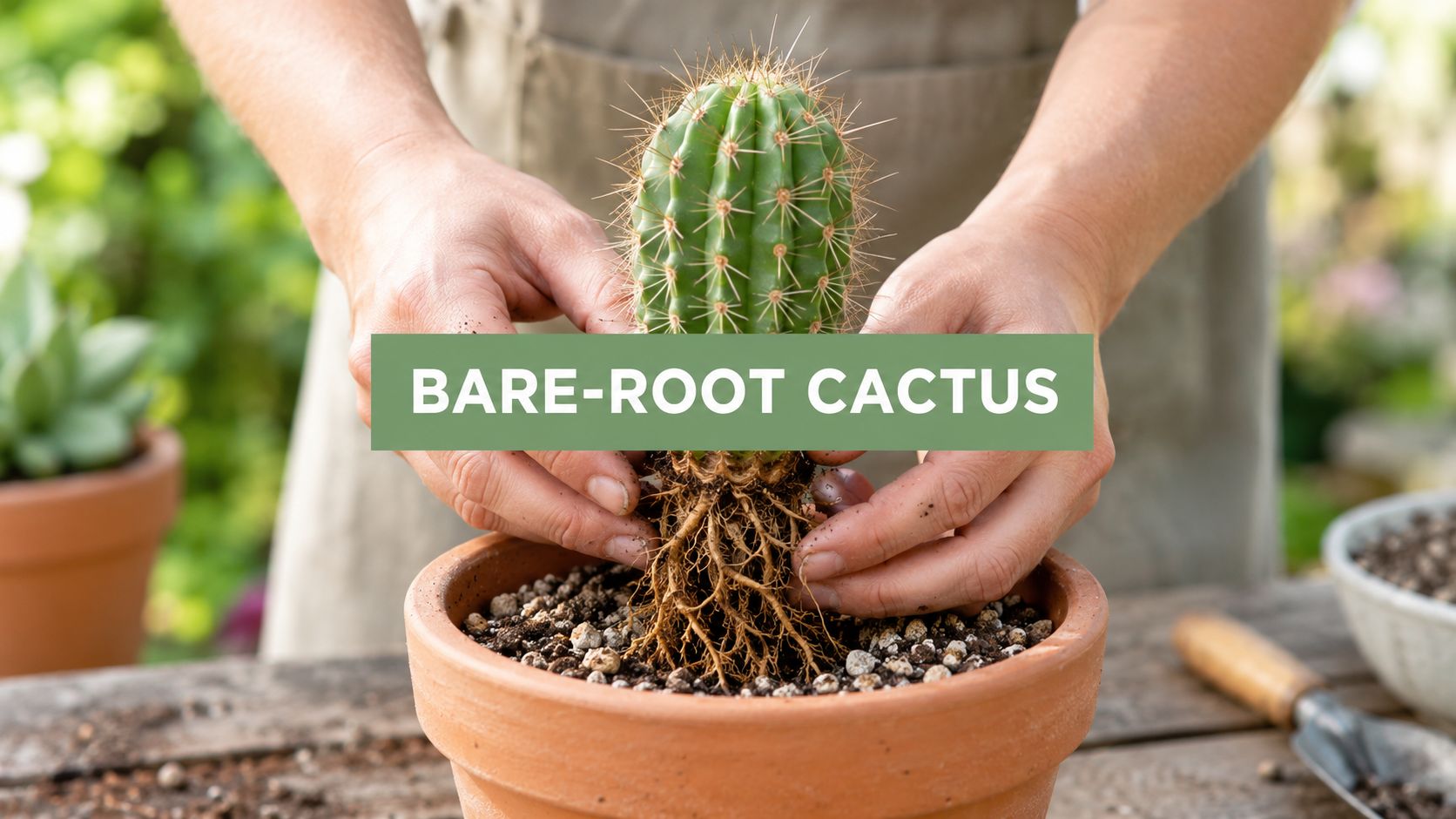
- Soil or root condition. If bare root, inspect for active-looking roots and remove obviously dead material. If potted, check whether the mix feels overly wet or stale.
Quarantine first
Never place a new succulent directly into your main collection. Set it apart until you’re confident it’s clean and stable. This matters even when the plant looks fine at first glance.
A short quarantine gives you time to watch for pests, delayed rot, or hidden weakness. It also keeps one bad surprise from becoming a collection-wide problem.
New plants should earn their place on the shelf.
Go slow with light and water
One of the most common mistakes is giving a shipped succulent intense sun immediately. A plant that just spent time in a box needs a gradual return to bright conditions. Put it in bright, indirect light first, then increase exposure based on how it responds.
Watering should also be deliberate. If the plant is bare root, let any damaged root surfaces settle before rushing to soak it. If it arrived potted, don’t water automatically just because it came in the mail. First determine whether the soil is already damp and whether the plant needs moisture.
Decide whether to repot now or later
Not every new succulent needs immediate repotting. If the plant arrived stable, clean, and in suitable media, letting it adjust before changing everything at once can be the better move.
Repot sooner if you notice any of these issues:
- Soggy or compacted soil
- Poor drainage
- Visible pests in the media
- A pot size that clearly doesn’t match the root mass
If you repot, use a fast-draining succulent mix and a container with drainage. Keep the process clean and avoid over-burying the crown.
Document problems early
If there’s a real issue, photograph it promptly and contact the seller within their stated window. Clear photos of the box, plant, roots, and damaged areas make resolution easier.
Good post-purchase care doesn’t just rescue plants. It also tells you which sellers are worth using again. A plant that settles in cleanly, roots well, and resumes healthy growth tells you far more than a polished product page ever could.
Final Verdict Finding Your Perfect Succulent Source
The best place to buy succulents depends on what you need most. If you want hands-on confidence and immediate inspection, a strong local nursery is hard to beat. If you want range, unusual cultivars, or access beyond what nearby shops carry, online specialty sellers usually make more sense. If you’re shopping on price alone, big-box stores and swaps can work, but only if you inspect ruthlessly.
The bigger lesson is simple. Don’t judge a seller only by the transaction. Judge them by what the plant looks like after transit stress, after quarantine, and after a few weeks in your care. That’s where quality shows up.
Use the seven criteria as your filter. Look at selection, yes, but pay closer attention to health, shipping discipline, guarantees, and how transparently the seller presents risk. Then match the source to your actual situation instead of chasing a one-size-fits-all answer.
That’s how experienced buyers avoid disappointment. They shop for survivability, not just excitement.
If you’re looking for larger cacti and succulent specimens, bulk buying options, and detailed product information from a category-specific retailer, take a look at The Cactus Outlet.