

You’re probably looking at a black prince echeveria right now and wondering two things.
First, how does a succulent get that dark without being unhealthy? Second, how do you keep it from turning into a stretched, pale, mushy disappointment a few months from now?
I get it. This is one of those plants people buy for the color, then lose confidence when it changes after bringing it home. The good news is that black prince echeveria isn’t hard to grow once you understand what the plant is trying to do. Think of it less like a fragile showpiece and more like a compact sun-lover with a very clear personality. Give it the right light, fast drainage, and restraint with water, and it rewards you with one of the most dramatic rosettes in the succulent world.
Unveiling the Black Prince Echeveria
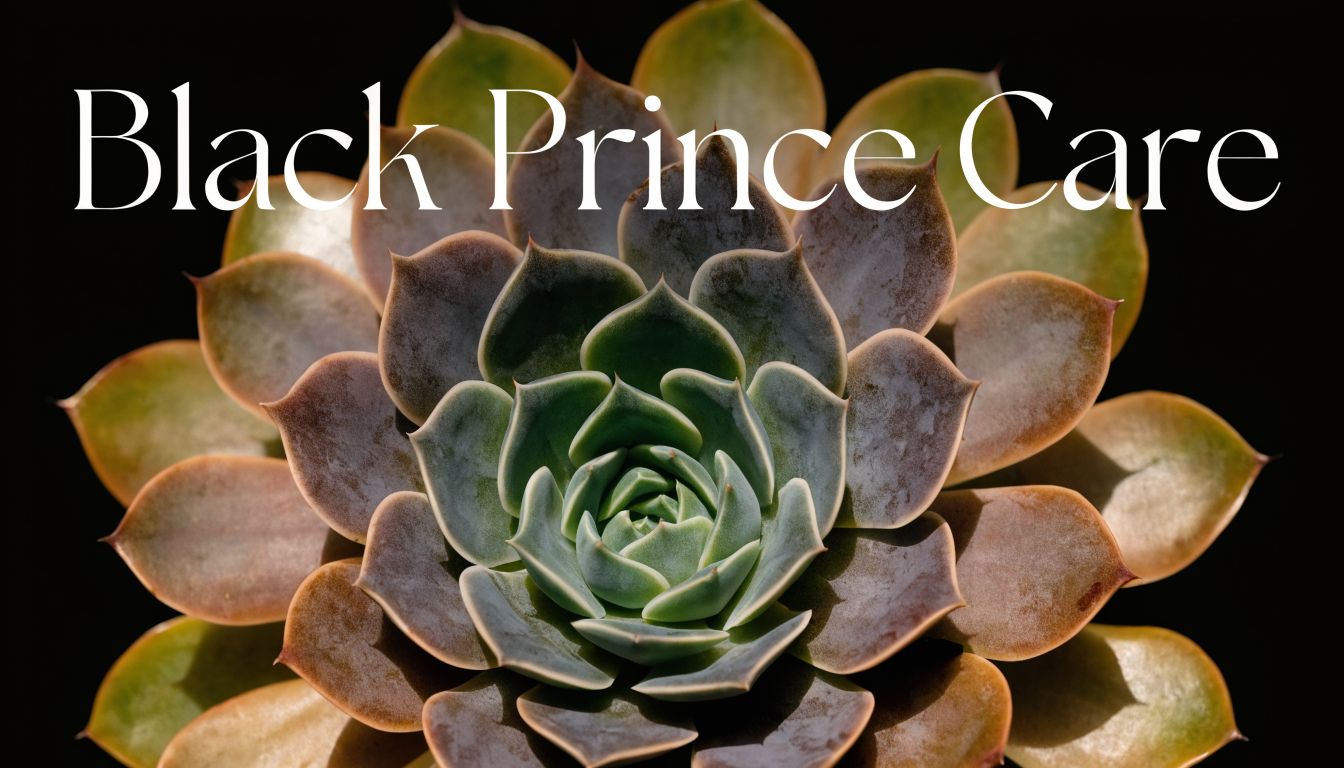
A lot of first-time buyers notice the color before anything else. On a bench full of pale blue echeverias and silvery sedums, black prince echeveria looks almost painted. The outer leaves can read as burgundy, chocolate, or nearly black, while the center often stays greener. That contrast is part of the charm.

What makes this plant especially interesting is that it didn’t just appear in nature by accident. Echeveria 'Black Prince' was first introduced in 1970, created by Frank Reinelt of California through a cross between Echeveria shaviana and Echeveria affinis, producing the dark-leaved rosettes people know today, typically around 6 inches (15 cm) in diameter according to World of Succulents on Echeveria 'Black Prince'.
What it looks like when it’s happy
A healthy black prince echeveria grows in a tidy rosette. The leaves are fleshy and pointed, arranged in a spiral that looks almost geometric. If you’ve ever seen an artichoke from above, the structure feels similar, just smoother and more sculptural.
The center usually looks more alive and green than the outer ring. New leaves emerge from the middle, then darken as they mature. That’s normal. New plant parents sometimes assume the green center means the plant is reverting or losing color. It isn’t. It’s just growing.
Black prince echeveria often looks darkest at the outer edges and newest at the center. That contrast is part of its normal pattern, not a flaw.
Why collectors love it
This hybrid got good genes from both parents. One parent contributed ruffled, softer-toned characteristics, and the other brought stronger dark coloration and a more pointed leaf shape. The result is a plant that feels refined but still bold.
It also fits into places where bigger statement succulents don’t. Mature plants stay compact enough for a windowsill, small patio pot, or a shallow bowl planting. As they age, they can form offsets and create a clustered look, which makes one plant feel like a small colony instead of a single rosette.
Here’s a quick identification guide that helps when garden centers lump dark echeverias together:
| Trait | Black prince echeveria |
|---|---|
| Growth form | Tight rosette |
| Leaf feel | Thick and fleshy |
| Leaf shape | Pointed, spoon-like |
| Color pattern | Greener center, darker outer leaves |
| Overall impression | Compact, symmetrical, dramatic |
Where people get confused
The biggest confusion is naming. Plants in cultivation can vary, and dark echeverias are often sold under overlapping labels. So instead of obsessing over a tag, start with the structure. A black prince echeveria should look compact, balanced, and substantial, not floppy or loose.
The second confusion is whether dark color means stress in a bad way. Not necessarily. With this plant, stronger color can be part of normal, healthy growth when conditions are right. You’ll see why that matters in care, because black prince doesn’t become dark by accident.
The Complete Care Blueprint for a Thriving Plant
Black prince echeveria stays simple when you remember one rule. Treat it like a plant that wants quick-drying roots and lots of light, not like a thirsty tropical houseplant.

Light makes the color
If your plant isn’t darkening, light is the first thing to check. The deep coloration is a photomorphogenic response to high light intensity, especially UV and blue light. In full sun, plants can reach 90 to 100% dark pigmentation within 4 to 6 weeks, driven by anthocyanin pigments that help protect plant cells, as explained by Plant Addicts on Black Prince Echeveria.
That sounds technical, but the everyday version is easy to understand. It's similar to a tan. More sun exposure changes the plant’s appearance because it’s responding to the environment. With black prince echeveria, that response shows up as richer burgundy to near-black tones.
Here’s what that means in practice:
- Outdoors. Give it full sun if your climate allows it, with at least 6 hours daily.
- Indoors. Put it in your brightest window and watch for stretching toward the glass.
- When increasing sun. Move it gradually. A plant raised in softer light can scorch if you shove it straight into intense afternoon sun.
Practical rule: If the rosette is staying wide, low, and compact, your light is probably close to right. If it starts stretching upward with bigger gaps between leaves, it wants more.
Soil needs to drain fast
Standard potting soil holds too much moisture for this plant. Black prince echeveria stores water in its leaves, so soggy roots are far more dangerous than slightly dry soil.
Use a gritty succulent or cactus mix that drains quickly. Sandy or loamy, well-drained soil is what suits this plant best. If you’re growing in a container, a pot with a drainage hole is essential. Terracotta is especially forgiving because it dries faster than glazed ceramic or plastic.
A simple test helps. Water the pot thoroughly, then check how long the mix stays damp. If it still feels wet for too long, the mix is too heavy for a succulent like this.
Water less than you think
Most losses happen here. New plant parents see fleshy leaves and assume the plant needs frequent drinks to stay plump. It doesn’t. Wait until the soil has dried fully, then water thoroughly and let excess water leave the pot.
A helpful mindset is this: black prince echeveria likes a full drink followed by a dry rest. It doesn’t like constant sips.
Use this watering rhythm:
- Check the soil first. Don’t water on a fixed calendar.
- Water until moisture moves through the pot.
- Let it dry again before repeating.
- Reduce watering in winter when growth slows.
If you’re unsure, wait a little longer. Overwatering causes more trouble than underwatering with this plant.
For broader basics on drought-tolerant plants and watering habits, this succulent plant care guide from The Cactus Outlet gives a useful foundation.
Temperature and feeding
Black prince echeveria grows well in USDA zones 9 to 11 and thrives around 65 to 80°F (18 to 27°C). It’s generally hardy down to 25°F (-4°C) in the commonly cited care range, but cold protection becomes important near that limit. If you live somewhere colder, containers make life much easier because you can move the plant out of danger.
A few care points are easy to miss:
- Fertilizer. Use it lightly. This plant only needs feeding once monthly at half-strength during spring and summer growth.
- Humidity. Lower humidity is better than muggy air.
- Spacing. If planting with others, give each rosette room so air moves around it.
A simple setup that works
If someone walked into my nursery and asked for the safest beginner setup, I’d suggest this combination:
- Pot. Small terracotta pot with a drainage hole
- Placement. Brightest sunny spot available
- Soil. Fast-draining cactus or succulent mix
- Watering style. Deep soak only after full drying
- Fertilizer. Light monthly feeding during active growth only
That setup removes most of the common failure points before they start.
Expanding Your Collection Through Propagation
One of the best things about black prince echeveria is that you don’t have to stop at one plant. Once it matures, you can make more. Often, many care guides become vague regarding this process, and vague advice is how people end up with rotting leaves on a windowsill and no new plants to show for it.

Choose offsets if you want the best odds
If your plant produces pups, use them first. Propagation via offsets has a 90 to 95% success rate and roots in 2 to 4 weeks, while leaf cuttings have a 60 to 70% success rate due to higher rot risk, according to the cited study referenced in this propagation video source.
That difference matters. If you’re a beginner, offsets are the friendlier path. They already have a head start because they’re miniature plants, not just detached storage tissue trying to become one.
Here’s the quick comparison:
| Method | Best for | What to expect |
|---|---|---|
| Offsets | Beginners, faster results | Higher success and quicker rooting |
| Leaf cuttings | Patience, experimentation | Lower success and more rot risk |
How to separate an offset
Use a clean knife or pruners and work slowly. You’re not trying to rip a baby away. You’re trying to make a neat, clean separation that the plant can heal from.
- Look for a pup with some size. A larger offset is easier to handle.
- Lift the lower leaves gently so you can see where it joins the mother plant.
- Cut cleanly at the base.
- Let the cut dry and callous before planting.
- Set it into dry, gritty mix and wait before watering heavily.
The callousing step matters because fresh wounds and wet soil are a bad combination. Letting the cut dry is like letting a scrape form a skin before jumping in a pool.
For a broader walkthrough with related methods, this guide on how to propagate succulents is helpful.
Leaf propagation is slower and fussier
Leaf cuttings can still work, and they’re satisfying when they do. The trick is removing the whole leaf cleanly from the stem. A torn leaf base often fails before it even starts.
Lay the leaf on top of dry or barely moist propagation mix, keep it in bright light, and resist the urge to fuss over it. Too much moisture is the usual mistake. People think they’re helping, but they’re really inviting rot.
A short visual walkthrough can make the process easier to picture:
If you want more plants fast, separate offsets. If you want to experiment, try leaves. Just don’t judge your skill by a failed leaf. Even under good care, they’re less reliable.
When to repot
Propagation and repotting often happen around the same stage of growth. If the plant is filling its container, pushing offsets against the rim, or drying out unusually fast, it may be ready for a new pot.
Keep the upgrade modest. Don’t jump from a snug pot into a huge container. Extra soil around a small root system stays wet longer, and that raises the risk of rot. Move up just enough to give roots and pups a little breathing room.
After repotting, give the plant time to settle. Freshly disturbed roots don’t need a flood. They need stability, air, and patience.
Troubleshooting Common Plant Problems
Most black prince echeveria problems are readable once you know the signals. The plant won’t speak, but it does point clearly. Stretching means one thing. Mushiness means another. Specks of white fluff usually mean something else entirely.

If it’s stretching upward
A compact rosette should stay low and stacked. When the stem elongates and the leaves spread farther apart, the plant is asking for more light. This is etiolation, and it happens when the plant is trying to reach a better light source.
The fix is simple, but not instant:
- Move it to brighter light gradually
- Rotate the pot so growth stays balanced
- Don’t expect old stretched growth to shrink back
New growth tells you whether the correction worked. If the center starts coming in tighter and closer, you’re on the right track.
If the leaves look pale or less dramatic
Sometimes the plant isn’t stretching, but it still doesn’t look like the moody specimen you expected. In that case, light is still usually the issue. Many black prince echeverias remain attractive in lower light, but they won’t show the same depth of color.
A change in color alone isn’t always a crisis. It’s often just a clue that the growing conditions changed after purchase.
If leaves turn soft or the base feels mushy
This is the problem growers fear most because it can move fast. Soft tissue at the base usually points to excess moisture, poor drainage, or roots staying wet too long. Black prince echeveria can handle drought much better than stale, wet soil.
Use this quick diagnostic table:
| Symptom | Likely cause | What to do |
|---|---|---|
| Mushy lower leaves | Overwatering | Stop watering and check roots |
| Soft stem base | Rot | Unpot, remove damaged tissue, replant in dry mix |
| Wet soil that lingers | Soil too dense or poor drainage | Change mix and container setup |
If the rot is limited, remove damaged tissue with a clean blade and let healthy parts dry before replanting in fresh, fast-draining soil.
Healthy succulents are firm, not squishy. If a black prince echeveria feels like it’s collapsing instead of drying, think excess water first.
A related symptom many growers notice is leaf drop. Sometimes that’s age, and sometimes it’s stress. This guide to succulent leaves falling off helps you sort normal shedding from a care problem.
If you spot pests
Black prince echeveria can attract the usual sap-sucking troublemakers. The ones people most often notice are mealybugs and aphids. Mealybugs look like bits of white cotton tucked into leaf creases. Aphids often cluster around tender new growth or flower stalks.
Start with a close inspection. Look at the leaf bases, the center of the rosette, and any hidden crevice where insects can gather.
Try this sequence:
- Isolate the plant from nearby succulents.
- Remove visible pests by hand or with a cotton swab.
- Clean the plant gently and keep watching for return activity.
- Improve airflow and avoid crowding so pests have fewer sheltered spots.
If you see scars or burned patches
Dark succulents can still burn. If a plant was raised in gentler conditions and suddenly placed in harsh direct sun, some leaves may show dry, damaged spots. That’s not the same thing as healthy dark pigmentation.
Burned tissue won’t recover, but the plant can. Ease it into stronger light the way you’d harden off a seedling. Slow changes work better than dramatic moves.
Styling and Acquiring Your Black Prince
Black prince echeveria earns its keep visually. Even when it’s small, it anchors a container arrangement the way a dark throw pillow can anchor a pale sofa. The color gives everything around it more definition.
Where it looks best
Because it forms clumps and can spread to 5 to 12 inches (13 to 30 cm), black prince echeveria works well as a solo specimen or as a repeating accent in a larger planting. It’s also non-toxic to pets and humans, which makes it a comfortable choice for family spaces and indoor displays, as noted by Gardenia’s plant profile for Echeveria 'Black Prince'.
That safety factor matters more than people expect. A lot of plant styling happens where life is already happening. Entry tables, patios, dining nooks, and low shelves all become options when you’re not worrying about a toxic plant in everyday reach.
A few pairings work especially well:
- With pale succulents. The dark rosette creates strong contrast.
- In terracotta. Warm clay makes the foliage look even deeper.
- In gravel gardens. The color reads beautifully against stone.
- In modern interiors. The rosette shape feels architectural and clean.
Pot and decor choices that flatter it
If you want the plant to feel elegant, keep the container simple. Black, charcoal, cream, sand, and unglazed clay all work. Busy glazed patterns can compete with the rosette instead of framing it.
Indoors, think about the whole room, not just the pot. If you're blending plant styling with furniture and finish choices, these Southern Oregon houseplant decor tips offer useful ideas for matching plants with your space in a way that feels intentional.
A dark succulent works like visual punctuation. It gives the eye a place to land, especially in rooms filled with lighter wood, neutral upholstery, or soft wall colors.
What to expect when buying online
Buying succulents online can make some people nervous, especially with a compact rosette that looks so sculptural. That concern makes sense. A black prince echeveria may arrive a little dry or slightly shifted from shipping, and that alone doesn’t mean anything is wrong.
When your plant arrives, keep the first day simple:
- Unbox gently and inspect the rosette
- Let it rest so it can adjust from travel
- Wait to water until the soil condition calls for it
- Give it bright light, but not a sudden shock of harsh exposure
Think of unboxing as acclimation, not rescue. Most problems come from doing too much too quickly.
Frequently Asked Questions About Black Prince Care
Can black prince echeveria stay outside in a marginal climate
Sometimes, yes, with strategy. Many care guides stop at the basic hardiness limit, but gardeners in borderline areas often have better results when they use a warmer microclimate. According to Succulents and Sunshine on Black Prince Echeveria, using a south-facing wall or frost cloths can extend viability by an additional 5 to 10°F beyond the commonly cited 25°F (-4°C) threshold.
That doesn’t mean the plant becomes carefree in cold weather. It means site choice matters. A protected wall stores warmth. Frost cloth buffers exposure. Dry soil also helps reduce cold stress compared with wet winter conditions.
If you want to try overwintering outdoors:
- Plant in the warmest microclimate you have
- Keep drainage sharp so roots don’t sit wet in cold weather
- Use frost cloth when cold snaps are forecast
- Move container plants under cover when conditions turn severe
Why isn’t my plant turning black
Usually because the plant isn’t getting enough strong light, or because you’ve only had it a short time. New growth can stay greener in the center while older leaves darken first. That’s normal.
The other issue is expectation. “Black” is a descriptive common name, not a promise that every plant will look ink-dark at all times. Temperature, season, age, and growing conditions all shape the final look. Aim for a compact rosette and healthy growth first. Deep color follows the right setup.
Is offset propagation really better than leaf propagation
For most home growers, yes. Offsets are easier to handle and more forgiving, especially if you’re still learning your watering habits. Leaf propagation can work, but it requires a cleaner leaf removal, more patience, and more restraint.
If your goal is dependable results, choose pups when the plant offers them. If your goal is practice and curiosity, try leaves too. Just treat it like the slower method, not the safer one.
How do I know if lower leaves are normal aging or a problem
Dry, papery lower leaves are often normal. The plant is cycling out old foliage as it grows from the center. That kind of leaf can usually be removed gently once it’s fully dried.
Soft, translucent, or foul-smelling leaves are different. Those suggest moisture trouble, especially if the problem begins low on the plant and moves upward. Texture tells you a lot. Dry usually means aging. Mushy usually means stress.
Does black prince echeveria make a good indoor plant
Yes, if you can meet the light requirement. Indoors, the biggest challenge isn’t watering. It’s brightness. A sunny window is often the deciding factor between a tight, handsome rosette and a stretched one.
If your home has strong natural light, black prince echeveria is one of the most rewarding succulents to grow because it stays compact, looks sculptural year-round, and doesn’t ask for constant attention.
If you’re ready to add one to your collection, The Cactus Outlet offers a wide range of cacti and succulents for beginners, collectors, and designers who want healthy plants shipped with care.