


Healthy cactus, bright light, no flowers. That’s the pattern that frustrates most growers.
The usual advice is to “just neglect it more.” That’s incomplete, and sometimes flat-out wrong. A cactus that never gets the right seasonal signals can stay alive for years without doing what you bought it for, which is bloom.
Blooming cactus plants respond to a full annual cycle, not a single trick. They need a period of restraint, a period of waking up, a period of active growth, and a period of winding down. When growers miss one phase, the plant often stays vegetative. It makes spines, pads, ribs, or stems, but no buds.
At a nursery level, the difference between a cactus that flowers reliably and one that refuses usually comes down to timing. Watering at the wrong time, keeping winter temperatures too warm, moving a plant once buds appear, or pushing lush growth with rich soil can all block flowering. A cactus doesn’t bloom because it looks happy to us. It blooms when its internal calendar says conditions are right.
The Secret to Unlocking Your Cactus Blooms
Luck has very little to do with it.
A cactus bloom is a response to maturity, stored energy, and seasonal cues lining up at the same time. If one of those pieces is missing, you get a plant that survives but doesn’t perform. That’s why two growers can own the same species and get very different results.
The “neglect it and wait” method fails because neglect by itself doesn’t create a bloom cycle. A cactus still needs enough light to build energy, a dry rest at the proper time, and a gradual return to growth. Too much comfort year-round often works against flowering. Warm indoor temperatures all winter can keep a plant from getting the rest signal it needs.
Practical rule: A non-blooming cactus is usually missing a seasonal cue, not asking for more random stress.
What works is deliberate contrast over the year. Winter should feel cooler and drier. Spring should feel brighter and slightly wetter. Summer is for active growth and energy storage. Autumn is for slowing down before dormancy. That rhythm matters more than any miracle fertilizer or internet hack.
Growers who get dependable flowers don’t rely on hope. They manage conditions. They know which species bloom young, which need age, and which abort buds if they’re shifted across the patio at the wrong moment. They also accept a trade-off. The same routine that keeps a cactus lush and green all year may be the exact routine that prevents flowers.
Understanding the Cactus Bloom Cycle and Maturity

The first question isn’t “How do I force flowers?” It’s “Is this cactus even ready?”
Flowering is expensive for a plant. Buds, petals, nectar, and seed production all draw on stored reserves. A cactus has to reach enough size and stability before it can spare that energy. That’s why mature plants bloom far more reliably than small, recently rooted, or frequently stressed ones.
Maturity changes everything
One of the clearest examples is the Organ Pipe Cactus. According to the National Park Service profile on Organ Pipe Cactus, it can live over 150 years and usually produces its first flowers around age 35. The same source notes that it grows only about 2.5 inches per year, and for the first 10 years seedlings stay under a few inches tall. That tells you a lot about how these plants allocate energy. They build structure first and reproduce later.
That long timeline isn’t universal. The same verified dataset notes that Rebutia and Mammillaria may flower within 4 years, while Peruvian Apple may take 10 to 20 years and Saguaro may take 40 to 55 years for first blooms. The takeaway is simple. Species choice sets your waiting period.
Why healthy doesn’t always mean bloom-ready
A cactus can look firm, green, and well-rooted and still be too young. It can also be mature but energy-poor. Plants that spend years in weak light often survive on low output. They stay alive but don’t bank enough reserves to support flowering.
Watch for these maturity realities:
- Young globular cacti often bloom sooner, especially compact genera that flower close to the crown.
- Columnar cacti usually demand much more patience because they must build height and mass first.
- Recently propagated pieces may need time to re-establish roots before they switch back to reproduction.
- Fast top growth doesn’t always mean floral readiness. Soft, stretched tissue often signals poor light rather than vigor.
A cactus blooms when it can afford to bloom. Until then, your job is building a plant that stores more energy than it spends.
Blooming is part biology, part timing
Nearly all species can bloom under mature conditions, but their flower habits vary. The flowering guide at Arid Succulents Hub notes that nearly all species are capable of blooming when mature. It also points out a useful contrast. Most cactus flowers last just one day or less, while Echinopsis oxygona can hold flowers for several weeks.
That matters because some growers miss blooms because the flowers are brief. A plant may be doing its job perfectly, but if the bloom opens at night and closes by the next morning, you may never catch it.
Your Seasonal Guide to Triggering Cactus Flowers
The annual cycle starts in winter, not spring. Most flowering failures trace back to a winter that was too warm, too wet, or too active.

Winter dormancy does the heavy lifting
For many desert cacti, winter isn’t a dead period. It’s the signal-setting phase that prepares the plant to form buds later. The bloom protocol outlined at The Greedy Vegan cactus growing guide states that successful flowering requires 2 to 4 months of winter dormancy at temperatures below 15°C (59°F) with severely restricted watering. It also notes that many species respond to warm growing-season days of 70 to 90°F and cooler nights of 40 to 60°F as the trigger for bud development.
That’s the framework most home growers miss. They keep the plant on a warm windowsill, water lightly through winter, and assume rest is happening. It usually isn’t.
Use winter for restraint:
- Keep it cool: The plant should feel the seasonal drop, not summer conditions in a heated room.
- Keep it dry: Severely restricted watering matters because moisture plus warmth pushes growth instead of dormancy.
- Keep it bright if possible: Dormancy doesn’t mean darkness.
- Leave it alone: Don’t repot, feed, or force movement unless the plant’s safety requires it.
If you grow holiday cacti, the same source notes a more specific trigger. Cool nights of 55 to 60°F combined with 10 hours of light daily for about 4 weeks can induce flowering.
Spring awakening needs patience
When daylight increases and temperatures rise, a cactus starts shifting from rest to growth. Many growers then overreact. They see warming weather and jump from dry winter conditions to frequent watering, feeding, repotting, and full sun all at once.
That’s too abrupt.
Start spring by reintroducing water carefully. The first soak should happen only when the plant is clearly transitioning and the potting mix can dry properly afterward. Once growth resumes, increase watering gradually. Don’t flood a dormant root system and expect a clean response.
Spring is also when bud initials may appear. They’re easy to damage through handling.
Nursery habit: Once buds show, stop treating the plant like a project. Treat it like a loaded tray of glassware.
The same temperature guide linked above warns that once buds begin forming, radical shifts in light or temperature can cause them to abort. That’s one of the most common reasons a promising plant never finishes the job.
Summer is for energy storage
Summer growth determines next season’s flowers as much as the current one. If a cactus spends summer underlit, overpotted, or chronically damp, it won’t store energy efficiently.
This is the season for strong light, active root function, and disciplined watering. Water thoroughly, then let the mix dry before watering again. Don’t keep the root zone continually moist. Desert cacti perform best when roots cycle between saturation and air.
Summer priorities are different from winter priorities:
| Season | Main Goal | What to Avoid |
|---|---|---|
| Winter | Rest and signal-setting | Warm, wet comfort |
| Spring | Controlled wake-up | Sudden changes |
| Summer | Energy storage and steady growth | Constant moisture and weak light |
| Autumn | Hardening and slowdown | Late soft growth |
If your cactus is outdoors, summer can be excellent for bloom preparation, but only if rain exposure is controlled and the plant isn’t getting scorched after a dim winter. Acclimation still matters.
Autumn sets the next bloom cycle
Autumn is where experienced growers get ahead. They stop feeding in time, reduce watering gradually, and let tissue harden before cold weather arrives. If you keep pushing active growth too late, the plant enters winter soft and confused. That weakens the dormancy signal.
A good autumn routine usually includes:
- Reducing water step by step rather than stopping overnight.
- Holding fertilizer so the plant slows naturally.
- Keeping strong light while temperatures are still favorable.
- Planning winter placement early so the transition isn’t chaotic.
This season often separates a plant that blooms next year from one that coasts.
What works and what fails
Some trade-offs are worth stating plainly.
- What works is consistency within each season and contrast between seasons.
- What fails is a flat routine that never changes all year.
- What works is letting the cactus dry fully during active growth cycles.
- What fails is frequent sips that keep roots half-moist.
- What works is a stable setup once buds appear.
- What fails is rotating the pot for symmetry, moving it indoors for company, then back outside for more sun.
Blooming cactus plants reward growers who think in months, not moments.
Perfecting Your Core Cactus Care Routine
A cactus does not bloom because it was treated kindly every week. It blooms because the basics were handled correctly for months at a time, especially at the roots, under the light, and in the fertilizer schedule.

Soil and water need to work together
The fastest way to lose flowers is to grow a cactus in a mix that stays wet longer than the season calls for. During active growth, roots need air as much as water. During rest, they need even more air and very little moisture.
Use a gritty, fast-draining mix that dries on a predictable timetable in your conditions, not mine. Nursery growers in dry climates can use more mineral content and water more freely. Indoor growers in humid rooms usually need a leaner mix and a stricter hand. The goal stays the same. Soak the root ball thoroughly in active growth, then let the mix dry fully before watering again.
Pot choice affects that rhythm. Terracotta helps excess moisture leave the root zone faster. Plastic holds moisture longer, which can be useful in very hot, arid setups but often causes trouble indoors. Oversized pots also delay drying, and that weakens both root health and bloom performance.
Light drives flower production
Blooming takes stored energy. A cactus that survives in weak light is not the same as a cactus that has enough reserve to flower well.
Give the plant the brightest conditions the species can handle, and adjust gradually if it is coming out of lower light. I see this mistake often in the nursery. A plant spends winter on a dim shelf, then gets pushed into hard sun and stalls from stress instead of building spring strength. Good flowering comes from high light paired with proper acclimation, not from sudden exposure.
If you want a solid baseline for day-to-day setup, this cactus care guide from The Cactus Outlet covers the fundamentals well.
Feed for flowers, not soft growth
Heavy feeding gives many cacti a lush look that beginners mistake for health. In practice, too much nitrogen often produces tender, inflated growth with poor flowering potential.
Use a restrained fertilizer program during active growth only. Many growers prefer a lower-nitrogen formula once the plant is established and receiving strong light. Stop feeding before autumn slowdown so the plant can firm up and enter dormancy in good condition. Feeding through stress, heat, or winter rest usually creates problems you do not see until the next bloom cycle fails.
Small corrections matter here. A well-grown cactus should look compact, firm, and in proportion. If it is racing upward or swelling unnaturally fast, reduce feed and reassess light.
This video gives a practical visual walkthrough of the basics growers often miss.
Repotting without setting the plant back
Repotting can improve flowering if the mix has broken down, salts have built up, or the roots have filled the pot so completely that watering becomes erratic. It can also cost you a bloom season if you disturb the plant at the wrong moment.
Use this quick checklist:
- Repot after the bloom cycle, not during bud formation.
- Choose only a modest size increase so the new mix does not stay wet too long.
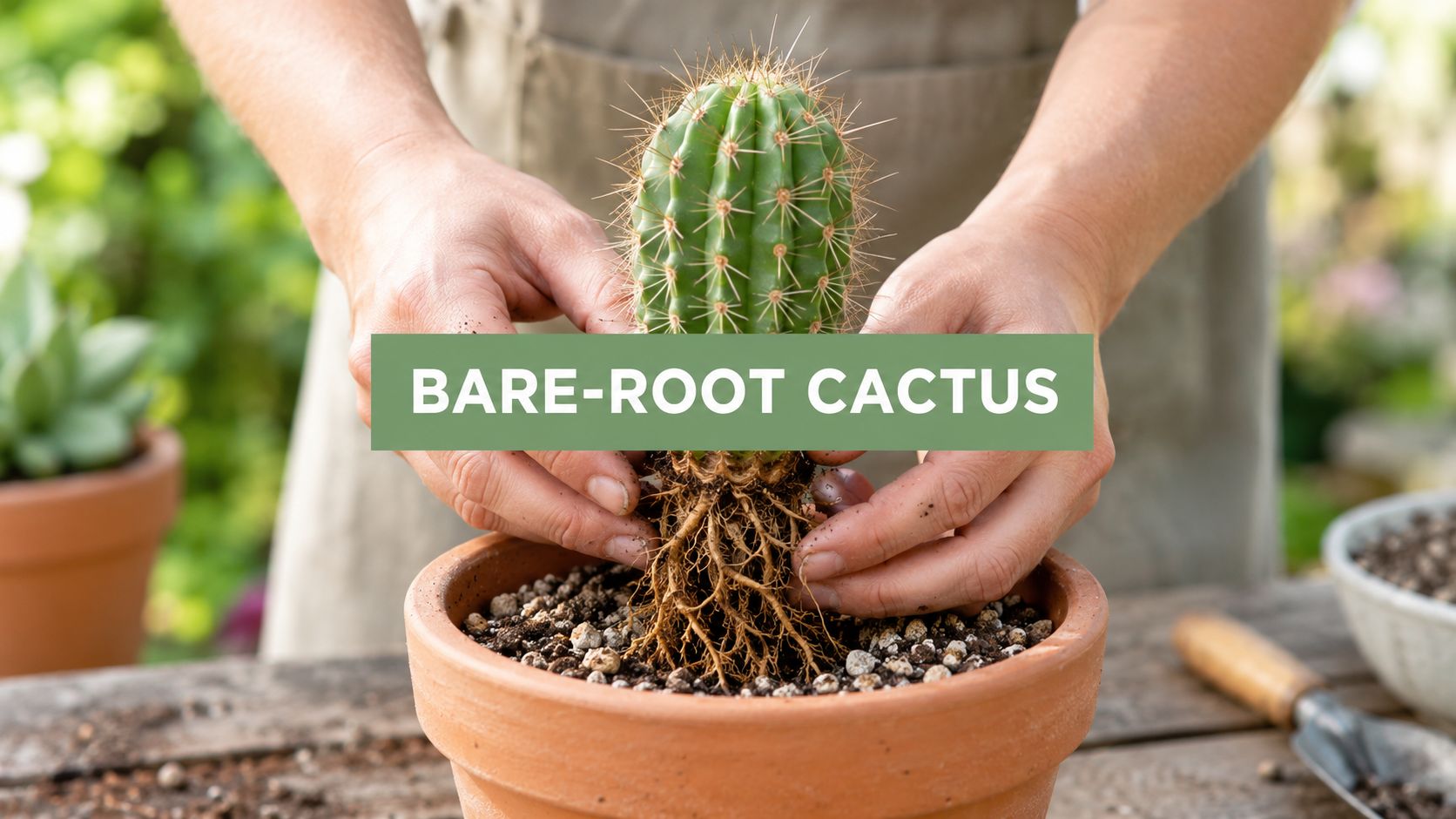
- Inspect roots carefully and remove dead material rather than tearing healthy roots apart.
- Wait before watering if root damage occurred, so cuts can dry and settle.
I treat repotting as a recovery period, not a signal to start pushing growth. If you repot, feed, relocate, and increase watering all at once, many cacti respond by pausing instead of flowering.
Troubleshooting Why Your Cactus Wont Bloom
A cactus that refuses to bloom is rarely being mysterious. In nursery production, the cause is usually tied to one missed part of the annual cycle. Good spring flowers are earned months earlier, often during winter rest or the first push of spring growth.

Healthy plant, no buds
This is the classic case. The plant looks clean, rooted, and alive. It may even put on growth every year. Still no flowers.
Start with the seasonal sequence, not the current week. A cactus that never had a real cool, dry rest often keeps itself in low-level growth instead of setting buds. A plant that spent last season in weak light may also lack the stored energy needed to flower, even if it appears healthy. Age matters too. Some species bloom young, while others need more body size and maturity than new growers expect.
Overfeeding creates another common problem. The plant stays green and active, but it invests in tissue instead of reproduction. I see this often in cacti pushed with rich fertilizer through summer and then kept too comfortable in winter. They look vigorous right up until bloom season passes with nothing to show for it.
If the body is compact and hard, revisit winter conditions first. If it is stretching, pale, or leaning, correct light before you expect flowers.
Buds form, then dry up or fall
Once buds are present, consistency matters more than intervention.
Bud loss usually follows a sudden shift in one of three things: temperature, watering rhythm, or orientation to the light. Some species tolerate a little handling. Others react badly if the pot is turned or moved across the patio. A cactus in bud is already spending stored energy. If conditions swing at that point, the plant often cuts its losses.
Check the body, not just the buds. Yellowing tissue, soft spots, or a dull, washed-out color can point to stress that began earlier. If that is happening, use a proper diagnosis instead of guessing. This guide on why a cactus is turning yellow helps separate light stress, watering mistakes, and root trouble.
Blooming stopped after repotting or planting out
Mature cacti often pause flowering after root disturbance. That includes repotting, dividing offsets, and moving established specimens into garden beds or other outdoor plantings. The plant is redirecting energy below the soil line, where you cannot see the work.
This is especially common with larger columnar types. Growers move a specimen from a container into the ground and expect the same bloom schedule to continue. In practice, many cacti need time to rebuild roots, re-anchor, and adjust to a different drying pattern before they return to reliable flowering.
I treat this as a recovery phase. Keep the plant stable, avoid heavy feeding, and judge progress by firmness and sound new growth before you worry about flowers.
A quick diagnostic table
| Symptom | Most likely cause | Best response |
|---|---|---|
| No buds at all | Broken winter rest, weak light, or immaturity | Review the full seasonal cycle and confirm the plant is old enough to bloom |
| Buds abort | Sudden changes after bud set | Keep placement, watering, and temperature steady |
| Plant grows but stays soft | Excess water or rich feeding | Let the mix dry more fully and reduce fertilizer |
| Flowering stopped after move | Root disturbance and re-establishment | Prioritize root recovery and wait for the next normal cycle |
If a cactus has to choose between rebuilding and blooming, it will rebuild first.
Choosing Bloom-Prone Cacti from The Cactus Outlet
If you want flowers sooner, choose species that naturally bloom earlier and more freely. That sounds obvious, but many buyers fall for dramatic form first and only later learn they picked a plant with a very long juvenile phase.
Fast reward versus long-game specimens
For fast gratification, compact genera are usually the better bet. Mammillaria and Rebutia are strong choices because they tend to bloom relatively young under good care. They suit growers who want a plant that can reward a proper seasonal routine without a long wait.
Echinopsis is another smart choice if your goal is showy flowers. Flower duration and habit vary, but this group is widely appreciated because the blooms can be large and memorable compared with the plant body.
Then there are the long-game cacti. Peruvian Apple offers architectural value and eventual flowers, but patience matters more. If you buy it for shape and then get flowers later, you’ll be happy. If you buy it expecting quick blooms, you’ll be frustrated. If that species interests you, this Peruvian cactus apple guide gives useful context.
Popular blooming cacti at a glance
| Cactus Species | Common Name | Flower Colors | Bloom Season | Time to First Bloom |
|---|---|---|---|---|
| Echinopsis oxygona | Easter Lily Cactus | whites, pinks, and related shades are commonly seen in cultivation | spring into the warm season under mature conditions | not specified in the verified data |
| Mammillaria | Pincushion Cactus | reds, purples, yellows, and whites occur across cactus flowers | spring to warm-season flowering under mature conditions | within 4 years |
| Rebutia | Rebutia | reds, purples, yellows, and whites occur across cactus flowers | spring to warm-season flowering under mature conditions | within 4 years |
| Cereus repandus | Peruvian Apple | not specified in the verified data | mature warm-season blooming under proper conditions | 10 to 20 years |
| Carnegiea gigantea | Saguaro | not specified in the verified data | mature warm-season blooming under proper conditions | 40 to 55 years |
Where flower color isn’t tied to a specific species in the verified data, it’s better to stay general than pretend precision.
Crested cacti are collectible and still capable of bloom
Collectors often assume a crested cactus is all form and no flowers. That’s a mistake. The verified guidance drawn from Laidback Gardener on desert cacti and bloom notes that crested, or fasciated, cacti are prized for their unusual sculptural growth and are still capable of flowering. It also notes that propagation by cuttings preserves those traits.
That makes crested forms especially appealing for people who want something visually striking even when out of bloom. They bring texture, rarity, and collector interest, and if grown well, they can still deliver flowers. The trade-off is that they don’t always fit standard care assumptions perfectly. Their odd growth form can change how they handle moisture, airflow, and sun exposure across the crest.
How to choose well
Buy for the outcome you want:
- Want reliable flowers sooner: Start with Mammillaria or Rebutia.
- Want dramatic blooms: Look toward Echinopsis.
- Want a statement plant with eventual flowers: Choose Peruvian Apple.
- Want collector appeal first, blooms as a bonus: Consider crested forms.
The best blooming cactus plants aren’t always the biggest or rarest. They’re the ones that match your patience, climate, and growing setup.
Your Journey to a Flowering Cactus Oasis
A flowering cactus collection doesn’t come from guesswork. It comes from reading the plant’s calendar correctly and respecting its rest as much as its growth. Once you start thinking seasonally, the whole process gets clearer.
That same mindset also helps when you’re designing the space around your plants. If you’re building a dry garden or raised display area, this roundup of DIY retaining wall project inspiration offers useful ideas for shaping a cactus-friendly yard.
Stay patient. Keep the cycle consistent. When the conditions line up, blooming cactus plants stop feeling mysterious and start feeling predictable.
If you're ready to build a collection that’s grown for structure, maturity, and bloom potential, browse the specialty selection at The Cactus Outlet. Whether you want a compact flowering cactus for a patio pot or a statement specimen for the garden, you’ll find well-grown plants that make the wait worthwhile.