


Meet the cactus world’s rugged mountaineer: the Old Man of the Andes, Oreocereus celsianus. This isn't just another columnar cactus; it's a living sculpture, famous for the thick, white, woolly hair that cloaks its green body. But that "wool" isn't just for looks. It’s a brilliant piece of natural engineering, a key to its survival in one of the planet's toughest environments.
The Woolly Survivor of the Andes

Picture a plant that doesn’t just survive but actually thrives on windswept, sun-scorched mountainsides where almost nothing else can grow. That's the Old Man of the Andes cactus in its element. Its story begins high in the Andes—a land of brutal sunlight, frigid nights, and thin air.
This is where its most famous feature comes into play. Think of that dense, white fleece as the cactus's own personal, all-weather gear. It’s perfectly designed for the extreme elevation.
The wool is a two-for-one deal. During the day, it acts like a natural sunscreen, reflecting the intense UV radiation. When night falls and temperatures plummet, it becomes an insulator, trapping just enough warmth to protect the plant’s sensitive skin.
From Mountain Slopes to Your Garden
The Old Man of the Andes has made a long journey from those remote peaks to become a favorite in collections around the world. Native to the high-altitude deserts of Peru, Bolivia, and northern Argentina, this species is right at home at elevations between 8,000 to 13,000 feet. In the wild, it endures blistering sun and temperatures that can dip to 10°F (-12°C). It often grows into impressive clumps, with multiple stems rising from the base to reach heights of up to 10 feet tall. You can see more about its incredible origins over at Spadefoot Nursery.
That toughness is exactly what makes it such a rewarding and surprisingly manageable plant for home growers. The same traits that help it conquer the Andes make it a hardy and spectacular addition to your garden or patio.
A few things really make it stand out:
- A Living Sculpture: Its tall, columnar form covered in that signature white wool is a guaranteed conversation starter.
- Surprising Hardiness: It can handle a light frost, which gives it an edge over many other cacti in cooler climates.
- Low-Maintenance Attitude: Once it's established, this desert native is perfectly happy with minimal fuss and watering.
Understanding where this cactus comes from is the secret to helping it thrive in your care. When you appreciate its natural history, you can give it the conditions it needs to do more than just survive. This guide will walk you through it.
How to Recreate the Perfect Andean Habitat

To really get an Oreocereus celsianus to thrive, you don't need your own mountain peak. You just have to think like one. The key is to recreate the harsh, beautiful conditions of its high-altitude home. Get the light, water, soil, and temperature right, and this woolly survivor will feel right at home.
Imagine the environment it comes from: steep, rocky slopes with intense, unfiltered sun. That blazing sun is the single most important ingredient for growing a truly magnificent Old Man of the Andes. Why? Because more sun encourages the cactus to produce more of its signature white wool as a natural sunblock.
The Right Light for a Woolly Coat
Your number one job is to give this cactus as much direct sun as you possibly can.
If you're growing it indoors, a south-facing window is prime real estate, providing bright, sustained light for most of the day. An east or west-facing window can work in a pinch, but you might notice the woolly coat isn't quite as thick and impressive.
For those planting outdoors, find a spot in a rock garden or xeriscape that gets at least six hours of direct, unimpeded sun. Without enough light, the cactus will start to etiolate—a term we use when a plant stretches desperately for light, becoming pale, thin, and losing its iconic compact shape and dense hair.
Key Insight: Think of the wool on your Old Man of the Andes as a happiness meter. A lush, dense coat means it's getting all the light it craves. Sparse, thin hair is its way of telling you it needs a sunnier spot, fast.
Perfecting the Soak and Dry Method
When it comes to cacti, the quickest way to fail is by overwatering, and this guy is no exception. These plants evolved in dry, arid climates and have zero tolerance for "wet feet," which leads directly to root rot. The only way to water is with the "soak and dry" method.
It's simple: when you water, do it thoroughly. Drench the soil until water flows freely from the pot's drainage holes. Then, and this is the crucial part, let the soil dry out completely before you even think about watering again.
In the active growing season of spring and summer, this might mean watering every few weeks. But in winter, when the plant goes dormant, you'll want to pull way back, watering only once every month or even two.
Building the Ideal Soil Foundation
That bag of all-purpose potting soil from the garden center is a death sentence for an Old Man of the Andes. It's designed to hold moisture, which is the exact opposite of what this cactus needs. You're looking for a mix that drains with incredible speed, just like the rocky, gritty soil of its native slopes.
You can buy a quality pre-made cactus mix, but many of us serious growers prefer to mix our own. Here’s a tried-and-true recipe that works wonders:
- 50% Pumice or Perlite: This inorganic grit is all about creating air pockets and letting water rush right through, preventing it from logging the roots.
- 50% Potting Compost: This organic part provides the essential nutrients the cactus needs to grow strong.
If you live somewhere with high humidity, don't be afraid to tweak the recipe. Bumping up the pumice or perlite to 60% or even 70% will give you extra insurance against rot. You can find more of our thoughts on the perfect growing medium in our guide to cactus and succulent soil.
Impressive Cold Tolerance
Here’s something that surprises a lot of people: this cactus is tough as nails when it comes to cold. Growing at high elevations has given it some serious cold hardiness. An established plant can handle quick temperature dips down to 15-20°F (-9 to -6°C).
There's one huge catch, though: it must be bone dry. Wet soil combined with freezing temperatures is a fatal combination that will turn the roots to mush. If a hard frost is on the forecast, either cover your outdoor plants or, if they're in pots, bring them into a dry, protected spot like a garage or shed until the danger has passed.
Styling and Landscaping With Your Cactus
Once you've mastered the basics of care, the real fun begins. The Old Man of the Andes isn't just another plant; it's a living sculpture. Its strong vertical lines and distinctive woolly coat make it a powerful design element, capable of adding architectural drama to just about any space, inside or out.
Think of it as a statement piece. That tall, fuzzy column is an instant focal point. Set against the soft, leafy textures of a traditional garden, it provides a striking contrast that immediately grabs your attention.
Designing a Desert Oasis
The Oreocereus celsianus feels most at home in arid-themed gardens, where its upright form offers a much-needed sense of height. It beautifully breaks up the low-profile look common to many desert landscapes.
One of the best ways to feature it is in a rock garden. When you place it among large, weathered boulders, you're essentially recreating a piece of its native Andean habitat. The simple gray or tan of the stone provides the perfect backdrop, making the cactus’s white wool and green body pop with life.
It's also a natural anchor for a xeriscape, where water-wise plants take center stage. The Old Man of the Andes is proof positive that a low-water garden can be incredibly dynamic and visually interesting.
Designer's Tip: Use that columnar shape to your advantage by drawing the eye upward. Tuck it toward the back of a garden bed to create a wonderful sense of depth. Or, for a really powerful and natural-looking display, plant a trio of them together at varying heights to mimic how they cluster in the wild.
Perfect Companion Plants
Choosing the right neighbors for your cactus is what takes a planting from good to great. The key is to create harmony by playing with contrasting shapes, textures, and colors. Low-growing, mounding plants are fantastic partners because they complement the Old Man of the Andes without competing for the spotlight.
Here are a few combinations that always work beautifully:
- Golden Barrel Cactus (Echinocactus grusonii): The iconic spherical shape and sharp, yellow spines of the Golden Barrel create a stunning visual opposition to the tall, white, fuzzy column of the Oreocereus.
- Low-Growing Agaves: Varieties like the Queen Victoria Agave (Agave victoriae-reginae) form tight, geometric rosettes that sit perfectly at the base of the cactus. Their smooth, rigid leaves offer a clean textural break from the soft-looking wool.
- Blue Chalksticks (Senecio serpens): This spreading succulent introduces a cool, blue-gray hue that looks incredible next to the cactus’s white fleece. Together, they create a serene and modern color palette.
For even more inspiration, check out our complete guide to cactus garden landscaping ideas and see how these different elements can come together.
Bringing the Drama Indoors
As an indoor plant, this cactus brings a dose of sophisticated, organic texture that designers absolutely love. Potted by itself, it becomes an instant focal point in a minimalist or contemporary room. To really let the plant's unique form shine, place it in a simple, modern pot—think matte black, raw terracotta, or concrete.
A single Old Man of the Andes cactus in a sunny corner can completely transform a room. It adds life and a sculptural quality that feels both natural and deliberate. It's a go-to choice for collectors and decorators who want a plant with some real personality and presence.
How to Propagate Your Woolly Cactus
Want to share your Old Man of the Andes with friends or just grow your own collection? You're in luck. This cactus is pretty straightforward to propagate, and it's a really satisfying project. While you can grow them from seed, it’s a test of extreme patience. The much faster and more common route is taking cuttings, which gives you a perfect clone of your original plant.
Taking a cutting is less like gardening and more like performing a little bit of plant surgery. You'll want to use a sterilized, sharp knife to slice off a healthy piece—either from the top of the main stem or one of its side arms (pups). The cleaner the cut, the better. A clean slice helps prevent nasty bacteria from getting in and causing rot before your new cactus even has a chance.
The All-Important Callusing Period
Once you have your cutting, whatever you do, don't rush to plant it. This is the step where most people go wrong. The fresh, wet wound needs to dry out and form a hard, protective layer. We call this callusing. Think of it as a scab forming over a scrape; it's the plant's way of sealing itself off from infection.
To let it callus properly, just set the cutting aside in a dry place with decent airflow, but out of direct sun. Depending on how thick the cutting is and the humidity in your home, this can take anywhere from one to two weeks. You'll know it's ready when the cut end is dry, firm, and feels almost like cork.
Crucial Step: Do not skip callusing. Sticking a fresh, wet cutting into soil is an open invitation for fungus and rot. It’s the quickest way to doom your propagation project.
Planting and Rooting Your New Cactus
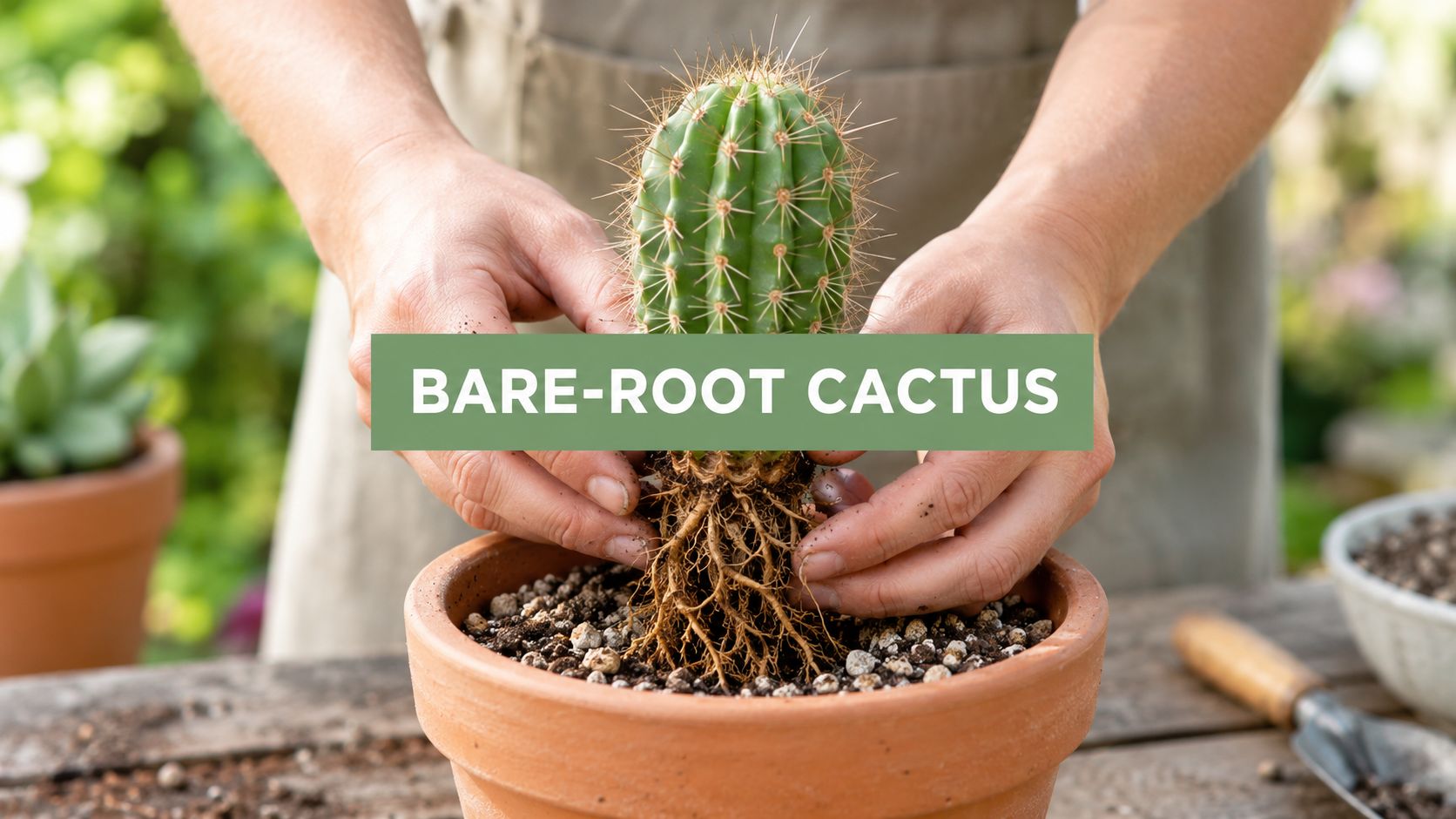
After the cut end has formed that nice, dry callus, it's finally planting time. Grab a small pot and fill it with the same kind of fast-draining cactus mix you use for the mother plant. A simple 50/50 mix of potting compost and pumice works perfectly.
Gently push the callused end about an inch deep into the soil—just enough to keep it standing upright. If it's a bit top-heavy and wants to wobble, you can use a few small rocks around the base to prop it up. If you'd like a more detailed visual guide, check out our general post on how to propagate cactus from cuttings.
Now, wait about a week before you even think about watering. Give it that time to settle in. From then on, water only when the soil is bone dry. Patience is key here. It can take several weeks, or even a couple of months, for strong roots to develop. To see if it's working, give the cutting a very gentle tug. If you feel resistance, pop the confetti—you've got roots and a brand new Old Man of the Andes
Troubleshooting Common Cactus Problems
Even a cactus as tough as the Old Man of the Andes can have its bad days. The good news is, these plants are great at telling you exactly what’s bothering them. Once you learn to read the signs, you're well on your way to keeping your cactus thriving for decades to come.
The most common mistake we see is growers loving their cactus a little too much—especially with the watering can. Overwatering is, without a doubt, the number one killer of cacti. Since Oreocereus celsianus is built for arid mountain life, its roots simply can’t tolerate sitting in soggy soil, which leads to root rot in a hurry.
Diagnosing and Treating Root Rot
Your first clue that you're overwatering usually shows up at the base of the plant. If the stem feels soft, squishy, or has a brownish, discolored look near the soil line, you're almost certainly dealing with root rot. The whole cactus might even start to lean as its foundation gives way.
If you catch it early, you might get away with just holding off on watering and letting the soil dry out completely. For more serious cases, though, you’ll need to perform a bit of emergency surgery. Just take a cutting from the firm, healthy top part of the cactus, let the cut end callus over for a week or two, and then replant it in fresh, bone-dry soil.
Expert Tip: The best defense is a good offense. Always use a pot with plenty of drainage and a very gritty soil mix. When in doubt, don't water. It is far, far easier for an Old Man of the Andes to bounce back from being too dry than from being too wet.
Battling Common Cactus Pests
That beautiful, thick wool that gives the Old Man of the Andes its name is also a five-star hotel for pests. Mealybugs and scale are the two most common culprits. They love to burrow deep into the white hairs, which can make them tough to spot until you have a real infestation on your hands.
- Mealybugs: These guys look like tiny, fuzzy white specks of cotton. You'll often find a sticky, clear substance they leave behind called honeydew.
- Scale: These insects look more like little armored bumps, usually brown or tan, that latch firmly onto the cactus stem.
For a minor invasion, you can dip a cotton swab in 70% isopropyl alcohol and dab the pests directly to kill them on contact. If the problem is more widespread, you may need a systemic insecticide applied to the soil to knock them out for good.
Addressing Light-Related Issues
Light is the other big piece of the puzzle, and your cactus will tell you loud and clear what it needs. Two of the most common issues are directly tied to how much sun it's getting.
Etiolation (Stretching): If your cactus starts to look thin, pale, and stretched out, it's literally reaching for more light. This process is called etiolation. You can't undo the stretched growth, but you can prevent more of it by moving your plant to a much sunnier spot.
Sunburn: On the flip side, a cactus that isn't used to intense sun can get a nasty sunburn. This shows up as ugly white, yellow, or brown scorched patches on its skin. To avoid this, always acclimate your plants to brighter light gradually over a week or two.
From Our Nursery to Your Doorstep
We get it. Ordering a plant online, especially a beautiful specimen like the Old Man of the Andes, requires a leap of faith. You want the excitement of a new arrival, not the stress of a damaged one. That's why we’ve poured years of experience into our packing and shipping process, ensuring your cactus makes the journey from our hands to yours safely.
It all starts with selection. We don’t just grab any plant off the bench; we hand-pick the healthiest, most robust, and most charismatic specimens specifically for shipping. Once we have the perfect cactus, the real work begins.
Our Secure Packaging Promise
Shipping an Oreocereus celsianus isn't like shipping just any cactus. The biggest challenge? That incredible woolly coat. We've developed a special packing method designed from the ground up to protect its signature fluff.
-
Gentle Cushioning: First, we wrap the entire column in a soft, breathable material. This acts as a gentle cushion, protecting the delicate wool without matting or crushing it.
-
Secure bracing: Next, the wrapped cactus is carefully placed and secured inside a sturdy shipping box. There’s no room for it to tumble or shift around, which keeps its tall, columnar shape perfectly intact during transit.
-
Priority Handling: Finally, we label every side of the box with "Live Plant - Handle with Care" so that every person who touches it knows exactly what’s inside.
The goal is simple: your cactus should arrive looking just as magnificent as it did the moment we picked it for you. We obsess over the details so you can unbox a happy, healthy plant.
The Old Man of the Andes has seen a huge surge in popularity since the 2000s, and for good reason. Its reputation as a "hard-to-kill" plant is well-earned, reflected in a 95% customer satisfaction rate for its easy care. It's a favorite for both seasoned collectors and people just looking for a truly unique gift.
Today, nurseries like ours ship thousands every year. A whopping 70% of sales are destined for gardeners in zones 8-10, where this tough cactus can handle outdoor winter temperatures down to a chilly 10°F. You can read more about its rising fame on Tonkadale.com.
Your Questions Answered
Even after covering the basics, a few questions always pop up when you're getting to know a new cactus. Let's tackle some of the most common ones we hear about the incredible old man of andes cactus so you can feel totally confident bringing one home.
How Fast Does This Cactus Grow?
Don't expect this one to shoot up overnight. The Old Man of the Andes takes its sweet time, and honestly, that's a huge part of its charm. You're looking at a very slow growth rate, usually just a few inches a year, even under perfect conditions. This makes it an amazing plant for a specific spot, as it won't be outgrowing its pot or its place in your garden anytime soon.
If you want to give it a little nudge during the growing season (spring and summer), make sure it's getting all the sun it can handle and stick to that "soak and dry" watering schedule. A little bit of diluted cactus fertilizer once or twice during this time can also encourage steady, healthy growth.
Our Take: Think of its slow growth as a feature, not a flaw. It's a living sculpture that you get to enjoy for years and years without the hassle of constant repotting.
Will It Flower Indoors?
Getting an Old Man of the Andes to bloom indoors is a real achievement, but it's not impossible! The main thing to know is that these cacti need to be quite mature to flower, a process that can take many years.
More importantly, you have to convince the plant it's back home in the Andes. This means giving it a distinct winter rest with cooler temperatures and very little water. Once spring arrives, blasting it with bright light and resuming a regular watering schedule can signal that it's time to produce those beautiful, purplish-pink flowers. While the woolly column is the main show, giving it perfect care might just get you a rare floral encore.
Is the White Hair on the Cactus Soft?
That thick, white coat looks just like soft cotton or wool, but you might be surprised by the texture. It’s actually more wiry and bristly to the touch. This "hair" is made of modified, hair-like spines that erupt from the areoles.
While it's certainly much softer than the sharp central spines lurking underneath, it’s not exactly fluffy. This woolly layer is a brilliant evolutionary adaptation, acting as a natural sunblock against harsh UV rays and as a winter coat against freezing mountain temperatures. It’s best to be gentle when handling the plant to keep this amazing, protective feature looking its best.
Ready to bring this woolly survivor home? The Cactus Outlet has healthy, beautifully grown specimens that are ready for their new home with you. Find your perfect Old Man of the Andes cactus in our shop today