


A lot of people meet the mexican fire barrel cactus the same way. They see one in a gravel bed, or in a nursery row, or in a photo online, and it stops them cold. The plant doesn’t read like ordinary greenery. It looks like a forged object, ribbed and armored, with red spines that seem to glow when the light hits from the side.
Then the practical questions arrive. Can I grow one in a pot? How big will it get? Why are some short and round while others are tall and columnar? And if I buy a large specimen, how do I handle something that’s beautiful, heavy, and very sharp?
I’ve spent years around cacti that demand respect before they ask for care, and this species is one of them. It rewards patience, restraint, and good placement. It also rewards buyers who understand what a mature plant needs before they bring one home.
Introducing a Living Sculpture The Mexican Fire Barrel
The first mature mexican fire barrel cactus I ever had to move taught me two lessons at once. First, this is one of the most dramatic cacti you can own. Second, the drama comes with logistics.
A small plant is already handsome. A large one changes a space. Set a mature specimen near stone, gravel, or a clean stucco wall and the whole area tightens up visually. The ribs give structure. The spines add color. The body holds itself with the kind of stillness only desert plants seem to have.
Botanically, this cactus is Ferocactus pilosus. Common names vary, and that’s part of the confusion people run into when shopping. But when growers talk about the mexican fire barrel cactus, they usually mean that striking red-spined plant from the Chihuahuan Desert that starts out rounded, then slowly becomes a tall column over time.
Practical rule: Don’t shop for this cactus as if you’re buying decor. Shop for it the way you’d choose a boulder, a specimen tree, or a piece of sculpture. Size, shape, and placement matter from the start.
Large specimens are where things get interesting. A mature fire barrel isn’t just a plant you tuck onto a windowsill. It may become the focal point of a patio, a desert bed, an entry court, or a bright interior space with real sun. That changes how you think about pot size, pathways, handling, and even unpacking after delivery.
This is the kind of cactus that asks you to slow down and do things properly. If you do, it can become the plant people ask about first every time they visit.
Identifying the True Fire Barrel Cactus
You spot a red-spined barrel cactus online, order it, and start planning around that dramatic color. Then the plant arrives and the proportions feel off, or the form stays squat when you expected a future column. That kind of disappointment usually starts with a name mix-up.
The plant people usually mean by mexican fire barrel cactus is Ferocactus pilosus. Common names wander from seller to seller, so the safest approach is to identify the plant by structure first and color second. This species is native to the Chihuahuan Desert in northeastern and north-central Mexico, including Coahuila, Nuevo León, San Luis Potosí, Tamaulipas, Durango, and Zacatecas. It grows on rocky limestone slopes at 1600 to 2000 meters, and Backyard Nature’s profile of Ferocactus pilosus also notes its slow pace, with plants taking many years to gain serious height.
What the plant looks like over time
Age changes this cactus more than many buyers expect.
A young fire barrel is often rounded, compact, and almost tidy. With time, that globe stretches upward into a column, like a stone urn gradually becoming a pillar. If you are shopping for a mature specimen, that shift matters because the silhouette is part of what you are paying for. A large plant is not an oversized seedling. It has a different presence.
That slow development is useful to understand before you buy. Small plants suit collectors who enjoy watching form change over the years. Large specimens suit gardeners and designers who want instant structure now, especially in courtyards, gravel beds, and entry plantings where a single cactus has to carry visual weight from day one.

Signature features that matter
The spines grab attention first, but good identification comes from reading the whole plant.
Look for these traits together:
- Strong vertical ribs: The stem has pronounced ribs that give the cactus a carved, architectural look.
- Dense red spines: The central and radial spines create the fiery color effect that gives the plant its common name.
- White bristling around the areoles: In pilosus, those wiry white hairs around the spine bases are an important clue.
- A taller, column-form habit with age: Mature plants rise upright instead of staying permanently round.
That white bristling trips people up. From a few feet away, it can make the cactus look slightly fuzzy, almost softened by light. Up close, it is still a heavily armed plant, and mature specimens deserve the same respect you would give any large, rigid, sharp architectural feature in the garden.
How it differs from other barrel cacti
The comparison buyers make most often is with the golden barrel. That is a useful starting point because both are ribbed, bold, and sculptural. The difference shows up in temperament and outline. Golden barrel tends to stay more rounded and symmetrical. Ferocactus pilosus develops a more upright, rugged profile, with red spines that read warmer and more dramatic from a distance.
If you want a broader species comparison before choosing a specimen, this guide to different types of barrel cacti helps sort out the main visual differences.
A healthy fire barrel looks firm, compact, and balanced. A stretched body, faded spine color, or a lean to one side usually points to long-term problems with light or handling.
Why identification affects buying
Correct identification matters even more once you step up from a small nursery plant to a substantial specimen. At that size, you are no longer choosing only for species. You are choosing for height, diameter, spine density, symmetry, and how the plant will sit in its container or in the ground.
This is one place specialty cactus nurseries earn their keep. A mature Ferocactus pilosus can be awkward to handle, expensive to ship, and hard to judge from a single photo. Buyers need to know whether they are getting a younger rounded plant or a specimen with the beginnings of that classic columnar stance. They also need realistic expectations about clearance from paths, doors, seating areas, and unloading space on delivery day.
With a cactus this substantial, identification is not just botanical correctness. It is part of good planning.
Creating the Ideal Desert Habitat at Home
You bring home a mature mexican fire barrel cactus, set it in the sunniest spot you have, give it a generous drink, and expect it to settle in. A month later, the body looks slightly dull, the soil still feels cool deep in the pot, and moving it even a few feet feels like shifting a spiny boulder. Large specimens teach this lesson quickly. Success depends less on routine care and more on building the right setting from the start.
A fire barrel is a desert plant, but for a big established specimen, “desert conditions” need to be translated into practical choices at home. Light has to be strong enough to hold the plant’s shape. Soil has to drain fast enough for a large root mass. The container has to be stable enough that the cactus does not become a tipping hazard on a patio or near an entry.
Start with light, because light sets the plant’s structure
Strong sun keeps this cactus compact, firm, and richly armored. Planet Desert’s growing information for fire barrel cactus notes that it performs best in full sun with 6 to 8 hours of direct light, and in a sharply draining mineral-heavy mix Planet Desert’s growing information for fire barrel cactus.
For a mature specimen, that matters even more than it does for a small plant. A large barrel under weak light does not just lose color. It can begin to favor one side, soften in growth, and look visually heavy at the top. The plant is storing water in its stem, so good light works like a traffic director. It helps the cactus use that stored moisture slowly and safely.
Indoor growers often overestimate light. A bright room is pleasant for people, but many fire barrels need the kind of direct sun that casts a hard-edged shadow for several hours. South-facing windows are usually the minimum. If the cactus came from greenhouse shade, increase sun exposure gradually so the skin does not scorch.
Soil should drain like a gravel wash after rain
Rich potting soil is the wrong instinct here. In habitat, these roots push through mineral ground that sheds water quickly and pulls fresh air back in soon after a storm.
Earlier cultivation guidance in the verified data describes a useful desert-style blend of 10% native soil, 45% washed sand or pumice, and 45% compost. The exact recipe matters less than the behavior of the mix. Water should pass through fast. The root zone should dry evenly, not stay wet at the bottom like a soggy sponge hidden under dry crumbs.
That last point causes a lot of trouble with large cacti in deep pots. The top inch can look bone dry while the lower half still holds moisture. For nursery customers buying substantial specimens, I usually compare the pot to a chimney. If air cannot move through the full column of soil, the roots near the base stay vulnerable much longer than the surface suggests.
A simple hand test helps. Squeeze a damp handful of mix. If it clumps into a dense ball and smears across your palm, it is too water-retentive. If it breaks apart with visible grit and coarse particles, you are closer to what this plant wants.
Water thoroughly, then give the roots real quiet time
Large fire barrels do best with a full soaking followed by a true drying cycle. Frequent light watering encourages the kind of shallow, uneven moisture that leads growers astray.
Use a simple rhythm:
- During warm active growth: Water thoroughly, then wait until the mix is dry through the root zone.
- During cooler periods: Water far less often and let the dry interval stretch.
- After repotting or moving a large specimen: Be extra cautious until you know how quickly that new setup dries.
One careful habit makes a big difference. Check moisture low in the pot, not only at the surface. A wooden skewer, moisture meter, or even the weight of the container can tell you more than a glance at the top dressing.
Mature barrel cacti usually suffer from damp roots long before they suffer from being kept a little too dry.
Choose a container that suits the plant’s size and behavior
A large mexican fire barrel cactus needs a pot that behaves like a good foundation under a stone fountain. It should be stable, broad enough to balance the body, and fitted with open drainage holes.
Terracotta helps because the walls breathe, but material is only part of the decision. Weight, width, and center of gravity matter just as much. A narrow decorative pot may look elegant on delivery day and become a nuisance once the plant leans slightly toward the sun or catches wind on a patio.
This is one area where mature specimens differ sharply from small nursery cacti. A young plant can be repotted casually on a bench. A sizable fire barrel may require two people, protective wrapping, and a clear path from truck to display spot. Buyers often focus on the cactus itself and forget to measure gates, stair landings, shelf depth, or the swing of a front door. Those details matter when you are receiving a substantial plant from a specialty nursery such as The Cactus Outlet, where safe handling and shipping of heavy specimens are part of the equation.
Placement should protect both the plant and the people around it
Spines change how you design the space. A mature fire barrel is not something to tuck beside a narrow walkway and admire from six inches away.
Place it where it has sun, airflow, and breathing room:
- Keep clear of foot traffic: Leave space around paths, chairs, pet routes, and doors.
- Use heat-reflective surfaces well: Stone, gravel, and masonry often suit the plant and the look.
- Avoid low wet pockets outdoors: Water that collects around the base can cause root trouble.
- Plan access before the cactus arrives: You should be able to rotate, clean around, or protect the plant during bad weather without a wrestling match.
Good placement also improves the display. A mature fire barrel has presence. Give it enough open space and it reads like living sculpture. Crowd it between furniture or soft leafy plants, and it starts to feel accidental rather than intentional.
Mexican Fire Barrel Cactus Care at a Glance
| Requirement | Specification | Pro Tip |
|---|---|---|
| Light | Full sun, ideally 6 to 8 hours of direct exposure | Increase sun gradually if the plant came from shade |
| Soil | Fast-draining, mineral-heavy cactus mix | If the lower half of the pot stays wet, increase grit and reduce organic matter |
| Water | Soak, then let soil dry fully | In cool weather, cut watering back hard |
| Pot | Drainage required, stable and heavy enough for balance | Wider, weightier pots are often safer for mature specimens |
| Placement | Bright, airy, and away from foot traffic | Leave room for unloading, turning, and maintenance |
| Winter care | Keep on the dry side | A dry cactus usually handles cool spells better than a wet one |
What beginners often misunderstand
Neglect is not the goal. Restraint is.
This cactus still needs informed choices about sun, drainage, spacing, and container size. Once those are right, care becomes much easier. With a large specimen, that preparation pays off twice. The plant stays healthier, and the whole experience of owning, moving, and showing it off becomes far more satisfying.
Advanced Care and Troubleshooting Common Issues
Once the basics are steady, the next challenges are usually practical. Handling a large plant. Reading stress signals correctly. Figuring out why a healthy-looking cactus still refuses to bloom. Those are the things that separate keeping a fire barrel alive from growing one well.

Repotting a large specimen without regretting it
Repotting a mature mexican fire barrel cactus is part horticulture and part rigging job. The plant is awkward, heavy, and covered in sharp spines that catch skin, clothing, and gloves.
Work in stages:
- Prepare the new pot first. Have the dry gritty mix ready before you touch the plant.
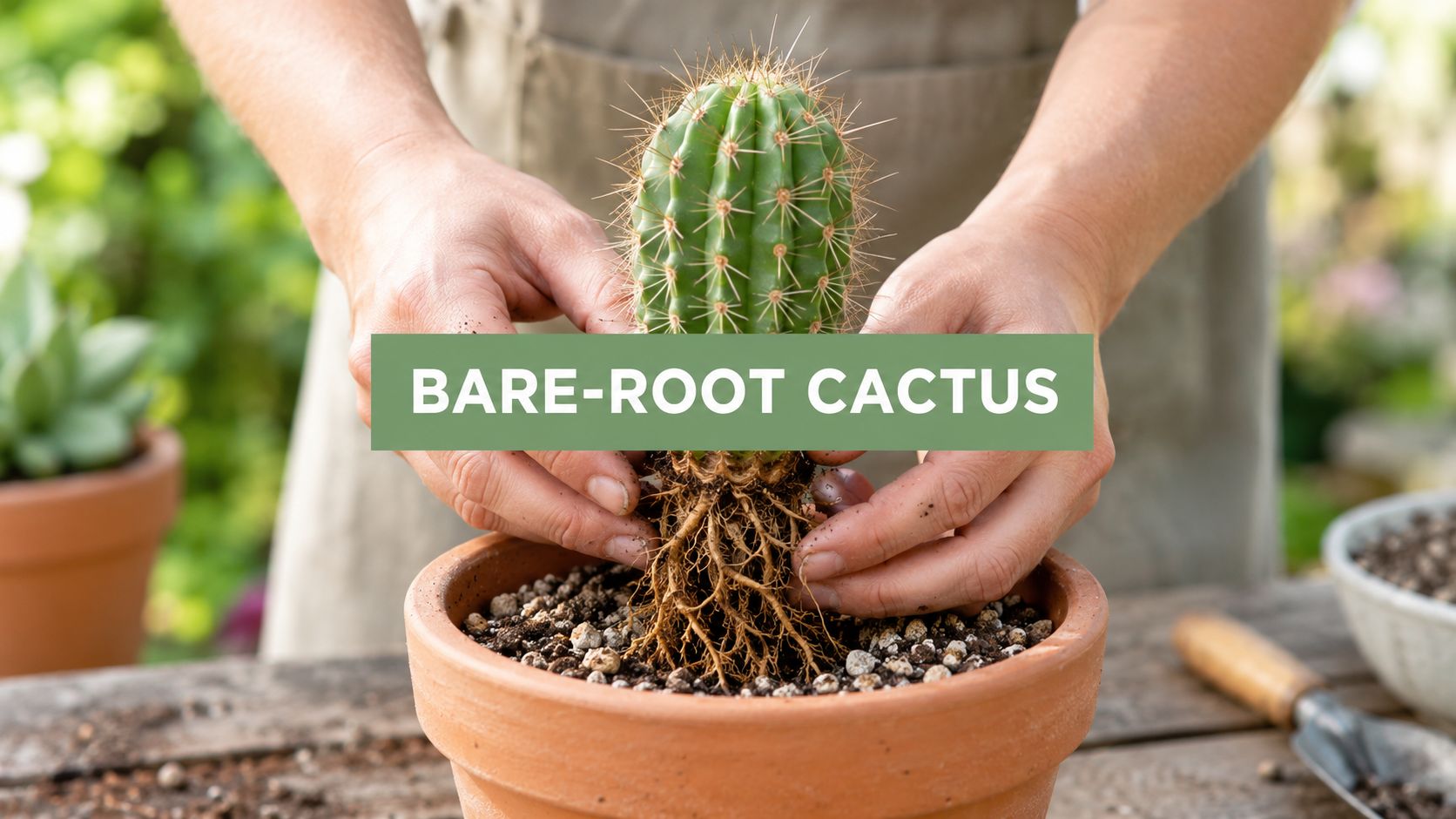
- Protect your hands and forearms. Thick gloves help, but folded cardboard, layers of newspaper, or a strip of carpet can help cradle the body.
- Lay the plant gently on its side if needed. Don’t try to lift a large specimen straight up if the pot is tight.
- Check the roots. Remove obviously damaged or dead material with a clean tool.
- Replant at the same depth. Don’t bury more stem than before.
- Wait before watering if roots were disturbed. Let any injuries dry first.
The mistake I see most often is haste. People start the job before they’ve planned where the cactus will rest, how they’ll turn it, or what will keep it from rolling.
Why your cactus isn’t flowering
This frustrates more growers than almost anything else. The plant looks healthy, the spines are handsome, and still no flowers.
The reason is usually simple, though not easy to fix. Blooms rarely appear on cultivated plants because they need a mix of maturity and consistent intense sun. The verified data notes that flowering often requires 3 to 5 years or more plus full sun conditions that indoor rooms or sheltered patios often fail to provide, as summarized by MyPlantIn’s care discussion for this species.
That’s why many retail photos create unrealistic expectations. The flowers are real. The average home setup often isn’t enough to produce them.
If flowering is your goal, treat survival and blooming as two different standards. A cactus can survive in bright conditions and still never receive enough light to bloom.
A ring of flowers near the top of a mature plant is one of the pleasures of the species, but it usually belongs to a plant that has had enough age and enough sun for long enough.
Later in the section, this visual walkthrough can help if you want to compare your setup and handling habits with a practical grower demonstration.
Pests and physical problems
This species is tough, but not invincible. Problems usually build from conditions, not bad luck.
Watch for these issues:
- Mealybugs: White, cottony clusters tucked around areoles or protected creases.
- Scale: Small fixed bumps that cling to the plant body.
- Root trouble: Softness or instability near the base often points to excess moisture.
- Sun shock after sudden exposure: A plant moved abruptly from shade into intense sun can scar.
For mealybugs or scale, many growers spot-treat with rubbing alcohol on a cotton swab. The key is early action and repeat inspection. For root trouble, speed matters more. Remove the plant from wet conditions and inspect the root zone.
Feeding and long-term stability
Most mature fire barrels don’t need heavy feeding. In fact, too much fertilizer tends to push the wrong kind of growth. You want firm, compact development, not soft expansion.
Large specimens also need rotation only if you’re growing in a pot and light comes mainly from one side. Even then, rotate cautiously. Once a cactus has settled into a strong directional posture, forcing perfect symmetry can do more visual harm than good.
A mature specimen should look settled, not over-managed.
Expanding Your Collection Through Propagation
A mature mexican fire barrel cactus changes how you think about propagation. Once you have lived with a substantial specimen, the question is rarely how to make more plants in theory. The main question is how to add future specimens without waiting a decade for every pot to gain presence.
For this species, propagation usually means choosing between offsets and seed. Both work. They serve different goals, and that distinction matters if you are building a collection with display-sized plants in mind.
The University of Arizona arboretum reference on propagation notes offsets as the faster route compared with seed. That lines up with what specialty growers see in the nursery. If your eye is on a plant with enough body to hold its own in a large container or desert bed, starting with existing mass saves years.
Offsets for growers who want size sooner
Offsets are the practical path for collectors who care about form and scale. A pup is already partway through the journey. It is like starting a masonry project with a shaped stone instead of a pile of sand.
That head start matters most with fire barrels. Small seedlings can be charming, but they do not create the same visual weight as an older plant with clear ribs, dense spination, and a settled outline.
A careful approach usually follows this order:
- Choose an offset with substance: Wait until the pup has enough size to support itself after separation.
- Make a clean separation: Use a sterile, sharp blade if the offset will not detach on its own.
- Let the cut surface callus fully: The wound needs to dry before it meets potting mix.
- Root it in a gritty medium: Use a fast-draining mix and hold back on water at first.
For a broader primer on handling detached pieces, callusing, and rooting, see this guide on how to propagate cactus from cuttings.
One point often gets missed. Not every mature fire barrel offsets generously, and large specimen growers know that a handsome solitary plant may stay solitary for years. If your aim is to build a group of bold, mature-looking plants for a patio, greenhouse, or sales bench, buying additional established specimens is often more realistic than waiting for one plant to populate the whole collection. That is especially true for collectors who want immediate structure and who are comfortable handling larger cactus shipments from a nursery experienced with substantial plants.
Seeds for patient growers
Seed growing offers a different reward. You see the plant’s whole life cycle, from a tiny green bead to a ribbed barrel with character. For species enthusiasts, that process is immensely satisfying.
It is also slow.
A seedling fire barrel develops on cactus time, not human decorating time. If your goal is a dramatic specimen beside an entry, in a large courtyard pot, or as the anchor of a serious collection, seed is the long road. Many hobbyists start seed for the pleasure of growing, then buy one or two larger plants so the display does not have to wait.
That mix of strategies works well in real collections. The mature specimen gives the composition weight now. The seedlings become the next generation.
Which method fits your goal
The choice becomes simpler when you match the method to the result you want.
| Method | Best for | Main advantage | Main tradeoff |
|---|---|---|---|
| Offsets | Collectors who want visible progress sooner | Starts with existing plant mass | Depends on having a parent plant that produces pups |
| Seeds | Growers who enjoy the full life cycle | Greater genetic variation and a rewarding long process | Takes much longer to reach display size |
Collectors sometimes assume propagation should replace buying. In practice, the two approaches complement each other. Propagation builds your bench for the future. Acquiring a well-grown plant gives your space an immediate focal point.
That is the nursery way to see it. Use offsets and seedlings as tomorrow’s stock. Use mature specimens when you want the look of a finished collection now.
Landscape Design and Indoor Display Ideas
You finally get a substantial Mexican fire barrel home, set it near the front walk or in a bright room, and realize the primary question is not how to keep it alive. It is how to give it the stage it deserves. A mature specimen has the visual pull of carved stone, except it changes with the light, the season, and every new spine.
Large plants need restraint around them. I see this often at the nursery. A customer buys a beautifully grown barrel, then surrounds it with busy pottery, several small succulents, and bright gravel mixes. The eye starts hopping from detail to detail, and the cactus loses its authority. With this species, simpler usually looks stronger.
Using a mature specimen in outdoor settings
Outdoors, a Mexican fire barrel reads best against materials that make its shape easy to see. Gravel, decomposed granite, pale stone, weathered concrete, and low masonry all work well because they do not compete with the ribs and spine color. The plant’s form is already dramatic. Your job is to frame it, much like a gallery wall frames a sculpture.
A few placements work especially well:
- Near an entry: One sizable specimen in a clean gravel bed creates a clear focal point.
- Beside stonework: The rounded body softens hard edges from steps, walls, or boulders.
- In a courtyard container: A broad, heavy pot gives height and presence without crowding the planting.
- Along a dry garden path: Use it where people can admire it from a safe distance, not brush past it.
Spacing matters more with mature barrels than many gardeners expect. A small plant looks tidy almost anywhere, but a fully developed specimen has real width, visual mass, and plenty of spine reach. Leave room around it so the plant can be appreciated from several angles and so no one clips it with a sleeve, a hose, or a shin.
That is one reason serious collectors often buy larger plants from specialty growers rather than waiting years for impact. A mature specimen already has the heft needed to hold an entry court, poolside terrace, or gravel garden bed on its own. If you want to browse examples of established cactus stock, The Cactus Outlet’s cactus plants for sale shows the kind of inventory that helps a display look finished much sooner.
Bringing a fire barrel indoors
Indoors, the same principle applies. Give the plant enough light, enough floor space, and a container that supports the body instead of competing with it. A mature fire barrel works like living architecture. It gives a room weight and rhythm, especially in bright spaces with clean lines and natural materials.

The strongest indoor presentations usually share a few traits:
- A simple pot: Mineral tones, clay, concrete, or matte finishes keep attention on the plant.
- Visible floor or shelf space around it: Empty space helps the round silhouette read clearly.
- Strong natural light: A sunny window, enclosed sunroom, or bright south or west exposure works best.
- Enough clearance for people and pets: Mature spines turn a tight corner into a bad placement.
If you are unsure about size, use the room the way a furniture designer would. A small barrel on a wide empty floor can feel lost, while an oversized specimen in a narrow hallway feels like an obstacle. The goal is presence with comfort.
One more point is easy to miss until you have handled large cactus for a while. Mature fire barrels are display plants, but they are also heavy, awkward, and armed. That affects where they should live. Choose a spot you can access for occasional rotation, cleaning, or repotting without dragging the plant through a tight doorway or brushing it past furniture. Good placement is not only about appearance. It is about making long-term care realistic.
A well-placed Mexican fire barrel does not need much company. It needs light, breathing room, and a setting that lets its age and structure show.
Your Guide to Buying From The Cactus Outlet
Buying a mexican fire barrel cactus online gets easier once you know what to inspect. Start with the plant itself. A quality specimen should feel firm, show strong spine coverage, and have no soft areas near the base. The body should look stable and well-grown, not stretched or bruised.
Large specimens add another layer. You’re not just buying a species. You’re buying handling, packing, and transit risk. A mature fire barrel has weight, awkwardness, and spines that can snag packaging if the plant shifts in the box. Good shipping is mostly about preventing movement.
Look for these signs when choosing a seller:
- Plant stability: Mature plants should be secured so they can’t roll or bounce in transit.
- Dry shipping conditions: Cacti travel better on the dry side than in damp media.
- Protected spine zones: Packing should reduce abrasion against box walls.
- Clear after-arrival guidance: Buyers need to know when to pot and when to wait before watering.

If you’re comparing shopping options, The Cactus Outlet’s cactus plants for sale gives one example of a specialty retailer focused on cactus inventory rather than general houseplants. That matters because specialty cactus sellers usually account for the needs of heavy, spiny plants in a way general plant shippers may not.
When your plant arrives, don’t rush. Unpack carefully, inspect the base and body, and give the cactus time to settle before pushing it into a new potting routine. With large specimens, calm handling is part of good plant care.
Frequently Asked Questions
A mature mexican fire barrel cactus raises a different set of questions than a small nursery pot cactus. Once the plant is large enough to anchor a patio, entry, or bright interior room, placement, safety, and long-term appearance matter as much as basic survival.
Is the mexican fire barrel cactus safe around pets or children
The concern is the spines. They are sharp, crowded, and positioned at just the wrong height for a curious hand or nose. Treat this cactus like you would a hot grill in an outdoor kitchen. Beautiful to have nearby, but best placed where people and pets do not brush past it.
How fast does it grow when young
Slowly enough that patience becomes part of the experience. This is not a plant that changes shape from season to season. If you want the bold, sculptural look now rather than years from now, buying a mature specimen is often the practical choice.
Why are my spines not as red as the photos
Light is usually the first thing to check. In strong sun, the spine color tends to develop more richly, while lower light often leaves the plant looking duller or less fiery. A well-grown specimen should look sun-finished, almost like the color has been baked in.
Can it live indoors
Yes, if the light is strong enough. A bright room near a window can keep many houseplants happy, but this species wants the kind of exposure that feels closer to a sunroom or a very intense south-facing window. Without that, it may hold on for a while but lose the compact, sturdy look that makes mature plants so striking.
What’s the biggest mistake people make
Wet roots sitting too long in heavy soil. A mexican fire barrel stores water in its body the way a camel stores reserves for a hard trip, so it does not need constant replenishing. What it does need is a fast-draining mix and enough drying time between waterings.
How is it different from a golden barrel cactus
A mexican fire barrel cactus usually grows more upright and carries stronger red to reddish-orange spines, which gives it a tougher, hotter look. Golden barrel tends to stay rounder and reads as softer and more symmetrical in a planting. Side by side, one feels like a glowing ember and the other like a golden pincushion.
If you’re ready to add a dramatic specimen to your collection, The Cactus Outlet offers large cacti and succulents for collectors, gardeners, and designers who want plants with real architectural presence.