


You’re probably here because you saw a cactus labeled fire barrel cactus and fell in love with the color before you understood the plant. That happens all the time. A nursery tag says “fire barrel,” the spines glow red in the sun, and suddenly you’re deciding whether it belongs by the front walk, in a gravel bed, or in that bright window you’ve been trying to style with something architectural.
Then the confusion starts.
One seller shows a solitary barrel with dense red spines. Another shows a clumping plant under the same common name. A third uses the name for a different barrel cactus entirely. For growers, collectors, and designers, that mix-up matters. The wrong ID can lead to the wrong placement, the wrong winter expectations, and disappointment that could’ve been avoided with a closer look.
The good news is that fire barrel cacti are very growable once you understand your specific plant. Think of this guide as part field botany, part practical nursery advice. I’ll help you sort out the species confusion first, then make care simple enough to apply whether you’re planting in the ground or growing in a pot.
The Allure of Living Sculpture
In the desert, a mature fire barrel cactus doesn’t look delicate. It looks deliberate. The body is ribbed like a rain barrel built by nature, the spines catch the light like heated wire, and the whole plant sits with the calm confidence of something that knows how to survive hard weather.

That wild look is what draws people in. A fire barrel cactus brings the same effect into a garden or bright interior. It acts like living sculpture, with strong geometry, bold color, and a presence that doesn’t need a lot of companion plants to make an impact.
Why this cactus gets attention
The plant most often associated with the name in the American Southwest, Ferocactus wislizeni, can reach 2 to 10 feet tall and 18 to 33 inches in diameter, according to the U.S. Forest Service profile for Ferocactus wislizeni. That same source places it in the Sonoran Desert regions of southern Arizona and Mexico, and notes that it grows in USDA zones 9 to 11 and tolerates temperatures down to 25°F (-4°C).
Those numbers tell you something important. This isn’t a tiny windowsill novelty by nature. Even when young, it has the proportions and visual weight of a plant designed to anchor a space.
Fire barrel cacti work best when you treat them less like decor and more like structure. They’re closer to a boulder than a bouquet.
Why people keep them
People buy this cactus for different reasons, but the attraction usually falls into one of three buckets:
- Form: The heavy ribs and dense spines create a clean, sculptural silhouette.
- Color: Red or reddish spines give the plant a warm, almost glowing look in strong light.
- Resilience: It’s built for heat, dryness, and bright exposure.
That combination is rare. Many striking plants need constant intervention. A well-grown fire barrel cactus asks for the opposite. It rewards restraint.
What trips people up
Most growers don’t fail because the plant is difficult. They fail because the label is vague. “Fire barrel cactus” can refer to different Ferocactus species, and those species don’t all grow the same way.
That’s where confidence starts. Once you can identify which fire barrel you’re growing, the care becomes much more intuitive.
Identifying the True Fire Barrel Cactus
The biggest mistake I see isn’t overwatering. It starts earlier, at the nursery bench or product page. People assume fire barrel cactus refers to one exact species. In practice, the name gets applied to more than one plant, especially Ferocactus pilosus and Ferocactus gracilis.

That confusion matters because growth habit changes how you use the plant. A solitary barrel reads differently in a garden setting than a clumping one. A narrower cactus fits a pot or tight bed differently than a broader colony-forming specimen.
The two names buyers most often mix up
The most useful distinction is this: cactus grow guide notes that confusion between Ferocactus pilosus and Ferocactus gracilis is common. The same source says F. pilosus is known for a clumping habit and can grow up to 4 feet wide, while F. gracilis is typically narrower and solitary.
If you remember only one identification rule, remember that one.
Field shortcut: If the plant tends to form a clustered mass over time, think F. pilosus first. If it stands alone as a single, upright barrel, F. gracilis is often the better fit.
Fire Barrel Species Comparison
| Feature | Ferocactus pilosus (Mexican Fire Barrel) | Ferocactus gracilis (Fire Barrel Cactus) |
|---|---|---|
| Growth habit | Often clumping | Usually solitary |
| Overall form | Broader presence in the landscape | Narrower, more upright profile |
| Spine impression | Fiery red spines are a key selling trait | Often sold under the fire barrel name, but form differs |
| Best use | Strong in pots or where a colony effect is welcome | Strong in xeriscapes and focal plantings |
| Buyer concern | Can spread wider than expected | Often mislabeled, so shape surprises buyers |
What to look for in person
Spine color gets attention first, but it shouldn’t be your only clue. Nurseries often market by color because that’s what sells. Botanically, form tells you more.
Use this checklist when you inspect a plant:
- Check the body shape: A solitary cactus with a more columnar tendency points you toward F. gracilis.
- Look at the base: If small heads are forming around the main stem, that’s a strong clue for F. pilosus.
- Think about mature spread: A plant that stays visually narrow suits tighter spaces. A clumping plant needs room.
- Read labels skeptically: Common names are convenient, not precise.
For buyers who want a broader overview of the genus, this guide to different types of barrel cacti helps place fire barrels in the larger barrel cactus group.
Why the distinction changes care decisions
The species question isn’t just botanical trivia. It affects placement and expectations.
A clumping F. pilosus can become a dense, wide feature. That makes it useful in a pot display, a gravel island bed, or anywhere you want a fuller mass. A solitary F. gracilis reads more like a vertical accent. It’s cleaner, more architectural, and often easier to place as a focal point in a minimalist desert design.
There’s also a safety angle. A narrow solitary cactus can still be fierce, but a wide clumping specimen near a path creates more contact points for people, pets, and sleeves.
A practical way to choose
If your goal is a bold specimen with a clean silhouette, choose the solitary look. If your goal is a dramatic, fiery cluster that feels fuller and more rugged, choose the clumping habit.
Neither is the “wrong” fire barrel. The problem is buying one while expecting the other.
Creating the Ideal Desert Environment at Home
Set a fire barrel cactus on a bright patio, water it like a leafy houseplant, and trouble starts fast. Put that same plant in sharp sun, gritty soil, and a pot that dries quickly, and it settles in like it has found home. That contrast explains nearly everything about successful care.

The goal is not to copy a desert perfectly. The goal is to copy desert timing. Fire barrel cacti want intense light, brief access to water, and long dry intervals that let the roots breathe.
That matters even more if your plant was sold under the broad label "fire barrel cactus." A solitary Ferocactus gracilis and a clumping F. pilosus respond to the same basic rules, but they do not always behave identically in a container or outdoor setting. F. gracilis usually suits a hotter, brighter, drier setup with less crowding around the stem. F. pilosus, especially as it forms offsets, can trap more shade and reduce airflow at the base, so watering discipline becomes even more important.
Light drives shape, color, and watering rhythm
A fire barrel cactus uses sunlight the way a solar charger uses a full battery cycle. In strong light, the body stays compact, the spines develop better color, and the plant can process water more safely. In weak light, growth stretches, the plant loses some of its firm symmetry, and damp soil stays wet longer because the cactus is not using that moisture efficiently.
Outdoors, place it where it receives as much direct sun as your climate allows. Indoors, start with the brightest south or west-facing window available.
If the cactus came from greenhouse shade or a dim shop shelf, do not move it straight into harsh afternoon sun. Acclimate it over a week or two. Sunburn on cactus skin is a lot like a bad scorch on fruit. The tissue does not return to its original look.
For general cactus culture, the Missouri Botanical Garden's care guidance for cacti and succulents gives a reliable baseline: bright light, careful watering, and fast drainage all work together rather than separately.
Soil needs open space, not just "dryness"
"Well-drained" confuses new growers because many commercial mixes feel dry on top while staying soggy lower down. Fire barrel roots need a mix with air pockets between the particles. A loose mineral mix works like a colander. Water passes through, oxygen returns quickly, and the roots avoid sitting in stale moisture.
A heavy peat-based potting soil acts more like a wet kitchen sponge. It can stay damp near the center long after the surface looks ready for another watering.
A practical home mix often includes a cactus base amended with pumice, lava rock, coarse grit, or another mineral component. The exact recipe matters less than the behavior. After watering, the mix should drain fast and then dry steadily from top to bottom. If you are unsure how your potting setup should look and feel, this guide on how to repot cacti without trapping excess moisture around the roots shows the kind of soil structure these plants prefer.
Water deeply, then let the plant rest
Overwatering is usually a frequency problem, not a volume problem. A fire barrel cactus does better with a thorough soaking followed by a real dry period than with small sips every few days.
Dormancy confuses growers here. In cool weather or lower light, the cactus shifts into a low-use season. A phone in power-saving mode is a good comparison. It is still on, but it is consuming much less energy. Your cactus is still alive and active at a basic level, yet it is using far less water than it does in warm bright months.
Use the soil, not the calendar, as your guide.
- In active growth: Water only after the mix has dried thoroughly.
- In cool or dim conditions: Extend the dry period noticeably.
- If you are unsure: Wait a few more days. Barrel cacti tolerate caution better than constant moisture.
Wrinkling from underwatering usually develops gradually and is easier to correct. Rot from prolonged wetness often starts out of sight.
Pots, planting sites, and airflow
Containers give you more control, which is helpful if winters are cold, rain is frequent, or you are still learning your plant's pace. Terracotta is often useful because it releases moisture through the pot wall and helps the mix dry more evenly. In-ground planting works well only where drainage is naturally sharp and winter wet is limited.
Placement has practical consequences.
- Choose high ground or raised beds outdoors. Low spots collect runoff.
- Keep air moving around the plant. Crowded corners stay damp longer.
- Give clumping plants more elbow room. A mature F. pilosus cluster can create its own little pocket of shade and reduced airflow near the base.
- Leave safe clearance from paths and doors. A barrel cactus placed too close to foot traffic becomes a hazard, no matter how beautiful it looks.
If you want a visual walkthrough of how cactus growers set up light, soil, and watering habits, this video is useful:
Temperature depends on species, size, and moisture
Heat is rarely the problem if the roots are healthy and the plant has adapted to sun. Cold is trickier. A dry cactus can handle lower temperatures than a wet one, and a plant in the ground often behaves differently from one in a pot because container roots chill faster.
This is another point where species ID helps. A buyer expecting one generic "fire barrel cactus" may miss the fact that a solitary F. gracilis in a small pot can respond differently to cold and rain exposure than a broader clump of F. pilosus planted in a warm gravel bed. The name on the tag shapes where the plant should live.
Good fire barrel care comes down to one habit. Resist the urge to fuss. Give the plant sun, drainage, and patience, and it will do what desert cacti have done for ages: grow slowly, stay firm, and reward restraint.
Potting Repotting and Propagation
Handling a fire barrel cactus is partly horticulture and partly logistics. The plant is heavy for its size, the spines don’t forgive rushed movements, and the round body can shift unexpectedly while you work. A calm setup matters more than strength.

Choosing the pot
Terracotta is often a good match because it breathes and helps the mix dry more evenly. Plastic works too, but it usually holds moisture longer, so you need to be more disciplined about watering. Either way, drainage holes aren’t optional.
Keep the pot proportional. A fire barrel cactus doesn’t need a huge volume of unused wet soil around its roots. Oversized pots look generous but behave dangerously.
How to repot without getting skewered
Repotting goes smoothly when you prepare the materials first. Don’t pick up the cactus and then start looking for gloves or soil.
Use this sequence:
- Prepare the new pot first. Add a base layer of dry gritty mix.
- Protect your hands and forearms. Thick gloves help, but for larger plants I also like folded newspaper, cardboard, or a strip of old carpet wrapped around the body.
- Tip the old pot sideways. Ease the root ball out rather than pulling upward.
- Inspect the roots. Remove obviously dead or damaged material with a clean tool.
- Set the cactus at the same depth. Don’t bury the stem higher than it was before.
- Backfill and stabilize. Press the mix in enough to support the plant, but don’t compact it hard.
- Wait before watering. If any roots were disturbed, a short dry rest helps them settle.
If you want a more general walkthrough on safe handling technique, this guide on how to repot cacti is a practical companion.
Wrap the plant, move slowly, and think about where the spines will go if the cactus rolls. Most accidents happen in that split second.
Seeds versus offsets
Propagation depends partly on which species you have. Solitary types don’t offer offsets the way clumping types do, so seed growing may be your main route. Clumping plants give you the bonus option of separating pups.
The verified data gives useful benchmarks. RHS-linked growing details state that seed germination runs about 70 to 85% at 25 to 30°C, while offsets root at about 85% in a 1:1 mix of perlite and coarse sand at 24 to 28°C.
Propagating from seed
Seed growing takes patience, but it’s satisfying if you enjoy watching structure develop from the start.
A good seed setup usually includes:
- A shallow tray or pot: Wide is more useful than deep early on.
- A fine, gritty medium: The surface should stay airy, not crusty.
- Warmth: The cited germination range is your target.
- Bright light without cooking the tray: Young seedlings need light, but not scorching stress.
Propagating from offsets
Offsets are simpler for many growers because you’re starting with a piece of plant that already has structure. Remove the pup cleanly, let the cut surface dry and callus, then place it in a gritty rooting mix.
Don’t rush the first watering. Freshly removed offsets need time to seal. A little patience at this stage prevents a lot of mush later.
Troubleshooting Common Pests and Diseases
A healthy fire barrel cactus usually doesn’t invite many problems. Trouble starts when conditions stay too damp, airflow is poor, or the plant goes too long without inspection. The strongest defense is regular observation.
Root rot first, always
If a fire barrel cactus suddenly looks dull, unstable, or soft near the base, suspect rot before anything else. A rotting cactus often loses its firm, pressurized feel. The body may lean, discolor, or develop a sunken area near the soil line.
Your response should be immediate:
- Stop watering at once: Wet soil keeps feeding the problem.
- Unpot the plant if needed: You need to see the base and roots clearly.
- Remove compromised tissue: Use a clean blade and cut back to healthy firm tissue if salvage is possible.
- Reset in dry gritty mix: Don’t return the plant to the same soggy conditions.
Mealybugs and scale
These pests are easier to manage when caught early. Mealybugs often show up as white cottony bits tucked near areoles or in protected creases. Scale insects look more like small fixed bumps.
Try the least aggressive option first:
- Spot clean early infestations: A cotton swab with isopropyl alcohol can remove small clusters.
- Isolate the plant: Keep pests from spreading to nearby succulents.
- Check hidden areas: Spine bases and shaded crevices are favorite hiding spots.
- Repeat inspections: One cleaning rarely solves the whole problem.
Prevention is simpler than treatment
Fire barrel cacti stay healthier when the basics stay consistent. Give them bright light, rapid drainage, and space around the plant so moisture doesn’t linger. Don’t crowd them with leafy companions that trap humidity at the base.
For gardeners who want a broader framework for understanding common pests and diseases, that reference can help you think diagnostically about plant problems before they become severe.
Most cactus problems look sudden to the owner, but they started earlier. The plant was signaling stress before it collapsed.
Styling Your Fire Barrel Cactus Indoors and Out
A fire barrel cactus can make a patio corner or sunny room feel finished in a single move. Set one in the wrong spot, though, and it looks like a stranded nursery plant. Set it well, and it reads like living sculpture.
That difference usually comes down to two things. First, you need enough open space for the round body and colored spines to register clearly. Second, you need to know which "fire barrel cactus" you have, because a solitary plant and a clumping plant create very different visual effects.
Using it outdoors as a focal point
Outdoors, give the cactus a stage, not a crowd. Gravel, decomposed granite, and stone mulch work like a plain frame around a painting. They keep the eye on the plant’s ribs, spine color, and silhouette instead of scattering attention across too many textures.
A solitary plant such as Baja fire barrel often works best as a clear anchor in a dry garden bed. A clustering type needs more lateral room, because the design impact comes from the mass of several heads together rather than one strong globe.
Good companions share the same bold, dry-climate language:
- Agaves: Their broad rosettes set up a strong contrast against the barrel shape.
- Aloes: These add height and seasonal flowers without visually swallowing the cactus.
- Low mounding succulents: They soften the ground plane near the base.
- Boulders and rock accents: These echo the cactus’s visual weight and make the planting feel settled.
Keep foot traffic in mind. Fire barrel cacti are not plants for the edge of a narrow path or beside a door swing. The spines may glow beautifully in backlight, but they still behave like fishhooks.
Indoors, style starts with realism
Indoor styling only works if the plant can live there. A fire barrel cactus near a dim wall may match the furniture for a month, then slowly lose shape because the setting asks a desert plant to behave like a shade-tolerant houseplant. The result is usually weak growth, fading color, and a plant that looks apologetic instead of architectural.
A bright window is the starting point. The container comes after that.
The NC State Extension plant profile for Ferocactus gracilis notes its strong sun preference and striking ornamental use, which lines up with what long-time growers see indoors. The closer you can get to outdoor-style brightness, the more natural and compact the plant will look.
How to make an indoor placement look intentional
Indoors, restraint usually gives the best result. The cactus already supplies drama through form and spine color, so the surrounding choices should calm the scene rather than compete with it.
A few guidelines help:
- Choose a simple pot: Terracotta, sand, charcoal, or other mineral tones work well.
- Leave open space around the plant: Empty space lets the body shape read cleanly.
- Place it at the brightest window available: South or west exposure is often the strongest option.
- Use a stand or low plinth carefully: Raising the plant can improve sightlines, but only where people will not brush against it.
- Skip crowded mixed planters: Fire barrel cacti look better as a specimen than as one more element in a busy pot.
If you are considering a specimen with intense red spines, a Baja fire barrel cactus from The Cactus Outlet suits a clean container and a simple backdrop especially well.
Match the species to the design goal
Identification proves useful in a practical, visual way. Plants sold as "fire barrel cactus" are not always interchangeable.
Ferocactus gracilis usually gives you a more solitary, disciplined form. It fits modern courtyards, entry pots, and interiors where you want one strong geometric subject.
Ferocactus pilosus, often called Mexican fire barrel, can develop into a taller columnar barrel with dense red spines and a more rugged presence. In warm outdoor settings, it often looks best where there is enough room for that height and intensity to build over time.
For buyers, this matters. Someone wanting a single sculptural accent for a minimalist patio may prefer the cleaner look of F. gracilis. Someone after a hotter, more dramatic desert composition may be happier with F. pilosus. Many generic guides blur that distinction, but the styling result changes with the species.
One design rule that solves many mistakes
Let the cactus be the loudest voice.
If the spines are vivid, keep the pot quiet. If the plant is large, keep nearby companions low and simple. If the body is solitary and symmetrical, do not hide that symmetry behind tangled foliage or patterned containers.
Good styling with fire barrel cacti works like good lighting in a room. You notice the subject first, and the support elements only after that.
Your Cactus from The Cactus Outlet
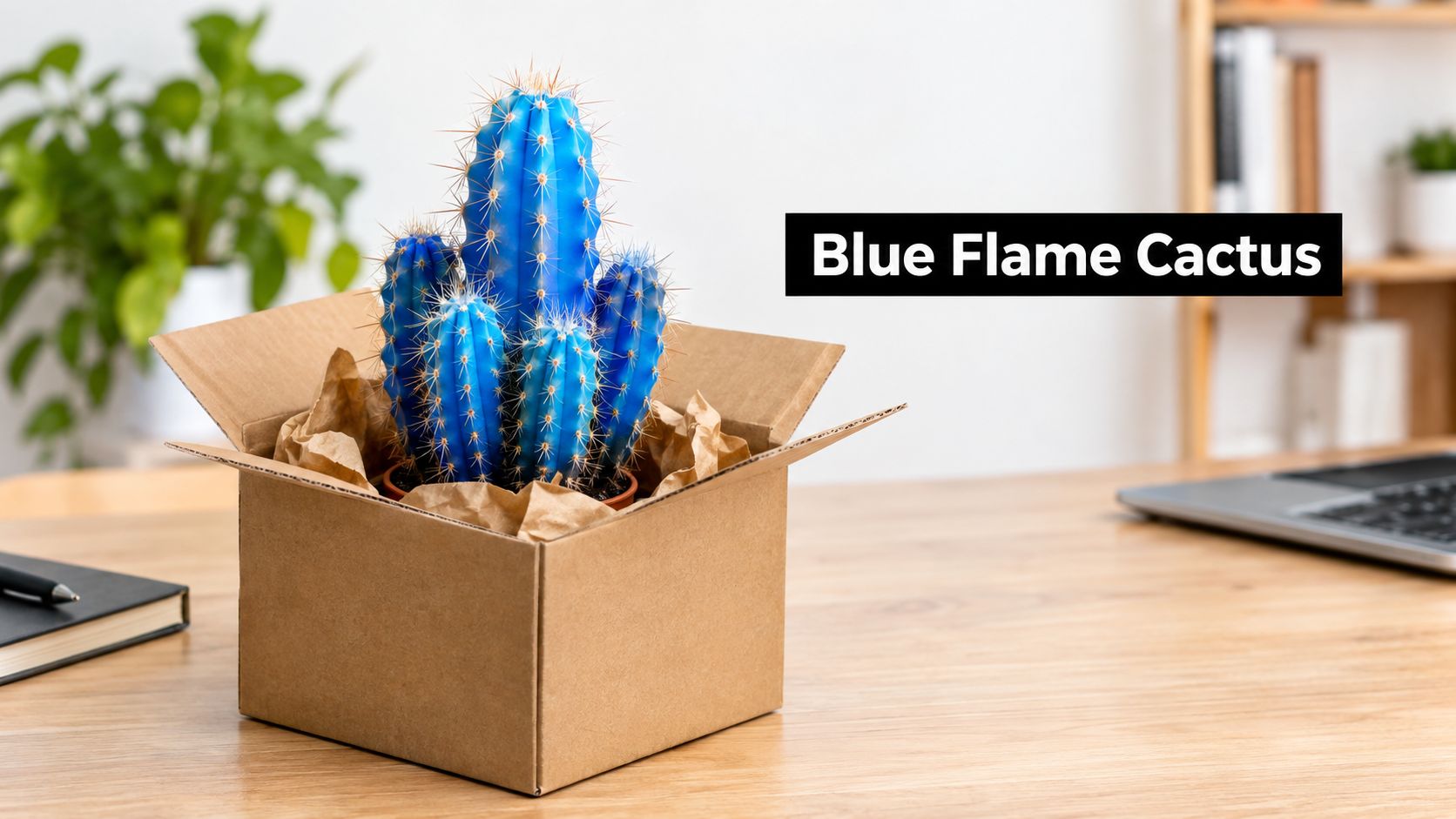
Buying a large cactus online makes some people nervous, and that’s understandable. These plants are heavy, spiny, and not shaped like ordinary nursery stock. A good delivery experience depends on two things: healthy pre-shipment plant selection and packaging that keeps the body stable in transit.
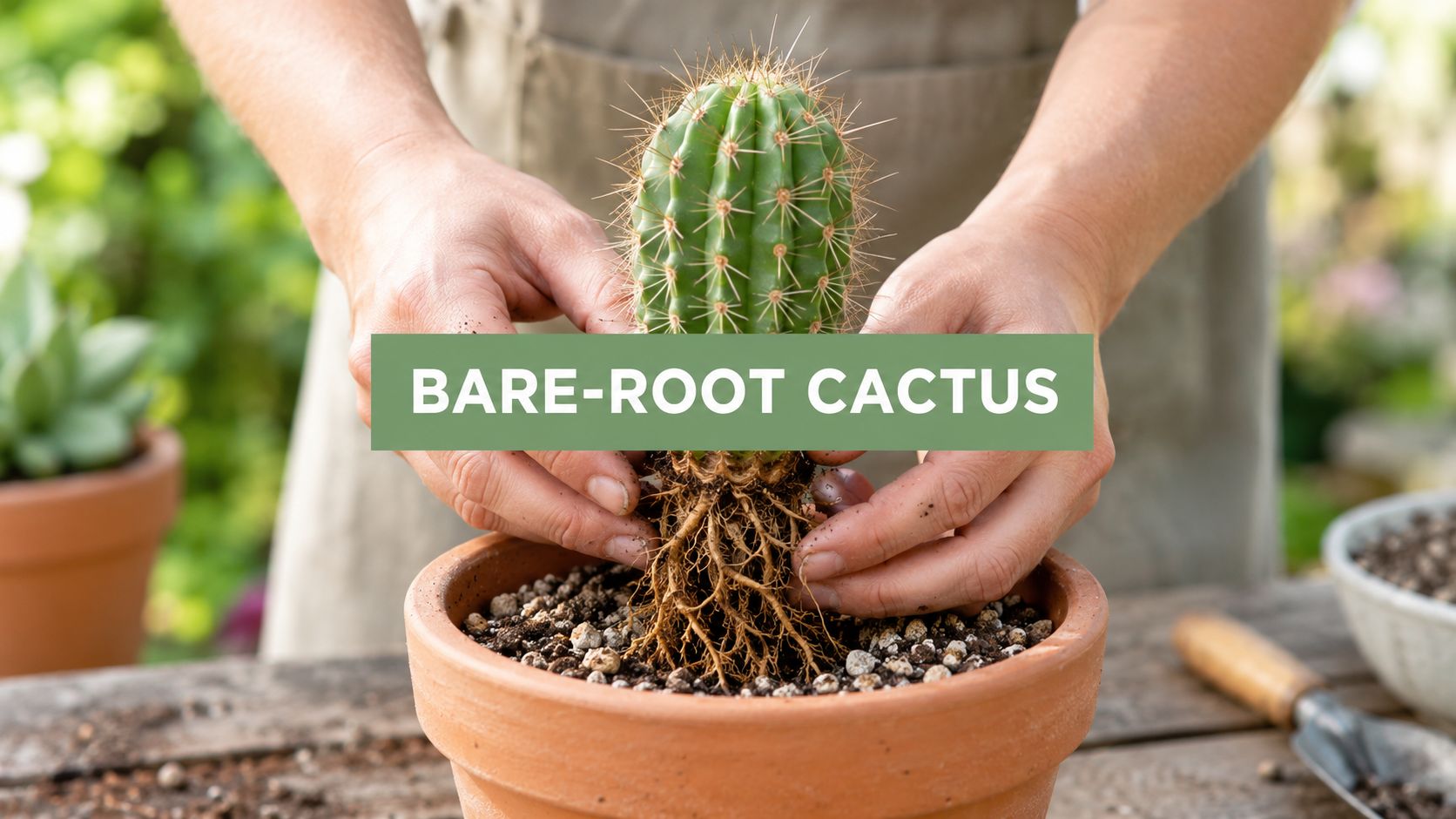
When your cactus arrives, inspect it before you do anything else. You want a firm stem, intact roots if shipped bare-root, and no soft areas near the base. Cosmetic spine disturbance can happen in shipping with any heavily armed cactus, but softness, odor, or obvious wet damage deserve closer attention.
For a plant sold specifically in this category, the Baja Fire Barrel product listing gives buyers a concrete example of how this cactus may be offered through a specialty cactus retailer. That matters because specialty sellers tend to understand that these plants need different handling than leafy houseplants.
A few shipping habits generally signal competent cactus packing:
- The plant is immobilized well: Movement is the enemy.
- The root zone is protected: Bare-root shipping can be very effective when done carefully.
- Spines are buffered from the box walls: This reduces body shift and skin damage.
- The cactus is kept dry in transit: Moisture during shipping creates avoidable risk.
After unpacking, don’t rush to pot and water immediately if the plant arrived bare-root. Let it rest, assess it, and then plant it into a dry, gritty mix. Cactus shipping succeeds when the seller respects the plant’s structure and the buyer respects the transition.
Frequently Asked Questions About Fire Barrel Cacti
Is the fire barrel cactus the same as fishhook barrel cactus
Not always. Common names overlap badly in cactus culture. Some people use “fire barrel cactus” for red-spined forms in Ferocactus, while Ferocactus wislizeni is also widely known as fishhook barrel cactus or candy barrel cactus. Always check the botanical name, not just the common name.
Which is better for a container, Ferocactus pilosus or Ferocactus gracilis
It depends on the look you want. F. pilosus is often chosen when people want a fuller clumping effect. F. gracilis usually suits growers who want a more solitary, upright specimen.
Why is my cactus leaning
Leaning can come from uneven light, root problems, or instability in the pot. If the body is still firm, check whether it’s stretching toward the light or sitting loosely in the mix. If the base feels soft, treat it as a health problem first.
Can I grow a fire barrel cactus in a regular house
Yes, if you can provide strong light and stay disciplined with watering. Bright windows and, in some homes, supplemental grow lights make the biggest difference. Indoors, people usually lose these cacti from excess moisture, not from underwatering.
Are fire barrel cacti safe around pets and children
The main issue is physical injury from spines. Some verified growing notes also mention mild saponins for F. gracilis, so caution is sensible. In practical terms, place the plant where curious hands, tails, and passing legs won’t meet it by accident.
How often should I repot one
Only when the cactus has clearly outgrown the container, become unstable, or needs fresh mix after a long stay in the same pot. Fire barrel cacti don’t need frequent disturbance. They prefer steady conditions.
If you’re ready to add one to your collection, The Cactus Outlet offers large cacti and succulents for growers, collectors, and designers who want desert plants with real presence.