

So, you're looking to buy a saguaro cactus. The first question is, where do you even start? Your best bet depends heavily on where you live. If you're in the Southwest, especially Arizona, you'll find them at specialized nurseries. For everyone else, reputable online retailers are the way to go.
Let's walk through each option so you can find a trustworthy seller and the perfect cactus for your home.
Your Guide to Finding the Perfect Saguaro Cactus
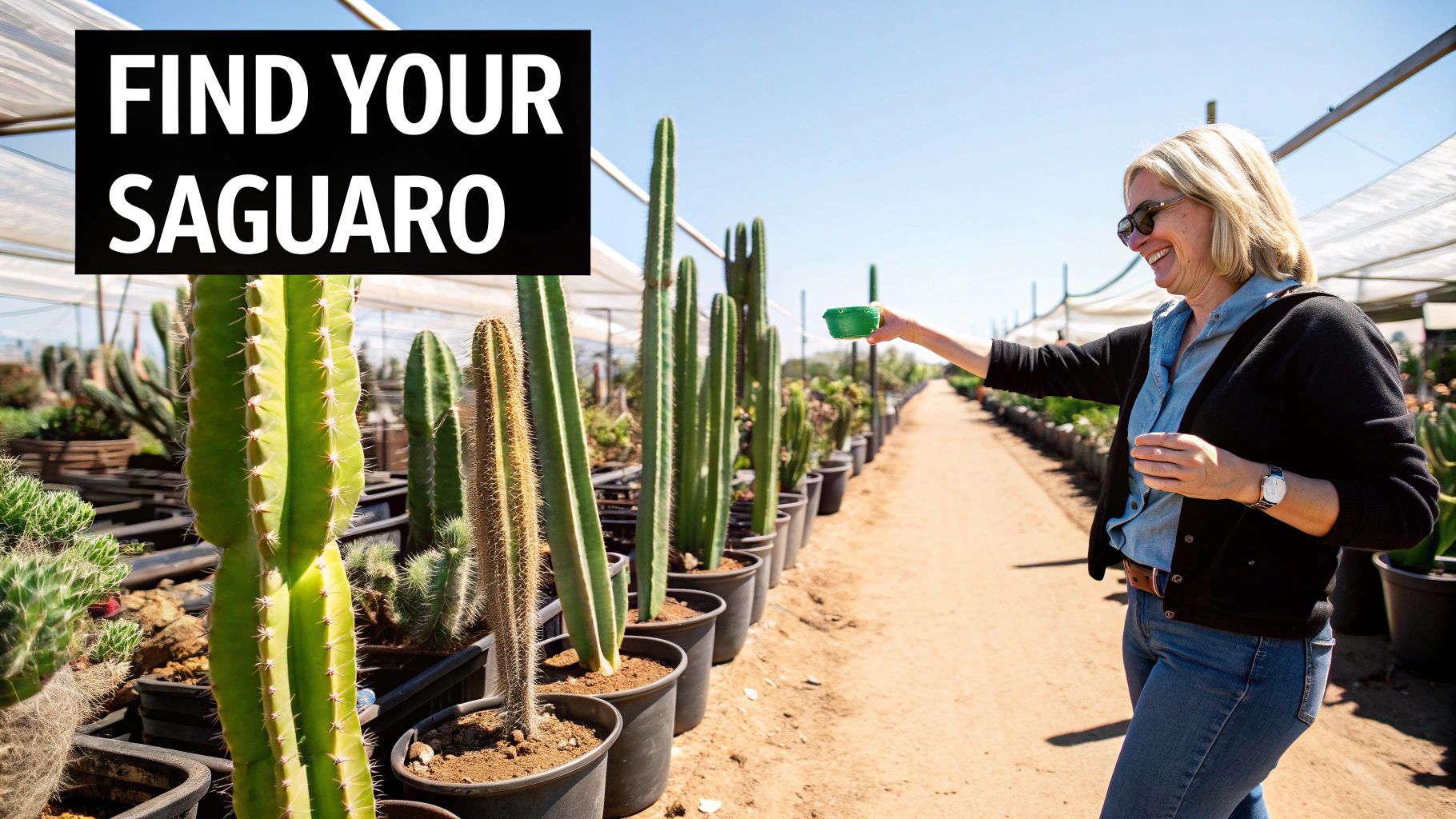
Buying a saguaro isn't like picking up a common houseplant at the local garden center. Think of it more like adopting a piece of living history. This is a significant investment in a slow-growing desert giant, and a little knowledge goes a long way. Getting it right from the start is key to its long-term health and your own enjoyment.
This isn't just about picking a plant. The saguaro (Carnegiea gigantea) is an icon of the Sonoran Desert, native only to parts of Arizona, Mexico, and a tiny sliver of California. Because they're a protected species in the wild, legal sales are incredibly strict. The vast majority of saguaros you can buy are nursery-propagated, and for good reason. You can learn more about this incredible plant's unique habitat over on Wikipedia.
Key Considerations Before You Buy
Before you jump into your search, let's nail down a few key factors. Knowing what you need will make the whole process much smoother.
- Legality and Documentation: This is non-negotiable. Always, always make sure the seller can provide the proper paperwork, like state-issued tags or transport permits. This proves your cactus was legally and ethically sourced.
- Seller Type (Local vs. Online): Where you live makes a huge difference. Local nurseries in the Southwest let you see the plant up close and personal, which is a huge plus. Online retailers, on the other hand, make these amazing plants accessible to enthusiasts everywhere.
- Size and Age: What's your vision? A small, manageable seedling you can watch grow over the years, or a mature, multi-armed giant that makes an immediate statement? The price and logistics will change dramatically depending on your answer.
- Your Environment: Be honest about your climate. Saguaros crave intense sun and absolutely cannot handle a hard frost. Your ability to give it the right conditions is the single biggest factor in its survival.
Once you bring your saguaro home, the fun really begins. Integrating it beautifully into your landscape is the next step, perhaps by designing a captivating patio that showcases its desert majesty.
Getting the Paperwork Straight: Saguaro Laws You Need to Know
Before you even think about where to buy a Saguaro, you need to understand one crucial thing: this isn't like picking up a ficus at your local home improvement store. Saguaros are a protected species, and a whole legal framework is in place to keep them safe from poaching and illegal harvesting.
Don't think of these laws as a hassle. Instead, see them as your guarantee that you're getting a healthy, ethically-sourced plant.
The big one is the Arizona Native Plant Law. This law makes it a serious crime to dig up or move a Saguaro from any land—public or private—without the right permits from the Arizona Department of Agriculture. Getting caught can lead to felony charges and hefty fines, which shows just how seriously the state protects its most famous resident.
Nursery Grown vs. Wild Salvaged
When you're shopping around, you'll find Saguaros fall into two main categories: nursery-propagated or wild-harvested. Those grown from seed at a nursery are by far the most common and straightforward way to buy one.
A "wild-harvested" or "salvaged" Saguaro is a different story. These are cacti that have been legally removed from private land, usually because a new construction project is about to break ground. This isn't a free-for-all; it's a tightly controlled process that requires a stack of permits. Poaching, on the other hand, is a massive problem and directly harms the wild Saguaro population.
For you, the buyer, this difference is everything. A legally sourced Saguaro, whether from a nursery or a salvage crew, will always have official paperwork. This is your proof of a legitimate purchase.
Why Permits and Tags Are Non-Negotiable
So, what does this "paperwork" actually look like? When you buy a Saguaro, especially a larger one, the seller must provide you with the correct legal documents. Think of it as the cactus's birth certificate, proving it wasn't stolen from the desert.
Here’s what you absolutely need to ask for:
- State-Issued Tags: A legally salvaged Saguaro will have a physical tag from the Arizona Department of Agriculture attached to it. This tag has a permit number and is locked to that specific plant.
- Transport Permits: To move a Saguaro, a permit is usually needed that lists where the plant came from and where it's going.
- A Detailed Receipt: Your bill of sale should clearly list the species, its size, and any permit numbers tied to it.
Asking to see these documents isn't being a difficult customer; it's being a smart and responsible one. Any reputable nursery will have this information on hand and will gladly walk you through it. If a seller gets cagey about paperwork or quotes a price that seems suspiciously low, that's a giant red flag.
By demanding the proper documentation, you're not just protecting yourself—you're playing a direct role in conserving these magnificent desert giants for future generations.
Finding a Saguaro Cactus Locally in the Southwest
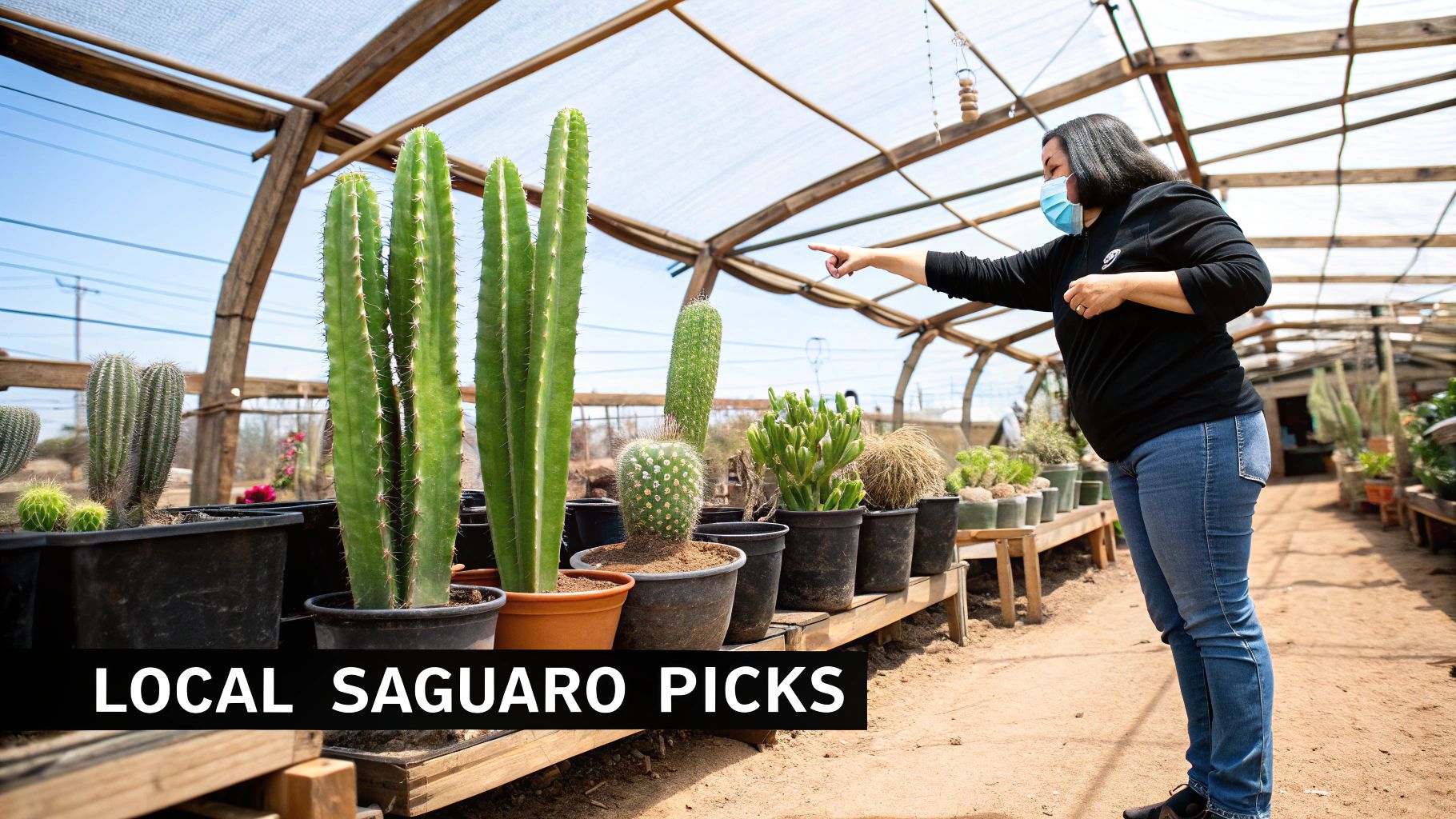
If you're lucky enough to call the desert Southwest home, your search for a saguaro should start and end at a local nursery. Honestly, this is the best way to get your hands on one of these giants, offering huge advantages that you just can't get from a website.
Buying local means you can see the cactus in person before you even think about pulling out your wallet. You can check it over for firm, green skin, look for any pests, and spot any soft areas that might hint at rot. Best of all, you get to talk to the actual growers—people who live and breathe these plants. They can give you the saguaro’s backstory and offer care advice that’s spot-on for your specific neighborhood.
Plus, you get to skip the headache of shipping. Trust me, trying to mail a large, spiny, and incredibly heavy plant is a logistical nightmare you'll be glad to avoid.
What to Look for in a Local Nursery
When it comes to saguaros, not all nurseries are on the same level. You want a place where the staff are genuinely passionate and can answer your questions about permits, planting, and what to do five years down the road. Their cacti should look vibrant and well-cared-for, not like they're struggling to get by.
A top-notch nursery will also be completely open about where their saguaros come from. They’ll proudly point out the official state-issued tags on any salvaged plants or walk you through how they propagate their nursery-grown ones. That kind of honesty is a sure sign of a business that respects the plant, the law, and its customers.
A great local nursery doesn't just sell you a plant; they give you the confidence and know-how to help it flourish for decades. That guidance is often what separates a saguaro that merely survives from one that truly thrives.
Your Health Checklist Before You Buy
Found a saguaro you like? Run through this quick checklist to make sure it's in good shape. This simple inspection is your best bet for bringing home a healthy, happy cactus.
- Firmness: Carefully—very carefully—press on the cactus. It should feel solid and firm all over, with no mushy spots.
- Color: The skin should be a healthy, consistent green. Some yellowing can be a red flag for stress, but don't be alarmed by a woody, bark-like base on older plants. That's just a natural part of aging called corking.
- Ribs: A well-watered saguaro has plump, full ribs. If they look shrunken or withered, the plant is dehydrated.
- Roots (If Visible): If you're buying a bare-root cactus, the roots should look dry and healthy, not black, brittle, or mushy.
By sticking with local Southwestern nurseries, you're not just supporting a neighborhood business. You're giving yourself the best possible start for a long and rewarding journey with your new desert icon.
How to Buy a Saguaro Cactus Online Safely
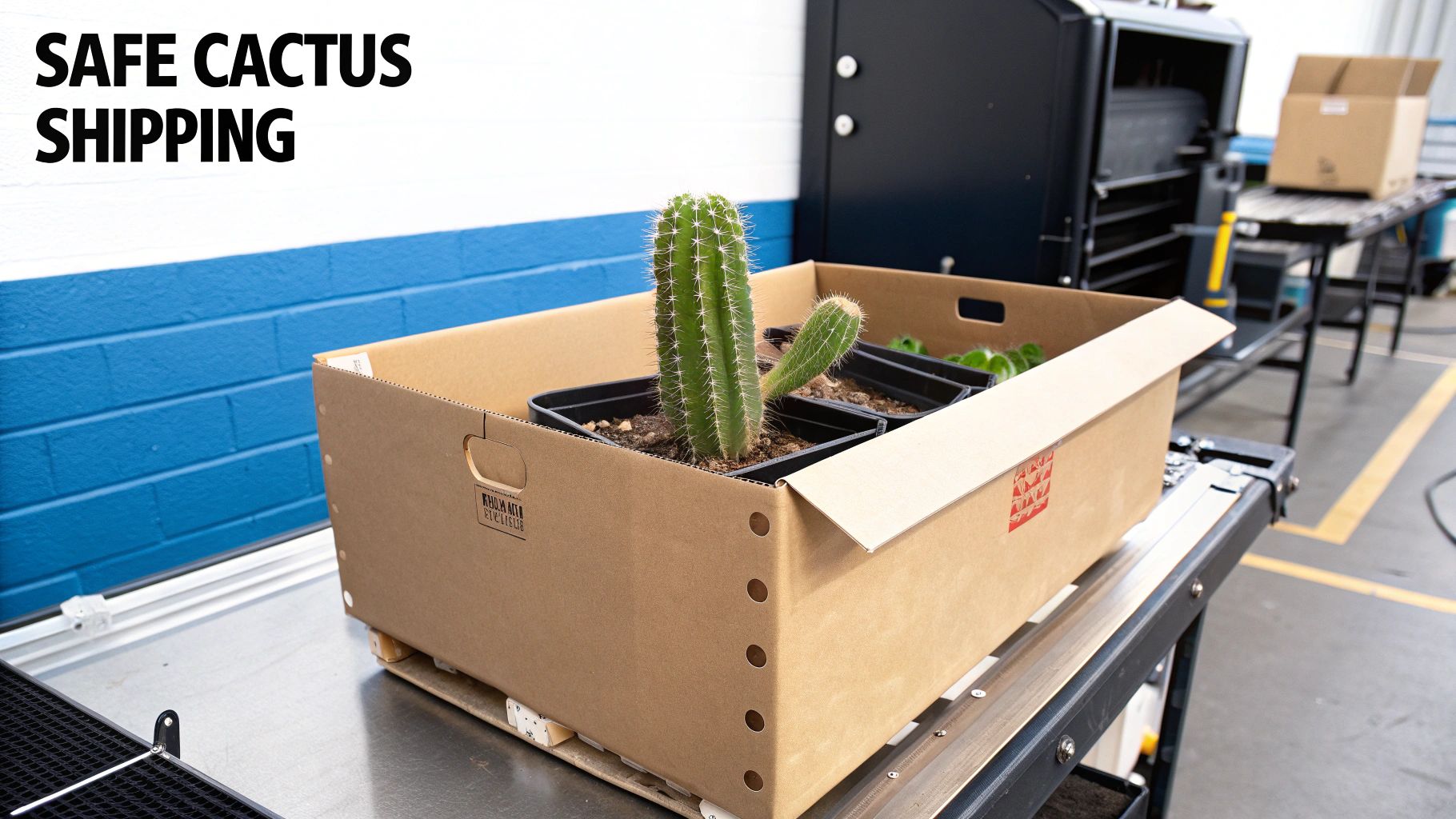
For cactus lovers living far from the desert, ordering a saguaro online is often the only realistic option. You might miss out on picking your plant in person, but a reputable online nursery can get a healthy, legally-sourced saguaro delivered right to you. The trick is knowing how to spot a good seller and understanding what to do when your new spiny friend shows up.
The internet definitely opens up your options, but it also means you have to do a little more homework. Unlike buying locally, you can't just walk up and inspect the cactus for health or check its paperwork on the spot. You're putting your trust in the seller, so it’s crucial to gauge their reputation and transparency by asking the right questions before you add anything to your cart.
Keep in mind that size is a huge factor here. Shipping a small, one-foot-tall saguaro is a pretty standard process for experienced growers. Trying to move a giant, multi-armed specimen across state lines? That's a massive and expensive logistical puzzle, which is why almost all online sales are for smaller, younger plants.
Vetting Your Online Seller
Not all online plant shops are the same, especially when it comes to a protected species like the saguaro. A trustworthy seller should be an open book, ready to talk about their sourcing, how they ship, and the health of their plants.
Here’s a simple checklist to run through:
- Ask for Photos: Don’t settle for a stock photo. Request pictures of the actual plant you will be receiving so you can see its true condition.
- Inquire About Permits: Ask them straight up how they document the legal origin of their saguaros. A legitimate nursery will have a clear, confident answer.
- Read Reviews: Hunt down feedback from other customers who specifically bought saguaros. Did the plants arrive healthy? Were they packaged securely?
- Understand Their Shipping Process: Find out if they ship bare-root. Ask how they protect the cactus from getting banged up or exposed to extreme temperatures during its journey.
Think of the best online sellers as partners in your saguaro journey. They should be more than willing to answer your questions and give you detailed care instructions, setting you up for success from day one.
From Their Nursery to Your Doorstep
Once you've clicked "buy," your saguaro's adventure begins. Most online sellers ship saguaros bare-root, which means the roots are completely free of soil. This might sound strange, but it’s actually the safest method for the plant. It keeps shipping costs down and, most importantly, prevents the roots from sitting in damp soil, which is a fast track to rot.
When the box arrives, don't panic when you see a soil-free cactus carefully wrapped inside. Your first task is to gently unwrap it and check for any damage from the trip. After that, you'll need to plant it in a specialized, fast-draining cactus mix and carefully follow the seller's advice on when to give it its first drink of water. For a deeper dive into finding great online sellers, check out our guide on the best place to buy cactus online.
This initial care is absolutely critical. It’s what helps your saguaro settle in and start thriving in its new home.
Decoding the Price of a Saguaro Cactus
When someone asks "How much does a saguaro cost?" I always say it's like asking about the price of a car. It all comes down to the model. A tiny seedling is a pretty modest purchase, but a towering, multi-armed giant? That’s a serious landscape investment. To find the right cactus for your budget, you first have to understand what drives these prices.
The biggest factor, hands down, is size—which is really just a stand-in for age. Saguaros grow incredibly slowly. A little one-foot-tall cactus might already be 10 years old, and one that has finally started growing arms could easily be over 75 years old. That immense time investment is the number one reason they cost what they do.
What Determines the Sticker Price
It’s not just about height. Several other key traits play a huge role in the final price you'll see when figuring out where to buy a saguaro cactus. Each one adds to the plant's rarity, character, and visual appeal.
- Height: This is the most basic starting point. Most nurseries price saguaros by the foot, and the cost per foot usually climbs as the cactus gets taller.
- Arms: This is a game-changer. The minute a saguaro has arms, its value jumps significantly. An arm is a clear sign of great age and personality, making these specimens the ones everyone wants.
- Origin: Nursery-grown saguaros tend to have more straightforward pricing. On the other hand, salvaged cacti—those legally rescued from construction sites—can have prices all over the map, depending on their condition and how complicated the removal process was.
This chart gives you a good visual of how quickly those prices can escalate as a saguaro gets bigger and more mature.
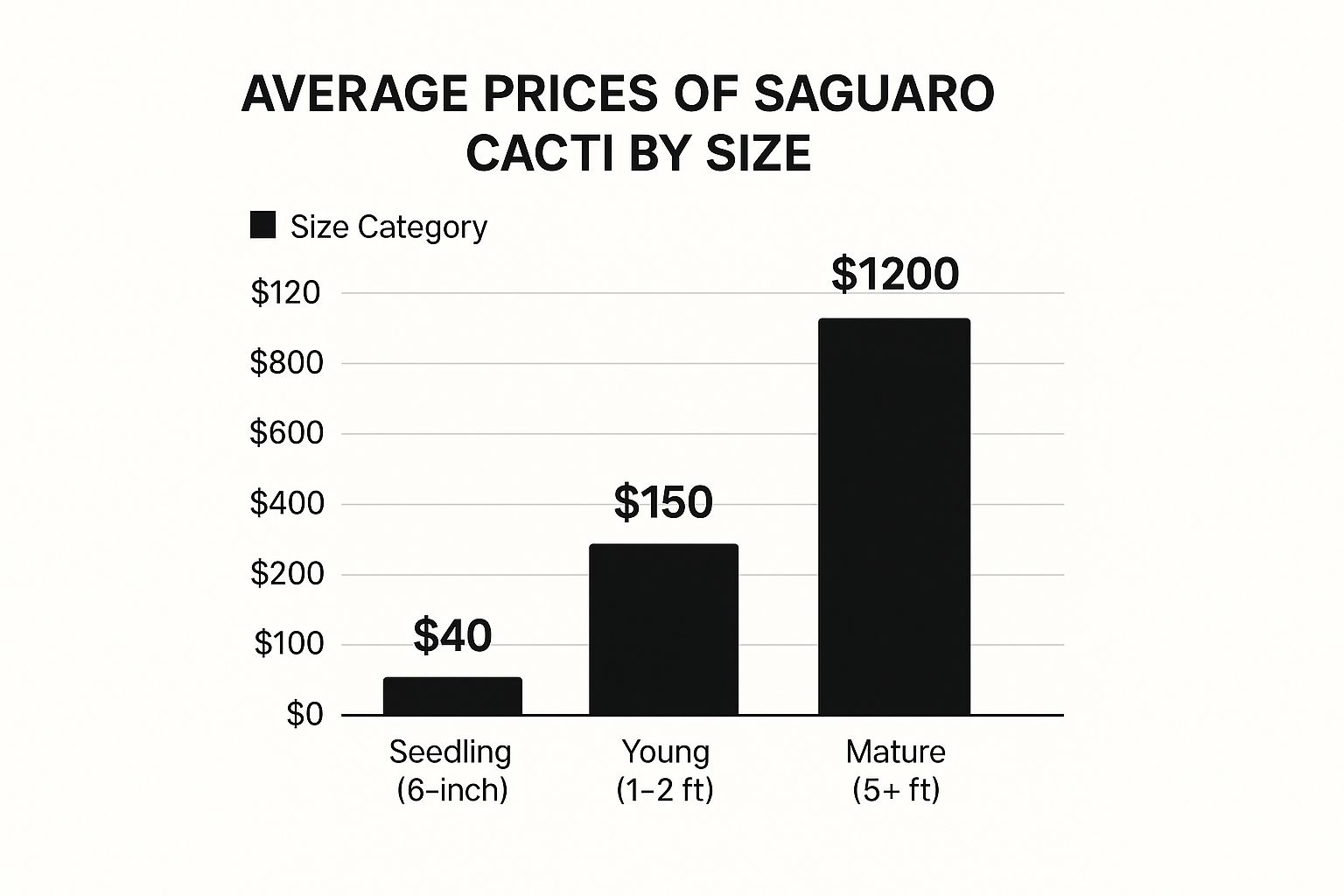
As you can see, that leap from a young, armless saguaro to a mature, multi-foot specimen is massive. It truly reflects the decades of slow, patient growth that went into creating it.
A Closer Look at Market Prices
To give you a more concrete idea, here’s a breakdown of what you can generally expect to pay. Keep in mind these are just ballpark figures; prices will always vary from one seller to the next.
Estimated Saguaro Cactus Price by Size and Type
| Saguaro Size / Type | Estimated Price Range (USD) | Key Considerations |
|---|---|---|
| Seedling (Under 1 foot) | $25 - $75 | Perfect for pots and small gardens. Easy to handle yourself. |
| Young (1 - 4 feet, no arms) | $100 - $600 | A common size for landscaping. May still need help moving it. |
| Established (5 - 8 feet, with or without arms) | $500 - $2,500 | Professional installation is a must. Arms add significant cost. |
| Mature (10+ feet, with arms) | $2,000 - $10,000+ | A true statement piece. Price varies by height, arm count, and overall form. |
| Salvaged (Varies) | Varies Widely | Can be a good deal, but health can be a gamble. Look for a reputable source. |
What this table really shows is that you’re paying for time. Whether it’s a small potted plant or a massive landscape centerpiece, the price reflects the years—or decades—it took for that saguaro to reach its current size.
Beyond the Plant Itself
Don't forget, the sticker price is only part of the story. Once you get into larger cacti, you have to budget for the services needed to get it home and into the ground safely.
Remember, you're not just buying a plant; you're investing in a living sculpture that has taken decades, or even a century, to grow. The price reflects its irreplaceability and the specialized care required to handle it.
These extra costs often include professional delivery with special equipment and planting services, which are absolutely essential for any saguaro taller than a few feet. You might also run into permit fees, especially for salvaged plants. If you want to dig deeper into the economics, we have a whole article explaining why large cacti and succulents are so expensive.
Essential Care for Your New Saguaro Cactus
https://www.youtube.com/embed/JrLmRaQIQME
Getting your new saguaro home is a huge milestone, but it's really just the start of a beautiful, long-term relationship. The first few weeks are critical. How you care for it now will set the stage for decades of healthy growth, so let's get it right.
First things first: planting. Whether you're putting it in the ground or a large container, the soil has to be fast-draining. No exceptions. I always recommend a quality cactus mix beefed up with extra pumice or coarse sand. This imitates the gritty soil of the Sonoran Desert and is your best defense against root rot—the number one killer of these incredible cacti.
Once it's planted, fight the urge to water it right away. Seriously, step away from the hose. Give the saguaro a week or two to settle in. This lets any bruised or broken roots heal up before you introduce moisture.
Acclimation and Initial Watering
Getting your saguaro used to its new home is a big deal, especially if it came from a different environment. A cactus grown in a greenhouse can get a nasty sunburn if you just stick it in the blazing sun. You have to introduce it to direct sunlight gradually.
Start with just a few hours of gentle morning sun, then slowly increase the exposure over a few weeks. Think of it like getting a tan—you don't want to burn.
As for watering, your local climate and the season are your guides. Saguaros are masters of water storage, with those accordion-like ribs expanding to hold an incredible amount. Because of this, it's always, always better to underwater than to overwater.
A good rule of thumb is to let the soil dry out completely between waterings. In the heat of summer, that might mean a deep soak every few weeks. But come winter, you might not need to water it at all.
This isn’t just about keeping a plant alive; it’s about protecting a significant investment. As wild saguaro populations face new challenges from climate change, legally and ethically cultivated specimens become even more valuable. For a deeper dive into this, you can learn more about ongoing research into saguaro population dynamics on academic.oup.com.
Long-Term Health and Monitoring
Once your saguaro is established, it's surprisingly self-sufficient. But that doesn't mean you can forget about it! A quick check-in now and then will help you spot any potential issues before they become serious problems.
Here’s what I look for:
- Plump Ribs: A happy, well-hydrated saguaro has full, expanded ribs. If they look thin and pinched, it's telling you it's thirsty.
- Firm Skin: Give it a gentle press. The cactus should feel solid and firm. Any soft or mushy spots are a red flag for rot.
- Healthy Color: The skin should be a nice, rich green. If it starts looking yellow, it could be getting too much sun or missing some key nutrients.
For a complete seasonal breakdown, our saguaro cactus care guide covers everything you need to know. Follow these steps, and you won’t just have a cactus—you’ll have a thriving, iconic centerpiece for your landscape for many years to come.
Common Questions About Buying a Saguaro
Bringing a saguaro into your life is a big deal, and it's natural to have questions. After all, this isn't your average houseplant. Let's tackle some of the most frequent things people ask, from legal concerns to what a healthy saguaro actually looks like.
Is It Legal to Buy a Saguaro Cactus With Arms?
Absolutely, as long as it's done the right way. It is 100% legal to buy a saguaro with arms, but only if it comes from a licensed nursery and has all the official permits and tags. Those majestic arms don't even start to appear until a saguaro is 50 to 75 years old, which is why these plants are so special, and yes, more expensive.
The non-negotiable part of this deal is the paperwork. Always insist on seeing the documentation that proves the cactus was sourced legally. This is your guarantee against poaching and ensures you're buying a responsibly salvaged plant.
Can I Grow a Saguaro Cactus Outside of Arizona?
You can, but it takes some serious dedication. The trick is to mimic the Sonoran Desert environment as closely as possible, which means giving it tons of direct sun, plenty of heat, and zero exposure to frost. Saguaros are true desert dwellers and have no tolerance for freezing temperatures.
For anyone in a colder climate, this means your saguaro will need to live in a very large container. You'll have to haul it indoors for the winter or keep it in a heated greenhouse. You also have to get the soil just right—it needs to drain incredibly well to prevent root rot, which is a major killer for these cacti in wetter climates.
So, if you're dreaming of a saguaro for your garden in, say, Florida or Oregon, think "pot," not "plot."
How Can I Tell if a Saguaro for Sale Is Healthy?
A healthy saguaro should feel firm to the touch, not soft or mushy, and its skin should be a vibrant green. Watch out for any yellowing, brown spots, or visible signs of pests, which are all red flags. A well-watered saguaro will also have full, plump ribs.
Don't be alarmed by a woody, bark-like texture at the very base of an older plant. This is a natural aging process called corking, and it's a sign of maturity, not disease. If you're buying a bare-root cactus and can see the roots, they should look dry and solid, not rotted or black.
Ready to find your perfect desert giant? At The Cactus Outlet, we offer a wide selection of healthy, legally sourced cacti for enthusiasts nationwide. Explore our collection today!