

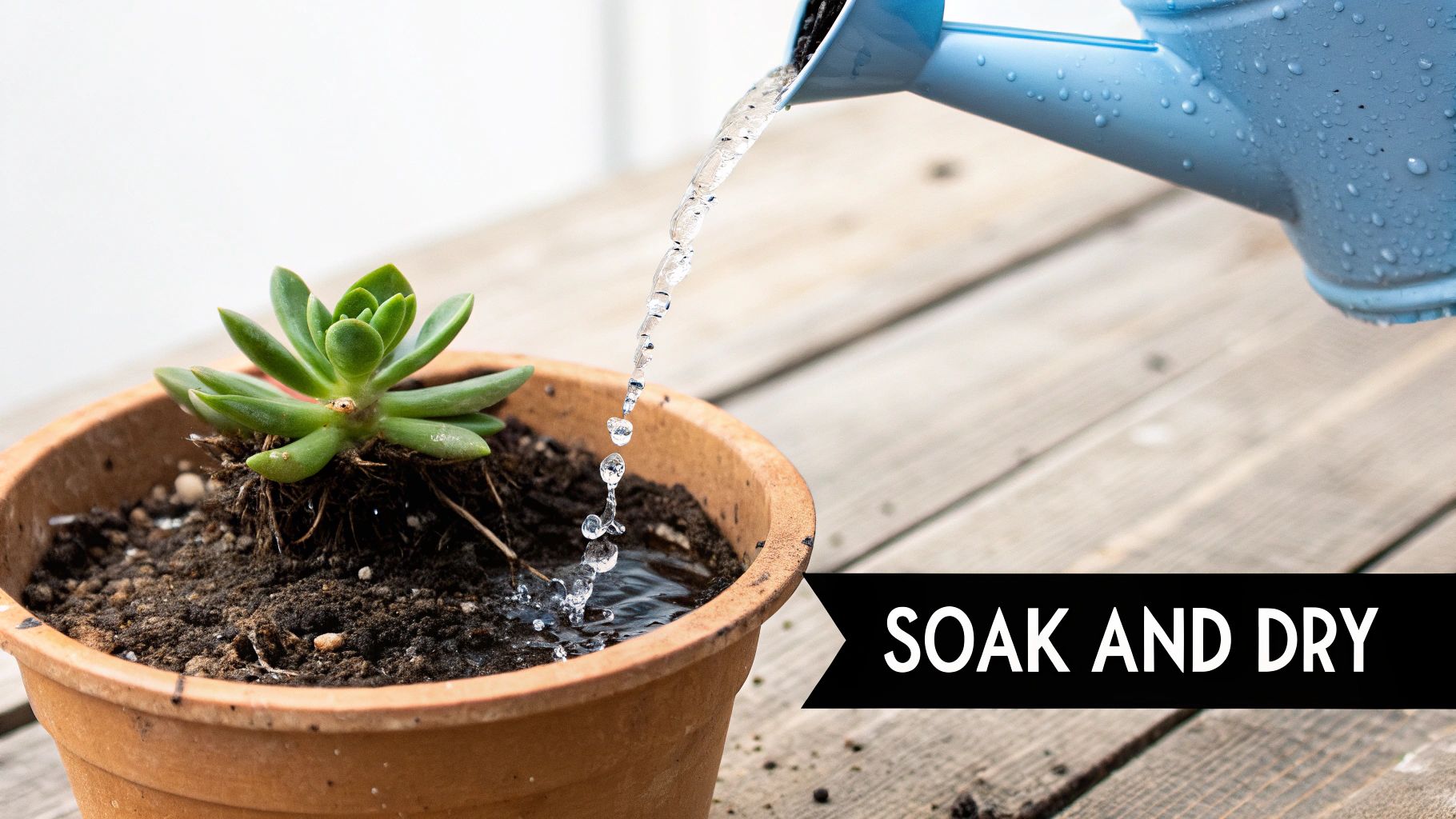
When it comes to watering succulents, there's one golden rule that beats all others: the soak and dry method. It’s a simple concept that perfectly mimics the desert downpours and long dry spells these plants evolved to handle. You just drench the soil completely until water streams out of the drainage hole, and then—this is the important part—let it dry out entirely before you even think about watering it again.
This is single-handedly the most important thing you can do to keep your succulents alive and well.
Rethinking How You Water Succulents
So many people, especially those new to succulents, end up killing their plants with kindness. The biggest mistake I see is giving them frequent, tiny sips of water. This only wets the top inch of soil, which encourages weak, shallow roots that can’t anchor or sustain a healthy plant. Your succulents aren't like your other houseplants; they play by a completely different set of rules.
The ‘soak and dry’ technique works because it forces the roots to grow deep down into the pot, searching for that last bit of moisture as the soil dries. This process builds a strong, robust root system that makes the plant more resilient and ready to handle drought—exactly what it's built to do.
Ditch the Watering Schedule
The question I hear most is, "How often should I water my succulent?" The honest answer? There’s no magic number. A rigid schedule, like watering every Sunday, is the fastest way to kill a succulent. How often you water depends entirely on your unique environment.
Several factors will change how quickly your plant's soil dries out:
- Light: A succulent sitting in a bright, south-facing window will get thirsty much faster than one in a lower-light area.
- Pot Type: Porous terra cotta pots breathe and dry out incredibly fast. A glazed ceramic or plastic pot, on the other hand, will hold moisture for much longer.
- Humidity: If you live in a dry climate or have the heat running all winter, your plants will need water more often than those in a humid coastal region.
- Season: Succulents do most of their growing in spring and summer, so they’ll need more water then. In fall and winter, they go dormant and need a whole lot less.
Key Takeaway: Stop watering on a schedule. Start checking the soil. This simple shift from a rigid routine to paying attention to your plant is what separates struggling succulent keepers from successful ones.
A General Succulent Watering Frequency Guide
While watching your plant is always best, it helps to have a general idea of where to start. Think of this table as a loose guide, not a set of hard-and-fast rules. Before you ever grab your watering can, always, always check that the soil is completely dry.
| Location / Season | Indoor Succulents | Outdoor Succulents |
|---|---|---|
| Spring / Summer (Active Growth) | Every 2-4 weeks | Every 1-2 weeks (more in extreme heat) |
| Fall / Winter (Dormancy) | Every 4-8 weeks | Every 3-6 weeks (or rely on rainfall) |
Remember, succulents are drought-resistant plants built to survive on very little water. Typically, they only need a good soak every 1 to 2 weeks during their growing season and far less—maybe once a month—when they’re dormant. To get a fuller picture of their needs, check out our comprehensive succulent plant care guide.
This mindful watering approach fits perfectly with sustainable gardening. By understanding the core xeriscaping landscaping principles, you can see how this method helps create stunning, low-water gardens. Their ability to thrive on an infrequent watering schedule, just like they would in their native habitats, is precisely why overwatering is the number one succulent killer.
Reading the Signs: Is Your Succulent Thirsty or Drowning?
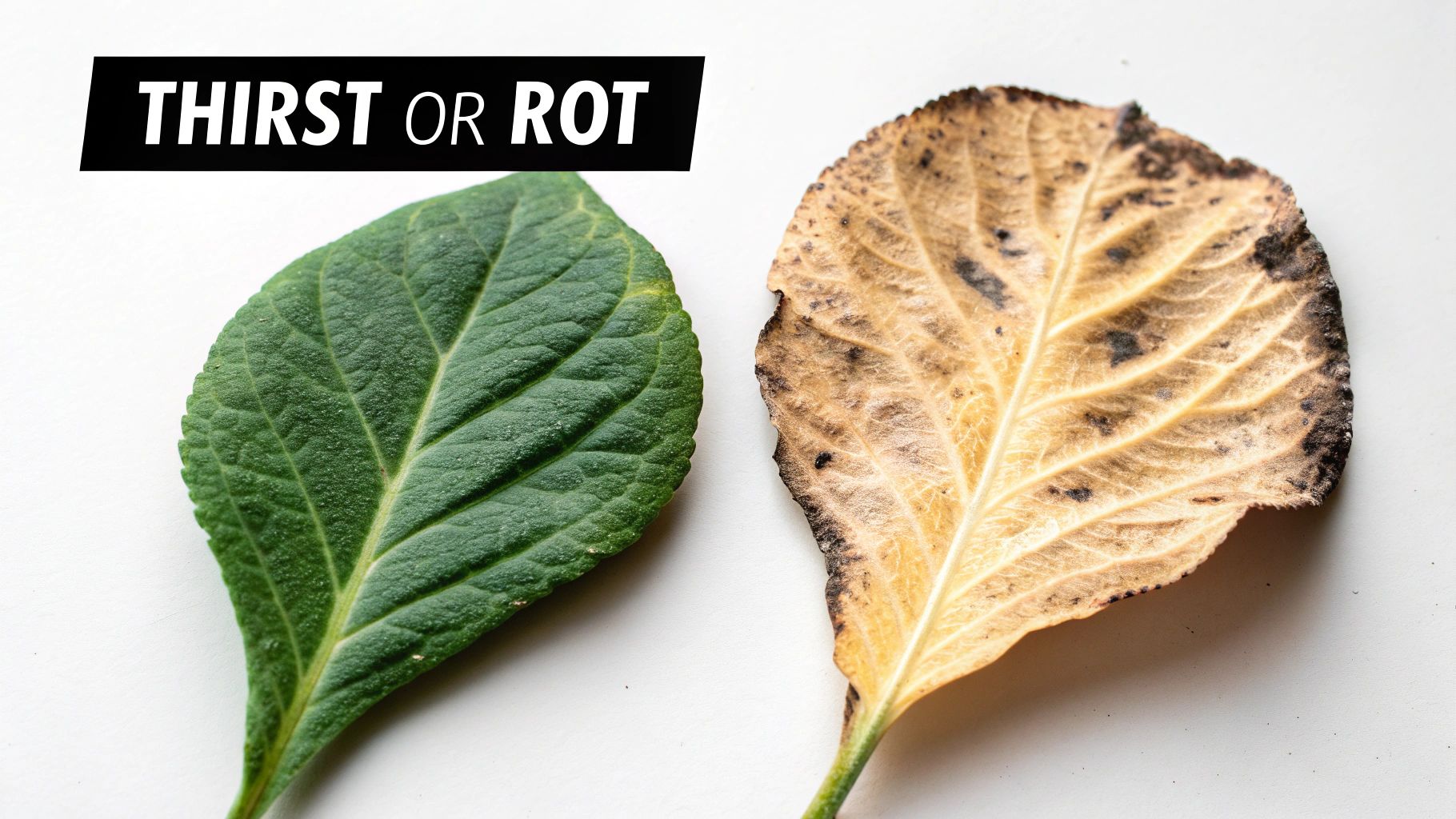
Your succulents are always talking to you; you just need to learn their language. Mastering this skill is what separates the plant parents who struggle from those who seem to have a magic touch. It’s all about becoming a plant detective, spotting the subtle clues before they turn into a full-blown crisis.
What an Underwatered Succulent Looks Like
When a succulent gets thirsty, it starts tapping into the water reserves stored in its leaves. This process creates some really obvious visual cues once you know what to look for. Think of it as your plant's way of politely asking for a drink.
A thirsty succulent will often have:
- Wrinkled or Puckered Leaves: The leaves lose that plump, firm look and start to appear a bit deflated, almost like a grape on its way to becoming a raisin. You'll usually notice this on the lower, older leaves first.
- Soft or Bendy Leaves: Give a leaf a gentle squeeze. A healthy, hydrated leaf is rigid and firm. A thirsty one will feel soft, pliable, and might even bend without snapping.
- Curling or “Closed” Rosettes: For succulents like Echeverias, you might see the leaves curl inward, making the rosette look tighter. This is a clever defense mechanism to reduce the surface area exposed to the sun and conserve water.
A great example is the common Jade plant. Its leaves are usually thick, glossy, and firm. When it’s thirsty, those same leaves will look dull and develop fine wrinkles, feeling much less substantial. That’s your signal to give it a good, deep soak.
A thirsty succulent is an easy fix. A thorough watering using the 'soak and dry' method will usually have it looking plump and happy again in a day or two. The real goal is to catch these signs early before the plant gets severely stressed.
Spotting the Signs of an Overwatered Succulent
Now for the big one. Overwatering is, without a doubt, the number one killer of succulents. It’s far more dangerous than letting them get a little thirsty. When the soil stays wet for too long, the roots can't breathe. They suffocate and begin to decay, leading to the dreaded root rot.
The signs of drowning are very different from the signs of thirst and signal a much more urgent problem. The leaves might look full of water, but in a really unhealthy way.
Common Signs of Overwatering
- Yellow or Translucent Leaves: The leaves—especially the lowest ones—will turn a sickly yellow and can even look see-through. This happens because the plant cells are so full of water that they’ve started to burst.
- Mushy or Squishy Leaves: Unlike the soft-but-dry feel of a thirsty plant, an overwatered leaf will feel squishy and waterlogged. It’s a very distinct, unpleasant texture.
- Leaves Dropping Easily: If leaves fall off the stem with just a gentle bump, it's a classic sign that the connection point is rotting away.
- Black or Dark Stem: Always check the base of the plant. If the stem is turning dark brown or black and feels soft, rot has already taken hold.
If you spot these signs, you need to act fast. Don't just wait for the soil to dry out. The real damage is happening below the surface. You'll need to pull the plant out of its pot to get a look at the roots and trim away any rot before it spreads. Understanding these signals is the key to knowing how much to water succulents—or, more importantly, when to put the watering can down.
How Your Pot and Soil Mix Dictate Watering Needs
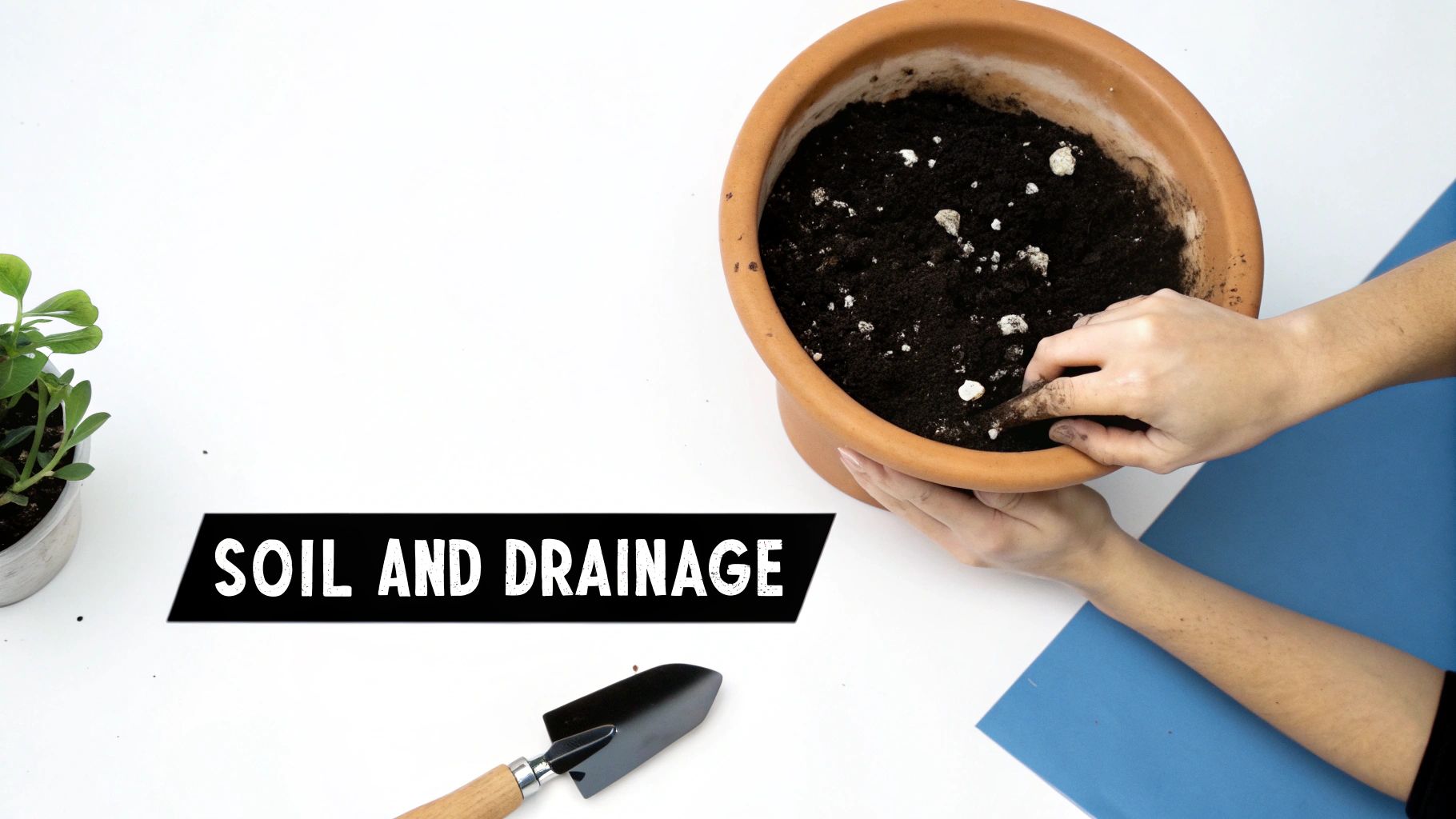
Before we even get to the "how often" and "how much" of watering, we have to talk about where your succulent lives. The pot and the soil inside it are the single most important factors in preventing root rot and making your life easier.
Think of it this way: a fast-draining setup is your safety net. It gives you a huge margin for error. On the flip side, a dense, water-logged soil is a recipe for disaster, where one heavy-handed watering can be the end of your plant.
The Non-Negotiable Role of Drainage Holes
Let me be perfectly clear: your succulents must be in a pot with drainage holes. This isn't a friendly suggestion; it's the golden rule of succulent care. Without an escape route, excess water pools at the bottom, suffocating the roots and creating a swampy mess that leads straight to rot.
But what about those gorgeous decorative pots without holes? You have two safe ways to use them:
- Drill your own holes. With a special masonry bit, you can easily add drainage to most ceramic or terracotta pots.
- Use it as a "cachepot." This is my go-to method. Just keep your succulent in its simple plastic nursery pot (with holes!) and place it inside the decorative one. When it's time to water, pull the inner pot out, give it a good soak, let it drain completely, then pop it back in.
Expert Tip: Ignore the old advice to put a layer of gravel at the bottom of a pot for drainage. It’s a myth! This actually creates a "perched water table," which raises the water level and keeps the roots sitting in a soggy zone.
Choosing the Right Pot Material
The material your pot is made of directly affects how often you'll need to water. Some materials breathe, while others trap moisture.
- Terracotta (Clay): This is the gold standard for a reason. Terracotta is porous, allowing air and moisture to pass right through its walls. This helps the soil dry out quickly and evenly, making it incredibly forgiving if you're a bit overzealous with the watering can.
- Glazed Ceramic or Plastic: These non-porous materials are perfectly fine, but they hold onto moisture for much longer. If your plant is in a glazed or plastic pot, you just need to be extra vigilant. Always make absolutely sure the soil is bone-dry before you even think about watering again.
The Perfect Soil Mix for Happy Succulents
Never, ever use standard potting soil straight from the bag. It's designed to retain water for thirsty houseplants, which is the exact opposite of what your succulents need. They crave a gritty, airy soil that lets water rush right through.
The secret is adding amendments that create air pockets and ensure fantastic drainage. The two best ingredients for this are:
- Perlite: Those little white, lightweight volcanic rocks. It’s fantastic for aeration.
- Pumice: A porous volcanic rock that adds structure and drainage. It’s a bit heavier than perlite, so it doesn’t float to the top of the soil when you water.
You can find pre-made cactus and succulent mixes at any garden center, but I find that making your own is cheaper and more effective. A foolproof starting recipe is simply mixing one part potting soil with one part perlite or pumice. For a more detailed look at creating the perfect blend, check out our guide to the ideal cactus and succulent soil mix.
The incredible popularity of these plants speaks volumes about their appeal. The global succulent market was valued at around USD 4.95 billion in 2023 and is projected to skyrocket to nearly USD 21.96 billion by 2032, largely because people want beautiful plants that don't demand constant watering.
Watering by the Calendar: Seasons and Climate
A succulent basking in a hot Arizona sun needs a completely different drink schedule than one chilling on a misty Seattle porch. To really nail how to water your succulents, you have to play amateur meteorologist for your own home and garden. Your plant's world isn't static—it's always changing with the weather, the season, and even which room it’s in.
Getting a feel for these shifts is what separates basic succulent care from a true green thumb. A one-size-fits-all schedule just won't cut it when you're dealing with the real-world dance between seasons and climate.
The Unique Challenges of Indoor Succulents
Growing succulents inside brings its own set of quirks. Sure, you don't have to worry about a surprise rainstorm, but you're creating an artificial climate that can be surprisingly tricky for these desert dwellers.
Winter heating, for example, is a double-edged sword. It cranks out dry air that can suck moisture from the soil much faster than you’d think. At the same time, the days are shorter and the sunlight is weaker, so the plant isn't really using much water to grow. It's a confusing mix.
On the flip side, if your home is naturally humid, you might find you can stretch the time between waterings way out, even in the middle of summer. It all comes down to watching your specific environment. A succulent in a bright, south-facing sunroom will get thirsty far more often than the exact same plant sitting in a cool, north-facing office.
Outdoor Succulents vs. The Elements
Once you take succulents outdoors, it's a whole new ballgame. Now you're dealing with intense sun, whipping winds, and actual rain, all of which throw your watering schedule for a loop.
- Sun and Heat: A succulent sitting in the full sun during a 95-degree heatwave might need a thorough drenching every single week. That intense heat causes water to evaporate from the soil and transpire from the leaves at a shocking rate.
- Wind: Never, ever underestimate wind. A breezy patio can dry out a pot just as fast as direct sun. If it's windy, you'll need to check the soil moisture more often.
- Rainfall: This is the obvious one. If you just got a good downpour, hit the reset button on your watering clock. The golden rule is to always poke a finger in the soil to make sure it's dry before you even think about grabbing the watering can.
A Pro Tip: For outdoor succulents, especially if you live somewhere with summer rain, the best approach is often reactive. Check them after a few hot, dry days, but let nature do the watering whenever it can. I've learned the hard way that overwatering is a much bigger risk than underwatering, even when they're outside.
Following Your Succulent's Natural Rhythm
Succulents live and breathe by the seasons, following a built-in cycle of growing and resting. Your watering habits absolutely must follow this rhythm. Trying to push a dormant plant is like trying to make a hibernating bear run a marathon—it’s just not going to end well.
During spring and summer, most succulents are in full-on growth mode. They're pushing out new leaves, getting taller, and guzzling water and nutrients to fuel all that action. This is when they're the thirstiest and will thank you for consistent "soak and dry" waterings.
Come fall and winter, however, most of them enter a state of dormancy. The days get shorter, the light is weaker, and the plants basically put their metabolism on low power mode. Their need for water plummets. Watering a dormant succulent as if it were still summer is the fastest way I know to cause root rot. For many of my indoor plants, this means I might only water them once every 4-8 weeks.
This isn't just a gardener's hunch; it's backed by how they're grown on a massive scale. Research has actually shown that watering thoroughly every 10 to 14 days during the peak growing season can improve a succulent’s root development by up to 30% compared to giving them little sips more often. This encourages that deep, drought-resistant root system they're famous for. You can see how these principles are applied commercially by checking out trends in the succulent plant market on Business Research Insights. It proves what experienced growers have known for years: letting the soil go completely dry is the secret to a strong, resilient plant.
How to Save an Overwatered or Underwatered Succulent
https://www.youtube.com/embed/ugVyVk4vnnE
Even the most seasoned succulent growers make mistakes. It’s pretty disheartening to see a plant you love looking limp and sad, but don't throw in the towel just yet. Whether it's looking mushy and yellow or wrinkled and dry, there's almost always a way to bring it back if you act fast.
Think of this as your plant's ER guide. With a bit of patience and the right moves, you can turn a near-disaster into a valuable lesson in succulent care.
The Emergency Plan for an Overwatered Succulent
Of the two common watering problems, overwatering is by far the more dangerous. It can quickly lead to root rot, which is often a death sentence for succulents. If you spot yellow, almost translucent leaves that feel squishy and fall off with the slightest nudge, it’s time for an intervention.
Here’s what you need to do, step-by-step:
- Unpot the Plant: Gently slide the succulent out of its container. Tapping the sides and bottom can help loosen the root ball without causing damage.
- Inspect the Roots: Carefully brush away the old, waterlogged soil. What you want to see are firm, white, or light tan roots. If they’re dark brown or black, feel mushy, and have a funky smell, you’ve got root rot.
- Perform Root Surgery: Grab a clean, sharp pair of scissors and get trimming. You have to be ruthless here—cut off every single piece of rotted root. Any rot you leave behind will just keep spreading.
- Let it Heal: Once the surgery is done, let the succulent air out in a dry, shaded spot for 2-3 days. This allows the cuts on the roots to callus over, creating a barrier against bacteria when you repot.
- Repot in Fresh, Dry Soil: Place your succulent in a new pot filled with fresh, completely dry, well-draining succulent mix. Critically, do not water it! Wait at least a week before giving it a drink. This lets the roots settle in without the shock of immediate moisture.
Getting your watering schedule right with the seasons is the best way to prevent this from happening in the first place.

As you can see, you should be watering more during the active growth periods of spring and summer and pulling way back when the plant is dormant in fall and winter.
Reviving a Severely Underwatered Succulent
Thankfully, an underwatered succulent is a much easier fix. If its leaves are wrinkled, shriveled, and feel soft but still dry to the touch, your plant is just thirsty and has started using up its internal water stores.
The trick is to rehydrate it thoroughly, not just give it a tiny splash. Try bottom watering: place the pot in a saucer or basin of water for about 30 minutes. This allows the soil to soak up moisture from the bottom, completely saturating the root ball without drowning the top layer.
After its bath, let the pot drain completely. You should see those sad, wrinkled leaves plump right back up within a day or two.
Expert Tip: Persistently soggy soil is a breeding ground for fungus gnats. These annoying little black flies lay their eggs in moist topsoil, and their larvae can nibble on your plant's delicate roots. Letting the soil dry out completely between waterings is your best defense to break their life cycle.
When Is It Too Late to Save My Plant?
Sometimes, despite your best efforts, the damage is just too extensive. If the main stem of your succulent has turned black and feels mushy all the way through, the rot has probably taken over the plant’s core systems, and recovery is unlikely.
But don't give up immediately! Even if the main plant is a goner, you can often propagate healthy leaves or offsets to start new plants. For more advanced rescue tips, especially for their spikier cousins, check out our guide on how to revive a dying cactus, as many of the same principles apply. Learning to care for succulents is a journey, and a little troubleshooting is part of the process.
Answering Your Top Succulent Watering Questions
Even when you've got the "soak and dry" method down, some tricky situations can pop up that leave you second-guessing your routine. Let's walk through some of the most common questions I hear from fellow succulent growers. Getting these details right is often what separates a thriving plant from a struggling one.
Should I Mist My Succulents?
This is a big one, and the short answer is no. Misting is a surprisingly common mistake, and it comes from a good place, but it does more harm than good for these plants. It wets the leaves and creates surface humidity, which is a perfect invitation for fungal diseases and rot to set in.
Think about it this way: succulents are built to pull water up through their roots, not absorb it through their leaves. Misting only encourages weak, shallow roots to form right at the surface instead of the deep, strong root system they need to be truly healthy. Always water the soil, not the plant.
A Pro Tip to Remember: Succulents drink with their roots, not their leaves. Misting doesn't get water where it's needed and can lead to rot. Deep, direct soil watering is always the way to go.
I Just Repotted My Succulent. When Can I Water It?
Hold off for a bit! I know it feels wrong to leave a newly potted plant thirsty, but you absolutely need to wait. Give it at least three to seven days before its first drink in its new home.
During repotting, the fragile little roots always get bumped around, and some will inevitably break or tear. These create tiny open wounds. If you water right away, you're essentially washing bacteria and fungus straight into those wounds, which is a fast track to root rot. Letting the plant sit in dry soil for a few days gives those little injuries time to callus over and heal, protecting the plant for the long haul.
Is It Okay to Use Regular Tap Water?
For most of us, yes, tap water is completely fine. It's easy, and succulents are generally not that fussy.
The only time you might run into trouble is if your home has very "hard" water, which is loaded with dissolved minerals. Over time, you might notice a crusty white film building up on your soil or on the outside of your terracotta pots. This mineral buildup isn't an emergency, but it can eventually change the soil's chemistry and make it harder for the plant to take up nutrients.
- If you spot that white crust: It might be worth switching up your water source.
- What are the best alternatives? Rainwater is the gold standard. Filtered or distilled water works great, too.
- A simple trick: If you stick with tap water, just let it sit out in an open container for 24 hours before using it. This allows much of the chlorine to evaporate, which is better for your plants.
What's the Best Time of Day to Water?
Watering in the morning is your best bet, especially for any succulents you keep outside. This gives the plant all day to use the water and allows any splashes on the leaves or excess moisture on the soil surface to dry up in the sun and airflow.
When you water at night, the plant and its soil can stay cold and damp for hours. This is prime time for fungus and rot to take hold. While it’s less of a risk for indoor plants in a climate-controlled room, getting into the habit of a morning watering is a simple practice that promotes great plant health.
Ready to grow your collection? At The Cactus Outlet, we have a huge selection of beautiful, healthy cacti and succulents just waiting for a new home. Come find your next favorite plant at The Cactus Outlet.