


It’s a common misconception that all succulents can take the heat. While they’re tough, many will absolutely scorch if left in intense, direct sunlight all day. The real secret is picking varieties that are naturally built for it.
Think of species like Agave, certain Aloes, and of course, most cacti. These plants have spent millennia developing their own survival gear—things like waxy coatings, dense spines, or unique shapes that help them not just survive, but thrive under a blazing sun. When you're looking for succulent plants full sun, you're really looking for these built-in tools.
Your Guide to Sun-Loving Succulents
Choosing the right succulent for that sun-drenched spot in your garden isn’t just about aesthetics; it's about learning to spot the subtle clues that scream "I can handle the sun!" I see people make the mistake all the time of assuming every succulent is a desert plant that loves endless sun. In reality, many come from places like shaded rock crevices or grow under the protection of larger plants, which makes them surprisingly vulnerable to sunburn.
But the good news is, the toughest succulents often wear their sun protection right on their leaves. Once you know what to look for, you can confidently pick plants that will flourish, not just bake, in the brightest parts of your yard.
Decoding a Succulent's Sun Tolerance
Next time you’re at the nursery, keep an eye out for these tell-tale signs of a sun-worshipping succulent:
- A Powdery, Waxy Coating (Farina): Ever see that silvery, powdery film on plants like Echeveria 'Lola' or the ghost plant (Graptopetalum paraguayense)? That's farina. It’s the plant's own natural sunscreen, reflecting harsh UV rays and helping it hold onto precious moisture.
- Dense Spines or Hairs: Cacti are the undisputed champions of sun protection. The tightly packed spines on a Golden Barrel Cactus (Echinocactus grusonii) act like a shield, diffusing direct sunlight and protecting the plant’s tender skin from getting fried.
- Thick, Beefy Leaves: Sturdy plants like Agaves and many Aloes have incredibly thick, fleshy leaves. This design isn't just for storing more water; it also creates a much tougher physical barrier against the sun's intensity.
- Lighter Colors: As a general rule, succulents with silver, gray, blue, or pale green leaves tend to reflect more sunlight than their darker green cousins. This simple trait makes them naturally better equipped for full sun.
Getting a feel for these characteristics will make you a much smarter shopper. For a deeper dive into different succulent families and what makes them unique, you can check out our detailed guide on the types of succulents and cacti.
A plant’s resilience is written all over its biology. An Agave’s rigid, fibrous leaves are its armor against the sun, while a Sedum’s ability to drop leaves and regrow is its own clever survival strategy. Choosing the right plant is all about matching its natural defense mechanism to your garden's environment.
Many of these sun-loving succulents are at their best when they get between 6 to 12 hours of daily sun, just like in their native desert habitats. What’s truly incredible is how this tolerance for light ties directly into their low water needs. In a typical garden, you can cut irrigation frequency by as much as 75% compared to traditional thirsty plants, making them champions of water conservation. This isn't just good for the planet; it's smart gardening.
Here is a quick-glance table to help you compare some of the best choices for those bright, sunny spots.
Top Succulent Species for Full Sun Conditions
| Succulent Genus | Key Characteristics | Sun Exposure Needs | Hardiness Zone |
|---|---|---|---|
| Agave | Rosette shape, thick and rigid leaves, often with sharp spines. Extremely drought-tolerant. | 6-8+ hours of direct sun | Varies (Zones 5-11) |
| Echeveria | Rosette-forming, often with powdery farina. Comes in many colors. | 4-6 hours of morning sun; protect from harsh afternoon sun | Zones 9-11 |
| Sedum | Low-growing groundcovers or upright "stonecrops." Hardy and fast-spreading. | 6+ hours of direct sun | Varies (Zones 3-9) |
| Sempervivum | "Hens and Chicks." Cold-hardy rosettes that produce many offsets. | 6+ hours of direct sun | Zones 3-8 |
| Aloe | Fleshy, spear-shaped leaves, often with toothed margins. Many have medicinal uses. | 4-6 hours of direct sun; some can scorch in intense heat | Zones 9-11 |
| Cactus | Diverse family with spines or hairs for protection. Iconic desert look. | 6-8+ hours of direct sun | Varies widely |
This table should give you a solid starting point. Remember to always double-check the specific needs of the variety you choose, as even within a genus like Aloe, sun tolerance can vary quite a bit.
How to Acclimate Succulents to Direct Sun
Think of it this way: you wouldn't send a plant that's been chilling in a comfy, shaded nursery straight out into the scorching desert sun. That's a recipe for disaster. Taking a succulent from filtered light and plopping it into intense, direct sun can cause irreversible sunburn, leaving you with bleached, scarred leaves. The secret to growing tough, sun-loving succulents is a gradual process called acclimation.
It's all about easing them into their new environment. You need to give the plant time to adapt by slowly increasing its sun exposure. This allows it to thicken its cuticle—the waxy, protective outer layer on its leaves—and adjust its internal chemistry to handle the intense light and heat.
This visual guide breaks down the core idea: pay attention to your plant, read its cues, and adjust your approach.
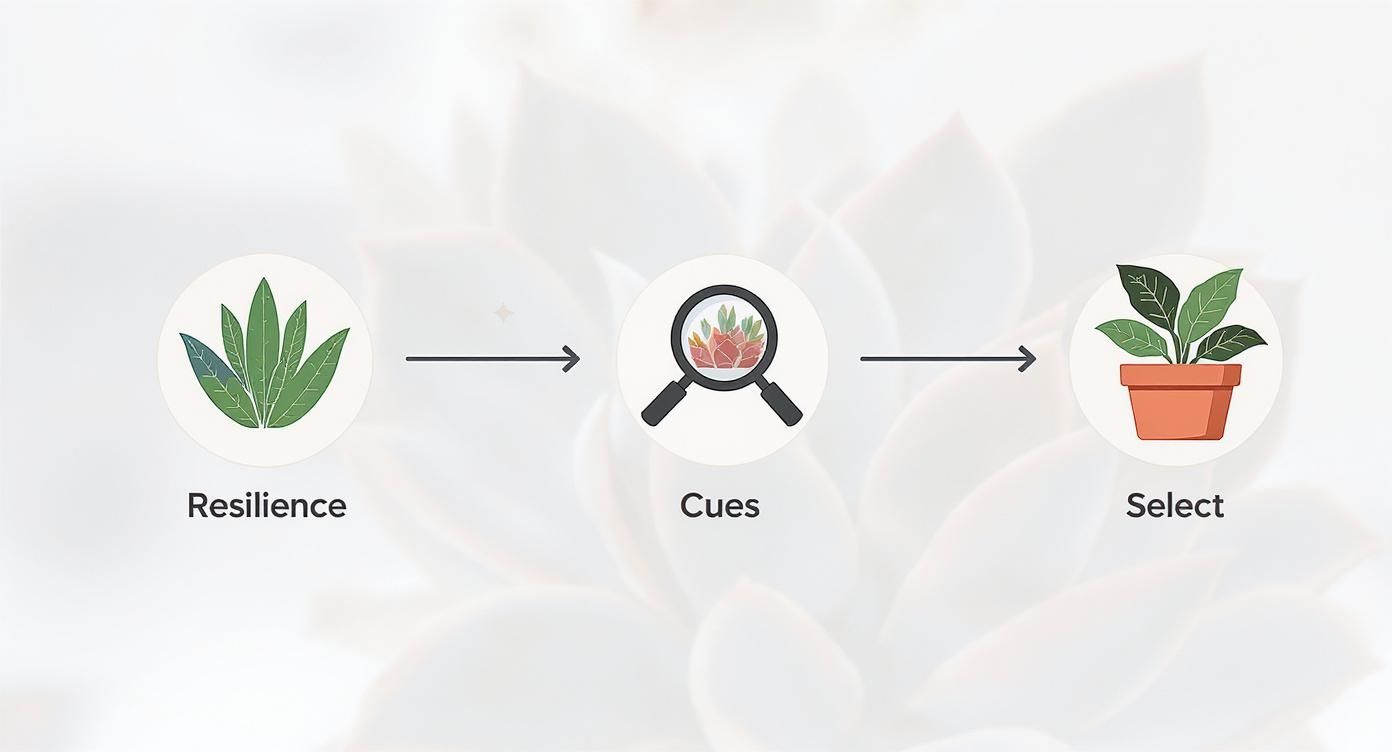
It’s a simple feedback loop: check for resilience, watch for cues, and select the right spot. This is how you set your plants up for success.
A Flexible Week-by-Week Acclimation Schedule
The best way to acclimate a succulent is to forget rigid schedules and instead learn to read your plant. Start by finding a spot that gets just 1-2 hours of gentle morning sun. That softer, less intense light is the perfect introduction.
Keep it there for a few days. If you don't see any signs of stress—like the leaves looking pale, yellow, or washed out—it's time to up the ante. Add another hour of morning sun every two or three days. I learned this lesson the hard way after nearly frying a beautiful Echeveria during a surprise heatwave because I rushed the process.
Pro-Tip: Your plant's leaves are telling you everything you need to know. A slight paling of color is one of the first cries for help. If you see this, pull it back into the shade for a couple of days before trying again, but more slowly this time. Watching your plant is far more valuable than following a calendar.
Once your succulent is comfortably handling a full morning of sun (after about a week or so), you can start introducing it to the more intense afternoon light. Begin with just an hour and slowly increase the time over the next one to two weeks. The whole transition can take anywhere from two to four weeks, depending on your climate and the specific type of succulent.
This careful process is also the key to unlocking those gorgeous stress colors. To learn more about using the sun to bring out vibrant reds, purples, and oranges, check out these advanced techniques on how to sun stress succulents.
Creating the Perfect Soil for Sun-Soaked Succulents

For succulent plants, full sun exposure is only one piece of the puzzle. The real secret to success lies just beneath the surface, in the soil itself. In a spot that gets blasted by the sun all day, your soil isn't just dirt—it's your plant's entire life support system.
The wrong kind of soil, especially one that holds onto water, is a death sentence. When intense sun beats down on soggy soil, it essentially cooks the roots and rolls out the red carpet for rot.
The goal here is simple: recreate the kind of arid, gritty soil these plants call home in the wild. This means drainage and aeration are non-negotiable. Standard potting soil is the enemy—it’s far too dense and acts like a sponge, keeping moisture locked against delicate roots.
The Anatomy of a Perfect Gritty Mix
Mixing your own succulent soil is incredibly rewarding and much easier than you might think. It gives you total control over your plant's world. You're aiming for a blend where water can flow through quickly, leaving just enough moisture behind for the roots to drink without ever getting waterlogged.
Here are the essential ingredients for a fantastic DIY mix:
- Pumice or Perlite: These lightweight volcanic rocks are the heroes of aeration. They’re full of tiny air pockets that keep the soil from compacting, allowing roots to breathe freely.
- Coarse Sand or Horticultural Grit: And I mean coarse! This isn't your kid's sandbox sand. The larger particles create channels for water to drain away, preventing a swampy mess at the bottom of the pot.
- Coconut Coir or Peat Moss: Use this sparingly. A little bit goes a long way to give the mix some structure and hold a tiny bit of moisture for the plant to access between waterings.
A solid, time-tested recipe is one part potting soil (or coir), two parts coarse sand, and two parts pumice or perlite. This creates a beautifully balanced, fast-draining base that most sun-loving succulents will adore. For an even deeper dive, check out our complete guide on creating the ideal cactus and succulent soil mix.
Smart Planting for Sunny Spots
Once your soil is ready, how you plant can add another layer of protection. A simple but highly effective trick, especially for plants in full sun, is to add a top dressing.
A one-inch layer of decorative gravel, small pebbles, or volcanic rock spread over the soil surface does more than just look nice. It acts as a protective mulch, shielding the soil from the direct sun, keeping the plant’s base dry, and stopping soil from splashing up during watering.
The demand for tough, water-wise plants is absolutely booming, with succulents leading the charge. The market is projected to surge from USD 4.99 billion to USD 15.07 billion between 2024 and 2031, which shows just how much people value their resilience in sunny, dry gardens. Gardeners everywhere are looking for beautiful, hardy options for their sun-drenched patios and landscapes, and succulents are the perfect fit.
A Smarter Way to Water Succulents in Full Sun
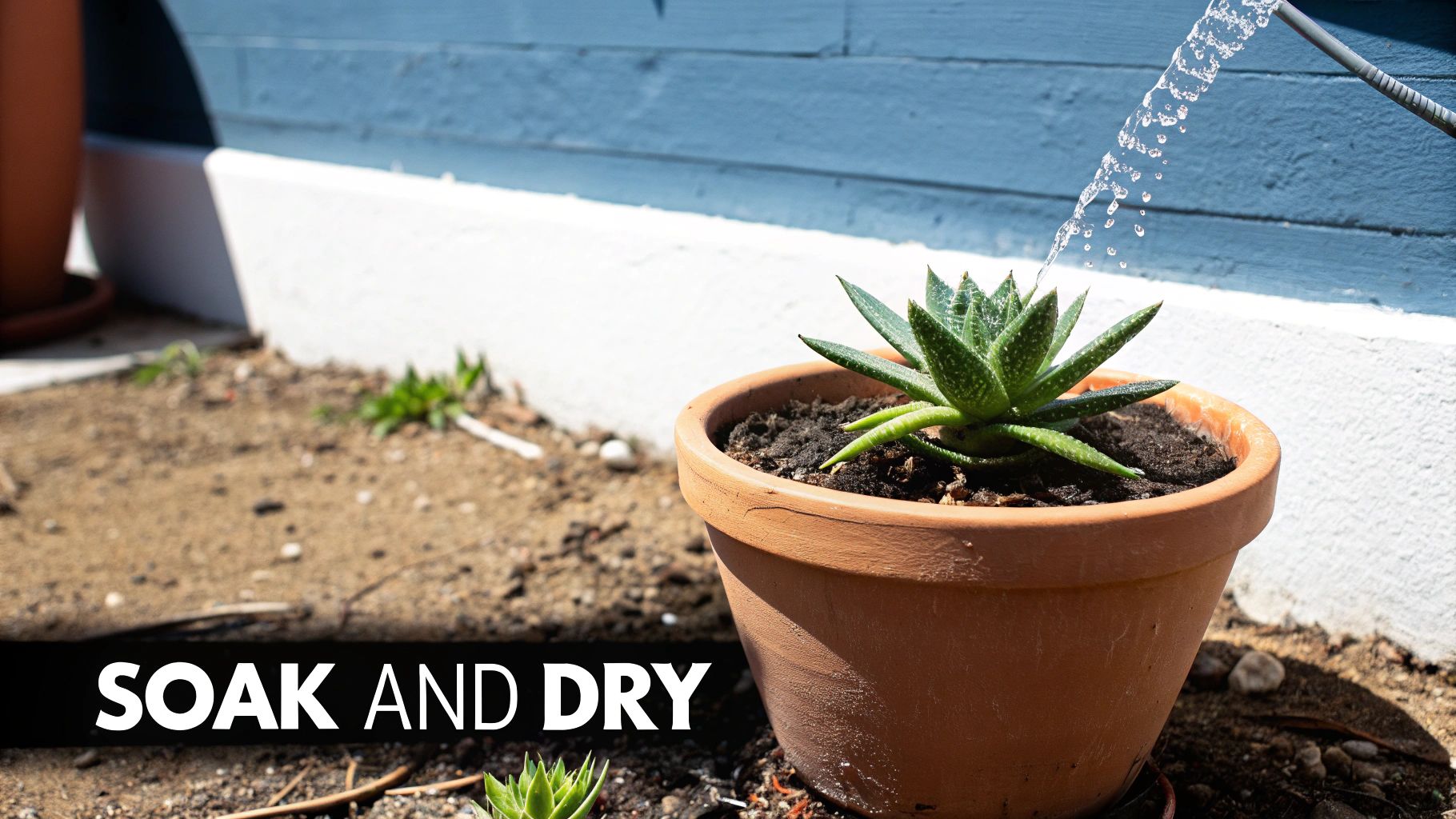
This is where so many people trip up. Watering succulents baking in the sun is a delicate balance. The intense heat fries the soil dry in a flash, making it tempting to overwater and accidentally kill your plants with kindness. My best advice? Throw out your rigid watering calendar and start paying attention to what your succulents are telling you.
The proven strategy that mimics their natural environment is the “soak and dry” method. It’s simple, really. You completely drench the soil until water pours out of the drainage holes. Then, you let it go bone-dry before you even consider watering again.
This mimics the heavy, infrequent downpours succulents get in the wild and forces them to grow deep, resilient roots. It’s hands-down the best way to avoid root rot, the number one enemy of happy succulents.
Reading the Signs of a Thirsty Succulent
Forget guessing games. Your succulents will give you clear, physical clues when they need a drink—you just need to learn their language. Honestly, picking up on these signals is the most valuable skill you can develop.
Keep an eye out for these tell-tale signs:
- Wrinkled or Puckered Leaves: The plant will start to look a little deflated. You’ll see fine lines or wrinkles appear, usually on the lower, older leaves first.
- Loss of Firmness: A happy, hydrated succulent feels plump and firm to the touch. Give a leaf a gentle squeeze. If it feels soft and squishy, it means the plant is dipping into its internal water reserves.
- Bone-Dry Soil: This is the most straightforward signal. I like to stick a wooden skewer or my finger a couple of inches into the soil. If it comes out totally clean with no moisture, it’s go-time.
Waiting for these visual cues takes the guesswork out of it. It ensures the plant is actually ready for water, which prevents the soggy soil that leads to root rot—a common mistake when people see their plants in intense sun and panic-water.
Nailing down your watering technique is a game-changer. For a deeper dive into the specifics, check out our complete guide on how to water succulents.
Adjusting Your Watering for Sun and Season
A succulent’s water needs aren't static; they change constantly based on their surroundings. Think about it: a plant in a black plastic pot on a blistering July afternoon is going to be way thirstier than the same plant in a terracotta pot on a cool spring day.
Here’s how to fine-tune your approach:
- Pot Material Matters: Porous materials like terracotta are fantastic for full-sun spots because they breathe, helping the soil dry out faster. On the other hand, non-porous pots like glazed ceramic or plastic will hold onto moisture much longer, so you'll need to water them less often.
- Seasonal Shifts: In the spring and summer, when your succulents are actively growing, they'll be much thirstier. But as things cool down in the fall and winter, their growth slows, and you’ll need to cut back on watering dramatically.
- In-Ground vs. Containers: Succulents planted in a garden bed have more space to spread their roots and find moisture deep in the ground. They typically need watering far less frequently than potted succulents, whose limited soil volume dries out incredibly fast.
Solving Common Problems in a Full Sun Garden
https://www.youtube.com/embed/8pv3DKnI41w
Even the toughest succulent plants full sun can hit a rough patch. A surprise heatwave or a sudden pest problem can throw a wrench in the works for any gardener, no matter their experience level. The real skill is in spotting the trouble early and acting fast. Think of these moments less as disasters and more as on-the-job training.
Sunburn is probably the most common issue I see. Just like us, succulents can get scorched if they're suddenly blasted with more intense sun than they're used to. You'll know it's happening when you see pale, yellow, or even white patches pop up on the leaves, usually the ones getting the most direct sun. If it gets really bad, those spots can turn brown or black, leaving a permanent, hardened scar.
A little sunburn is mostly a cosmetic issue the plant will eventually outgrow as new leaves form. Severe burns, however, are there to stay. The second you see those first pale spots, the best thing you can do is give the plant a break. Move the pot to a spot with afternoon shade or just drape a piece of shade cloth over it during the peak heat of the day.
Diagnosing Common Pests and Ailments
Intense heat and sun can put a lot of stress on plants, and a stressed plant is an open invitation for pests. It's a frustrating cycle, but learning to recognize the signs of an invasion is half the battle.
Here are the usual suspects you'll find in a sunny garden:
- Mealybugs: These little guys look like bits of white cottony fuzz. They love to hide in the tight spots where leaves meet the stem, sucking the life out of your plant and weakening it over time.
- Spider Mites: You can barely see these with the naked eye. The tell-tale sign is the very fine, silky webbing they leave behind. They absolutely love hot, dry conditions—the very definition of a full-sun succulent garden.
- Etiolation (Stretching): This isn't a pest, but it's a super common problem. If a plant labeled "full sun" isn't getting enough sun, it will start stretching and reaching for the light. This leaves you with a lanky, pale-looking plant with big gaps between its leaves.
The fix for etiolation is simple: give it more light. You'll want to move it to a brighter spot gradually to avoid sunburn. While you can't undo the stretching on the existing stem, you can behead the stretched-out top, let the cut end callous over, and replant it to grow a new, more compact rosette.
Treating Pests Effectively
When it comes to mealybugs and spider mites, I've found a simple spray of isopropyl alcohol works wonders. Just grab a bottle of 70% solution and mix it with an equal part of water. Add a single drop of dish soap to help it stick, then spray the pests directly. The alcohol breaks down their waxy protective coating. You'll likely need to repeat this every few days until you're sure they're gone for good.
It's no secret that people all over the world are obsessed with these hardy plants. The succulent market was valued at about USD 12.2 billion in 2024 and is projected to climb to USD 18.2 billion by 2034, largely because they're perfect for city living and sunny gardens. That's some serious demand, and it just shows how much love there is for these sun-loving survivors. You can dive deeper into the succulent market's growth at Zion Market Research.
Common Questions About Full-Sun Succulents
Let's dig into some of the most common questions we get from fellow succulent lovers. It’s one thing to read a plant tag, but it's another thing entirely to deal with the reality of a sun-baked patio. These are the details that can make or break a thriving succulent garden.
We'll clear up the confusion and give you the straightforward advice you need to grow with confidence, even when the sun is blazing.
Can All Succulents Really Take Full Sun All Day?
This is a big one, and the short answer is absolutely not. While succulents are famous for loving the sun, only a select few can actually handle 8+ hours of direct, punishing sunlight, especially during the peak of summer.
In the plant world, "full sun" usually means at least six hours of direct light. But the intensity of that light is what really counts. Hardy Agaves and many desert cacti are built for that kind of exposure. On the other hand, a lot of popular succulents like certain Haworthias or Gasterias would get scorched. They're much happier with bright, indirect light or a bit of gentle morning sun.
Expert Tip: Don't just trust the generic plant tag. "Full sun" in a mild coastal area is completely different from "full sun" in a hot inland valley. The best tool you have is observation. If you start seeing washed-out, yellow, or white patches on the leaves, that's sunburn. Move the plant to a more protected spot right away.
What’s the Best Type of Pot for Succulents in Direct Sunlight?
Choosing the right pot is more than just a style decision—it's critical for plant health in a hot, sunny spot.
I almost always recommend terracotta or unglazed ceramic pots. Because they're porous, they breathe. This allows air to get to the roots and helps the soil dry out properly, which is the best way to prevent root rot.
That porous nature also acts as a great insulator, protecting the root ball from getting cooked when the pot itself heats up in the sun. You can use plastic or glazed pots, but you have to be much more careful. They trap heat and moisture, which can be a deadly combination. If you go that route, stick with lighter colors that reflect the sun's rays instead of absorbing them.
Ready to find the perfect sun-loving succulent for your garden? The experts at The Cactus Outlet have a curated collection of tough, beautiful plants that are ready to thrive in the brightest spots. Explore our selection and bring home a resilient new addition today.