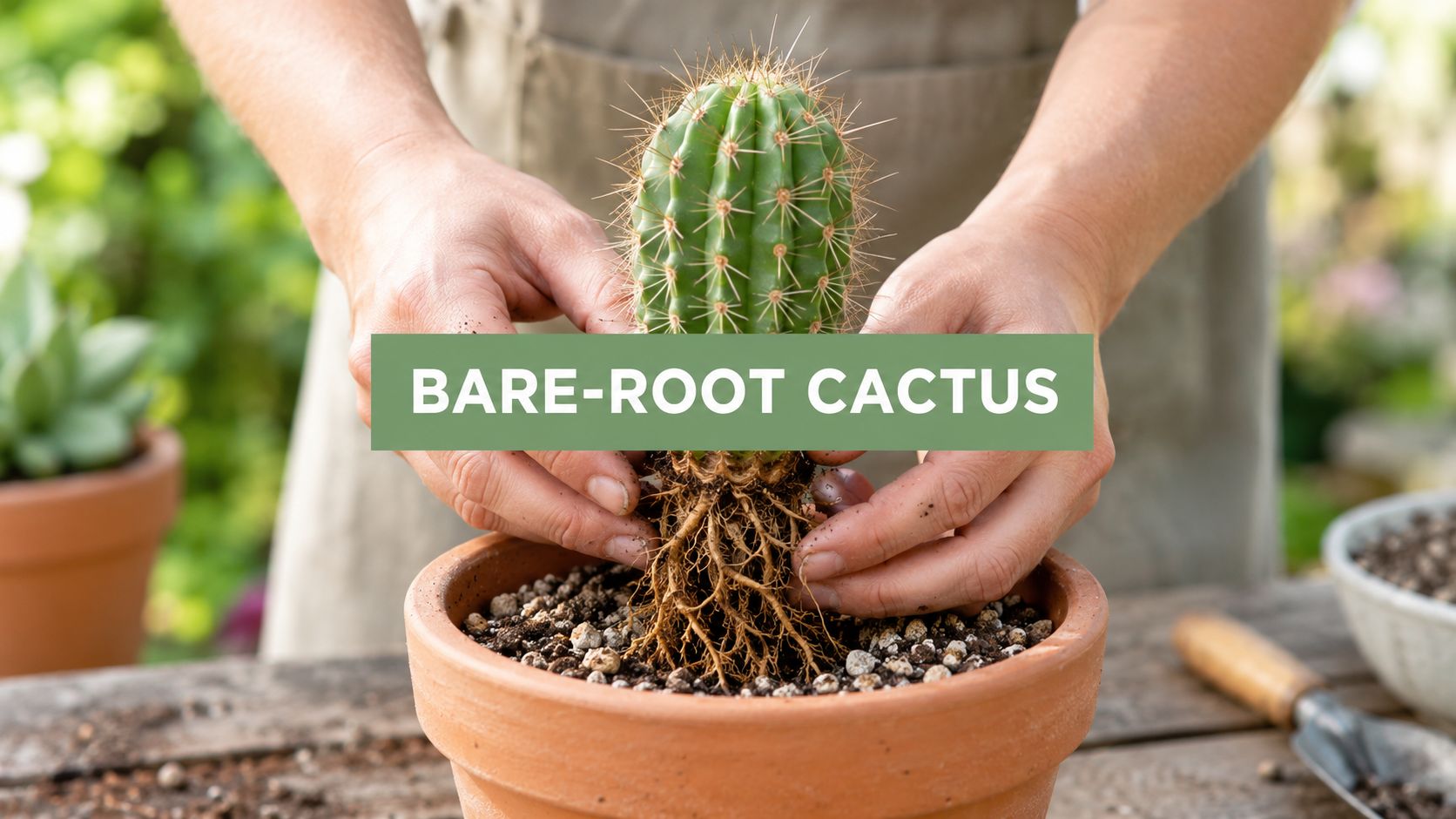

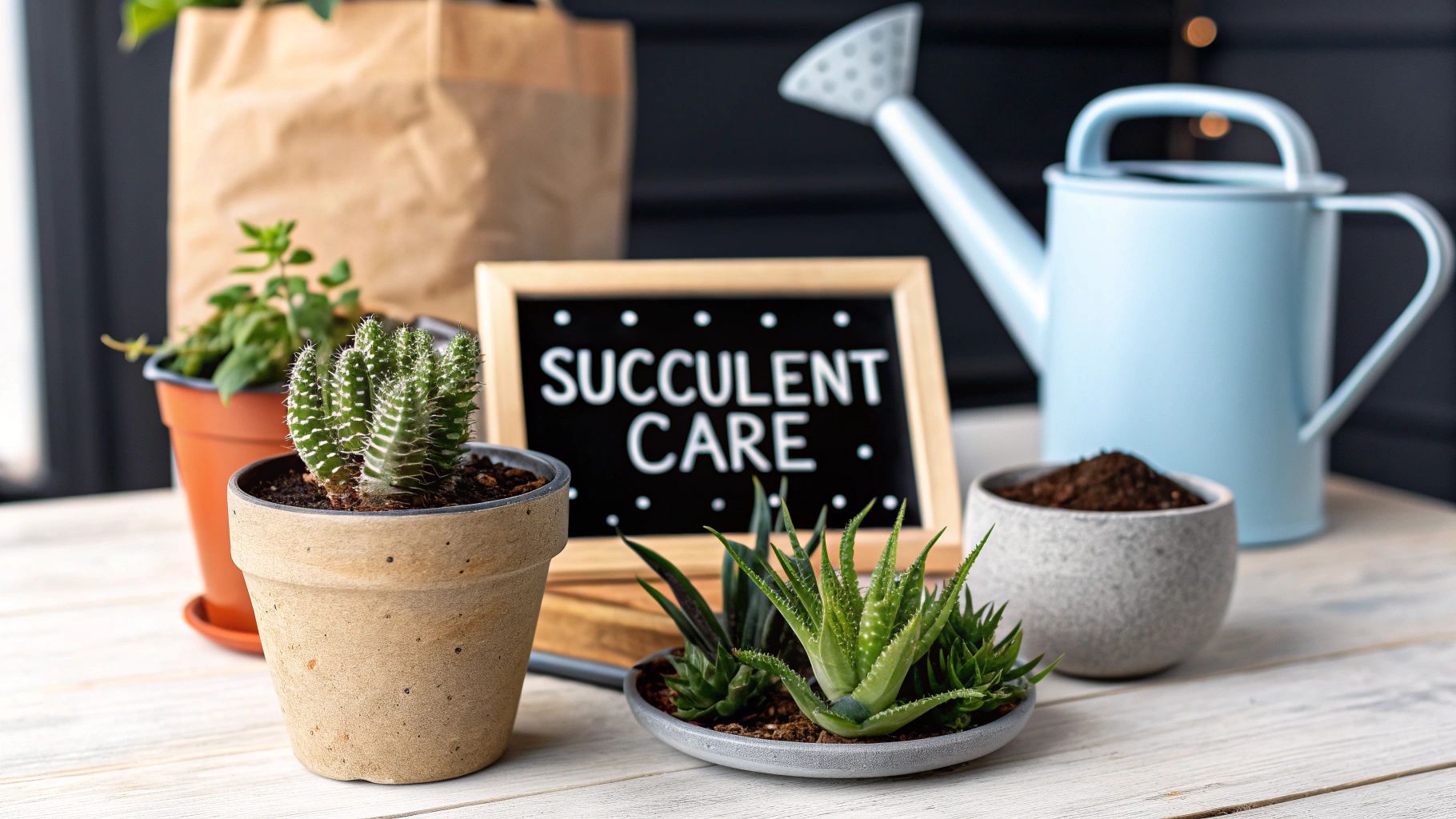

If you get just a few things right, succulents are incredibly rewarding plants to grow. The magic formula isn't complicated: give them plenty of bright, indirect sunlight, use soil that drains quickly, and water them deeply but not too often. That’s it. If you can master those three things, you're essentially recreating the dry, sun-drenched climates these tough little plants call home.
Your Foundation for Flourishing Succulents
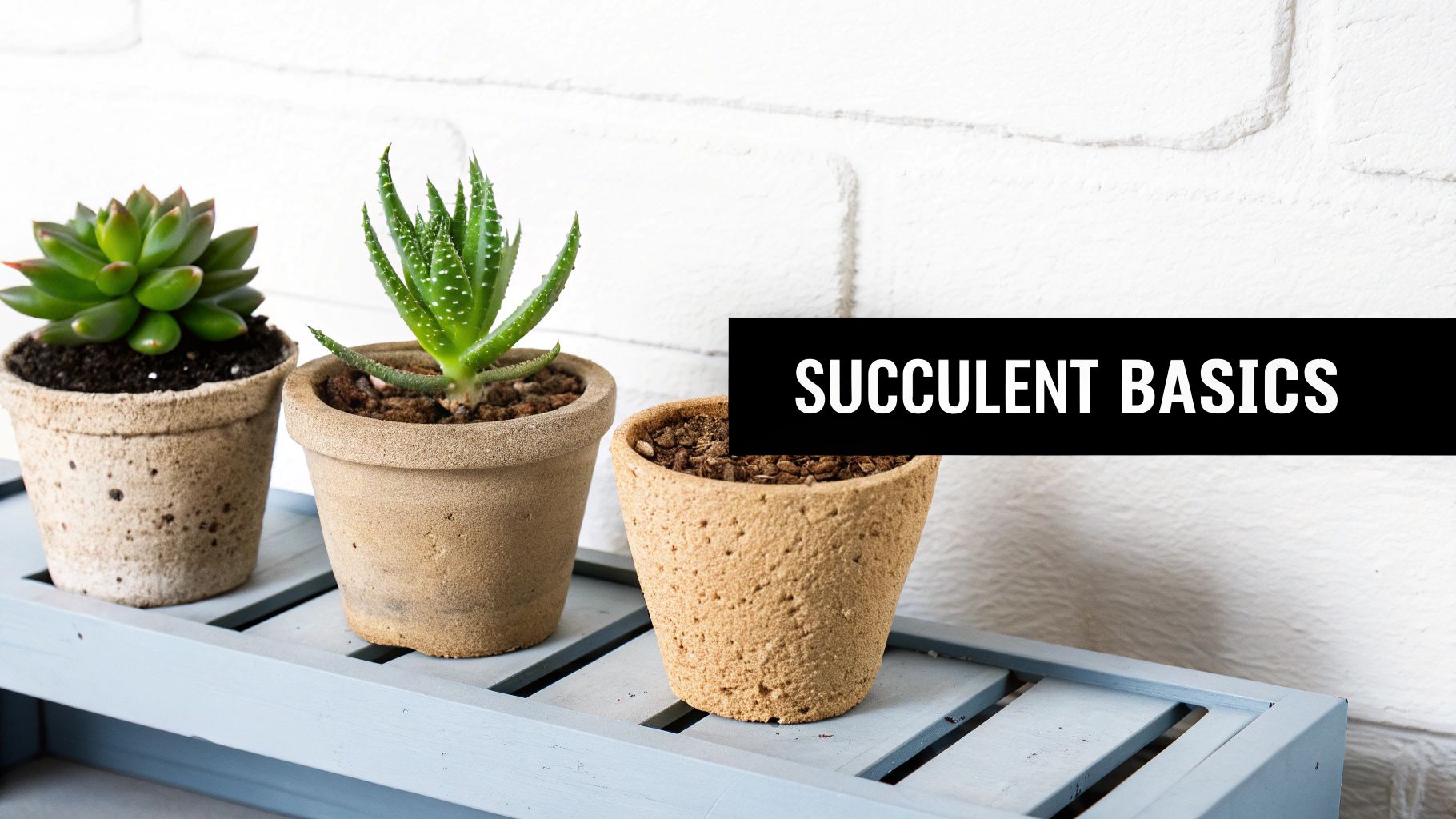
Welcome to the wonderful, slightly addictive world of succulents! Their unique shapes and easy-going nature make them a favorite for just about everyone, from total beginners to seasoned plant collectors.
The most important thing to wrap your head around is that succulents are built for drought, not downpours. Their plump leaves and stems are little water tanks, designed to get them through long dry spells. This is exactly why the number one killer of succulents is too much love in the form of overwatering.
To keep your plants happy, always use the "soak and dry" method. Give the soil a thorough drenching until you see water run out of the bottom of the pot. Then, and this is the crucial part, let it dry out completely before you even think about watering again. For most succulents living indoors, this usually means a good drink only every 2-4 weeks.
Replicating Their Native Habitat
Your goal is to mimic a succulent's natural environment—think of a sunny, arid place with gritty, fast-draining soil. Getting the pot and soil right is just as important as how often you water.
- Pots with Drainage: This is a deal-breaker. If your pot doesn't have a drainage hole, the water has nowhere to go. This leads to soggy soil and root rot, which is a swift death sentence for a succulent.
- Porous Soil: Regular potting mix is a no-go; it acts like a sponge and holds way too much moisture. You need a special cactus or succulent soil mix. You can also make your own by mixing regular potting soil with gritty stuff like perlite or coarse sand to improve drainage.
- Ample Light: Most succulents are sun-worshippers and need at least six hours of bright, indirect light each day. A south-facing window is usually the sweet spot, but watch out for intense, direct sun, which can actually scorch the leaves of some varieties.
The real secret to knowing how to care for succulents is learning to read the plant. Instead of watering on a strict schedule, pay attention to what it's telling you. Are the leaves a bit wrinkled and soft? It's probably thirsty. Are they looking yellow and mushy? You've likely overwatered.
This isn't new wisdom. People have been cultivating succulents for thousands of years! Ancient Egyptians were growing Aloe vera as far back as 6,000 years ago, prizing it for medicinal purposes and planting it in sandy soil to copy its desert origins.
For more great advice on keeping your indoor garden thriving, this guide on how to care for indoor plants is a fantastic resource.
Here at The Cactus Outlet, our rule of thumb for plants like the Saguaro or Euphorbia is simple: don't water until the soil is bone-dry 2-3 inches deep. Indoors, that’s roughly every 2-3 weeks. During the winter, when the plants are dormant, you’ll want to cut that watering frequency back by 50-70%.
To make it even easier, here's a quick cheat sheet with the essentials.
Succulent Care Quick Reference Guide
This table breaks down the most critical care elements to help you keep your succulents healthy and vibrant.
| Care Element | Best Practice | Why It Matters |
|---|---|---|
| Watering | "Soak and dry" method; water every 2-4 weeks when soil is completely dry. | Prevents root rot, the most common cause of succulent death. |
| Soil | Use a fast-draining cactus/succulent mix or add perlite/sand. | Ensures roots don't sit in water, mimicking their native arid soil. |
| Light | Minimum 6 hours of bright, indirect sunlight daily. A south-facing window is ideal. | Provides the energy needed for photosynthesis and maintains vibrant color. |
| Container | Always choose a pot with a drainage hole. | Allows excess water to escape, which is critical for preventing rot. |
| Fertilizer | Feed with a diluted, low-nitrogen fertilizer during the spring/summer growing season only. | Gives a gentle nutrient boost without overwhelming the plant. |
Stick to these fundamentals, and you'll be well on your way to building a beautiful succulent collection that thrives for years to come.
Getting the Light and Temperature Just Right
If there's one thing I've learned over the years, it's that getting the lighting right is more than half the battle when it comes to happy succulents. Light is what fuels their growth, brings out those stunning, vibrant colors, and keeps them compact and beautiful. Get it wrong, and even a perfectly watered plant will start to look sad, pale, and stretched out.
Succulents come from places where the sun is no joke, so they’re wired to crave bright light. But here's a common misconception: "bright light" doesn't always mean sticking them in the harshest, most direct afternoon sun. That's a quick way to scorch the leaves of many popular varieties, especially things like Haworthia or Gasteria. The real trick is finding that perfect balance.
Finding the Sweet Spot for Light
For most succulents you’ll be growing inside, the magic number is about six hours of bright, indirect sunlight each day. The best seat in the house is usually near a south-facing window, which gives you that strong, consistent light they love. An east-facing window is a solid runner-up, offering a gentler dose of morning sun.
Not sure if your spot is "bright and indirect"? Try this old-school trick: hold your hand about a foot from the window where you want to place your plant. If you see a sharp, clearly defined shadow, the light is probably too direct. If the shadow is softer and a bit fuzzy, you’ve hit the jackpot.
Light isn't just a preference; it's the lifeblood of a succulent. An incredible 85% of that leggy, stretched-out growth (a condition called etiolation) is a direct result of not enough light. This doesn't just look bad; it creates plants that are 50% weaker and way more likely to attract pests.
Think about it: in the wild, a giant Saguaro soaks up 10-12 hours of intense sun daily. That light fuels a photosynthetic process three times more efficient than your average houseplant. As the succulent market explodes—projected to jump from USD 12.2 billion in 2024 to 18.2 billion by 2034—understanding these basics is key. We know from experience that a south-facing window delivering 4,000-6,000 lux for six-plus hours can boost growth by up to 40%.
Learning to Read Your Plant’s Signals
Your succulents are constantly talking to you through their appearance. You just have to learn how to listen. Catching light-related issues early is the best way to keep them thriving.
Signs of Not Enough Light (Etiolation):
- Stretching: The plant suddenly looks like it’s on stilts, with big gaps between the leaves as it desperately reaches for more light.
- Fading Color: Those beautiful reds, purples, and oranges wash out, leaving the plant a dull green.
- Downward-Pointing Leaves: You might notice the leaves flattening or pointing down, trying to expose more surface area to any available light.
Signs of Too Much Light (Sunburn):
- White or Yellow Scars: These are literal sunburns—bleached-out patches on the leaves that won't ever heal.
- Crispy, Brown Tips: The edges of the leaves look and feel fried, a sure sign of scorching.
- Extreme Color: While a little stress color is a good thing, a deep, dark purple or almost-black red can mean the plant is getting cooked.
If your plant is stretching, start moving it to a brighter location a little at a time to avoid shocking it. And if you have a spot that gets blasted with sun all day, your best bet is to choose the right plant for the job. You can learn more about which succulent plants thrive in full sun conditions to make sure you're setting them up for success.
Ideal Temperatures and Seasonal Changes
When it comes to temperature, succulents are a lot like us. They’re most comfortable in the same range we keep our homes, somewhere between 60-80°F (15-27°C). This is a huge reason they make such fantastic houseplants.
But don’t let their tough looks fool you; the vast majority of succulents can't handle a frost. If you move your collection outside for the summer, you absolutely have to bring them back in before the first frost hits. A light frost might just damage the leaves, but a hard freeze will kill the plant completely.
During the winter, most succulents hit the pause button and go into dormancy. Growth slows to a crawl, and they need far less water and zero fertilizer. This is a totally natural rest period that helps them store up energy for a big growth spurt in the spring. You can even encourage this healthy downtime by letting them experience slightly cooler indoor temperatures, maybe around 50-60°F (10-15°C).
Mastering Watering and Perfecting Your Soil Mix
Ask any succulent enthusiast what the #1 killer of these plants is, and you’ll get the same answer every time: overwatering. It’s the classic rookie mistake, usually coming from a place of love, but it’s the most critical skill to get right. Succulents are built to survive droughts by storing water in their leaves, which means they absolutely despise sitting in wet soil.
The secret to happy, healthy succulents is the "soak and dry" method. It's simple. When you water, give the plant a thorough drenching until water runs out of the drainage hole. This encourages the roots to grow deep and strong. Then comes the most important part: let the soil become 100% dry before you even think about watering it again.
For most succulents living indoors, this could mean watering just once every two to four weeks. The best way to know for sure is the finger test—stick your finger a couple of inches into the soil. If you feel even a hint of coolness or moisture, step away. Wait a few more days and check again.
Learning the Language of Your Succulent
Your succulents will tell you when they’re thirsty. You just have to learn how to listen. Ditching a rigid watering schedule and watching for these physical signs is a game-changer.
- Underwatered: The leaves will start looking a little sad and deflated. They might appear wrinkled or puckered and feel soft to the touch instead of firm and plump.
- Overwatered: This is the real danger zone. The leaves, especially those at the base of the plant, will look yellowish and almost translucent. They'll feel mushy and might fall off at the slightest nudge.
Don't forget that your plant's needs change with the seasons. They're thirstiest during their active growing period in spring and summer. When they go dormant in the winter, you'll need to cut back on watering dramatically, sometimes to as little as once a month.
Why Your Soil Mix Is a Game Changer
You can nail your watering technique, but it won't matter if the soil is working against you. Standard potting mix is designed to hold onto moisture, which is exactly what succulents hate. It acts like a sponge, suffocating the roots and creating a perfect storm for root rot.
To set your plant up for success, you need a soil mix that drains fast and allows for plenty of airflow. This lets water pass through quickly and helps the roots breathe. You’ve got two solid options:
- Buy a specialized mix: The easiest route is to grab a pre-made bag of soil specifically formulated for cacti and succulents.
- Create your own mix: It's easier than you might think and gives you ultimate control. A fantastic, no-fail recipe is blending one part potting soil, one part perlite or pumice, and one part coarse sand.
Those gritty components are absolutely essential. They create little air pockets in the soil, preventing it from becoming compacted and ensuring excess water drains away almost instantly. You're basically recreating the loose, rocky soil they'd grow in naturally.
If you want to get really nerdy about crafting the perfect growing medium, our guide on the ideal cactus and succulent soil mix has all the nitty-gritty details.
This visual guide shows what happens when your succulent's light exposure is off.
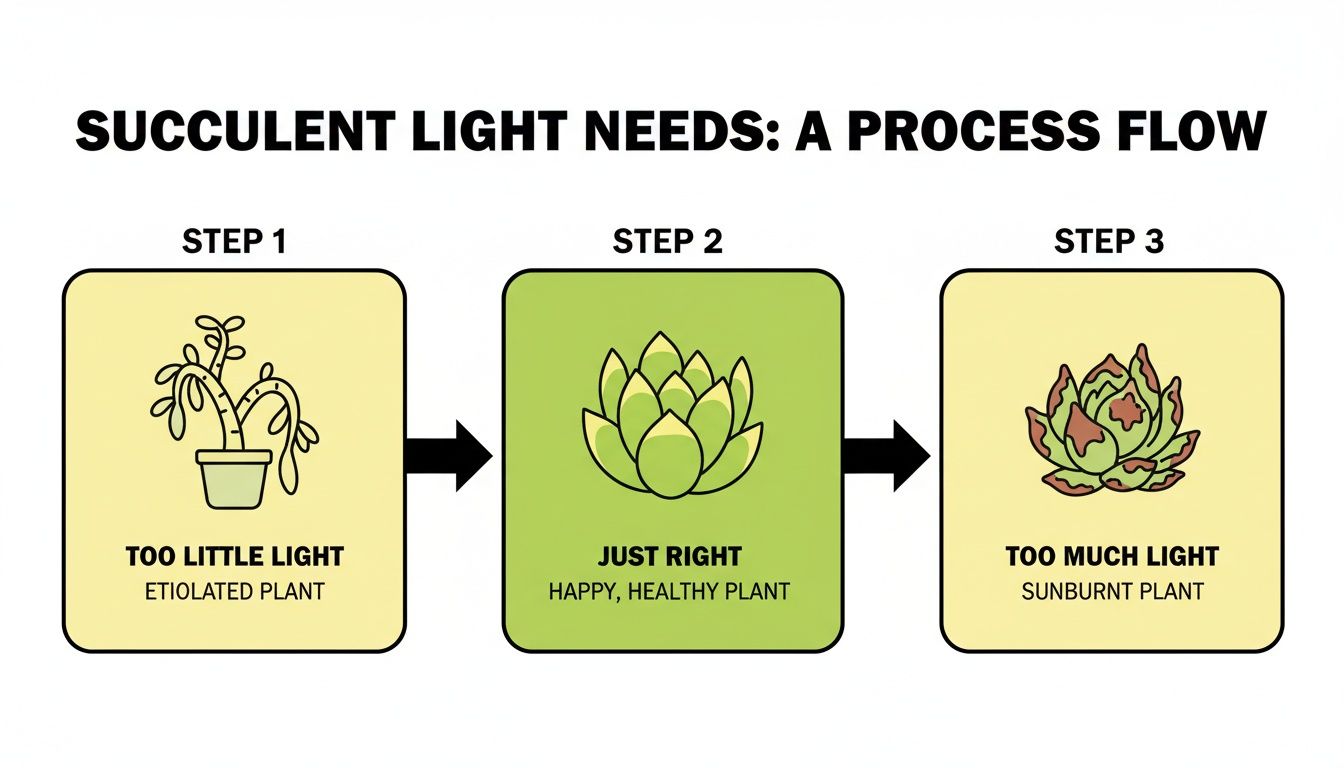
As you can see, the goal is a happy, compact plant that gets just the right amount of light. Too little light causes it to stretch out (etiolation), while too much can cause nasty sunburn.
By getting the "soak and dry" method down and using a gritty, fast-draining soil, you'll have eliminated the two biggest threats to your succulents. This one-two punch creates the foundation for a resilient, vibrant plant that's ready to thrive for years to come.
Choosing Pots, Feeding, and Repotting Your Succulents
Just as critical as light and water is the home you give your succulent. The pot you choose does more than just look good on a shelf; it plays a massive role in your plant's long-term health by helping you manage moisture and prevent the dreaded root rot. It’s a foundational choice that really sets the stage for everything else.
The material of your pot matters more than you might think. Terracotta is a classic for good reason. Its porous clay walls allow air and water to pass through, which helps the soil dry out much faster. For succulents, that breathability is a huge advantage, creating a far more forgiving environment if you tend to be a little heavy-handed with the watering can.
Glazed ceramic pots, on the other hand, are non-porous. While they come in a stunning variety of colors and finishes, they hold onto moisture for a lot longer. If you fall in love with a ceramic pot, you just have to be extra careful with your watering habits and make sure your soil mix is exceptionally well-draining.
The Non-Negotiable Rule of Drainage
No matter what material you pick, one feature is an absolute deal-breaker: drainage holes. If a pot doesn't have at least one hole at the bottom, it's essentially a bathtub waiting to drown your plant's roots.
Don't fall for the myth of adding a layer of rocks at the bottom for drainage—it doesn't work. It actually creates a waterlogged zone right where the roots are most vulnerable.
Pot size also has a direct impact on how quickly the soil dries out. A tiny plant swimming in a massive pot is a recipe for disaster. All that extra soil will hold moisture for way too long, overwhelming the small root system. As a general rule, choose a pot that’s only about 1-2 inches wider in diameter than the plant itself. This gives it just enough room to grow without creating a swampy mess. You can dive deeper into this topic in our guide on keeping succulents happy in a pot.
Demystifying Fertilizer for Succulents
Succulents aren't heavy feeders. Out in their native habitats, they’re used to thriving in gritty, nutrient-poor soils. Still, giving them a little boost during their active growing season—usually spring and summer—can encourage more robust growth and bring out those vibrant colors we all love.
The key is to fertilize sparingly to avoid burning their sensitive roots.
- Timing is Everything: Only feed your succulents when they are actively growing. Never fertilize a dormant plant in the fall or winter.
- Choose the Right Food: Use a fertilizer made specifically for cacti and succulents, which will be low in nitrogen. An all-purpose fertilizer diluted to half or quarter strength also works perfectly well.
- Less is More: For most succulents, feeding them just once or twice during the entire growing season is plenty. Over-fertilizing can cause weak, stretched-out growth that’s more likely to attract pests.
Think of fertilizer as a gentle vitamin supplement, not a three-course meal. You're just giving your plant a little nudge to support its natural growth, not trying to force it to bulk up.
Knowing When to Repot Your Plant
Eventually, your thriving succulent is going to need a new home. Repotting isn't just about giving it more space; it's also a great chance to refresh the soil, which gets compacted and loses nutrients over time. Knowing the signs is the best way to avoid stressing your plant.
Look for these tell-tale signs that it's time for an upgrade:
- Roots are growing out of the drainage hole. This is the most obvious sign your plant is totally root-bound.
- The plant looks top-heavy or tips over easily. The root system just isn't big enough anymore to hold it steady.
- Water runs straight through the pot. If water gushes out the bottom without seeming to wet the soil, the pot is so full of roots there’s no soil left to absorb moisture.
- Growth has stalled. If it's the growing season and your otherwise healthy plant hasn't put out any new growth in months, it has likely run out of room.
When you do repot, be gentle. Carefully loosen the old soil from the roots, check for any mushy, rotten spots (and trim them off if you find any), and settle the plant into its new pot with fresh, dry succulent mix. After that, wait at least a week before watering. This gives any damaged roots time to heal and callous over, which is your best defense against rot setting in.
Troubleshooting Common Succulent Problems
Sooner or later, every succulent owner runs into a problem. It's just part of the journey. Don't think of it as a failure—think of it as your plant communicating with you. The key is learning to spot the signs early and knowing how to respond.
Whether it’s a tiny bug you didn’t invite or a sign of stress from its environment, most issues are totally fixable. Let's walk through the most common problems you'll face, so you can turn that moment of panic into a clear plan of action.
Identifying and Treating Common Pests
Succulents are pretty tough, but they aren't immune to pests, especially when they live indoors with us. Catching an infestation before it gets out of hand is absolutely crucial, because these little critters can multiply in a flash.
A golden rule I live by: always quarantine new plants for a few weeks before introducing them to your collection. This simple step can save you a massive headache down the road.
The usual suspects are mealybugs, spider mites, and aphids. Each has a tell-tale look and needs a slightly different battle plan.
Mealybugs
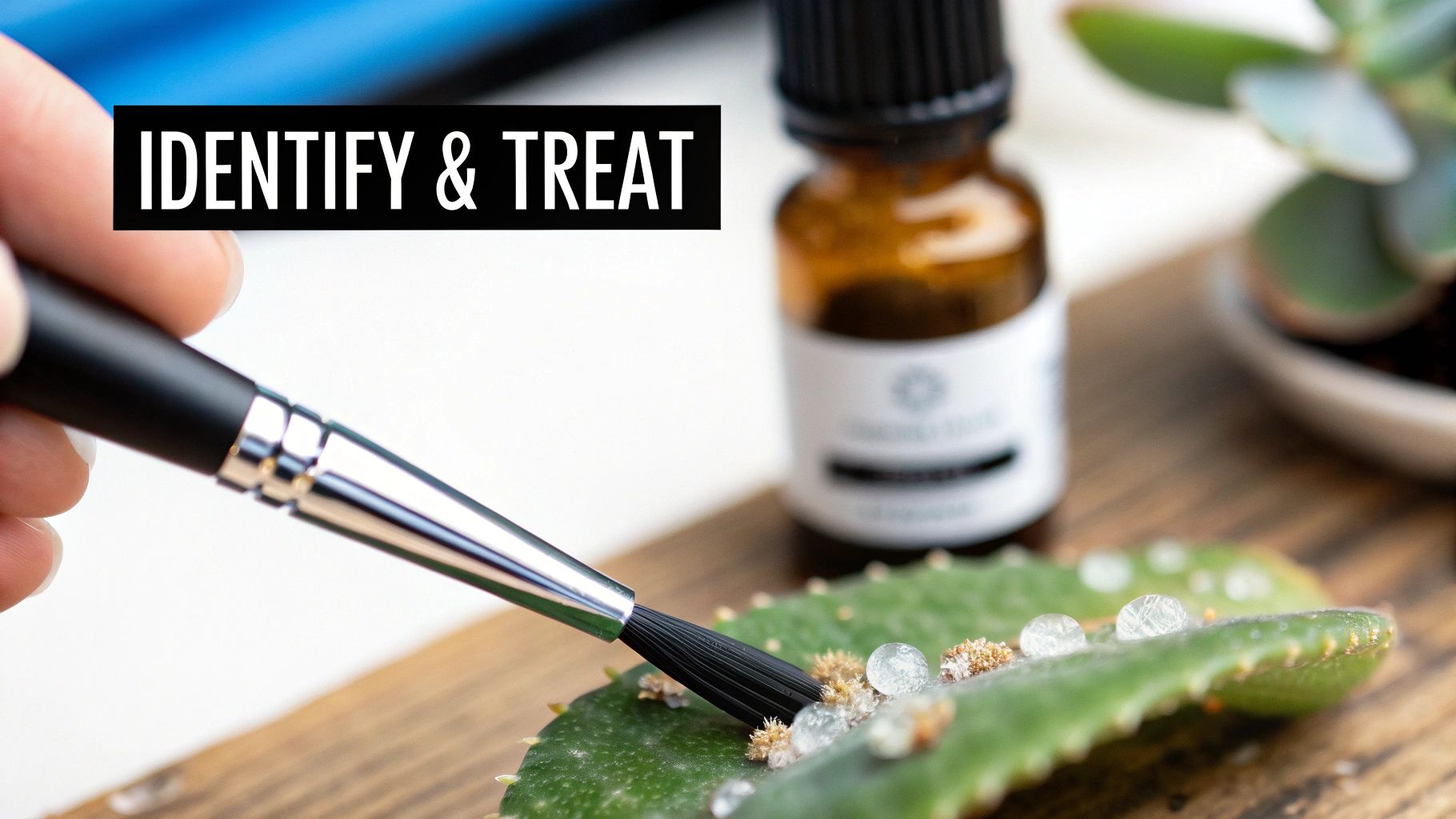
These are probably the easiest pests to spot. Look for small, fuzzy white spots that resemble bits of cotton, usually tucked into the tight crevices where leaves meet the stem. They feed on plant sap, which can stunt growth and cause leaves to drop.
- For small-scale issues: Dip a Q-tip in 70% isopropyl alcohol and dab it directly onto each mealybug. It's an instant fix.
- For larger infestations: You'll need to spray the entire plant. A solution of insecticidal soap or diluted neem oil from The Cactus Outlet works wonders. Be thorough and get into all those little nooks and crannies.
Spider Mites
Spider mites are incredibly tiny, so you probably won't see the bugs themselves. Your first clue will be delicate, silky webbing between the leaves. They love dry, warm air and leave behind a pattern of tiny, discolored spots on the leaves from their feeding.
To fight back, start by boosting the humidity; they hate it. A good rinse under the tap can physically knock them off. Follow this up with a spray of neem or horticultural oil every few days to catch them at every stage of their life cycle.
My Best Advice: When you're treating for any pest, consistency is everything. A one-and-done treatment rarely works. You need to repeat your chosen method every 5-7 days for a few weeks to make sure you’ve wiped out the adults and any eggs that hatch later.
Aphids
These small, pear-shaped insects often hang out in clusters on tender new growth and flower stalks. You might see them in green, black, or even gray. Just like mealybugs, they suck the life out of your plant and can cause new leaves to look twisted and deformed.
- A strong spray of water from a hose or sink sprayer can be surprisingly effective at dislodging them.
- For a more stubborn group, insecticidal soap is your best bet.
- Some gardeners even release beneficial insects like ladybugs to handle the problem naturally.
It can be tough to tell these tiny intruders apart. Here's a quick guide to help you identify what you're dealing with.
Common Succulent Pest Identification and Treatment
| Pest Name | Visual Cues | Recommended Treatment |
|---|---|---|
| Mealybugs | White, cottony masses in leaf joints and crevices. | Spot-treat with 70% isopropyl alcohol on a cotton swab. For larger infestations, use insecticidal soap or neem oil spray. |
| Spider Mites | Fine, spider-like webbing between leaves; tiny yellow or brown spots on leaf surfaces. | Rinse the plant thoroughly with water. Increase humidity and apply neem oil or horticultural oil spray every 5-7 days. |
| Aphids | Small, pear-shaped insects (often green or black) clustered on new growth or flower buds. | Dislodge with a strong jet of water. Apply insecticidal soap for persistent issues. |
| Scale | Small, hard, brown, or tan bumps that attach to stems and leaves. | Scrape off with a fingernail or use a cotton swab with alcohol. For heavy infestations, use horticultural oil. |
Remember to always isolate the affected plant immediately to prevent the pests from spreading to their neighbors.
Solving Environmental and Care Issues
Beyond pests, most succulent troubles come down to something in their environment. Yellowing leaves, a lanky shape, or mushy stems are just your plant's way of telling you it needs a change.
Root Rot is the number one enemy of succulents. It’s almost always caused by too much water or soil that stays wet for too long. You’ll know it’s rot if the stem base turns mushy and black, and the lower leaves become yellow, translucent, and fall off at the slightest touch. If you see this, act fast.
- Take the plant out of its pot immediately.
- With a clean, sharp knife, cut away every single piece of dark, mushy root.
- Let the healthy part of the plant sit out in a dry, shady spot for several days to callus over.
- Repot in a completely new, dry batch of well-draining succulent soil.
Another frequent problem is etiolation, which is a fancy word for stretching. This is what happens when a succulent is desperately reaching for more light. It will grow tall and spindly, with big gaps between the leaves. You can't shrink it back down, but you can fix it. Move the plant to a much sunnier spot. To save its appearance, you can "behead" it—cut off the compact rosette at the top, let the stem dry for a few days, and replant it. You can even propagate new plants from the leaves on the leftover stem!
Finally, don't have a heart attack over a little leaf drop. It’s often perfectly normal. Succulents will absorb the water and nutrients from their oldest, lowest leaves to fuel new growth. These old leaves will shrivel up and fall off. As long as it's the bottom leaves and the rest of the plant looks healthy, you have nothing to worry about.
Common Questions & Quick Answers for Succulent Care
Even the most seasoned succulent grower has questions now and then. It's totally normal to second-guess what you're seeing—is that leaf a good sign, or a bad one? This section is here to give you straightforward answers to the most common head-scratchers we hear from our community.
Think of this as your quick-reference guide for those "what does this mean?" moments. We'll cut through the confusion on some of the trickiest topics and give you the confidence to keep your plants happy and healthy.
So, How Often Should I Really Water My Succulents?
This is the million-dollar question, and the honest-to-goodness answer is: there is no magic schedule. The fastest way to kill a succulent is to stick to a rigid "water every Sunday" routine. The real secret to mastering how to care for succulents is to check the soil, not the calendar.
Your watering frequency is a moving target that depends entirely on your unique environment. The amount of light, the temperature, humidity levels, pot size, and even the time of year all come into play. The only rule that truly matters is this: water deeply only when the soil is 100% bone-dry from top to bottom. For an indoor succulent in a terracotta pot during a hot summer, that might be every two weeks. But in the middle of winter, when the plant is dormant, it could easily be every five or six weeks.
A simple wooden skewer or chopstick is your best friend here. Gently push it all the way to the bottom of the pot. If it comes out with any dark, damp soil clinging to it, wait a few more days and check again. It's that simple.
Can My Succulent Actually Survive in a Low-Light Room?
While some succulents are more forgiving than others, the short answer is that most will not truly thrive without enough light. Succulents are sun-worshippers at heart. A dim room won't kill them overnight, but you'll start to see them stretch toward the light, a process called etiolation.
This stretching weakens the plant, making it look pale and leggy, and opens the door to pests and disease. A few varieties, like Haworthia and Gasteria, can handle lower light better than most. But if you want your Echeveria to keep its vibrant colors and tight, beautiful rosette shape, it absolutely needs at least six hours of bright, indirect sunlight every single day.
For those interested in a popular low-light tolerant option, you might find this Guide to Rare Snake Plant Flowers fascinating—it covers a unique side of these resilient plants.
Why Are the Bottom Leaves of My Succulent Drying Up?
Seeing the lowest leaves on your succulent turn crispy and shrivel can be alarming, but most of the time, it's a completely normal part of the plant's life cycle. As your succulent pushes out new leaves from its center, it cleverly reabsorbs the water and nutrients from its oldest leaves at the base.
This is just the plant's natural way of recycling energy to fuel new growth. These old leaves will eventually dry into a papery crisp and fall off, or you can gently pluck them away.
The key is to pay attention to how the leaves are changing.
- Totally Normal: A few bottom leaves are slowly and gradually drying up while the rest of the plant looks plump and healthy.
- Sign of a Problem: If lots of leaves are turning yellow and mushy (not crispy), or if leaves higher up the stem are affected, you're likely looking at overwatering and potential root rot.
- Time to Water: If the bottom leaves are shriveling up fast and leaves further up the plant also look a bit wrinkled or feel soft, your plant is telling you it's thirsty.
Learning to read these signals is the difference between worrying and knowing exactly what your plant needs.
Ready to start or expand your collection? At The Cactus Outlet, we offer a stunning variety of healthy, high-quality succulents and cacti shipped directly to your door. Explore our selection and find your next favorite plant today at https://www.cactusoutlet.com.