
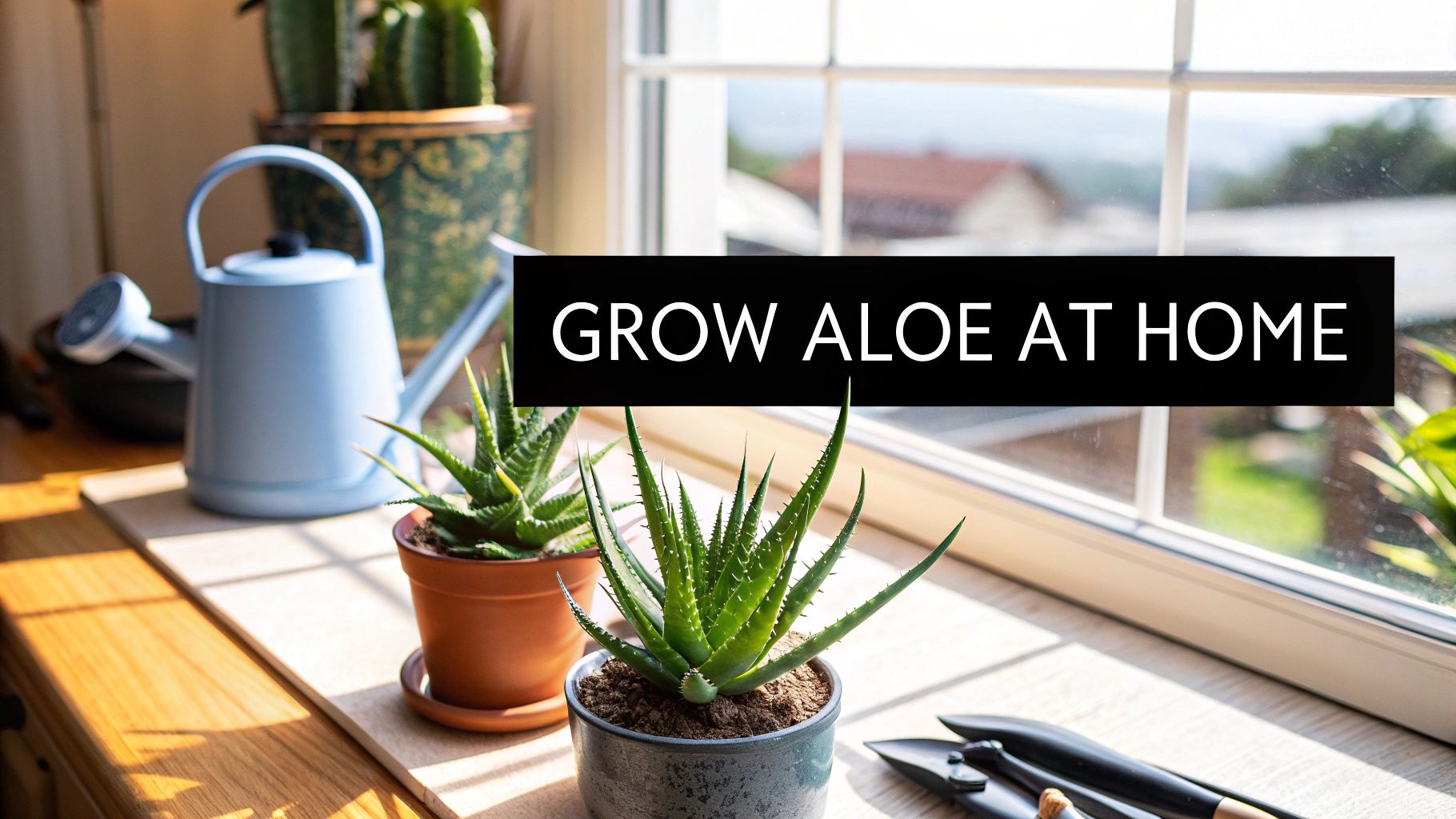

When you picture a succulent, chances are an aloe plant comes to mind. It's an iconic plant, instantly recognizable by its thick, fleshy leaves that seem sculpted by nature. For thousands of years, people have valued these hardy plants not just for their striking looks but as a living source of soothing gel. Their resilience makes them a fantastic starting point for anyone new to gardening.
A Living Legacy of Beauty and Wellness
Welcome to the world of aloe plants, where sculptural design and natural wellness meet. These incredible succulents have captivated people for centuries, traveling from the arid landscapes of the Arabian Peninsula to become a beloved fixture in homes all over the world. Their lasting appeal is simple: they're as useful as they are beautiful.
Think of this guide as your go-to resource, whether you're just dipping your toes into the plant world or you're a seasoned collector looking to add more variety. We'll walk through everything you need to feel confident growing thriving aloes. An aloe isn't just a plant; it's a low-maintenance friend that only asks for a sunny window and a little water now and then. In return, you get a pop of green, a touch of modern style, and a connection to a long history of natural remedies.
What Makes an Aloe Plant So Special?
The fascination with aloes goes well beyond the famous gel inside their leaves. The sheer diversity is staggering—with over 500 known species, you can find an incredible variety of shapes, sizes, and patterns. This means there’s an aloe out there to fit any space or style.
You could say aloe plants are a masterclass in nature's efficiency. They store water in their leaves, which lets them survive long dry spells. This makes them a perfect match for busy plant owners and anyone interested in water-wise gardening.
Here’s a quick breakdown of what makes them a must-have:
- Architectural Beauty: From the mesmerizing spiral of Aloe polyphylla to the cool, speckled patterns of the Tiger Aloe, their shapes add a unique, modern vibe to any room.
- Low Maintenance: Being succulents, they truly thrive on a "less is more" care routine. They're incredibly forgiving, which is great for beginners still figuring things out.
- Versatility: Beyond just looking good on a shelf, species like Aloe vera are famous for their practical uses, bringing a touch of wellness tradition right into your home.
Our goal here is to give you the know-how to pick, grow, and truly appreciate these amazing plants. We want you to feel empowered every step of the way on your gardening journey.
Choosing the Right Aloe for Your Space
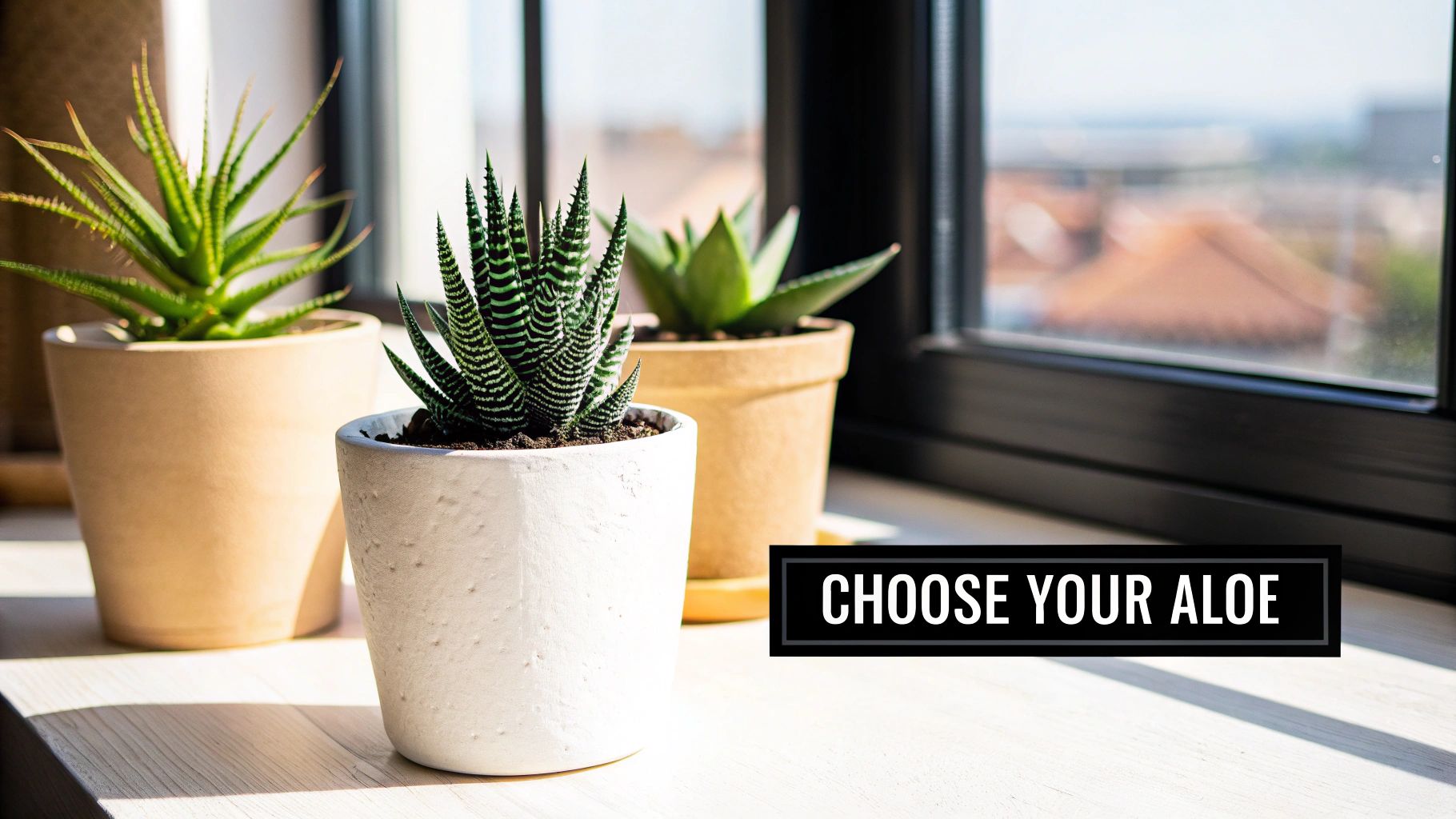
When you hear "aloe," Aloe vera is probably the first thing that comes to mind. But that’s just the tip of the iceberg. The aloe family is a massive, sprawling group of over 500 species, each with its own unique personality.
Finding the right aloe is like picking out a piece of living art. You’ll find everything from tiny, compact jewels perfect for a desk to towering giants that can anchor an entire landscape. Some grow in mesmerizing spirals, while others boast intricate patterns. The sheer variety means there’s an aloe out there for just about any space, whether you have a blazing hot patio or a cozy apartment nook.
Architectural Wonders for Modern Spaces
If you’re drawn to clean lines and dramatic shapes, some aloes are natural-born showstoppers. These plants are all about form, serving as incredible focal points that can define a room or garden.
- Spiral Aloe (Aloe polyphylla): This is a true collector's dream. It forms a perfect, hypnotic spiral of fleshy leaves that’s impossible to ignore. It’s a statement piece, for sure, but it does prefer cooler climates and demands excellent drainage.
- Tiger Aloe (Gonialoe variegata): A more manageable but equally stunning choice. The Tiger Aloe gets its name from the beautiful V-shaped white stripes that slash across its dark green leaves. It’s a fantastic pick for containers where you can appreciate its intricate design up close.
These aloes are perfect for minimalist interiors or modern rock gardens, where their structured silhouettes can really pop.
Giants of the Garden Landscape
Got some room to spare outdoors? If you live in a warmer climate (think USDA zones 9-11), certain aloes can transform into magnificent, tree-like specimens. These aren't your average houseplants; they're landscape powerhouses that create dramatic shadows and attract hummingbirds with their brilliant flowers. They're a key player when trying to create a beautiful and sustainable garden with xeriscape plants.
The Tree Aloe (Aloidendron barberae), for example, is a true giant, capable of reaching an incredible 60 feet tall with a thick, branching trunk. It makes for an unforgettable focal point in a drought-tolerant yard, offering shade and an almost prehistoric vibe. Planting one is a serious long-term investment in your garden's character.
Choosing a large-scale aloe is about more than just filling a space; it's about creating a living landmark. These majestic plants connect your garden to the wild, arid landscapes where they originate, offering a sense of permanence and natural grandeur.
Finding Your Perfect Match
To make the choice easier, start by thinking about where the plant will live. Is this a small accent for a bookshelf, a centerpiece for the patio, or the future king of your front yard? Knowing the answer will immediately help you narrow down the contenders.
Keep these simple factors in mind as you browse:
- Size at Maturity: Always check how large the aloe will eventually get. That tiny pup in a 2-inch pot can quickly become a monster.
- Light Needs: Be honest about the sunlight you have. A sun-worshipper won't be happy tucked away in a dim corner.
- Your Style: What look are you going for? Do you love orderly patterns, dramatic spikes, or a classic, friendly rosette? Pick what you'll love looking at every day.
To help you get started, we've put together a quick comparison of some of the most popular aloes you'll find.
A Quick Guide to Popular Aloe Species
Compare these popular aloe varieties to find the perfect match for your home and garden.
| Species Name | Common Name | Mature Size | Primary Feature | Best For |
|---|---|---|---|---|
| Aloe vera | Aloe Vera | 2-3 ft. tall | Medicinal Gel, Classic Rosette | Windowsills, Home Remedies |
| Gonialoe variegata | Tiger Aloe | 12 in. tall | Striking White Markings | Desktops, Small Containers |
| Aloe polyphylla | Spiral Aloe | 1-2 ft. wide | Perfect Spiral Growth Pattern | Cooler Climates, Rock Gardens |
| Aloidendron barberae | Tree Aloe | Up to 60 ft. tall | Massive, Branching Structure | Drought-Tolerant Landscapes |
| Aloe aristata | Lace Aloe | 6-8 in. wide | Fine White Spines, Compact Size | Small Pots, Group Plantings |
Ultimately, choosing an aloe is a personal journey. By matching the plant to your environment and your own personal taste, you’re guaranteed to find a tough, beautiful companion that will bring a touch of the exotic to your space for years to come.
Mastering the Essentials of Aloe Plant Care
Learning how to care for an aloe isn't about following a strict set of rules. It’s more about understanding the plant's personality. These succulents are tough, built to survive in places where other plants wouldn't stand a chance, which means they do best with a "less is more" mindset. Once you nail the five pillars of their care—Light, Water, Soil, Fertilizer, and Temperature—you're not just growing a plant; you're creating the perfect little desert environment for it to thrive in.
Think of your aloe as a self-contained survivalist. It holds its own water supply in its chunky leaves, pulls what little food it needs from gritty soil, and soaks up the sun. Your job is simply to mimic those natural conditions. Forget complicated routines; success with aloes comes from giving them a solid foundation and then getting out of their way.
Finding the Perfect Light
Aloes absolutely love sun, but that doesn't mean they want to get scorched. What they're really after is a ton of bright, indirect light to power their growth. The goal is to replicate the dappled sunlight they’d get in their native, arid landscapes—that’s the sweet spot.
An east-facing window is usually a great bet, giving them gentle morning sun. A spot a few feet back from a south or west-facing window works just as well, shielding the plant from the harshest direct afternoon rays. If you notice your aloe's leaves turning a reddish-brown, that’s its way of telling you it's getting a sunburn. It's a clear signal to move it somewhere with a little less direct exposure.
The Art of Watering Like a Desert Rainstorm
If there's one mistake that's the downfall of most aloe plants, it's overwatering. Their roots are incredibly prone to rot if they're left sitting in damp soil. The best strategy is to think like a desert storm: give them a thorough drenching, then let a long, dry spell follow.
Here’s how to nail it every time:
- Water Deeply: When it's time to water, be generous. Pour water until you see it freely draining from the bottom of the pot. This encourages the roots to grow deep and strong.
- Let It Dry Completely: This is the critical part. You have to let the soil dry out all the way through before you even think about watering again. Indoors, this might mean watering every 2-4 weeks, but you should always check first.
- Test the Soil: Don't just rely on a schedule. The best way to know is to stick your finger or a wooden chopstick about two inches down into the soil. If it comes out totally clean and dry, it's go-time. If any soil sticks to it, give it more time.
The golden rule for watering aloes is simple: when in doubt, wait. They are far more forgiving of being too dry than they are of being too wet.
Building the Right Foundation with Soil
The right soil is completely non-negotiable for a happy aloe. Your average, everyday potting mix is a death sentence; it holds way too much moisture and will lead to root rot in no time. Aloes need a gritty, fast-draining soil that lets their roots breathe.
The easiest route is to just buy a pre-made cactus or succulent mix. Or, if you prefer to mix your own, you can create a fantastic blend with equal parts:
- Standard Potting Soil
- Perlite or Pumice (for great aeration)
- Coarse Sand or Fine Gravel (for drainage)
This recipe makes sure water flows right through, preventing the soil from turning into a swampy trap. Proper drainage is truly the cornerstone of good aloe care. For an even deeper dive into their needs, take a look at our complete guide to Aloe vera plants care.
A Minimalist Approach to Fertilizer
Aloes are not greedy plants. Out in the wild, they grow in soil that’s pretty low in nutrients, so they’re wired to get by with very little. In fact, over-fertilizing is a common mistake that can burn their roots and lead to weak, stretched-out growth.
If you feel the need to fertilize, go easy. A balanced, water-soluble fertilizer diluted to half-strength is more than enough. Feed them just once or twice a year, only during the spring and summer when they're actively growing. You should never fertilize in the fall or winter when the plant is resting.
Ideal Temperature and Environment
Aloes are perfectly happy in the same temperatures we are, preferring a range between 55°F and 80°F (13°C and 27°C). They have zero tolerance for frost, so if you give your aloes a summer vacation outside, make absolutely sure to bring them back in before the first cold snap.
Their appeal goes far beyond home decor; these plants are at the center of a massive global industry. The aloe vera market alone is valued at an incredible USD 2.26 billion and is on track to hit USD 3.15 billion by 2031. This explosive growth is fueled by its use in everything from cosmetics to health drinks, with the Asia-Pacific region leading the charge with a 39.10% market share. So that humble aloe on your windowsill is part of a much bigger story. You can learn more about the booming global aloe vera market on mordorintelligence.com.
A Guide to Potting and Propagating Aloes
Sooner or later, your aloe plants will either get too big for their britches or start producing little babies of their own. Both are fantastic signs of a healthy, happy plant! Here, we’ll walk through the simple steps for potting, repotting, and propagating, turning these essential chores into rewarding projects that expand your collection.
Think of potting as giving your aloe a solid foundation to thrive. When it comes to propagation, you’re simply helping the plant do what comes naturally: multiply. With just a few basic tools and a bit of patience, you can easily manage your aloe’s growth and even share new plants with friends and family.
Potting and Repotting Your Aloe
Aloes actually don't mind being a little snug in their pots, so you’ll likely only need to repot them every two to three years. You'll know it's time when you spot roots sneaking out of the drainage holes or when the plant has produced so many pups that the pot is overflowing.
Spring is the perfect season for this task, as the plant is just kicking into its active growth phase.
Here’s how to give your aloe a new home:
- Choose the Right Pot: Grab a new container that's only 1-2 inches wider in diameter than the old one. A pot that’s too big holds onto excess soil and water, creating the perfect storm for root rot. Terracotta is a great choice because its porous clay helps the soil dry out more evenly.
- Prepare Your Soil: You absolutely must use a fast-draining cactus or succulent mix. This is the golden rule for healthy roots.
- Remove the Plant: Gently tip the pot on its side and carefully slide the aloe out. If it’s a bit stubborn, a few taps on the sides of the pot should loosen the root ball.
- Inspect the Roots: Take a look at the roots. If you see any that are dark, mushy, or just look unhealthy, trim them off with a clean pair of scissors.
- Pot the Aloe: Add a layer of your soil mix to the new pot. Center the plant inside, making sure its base is at the same depth as before. Fill in around the sides with more soil, gently patting it down.
- Wait to Water: This is crucial—don't water your newly repotted aloe for at least a week. This little dry spell gives any bruised or cut roots time to heal and form a callus, which prevents them from rotting.
This diagram covers the core care principles that get your aloe ready for successful potting and a happy life.
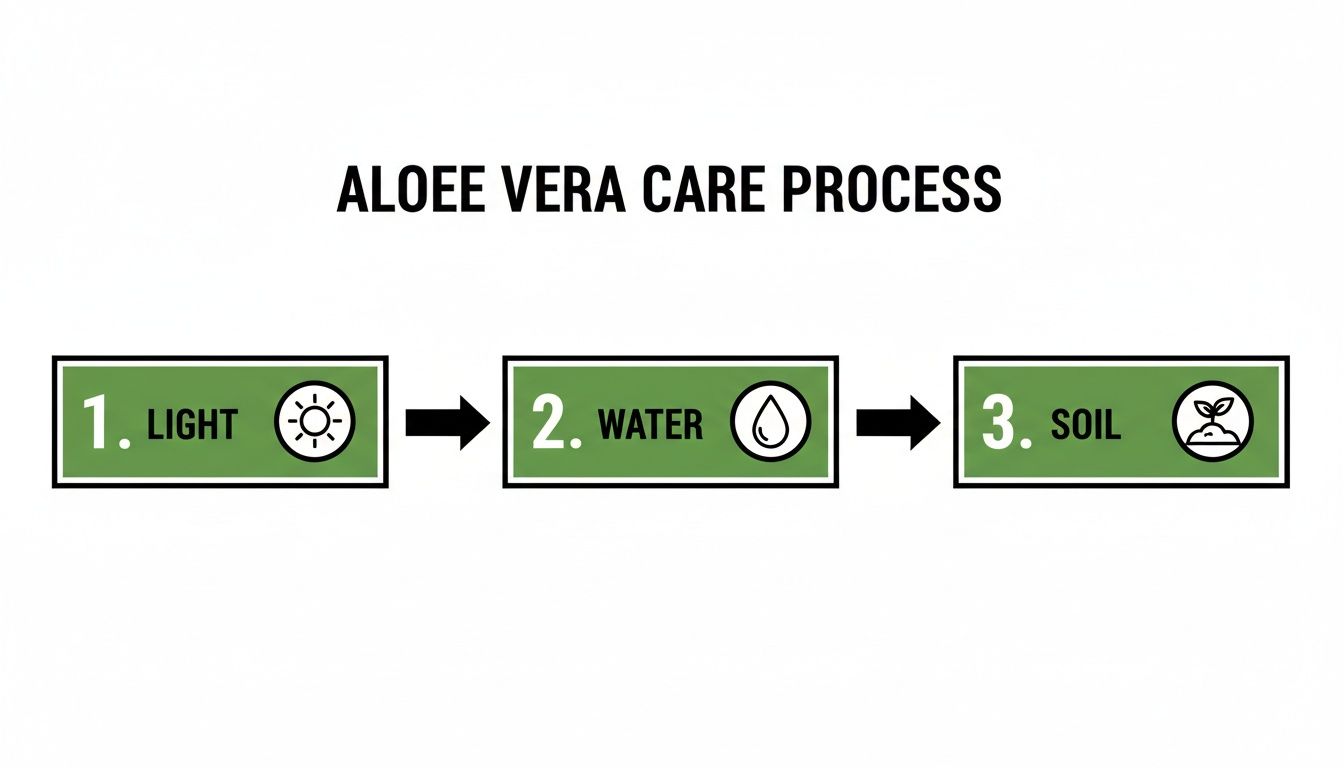
As you can see, success with aloes comes down to balancing light, water, and soil to recreate the arid conditions they love.
Propagating Aloes by Dividing Pups
One of the best parts of growing aloes is watching them create offsets, or as we affectionately call them, "pups." These are perfect little clones of the mother plant that pop up around its base. Separating them is by far the easiest and most reliable way to make more aloes.
Propagating pups is like giving your plant’s family tree new branches. Each offset can grow into a full-sized, independent plant, carrying on the genetics of its parent.
Once a pup is a few inches tall with several of its own leaves, it’s ready to leave the nest. I recommend waiting until it has developed its own small root system, as this dramatically increases its chances of survival on its own.
Ready to divide? Here’s how:
- Gather Your Tools: You’ll want a clean, sharp knife or pruning shears, some small pots, and fresh succulent soil.
- Unpot the Mother Plant: Carefully take the main plant out of its pot. This gives you a much better view of where the pups are attached.
- Separate the Pups: Find the spot where the pup connects to the mother plant. Use your knife to make a clean cut, trying your best to keep as many of the pup’s own roots intact as possible.
- Let Them Callus: Set the pups aside in a dry, shady spot for a day or two. This allows the cut to dry and form a protective callus, which is your best defense against rot. While some people have luck growing aloe vera from a cutting, dividing pups is a much more foolproof method.
- Plant Your New Aloes: Pot each pup into its own small container using your succulent mix. And just like with repotting, hold off on watering for about a week to let them settle in.
How to Troubleshoot Common Aloe Problems
Even the toughest aloes can run into trouble now and then. But don't panic! Most issues are surprisingly easy to fix once you know what to look for. Think of your aloe's leaves as a report card—they’ll tell you exactly what’s going on with its health.
Consider this your field guide to decoding those signals. We'll walk through the most common problems, explaining the symptoms, pinpointing the cause, and giving you clear, actionable steps to get your aloe back in top shape.
Issue 1: Mushy Yellow Leaves
This is probably the number one problem aloe owners encounter, and it sends a very clear message.
- The Symptom: You'll see leaves, usually starting at the base, turn a sickly yellow and feel soft or squishy. The whole base of the plant might look dark and waterlogged.
- The Cause: This is the classic, textbook sign of overwatering. The soil has been wet for too long, and the roots are suffocating, which quickly leads to root rot.
- The Solution: Stop watering immediately. Let the soil dry out completely. If it’s really bad, you’ll need to act fast: repot the plant into fresh, dry succulent mix. While you have it out, inspect the roots and trim off anything that’s black and mushy. For a full rescue mission, check out our guide on how to save an aloe plant.
Issue 2: Brown, Crispy Tips
On the flip side, you might see the tips of your aloe leaves looking parched and brittle.
- The Symptom: The very ends of the leaves turn brown, feel dry to the touch, and might even get crispy or shrivel up.
- The Cause: This almost always points to underwatering. Yes, aloes are drought-tolerant, but they aren't immortal! The plant is conserving resources by pulling moisture from its leaf tips to keep the core alive.
- The Solution: Give the plant a good, deep drink of water, letting all the excess drain away. You can’t reverse the browning on the tips, but feel free to trim them off for a cleaner look. Going forward, try watering just a little more frequently.
Remember the golden rule of watering aloe plants: Water deeply, but infrequently. It’s the period of dryness between waterings that keeps the roots healthy and strong.
Issue 3: Leggy, Stretched-Out Growth
If your aloe is looking more like a lanky teenager than a tight, compact rosette, it's begging for a change of scenery.
- The Symptom: The plant shoots up, growing tall and thin with big gaps between the leaves. The leaves themselves might look a bit pale. This phenomenon is called etiolation.
- The Cause: It’s not getting enough light. Simple as that. The plant is literally stretching itself out, reaching for the nearest light source.
- The Solution: Slowly introduce your aloe to a spot with more bright, indirect sunlight. Be careful not to shock it by moving it into direct, intense sun all at once—that can cause sunburn. The stretched-out parts won't shrink back, but all the new growth will be compact and healthy.
Issue 4: Common Pests
Aloes are pretty good at fending for themselves, but they can still attract some unwelcome visitors, especially when kept indoors.
- The Symptom: Look closely in the crevices where the leaves meet the stem. See any small, white, cotton-like fluff? Those are mealybugs. Tiny brown or black bumps that look like part of the plant are likely scale insects.
- The Cause: Pests tend to show up on plants that are already stressed or in areas with poor air circulation.
- The Solution: If you only see a few, dip a cotton swab in 70% isopropyl alcohol and just dab the pests directly. For a more widespread problem, spray the entire plant with a gentle insecticidal soap. Make sure you get it into all the nooks and crannies where they love to hide.
The Many Uses of Aloe Plants
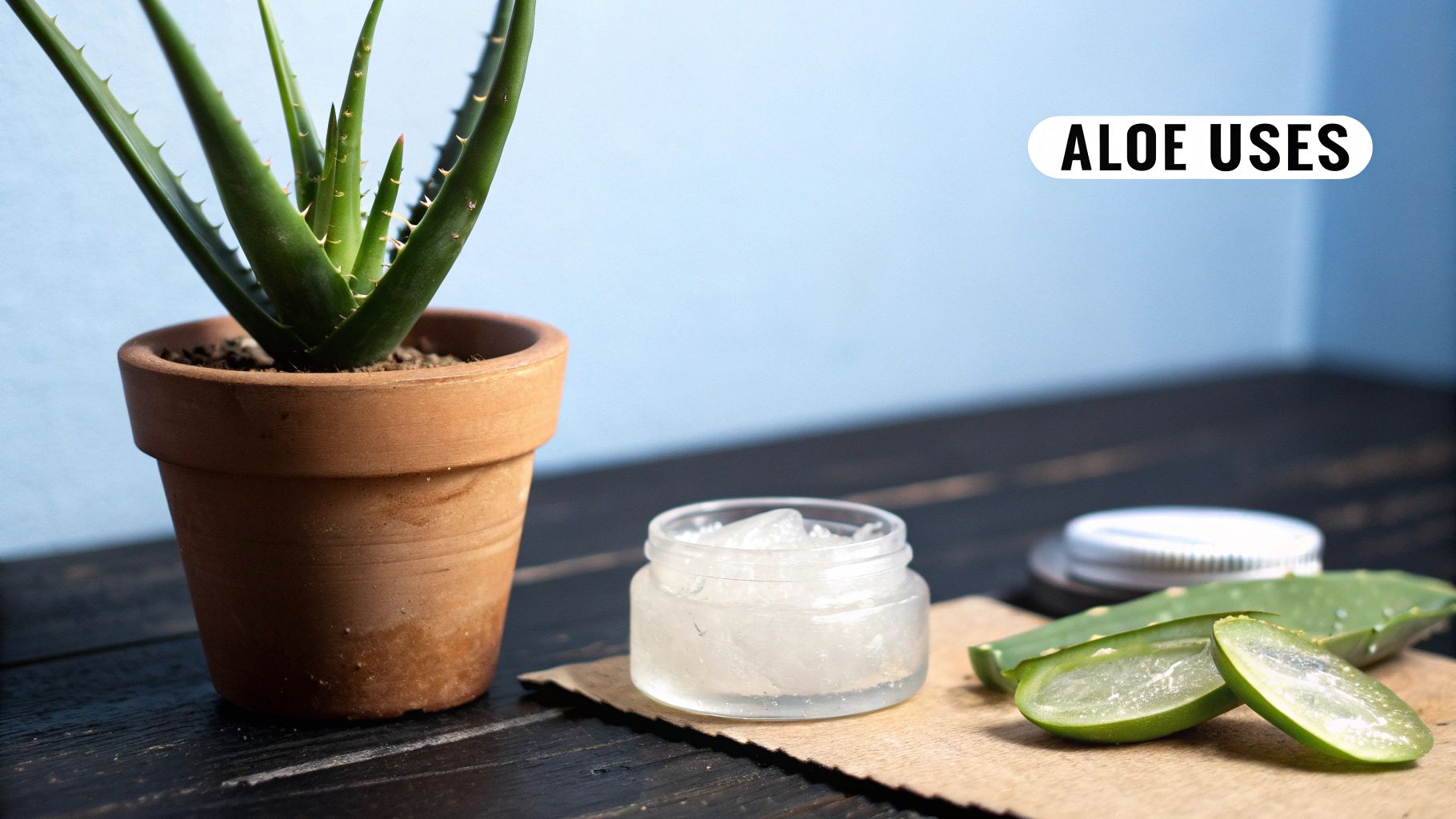
Sure, aloes look incredible, but their striking appearance is just the beginning. These plants are packed with a surprising range of uses that people have trusted for thousands of years. From ancient Egyptian remedies to today's wellness routines, the power inside those fleshy leaves has a long and storied history. An aloe in your home isn't just a plant; it's a living piece of natural history.
This incredible versatility is exactly why aloes are so popular. In North America alone, the demand for aloe vera products is huge, with the market valued at USD 1.64 billion and expected to climb to USD 2.75 billion by 2032. It’s clear people appreciate a plant that’s both a beautiful succulent and a source of amazing ingredients. You can dig deeper into the trends shaping the aloe vera products market on coherentmarketinsights.com.
An Ornamental Centerpiece
Let's start with the obvious: aloe plants are gorgeous. Their strong, architectural forms and varied patterns bring a modern, sculptural vibe to any windowsill, patio, or garden bed. There's a reason designers love them.
Aloes are also champions of xeriscaping—the art of creating beautiful, water-wise landscapes. Because they need so little water to thrive, they're perfect for drought-tolerant gardens. They provide that pop of year-round green without being needy.
The beauty of using aloe plants ornamentally is their effortless style. They create a powerful visual impact while asking for very little in return, embodying a minimalist and sustainable approach to gardening.
A Soothing Home Remedy
Of course, the most famous use for aloe is the soothing gel found inside the leaves of Aloe vera. For centuries, this clear, cool gel has been the go-to home remedy for minor skin troubles.
Here are a few ways people use it around the house:
- Minor Sunburns: A bit of aloe gel feels incredibly cooling on sun-kissed skin.
- Small Scrapes and Cuts: The gel can form a natural barrier, helping to keep the area moisturized while it heals.
- Skin Hydration: It works wonders as a simple, natural moisturizer for dry spots.
Important Safety Note: This is crucial—only use the gel from a correctly identified Aloe vera (Aloe barbadensis miller). Some other aloe species can be irritating or even toxic. Also, some people are sensitive to the yellow latex just under the leaf skin, so always do a small patch test on your skin first.
Exploring Culinary Uses
While not as common, some aloes have found their way into the kitchen, but you have to be extremely careful here. The inner gel of Aloe vera is edible, but only if it's prepared properly by removing the entire bitter outer leaf and all traces of the yellow latex layer.
Once prepared, this gel is sometimes blended into smoothies or drinks for its supposed health benefits. I can't stress this enough: you must be 100% certain of the plant's species and preparation method. Getting it wrong can cause some serious digestive issues. If you're not an expert, it's safer to stick with commercial products, like this Aloe Vera Gel Set, which showcase aloe's versatility in a ready-to-use form.
Your Aloe Questions, Answered
Even the most seasoned plant parent has questions now and then. We get it! Here are the answers to some of the most common queries we hear from our customers at The Cactus Outlet, designed to help you solve problems and grow with confidence.
How Can I Tell If My Aloe Is Getting Too Much Sun?
Your aloe will tell you! If it’s getting scorched, the leaves will protest by turning a stressed-out shade of yellow, orange, or even reddish-brown instead of their usual vibrant green. Think of it as the plant's version of a sunburn.
While aloes are sun-lovers, that scorching afternoon sun can be way too intense. The easy fix? Move it to a spot that gets plenty of bright, indirect light. An east-facing window is perfect, or you can simply pull it back a few feet from a south-facing one. It should bounce back to its happy green color in no time.
Is the Gel from Any Aloe Plant Safe for Skin?
Definitely not, and this is a critical one to remember. The only species you should ever use for its soothing, medicinal gel is Aloe vera (Aloe barbadensis miller). The gel from other ornamental aloes won't have the same benefits and could even cause some serious skin irritation.
Always be 100% certain of your plant’s ID before ever using its gel. If there's any doubt at all, just enjoy it for its good looks and leave the skin remedies to the pros.
Why Is My Aloe Plant So Tall and Stretched Out?
That long, lanky look is a classic case of etiolation. It's a fancy word that simply means your plant is desperate for more light. It's literally stretching its "neck" out, reaching for the nearest light source, which causes those weak stems and big, awkward gaps between the leaves.
To get it back on track, you'll need to move it to a much brighter spot, but do it gradually to avoid shocking it. While you can't really fix the parts that have already stretched, all the new growth that comes in will be tight, compact, and healthy, restoring that classic aloe shape you love.
How Often Does My Aloe Need to Be Repotted?
Aloes actually enjoy being a little snug in their pots, so you don't have to rush to repot. A good rule of thumb is to give them a new home every two to three years, or when you see some obvious signs that it's getting cramped.
Here’s what to look for:
- Roots are making a break for it out of the pot's drainage holes.
- The pot is overflowing with new pups (baby aloes).
- The whole plant seems to be pushing itself up and out of the soil.
When it's time for an upgrade, just pick a new pot that’s only one or two inches wider than the old one. This simple step is your best defense against root rot, as it keeps the soil from staying waterlogged.
Ready to add a stunning new aloe to your family or start your collection? At The Cactus Outlet, we have a massive variety of healthy, gorgeous aloes and succulents, all ready to be shipped right to you. Dive into our collection and find your next piece of living art. Shop our aloe plants now at https://www.cactusoutlet.com.