


Of all the cacti out there, few command attention quite like the Golden Barrel Cactus. Its iconic, perfectly round shape and brilliant golden spines make it a true living sculpture. You've probably seen Echinocactus grusonii stealing the show in desert landscapes, rock gardens, or as a stunning centerpiece in a modern pot. It’s no wonder it has the cheeky nickname "Mother-in-Law's Cushion."

The Enduring Allure of the Golden Barrel Cactus
What makes this cactus so special? It's the flawless geometry. The body is a perfect globe, wrapped in razor-sharp, glowing yellow spines that catch the light beautifully. Its surface is lined with deep, orderly ribs that create a striking pattern of light and shadow, and the top is crowned with a patch of soft, woolly felt where new growth and flowers emerge. It’s an architectural masterpiece designed by nature.
But there's a deeper story to this plant's beauty. While it’s a common sight in nurseries and gardens around the world, the Golden Barrel is critically endangered in the wild. Its native home is a small area in east-central Mexico, where volcanic slopes provided the perfect growing conditions. Sadly, habitat destruction has pushed this incredible species to the brink of extinction.
A Plant with a Story
Knowing this completely changes how you see the plant. When you decide to grow a Golden Barrel, you're doing more than just adding a cool succulent to your collection—you’re becoming a custodian of a rare and precious species. Your garden becomes a small sanctuary for a plant that has largely vanished from its natural environment.
This guide is designed to give you everything you need to help your Golden Barrel not just survive, but truly thrive. We'll get into the nitty-gritty of:
- Essential Care: Getting the sun, water, and soil just right.
- Smart Propagation: How to create new plants from your existing one.
- Design and Display: Using its bold shape to make a statement in your home or garden.
By the time you're done here, you'll have the skills and confidence of a seasoned grower and a real appreciation for this cactus's place in the world.
Let's start with a quick snapshot of what makes the Golden Barrel Cactus tick.
Golden Barrel Cactus At A Glance
Here’s a quick summary of the key details for Echinocactus grusonii.
| Attribute | Details |
|---|---|
| Common Name | Golden Barrel, Mother-in-Law's Cushion |
| Scientific Name | Echinocactus grusonii |
| Native Habitat | East-Central Mexico (critically endangered) |
| Growth Habit | Slow-growing, globular, can reach 3 ft in diameter |
| Sun Exposure | Full sun (at least 6 hours daily) |
| Water Needs | Low; uses "soak and dry" method |
| Soil Type | Gritty, fast-draining cactus mix |
| Hardiness | USDA Zones 9-11 |
This table gives you the basics, but now it's time to dive into the specifics of how to give this incredible plant the life it deserves.
From Volcanic Slopes to Your Garden: A Story of Survival
To really get a feel for the Golden Barrel, you have to picture where it comes from. This isn't some lush, gentle landscape. We're talking about the harsh, sun-blasted volcanic slopes of east-central Mexico, a place that forged this cactus into the tough survivor we know today.
Imagine intense, unfiltered sun beating down on porous, rocky ground. Rain is a rare event, arriving in brief, powerful bursts before disappearing almost instantly. This is the environment that shaped Echinocactus grusonii, and its entire structure is a masterclass in adaptation.
A Masterpiece of Natural Engineering
Every single feature you see on this cactus is a direct response to those brutal conditions. Its classic spherical shape is brilliant because it minimizes the surface area exposed to the drying air, saving precious water. Those deep, accordion-like ribs aren't just for looks, either—they let the plant's body swell up to store water during a downpour and shrink down during a drought, acting just like a living canteen.
Even its famous golden spines are a multi-tool for survival:
- Built-in Sunscreen: They create a dense cage that casts a subtle but critical layer of shade over the cactus’s green skin, preventing nasty sunburn.
- Water Harvesters: The spines are perfectly designed to catch morning dew and channel every last drop of rain down toward the base of the plant, right where the roots can absorb it.
- Bodyguards: Most obviously, they present a formidable defense against any thirsty animal looking for an easy drink.
This is a plant built for extremes. It expects bright light, infrequent but deep watering, and soil that drains so fast its roots never sit in water. If you can replicate those three things, you’ve unlocked the secret to growing a happy Golden Barrel.
An Urgent Conservation Story
Here’s the tragic irony: while the Golden Barrel is one of the most beloved and widely grown cacti on the planet, it's almost gone from the wild. The construction of the Zimapán Dam back in the early 1990s flooded the main canyon where this species grew, wiping out its primary habitat.
Because of this, the International Union for Conservation of Nature (IUCN) officially lists the Golden Barrel Cactus as Endangered. It is now exceptionally rare in its native environment, hanging on in just a few small, scattered populations. Suddenly, growing one in your home or garden feels a lot more meaningful, doesn't it? The overwhelming majority of these cacti now exist in private collections, nurseries, and botanical gardens.
When you understand its journey from volcanic slopes to the brink of extinction, you look at the plant in your pot a little differently. Each one thriving in a garden is a living ambassador for a species that has all but vanished from its homeland.
This precarious status is why responsible sourcing is so important. Always buy your golden barrel cactus echinocactus grusonii from reputable growers who propagate them from seed or by rooting offsets. Doing so supports the species' survival and ensures you aren't accidentally contributing to illegal poaching from its few remaining wild habitats.
The Golden Barrel is an incredible plant, but it’s just one member of a diverse family. You can learn more about different types of barrel cacti and their own unique stories in our guide. Owning one of these isn't just about adding a cool plant to your collection—it's about becoming a guardian of natural history.
Mastering the Foundations of Golden Barrel Cactus Care
The secret to a happy Golden Barrel Cactus isn't some complicated horticultural trick. It's actually pretty simple: you just have to think like a cactus. Your main job is to mimic the sun-blasted, rocky, and dry home it came from in central Mexico. If you can get that right, you’re golden.
Let's break it down to the big three: light, water, and soil. Nail these, and you'll have a perfectly round, vibrant cactus that becomes the centerpiece of your collection. Everything else is secondary.
Think of your Golden Barrel as a little solar-powered battery. It evolved on exposed volcanic slopes, so its entire biology is wired to crave intense, direct sunlight. Anything less is a compromise that will dull its color and warp its shape.
Replicating the Intense Mexican Sun
To keep that classic spherical form and those brilliant yellow spines, your cactus absolutely needs a minimum of six hours of direct, unfiltered sun each day. For an indoor plant, a south-facing window is your best bet. If it's outdoors, find a spot that gets blasted by the sun from morning into the late afternoon.
Without enough light, a Golden Barrel starts to etiolate. It's a natural survival response where the plant literally stretches itself out, becoming tall and skinny as it desperately searches for a light source. This stretching is permanent and weakens the plant's structure, so getting the placement right from day one is crucial.
If your cactus has been in a shadier spot, don't just shove it into the full sun. You'll give it a nasty sunburn. Instead, acclimate it gradually over a week or two to let its skin toughen up.
The "Soak and Dry" Watering Philosophy
Believe it or not, one of the fastest ways to kill a Golden Barrel is by being too attentive—especially with the watering can. These cacti are built to survive long droughts broken up by occasional, intense downpours. We can copy this rhythm with a simple method called "soak and dry."
It’s exactly what it sounds like:
- Soak: When it's time to water, give it a real drink. Drench the soil until water pours out of the drainage holes. This ensures every last root gets access to moisture.
- Dry: Now for the most important part: let the soil become bone dry all the way through before you even think about watering again. You can check by sticking your finger a few inches into the pot or using a soil moisture meter. This drying-out period is non-negotiable for preventing root rot, the number one killer of this species.
A Golden Barrel Cactus would rather be too dry than too wet. In the wild, its roots never sit in moisture, and replicating this dry spell is fundamental to its survival. Inactive during winter, it needs even less water—perhaps only once a month or less, depending on your climate.
Building the Perfect Gritty Soil Foundation
The ground your Echinocactus grusonii lives in is just as critical as light and water. Using standard potting mix is like forcing your cactus to wear wet socks—it's a recipe for disaster. That stuff is designed to hold moisture, which is the exact opposite of what these desert dwellers need. Their roots crave air and fantastic drainage to stay healthy.
Your cactus needs a gritty, chunky mix that lets water rush right through, just like the porous volcanic soil of its native home. While you can buy pre-made cactus soil, I find that making my own gives the best results. A great, no-fuss recipe is a 1:1:1 ratio of:
- Potting soil
- Coarse sand
- Mineral grit (like perlite or pumice)
This infographic provides a powerful look at the Golden Barrel's journey, from its precarious life on volcanic slopes to the conservation efforts helping it survive.

Seeing its fragile origins really drives home why getting the soil and sun conditions right is so important. If you want to get your hands dirty and create the perfect base for your desert plants, check out our guide on how to make cactus soil. This approach guarantees your Golden Barrel's roots will have the dry, airy home they were born to live in.
Alright, you’ve mastered the essentials for your Golden Barrel. You're giving it the bright sun, gritty soil, and deep, infrequent waterings it loves. Now, let’s move past simple survival and learn the techniques that will help your cactus not just live, but truly flourish into a stunning, show-stopping specimen.
These are the next-level tips for growers who are serious about their plants.
The Right Way to Fertilize
It's a huge myth that cacti don't need to be fed. While they're incredibly tough, the sterile potting mixes we use lack the trace minerals they'd find in their native volcanic soil. In a pot, your cactus depends entirely on you for its nutrition.
Feeding a Golden Barrel is a delicate dance, though. Think of it less like a three-course meal and more like a targeted vitamin supplement. If you use a standard, high-nitrogen houseplant food, you’ll get a burst of fast, weak growth that makes the cactus look bloated and leaves it vulnerable to pests and disease.
For a strong, dense cactus with impressive spines, you need a different approach. The secret is a fertilizer that's low in nitrogen but high in potassium and phosphorus. This specific blend promotes robust cell structure and encourages flowering, all without forcing the kind of soft growth you want to avoid.
Here’s the simple schedule to stick to:
- When to Feed: Only during the active growing season in spring and summer.
- How Often: Very sparingly. Once every 4-6 weeks is plenty.
- What to Use: A liquid fertilizer formulated for cacti, diluted to half the recommended strength.
Never, ever fertilize in the fall or winter. The plant is dormant, and pushing nutrients on it when it can't use them will only burn the roots. This disciplined feeding helps your cactus build its strength slowly and naturally, just as it would in the wild.
How to Propagate Your Golden Barrel
One of the most satisfying parts of owning a mature golden barrel cactus echinocactus grusonii is making more of them. As your plant gets older, it might start producing small offsets, often called "pups," around its base. Propagating these pups is a great way to expand your collection or share your hobby with friends.
Removing an offset requires a bit of care. You'll want thick gloves, a sharp, clean knife, and a steady hand. Gently clear the soil away from the base of the pup to see where it connects to the mother plant, then make a clean, decisive cut.
Let the fresh cut on the pup dry out in a shady, airy spot for several days up to a week. It needs to form a hard, dry callus over the wound. This step is absolutely critical—planting a fresh cutting will almost always lead to rot. Once it's callused, just set it on top of some dry cactus mix, and it will eventually grow roots.
Understanding Your Cactus's Annual Rhythm
Like most desert dwellers, the Golden Barrel cactus operates on a distinct yearly cycle. It puts on most of its growth during the warm, sunny days of spring and summer before slowing down for a long winter rest. Honing your care to match this natural rhythm is key, especially if you live in a region with cold winters.
If your cactus lives outside in a climate colder than USDA Zone 9, it must be protected from frost. Even one hard freeze can turn parts of the plant to mush or kill it outright. Potted cacti should be moved into a garage, shed, or a cool, bright spot indoors for the winter.
For every Golden Barrel, winter means you drastically cut back on water. As the days get shorter and cooler, the plant's metabolism grinds to a near halt, and its water needs plummet. You may only need to water it once a month—or even less—just to keep the roots from completely drying out. This cool, dry rest period isn't just about survival; it's a necessary trigger that encourages the plant to produce its beautiful yellow flowers in the spring.
Solving Common Golden Barrel Cactus Problems
Even a cactus as tough as Echinocactus grusonii can run into trouble now and then. Think of this as your field guide to plant first aid. Learning to read the signs your cactus is giving you is the key to catching problems early and getting your plant back on track.
Nine times out of ten, issues with a Golden Barrel trace back to the fundamentals we’ve already covered—water, sun, and soil. Let’s figure out what your cactus is trying to tell you.
Decoding a Mushy and Yellowing Base
If you spot the base of your cactus turning soft, squishy, and yellow or brown, you need to act fast. This is the classic, tell-tale sign of root rot, and it’s almost always caused by too much water or soil that just won't dry out. The roots have literally drowned and started to decay, and that decay is creeping up into the cactus itself.
Don't panic, but it's time for some emergency plant surgery:
- Gently remove the cactus from its pot and brush off all the old, wet soil.
- Now, inspect the roots. Healthy roots are firm and pale, while rotted roots will be black, mushy, and might even smell bad.
- Using a clean, sharp knife, cut away every bit of rot—both on the roots and on the base of the cactus. You have to be aggressive here; any infected tissue left behind will just keep spreading.
- Let the cactus air out in a dry, shaded spot for several days, or even a full week. You're waiting for every cut surface to form a dry, hard callus.
- Once callused, repot it into a pot with fresh, completely dry, fast-draining cactus mix. Don't water it for at least another week to give it time to settle in.
This drastic measure can save the plant, but prevention is always better. Stick to a soak-and-dry watering schedule and make absolutely sure your pot has excellent drainage.
Identifying and Eliminating Common Pests
While they are hardy, Golden Barrels can occasionally attract some stubborn pests. They love to hide deep down between the ribs or in the fuzzy wool at the plant’s crown, so you have to look closely. The usual suspects are mealybugs and scale.
Mealybugs look like tiny bits of white cotton. They suck the sap from the plant, and a bad infestation can stunt its growth. Scale insects are small, hard bumps that look like they're part of the cactus but can be scraped off with a fingernail.
The simplest and most effective weapon against these pests is 70% isopropyl alcohol. Just dip a cotton swab in the alcohol and touch it directly to each bug. The alcohol dissolves their protective waxy shell and kills them instantly.
For a bigger outbreak, you can mix a 50/50 solution of alcohol and water with a drop of dish soap in a spray bottle. Always spray a small, hidden area first to test for a bad reaction, and keep the plant out of direct sun for a day after spraying to prevent sunburn.
Even with the toughest plants, a little vigilance goes a long way. Spotting these issues early is half the battle. Below is a quick-reference table to help you diagnose and treat the most common problems you might encounter.
Common Golden Barrel Issues and Fixes
| Symptom | Possible Cause | Solution |
|---|---|---|
| Soft, yellow or brown base | Root rot from overwatering | Perform "plant surgery": unpot, trim all rot, let cuts callus, and repot in dry soil. |
| White, cottony spots | Mealybugs | Spot-treat with a cotton swab dipped in 70% isopropyl alcohol. |
| Small, hard brown bumps | Scale insects | Dab each insect with 70% isopropyl alcohol; gently scrape off with a fingernail. |
| Shriveled, wrinkled appearance | Underwatering | Water the plant thoroughly until water runs from the drainage holes. It should plump up in a few days. |
| Stretched, pale new growth | Etiolation (not enough light) | Gradually move the cactus to a location with more direct sunlight. |
| Brown or yellow sunburn spots | Too much intense, direct sun | Move the plant to a location with bright, indirect light or provide some afternoon shade. |
This table should help you quickly pinpoint what's wrong and give you the confidence to fix it. Remember, these cacti are survivors, and with the right care, they can bounce back from almost anything.
Is It Corking or Is It Rot?
As a golden barrel cactus echinocactus grusonii gets older and heavier, it will naturally develop a tough, tan-colored, bark-like skin around its base. This is a normal and healthy process called corking. It’s the plant's way of building a stronger foundation to support its weight.
Many new cactus owners mistake corking for rot, but they are easy to tell apart once you know what to look for.
- Corking: The tissue is firm, dry, and woody. It doesn't give when you press on it. This is a sign of healthy aging.
- Rot: The tissue is soft, mushy, and often looks wet. It will feel squishy, like a rotten vegetable.
If you see corking, just leave it be. It's a badge of honor, showing your cactus is a mature, well-cared-for specimen. Understanding the difference is key to not panicking and "fixing" a problem that doesn't exist
Designing with Architectural Beauty
Think of the Golden Barrel Cactus as more than just a plant. It’s a living sculpture. With its perfect globe shape, glowing yellow spines, and meticulously aligned ribs, this cactus is a powerful piece of natural architecture you can build a whole design around. It has a gravity that draws the eye, making it an incredible anchor for any space, indoors or out.

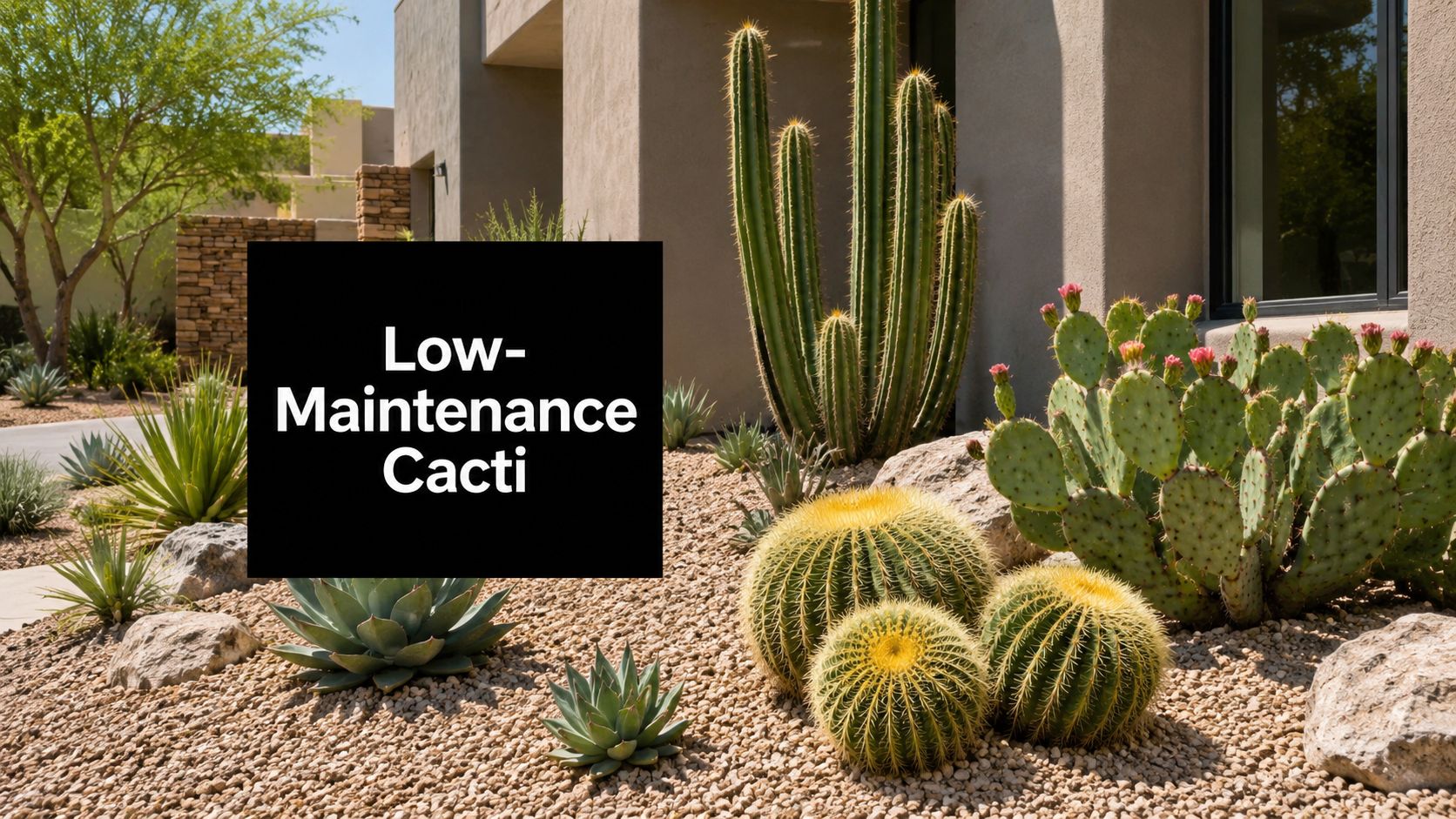
Out in the landscape, Echinocactus grusonii really comes into its own as a dramatic statement piece. Its clean, modern form is a natural fit for xeriscapes, minimalist rock gardens, and contemporary designs. My advice? Avoid scattering them randomly. Instead, try planting them in tight, staggered groups of three, five, or seven. This gives them a sense of deliberate mass and makes their presence feel much more substantial.
Creating Powerful Plant Pairings
The secret to making a Golden Barrel stand out is contrast. That rigid, spiky ball looks absolutely phenomenal when you set it against plants with softer, more graceful shapes. It’s all about creating a little tension.
- Soft Grasses: Feathery grasses like Pink Muhly or Mexican Feather Grass create a dreamy, flowing backdrop. Their movement makes the cactus’s solid, static form feel even more grounded.
- Silver Succulents: The cool, silvery-blue foliage of an Artichoke Agave or Bush Morning Glory makes the golden spines of the barrel cactus practically vibrate with color.
- Fine-Leafed Groundcovers: A low-growing groundcover not only softens the look at the base of the cactus but also helps keep the soil cool—a win-win for a lush, water-wise design.
The real magic happens when you create an interplay of textures, forms, and colors. This is when you move past just placing plants and start really designing a garden, where every element plays off the others. If you're looking for more inspiration, exploring other cactus garden landscaping ideas can spark some fantastic new combinations.
Container Gardening for Any Space
You don't need a huge yard to appreciate the stunning form of a golden barrel cactus echinocactus grusonii. If you live in a colder climate (below USDA Zone 9) or just have a small patio or balcony, a container is your best friend. A pot lets you bring this architectural beauty almost anywhere.
The container itself becomes a critical part of the look. I find that simple, modern pots in neutral tones—charcoal, stark white, or classic terracotta—let the cactus’s unique shape be the star. Just make sure the pot is only a few inches wider than the plant and has plenty of drainage.
Bringing a Golden Barrel indoors can be a game-changer. Position it where it can truly be a sculptural focal point, like next to a sun-drenched window in a minimalist living room. If you’re interested in making your home a more tranquil and nature-filled space, look into biophilic design principles. A Golden Barrel is the perfect starting point for thoughtfully integrating the natural world into your home.
Your Golden Barrel Cactus Questions Answered
Even after covering all the basics, you probably still have a few lingering questions. It's completely normal! Let's tackle some of the most common ones I hear from fellow growers to clear things up.
How Fast Will My Golden Barrel Cactus Grow?
If you're looking for instant gratification, this isn't your plant. The Golden Barrel is a true lesson in patience and is famous for its slow, deliberate growth. A small cactus the size of a golf ball might only add about an inch to its diameter each year.
This slow pace is actually a huge benefit, especially for container growing. It means your cactus will stay a manageable size for a long, long time. Resist the temptation to speed things up with extra water or fertilizer—you’ll only end up with a weak, bloated cactus that’s prone to problems. A healthy, happy plant that takes 10-15 years to reach 10 inches across is a sign you're doing everything right.
Will My Cactus Ever Flower?
It absolutely will, but this is another area where you have to play the long game. A Golden Barrel won't even think about flowering until it's mature and well-established, which usually means it needs to be at least 12-14 inches in diameter. Getting there can easily take over a decade.
When it's ready, you can encourage it by mimicking its natural environment. The two big triggers are:
- Tons of Sun: Give it as much direct, bright sunlight as possible. This is the fuel it needs to produce flowers.
- A Cool, Dry Winter: Letting the plant go dormant in winter is crucial. Cut way back on water and let it experience cooler (but not freezing) temperatures. This rest period is the natural signal for it to start forming buds for a spring bloom.
Your patience will be rewarded with a spectacular crown of bright yellow, cup-like flowers right at the top.
Why Is My Cactus Turning Yellow?
Yellowing is a classic "it depends" situation, and where it appears is the biggest clue. If the base of the cactus is turning yellow and feels soft or mushy, you're almost certainly looking at root rot from too much water.
On the other hand, if you see bleached-out, pale yellow spots on the top or the side that gets the most sun, that's sunburn. This is common when a plant is moved from a shadier spot into intense, direct light too quickly.
It's critical to know the difference. Root rot is a life-threatening emergency that feels soft and squishy. Sunburn is more like a dry, crispy scar; it’s permanent cosmetic damage, but it tells you the plant is stressed and needs to be moved to a spot with less intense light.
Are The Spines Dangerous For Pets and Kids?
Without a doubt, yes. The spines on a Golden Barrel are no joke—they are incredibly stiff, sharp, and can easily puncture skin. This makes them a real hazard for curious kids and pets who don't know any better.
Always, always place your cactus where it can't be accidentally brushed up against or knocked over. If you have small children or pets, your best bet is to put it in a raised planter or a location that's physically out of their reach.
Ready to add this living sculpture to your garden or home? At The Cactus Outlet, we have healthy, beautifully grown Golden Barrel Cacti that are prepared to make a statement in your collection. You can browse our Golden Barrel selection and find the perfect one to start your journey.