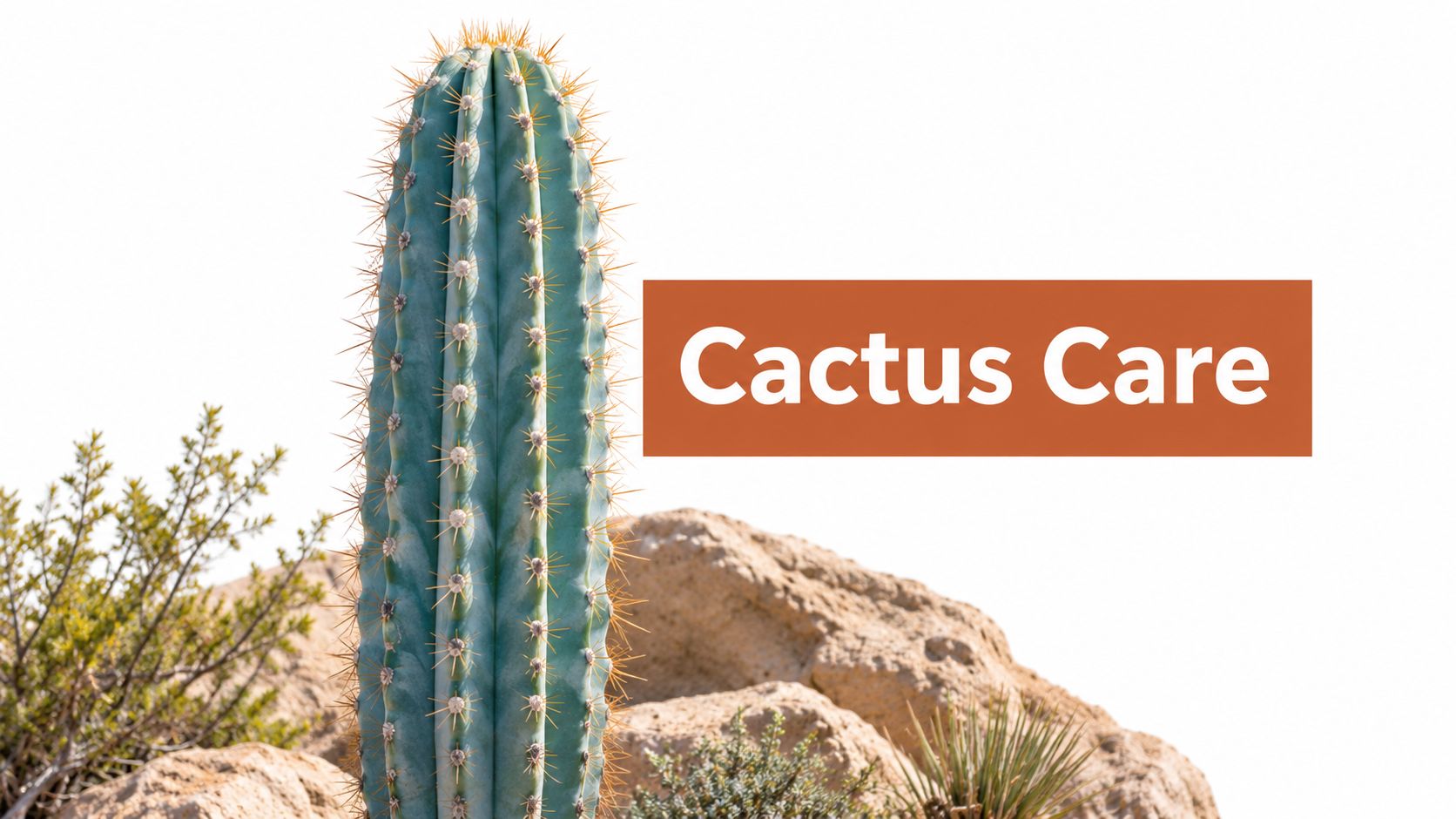



Ever wondered if there’s a plant that’s part living sculpture, part fruit tree? Meet the Peruvian Apple Cactus (Cereus repandus). This is a truly magnificent plant, famous for its towering, blue-green columns, stunning night-blooming flowers, and a surprisingly delicious fruit.
Getting to Know the Peruvian Apple Cactus
This is no ordinary houseplant. The Peruvian Apple Cactus is a massive, tree-like cactus that brings serious architectural drama wherever it grows. Hailing from the arid landscapes of South America, it has become a favorite for both beginners and seasoned gardeners, and for very good reason. Its care is refreshingly straightforward, and watching it mature into a statement piece is one of the most rewarding experiences a plant owner can have.

Unlike more finicky plants, the Peruvian Apple Cactus is wonderfully forgiving. It really does offer the best of three worlds in one incredible package:
- A Striking Form: Its ribbed, blue-green stems branch out over time, creating a candelabra-like shape that adds an impressive vertical accent to any garden or large indoor space.
- A Spectacular Show: The cactus produces enormous, fragrant white flowers that are a true spectacle. Measuring about 6 inches across, these blooms put on a show for one night only, opening after dusk and fading by morning. It’s a fleeting, magical event.
- An Edible Reward: After the flowers fade, the cactus develops a round, apple-like fruit. Often called pitaya or a cactus apple, it has a sweet, refreshing flavor that’s a real treat.
This combination of stunning looks, simple care, and a unique harvest makes the Peruvian Apple Cactus a truly special addition to any plant collection.
A True Giant of the Cactus World
One of the most jaw-dropping facts about this plant is its sheer size potential. The Peruvian Apple Cactus, known to botanists as Cereus repandus, is one of the tallest cacti on the planet. In its native habitat, it commonly reaches 33 feet tall. But get this—with some support, it has been known to soar up to an incredible 110 feet.
Even without any help, wild specimens have been recorded at 82 feet, cementing its status as a true giant. In warm climates, it can grow about one foot per year, making it a great choice for enthusiasts who want a dramatic, tree-like specimen. To get a broader sense of the cactus market, you can explore market research available from The Cactus Outlet's partners.
Think of it this way: Owning a Peruvian Apple Cactus is like having a piece of living architecture. While it serves a beautiful decorative purpose, it also grows and changes, eventually rewarding you with a fleeting floral show and a delicious harvest.
What's in a Name?
The name "Peruvian Apple Cactus" can be a little confusing, as it goes by several common and scientific names. Let's clear things up so you know exactly what you’re looking for.
Here’s a quick-reference table to help you keep the names straight.
Peruvian Apple Cactus at a Glance
| Attribute | Description |
|---|---|
| Botanical Name | Cereus repandus (also known as Cereus peruvianus) |
| Common Names | Peruvian Apple Cactus, Queen of the Night, Column Cactus |
| Fruit Names | Peruvian Apple, Cactus Apple, Pitaya |
Its most accurate scientific name is Cereus repandus, though you'll often see it sold under the older, more common name Cereus peruvianus.
Don't worry too much about the different names. Whether you call it Cereus repandus or Peruvian Apple Cactus, you’re getting the same spectacular plant, known for its majestic columns and the delightful fruit that gives it the "apple" moniker. Understanding these basics is the first step to seeing why this low-maintenance giant is a must-have for so many plant lovers.
Your Essential Cactus Care Guide
You might look at the impressive size of a Peruvian Apple Cactus and assume it's a ton of work. The truth is, keeping one happy is surprisingly straightforward. The real secret isn't a complicated routine; it's about understanding where this cactus comes from and giving it a little slice of its native South American home. We're talking lots of sun, deep but infrequent drinks of water, and soil that doesn't hold onto moisture.
Get these basics right, and you'll be rewarded with a stunning, fast-growing cactus that might even produce some of its famous fruit. This isn't about following a strict schedule. It's about learning to read your plant. A few wrinkles on its skin? It's probably thirsty. A lanky, pale arm? It's stretching, desperate for more light. Once you learn its language, caring for it becomes second nature.
Finding the Perfect Light
Sunlight is the lifeblood of your Peruvian Apple Cactus. It needs plenty of bright, direct sun to power its growth and maintain that beautiful blue-green hue. You should aim for a spot where it can soak up at least six hours of direct sunlight every day.
But be warned—not all sun is created equal. The scorching, direct afternoon sun, especially in hotter regions, can be a bit too much. This can cause sunburn, which shows up as ugly yellow or whitish patches on the cactus's skin. The key is to find that perfect balance between bright light and some protection from the harshest rays.
- Outdoor Cacti: An east-facing spot is often the sweet spot. This gives the cactus plenty of brilliant morning sun but shields it from the intense heat of the late afternoon.
- Indoor Cacti: Your best bet is a clear, south-facing window. This location provides the most consistent and strong light throughout the day, which helps prevent your cactus from getting leggy and leaning toward the window.
If you see your cactus tilting heavily toward the light, that's a classic sign of etiolation. It's literally reaching for more sun. Don't panic! Just gradually acclimate it to a sunnier location to get it back on track.
Mastering Watering and Soil
If there's one surefire way to kill a Peruvian Apple Cactus, it's by overwatering. These plants are desert dwellers, evolved to handle drought, and their roots will quickly rot if they sit in soggy soil. That's why the "soak and dry" method isn't just a suggestion—it's the golden rule.
The technique is simple: when you water, do it thoroughly until you see water running out of the drainage holes. Then, you wait. Don't even think about watering again until the soil has dried out completely. The easiest way to check is to stick your finger a couple of inches into the soil. If you feel any moisture, hold off.
A pot without drainage holes is a death sentence for a Peruvian Apple Cactus. Good drainage is the single most important defense against root rot, the number one killer of these beautiful plants.
The right soil is the other side of the coin. Regular potting mix is a no-go; it holds on to far too much water. You need a gritty, chunky mix that lets water rush right through. You can easily make your own fantastic blend by mixing:
- One part standard potting soil
- One part coarse sand or fine gravel
- One part perlite or pumice
This recipe gives the cactus just enough organic material to get nutrients, but ensures water drains away immediately, keeping the roots dry and happy. If you want to explore this topic further, we cover the core principles in our complete cactus care guide.
Feeding and Winter Protection
The Peruvian Apple Cactus isn't a particularly hungry plant, but a little bit of food during its growing season (spring and summer) will really kick its growth and flowering into high gear.
Grab a low-nitrogen fertilizer made specifically for cacti and succulents. Dilute it to half the recommended strength and feed your cactus with it just once every 4-6 weeks. Only do this during the growing season. Stop all fertilizing in the fall and winter when the plant is dormant; feeding it then can burn the roots.
While this cactus loves the heat, it can't handle a hard freeze. It can generally tolerate a quick dip down to about 20°F (-6°C), but any prolonged time in freezing temperatures will cause permanent damage. If you live in a colder area (USDA Zone 8 or below), you'll need a winter strategy. For potted plants, it's as simple as moving them into an unheated garage or shed. If your cactus is planted in the ground, cover it with a frost cloth or old blanket on freezing nights to trap some of the earth's warmth.
How to Propagate Your Cactus
One of the best things about the Peruvian Apple Cactus is just how easy it is to multiply. It almost feels like a magic trick, turning a single arm into a whole new plant, but it’s really just straightforward botany.
This is the perfect way to expand your own collection, fill out a garden bed, or share a piece of your prized cactus with friends. You can create a whole family of cacti for free! The secret to success isn't complicated; it all comes down to patience and avoiding the single biggest pitfall: rot.
Selecting and Taking a Cutting
First things first, you need to pick a healthy, mature arm to be your new plant. Look for a stem that’s at least 6-8 inches long, with good, vibrant color. You want to avoid any pieces that have blemishes, soft spots, or signs of pests. A strong, robust cutting has more stored energy, giving it a much better shot at rooting successfully.
Once you’ve picked your candidate, grab a sharp, clean knife or even a small handsaw for thicker arms. Now, I can’t stress this enough: always sterilize your blade with some isopropyl alcohol before you cut. A dirty tool can introduce bacteria right into the plant’s flesh, which is a fast track to infection and failure. Go ahead and make a clean, confident cut at a joint where the arm meets the main stem.
The Crucial Callusing Period
Alright, you've made the cut. Now comes the single most important part of this whole process, and it’s one you absolutely cannot skip: letting the cutting callus. Just lay the cutting on its side somewhere dry, shady, and well-ventilated—keep it out of direct sun. That fresh, open wound at the base needs to completely dry out and form a hard, protective scab.
This callusing step is your number one defense against rot. If you plant a fresh, wet cutting, you’re basically inviting moisture-loving fungi to a party. Your cutting will almost certainly turn to mush before it ever gets a chance to grow roots.
Depending on how thick the cutting is and the humidity where you live, this can take anywhere from a week to several weeks. You'll know it's ready when the cut end is totally dry, hard to the touch, and has formed a pale, tough-looking scar.

As you can see, the foundation for a healthy cactus—whether it's a new cutting or an established plant—always comes back to a simple balance of sun, water, and the right soil.
Planting and Rooting Your New Cactus
Once your cutting has a nice, solid callus, it's finally ready to be planted. Here’s how to set it up for success:
- Pick the Right Pot: Grab a pot with great drainage that’s a good size for your cutting. A pot that's way too big will hold onto excess moisture, which puts you right back in the danger zone for rot.
- Use Dry Cactus Mix: Fill the pot with a dry, gritty cactus and succulent soil. Do not start with damp soil—this is key.
- Plant the Cutting: Gently push the callused end about 1-2 inches deep into the dry soil. You just need it deep enough to stand up on its own. If you have a tall or wobbly cutting, you can use a few bamboo stakes or rocks to prop it up until it grows roots.
- Wait to Water: This part feels wrong, but trust the process. Do not water the cutting right away. Let it sit in that dry soil for at least 1-2 weeks. This dry period is what encourages the cutting to send out new roots in search of water.
After a couple of weeks have passed, you can start watering very lightly, using the same "soak and dry" method you would for a mature cactus. Getting roots to form can take several weeks or even a few months, so patience is key. To check for progress, give the cutting a very gentle tug. If you feel resistance, congratulations—you've got roots! For a more detailed walkthrough, you can learn more about how to propagate cactus from cuttings in our dedicated guide.
Decorating with Your Cactus Indoors and Out

The Peruvian Apple Cactus isn't just another houseplant. It's a living sculpture. With its strong vertical lines and incredible blue-green hue, this cactus has the power to anchor an entire room or garden design. Forget fleeting trends; this plant brings a timeless, organic energy that only deepens as it grows.
Its architectural shape naturally becomes a focal point, drawing the eye and adding a touch of drama and sophistication. A single towering specimen can be breathtaking, but a cluster of them at different heights is just as impressive. This cactus doesn’t just fill a corner—it defines it.
Creating a Stunning Outdoor Showcase
Outdoors is where the Peruvian Apple Cactus really gets to show off. It thrives in the open air and sunshine, and its commanding presence is perfect for adding structure to flat, uninspired yards. It can serve as the dramatic centerpiece that ties your entire landscape together.
One of the best ways to feature it is within a xeriscape or a thoughtfully designed rock garden. The cactus’s rugged, column-like form creates a fantastic contrast against the softer textures of ornamental grasses or the earthy tones of decorative boulders and gravel. This approach gives you a water-wise, low-maintenance garden that looks incredible all year long. For some great visual inspiration, check out these cactus garden ideas to see how you can highlight your plant.
You can also use these cacti to create a natural privacy screen. Planting several in a row establishes a living wall that’s both beautiful and surprisingly effective. It’s a far cry from a traditional fence, providing security while lending a unique, resort-like feel to your property.
To create a cohesive design, try pairing your Peruvian Apple Cactus with other succulents that enjoy similar conditions. Some excellent companions include:
- Agave: Their low-growing, rosette shapes provide a beautiful contrast to the tall, straight columns of the cactus.
- Golden Barrel Cactus: The classic spherical shape of these cacti adds a pleasing variation in form.
- Trailing Sedums: Let these spill over the sides of planters or down rock walls to soften the edges of the design.
Bringing Sculptural Beauty Indoors
When you bring it inside, a potted Peruvian Apple Cactus immediately becomes a bold statement piece. Its height draws the eye upward, which can make a room feel taller and more open—a fantastic trick for spaces with high ceilings. Even a small specimen can introduce a touch of modern, organic style to a bookshelf or an end table.
A single, well-placed Peruvian Apple Cactus can have more design impact than an entire gallery wall. It acts as both art and a living thing, filling the room with a calm, natural energy.
Tuck it into a bright corner where it can anchor the room without getting in the way. It looks especially stunning in minimalist, modern, or bohemian interiors, where its clean lines complement uncluttered spaces and its organic texture adds a dose of warmth.
The pot you choose is just as important as the plant itself. A great container will highlight the cactus while tying into your home’s decor.
- For a modern look: Go for a simple, geometric pot in a neutral tone like white, matte black, or gray.
- For a rustic or bohemian vibe: You can't go wrong with a classic terracotta or a textured ceramic pot to add earthy warmth.
- For a touch of glam: A sleek metallic planter, maybe in brass or brushed black, can add a sophisticated edge.
Just make sure the pot is proportional to the cactus—you want it to be large enough for stability without overwhelming the plant. If you're looking to create a more elaborate display, we have plenty of other indoor cactus garden ideas to get you started. With the right placement and the perfect pot, your Peruvian Apple Cactus will easily become one of the most cherished focal points in your home.
How We Deliver a Perfect Cactus
Getting a beautiful, healthy cactus to your door is more than just shipping—it's a promise. We know that the journey from our nursery to your home is a critical one. A strong, vibrant start is the best way to ensure your new Peruvian Apple Cactus will thrive for years to come, so we’ve perfected every step of the process.
This isn’t about just putting a plant in a box. It’s a careful system we've developed to protect your cactus from the moment we select it until you unbox it. Our goal is to deliver a plant that isn't just surviving the trip, but is absolutely ready to flourish.
Hand-Picking the Very Best
It all begins in the nursery, where our team of experts personally selects every single Peruvian Apple Cactus. We don't just pull the next one in line; we’re on the hunt for specific signs of exceptional health and strength.
So, what are we looking for?
- Deep, Healthy Color: We’re after that rich, blue-green color that screams good health and proper sunlight.
- A Firm, Solid Body: Every cactus gets a gentle squeeze to check for firmness. Any soft spots are an immediate red flag for stress or potential rot.
- Flawless, Unscarred Skin: We inspect each plant closely for blemishes, old pest damage, or sunburn, choosing only the cleanest specimens.
- A Strong Foundation: While you can't see the roots yet, we only pick from stock that we know has developed a robust and healthy root system.
This hands-on selection process guarantees the plant you receive is a prime example of its species, perfectly prepped for its new life with you.
Expert Packaging for a Safe Arrival
Shipping a large, spiny plant is truly an art form. A single broken spine or a bruised stem can spoil its architectural beauty and create an opening for disease. That’s why our packaging method is all about total protection—think of it as a custom-fit suit of armor for your plant.
First, we carefully wrap the entire cactus in soft, cushioned material. This padding is crucial for protecting the waxy, natural coating on the plant's skin, known as the epicuticular wax. This layer is the cactus's built-in sunscreen and defense against moisture loss, so keeping it intact is a top priority.
Then, we secure the wrapped plant inside a heavy-duty box so it can't shift around during its journey. We use custom supports to keep it upright and cushioned from every angle, eliminating the risk of it banging against the sides. This fortress-like approach ensures your cactus arrives looking just as pristine as it did the moment it left our nursery.
We ship our cacti bare-root—without any soil or a pot. This is the gold standard for shipping for a very good reason: it nearly eliminates the risk of root rot in transit and makes for a much safer, lighter journey.
Acclimating Your New Arrival
Once your cactus arrives, there’s one final, easy step: a gentle introduction to its new environment. Unpack it carefully (it’s still spiny, after all!) and find a spot that gets bright, but indirect, light. Do not place it in direct, intense sun right away.
Let the cactus hang out in this spot for about a week. This little rest period gives it time to recover from the stress of shipping and adjust to your home's unique temperature and light. After a week has passed, you can slowly move it to its permanent, sunnier home.
Taking this one simple step helps prevent shock and sunburn, giving your Peruvian Apple Cactus the strong, healthy start it deserves. The global demand for these incredible plants is soaring, with Peru's prickly pear market alone hitting $231.8 million in exports in 2023. It’s a testament to their worldwide appeal, which you can read more about in these insights on prickly pear exports on Tridge.com.
Solving Common Cactus Problems
Peruvian Apple Cacti are incredibly resilient, but they’re not invincible. Part of being a good plant owner is learning to read the signs your cactus gives you when it's unhappy. The good news? Most problems are easy to fix if you catch them early.
Think of it this way: your cactus can't talk, so it shows you what it needs. A soft spot at the base, an off-color patch, or a new arm stretching desperately toward a window are all clear signals. Learning to interpret these visual cues is the real secret to keeping your plant thriving for years. Most of the time, all it takes is a small tweak to your care routine.
Pesky Pests and How to Evict Them
A healthy, happy cactus is rarely bothered by pests. But if a plant is stressed, it can become a target for a couple of common sap-suckers. The two you’re most likely to see are mealybugs and scale. Both feed on the plant’s juices and, if left to their own devices, can weaken your cactus over time.
Mealybugs are the more obvious of the two. They look like tiny, white, cottony fluff, usually tucked into the crevices between the ribs or near new growth. Scale insects are a bit sneakier; they look like small, hard, brown bumps stuck firmly to the stems and can be mistaken for a natural part of the plant.
Luckily, you can handle both without reaching for harsh chemicals.
- Spot Treatment: If you only see a few bugs, just dip a cotton swab in 70% isopropyl alcohol and touch it directly to each pest. The alcohol dissolves their protective coating, and you can easily wipe them away.
- Wider Application: For a bigger infestation, mix equal parts isopropyl alcohol and water in a spray bottle. Add a single drop of mild dish soap—this acts as a surfactant, helping the solution stick to the pests. Spray all the affected areas thoroughly. Be sure to keep the cactus out of direct sun until the spray has completely dried to avoid sunburn.
Don't panic if you spot a few pests. A quick response with simple household items is usually all you need. The trick is to inspect your plant regularly so you can catch these freeloaders before they start a family.
The Number One Enemy: Root Rot
If there’s one thing that can take down a Peruvian Apple Cactus, it’s root rot. This isn't some mysterious disease—it’s the direct result of too much water. When the soil stays soggy, the roots can't get oxygen and they begin to suffocate and decay, turning into a foul-smelling mush.
The first signs above the soil can be subtle. You might notice the base of the cactus turning yellow or a stem that feels soft and squishy to the touch. If you suspect root rot, you have to act fast.
Gently slide the cactus out of its pot and take a hard look at the roots. Healthy roots should be firm and white or light tan. Rotted roots will be dark brown or black, slimy, and will fall apart when you touch them.
Using a clean, sharp knife, you need to perform some surgery. Carefully cut away every last bit of rotted root and any soft, mushy stem tissue. Keep cutting until you only see firm, healthy, green flesh.
Let the cactus sit out in a shady, dry place for several days. You're waiting for all the cuts you made to dry out and form a hard callus. Once they have, you can repot it in a fresh, completely dry batch of cactus mix. Here's the most important part: wait at least one to two weeks before you even think about watering it again. This gives the plant time to settle in and start growing new, healthy roots.
Frequently Asked Questions
Even seasoned cactus lovers have questions when it comes to the Peruvian Apple Cactus. It's a unique plant, after all, and knowing a few key details can make all the difference. Let's tackle some of the most common things people ask.
Getting these details right will help you grow a truly spectacular cactus with confidence.
Is the Peruvian Cactus Apple Fruit Really Edible?
You bet it is! And it's not just edible; it's genuinely delicious. The fruit, often called a "pitaya" or cactus apple, has smooth, thornless skin that blushes to a beautiful reddish-pink when it's ready to eat. That alone makes it much friendlier to handle than many other cactus fruits.
As for the taste, people often say it’s like a refreshing cross between a kiwi and a pear—a mild sweetness that's not overpowering. The inside is firm but juicy, with tiny, crunchy black seeds, much like a dragon fruit. It's a fantastic treat, especially when you chill it first.
How Fast Does It Grow?
People usually think of cacti as slow, patient growers, and many are. The Peruvian Apple Cactus, however, can really surprise you if it's happy. Its growth speed really comes down to its living conditions.
- Outdoors: In a warm climate (think USDA Zones 9-11) where it’s planted in the ground, this cactus can take off, sometimes growing up to one foot per year.
- Indoors: When potted indoors, its growth will naturally be a bit more restrained. A healthy indoor specimen will still put on several inches each year, mostly during the spring and summer.
Sunlight is the single most important ingredient for fast growth. A plant stuck in a dim corner will grow very slowly and can get pale and stretched out, a condition called etiolation.
Think of it like a solar-powered engine. The more direct sun you give it, the more fuel it has to grow tall and strong. A sunny spot is the key to unlocking its impressive growth potential.
Can I Grow It Indoors Year-Round?
Absolutely. You can definitely grow a beautiful Peruvian Apple Cactus indoors all year, even if you live somewhere with cold winters. The non-negotiable requirement is light—and lots of it. Your best bet is a spot right in front of a big, south-facing window that gets direct sun for most of the day.
Come winter, the plant will take a much-needed rest. Its growth will stop, and it will need far less water. You’ll want to cut back watering to maybe once a month (or even less) and stop feeding it entirely. Just keep it away from frosty windows and in that bright spot, and it will be perfectly happy until spring arrives.
Ready to add this architectural beauty to your collection? At The Cactus Outlet, we hand-pick every Peruvian Apple Cactus for health and vitality, ensuring you receive a perfect plant ready to thrive. Start your cactus journey with us today!