


Let's be honest, when you picture a cactus, you probably think of something that grows at a snail's pace, barely changing over a decade. But what if I told you that some cacti can shoot up a foot or more in a single year? A fast growing cactus completely changes the game, offering a dynamic and satisfying way to transform your garden or landscape in a surprisingly short amount of time.
Rethinking Cactus Speed A Guide to Fast Growers
Most people's idea of a cactus is the legendary Saguaro, a desert icon that can take ten years just to grow its first inch. This has cemented the idea that all cacti are slow, patient giants. But that’s a huge misconception. The cactus family is incredibly diverse, and plenty of species are in a real hurry to grow up.
It helps to think of it like building a house. A slow-growing cactus is like meticulously laying bricks one by one; progress is steady but measured in inches. A fast growing cactus, on the other hand, is like framing a house with prefabricated walls—the structure goes up fast, and the results are dramatic and visible. Species like the Peruvian Apple Cactus are prime examples, adding impressive height and structure in just a fraction of the time.
The Growth Potential of a Fast Growing Cactus
So, what do we really mean by "fast" in the cactus world? While you won't see it growing before your eyes like bamboo, the difference is night and day compared to its slower cousins. A fast grower can accomplish in a single season what might take a slow grower an entire decade.
This comparison really puts it into perspective.
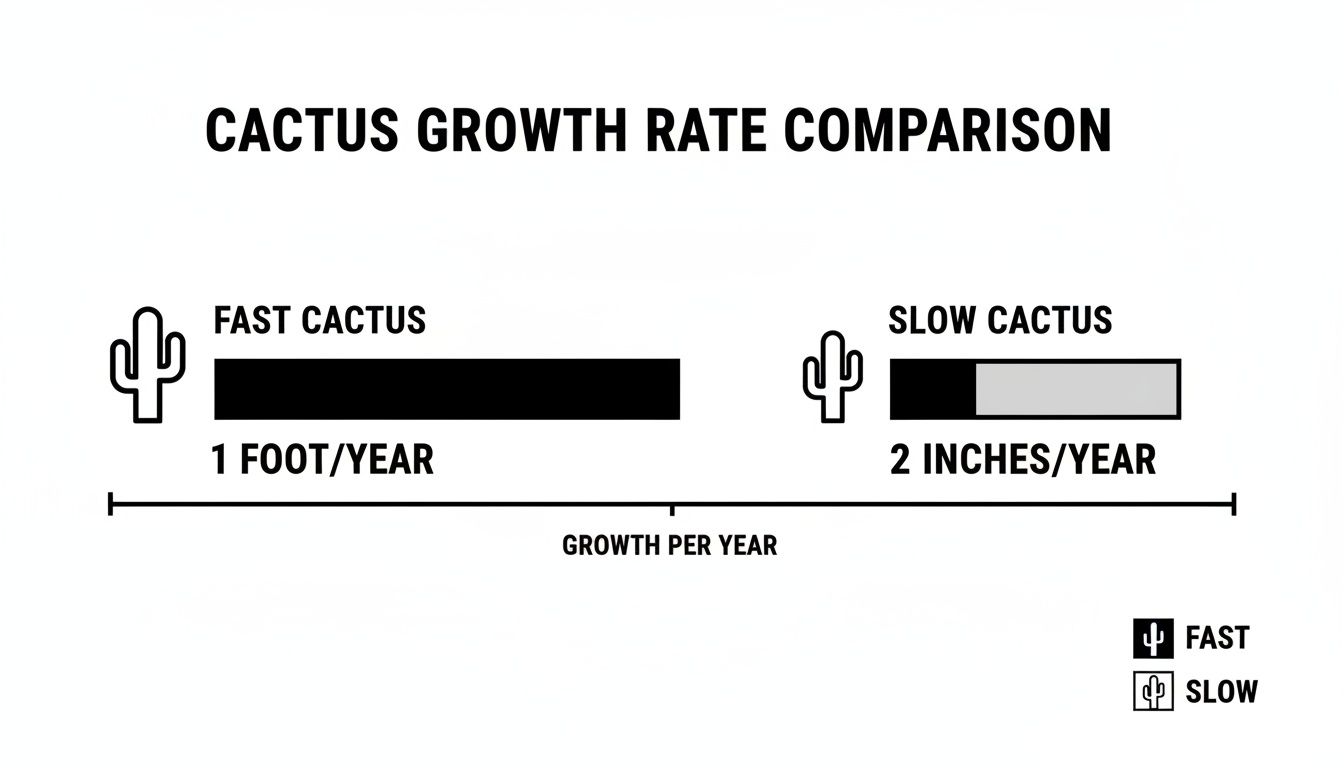
As you can see, the most vigorous species can grow up to six times faster than their more leisurely relatives. This completely changes how you can approach designing and planting your garden.
To really illustrate this, let's compare some popular species.
Cactus Growth Rates A Quick Comparison
The difference becomes crystal clear when you see the numbers side-by-side. This table contrasts the growth rates of some popular fast-growing cacti against notoriously slow ones.
| Cactus Species | Typical Annual Growth | Time to Reach 6 Feet |
|---|---|---|
| Peruvian Apple Cactus | 1-2 feet | 3-6 years |
| Prickly Pear (Opuntia) | 1 foot+ (new pads) | 5-7 years |
| Golden Barrel Cactus | 1-2 inches | 35-70 years |
| Saguaro Cactus | 1-1.5 inches (after 10 years) | 75+ years |
The timeline to achieve a mature, 6-foot plant speaks for itself. Choosing a fast-grower means enjoying a full-sized specimen in just a few years, not a few decades.
Why Choose a Fast Grower
Picking a fast growing cactus isn't just about getting quick results; it's a smart, strategic choice for gardeners and landscapers who have a specific vision in mind. These energetic plants offer some fantastic benefits.
- Rapid Results for Landscaping: Need a natural privacy screen yesterday? A fast-growing columnar cactus can create that lush, mature look in just a handful of years, not a lifetime.
- Quick Garden Expansion: Many fast growers, like the Prickly Pear, are unbelievably easy to propagate. A single pad can root and start a new plant, letting you fill a large space without a huge upfront cost.
- Dynamic Visual Interest: There's something uniquely rewarding about seeing your garden come to life. Watching a cactus visibly grow and change month-to-month adds a real sense of progress and vitality to your space.
The key takeaway is simple: not all cacti are created equal. By understanding which species grow quickly and giving them the right care, you can create a stunning, mature cactus garden in record time. This guide will show you exactly how to do it.
Meet the Fastest-Growing Cacti for Your Garden
Alright, now that you know what separates a slow-and-steady grower from a genuine speed demon, let's get to the fun part—meeting the stars of the show. These are the cacti that deliver jaw-dropping results in just a few seasons, completely transforming your garden with their bold shapes and impressive size. You can forget waiting decades for a mature look; these species are all about making a big impact, fast.
Each of these cacti has its own personality. Some shoot up like living sculptures, creating instant architecture, while others spread out, painting the ground with incredible texture. We’ll walk through a few of the best fast-growers we have right here at The Cactus Outlet and show you how they can bring your landscaping dreams to life in record time.
Peruvian Apple Cactus (Cereus peruvianus)
If you’re craving vertical drama and you want it now, the Peruvian Apple Cactus is an absolute champion. Seriously, this isn't one of those plants you have to squint to see grow. It's a dynamic, architectural species that announces its presence quickly and beautifully. It’s my go-to recommendation for creating a living privacy screen or a stunning focal point against a bare wall.
This columnar cactus has a gorgeous blue-green color and ribbed stems that just seem to reach for the sky. But what really makes it a showstopper is its growth rate. Under the right conditions, this beauty can shoot up an astonishing 1-2 feet per year. It's no wonder it's a favorite for gardeners who want quick results. Native to South America, it absolutely loves warm climates and well-draining soil. In places like the U.S. Southwest and California, where drought-tolerant landscaping is king, this cactus has exploded in popularity. In fact, nursery industry reports showed sales of columnar cacti like this jumped by 25% in 2023 as people caught on to using them for low-maintenance privacy screens that don't take forever to mature. You can dive deeper into these growth habits and read what other growers are saying over at CactiGuide.com.
As a bonus, it produces enormous, fragrant white flowers at night. They're a breathtaking sight, even if they only last for a single evening. These blooms often lead to an edible, apple-like fruit, which just adds another layer of cool to an already incredible plant.
Key Stats:
- Growth Rate: 1-2 feet per year
- Maximum Height: Can reach up to 30 feet tall
- Sun Exposure: Full sun is the ticket for maximum growth
- Best Use: Living privacy screens, architectural focal points, and dramatic vertical elements
The Peruvian Apple Cactus is like nature's skyscraper. It builds upward with purpose, creating an immediate sense of structure and scale in any garden design.
Prickly Pear Cactus (Opuntia species)
When your goal is to cover some ground and add bold, sculptural texture, the Prickly Pear is the cactus you've been looking for. Instead of growing tall and thin, Opuntia species expand outward, creating dense, sprawling clumps of their classic flat, paddle-like stems. This unique growth habit makes them fantastic for filling in empty garden beds or establishing a formidable—yet beautiful—natural barrier.
It’s amazing how quickly they get going. A single Prickly Pear pad can root and start multiplying, forming a huge colony in just a couple of years. Some varieties, like the stunning Santa Rita Prickly Pear (Opuntia santa-rita), even give you a bonus show with brilliant purple-tinged pads in cooler weather.
Most Opuntia species also produce vibrant, cup-shaped flowers in shades of yellow, orange, or pink, which are later followed by edible fruits known as "tunas." This mix of rapid spread, unique form, and seasonal color makes the Prickly Pear one of the most versatile and rewarding choices out there.
Key Stats:
- Growth Rate: Can easily add several new pads each year, spreading 1-2 feet wider annually
- Maximum Height: Varies widely, from low-growing ground covers to 15-foot shrubs
- Sun Exposure: Thrives in full, direct sun
- Best Use: Ground cover, natural fences, textural accents, and filling large, open spaces
Mexican Fence Post Cactus (Pachycereus marginatus)
For those who appreciate clean lines and a more uniform, organized look, the Mexican Fence Post Cactus is an unbeatable choice. The name says it all—this species is famous for being planted in rows to create living fences across Mexico, and for good reason. It grows straight, upright, and forms perfect multi-stemmed clumps.
Each dark green stem has distinct, clean white margins running along its ribs, giving it a very defined, almost manicured appearance. It grows in dense clumps right from the base, sending up new columns that quickly add to its mass. This cactus can easily put on a foot of height per year, making it an excellent candidate for a modern, architectural privacy screen that feels both natural and perfectly orderly.
Its tidy look and predictable growth pattern have made it a favorite among landscape designers who need to add structure and form to a project. While its flowers are a bit smaller and less flashy than the Peruvian Apple's, its powerful architectural beauty is on full display 365 days a year.
Key Stats:
- Growth Rate: Approximately 1 foot per year
- Maximum Height: Up to 20 feet tall
- Sun Exposure: Full sun brings out its best growth and form
- Best Use: Formal privacy hedges, living fences, and adding strong vertical lines to modern landscapes
These are just a handful of the incredible fast-growing cacti you can work with. By picking the right one for your specific goal—whether it's height, width, or pure structure—you can create a mature, high-impact landscape much faster than you ever imagined.
How to Maximize Your Cactus Growth Rate
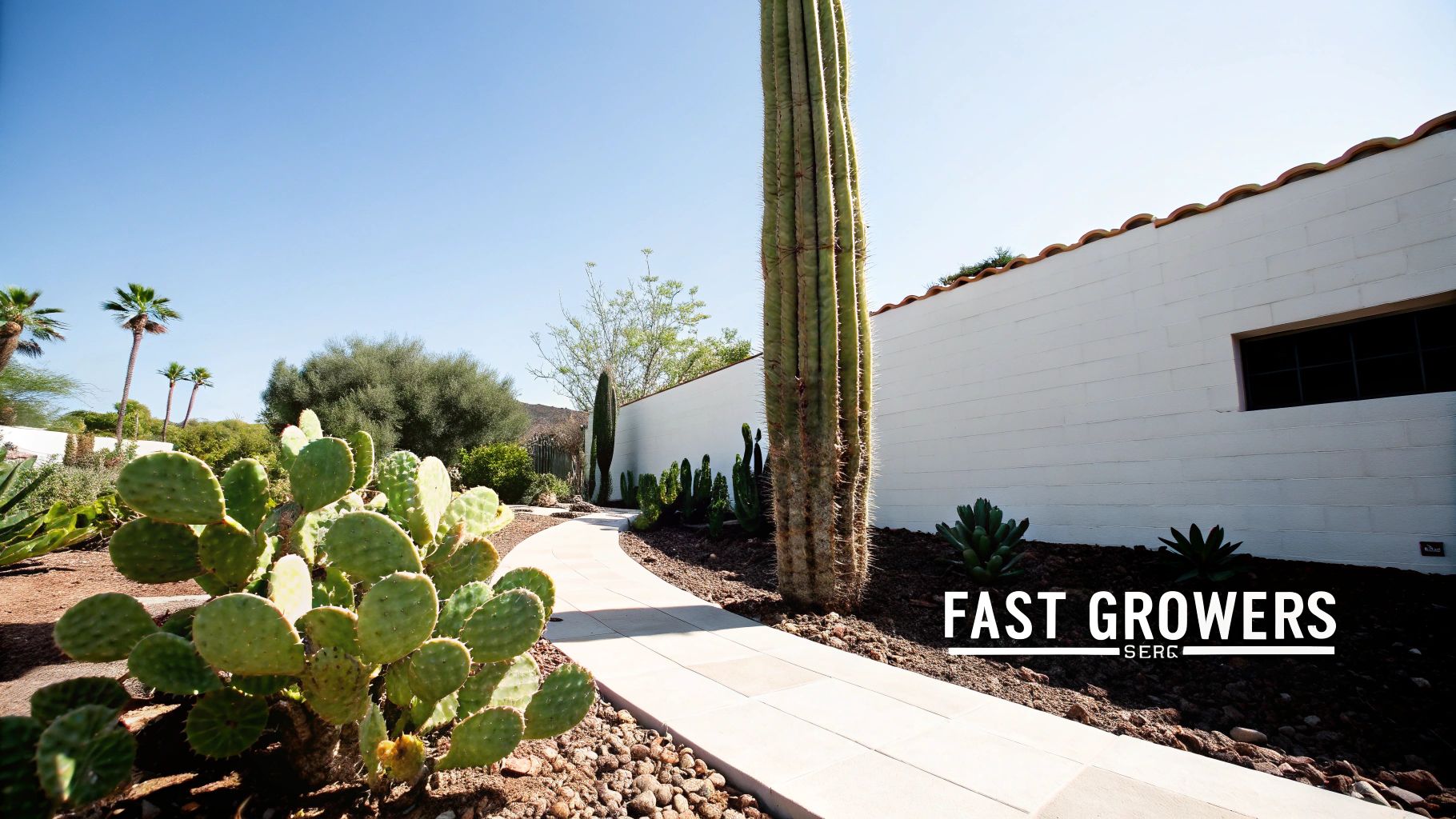
Picking a fast-growing cactus species is just the starting line. If you really want to see what it can do, you have to give it the right environment. Think of it like a high-performance engine—it has all the potential for speed, but it needs premium fuel and the right conditions to really open up on the track.
This isn’t about some complicated, time-consuming ritual. It’s about getting a few core principles right and sticking to them. Once you master the essentials of light, water, soil, and food, you'll see your cactus transform from a simple survivor into a thriving, fast-growing feature in your home or garden. Let's walk through the playbook for getting that explosive growth.
Mastering Sunlight Exposure
For a cactus, sunlight is pure energy. The more direct sun it soaks up, the more fuel it has to push out new pads, stems, and roots. For nearly all of the faster-growing types, that means giving them at least six to eight hours of direct, unfiltered sun every single day.
A south-facing window is usually the sweet spot for indoor cacti. For those planted outside, an open patch of yard with no shade is perfect. If you start to see your cactus stretching and getting skinny or pale—a condition called etiolation—it’s screaming for more light. That’s your cue to move it to a brighter spot, and fast.
On the flip side, be careful about too much intense sun, especially if you're in the middle of a sudden heatwave. This can cause sunburn, which shows up as ugly yellow or white patches on the plant's skin. If you're moving a cactus from a shadier spot into direct sun, it’s a good idea to acclimate it slowly over a week or two to prevent shock.
Watering Wisely: The Soak and Dry Method
The single biggest mistake people make with cacti is overwatering. It’s an easy trap to fall into, but these plants evolved for a life of infrequent, heavy downpours. The goal is to mimic that natural cycle with what we call the soak-and-dry method. It's the gold standard for a reason.
Here’s the simple process:
- Check the Soil First: Don't even think about grabbing the watering can until you've checked the soil. Stick your finger a couple of inches down. If you feel even a hint of moisture, walk away and wait.
- Soak It Completely: When it's finally bone-dry, it's time to water. And when you do, be generous. Drench the soil until you see water pouring out of the drainage holes. This ensures every last root gets a deep, satisfying drink.
- Let It Dry Out Again: This is the most important part. After that deep soak, you have to let the soil dry out completely before you even consider watering again. That dry period is critical for preventing root rot and actually encourages the roots to grow stronger as they seek out moisture.
During the growing season (spring and summer), you might find yourself watering every 7 to 14 days. But in the winter, when the plant is dormant, that can stretch to once every 4 to 6 weeks, maybe even less. Forget the calendar—let the soil tell you when it's thirsty.
The Right Soil Mix Is Everything
Grabbing a bag of standard potting mix from the store is one of the worst things you can do for your cactus. That stuff is designed to hold onto moisture, which is a death sentence for desert plants. A fast-growing cactus needs a soil that drains like a sieve, allowing its roots to breathe and never sit in water.
To truly push the growth rate, you need to prepare soil for planting properly. You can buy specialty cactus mixes, which work great, or you can easily whip up your own.
Here's a tried-and-true DIY recipe:
- One part standard potting soil
- One part perlite or pumice (for airflow)
- One part coarse sand or fine gravel (for drainage)
This gritty, porous blend lets water rush right through, just like the rocky desert ground where these plants evolved. Getting the soil right is non-negotiable if you’re serious about fast growth.
Strategic Fertilizing for Peak Growth
Think of fertilizer as a seasonal boost for your cactus. It delivers the nutrients it needs to power through its active growing season in spring and summer. But be careful—the wrong fertilizer, or feeding at the wrong time, can cause more problems than it solves.
Always look for a fertilizer made specifically for cacti and succulents. These are low in nitrogen and have a balanced profile of other key nutrients. Too much nitrogen will cause weak, flimsy growth that's a magnet for pests and disease. If you want to dive deeper, you can read about the best fertilizer for succulents in our article.
Feed your cactus every 2-4 weeks during the spring and summer, but only with a solution diluted to half-strength. Once fall arrives, stop fertilizing completely. Your cactus is going dormant, and it needs that rest period to stay healthy and gear up for the next big growth spurt in the spring.
Propagating Cacti for Rapid Garden Expansion
One of the best parts about having a fast growing cactus is how incredibly easy it is to make more of them. Propagation is really the ultimate garden multiplier, letting you turn a single healthy plant into a whole colony. For landscapers, it’s a brilliant, budget-friendly way to fill large areas. For the rest of us, it’s just a great way to share our plants with friends and family for free.
Instead of buying a dozen new plants, you can just take a few cuttings from one parent. This trick works exceptionally well with sprawling species like the Prickly Pear, which naturally wants to spread by dropping its pads and starting new plants. A single pad can root and become a totally new, independent cactus in just a few months, letting your collection grow exponentially.
Taking and Curing Your Cactus Cutting
Taking a cutting sounds technical, but it’s really just like giving your cactus a little trim to encourage new life. When working with a Prickly Pear, you’ll want to find a healthy, mature pad that’s at least six months old.
Grab a clean, sharp knife and slice the pad off right at the joint where it connects to the main plant. And please, wear thick, protective gloves! You’re not just protecting yourself from the big spines, but also from the tiny, hair-like glochids that are a massive pain to get out of your skin.
Once you have the pad, you’ve reached the most important step: callousing. You absolutely must let the cut end dry out and form a tough, protective seal.
Why is callousing so critical? Planting a fresh, wet cutting is a recipe for disaster. Think of it like an open wound. If you stick it straight into the soil, moisture gets in, and your new plant will rot from the base up before it ever gets a chance to sprout roots.
Just set the cutting somewhere dry and shady with good airflow for about one to two weeks. You'll know it's ready when the cut end is completely dry to the touch and looks a bit firm or shrunken.
Planting Your Cutting for New Growth
With a nicely calloused pad in hand, it's time for the fun part: planting. This is where the cutting begins its journey to becoming a brand-new cactus.
- Get the Pot and Soil Right: Grab a pot with plenty of drainage holes and fill it up with a fast-draining cactus and succulent soil mix. I can't stress this enough—good drainage is the key to preventing root rot.
- Plant the Pad: Gently push the calloused end about 1-2 inches deep into the soil. It just needs to be deep enough to stand up on its own. If it’s a little top-heavy, you can use a few small rocks to prop it up until it roots.
- Hold Off on Watering: Don't water it for the first week! This gives any tiny cracks in the callous a chance to heal, adding an extra layer of protection against rot.
- Start Watering Lightly: After a week has passed, you can give it a little water—just enough to make the soil slightly damp. Keep the soil barely moist until you spot new growth, which is the tell-tale sign that roots have formed. If you're impatient, you can give the pad a very gentle tug. If you feel resistance, you've got roots!
To see these steps in more detail, take a look at our complete guide on how to propagate cactus from cuttings.
Prickly Pear cacti, especially the Opuntia varieties we have at The Cactus Outlet, are true workhorses. They can turn a bare patch of yard into a lush, sculptural landscape in no time. These flat-stemmed wonders can spread at a rate of up to 2-3 feet per year, multiplying quickly through new pads. In fact, prickly pear species make up 70% of wild cactus populations in the American Southwest. Our cultivated varieties grow even faster; a single pad planted in the spring can easily become a 3-foot wide clump by the time fall rolls around.
Landscaping and Design with Fast Growing Cacti
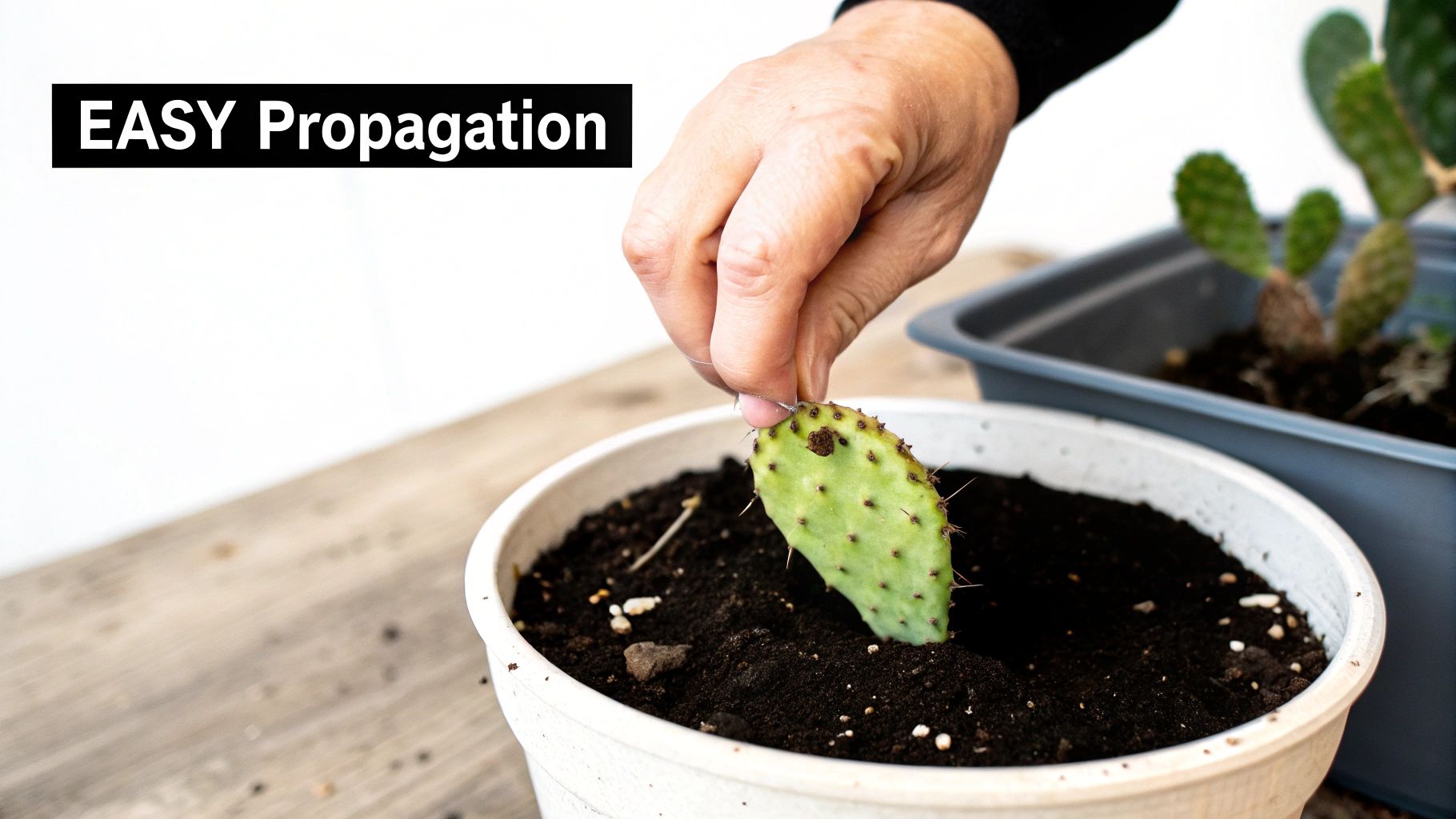
Once you've mastered the basics of care and propagation, the real fun begins. A fast-growing cactus is so much more than just another plant—it's a dynamic piece of living sculpture you can use to bring your landscape to life. Whether you have a sprawling yard or a tiny balcony, these cacti deliver a huge visual impact in a surprisingly short amount of time.
The trick is to start thinking like a landscape designer. Don't just look for a spot to stick a cactus; think about the job you want it to do. Are you trying to block a neighbor's view? Create a dramatic focal point? Or maybe just add some interesting texture? These plants are versatile enough to do it all.
Creating Vertical Interest and Privacy
One of the best ways to use a fast-growing cactus is to create vertical lines. Tall, columnar species like the Peruvian Apple Cactus or Mexican Fence Post act like living architectural pillars. They draw your eyes upward, making any space feel bigger and more grand. It's a classic designer's trick for adding scale and drama.
This verticality is also incredibly practical. Why wait a decade for a traditional hedge to fill in? A row of columnar cacti can become a dense, water-wise privacy screen in just a few years.
- Instant Architecture: Place a single, tall cactus against a blank wall. It immediately becomes a stunning focal point.
- Natural Fencing: Plant a row of them about 2-3 feet apart. They’ll grow together to form a beautiful and formidable living wall.
- Framing Views: Use a pair of tall cacti to frame a doorway, a path, or a distant view, directing attention right where you want it.
This approach is the perfect blend of form and function. You get incredible aesthetic appeal and a real solution for privacy, and the fast growth means you'll see your vision come to life quickly.
Adding Bold Texture and Form
While columnar cacti give you height, sprawling species like the Prickly Pear bring a whole different element: texture and mass. Their paddle-shaped stems create a bold, sculptural form that’s a fantastic contrast to softer plants like ornamental grasses or the smooth surfaces of a modern patio. This play between different textures is what gives a garden its character and depth.
Think of Prickly Pears as nature's ground-fillers. They can quickly cover a bare, sunny patch of dirt with fascinating shapes and seasonal flowers, all while keeping weeds down and needing almost no attention from you. Their tendency to spread makes them an affordable way to fill in large spaces.
A well-designed landscape is a conversation between different shapes and textures. The broad, flat pads of an Opuntia create a powerful visual anchor that makes everything around them look more interesting.
Designing for Natural Security
Beyond just privacy, the spiny nature of many cacti makes them a brilliant tool for natural security. Planting a dense row of a thorny, fast-growing cactus along your property line or under a low window creates a barrier that's as beautiful as it is effective at discouraging unwanted visitors.
This idea, often called "defensive planting," is a clever way to boost security without putting up an ugly fence. It fits perfectly into a xeriscape design, providing protection that looks completely natural. By mixing and matching these design ideas, you can create a space that’s not just beautiful but also smart and secure. For more great tips on arranging these amazing plants, take a look at our guide to succulent garden design ideas.
Choosing Your Perfect Cactus at The Cactus Outlet
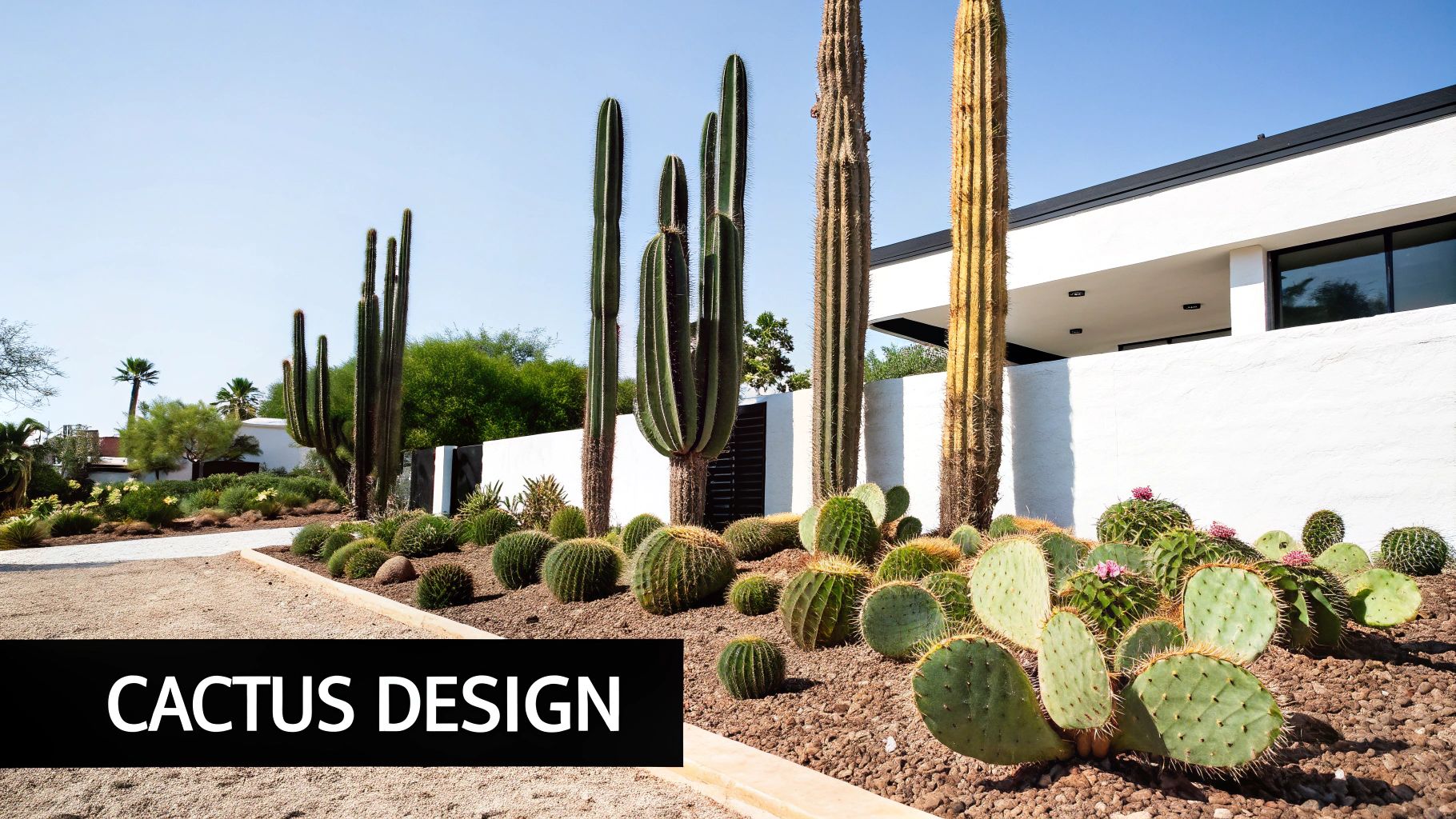
Alright, you've got the know-how to create a stunning cactus garden in what feels like no time at all. The last piece of the puzzle? Picking out the perfect plant to get started. Honestly, choosing a healthy, high-quality cactus from the get-go is the single best thing you can do to guarantee success.
Here at The Cactus Outlet, we've made that crucial first step both easy and reliable. When you buy from a specialized nursery like ours, you’re not just getting a plant. You're bringing home a specimen that's been expertly raised for health and vigor. It's the difference between adopting a puppy from a reputable breeder versus a random source—one is simply set up for a much better life.
What to Look For in a Healthy Cactus
A healthy cactus will practically tell you it's ready to thrive, you just have to know what to look for. As you browse our collection, keep an eye out for these tell-tale signs:
- Vibrant, Consistent Color: The plant should have a rich green, blue-green, or whatever color is natural for its species. Steer clear of any with yellowing, bleached-out patches (a sign of sunburn), or worse, brown and mushy spots that signal rot.
- Firm, Strong Structure: Give it a gentle squeeze (carefully!). The cactus body should feel firm and plump, not soft or shriveled. This tells you it's well-hydrated and structurally sound.
- A Healthy Root System: While you can’t exactly see the roots online, our growing practices are all about developing a robust root ball. Think of the roots as the engine for a fast growing cactus—and we make sure they’re ready to go.
We hand-inspect every single plant from The Cactus Outlet before it ships to make sure it meets these exact standards. Our team then expertly packages it so your new cactus arrives safe, sound, and ready to plant the moment you unbox it.
We've even put together a special collection just for gardeners who want to see results quickly. Take a look at our Fast Growers collection today. Each page gives you all the details you need to pick the perfect fast growing cactus for your vision and set yourself up for incredible success.
Got Questions? We've Got Answers.
Even the most seasoned plant parent has questions now and then. If you're wondering about a few of the finer points of growing these speedy cacti, you're not alone. Let's tackle some of the most common questions we hear.
How Can I Get My Indoor Cactus to Grow Faster?
Light. It's almost always about light. The single best thing you can do to encourage faster growth indoors is to give your cactus the sunniest spot you have. A south-facing window is usually the prime real estate, offering at least six to eight hours of direct sun.
If your home is on the shadier side, don't despair. A good grow light can make all the difference, providing the intense light your cactus craves. Beyond that, stick to the basics: water deeply only when the soil has completely dried out, and give it a boost with a diluted, low-nitrogen cactus fertilizer every two to four weeks during the spring and summer growing season. And of course, drainage is non-negotiable—that pot absolutely must have a hole.
Are Fast-Growing Cacti a Good Idea with Pets and Kids Around?
That's a really important question, and the honest answer is: it depends. You have to be selective. Many of the fastest growers, like the Prickly Pear, are covered in not just big, obvious spines, but also tiny, nearly invisible glochids that are a nightmare to get out of skin or paws.
Some plants that look like cacti, such as certain Euphorbia species, even have a toxic, milky sap. On the other hand, a variety like the Peruvian Apple Cactus has more predictable spines that are easier to avoid.
The golden rule here is simple: always research the specific cactus you're considering. When in doubt, play it safe and place any spiky plant well out of the reach of curious little hands and paws.
Can I Actually Plant These in a Cold Climate?
You might be surprised! While you won't be planting a Saguaro in a snowy backyard, some species are incredibly resilient. Certain varieties of Prickly Pear (Opuntia) are famously cold-hardy and can withstand freezing temperatures, snow and all.
For most other popular fast-growers like the Peruvian Apple or Mexican Fence Post, the best bet in a cold climate is to keep them in pots. That way, you have the flexibility to bring them inside or move them into a sheltered garage for the winter. This simple step protects them from a hard frost, which can easily cause permanent damage or kill the plant.
Ready to find the perfect plant to get your project off the ground? Take a look at the curated collection at The Cactus Outlet and bring home a healthy, vibrant, fast-growing cactus today. Explore our full selection of cacti.