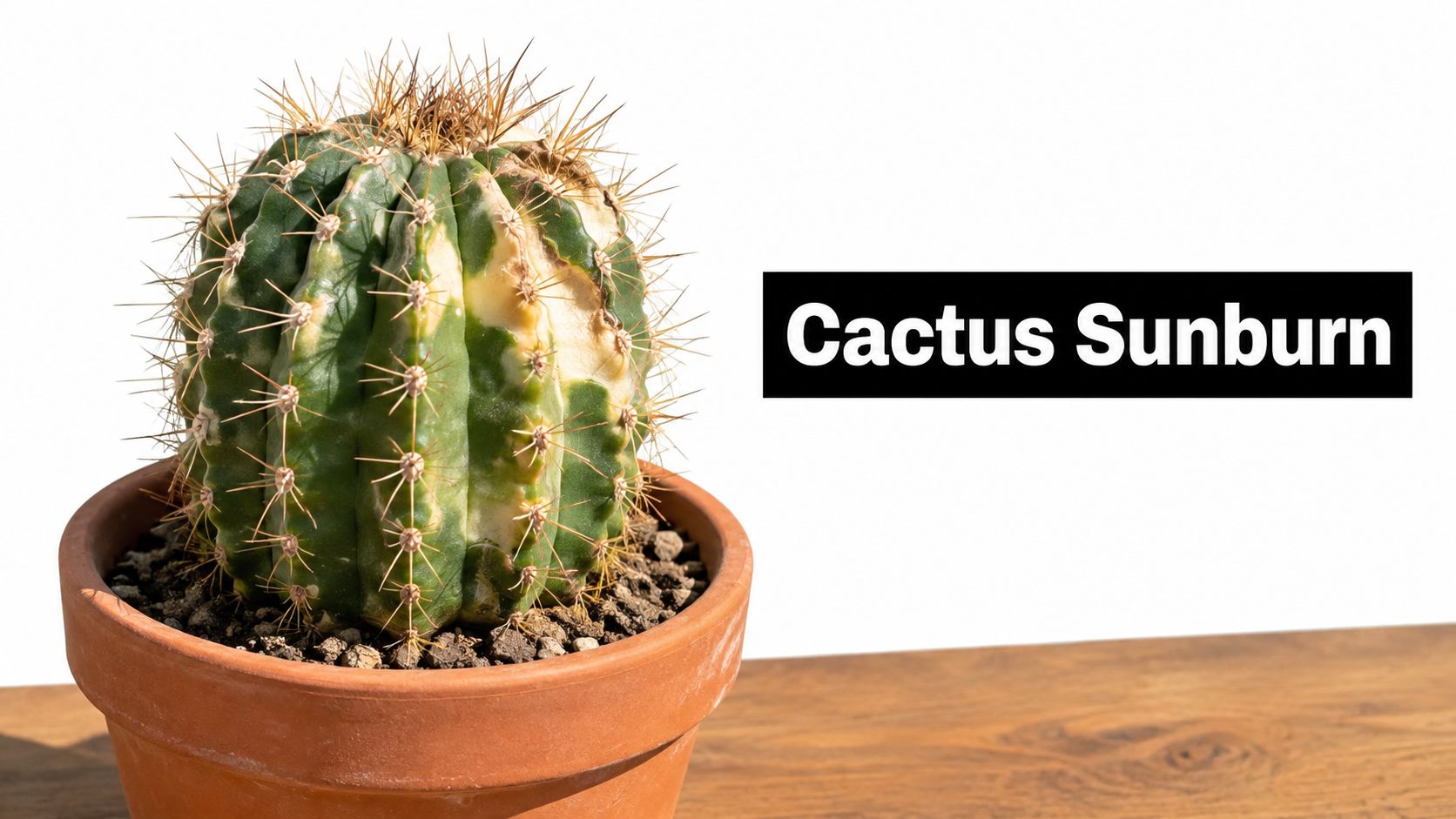

You move a large cactus into stronger light, step back, and notice pale patches on the sun-facing side that weren't there yesterday. That's the moment panic usually starts, and it's often where the wrong fix begins. The hard part isn't spotting damage, it's knowing whether you're looking at cactus sunburn, rot, or a stress mark that needs time and shade rather than water.
Recognizing Cactus Sunburn Before It Spreads
A customer brings in a greenhouse-grown columnar cactus, sets it on a patio, and two days later spots bleached patches facing the afternoon sun. The plant still feels firm, so the first instinct is to assume it's fine and just a little faded. That's how a lot of damage gets misread, because cactus sunburn starts as a surface change and only later turns corky or brown.
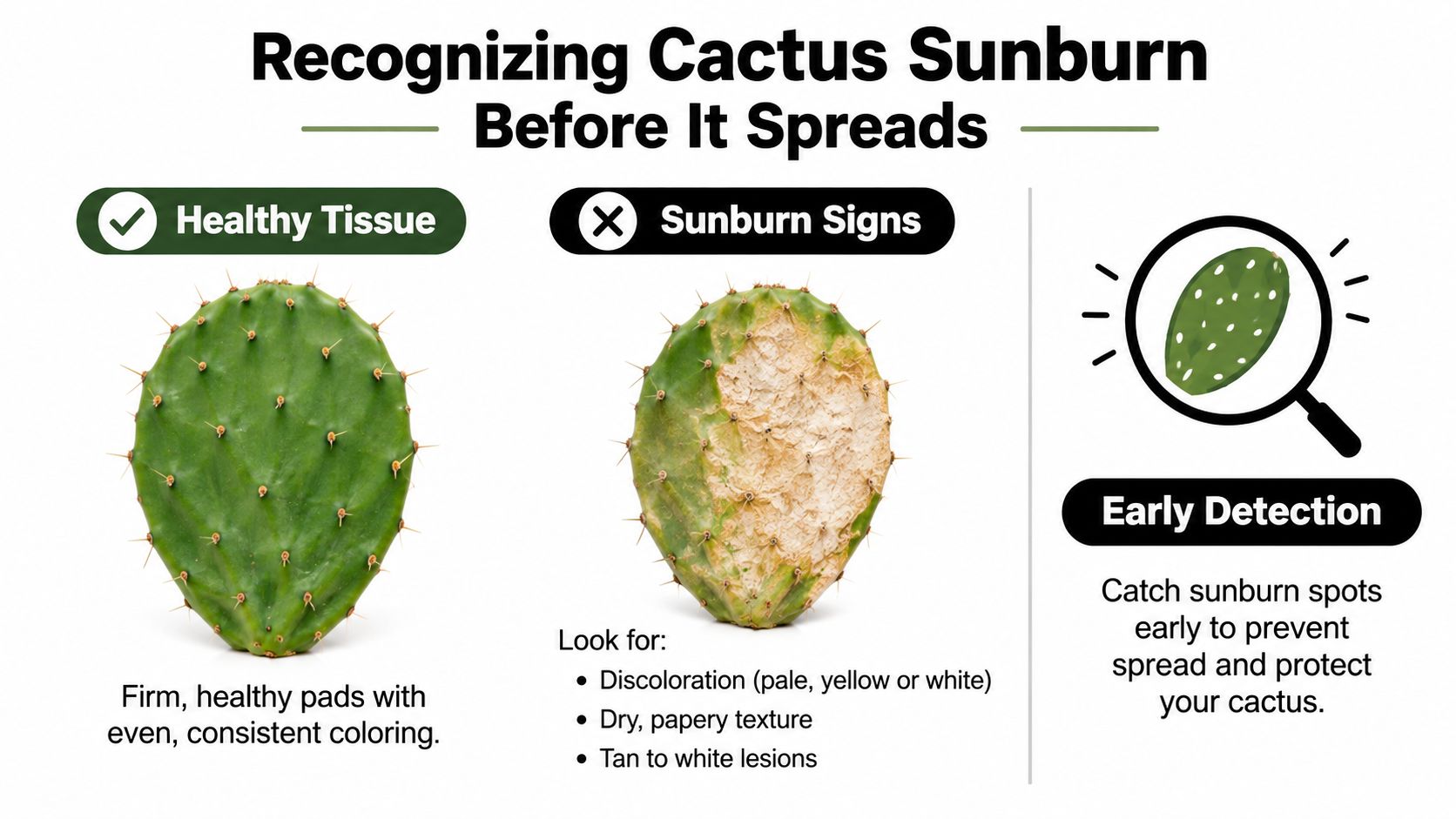
What sunburn looks like in the field
The earliest signs are usually bleached yellow, white, or pale tan patches on the exposed side of the plant. Those spots don't wipe away, and they don't behave like simple dehydration, because the epidermis has already taken the hit. In severe cases, the tissue dries out and becomes corky, which is a scar, not a temporary color shift.
Practical rule: if the damaged skin is still firm and dry, think light injury first. If it's soft, greasy, or smells off, stop calling it sunburn and inspect for rot.
I've seen buyers mistake old cosmetic scarring for active damage and water the plant hard, then wonder why the base softens a week later. I've also seen the opposite, a plant with true sun injury that was left in blasting afternoon sun because “it still looked alive.” The plant survived, but the patch stayed visible.
Firm tissue versus collapsing tissue
The quickest way to sort the problem is by touch and location. Sunburn usually shows up on the sun-facing side, often the side that was shaded in a nursery or during shipping. Rot tends to spread through softer tissue and often carries moisture, translucency, or odor.
A healthy burned plant can still be structurally sound, while infected tissue feels wrong almost immediately. That's why quick visual judgment isn't enough.
| Condition | Texture | Color | Odor | Action |
|---|---|---|---|---|
| Sunburn | Dry, firm, papery, corky if old | Bleached, yellow, white, tan, then brown | None | Shade and monitor |
| Rot | Soft, greasy, translucent, collapsing | Dark, black, water-soaked | Sour or foul | Isolate and inspect roots |
| Infection | Softening with spreading lesions | Patchy, darkening, irregular | Often unpleasant | Quarantine and evaluate |
For a second opinion on color change that isn't obviously scorch, the why is my cactus turning yellow guide is a useful companion. A broader tree-care reference like spot tree disease early can also help train your eye to separate surface injury from active disease, even though cactus texture behaves differently.
Diagnosing Sunburn Versus Rot and Infection
The biggest mistake I see is treating every pale patch like a watering issue. A cactus with sunburn doesn't need a fast drink just because it looks stressed. If the tissue is already compromised, extra water can push the plant toward rot instead of recovery.
Use texture first, then smell, then spread pattern
Dry, firm, bleached tissue points to light injury. Soft, black, translucent, or foul-smelling tissue points to rot or infection. If the damage stays on the sun-facing side, especially after a move outdoors or a shipping event, that's another clue that the problem started with light rather than roots.
A nursery-grown plant can look healthy in the morning and show damage after an afternoon on a wall that reflects heat. That reflected heat matters as much as direct sun, especially on large specimens sitting near concrete, masonry, or metal surfaces. Once tissue starts to soften, the diagnosis changes and so does the response.
Don't chase color alone. Chase texture, moisture, and spread.
| Condition | Texture | Color | Odor | Action |
|---|---|---|---|---|
| Sunburn | Dry, firm, shallow damage | Bleached, tan, brown | None | Shade and observe |
| Rot | Soft, wet, greasy, or collapsing | Dark, translucent, black | Sour or foul | Inspect roots and isolate |
| Infection | Variable, but often spreading | Irregular dark lesions | Sometimes present | Quarantine and evaluate |
If you work with lots of large plants, this decision tree saves more specimens than any spray bottle ever will. A cactus that's firm and dry can often be left alone. A cactus that smells wrong needs faster intervention, even if the discoloration looks minor at first.
One caution from the home-care side, the urge to water a stressed plant can make a bad situation worse. One horticultural source specifically warns against quickly rehydrating severely sunburned plants and recommends waiting until tissue stabilizes. For cactus owners, that advice matters because the cure for a light injury can turn into the trigger for rot if the diagnosis is wrong. For a broader comparison with root problems, see cactus root rot treatment.
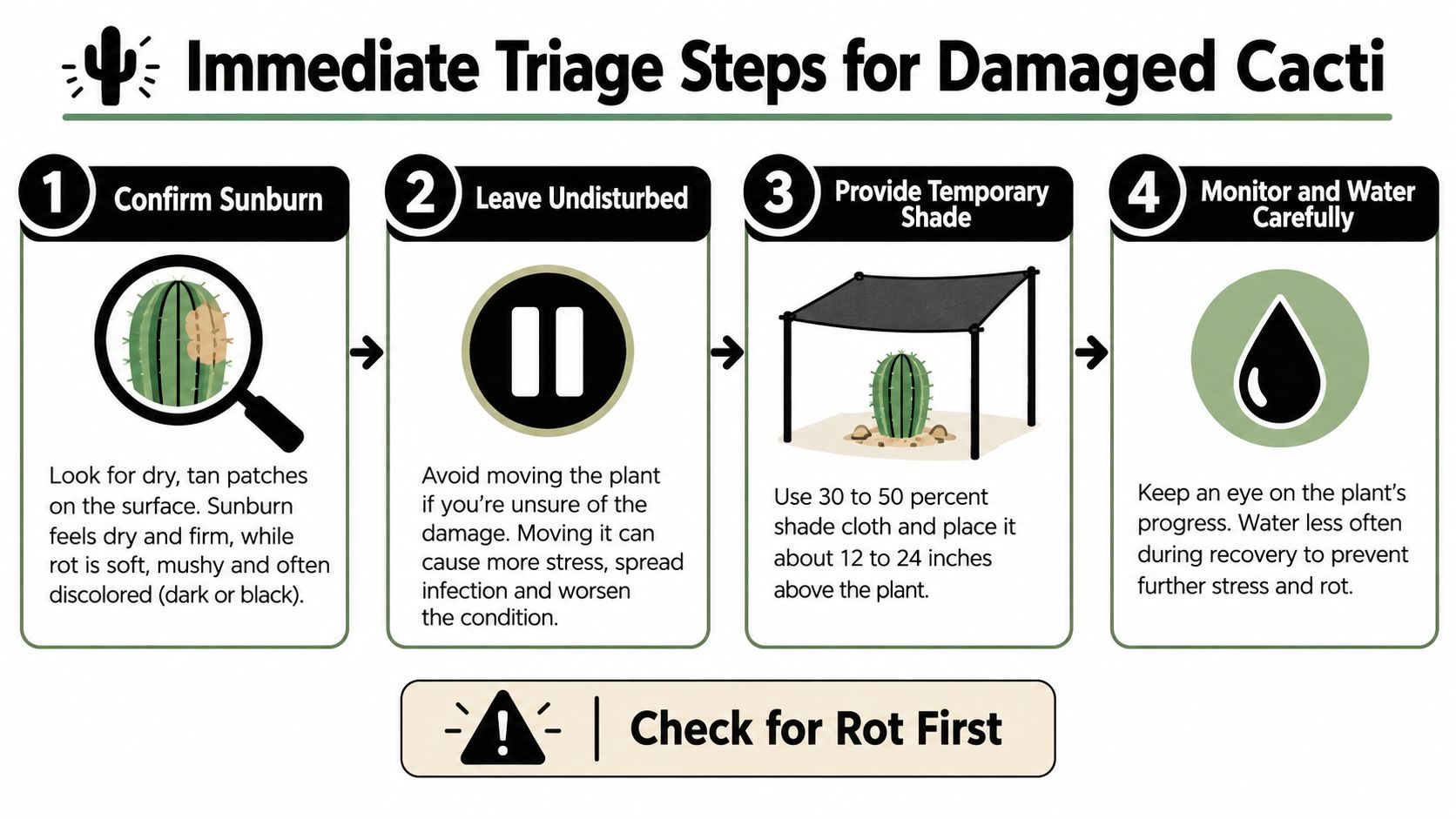
Immediate Triage Steps for Damaged Cacti
Once you've confirmed it's sun injury rather than rot, the goal is to stop the burn from advancing and avoid adding new stress. I've learned the hard way that repotting too soon does more harm than good. A cactus already dealing with UV damage doesn't need its roots disturbed unless there's clear evidence of a separate problem.
First response without making things worse
Move the plant out of direct afternoon sun right away. Bright shade or filtered light is the right landing spot while tissue stabilizes. If the cactus was shipped bare root or just moved from a greenhouse, keep the original orientation so a previously shaded side doesn't get turned directly into the strongest light.
Do not repot just because the plant looks unhappy. Root disturbance can stack with sun injury and make the plant slower to recover. If the skin is dry and firm, leave the damaged area intact so the plant can seal it on its own.
What to watch over the next two weeks
A 7 to 14 day monitoring window is enough to tell you whether the damage is stable or spreading. If the edge of the lesion stays dry and stops expanding, you're usually dealing with a healed scar forming over a controlled injury. If it darkens, softens, or develops moisture, stop treating it like simple sunburn.
- Leave it in place: If the plant is firm and the lesion is dry.
- Quarantine it: If you see any softening, odor, or new collapse.
- Shade it temporarily: If the exposed side still gets harsh direct sun.
- Water carefully: Only when the medium is fully dry and the plant isn't showing rot symptoms.
Practical rule: temporary shade helps recovery, but water does not fix UV damage.
For newly arrived plants, a little protection goes a long way. The University of Arizona Cooperative Extension recommends about 30% shade cloth for newly acquired agaves, aloes, cacti, and yuccas while they adjust, and that same approach works well for large specimens that have been in protected conditions before shipment. If you want a deeper look at light management, the do cactus need direct sunlight guide is a solid companion.
Preventing Sunburn Through Controlled Acclimation
Prevention is mostly about how fast the plant changes environments. A cactus that has lived under greenhouse glass, indoor light, or heavy shade doesn't have the same protective setup as one that has already adapted to open sun. Research on Opuntia species shows that cactus surfaces contain UV-screening flavonoids, and the concentration varies with exposure across the plant, while the epidermis itself can remove as much as 94% of incoming UV-B under some conditions, according to the published review on UV protection in Opuntia spp. Protection from UV Radiation in the Economic Crop Opuntia Spp.
Shade helps, but timing matters more
The mistake I see most often is parking a shaded plant in full sun and calling that acclimation. It isn't. Gradual exposure gives the plant time to build those protective layers, while sudden exposure overwhelms tissue that hasn't adapted yet. The University of Arizona Cooperative Extension recommends keeping newly acquired plants in the same directional orientation they had before relocation, because rotating a shaded side straight into strong sun can trigger injury.
That matters for bare-root shipments too. A plant that spent days in a box or in protected nursery conditions may look tough, but its exposed side often isn't ready for the heat and UV load it gets after delivery. For buyers who need to stage plants outdoors, a controlled transition is safer than a hard move into patio sun.
A practical setup is simple:
- Morning sun first: Give the plant short, gentle exposure.
- Temporary shade cloth: Use it to soften harsh afternoon light.
- Original orientation: Keep the same sun-facing side when possible.
- Watch reflected heat: Concrete, stucco, and walls can intensify burn risk.
Why permanent shade isn't the answer
Long-term shade can leave a plant underprepared for future exposure. That's why I don't treat shade as the destination, only as a bridge. The goal is a cactus that can take the sun it needs without getting cooked the first week it leaves the nursery.
For the transition itself, the difference between a healthy adjustment and a scar often comes down to previous light history. A species can be sun-tolerant in the abstract and still burn badly after a sudden move. If you want a broader look at light placement before you shift a plant outdoors, the native plants that thrive in Austin heat resource can be useful context for warm-climate planting decisions, especially around exposed walls and hot patios.
Species-Specific Vulnerabilities and Long-Term Care
Different cactus forms react differently, and that matters when you're placing big plants in the garden or on a patio. Columnar plants often show damage on the side facing the strongest light, especially when they've been rotated or recently moved. Barrel forms can hold scarring visually for a long time because of their dense, rounded structure, while segmented opuntias often make recovery look faster because new growth can outpace the damaged pad.
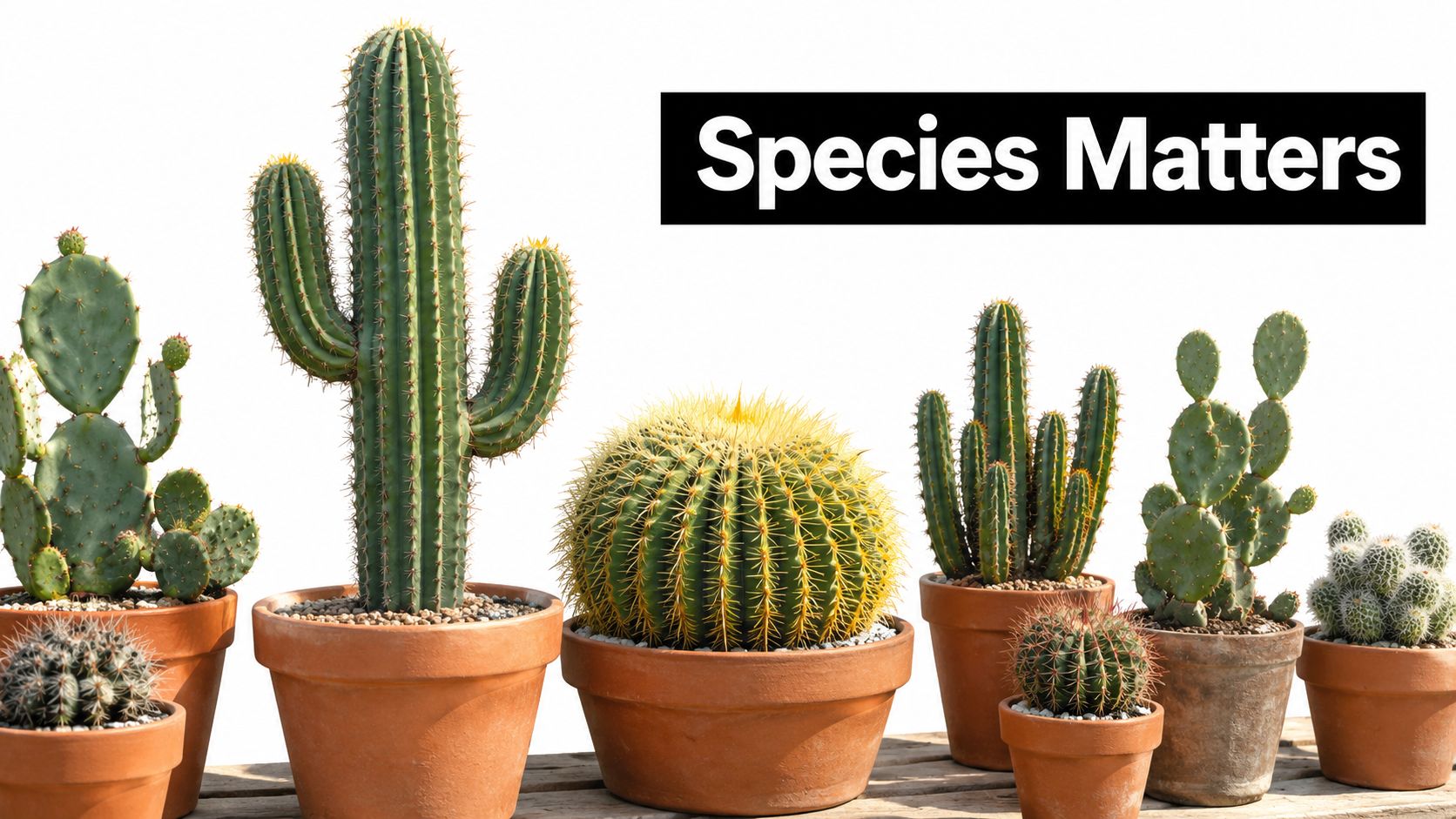
Form, placement, and reflected heat
Large columnar plants, including saguaros and San Pedro cacti, deserve extra attention on the equator-facing side of the stem because that is where damage often starts. That pattern was documented in the 2001 research on organ-pipe cactus, which also found fewer cases where surrounding vegetation provided partial shade and that visible stomata dropped by 40% after prolonged UV-B exposure 2001 study on Stenocereus thurberi. Those changes weren't cosmetic, they were cumulative tissue responses to stress.
Container plants are usually more exposed to reflected heat than in-ground plants, and that changes the burn pattern. A pot on concrete gets heat from below and from the side, which is why a plant can look fine in the morning and scald by late afternoon. For cold-hardy cactus and agave plantings, winter sun can also scorch tissue even when the plant handles frost well.
What to expect after the damage
Sunburned tissue generally stays visible. The plant may keep growing normally, but the scar won't turn green again. That doesn't mean the specimen is ruined, it means the damage is now part of its surface history.
If you're matching a plant to a site, think in terms of orientation, reflectivity, and previous light exposure, not just species name. A cactus from a shaded nursery bench behaves differently from the same species that's been living in open sun for years. If you're shopping for a large specimen from a nursery, ask how it was grown and where it has been sitting before you put it into full exposure.
When to Seek Professional Help or Further Evaluation
If a lesion turns soft, starts to collapse, or develops dark cracking, don't keep treating it like a simple sunburn case. Structural damage changes the math fast, especially in columnar cacti where one compromised side can affect the whole plant. Persistent decline after two weeks of correct shade and careful watering also points to something deeper, often hidden root trouble from earlier overwatering.
If the plant is firm, dry, and stable, you're usually dealing with a scar. If it's soft or spreading, get a closer look.
For prickly pear, barrel cactus, and tall columnar species, the warning signs are different but the principle is the same. Scarring is acceptable when the plant stays structurally sound. Tissue loss, collapse, or spreading softness means the problem has moved beyond cosmetic injury.
If you've bought a large specimen and the diagnosis still isn't clear, contact the nursery that supplied it and ask for species-specific guidance. For customers handling large outdoor cacti, that kind of follow-up is often the difference between a salvageable plant and one that keeps declining under the wrong care.
The Cactus Outlet carries large cacti and succulents that need the same kind of careful acclimation this guide covers, especially after shipping or a major light change. If you're adding a columnar cactus, barrel cactus, prickly pear, or agave to a bright outdoor space, visit The Cactus Outlet and choose plants with the placement and transition in mind.