
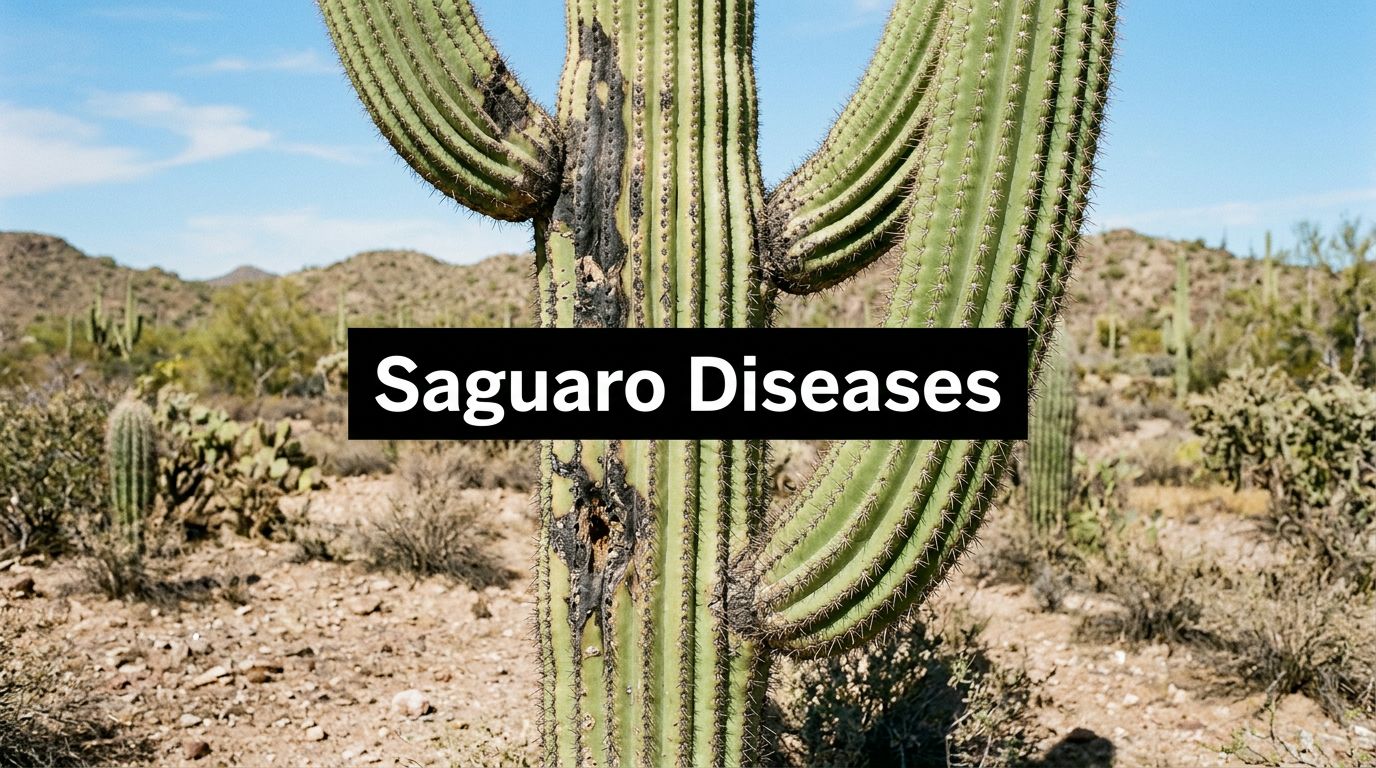

Bacterial necrosis was associated with 29% of recorded saguaro deaths in a 20-year monitoring study, so most saguaro decline is tied to environmental stress rather than a contagious outbreak. That single fact changes how you handle a black, oozing cactus, because rot often shows up after the plant was already injured, frozen, struck, or weakened.
A homeowner seeing wet black tissue on a prized saguaro usually jumps straight to panic. In the field, I see the better move is slower and more specific, because visible decay can be the last stage of a long injury chain, not the start of a plant-to-plant epidemic.
When Saguaro Rot Looks Like Disease but Isn't
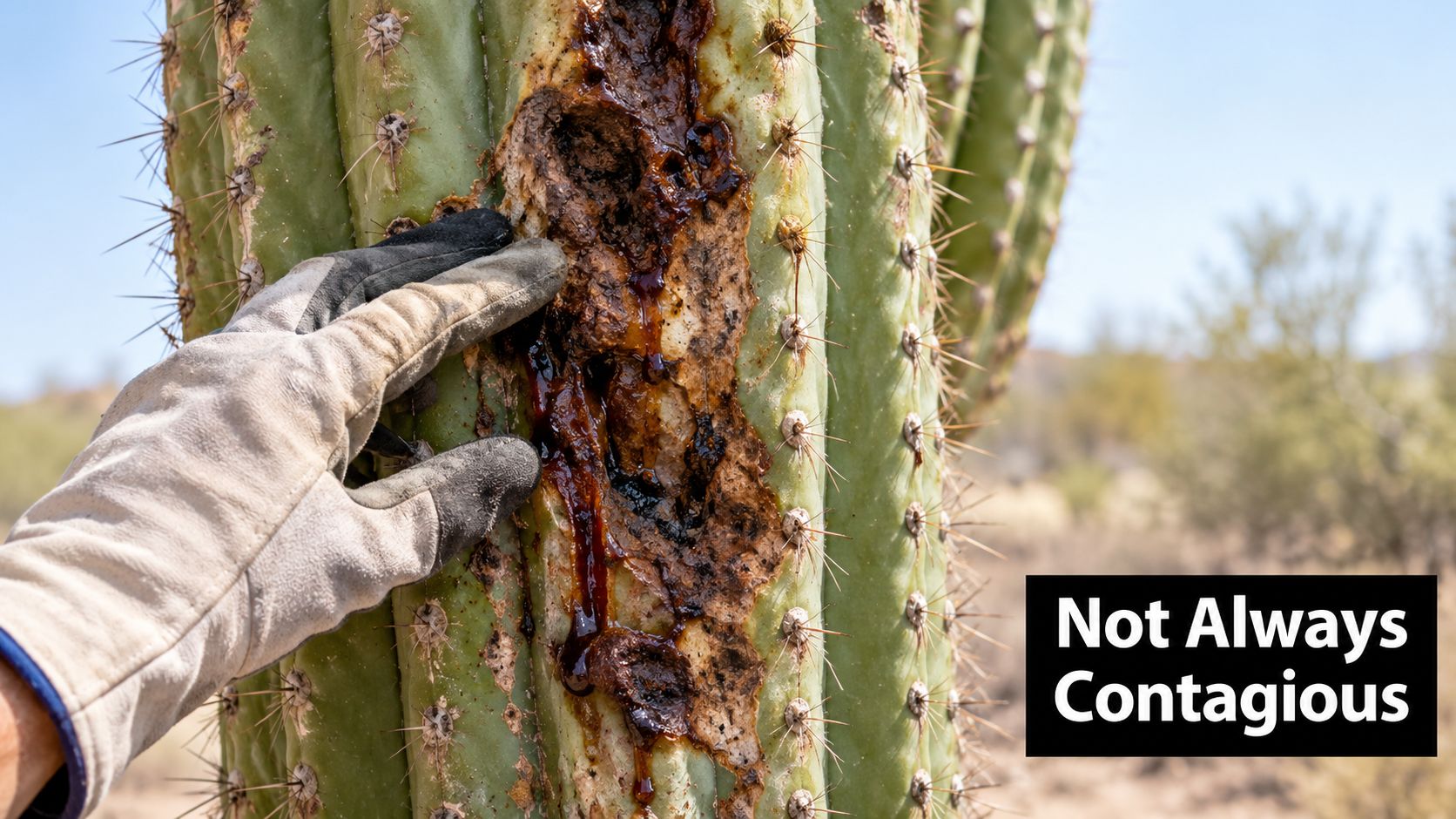
A saguaro owner finds a black, wet patch near the base and assumes the whole planting is at risk. That reaction makes sense, because wet, foul-smelling decay does signal bacterial necrosis, but the cause is often older damage, not a fresh contagious problem spreading through the yard.
The long historical record matters here. Investigators first treated the 1939 to 1940 die-off as a contagious disease problem, then later ecological work showed that much of the decline was tied to aging tissue, freeze injury, lightning, and delayed rotting after the original damage. The lesson is simple, the rot you see today may have started months or years earlier.
Read the plant as a timeline
A damaged saguaro tells a story in layers. A freeze can injure the tissue, lightning can open a wound, drought can weaken the plant, and bacteria move in after that. That sequence is why a lesion can appear long after the original stress.
Long-term monitoring after the 2011 freeze made the same point in a cleaner way. Older plants were far more vulnerable than younger ones, and the pattern of death tracked age, exposure, and growing conditions more than a simple contagious spread. If a specimen has been stressed by weather, placement, or injury, rot is often the visible endpoint.
Practical rule: don't ask only, “Is it infected?” Ask, “What injured this cactus first?”
For buyers and gardening professionals, that distinction changes the response. A plant with a single soft lesion may need treatment, but a cactus in an exposed site with freeze damage or mechanical wounds needs a broader diagnosis before anyone reaches for tools or chemicals. If you're trying to revive a stressed specimen, this guide on how to revive a dying cactus is a useful place to start.
Identifying the Three Main Saguaro Disease Types
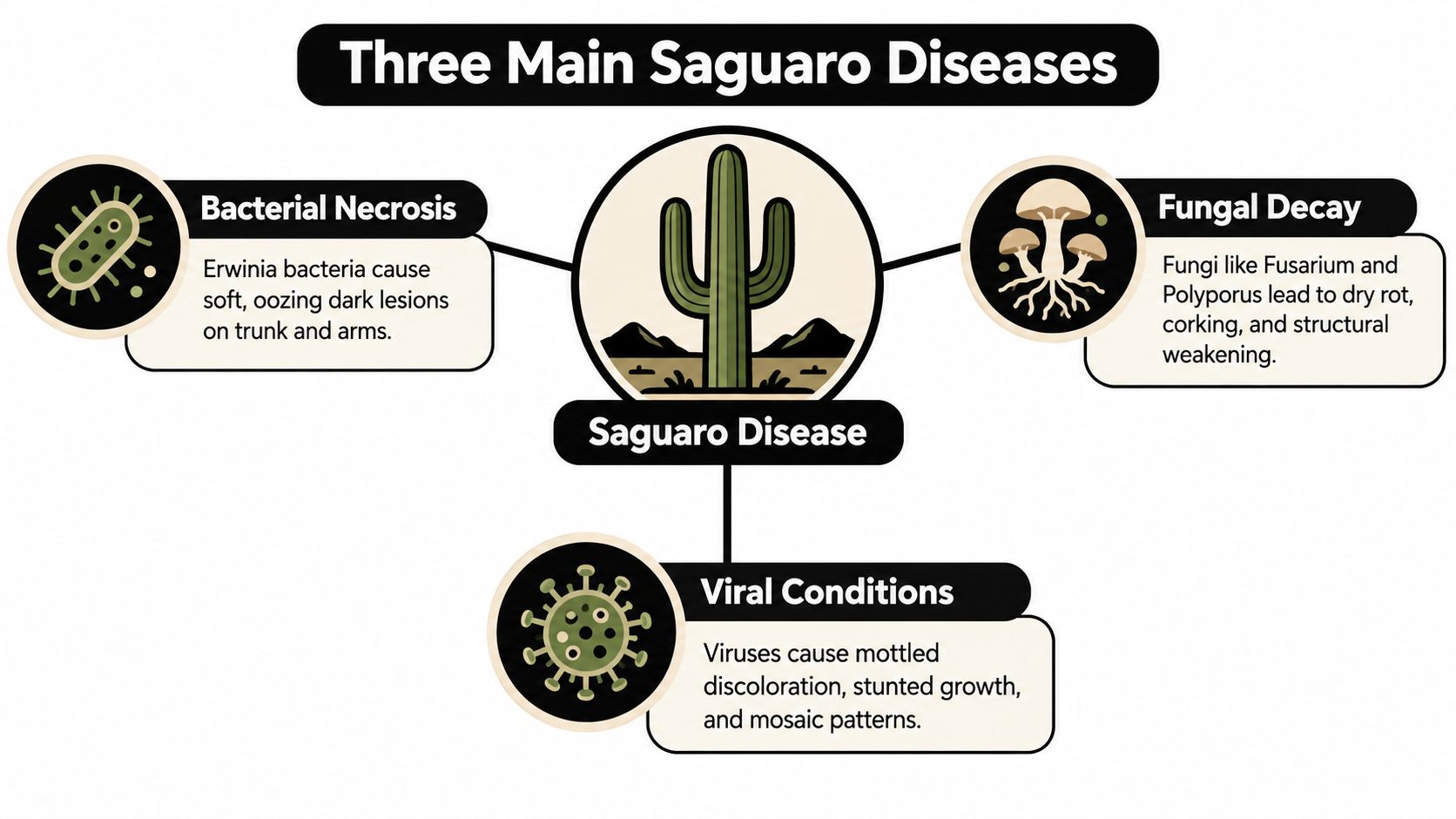
Saguaro problems fall into three broad buckets, and the visual clues are not the same. If you lump everything together as “rot,” you miss the entry point, the likely progression, and the correct fix.
Bacterial necrosis
Bacterial necrosis is the classic wet rot people notice first. It is commonly linked to Erwinia cacticida, and it usually shows up as soft, dark tissue with a foul odor and sticky exudate. Early lesions can begin small, sometimes as a light-colored water-soaked spot on the trunk or arm, then turn brown or black as the tissue collapses.
This type often enters through wounds. Freeze damage, transplant shock, animals, or tools can all create openings, and the bacterium behaves opportunistically once the tissue is weakened. That's why a plant can look fine for a while and then fail at the wound site later.
Fungal decay
Fungal problems tend to work differently. Research on saguaros describes Poria carnegiea as a root-entry white rot organism, and Phellinus texanus as a wood-decay fungus that weakens the internal structure of older plants and can contribute to wind-throw. In practice, that means the plant may not gush liquid the way bacterial necrosis does, but it can still lose strength from the inside out.
A large, leaning saguaro with a cavity is a different problem from a localized ooze spot. Surface treatment alone won't fix a plant that's losing structure underground or inside the trunk.
Viral conditions
Viral issues are less clearly documented in saguaros than bacterial or fungal decline, but they still belong in the differential when you see abnormal growth or patterning that doesn't match rot. I'd be cautious here, because homeowners often call every color change a disease. Sometimes the actual driver is stress, sun injury, or cold damage rather than a virus at all.
If you want a general tree-disease comparison point, fungal canker treatment for trees is a useful contrast in how woody plants can fail through cankers and decay patterns that aren't identical to cactus rot. The principle is the same, identify the tissue pattern before you treat the problem.
How to Diagnose Saguaros Showing Disease Symptoms
Start with the lesion itself. Wet, soft, and smelly points toward active decay, while dry, corky, or sunken tissue often points to older injury or a healed wound. The goal is to separate a current infection from tissue that already died and is now breaking down.
Check the pattern, not just the color
Look at where the problem sits on the plant. A wound near the base, a bruise from handling, or damage on the side exposed to freeze or sun can all explain why decay started there. If you see only one isolated lesion, that's very different from scattered abnormalities across the stem.
Then ask when the symptom appeared. If the cactus went through a freeze, a heat wave, a shipping move, or recent irrigation changes before the lesion showed up, the cause may be environmental stress. As noted earlier, bacterial necrosis often follows the stress event instead of causing the first damage.
A lesion that smells bad and feels soft deserves attention. A dry scar with no spread usually deserves observation and context.
Use weather and stability as part of diagnosis
Recent weather matters because saguaros can show delayed decline after freezing temperatures or harsh exposure. Inspect the plant for lean, trunk instability, or broad internal collapse, since those signs can mean structural failure rather than a simple surface infection. If the cactus is upright, firm, and showing only a small wound, you may have a treatable lesion.
For root and base issues, I'd also inspect the surrounding soil and drainage. If water pools around the crown or the base stays wet, root stress can drive decline even when the visible symptom looks like a disease spot. This root-rot guide fits well with that inspection mindset.
Use this quick checklist:
- Texture: wet and soft suggests active decay, dry and corky suggests older injury.
- Odor: foul smell points toward bacterial breakdown.
- Weather history: freeze, heat, wind, or lightning often explains the trigger.
- Wound site: animals, tools, and shipping damage create entry points.
- Stability: a leaning or hollowing cactus needs a structural check, not just a surface look.
Quarantine and Treatment Procedures for Active Infections
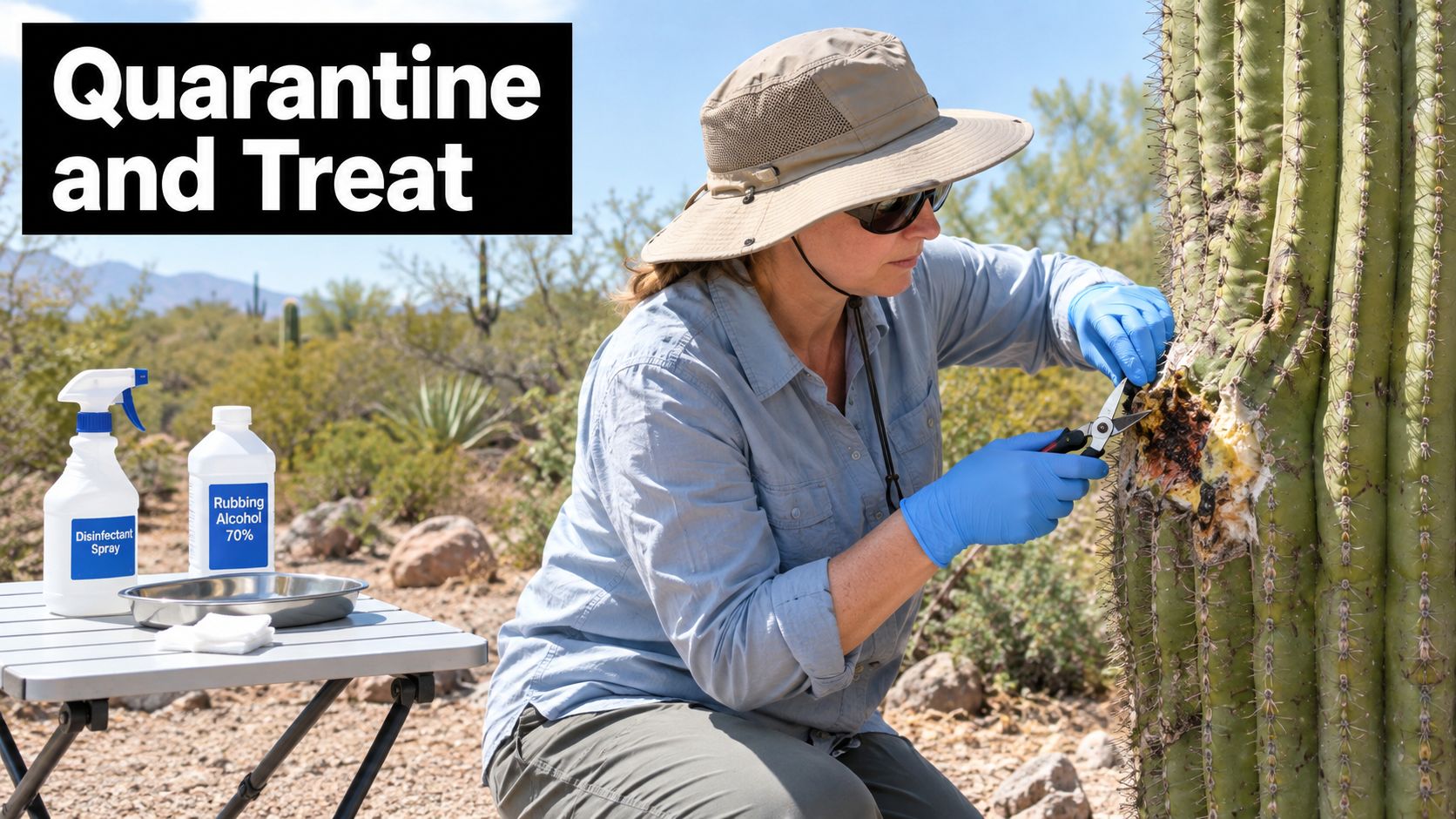
Once you know you're dealing with active rot, isolate the plant's problem area immediately. Keep irrigation off the wound, keep people away from unstable specimens, and don't leave soft tissue sitting in the planting bed where splash or handling can spread contamination.
Cut clean, cut back far enough
Remove all visibly discolored and softened tissue with a firm, sterile or disinfected tool. Keep cutting into sound tissue until the blade meets firm, clean material, because stopping at the edge of the soft spot usually leaves decay behind. Shape the lower edge of the wound into a downward drainage channel so water won't pool in the cavity.
That drainage shape matters more than the average grower realizes. If the cut holds moisture, the plant stays in a perfect environment for more tissue breakdown. Drying the wound is part of the treatment, not an afterthought.
Disinfect tools and handle waste correctly
Use either 70% isopropyl alcohol or a 10% bleach solution on tools, but never mix the two disinfectants. After the cut, put removed tissue in household trash rather than compost or an area near other plants. That keeps diseased material out of the garden.
Clean tools and dry wounds do more for a salvageable cactus than repeated spraying ever will.
For buyers and gardeners, this is the practical trade-off. Small active lesions can sometimes be handled on site, but the plant only has a chance if the original stress is corrected too. If freeze injury, poor drainage, or a bad planting site stays in place, the wound may close while the core problem continues underneath.
One more caution from the nursery side. Newly shipped or transplanted saguaros are vulnerable because their roots and stems have already been stressed. Treat them gently, and don't confuse post-shipping damage with a contagious epidemic.
Prevention Through Proper Cultural Care and Planting
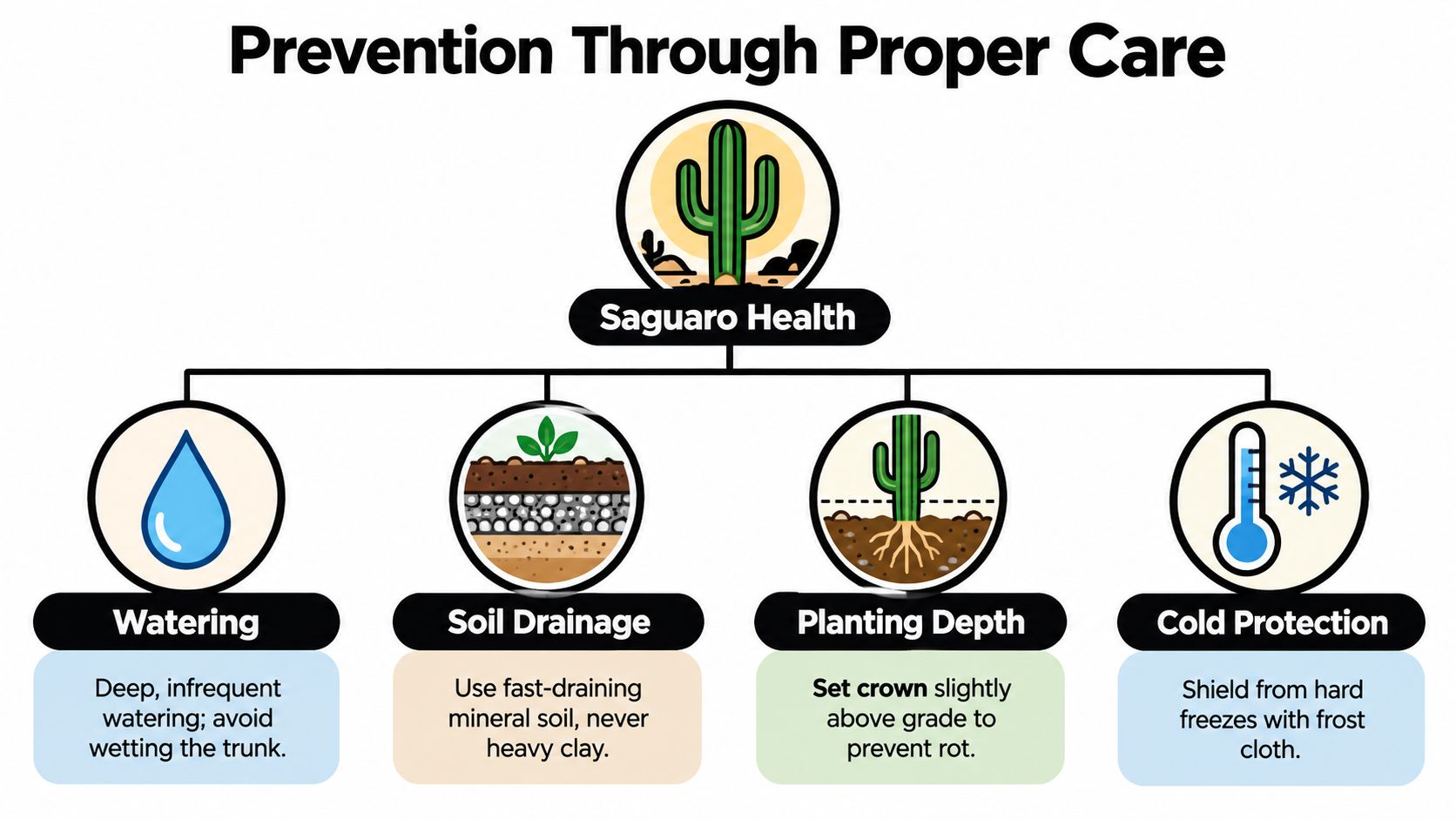
The strongest disease prevention starts before the cactus ever shows a lesion. Saguaros do far better with deep, infrequent watering, fast drainage, and a planting spot that reduces heat and freeze stress than they do with constant attention after they begin to rot.
Water and soil set the baseline
A soak-and-dry approach fits this plant far better than frequent moisture. The trunk should stay dry, and the soil should drain quickly so roots aren't sitting in damp media long after irrigation. If you want the watering side broken down in plain language, this cactus watering guide covers the core idea well.
Soil matters just as much. Saguaros need a fast-draining setup, not heavy clay or a rich mix that stays wet. In the nursery trade, I'd rather see a cactus slightly under-watered than kept in a soil that holds moisture around the base.
Site choice changes survival odds
Placement matters because exposure changes survival. Research on monitored plants found that mortality was lower beneath palo verde and mesquite than in open areas, which matches what many growers see in gardens and yards, nurse trees reduce the sting of sun and freeze. A saguaro in the open has to fight more stress, and that stress often becomes the setup for later rot.
Cold protection also belongs in the prevention bucket. Young or freshly planted specimens need help when hard freezes threaten, and even mature plants can be damaged enough to invite bacterial decay later. That's why the first response to weather risk should be protection, not panic treatment.
Shipping and establishment need patience
Bare-root shipping and transplanting are stressful, even when the plant arrives healthy. Give the cactus time to acclimate, keep the first watering careful, and avoid overhandling the crown or roots. If you're placing a specimen in a garden, professional tree care in Dublin is an example of the kind of local site-management thinking that matters when woody plants and large succulents need proper placement and aftercare.
The goal isn't to water a saguaro into health. The goal is to keep it dry enough, protected enough, and stable enough that rot never gets a foothold.
When to Call a Specialist for Saguaro Care
A small lesion on a firm plant is one thing. A mature saguaro that's leaning, hollowing, or collapsing is another, because cutting into the wrong place can turn a salvage job into a safety problem.
Use value and stability as your decision points
If the plant serves as a garden focal point, a premium specimen, or a mature cactus with obvious internal decay, get a qualified cactus specialist or arborist involved before you cut, move, or stake it. The larger the plant, the more likely hidden structural failure is present, and the risk rises fast once the trunk starts to lose integrity.
Homeowners can usually handle a small, localized wound when the rest of the cactus is firm and upright. They should stop short when the lesion is extensive, the plant is leaning, or the base feels compromised. At that point, the issue is no longer just disease control, it's plant safety and structural assessment.
Ask three questions before acting
- Is the wound localized or widespread? One clean lesion is more manageable than multiple collapse points.
- Is the cactus stable? Leaning or wobbling suggests deeper failure.
- Is the specimen replaceable? Higher-value plants justify specialist intervention more often.
If you're uncertain, don't force a solution. Saguaros recover slowly, and a bad cut or unsafe move can do more damage than the original problem. A calm assessment usually protects both the plant and the person working around it.
Key Takeaways for Saguaro Owners and Landscapers
Saguaro disease symptoms are real, but they're not always a contagious crisis. The biggest mistake is treating every black or oozing patch as proof of spread, when the underlying cause may be freeze injury, lightning, drought stress, age, or physical damage that set the stage for bacterial necrosis or decay.
The practical checklist is straightforward. Check whether the tissue is wet or dry, note whether there's odor, look for wounds, and think back to recent weather and irrigation changes. If the plant is soft, unstable, or hollowing, that's a different category from a small surface lesion on an otherwise firm cactus.
Prevention beats rescue in almost every case. Give saguaros well-drained soil, soak-and-dry watering, protection from extreme exposure, and enough site planning that they don't spend their lives fighting the wrong microclimate. When a plant does decline, treat the cause, not just the symptom.
Homeowners, collectors, and landscaping professionals who learn that distinction save themselves time, money, and a lot of unnecessary panic. A saguaro can look alarming and still be responding to old stress rather than an active epidemic, so the right diagnosis is the most valuable tool in the yard.
The Cactus Outlet carries large outdoor cacti and premium specimen plants that are suited to desert settings, container growing, and careful installation. If you're planning a saguaro project or rebuilding a stressed planting, visit The Cactus Outlet to review the available cactus and succulent options before you choose your next specimen.