

If you're comparing prickly pear listings with a dozen browser tabs open, the problem usually isn't whether the plant looks good in the photo. The central question is whether it'll arrive alive, match the name on the page, and fit the space you've got for it.
That's why buy prickly pear cactus online needs a buyer's workflow, not a impulse click. A good listing tells you what species you're getting, how it was grown, how it ships, and what happens after it lands on your porch. A weak listing hides those details and hopes the photo does the selling.
Why Buying Prickly Pear Online Feels Risky
The hesitation makes sense. Prickly pear can be a garden plant, a patio specimen, or an edible fruit producer, and those are very different purchases even when the listing uses the same common name. The market is real, not tiny, with a 2024 sourcing guide estimating the global prickly pear market at over $200 million annually and naming Mexico, the United States, and Spain as top exporters, which means buyers are dealing with a cross-border supply chain, not a local houseplant novelty source (sourcing guide).
That scale helps, but it also creates confusion. Fresh pads and fruit are usually best sourced regionally to reduce spoilage, and the same guide notes that online availability is strongest through specialty retailers and broader e-commerce channels. In plain terms, some sellers can ship a healthy cactus, while others are really moving fragile produce and pretending the logistics don't matter.
What usually goes wrong
A bad purchase usually fails in one of three places. The seller ships the wrong Opuntia, the plant gets packed in a way that crushes pads or rubs spines loose, or the buyer waters it like a houseplant on day one and creates rot.
Practical rule: If the listing doesn't tell you exactly what you're buying, assume the seller expects you not to ask.
Prickly pear also has real seasonal swings that affect what you can buy online. In the Northern Hemisphere, March to August is peak season for fresh pads, September to November is peak fruit season, and December to February means limited fresh supply with more reliance on canned, frozen, or imported product (sourcing guide). That's not trivia, it tells you why inventory, size, and price can shift so much across the year.
The other reason online buying feels risky is that prickly pear isn't a rare plant in the botanical sense, but it can still be hard to source locally in a usable form. Massachusetts records show eastern prickly pear has only four documented populations in two counties there, while the Nantucket population alone includes over 1,000 plants in three populations and the Barnstable site had several plants within one square meter with 12 stems counted in 2017 (Massachusetts eastern prickly pear report). That kind of uneven distribution is exactly why online buying matters.
Choosing the Right Prickly Pear Variety for Your Goal
Buyers make better decisions when they shop by intent, not by a random species name they found in a photo caption. The prickly pear genus, Opuntia, is the most widespread genus in the cactus family, with 145 accepted species across North and South America and now around the world after escaping cultivation, and NC State notes that some species are noxious weeds in certain locations (NC State Opuntia profile). That means the wrong plant is usually not a bad plant, just a mismatch.
Start with the job you want the cactus to do. An outdoor planting needs different traits than a patio container, and a fruiting plant needs different handling than one meant only for form and texture. If a seller cannot tell you that difference clearly, keep looking.
Varieties by buyer intent
If you want a tough ground plant for colder sites, look for cold-hardy native types with a compact habit. They fit cleanly into low-water garden beds, spread in a controlled way, and usually make more sense than large, upright selections that need room to settle. Sellers should name the species and say whether the plant stays low or sends out broader pads.
If you want a plant for a patio or a movable container, choose a smaller form that handles pot culture without constant pruning. These are the listings where shape matters more than size. A good seller will tell you whether the plant stays tidy, whether it branches freely, and whether it needs winter protection in a pot even if it would survive in the ground.
If you want fruit, buy for fruiting habit first and appearance second. Edible-fruit selections should be described with clear notes on pad form, fruiting behavior, and whether the plant is a younger start or a more established specimen. A generic decorative Opuntia page tells you little. A proper listing will separate ornamental use from harvest use and say what kind of plant is being shipped.
For bigger beds or a more dramatic planting, ask for large-scale Opuntia rather than assuming any broad pad form will do. Sellers who know their stock can tell you which selections stay open and spreading, which ones thicken into clumps, and which ones are better left for a site with more width than height. That is the kind of detail that saves you from buying a plant that looks right in a photo and fights your space after planting.
If you are comparing edible selections, use Opuntia ficus indica selection details as a reference point for how a serious listing should describe use, growth habit, and plant form. Good listings identify the goal plainly. Weak ones hide behind a common name and leave you to guess.
How to Read a Prickly Pear Listing Like a Buyer Who Knows What to Look For

A good cactus listing reads like a plant record. A weak one reads like a mood board. The details that matter are boring on purpose, because they predict whether the plant will survive shipping and whether it is the variety you want.
The signals that tell you a seller knows their stock
Start with the full botanical name. “Prickly pear” is too loose by itself. You want genus and species, and if the seller offers a cultivar name, that's even better. The sourcing guide on buying Opuntia specifically recommends verifying the exact botanical name and looking for cultivar documentation, then asking for proof of propagation method (Opuntia buying guide).
Next, look at the potting media or root description. Gritty, fast-draining media is a good sign, while peat-heavy mix is a warning sign. Standing water is a bad look on any cactus page, and it tells you the seller may not be thinking about transport stress at all.
A seller who can explain source material and propagation method usually packs plants with more care. A seller who can't explain either one is asking you to take everything on faith.
You should also care about quarantine and shipping compliance if the plant crosses state lines. The same guide advises confirming a USDA-APHIS phytosanitary certificate when shipping to regulated destinations like California, Florida, or Hawaii (Opuntia buying guide). If the listing is vague about this, ask before checkout, not after the box is in transit.
A clean product page, like the style you see on The Cactus Outlet's prickly pear content, should answer the basics without making you dig through customer comments for clues. That's the standard to hold any seller to.
Matching Size, Age, and Hardiness to Where You Plant
A small cactus is not a cheap shortcut, and a big cactus is not automatically the safer buy. Size is a planting decision. It changes how much transplant stress you accept, how long you wait for the plant to settle, and how fast the yard starts looking finished.
Hardiness deserves the same level of scrutiny. A market-oriented industry explainer lists prickly pear species generally as hardy in USDA zones 4 to 11, and it also notes that some species handle extreme cold down to about -30°F (-34°C), so the species name matters more than the genus alone (Gardenia Opuntia profile). That is the line between a plant you can set in the ground and one that belongs in a pot or a protected spot.
Small starts versus mature specimens
A small pad or young plant is usually easier to ship and easier to establish. It also asks more patience from you, because the plant has more growing to do before it reads as part of the design. A mature specimen costs more, but it lands closer to the finished look you want, which matters for patios, show beds, and any site where you need immediate visual weight.
The middle ground is often the smartest buy. A well-rooted, medium-size plant gives you enough structure to matter without the shipping stress that comes with a huge specimen. For patio buyers, that also makes the plant easier to move before placement is final. For outdoor design buyers, it helps the cactus read as intentional from day one instead of looking temporary.
Skip the impulse to buy the largest plant available just because it looks impressive in the listing photo. Bigger plants can arrive with more bruising risk, more handling stress, and more weight in transit. If the seller cannot explain how the plant is packed and stabilized, size works against you instead of for you.
The Eastern prickly pear fits best where you want a lower, spreading cactus that can play a structural role in colder-climate beds or native-style plantings. Chesapeake Bay notes that it can reproduce asexually when pads root into the ground, which is useful information for spacing, containment, and massing (Chesapeake Bay field guide). Treat that as a placement cue, not a reason to leave it unmanaged.
In warm-climate installs, use the plant as part of a broader composition, not as a stand-alone accent dropped into bare soil. The plant palette options for San Diego reference is useful because it shows how prickly pear can sit beside other drought-tolerant forms with different heights, textures, and bloom timing. This is the key planning move, choose a size that matches the rest of the planting, then decide whether the cactus should anchor a corner, fill a low layer, or provide repetition across a bed.
If you are comparing listings, use the seller's shipping and return page as part of that check. The Cactus Outlet shipping and returns information should answer how a plant is handled if it arrives stressed, which is the kind of practical detail that matters more than a glossy product description.
Shipping, Packaging, and Legal Details Worth Confirming
Shipping can make or break a cactus order, and prickly pear raises the stakes because the plant is spiny, heavy, and easy to bruise if someone handles it like a soft houseplant. A seller who does this well shows it in the packing choices, not the marketing copy.
Check the packing setup first. Corner boards, edge protectors, and other rigid materials help keep a box from collapsing, especially with larger plants or mixed orders. If you want a plain reference for what that protection looks like, the find corner board protectors resource from Material Handling USA is a useful example.
The questions worth asking before payment
Ask whether the plant ships bare root or potted. Ask what happens if weather delays the shipment. Ask whether the seller pauses orders during heat or cold spikes. These are not picky questions, they are the difference between a plant that arrives ready to recover and one that sits boxed up too long.
You also need a clear answer on legal paperwork if the plant crosses state lines. The Opuntia buying guide specifically flags a USDA-APHIS phytosanitary certificate for regulated destinations like California, Florida, or Hawaii. If the seller cannot answer that plainly, do not guess your way through compliance.
Shipping timing matters too. Fresh pads are strongest March to August, fresh fruit is strongest September to November, and winter means tighter supply plus more imported or preserved product. Good sellers talk about ship windows instead of pretending every item is always ready to go. The sourcing guide is a solid reminder that seasonality changes what you should expect to find.
Before you check out, compare the seller's plant-handling policy against the shipping and returns page. You want to know how they handle stressed arrivals, what happens if a box is damaged, and whether they have a process for live plants that do not make the trip cleanly.
What to Do in the First 30 Days After Your Cactus Arrives
The box on your porch marks the beginning of the test. A prickly pear can look fine the day it arrives and still collapse if you rush water into bruised tissue or a damaged root system.
Open it fast and inspect it with a buyer's eye. Look for crushed pads, soft spots, loose roots, torn joints, and damage around the base and spines. If the plant arrived warm, wrinkled, or slightly stressed, give it bright indirect light and leave it alone for a bit.
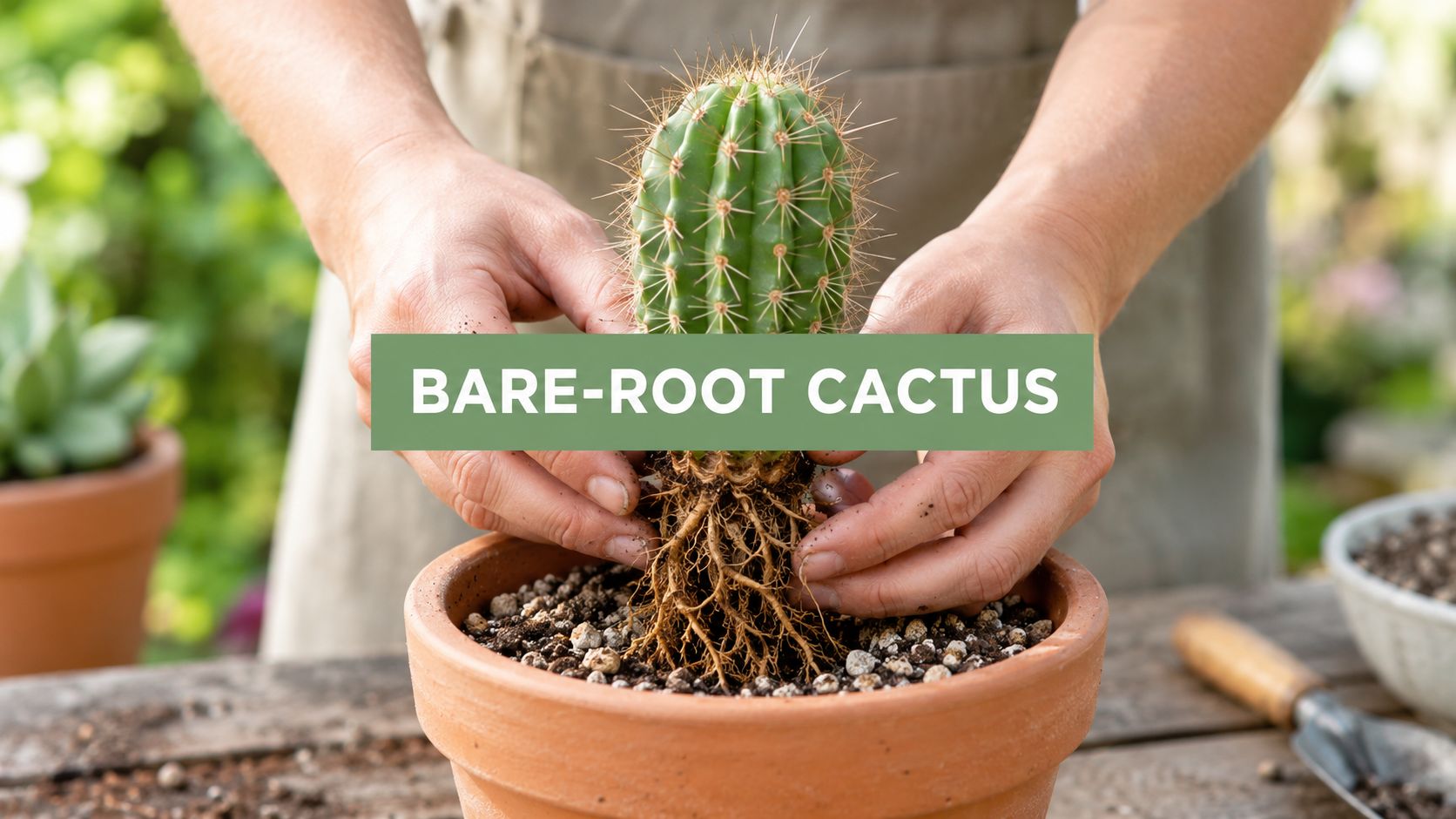
Best practice: bare-root cactus should sit dry for about 5 to 7 days before the first irrigation so tissue can callus, especially after mailing stress.
If the plant arrived as a bare-root specimen or a pad cutting, treat callusing as the first job. A removed pad needs a dry, healed surface before it can root cleanly, and state horticultural guidance says a detached pad should callous before planting (Massachusetts eastern prickly pear report). Skip this step and you invite rot at the cut edge, especially if the shipment took a beating.
Now watch the plant, not the calendar. A soft pad after arrival usually means shipping stress, but a spreading mushy patch means rot is starting and the plant needs to be isolated, dried, and checked for any wet tissue you can cut away. If the soil stays wet after potting, stop watering and improve drainage instead of guessing with a rescue soak.
Once it is potted, keep the mix dry between waterings. A strong indoor routine is to wait until the top 3 inches of soil are fully dry before watering again, and some nursery advice for a medium prickly pear points to infrequent watering only when the mix has dried well through the pot. The message is simple. Wet feet kill prickly pear faster than sun stress.
Pay attention to what the plant does during the first month. New wrinkles after shipping often mean it is using stored moisture while it settles, while a pad that stays limp and translucent is a warning sign. Do not keep repotting it for a better-looking container, and do not move it from shade to harsh sun in one jump. If you want to compare your handling plan with a seller's care notes, the prickly pear cactus guide gives buyers the kind of post-purchase detail a serious seller should provide.

A Quick Decision Framework Before You Check Out
A smart prickly pear purchase comes down to five checks. Variety, seller, size, shipping, and acclimation all need to line up, or the plant is asking more of you than the listing admits.
If you want the simplest version, run this filter in order. First, name the use case, garden, patio, or fruit. Second, verify the botanical name and propagation details. Third, choose a size that fits your climate and your patience. Fourth, confirm shipping timing and compliance. Fifth, make sure you're ready to dry-start it when it lands.
When you can answer those questions without guessing, you're ready to buy. If a listing can't answer them, keep scrolling.
If you want a cactus shipped by people who understand that a large specimen is a logistics project, not just a product photo, start at The Cactus Outlet. You'll find live cacti, including prickly pear options, with the kind of plant-focused detail buyers should demand before checkout.