

You're at checkout with two large cacti open in separate browser tabs. One costs less, the other comes from a nursery with clearer photos, better care information, and a shipping policy that mentions weather. The cheaper plant looks tempting, but a large cactus isn't a casual impulse purchase. Its size raises the cost of transport, the consequences of cold exposure, and the risk of mishandling during acclimation.
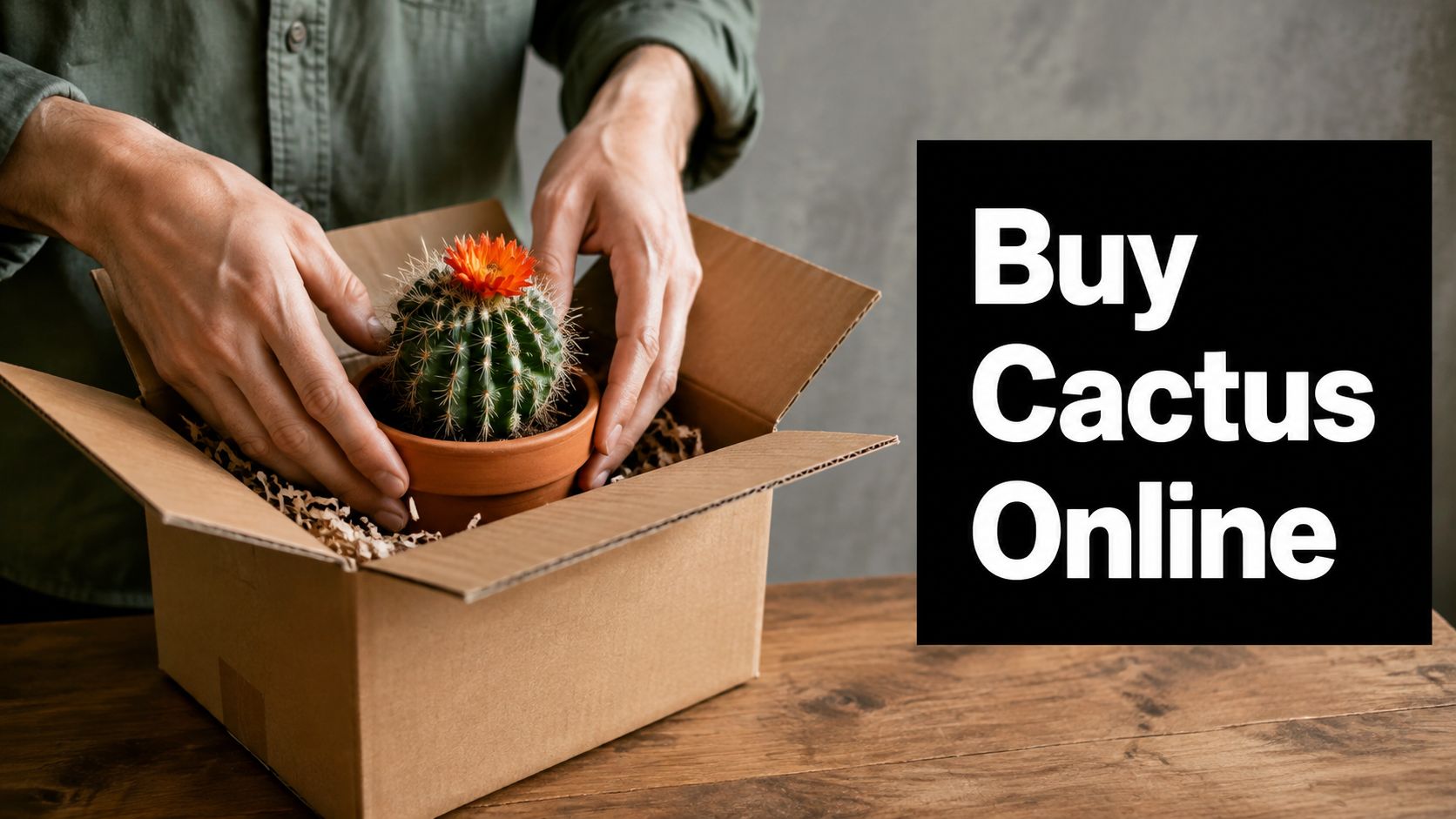
Buying a small succulent locally gives you a chance to inspect it, carry it home, and correct a poor choice quickly. Buying a mature cactus online means trusting a seller to select the right specimen, secure it inside a box, manage the shipping window, and explain what you should do after delivery. The purchase only succeeds when the plant survives the first two weeks in your care.
This guide gives you a practical framework for comparing listings, selecting a species for your climate and placement, evaluating packaging and permits, checking seller credibility, and managing the arrival window. By the end, you'll know which listings deserve a closer look and which red flags should send you elsewhere.
Picture This Before You Click Buy
A large cactus changes the buying decision in three ways. First, the plant has more mass and more force inside a box, so poor packaging can damage stems, spines, pots, and roots. Second, a mature specimen may have been grown in conditions that differ sharply from your patio, greenhouse, or garden. Third, replacing a disappointing large plant takes more money, time, and effort than replacing a small nursery pot.
That's why the lowest listed price shouldn't be your first filter. Start with the plant's intended location, the destination climate, and the seller's ability to show you what you're buying. A listing that gives only a name and a stock photograph leaves too many important questions unanswered.

The real value of a large specimen
Large cacti are usually purchased for a visible purpose. A columnar plant can anchor a gravel garden, a sculptural specimen can define a patio container, and a carefully placed group can create a privacy screen without the visual weight of a conventional hedge. Designers and contractors also care about uniformity, handling, and whether a seller can answer questions about mixed orders.
The plant's retail price is only one part of the decision. You're also paying for the chance that the specimen arrives in usable condition and transitions successfully into your environment. Clear photos, accurate dimensions, a stated shipping process, and practical care instructions provide more useful information than polished lifestyle imagery.
What the market signal tells you
The online channel is established enough to support dedicated cactus collections. The tracked U.S. succulents-and-cacti ecommerce segment generated about $19 million in aggregate online sales in 2025, recorded 602K sessions in June 2026, and showed an indexed conversion range of roughly 2.0% to 2.5%, according to tracked succulents and cacti ecommerce data.
That scale gives buyers choice, but choice also creates inconsistency. You'll find carefully selected plants alongside listings that give little information about origin, root condition, weather handling, or post-delivery care. The rest of your decision should separate those two experiences.
Why the Online Cactus Market Looks the Way It Does
Cacti and succulents now appear as a distinct commercial category in the federal horticulture reporting system. The 2022 Census of Agriculture horticulture specialties tables explicitly list cacti and succulents sales data for the 2024 reporting year, with publication activity continuing into 2025, as shown in the USDA horticulture specialties tables.
That recognition matters to a buyer because it confirms that cactus commerce isn't just an informal hobby market. The census framework records operations, plants on operation, wholesale sales, retail sales, and value. Sellers operate within a measurable horticultural segment, and buyers should expect professional standards for descriptions, fulfillment, plant condition, and customer support.
Online demand is meaningful, but the channel is under pressure. The tracked segment's revenue across retailers declined 24% from January to June, and the same source projected another 10% to 20% decline in 2026. Those figures don't mean you should avoid buying cactus online. They mean you should pay closer attention to execution, because a volatile market can encourage rushed discounting, inconsistent stock descriptions, and weaker fulfillment practices.
The buyer's market signal
| Market Signal | Reading | What It Means for Buyers |
|---|---|---|
| About $19 million in tracked online sales in 2025 | The category has commercial depth | Dedicated online assortments can support specialty plants and larger specimens |
| 602K sessions in June 2026 | Buyers actively use the channel | You have more online choice, but listings need careful comparison |
| Indexed conversion range of roughly 2.0% to 2.5% | Shoppers do complete purchases | Product presentation, trust signals, and delivery confidence influence decisions |
| 24% revenue decline from January to June | Retail performance is volatile | Don't assume a discount reflects equal plant quality or service |
| Projected 10% to 20% decline in 2026 | Market pressure may continue | Favor sellers with reliable processes over the cheapest listing |
Why seller reputation carries more weight
A fragmented category gives serious nurseries room to distinguish themselves through selection and service. It also gives weak sellers room to hide behind generic images, vague size language, and unclear policies. For a homeowner ordering a large specimen for their outdoor area, the difference can be more important than a modest price gap.
The same principle applies across online specialty plant shopping. Buyers comparing plant vendors, including resources such as premium cannabis seeds at Seed Cellar, should look for specific product information, transparent fulfillment expectations, and support that answers practical questions before checkout. A professional storefront should make the purchase easier to evaluate, not force you to guess.
Choosing the Right Species, Size, and Hardiness Zone
Choose the location before you choose the plant. A cactus that looks perfect in a product photo may be a poor fit beside a walkway, under a low roofline, or in a patio container that will be moved regularly. Large specimens need enough clearance for their mature form, their spines, and the people who will pass nearby.
Cold hardiness should narrow your shortlist before appearance does. New Mexico State University identifies the Argentine saguaro, Trichocereus terscheckii, also called Echinopsis terscheckii, as a USDA zone 8 columnar cactus, associated with average annual extreme lows of 10–20°F, while the Sonoran saguaro is rated zone 9, associated with 20–30°F lows, according to New Mexico State University's cactus hardiness guidance.
Match the plant to the job
- Garden specimen: Columnar cacti create height and a strong vertical focal point. Argentine saguaro is worth investigating for a colder garden than the Sonoran type, but your local exposure, drainage, and winter moisture still matter.
- Patio container: Agaves and aloes provide architectural form without requiring a permanent planting decision. Check the plant's eventual spread and the container's stability before ordering a large specimen.
- Privacy screen: Opuntias can create broad, pad-based structure, while columnar plants create a more open vertical screen. Spine placement matters more here than a listing's front-facing photo suggests.
- Interior feature: Euphorbias can provide a sculptural look, but don't assume every plant sold beside cacti has the same cold or light tolerance. Confirm the seller's care guidance for the exact plant.
Hardy cactus choices can extend well beyond the common garden forms. Brooklyn Botanic Garden reports that Echinocereus reichenbachii can be hardy to –25°F, while Coryphantha vivipara var. vivipara is described as hardy to –20°F in its guide to hardy cacti. Treat those figures as species guidance, not permission to ignore wet soil, wind, newly transplanted roots, or a sheltered microclimate.
Compare mature form, not just height
Columnar cacti need vertical clearance and a stable base. Agaves spread through their leaves, aloes can become wide and visually heavy, euphorbias may need careful placement around children and pets, and opuntias can occupy more horizontal space than a thumbnail suggests. A large plant should be measured by its overall footprint, not one attractive dimension.
Before checkout, confirm:
- Your ZIP code and the plant's stated hardiness information.
- The number of hours of direct sun available at the intended location.
- Whether the plant will live in the ground, in a fixed container, or in a movable pot.
- Clearance from doors, paths, seating, windows, and roof edges.
- Whether the listing shows the actual specimen or represents a general type.
- The plant's approximate form, root condition, spine placement, and container requirements.
For additional comparison help, use this guide to types of cacti while building your shortlist.
Shipping, Packaging, and the Temperature Window
Temperature is the shipping variable buyers should take most seriously. Most desert cacti are reported to experience damage below about 32°F, or 0°C. Below-freezing exposure can cause frost burn and tissue collapse, followed later by fungal rot, according to live plant shipping guidance on temperature damage.
A seller should therefore plan around the destination's overnight lows, not just hand the box to a carrier because the calendar says it's a convenient shipping day. Insulation helps, but it doesn't create unlimited protection. Heat packs also need a buffer beyond the carrier's estimated delivery time because delays can extend the exposure window.
Research on potted succulents found 12°C to be the optimum storage and transport temperature for maintaining ornamental quality and suppressing overgrowth across multiple species during simulated testing. The same research found 15°C and 18°C less effective for some plants, which supports a practical preference for temperature-aware staging, prompt dispatch, and reduced time in uncontrolled conditions, as described in the ornamental succulent transport study.
Summer and winter require different decisions
A summer shipment can face heat inside a parked delivery vehicle, on a sunny porch, or in a sealed box with limited airflow. A winter shipment faces the more immediate danger of freezing at night, especially when a package spends extra time at a sorting facility.
| Season | Risk Window | What a Good Seller Does |
|---|---|---|
| Summer | High heat during transit or delivery hold | Stages dispatch around the weather, uses protective packaging, and gives clear arrival instructions |
| Winter | Destination overnight lows near or below freezing | Delays shipment when needed, uses insulation and heat packs where appropriate, and allows a delivery buffer |
| Spring | Fast swings between warm days and cold nights | Checks both origin and destination conditions before dispatch |
| Autumn | Cooling nights and unpredictable carrier exposure | Avoids treating mild daytime weather as proof that the full route is safe |
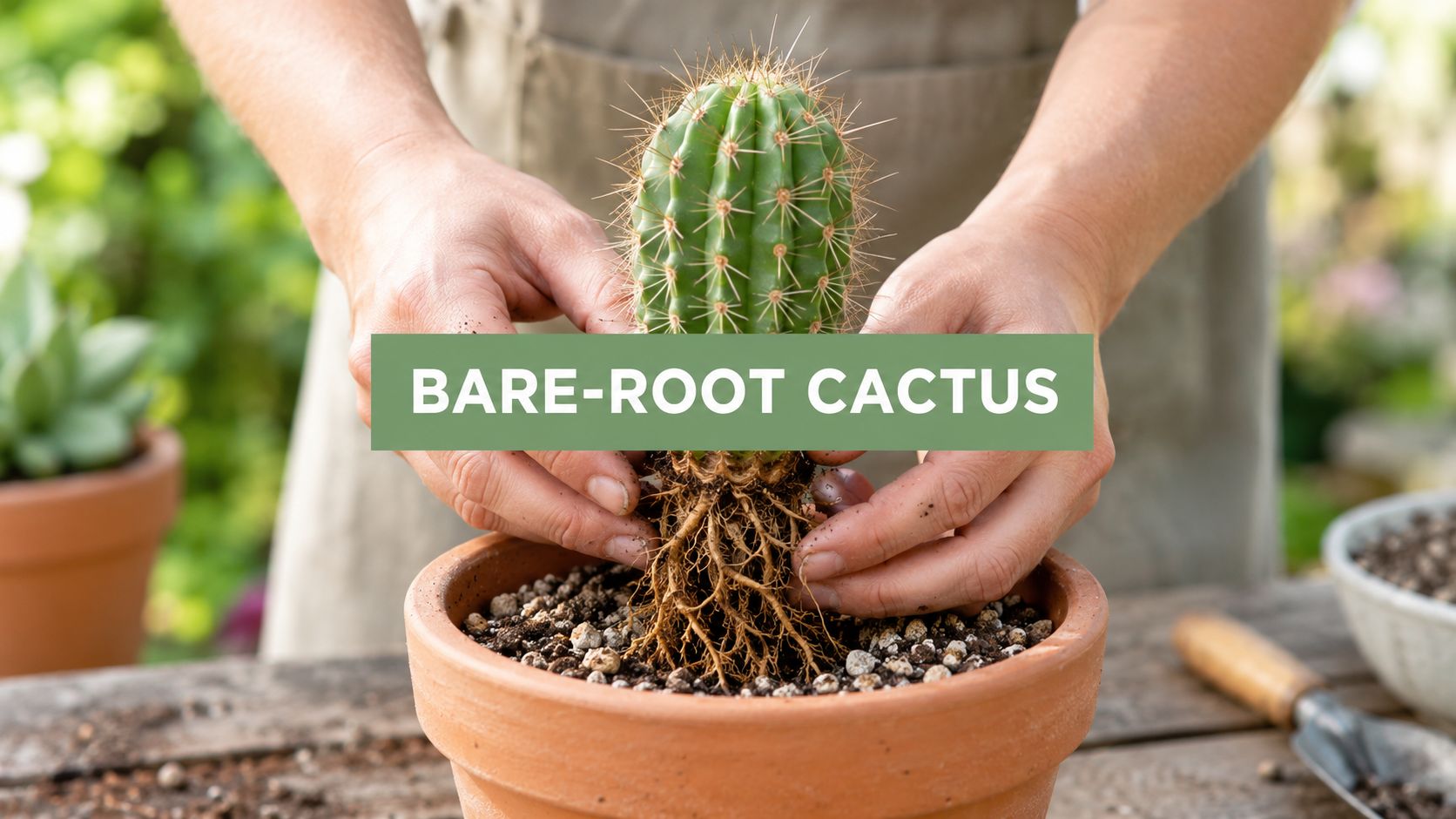
A plant shipped dry is generally easier to protect than one packed with wet soil. Ask whether the nursery uses dry-root handling for the specific order, how the pot is immobilized, and what happens if the forecast changes after purchase. If support cannot answer those questions, don't place a large order during a marginal weather window.
Practical rule: If the destination's overnight forecast threatens freezing, delay the shipment unless the seller can explain the insulation, heat-pack placement, and delivery buffer in concrete terms.
Before checkout, read The Cactus Outlet's shipping and returns information and compare it with the seller's answers to your weather questions. If you're arranging specialized transport beyond ordinary parcel delivery, this resource on how to find a courier for fragile items can help you frame the packaging and handling questions.

Legal and Permit Considerations Buyers Should Know
Domestic purchases from a U.S. nursery are usually the simplest route because the seller handles the ordinary domestic fulfillment process. International sourcing is different. Cactus-family plants for planting are regulated under CITES, and USDA APHIS states that an origin-country CITES permit or certificate plus a USDA-issued Protected Plant Permit may be required, as explained in the USDA APHIS Plants for Planting Manual.
The practical point is simple. Don't assume that a plant shown for sale online can legally cross a border just because a seller can place it in a box. The plant's family, form, country of origin, documentation, and destination all affect the transaction.
The cutting restriction
The APHIS manual states that cactus stem cuttings exceeding 153 mm, about 6 inches, in diameter, are not authorized for entry. That rule concerns entry into the United States under the manual, so it matters most when a buyer is evaluating imported material rather than a domestic nursery-to-door order.
Ask the seller where the plant is shipping from and whether the listing describes a rooted plant, a cutting, or another form of plant material. Don't rely on a product title alone, especially when the specimen is large or the seller operates outside the United States.
Transit can trigger separate requirements
USDA APHIS also says that plants or plant products entering or moving through the United States on their way to another country may require a transit permit. A shipment that stops at a U.S. port of entry before being reshipped abroad also needs one, according to APHIS transit permit guidance.
That means forwarding a cactus internationally isn't the same as delivering it to a domestic address. Before paying, identify the actual origin, destination, and route. If another country is involved, ask the seller or a qualified import specialist to confirm the documentation requirements rather than treating a standard online checkout as regulatory approval.
How to Read a Seller Before You Trust One
A seller's reputation should be judged by evidence, not atmosphere. Attractive branding and a large catalog don't tell you whether the plant shown is representative, whether the rootball is stable, or whether customer support can help when weather interrupts a shipment.
Start with the listing itself. A serious seller gives you enough information to decide whether the plant fits your space and risk tolerance. A vague listing forces you to buy on hope.
Green flags on the product page
Look for:
- Specific dimensions: The listing explains the plant's approximate size and whether measurements include the pot.
- Useful photographs: Images show form, base condition, potting, and spine placement rather than only a staged display.
- Clear care guidance: The seller explains light, watering, temperature, and acclimation without pretending every cactus follows the same schedule.
- Shipping detail: The page identifies how the plant is secured and how weather may affect dispatch.
- Accessible support: You can ask about the actual specimen, root condition, and intended placement before ordering.
- A readable policy: The guarantee, replacement process, and claim requirements are easy to locate.
Customer reviews are most useful when they describe arrival condition, packaging, communication, and recovery after delivery. A review that only praises appearance tells you less than a review that explains how the seller handled a weather delay or a damaged pot.
The cheap listing versus the accountable nursery
The cheapest listing may be reasonable if the seller answers questions, provides accurate information, and protects the order in transit. It's a poor deal when the low price comes with generic images, unclear dimensions, weak communication, or a policy that leaves you responsible for problems you couldn't reasonably prevent.
A recent buying guide argues that over 68% of online cactus purchases fail within 90 days when buyers skip seller verification, propagation history, and a 14-day quarantine and acclimation period, as reported in this cactus buying and care guide. That figure is a warning about the full purchase process, not a reason to blame every failed plant on the nursery. Buyers can create avoidable losses by watering immediately, exposing a stressed plant to harsh sun, or skipping inspection.
For a reference point, The Cactus Outlet presents the features you should expect from a premium online nursery, including detailed product descriptions, care instructions, customer reviews, well-packaged plants, promotional discounts, seasonal sales, and a dedicated support team. Landscape contractors and designers should ask about palletizing, lead times, mixed-species orders, and how the seller identifies each plant before shipment.
The right seller doesn't just sell you a cactus. The right seller gives you enough information to keep the purchase from becoming a guessing game.
Use this guide to choosing the best online cactus store as another checklist when comparing vendors.
Your First 14 Days After the Box Arrives
The delivery day is not planting day. Open the box in shade or bright indirect light, not in the strongest sun available. Photograph the packaging, the plant, the pot, and any visible damage before you move or water anything, because those records give you a clear basis for a seller claim.
Check the base and visible roots for softness, discoloration, or an unpleasant odor. If the root area or soil is wet, leave it alone. A stressed cactus doesn't need an automatic drink because it has arrived.
A practical acclimation schedule
Day one: Unpack carefully, support the stem rather than pulling on the spines, and place the plant in a protected shaded location. Keep the packaging until you've completed your inspection.
Days two through four: Maintain shade or indirect light and observe the base, body, and pot. Don't repot a plant that arrived stable unless the seller specifically tells you that immediate intervention is necessary.
Days five through seven: Begin introducing brighter light gradually. A plant that came from protected nursery conditions can scorch when moved directly into intense outdoor sun, even when the species ultimately prefers full light.
Days eight through fourteen: Continue the gradual light transition and keep the plant protected from unsuitable cold. A recently rooted plant may show less stable anchoring or a smaller root system than a mature field-grown specimen. Don't treat loose roots, fresh potting media, or a recently cut base as proof of failure, but do ask the seller for clarification before disturbing the plant.
Repot only when the rootball, moisture level, and plant condition justify it. If the cactus arrives wet, damaged, or unstable, repotting adds another stressor. Wait until the plant has settled, then choose a container that supports the existing rootball and has proper drainage.
The transport research identified 12°C as the optimum storage and shipping temperature for maintaining ornamental quality and suppressing overgrowth in multiple potted succulent species, so an arrival that has experienced temperature stress deserves a slower transition, not immediate watering or strong sun. A buyer in USDA zone 8 should also remember that a cold-hardy species still needs protection while newly received and establishing, particularly during a spring cold snap.
The Cactus Outlet offers large cacti, agaves, aloes, euphorbias, and succulents online with product information, care guidance, customer reviews, packaging support, and assistance for purchase questions. Visit The Cactus Outlet to compare specimens, choose a plant for your garden or container, and start with a seller that treats delivery and acclimation as part of the purchase.