
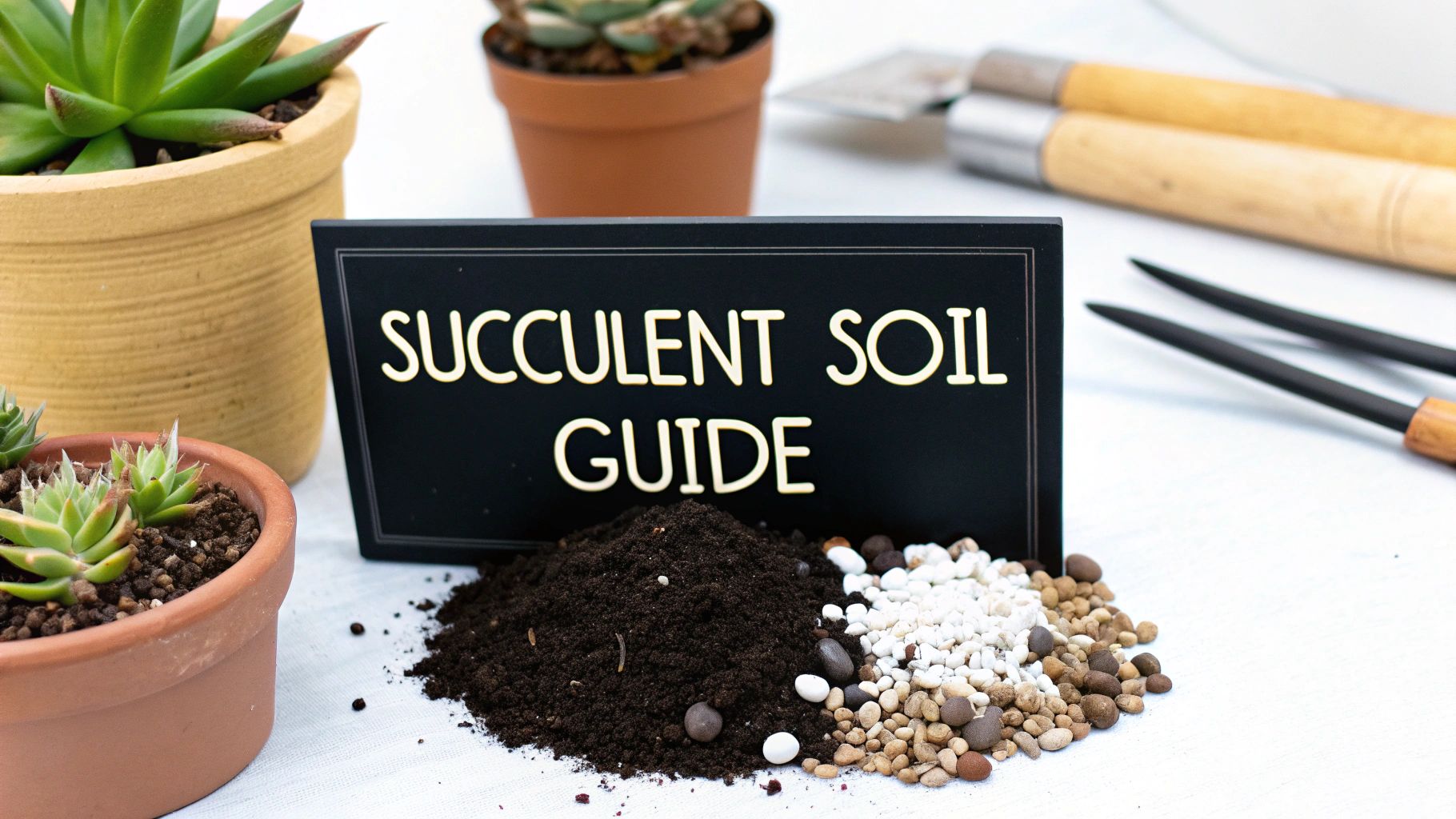

If you want your succulents to thrive, the secret is in the soil. The best potting mix for them is a fast-draining, gritty blend made of over 50% inorganic material, like pumice or perlite. This recipe closely mimics the dry, airy conditions of their native homes, which is crucial for preventing root rot—the number one killer of succulents planted in standard, moisture-heavy potting soils.
Why Your Succulent's Survival Depends on Soil
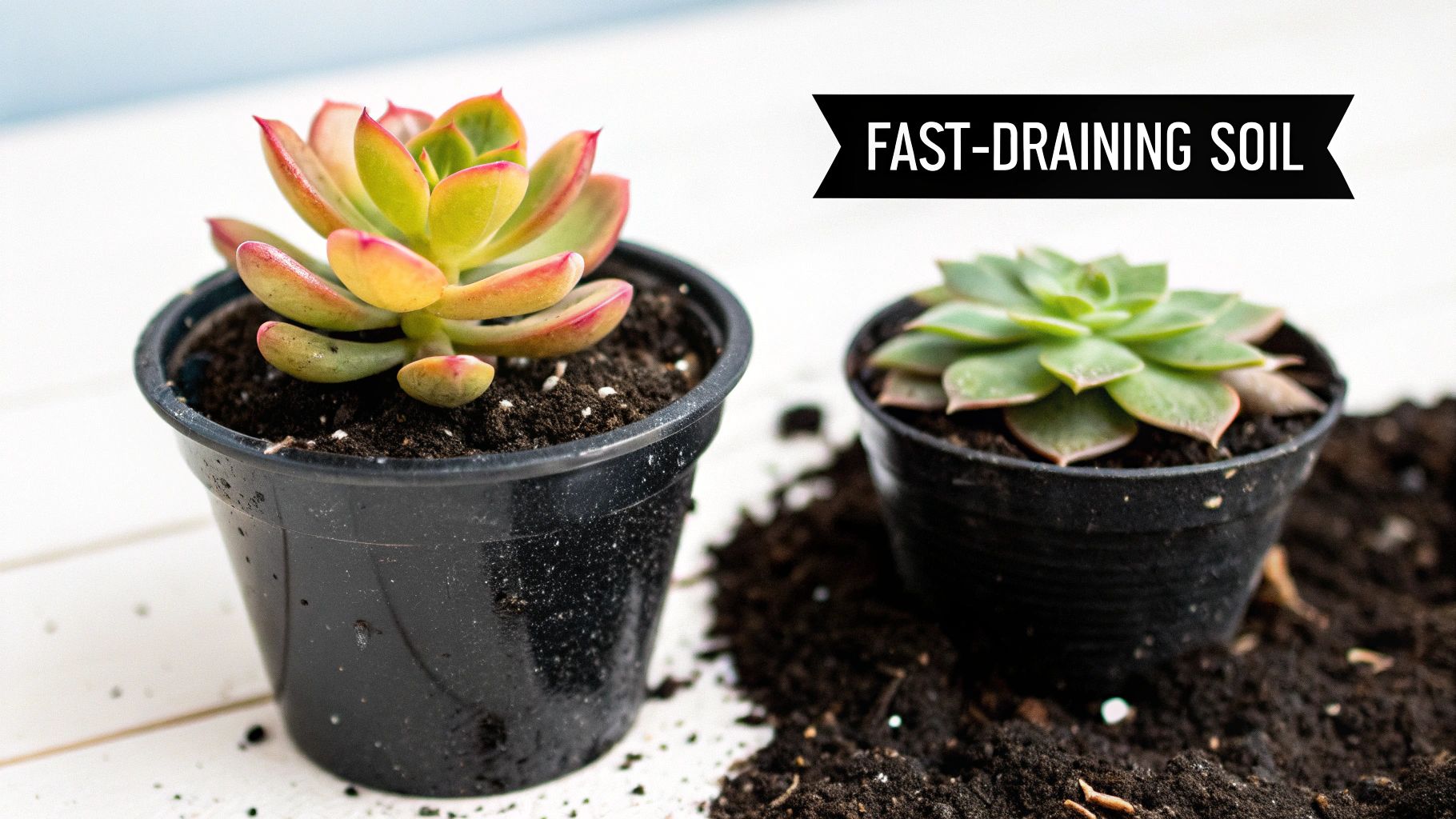
Have you ever brought home a perfect-looking succulent only to watch it turn into a yellow, mushy mess a few weeks later? I’ve been there, and the culprit is almost always the soil. For these unique plants, getting the foundation right isn’t just a helpful tip—it's absolutely essential for survival.
Think of it this way: planting a succulent in regular potting soil is like trying to grow a cactus in a swamp. It just won’t work. Standard mixes are designed to stay wet for tropical plants that love moisture. But for a succulent, that same soggy environment is a death sentence that suffocates their roots and opens the door to fungal diseases.
The Science of Succulent Soil
The best succulent soils are all about one thing: rapid drainage. These plants evolved in arid climates where rain is rare and the ground dries out in a flash. Their roots simply can't handle sitting in wet soil for long periods.
A great succulent mix gets this right by balancing two types of ingredients:
- Inorganic Components: This is the gritty stuff—pumice, perlite, coarse sand, or chicken grit. These materials don't hold water. Instead, they create little air pockets throughout the soil, letting water drain right through and giving the roots space to breathe.
- Organic Components: Think coconut coir or fine pine bark. These provide a little structure and trace nutrients, but they should be used sparingly. Too much organic matter is what makes a soil hold onto excess water.
A good rule of thumb is that proper succulent soil should feel light and gritty in your hands, never dense or spongy. When you water it, you should see water running out of the drainage hole almost immediately, leaving the mix just barely damp.
A Foundation for Thriving Plants
To really appreciate why this matters so much, you just have to look at how these plants grow in the wild. Succulents are masters of adaptation. Replicating their native soil is the most important thing you can do to keep them healthy. You can see just how tough and beautiful they are by exploring the desert's resilient blooms.
This guide will walk you through everything you need to know, from decoding the ingredients on a store-bought bag to mixing your own perfect blend at home. Investing a little time and effort into the right soil not only protects your plants but sets them up for years of stunning growth. It’s no surprise the global succulent market is booming, with a projected growth rate of 16-19% as more people discover the joy of these incredible plants.
Why Your Regular Potting Soil is a No-Go for Succulents
If you've ever walked through a garden center, you know the aisles are packed with bags of potting soil promising vibrant, healthy plants. And for things like ferns or pothos, that stuff is gold. But for your succulents? It can be a total disaster. The reason is simple: you have to think about where these plants came from. A fern grew up on a shady, damp forest floor, while your favorite Echeveria is native to a sunny, rocky cliffside.
Trying to grow a succulent in standard, all-purpose potting mix is like asking a camel to thrive in a swamp. It just won’t work. Those regular soils are designed to hold onto water, which is fantastic for thirsty tropicals but a death sentence for a succulent that’s adapted to dry conditions.
Roots Need to Breathe, Too
It's helpful to think of a succulent's roots as its lungs. They don't just suck up water; they need to pull in oxygen from the soil to stay healthy and function. When you use a heavy, peat-based potting mix, it gets waterlogged and compacts around those delicate roots.
That soggy, dense soil squeezes out all the tiny air pockets, and the roots literally start to suffocate. Without oxygen, they begin to decay, leading to the one thing all succulent growers dread: root rot. By the time you realize what's happening, it's often too late. This is exactly why finding the right soil isn't just a recommendation—it's essential for keeping your plants alive and well.
A great succulent soil does three things perfectly: it drains water away quickly, it stays full of air so roots can breathe, and it provides just enough stability to hold the plant upright. Standard potting mixes fail on every single point.
The Downward Spiral of Dense Soil
Using the wrong soil creates a domino effect of problems that go way beyond just wet roots. You're essentially rolling out the welcome mat for all sorts of issues that can quickly kill your plant. In fact, keeping the soil too wet is the number one mistake new succulent parents make.
Here are the main dangers you're inviting by using standard soil:
- Fast-Tracking Root Rot: The dense particles in regular soil stay soggy for days on end. This constant wetness causes the root tissue to break down, turning it black and mushy. Once that happens, the plant can no longer absorb water or nutrients, even though it's sitting in a wet pot.
- Fungus and Bacteria Party: Damp, stagnant soil is the perfect breeding ground for nasty pathogens. Harmful fungi and bacteria flourish in these conditions, leading to diseases like stem rot that can spread through the plant in no time.
- Unwanted Pest Problems: Annoying little bugs like fungus gnats absolutely love moist, organic soil. They lay their eggs right in the top layer, and the larvae munch on the organic material and tender roots, stressing out and damaging your succulent.
At the end of the day, standard potting mix creates a toxic, high-stress environment that forces your succulent to constantly struggle against conditions it was never built to handle.
A Recipe for Failure
If you look at the ingredients list on a bag of typical potting soil, you'll almost always see peat moss or composted forest products at the top. While these work wonders for many plants, they're the enemy of succulents. Peat moss, for example, can hold up to 20 times its own weight in water. That's amazing for a moisture-loving fern, but completely fatal for an Aloe.
What’s worse is that when peat moss finally does dry out completely, it becomes hydrophobic—it actually repels water. This makes it a nightmare to re-wet, as water just beads up and runs off the surface instead of soaking down to the roots. Your plant is then caught in a stressful cycle of being either waterlogged or bone-dry. The simplest way to avoid all these headaches is to just start with a soil mix made specifically for cacti and succulents.
Understanding the Building Blocks of Succulent Soil
If you want to create the perfect home for your succulents, you have to think about soil like a chef thinks about ingredients. Each component has a job to do, and the real magic happens when you get the proportions just right. Your succulent’s health depends entirely on what’s happening below the surface.
At its core, any good succulent soil is a blend of two things: inorganic and organic materials. The inorganic stuff is the gritty, mineral part that lets water drain and air circulate. Organic matter, on the other hand, comes from things like plants and provides a bit of structure and nutrients while holding onto some moisture. The secret to happy succulents is a mix that heavily favors the inorganic side.
The Role of Inorganic Materials
Think of the inorganic ingredients as the architectural support for your succulent’s roots. They create crucial air pockets, allowing the roots to breathe and preventing water from sitting around and causing rot. These are the absolute heroes of any good succulent soil mix.
Three of the best and most common inorganic materials are:
- Pumice: This is a lightweight volcanic rock that’s full of tiny air holes. It’s fantastic for aeration because it doesn't compact over time, and it holds just a tiny bit of moisture and nutrients to release slowly.
- Perlite: Another volcanic product, perlite looks like little white styrofoam balls. It provides incredible aeration but is so lightweight that it can sometimes float to the top when you water and can break down over the years.
- Coarse Sand: We’re not talking about fine beach sand here. You need gritty, coarse horticultural sand or even poultry grit. The larger particles keep water flowing freely instead of turning your pot into a brick.
This is why just grabbing a bag of standard potting soil is a death sentence for most succulents. It’s simply too dense and holds way too much water.
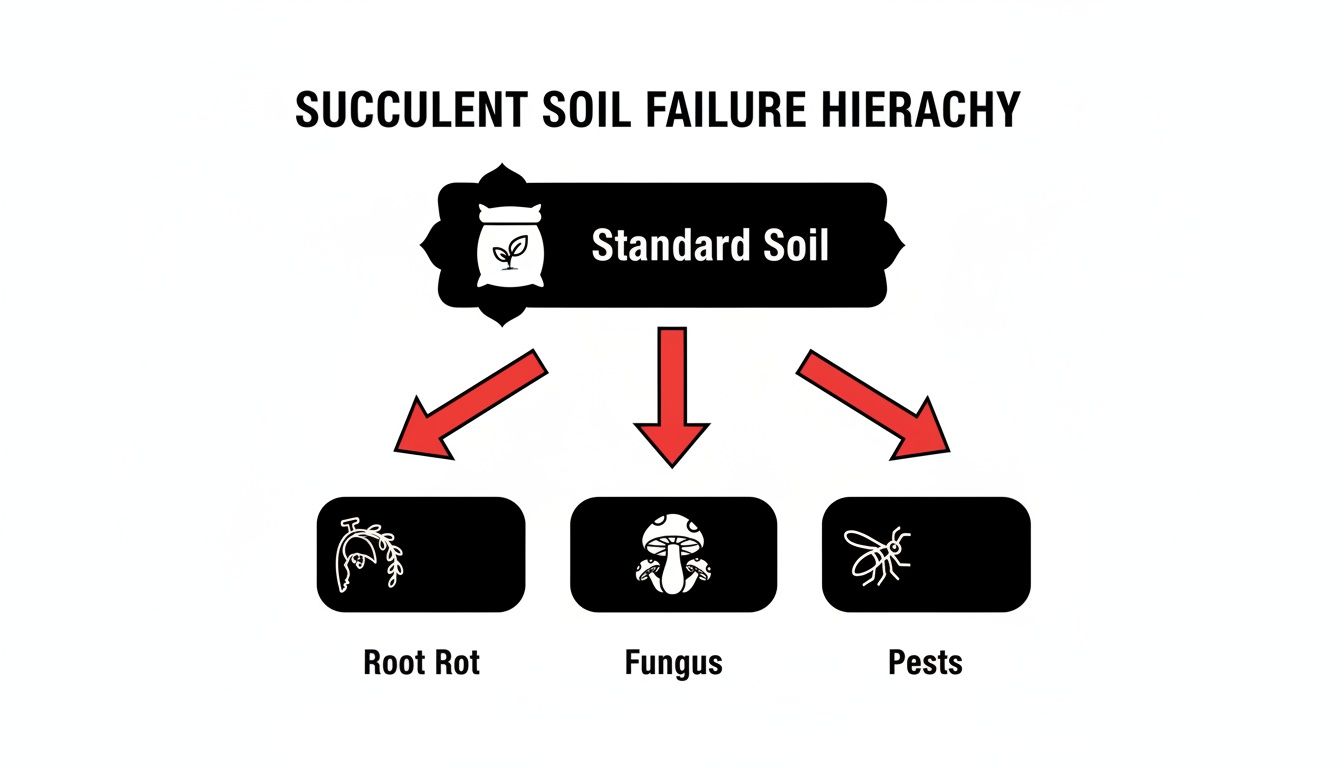
As you can see, using the wrong soil leads directly to the top three killers: root rot, fungus, and pests. It all starts with drainage.
Using Organic Components Wisely
While the inorganic grit does the heavy lifting, a little bit of organic matter is still useful. It gives the mix some structure and holds just enough water for the roots to grab a drink. The key here is moderation. Too much, and your fast-draining mix turns into a soggy sponge.
The best organic options are the ones that don't break down quickly or turn to mush:
- Coconut Coir: Made from coconut husks, coir is a great, sustainable alternative to peat moss. It holds moisture but still allows for good airflow, and it re-wets easily, unlike peat which can become hydrophobic.
- Pine Bark Fines: These tiny bits of pine bark add excellent structure and create large air pockets. They decompose very slowly, helping your soil mix stay loose and airy for a long time.
A great succulent soil should feel gritty and light in your hands, not dense and heavy like garden soil. A good rule of thumb is to aim for a mix that is at least 50-70% inorganic material. This guarantees the fast drainage your succulents need to truly thrive.
Comparing Your Soil Options
To help you choose the right ingredients for your mix or pick a quality pre-made bag, it helps to know exactly what each component does. For a deeper dive, check out this excellent guide on soil for succulent plants.
Here’s a quick reference table breaking down the most common soil building blocks.
Succulent Soil Component Comparison
| Component | Type | Primary Function | Aeration Level | Water Retention |
|---|---|---|---|---|
| Pumice | Inorganic | Aeration & Structure | High | Low |
| Perlite | Inorganic | Aeration | Very High | Very Low |
| Coarse Sand | Inorganic | Drainage & Weight | High | Very Low |
| Coconut Coir | Organic | Moisture & Structure | Medium | Medium |
| Pine Bark Fines | Organic | Structure & Aeration | High | Low |
Once you get familiar with these key ingredients, you can confidently walk down the soil aisle and know exactly what you’re looking for. You'll be able to spot a good mix from a bad one or even feel empowered to create your own custom blend. This is the foundation of becoming a truly great succulent parent.
Creating Your Own DIY Succulent Soil Mix
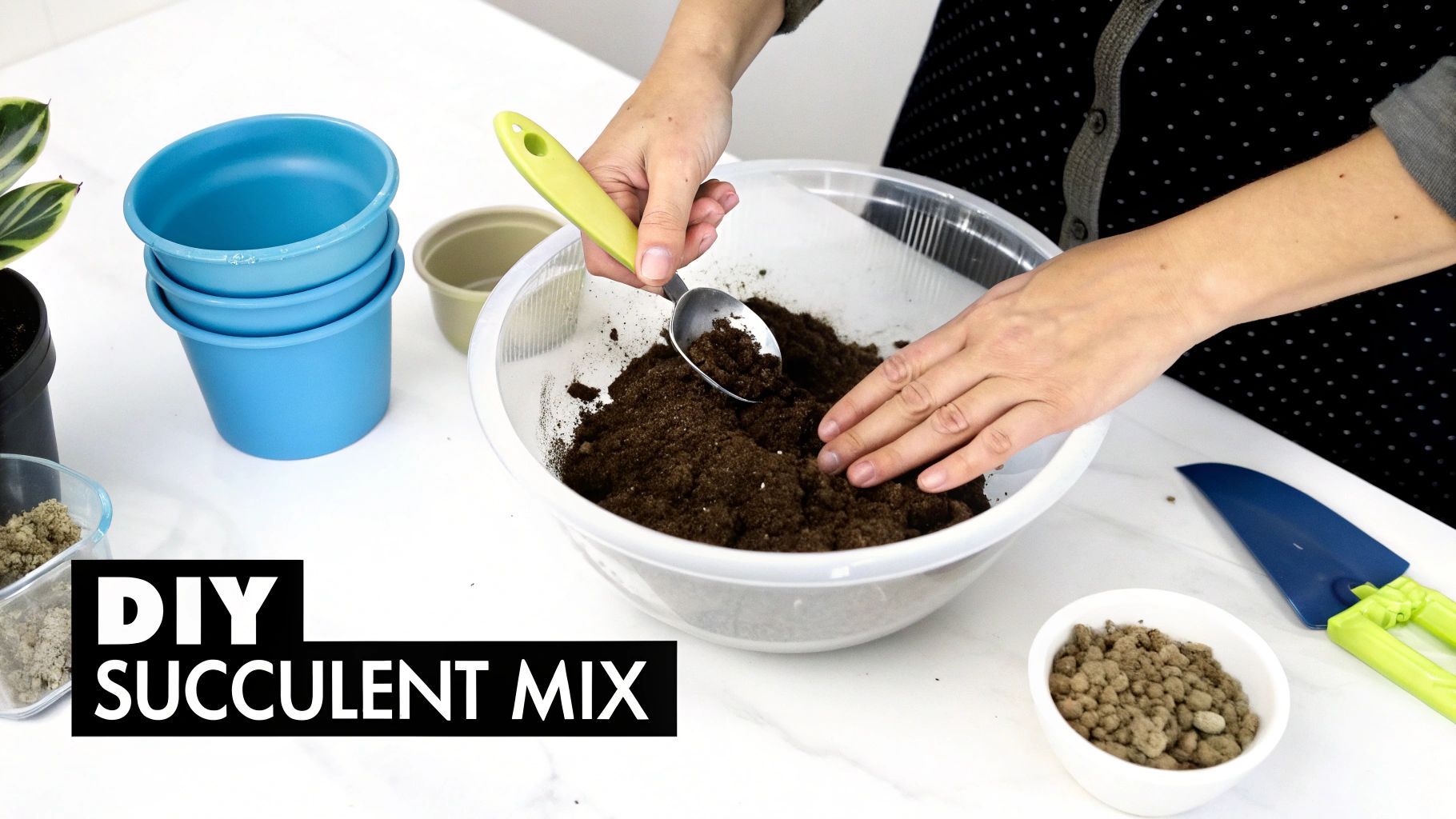
While buying a quality commercial mix is wonderfully convenient, there's a certain magic to creating your own. Mixing your own succulent soil is a total game-changer, giving you full control to tweak the recipe for your specific plants and even the climate you live in.
It's also incredibly satisfying and can save you money in the long run, especially as your plant collection grows. Think of yourself as a soil chef, blending the perfect ingredients to build a foundation where your succulents won't just survive—they'll thrive. Don't worry, it's far easier than it sounds. Here are three simple recipes to get you started.
The Simple Starter Blend For Beginners
This is the perfect place to start if you're new to the DIY soil game. It’s a basic, reliable, all-purpose recipe using just three ingredients you can find almost anywhere. This mix works beautifully for common, hardy succulents like Echeverias, Sedums, and Sempervivums, and it's a massive improvement over standard potting soil.
Consider this your classic, can't-mess-it-up formula for happy plants.
- 1 Part Potting Soil: Grab a basic, peat-free potting or cactus mix to use as a base. This adds a little bit of organic matter and structure.
- 1 Part Coarse Sand: Make sure you're using horticultural or builder's sand. Fine play sand or beach sand will just turn to concrete in your pots.
- 1 Part Perlite or Pumice: Both are fantastic for aeration. Pumice is a bit heavier, which helps keep top-heavy plants from tipping over, but perlite is often cheaper and easier to find.
Just toss these three ingredients into a bucket or tub and mix them until everything is evenly distributed. What you're left with is a light, gritty blend that gives your succulents the fast drainage they crave.
The boom in succulent popularity has put a spotlight on specialized potting soils. The best mixes, often blending ingredients like coco coir, perlite, and pine bark, can boost aeration by 60% and slash fungal problems by 50% in sensitive plants. This makes the right soil a non-negotiable part of the modern succulent market.
The Gritty Mix For Collectors
If you're growing fussier, arid-loving plants—think certain cacti, Lithops (living stones), or rare Haworthias—a standard mix might still hang onto too much water. This is where an ultra-gritty, soil-free recipe comes in. It's designed for maximum drainage and airflow, mimicking the lean, rocky conditions these plants call home. Our guide to crafting the perfect cactus soil mix recipe has even more great pointers for these desert dwellers.
This blend is almost entirely made of inorganic materials, which makes overwatering nearly impossible.
Recipe Components:
- 2 Parts Pumice: This is the star of the show, creating amazing structure and aeration that won't break down over time.
- 2 Parts Poultry Grit or Turface: These small, crushed rock materials add weight and ensure water flushes freely through the pot.
- 1 Part Pine Bark Fines: As the only organic component, it adds a hint of acidity and structure while retaining very little moisture.
Mix it all together thoroughly. A gritty blend like this is a perfect match for terracotta pots, which also help wick moisture away from the roots. Your plants will thank you for giving them room to breathe.
The Peat-Free Conscious Mix
Many gardeners are shifting away from peat moss because of the environmental concerns surrounding its harvest. This recipe is a fantastic, sustainable alternative that uses coconut coir, a renewable byproduct of the coconut industry. It's a great choice if you're looking to make your gardening habits a little greener without sacrificing performance.
This blend is a win for the planet and a win for your succulents.
- 2 Parts Pumice: This creates the crucial air pockets your plant's roots need to stay healthy.
- 1 Part Coconut Coir: This acts as the organic base. It holds just enough moisture and nutrients but stays light and airy.
- 1 Part Coarse Sand: Gives the mix an extra drainage boost, making sure it never gets soggy.
If you’re starting with a compressed brick of coir, you'll need to rehydrate it first. Once it’s light and fluffy, just mix it with the pumice and sand. This recipe strikes a perfect balance between slight moisture retention and excellent drainage, making it ideal for a huge range of succulents.
How to Choose a High-Quality Commercial Mix
Making your own succulent soil gives you total control, but let's be honest—sometimes you just need the convenience of a ready-to-go bag. The problem is, the soil aisle can be a confusing place. With a little know-how, you can easily spot the good stuff and avoid the bags of cheap, soggy filler that spell doom for your plants. It's all about learning to read the bag like a pro.
The real secret? Ignore all the flashy promises on the front. Flip that bag over and head straight for the ingredients list—that’s where the truth is. A top-tier commercial succulent soil will proudly list its inorganic, gritty materials first, showing you it’s serious about drainage.
Decoding the Ingredient Label
When you scan that list, you want to see the good stuff right at the top. High-quality mixes will lead with ingredients like pumice, perlite, calcined clay, or lava rock. These are the workhorses that create the air pockets and fast-draining environment succulents crave.
On the other hand, if the very first ingredient is peat moss or something vague like "forest products" or "composted materials," consider it a major red flag. Those ingredients are dense, hold way too much water, and compact over time, creating a perfect recipe for root rot.
An ideal potting soil formula contains 50-70% drainage materials like pumice and grit. This simple ratio drastically cuts down on overwatering deaths—which are responsible for a staggering 65% of houseplant failures—by promoting up to 40% faster root establishment. With the succulent market booming, getting this right is key to success, as you can learn more about in the latest potting soil market research.
Spotting Red Flags on the Bag
Beyond the ingredients, other clues on the bag can tip you off to a low-quality mix. Be wary of bags that feel suspiciously heavy and dense. If you can see the contents through a little plastic window and it looks like dark, rich garden dirt, put it back. The best soil for succulents should look and feel light, gritty, and airy—nothing like what you’d dig up in your vegetable patch.
Here are a few common warning signs to watch out for:
- Heavy reliance on peat moss: A little can be okay, but it should never, ever be the star of the show.
- Unspecified "forest products": This is often a catch-all for cheap, decomposing wood bits that turn to mush and hold water.
- Presence of fine sand: Unlike coarse horticultural sand, fine sand is a disaster. It clogs up air pores and basically turns to concrete when it gets wet.
- Added moisture-retaining crystals: These are designed for thirsty tropical plants and are the absolute opposite of what a succulent needs to thrive.
Pro-Tip: Elevate a Good Mix to Greatness
Even a pretty decent commercial mix can be made better with a little personal touch. Think of the store-bought bag as a fantastic starting point. To really dial it in, just mix in an extra scoop or two of pumice or perlite.
This simple trick amps up the aeration and gives your plants an extra buffer against accidental overwatering. It’s especially helpful if you live in a humid area or are growing succulents that are particularly sensitive to rot. For those looking for a reliable, expertly formulated base, a specialized product like this Cactus and Succulent Growers Soil is a great place to start. By learning to read the labels and make these small tweaks, you can give your succulents the perfect home they deserve.
Common Succulent Potting Mistakes to Avoid
Even after you’ve gone to the trouble of finding or mixing the perfect soil, a few simple missteps can unfortunately ruin all your hard work. Getting the soil right is a huge part of the puzzle, but knowing what not to do when you’re potting is just as critical.
Let's walk through some of the most common pitfalls I see. By steering clear of these well-meaning but ultimately harmful old habits, you can give your plants the best possible shot at a long, healthy life.
The Myth of a "Drainage Layer"
This is probably one of the most stubborn gardening myths out there: the idea that putting a layer of rocks or gravel at the bottom of a pot helps with drainage. It feels like it should work, right? But in reality, it does the exact opposite.
This practice creates what’s known as a "perched water table." Instead of flowing freely out, water hits that coarse layer and just pools up, completely soaking the soil sitting on top of it.
Think of it as creating a false bottom. The water won’t drain through the rocks until the soil above is totally saturated. This elevates the wettest soil right up into your succulent's root zone, essentially creating a tiny, pot-bound swamp—the perfect recipe for root rot.
The only thing you need for great drainage is a pot with a good-sized hole and a gritty, airy succulent mix filling it from top to bottom. Skip the gravel layer.
Using the Wrong Kind of Pot
Your pot and your soil work together as a single system. The biggest mistake you can make is choosing a pot without a drainage hole. I can't stress this enough. Even the best soil in the world can't save a plant if water has no way to escape.
If you fall in love with a decorative pot that doesn't have a hole, just use it as a "cachepot." Keep your succulent in a cheap plastic nursery pot that fits inside, and simply lift it out to water.
Another classic mistake is picking a pot that's way too big. A huge pot holds a lot of soil, and that soil holds a lot of water. A small succulent with a tiny root system can’t drink it all fast enough, leaving the roots sitting in cold, damp soil for days on end.
When you repot, a good rule of thumb is to only go up one size. That means choosing a new pot that’s about 1-2 inches wider than the last one. This gives the roots space to explore without leaving them swimming in a sea of soggy soil.
Frequently Asked Questions About Succulent Soil
Even after diving into recipes and reading bag labels, you probably still have a few questions rolling around in your head. Let's clear up some of the most common ones so you can feel totally confident about your soil choices.
Can I Just Add Perlite to Regular Potting Soil?
It’s a tempting shortcut, but it's usually not the best move. Think of it this way: most standard potting mixes are based on peat moss, a material that acts like a sponge and can hold up to 20 times its weight in water.
While tossing in some perlite does help create air pockets, it often can't overcome the intense water-logging nature of a heavy peat base. You'll get much better results starting with a quality cactus mix and then adding more grit to it.
How Often Should I Repot My Succulents?
Relax—succulents are pretty low-maintenance here. Most are slow growers and actually enjoy being a little snug in their pots, so you won't be repotting them as often as your other houseplants.
A good general guideline is to repot every 2-4 years. The most obvious sign it's time is when you see roots peeking out of the drainage hole. Repotting is also a great chance to give your plant a fresh start, since the organic matter in old soil eventually breaks down and compacts, which hurts drainage.
Is Cactus Soil the Same as Succulent Soil?
In the gardening world, yes, the terms are pretty much interchangeable. A good quality potting mix labeled for "Cactus & Succulents" will work great for either. At the end of the day, both types of plants need the exact same thing from their soil: fantastic drainage, plenty of aeration, and a structure that doesn't hold onto excess water.
Don't get too hung up on the name on the front of the bag. What really matters are the ingredients inside. If you see pumice, perlite, and other gritty materials listed, you're on the right track.
Do I Need to Fertilize if My Soil Has Compost?
Succulents aren't big eaters, but the nutrients in any potting soil won't last forever. If your mix has a little compost or worm castings, that will give your plant a nice nutritional boost for the first few months.
After that, you'll still want to offer a little food during the growing season (usually spring and summer). A heavily diluted, low-nitrogen fertilizer applied just a couple of times a year is all they need. This keeps them healthy without causing weak, stretched-out growth. For those passionate about their green spaces, finding the right soil is just one step. Explore other essential items and discover unique ideas for gardening gifts to complete your toolkit. When it comes to feeding succulents, always remember that less is more.
At The Cactus Outlet, we provide expertly formulated soils and premium, healthy succulents to give your collection the best possible start. https://www.cactusoutlet.com