
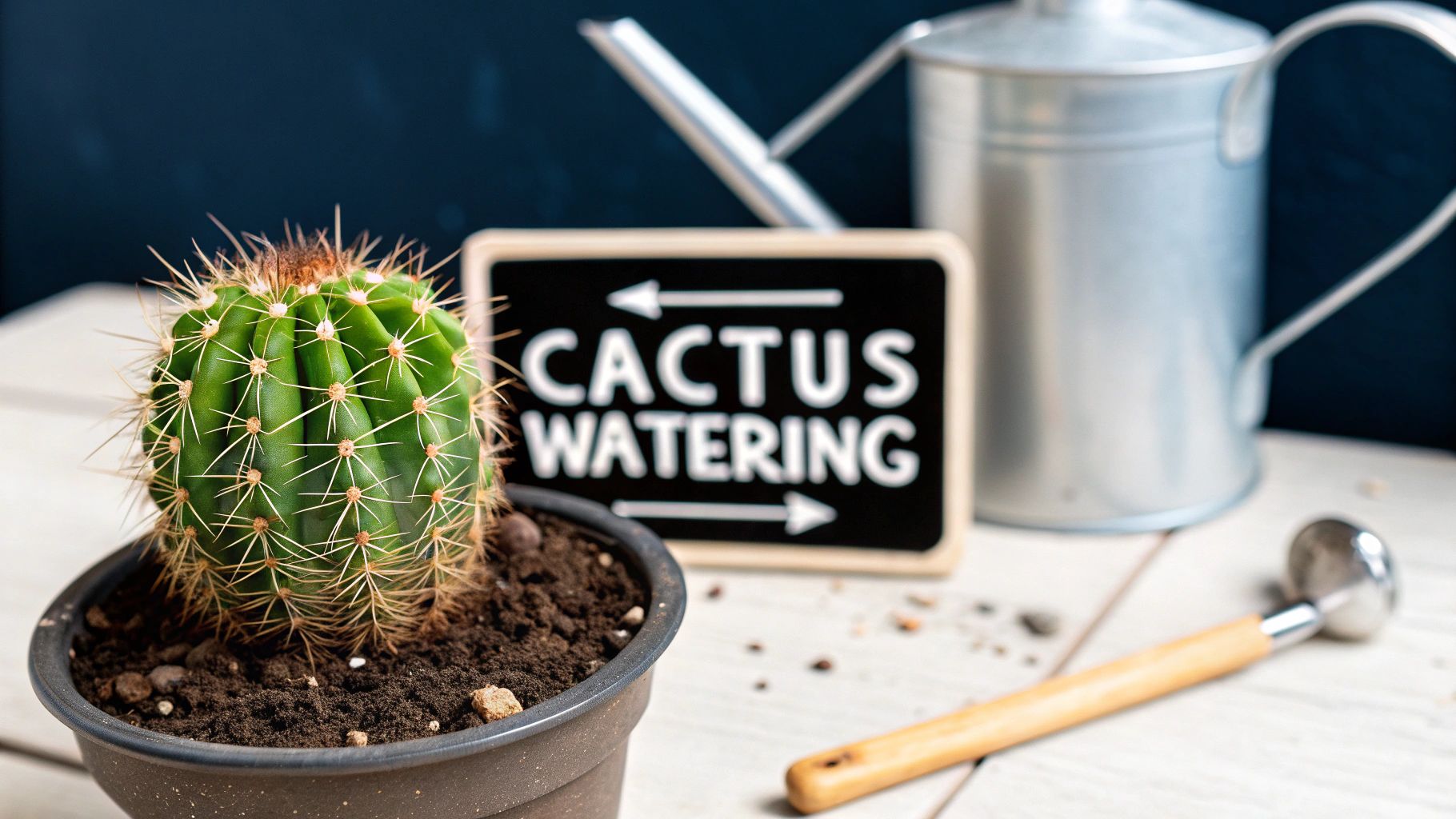

If there's one question I hear more than any other, it's this: "How often should I water my cactus?" People expect a simple answer, like "once a week," but the truth is, cacti couldn't care less about your calendar.
The real secret? Water them thoroughly, but only when the soil is completely, bone-dry. The biggest mistake you can make is watering too often. Cacti are built to survive a desert downpour followed by a long, intense drought, and that’s the cycle you want to replicate at home.
The Golden Rule of Cactus Watering
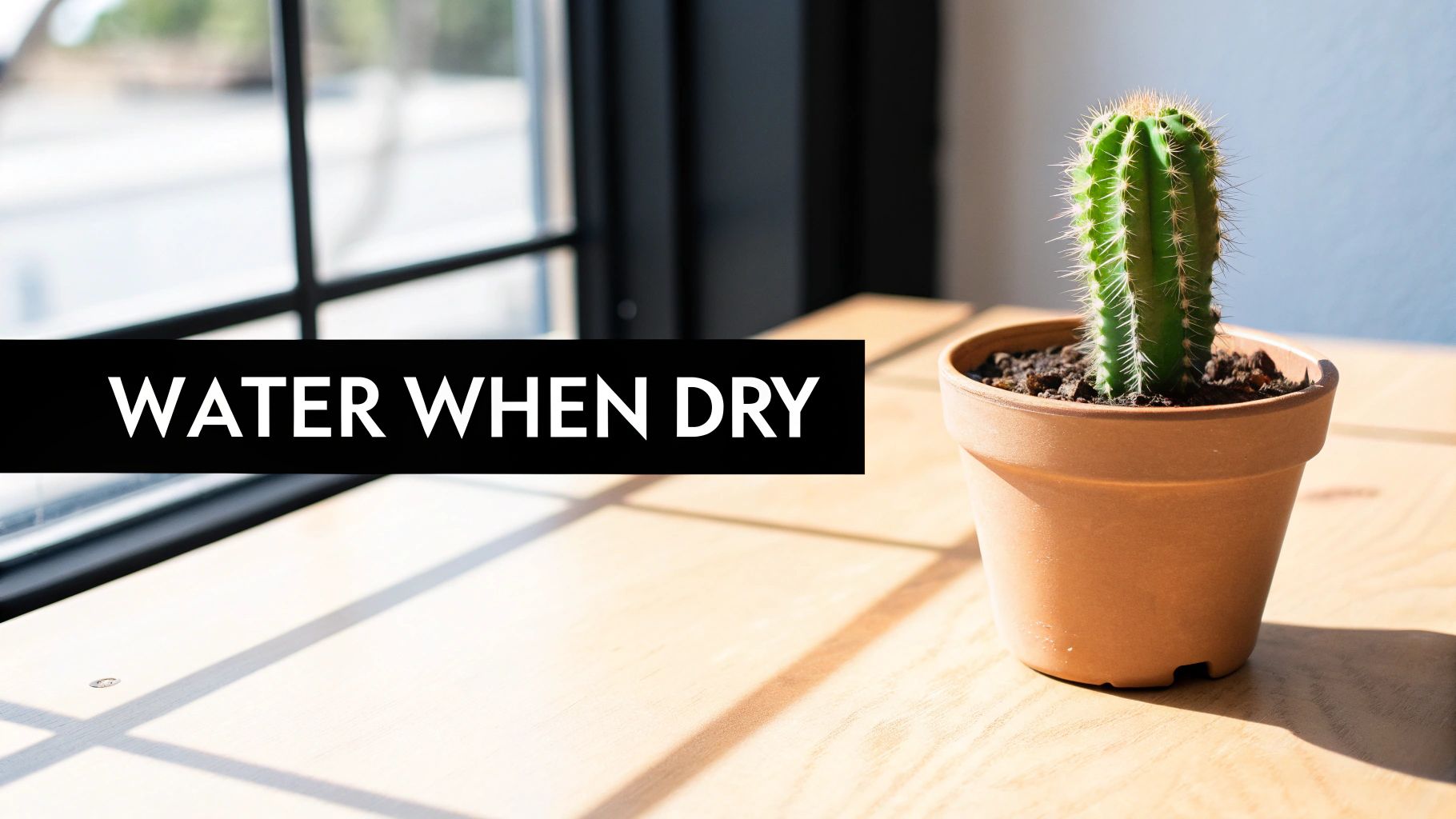
It’s tempting to put your plants on a strict schedule, but for a cactus, that’s a recipe for disaster. These plants are masters of survival, storing water in their stems to get through long dry spells. Their roots simply aren't equipped to handle sitting in damp soil—it’s a one-way ticket to root rot, the number one killer of cacti.
So, let the soil tell you when it's time. Instead of watering every Saturday just because it’s Saturday, poke a finger or a wooden skewer into the soil. Is it dry a couple of inches down? If so, it’s time to give it a good soak. This method works with your plant's natural rhythm, not against it.
Understanding the Key Influences
A fixed schedule is impossible because several things affect how quickly your cactus's soil dries out. Think of these as the variables that determine just how thirsty your plant is at any given moment.
- The Season: Cacti do most of their growing in spring and summer, which means they use a lot more water. In fall and winter, they go dormant and their water needs plummet.
- Light Exposure: A cactus basking in a bright, sunny spot will get thirsty much faster than one living in a dimmer corner of the room.
- Pot Size and Material: Smaller pots dry out more quickly than larger ones. Porous materials like terracotta are a cactus's best friend because they breathe and pull excess moisture away from the roots.
During the active growing season (spring and summer), you might find yourself watering every 7 to 14 days. But remember, this is just a starting point. The unbreakable rule is to always let that soil dry out completely before you even think about watering again. You can learn more about why watering frequency during this period is so critical.
The golden rule is simple: Check first, then water. When you ditch the calendar and start paying attention to your plant and its environment, you give it exactly what it needs, right when it needs it. No guesswork required.
Cactus Watering Quick Reference
To give you a clearer picture, here’s a quick reference table. Think of it as a baseline to get you started, but always remember to let the soil be your ultimate guide.
| Condition | Growing Season (Spring/Summer) | Dormant Season (Fall/Winter) |
|---|---|---|
| Indoor, Bright Light | Every 7-14 days | Every 4-6 weeks |
| Indoor, Low Light | Every 2-3 weeks | Every 6-8 weeks |
| Outdoor, Hot/Dry Climate | Every 5-7 days | Every 3-4 weeks (or rely on rain) |
| Outdoor, Mild Climate | Every 10-14 days | Every 4-6 weeks (or rely on rain) |
This table provides a great starting point for different scenarios, but it’s not a replacement for checking the soil. Your specific conditions—humidity, airflow, and soil mix—will always have the final say.
Adjusting Your Watering for the Seasons
Your cactus keeps its own calendar, and its thirst changes dramatically as the seasons turn. If you ignore these natural cycles, you’re setting your plant up for failure. Learning to follow this rhythm is the secret to knowing exactly how often to water your cactus for a long, healthy life.
Think of spring and summer as your cactus's "growing season." Longer days and warmer weather kick it into high gear. This is when you'll see new growth, and if you're lucky, some spectacular flowers. The plant's metabolism is fired up, and it's using water much more quickly, just like a runner needs more hydration during a marathon.
During this active phase, you'll naturally water more often—usually somewhere in the range of every 7 to 14 days. But remember, this is just a guideline. The golden rule is to always let the soil dry out completely first.
Entering Winter Hibernation
Once autumn rolls in and the days get shorter, your cactus gets the signal to slow down. It enters a state of dormancy, which is basically its version of hibernation. Growth slows to a crawl as the plant focuses on conserving energy through the cooler, darker months.
Because it’s not actively growing, its need for water drops off a cliff. Watering on a summer schedule now is a recipe for disaster and the fastest way to cause root rot. For most indoor cacti, watering just once every 4 to 6 weeks is plenty. Don't be surprised if some desert species go even longer without a drink.
Many growers also find success moving their plants for the winter. You can learn more about the pros and cons of this in our guide to growing succulents outdoors.
A classic mistake is treating a dormant cactus like a thirsty one. In winter, less is always more. Overwatering during this rest period is the number one reason cacti don't make it to spring.
Reading the Environmental Cues
So how do you know when to make the switch? Just look around. Your cactus is responding to the same environmental cues that you are. Pay attention to the light and temperature in your home.
- Growing Season (Spring/Summer): Notice the long days, bright sunlight, and warmer temperatures? Your cactus is wide awake and ready for a drink (once its soil is dry, of course).
- Dormant Season (Fall/Winter): When the days get shorter and the light feels weaker, your plant is getting sleepy. Cooler temperatures, especially near a window, are the final cue that it's time to rest.
By simply syncing your watering schedule with these two distinct phases—active growth and dormant rest—you're working with your plant, not against it. You're mimicking the natural wet and dry cycles it was built for. This simple awareness turns watering from a guessing game into an intuitive routine that will keep your cactus happy all year long. Let the seasons tell you when to check the soil, and let the soil tell you when to water.
How Your Pot and Soil Affect Watering Needs
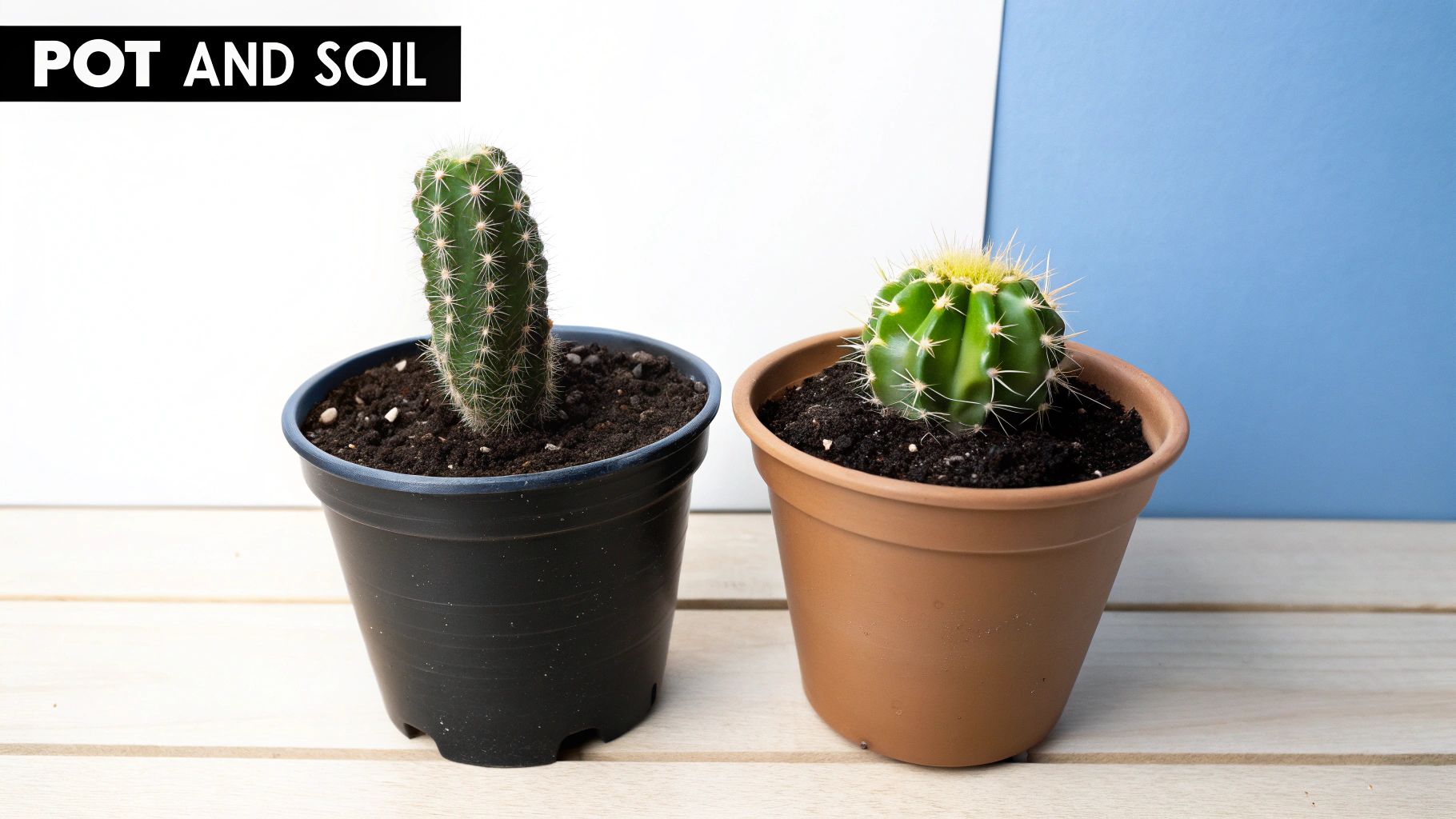
Picking the right pot and soil for your cactus goes way beyond looks. These choices are the single biggest factor in creating a healthy environment for your plant, and they directly control how often you’ll need to water. Get it wrong, and you're setting yourself up for a constant struggle with root rot—the number one killer of cacti.
Think of the pot as a tiny ecosystem for your cactus's roots. The material it's made from dictates how moisture behaves. An unglazed terracotta or clay pot is a cactus’s best friend because it’s porous. The material breathes, wicking excess moisture out of the soil and letting it evaporate right through the walls. This helps the roots dry out evenly and much more quickly.
Plastic or glazed ceramic pots, on the other hand, are non-porous. They lock moisture in. While this means you'll water less often, the danger of overwatering skyrockets. If you use one of these, you have to be absolutely certain the soil is dry deep down before you even think about reaching for the watering can.
The Foundation of Good Drainage
No matter what material you choose, one feature is an absolute deal-breaker: every pot must have a drainage hole. It's not optional. Without an escape route, water collects at the bottom of the pot, turning the soil into a swamp and literally suffocating the roots. It's the most critical feature of any cactus container.
A pot without a drainage hole is a death sentence for a cactus. No matter how carefully you water, the excess has nowhere to go, guaranteeing that the roots will eventually rot.
Soil is the other half of this critical partnership. Never, ever use standard potting soil straight out of the bag. It’s designed to act like a sponge, holding onto moisture for as long as possible. For a plant adapted to the desert, that’s a recipe for disaster.
You need a gritty, fast-draining soil mix designed specifically for cacti and succulents. These blends are full of ingredients like sand, perlite, or pumice that allow water to flow through freely, mimicking the rocky soil of a cactus's native home. To really get this right, check out our resource on the perfect cactus and succulent soil mix guide.
Picture pouring water through a handful of small rocks. That’s how a good cactus mix should perform. The water soaks the roots on its way down and then drains right out the bottom, leaving just the right amount of moisture behind. When you combine this kind of soil with a breathable pot that has a drainage hole, you create an environment that makes your watering routine much more forgiving and your cactus much happier.
Practical Ways to Tell When Your Cactus Is Thirsty
Forget the calendar. Your cactus and its soil are the only reliable watering guides you need. Instead of sticking to a rigid schedule, learning a few hands-on checks will tell you exactly when your plant is actually thirsty.
This is the most crucial shift you can make for the health of your cactus. The goal is simple: let the soil dry out completely between waterings. This mimics the boom-and-bust rain cycles of their native deserts and is the key to preventing root rot. By learning to "read" the soil, you’ll be able to water with total confidence.
The Classic Finger Test
The oldest trick in the book is still one of the best: the finger test. It's exactly what it sounds like. Just stick your index finger down into the soil, aiming for about one to two inches deep for most small or medium pots.
If your finger comes out with any damp soil clinging to it, or if the soil feels even slightly cool, it's not time to water yet. Wait a few more days. If it feels dusty and bone-dry all the way down, your cactus is ready for a drink.
The Chopstick Method for Precision
Need to check a deeper pot where your finger can't reach? Grab a plain wooden chopstick or a bamboo skewer. This method is incredibly reliable and works just like checking a cake to see if it’s baked through.
Carefully push the chopstick deep into the soil, being gentle to avoid stabbing major roots. Let it sit there for a minute, then pull it straight out.
- If it comes out clean and dry, the soil is ready for water.
- If it’s dark, damp, or has soil stuck to it, your cactus has plenty of moisture and you should wait.
This gives you a perfect snapshot of the moisture level near the bottom of the pot—exactly where problems like root rot tend to start. You can learn more about perfecting your watering technique in our comprehensive guide on how to water succulent plants.
The Pot Weight Method
After a while, you'll develop a feel for your plants, and the pot weight method will become second nature. It’s all about learning the difference in weight between a freshly watered cactus and a completely dry one.
The next time you give your cactus a thorough soak, pick up the pot and get a sense of how heavy it is. A few weeks later, when you think it might be time to water again, lift it. The difference is often dramatic.
A pot filled with dry, airy soil is surprisingly light compared to one saturated with water. This weight difference is your most foolproof indicator. With a bit of practice, you’ll know if it’s watering time just by lifting the pot.
How to Read the Signs: Overwatering vs. Underwatering
Your cactus is always telling you what it needs. You just have to learn its language. Figuring out the difference between the signals for "I'm thirsty" and "I'm drowning" is what separates a struggling cactus from a thriving one. Once you get the hang of it, you'll know exactly what to do.
Let's be clear: overwatering is the number one killer of cacti. It's far more deadly than forgetting to water because it leads to root rot, and most plants don't come back from that. When roots sit in soggy soil, they can't get any air and literally begin to rot away, a problem that quickly spreads up into the stem.
Spotting an Overwatered Cactus
Here’s where a lot of people go wrong. The early signs of an overwatered cactus can easily be mistaken for thirst, causing well-meaning owners to add even more water. The real giveaway isn't the top of the plant, but the bottom.
Look for these red flags:
- A Mushy, Soft Base: Gently squeeze the stem right at the soil line. A healthy cactus is firm. If it feels soft, squishy, or unstable, root rot is probably already underway.
- Yellow or Brown Stem: If you see discoloration starting at the base and creeping upwards, it's a classic sign of rot. The plant might look pale, sickly, and yellow.
- Bloated and Stretched Look: The cactus might appear unnaturally plump, almost like its skin is stretched too tight and ready to split.
- Pads or Arms Falling Off: Seemingly healthy pads or limbs might drop off without warning. This happens because the joint connecting them to the main stem has started to decay.
This flowchart gives you a simple, step-by-step way to figure out if it’s time to water.
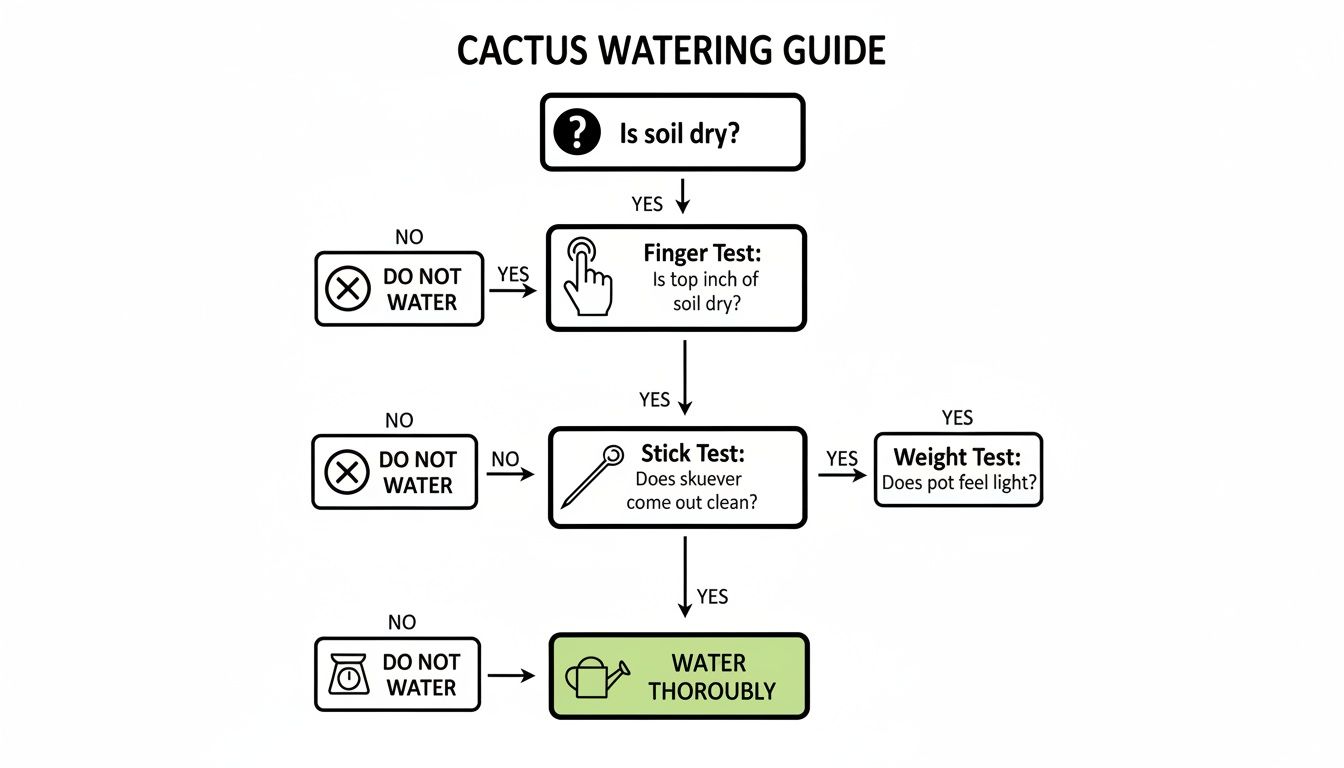
It helps you walk through the physical checks—like feeling the soil or lifting the pot—to take all the guesswork out of your routine.
Recognizing a Thirsty Cactus
The good news? A thirsty cactus is a much easier fix. These plants are built to handle drought, so they almost always bounce back with a good, thorough drink.
An underwatered cactus looks just like you'd imagine: dehydrated. Think of a grape slowly turning into a raisin—it's using up its internal water supply and shrinking.
Key Takeaway: An overwatered cactus usually feels soft and mushy from rot. An underwatered cactus feels leathery and wrinkled from dehydration. Texture is your best clue.
Here are the most common signs of a thirsty cactus:
- Wrinkles and Shriveling: The plant’s surface will start to look puckered and wrinkled as it depletes its water reserves.
- Leaning or Deflating: The whole cactus might seem a bit limp, start to lean over, or just look less plump and full than it used to.
- Brown, Crispy Patches: The very tips or edges might turn brown and feel dry and brittle when you touch them.
To make diagnosing your plant even easier, here's a side-by-side comparison of the symptoms.
Overwatering vs Underwatering Symptoms
| Symptom | Sign of Overwatering | Sign of Underwatering |
|---|---|---|
| Texture | Soft, mushy, squishy feel, especially at the base | Wrinkled, leathery, or shriveled feel |
| Color | Yellow or brown discoloration, often starting from the bottom up | May appear dull or faded; can develop dry, crispy brown spots |
| Shape | Swollen, bloated, or "waterlogged" appearance; may look stretched | Deflated, limp, or leaning; looks like it's shrinking |
| Stem/Pads | Healthy-looking pads or arms may suddenly fall off | No parts falling off, but the whole plant appears less full |
| Soil | Soil stays wet or damp for days; may have a sour smell | Soil is bone dry all the way through the pot |
Learning to spot these differences is the key. Once you can confidently tell one from the other, you'll be able to give your cactus exactly what it needs, right when it needs it.
Answering Your Top Cactus Watering Questions
Even with a solid plan, you're bound to have questions. Let's tackle some of the most common ones that pop up when you're trying to get your cactus watering just right.
Should I Be Misting My Cactus?
That’s a hard no for almost all cacti. Think about where they come from—dry, arid deserts with very little humidity. Misting just wets the surface of the plant, which can invite fungal diseases and rot, especially indoors where air circulation isn't as good.
The only real exceptions are jungle cacti, like a Christmas or Easter cactus. But even for those guys, a good watering at the roots is much more beneficial than misting the leaves. For your desert cacti, always stick to watering the soil.
What's the Best Water to Use?
If you can, use rainwater or distilled water. It's the gold standard. Tap water often contains a lot of dissolved minerals (think calcium and magnesium) that can accumulate in the soil over time, leaving a white crust and making it harder for the roots to do their job.
If you have to use tap water, here's a simple trick: let it sit out in an open container for at least 24 hours. This gives chemicals like chlorine a chance to evaporate before it ever touches your plant.
A Little Pro Tip: That mineral buildup from hard water can slowly change the soil’s pH. Using rainwater or distilled water is the easiest way to keep your cactus in a stable, healthy environment for years to come.
Help! How Do I Save an Overwatered Cactus?
The key is to act fast. First, gently slide the cactus out of its pot and get rid of as much of the soggy soil as you can. Now, take a good look at the roots. Healthy roots are firm and whiteish; rotted roots are black, mushy, and might even have a foul smell.
Using a clean, sharp knife or shears, you need to be ruthless—trim off every last bit of that black, rotted root. Then, let the cactus sit out in a dry, shady spot for a few days to a week. You're waiting for the cuts to dry and form a callus.
Once it's calloused over, repot it into a clean pot with fresh, bone-dry cactus mix. Don't even think about watering it for at least another week. This gives those freshly cut roots time to settle in and heal before they have to deal with moisture again.
At The Cactus Outlet, we make sure every cactus is healthy and ready to flourish in its new home. Find your next stunning plant by exploring our incredible selection at https://www.cactusoutlet.com