

It’s tempting to grab any old bag of potting soil off the shelf for your new cactus, but I’ve seen that movie before, and it usually ends with a sad, struggling plant. The real secret to a happy, thriving cactus isn’t complicated: it’s all about creating a fast-draining, airy soil mix that feels just like its native desert home. Get this right, and you’ll sidestep the number one killer of cacti—root rot.
Why Your Cactus Needs a Special Soil Mix
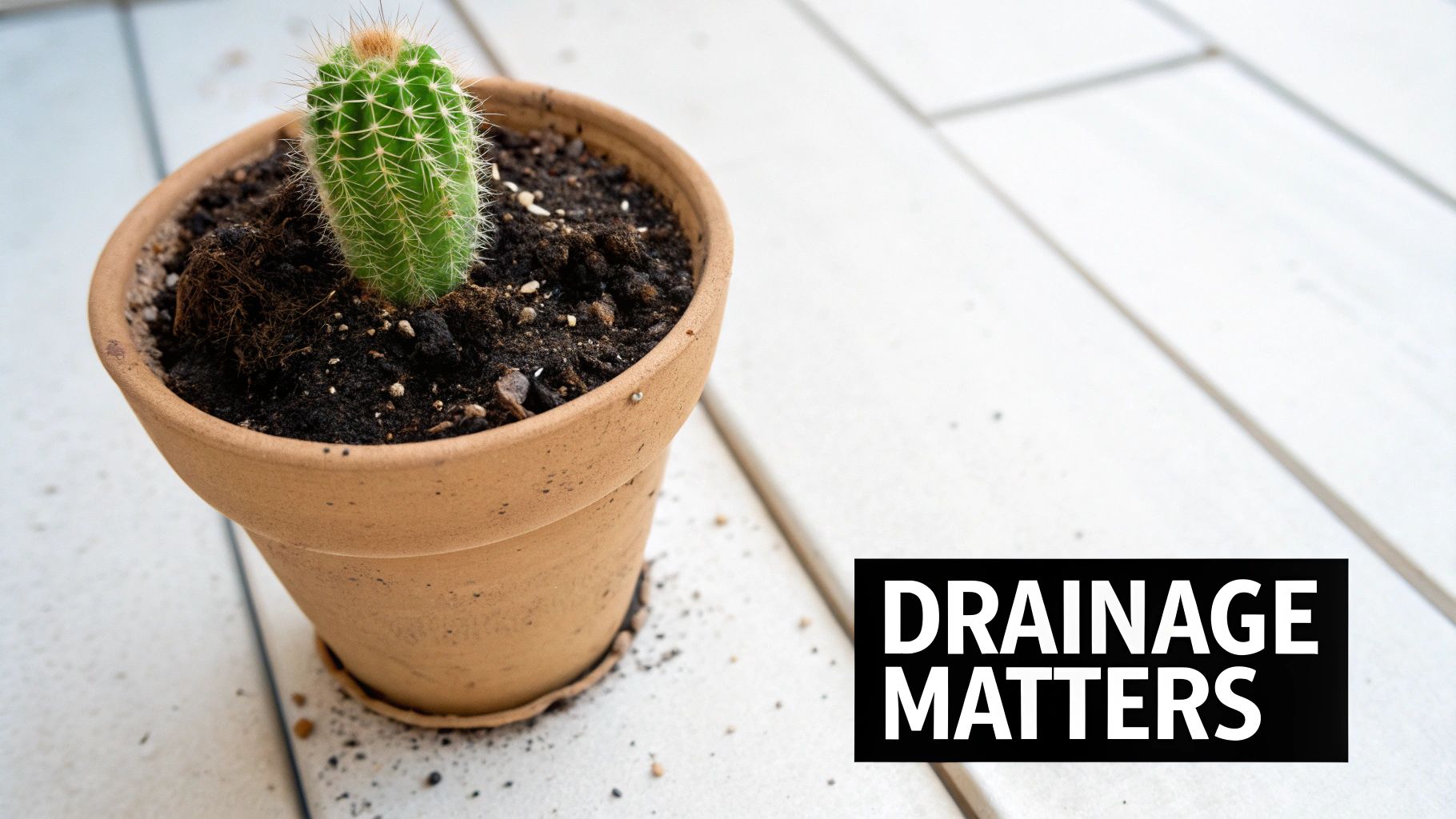
Picture a cactus in the wild. It’s probably baking in the sun, rooted in gritty, sandy soil where the rain, when it does come, vanishes almost instantly. That's a world away from what standard potting soil provides. Most commercial mixes are designed to hold water for thirsty houseplants, not for a desert survivor.
Using a dense, moisture-hugging mix for a cactus is like asking a fish to live on land. It just doesn't work.
The whole game boils down to two critical things: aeration and drainage. A good cactus soil recipe creates a porous, lightweight foundation. This allows water to rush through quickly and, just as importantly, lets air circulate around the roots.
This isn't just a "nice-to-have"—it's a must. When soil stays soggy, it literally suffocates the roots. They can't breathe or absorb nutrients, and the wet, stagnant environment becomes a breeding ground for rot. A custom mix ensures your plant’s feet never sit in a puddle.
The Dangers Of Standard Potting Soil
Take a look at the ingredients in a standard potting mix. You'll likely see a lot of peat moss or compost. While fantastic for many plants, these organic materials act like little sponges, clinging to water for days. For a cactus, that prolonged dampness is a death sentence.
Without proper drainage, you're inviting a host of problems:
- Root Rot: This is the big one. The roots turn to mush and can’t support the plant.
- Fungal Gnats: These annoying little pests absolutely love hanging out on a damp soil surface.
- Stunted Growth: A plant with suffocating roots simply can’t grow properly.
The importance of a well-draining substrate cannot be overstated. It is the foundational element that separates a thriving cactus from one that is merely surviving or, worse, slowly rotting from the base up.
To give you a clearer picture, let's compare the two side-by-side.
Table: Key Characteristics of Ideal Cactus Soil
| Characteristic | Ideal Cactus Soil | Standard Potting Soil |
|---|---|---|
| Texture | Gritty, porous, and lightweight | Spongy, dense, and fine |
| Drainage | Very fast; water flows through quickly | Slow; retains moisture for days |
| Aeration | High; allows for excellent airflow to roots | Low; can become compacted and suffocate roots |
| Organic Matter | Low percentage (less than 50%) | High percentage (often over 75%) |
| Drying Time | Dries out completely between waterings | Stays damp for extended periods |
This table really drives home the point: these are two fundamentally different environments for a plant's roots.
Mimicking Nature For A Thriving Plant
At the end of the day, our goal is to recreate the sparse, gritty conditions of an arid landscape right inside your pot. This means building a mix that’s light on water-retaining organic matter and heavy on inorganic grit like perlite, pumice, or coarse sand. This structure is what allows the soil to dry out completely between waterings—a cycle that is absolutely crucial for a cactus to stay healthy.
The incredible boom in succulent popularity has brought this need to the forefront. In fact, the global succulent market hit an estimated $8.5 billion in 2023. This surge is directly linked to growers learning that a well-draining soil mix is non-negotiable, especially when up to 70% of home-grown cacti suffer from root rot when planted in standard potting soil.
Understanding this principle also connects to broader gardening wisdom. For homeowners interested in water conservation, the same ideas apply to drought-resistant landscaping practices like xeriscaping. The right soil isn't just a preference for a cactus; it's a fundamental requirement. If you want to dive even deeper, check out why drainage is so critical for succulents.
Getting to Know Your Cactus Soil Ingredients
Putting together a great cactus mix isn't about following a strict, unchangeable recipe. It's much more like learning to cook by feel—once you understand what each ingredient does, you can tweak your blend to perfection.
Think of your soil components in two teams: the inorganic materials that provide structure and drainage, and the organic materials that offer a little bit of moisture and nutrition. Nailing the ratio between these two is the secret sauce for happy cacti. Too much organic stuff, and you're inviting root rot by holding onto water for too long. Too little, and the soil might dry out too fast to sustain the plant, which can be a problem especially for younger plants.
The Inorganic Foundation: All About Drainage and Airflow
The real workhorse of your cactus soil will be its inorganic, or mineral, components. This is the gritty stuff that should make up the bulk of your mix, usually somewhere between 60% to 80% of the total volume. These materials don’t decompose, and their entire job is to create the loose, airy structure that lets cactus roots breathe. They're the skeleton of your soil.
Here are the superstars you’ll want to get your hands on:
-
Pumice: If there's a king of cactus soil amendments, this is it. Pumice is a volcanic rock that’s super lightweight and full of tiny pockets. It’s fantastic for aeration and drainage, letting water flow right through, but it also holds onto a tiny bit of moisture and nutrients in its pores for the roots to access later. A big plus is that it has some weight to it, so it won’t float to the top of the pot like perlite often does.
-
Perlite: This is another volcanic glass product, and it looks a lot like tiny white styrofoam balls. It’s incredibly light and is a champ at preventing soil compaction. Its main purpose is to create air pockets, and it does that job exceptionally well, ensuring roots get the oxygen they need.
-
Coarse Sand: Be careful with this one. You absolutely must use horticultural sand, builder's sand, or even something like poultry grit. Never, ever use fine play sand or beach sand. The tiny, uniform particles in fine sand will lock together like cement when wet, completely destroying your drainage and suffocating the roots. The right kind of coarse sand adds a bit of weight and creates small channels for water to drain away.
These gritty materials are the non-negotiable backbone of any quality cactus soil. They make sure water never hangs around for too long and that oxygen can get all the way down to the root system.
Remember, the point isn't just to let water drain out. It's to create a whole network of air channels throughout the pot. Healthy roots need to breathe just as much as they need to drink, and this is what makes it possible.
The Organic Side: A Touch of Moisture and Nutrients
Even though they're desert plants, cacti do need a small amount of organic matter in their soil. This part of the mix holds onto just enough moisture for the roots to drink after you water and provides a very slow, steady supply of nutrients as it breaks down over time. You want to use this stuff sparingly—it should only make up about 20% to 40% of your final mix.
Your best bets for organic components are things that are fibrous and resist turning to mush:
-
Coco Coir: Made from coconut husks, coco coir is a brilliant, sustainable alternative to peat moss. It holds moisture well but has a more neutral pH and, crucially, it's easy to re-wet if it dries out completely. Peat, on the other hand, can become hydrophobic and repel water once it's bone dry. Coir keeps the mix fluffy and stable.
-
Pine Bark Fines: These small, shredded bits of pine bark are great for adding some structure and a bit of healthy acidity to the soil. They decompose very slowly, meaning your soil structure won’t collapse over time. Plus, their irregular shapes are perfect for creating more of those essential air pockets.
-
Worm Castings: You don't need a lot of this, but adding a small scoop of worm castings can do wonders. Think of it as a gentle, all-natural multivitamin for your plant. It introduces beneficial microbes and provides a slow-release source of nutrients that’s impossible to overdo—it won’t burn sensitive cactus roots.
By getting familiar with both the inorganic and organic players, you can take full control of your soil's destiny. You can custom-blend a mix that's just right for your specific cactus and your environment, giving it the perfect foundation for a long, healthy life.
Getting Your Hands Dirty: How to Make a Great Cactus Soil Mix
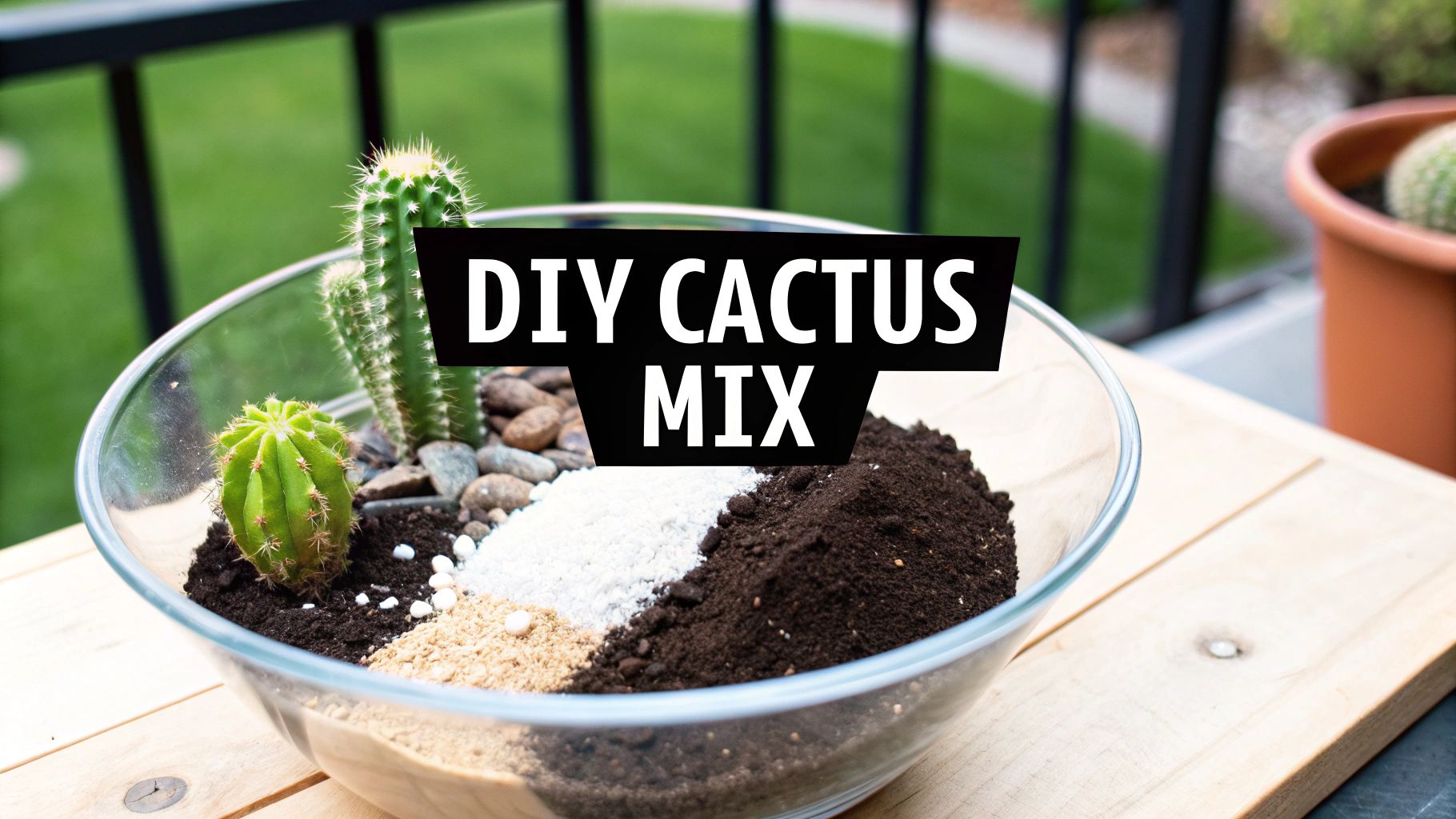
Alright, this is where the fun begins. Forget the measuring cups and kitchen scales. The best way to think about making cactus soil is in "parts." A "part" is whatever you want it to be—a small terracotta pot, an old yogurt container, a trowel. It keeps things simple and scalable, whether you're potting up one small plant or a dozen.
Our goal here is a mix that's more mineral than soil. Cacti are built for tough, arid environments, so we need to give them the sharp drainage they’d find in nature. I have a go-to recipe that works for almost any desert cactus I've ever grown. It's forgiving and a fantastic place to start.
The Classic Gritty Mix Recipe:
- 2 parts Pumice or Perlite
- 1 part Coarse Sand
- 1 part Coco Coir or Pine Bark Fines
This simple formula lands you at a ratio of roughly 75% inorganic to 25% organic material. This is the sweet spot. It allows water to rush through, preventing rot, but still provides just enough organic matter to hold a tiny bit of moisture and nutrients for the roots.
Putting It All Together
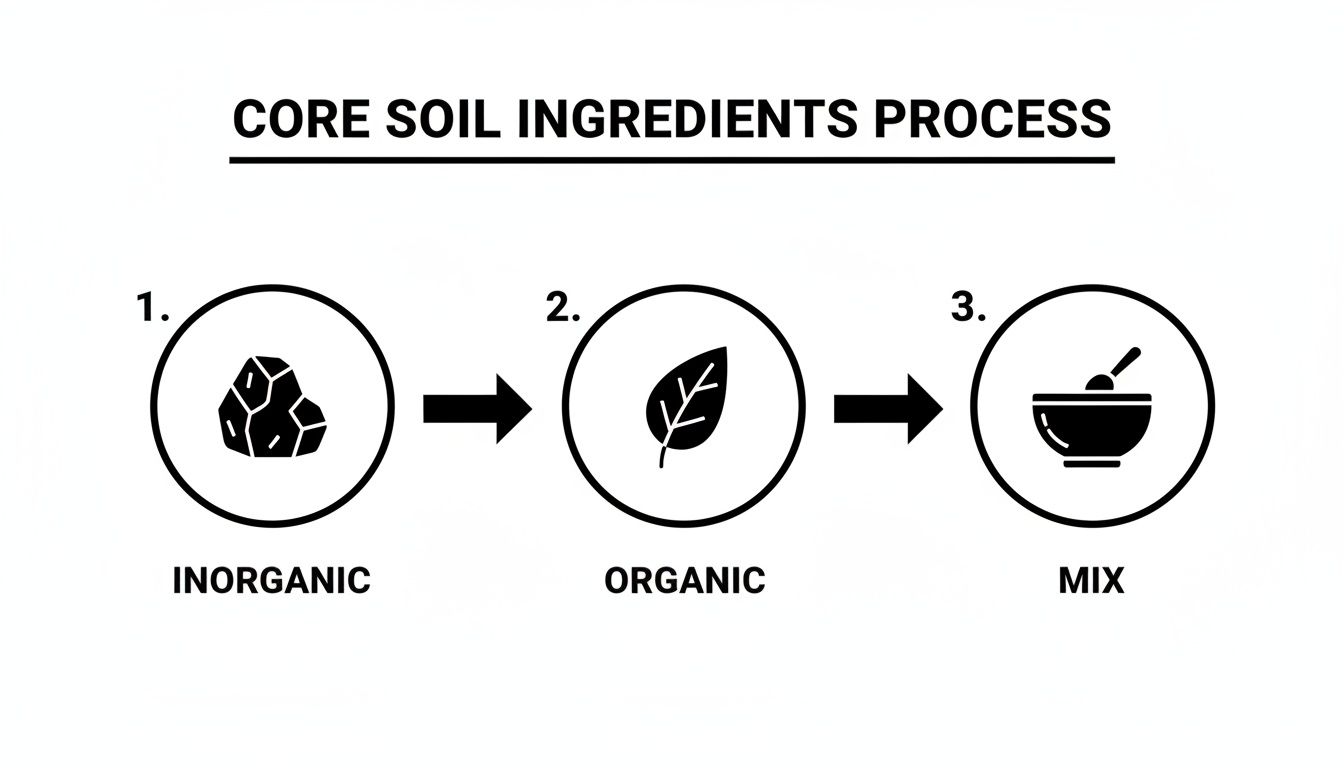
Grab a bucket, a potting tray, or just lay down a tarp to contain the mess. I always start with the inorganic stuff—the pumice and coarse sand. Dump them in and give them a good stir. You want to see all those different-sized particles mixed together, as this forms the structural backbone of your soil.
Now, it's time for the organic component. Whether you're using coco coir or pine bark, break up any clumps with your hands and mix it in thoroughly. The goal is to see the organic bits evenly speckled throughout the grit, not concentrated in wet pockets.
This simple diagram really captures the workflow: start with your mineral base, add the organic element, and then combine them into one homogenous mix.
It might seem overly simple, but getting this balance right is everything. In the massive $12 billion houseplant industry, proper gritty soil recipes are credited with preventing up to 90% of rot cases you see discussed in online cactus and succulent forums. It’s that important.
Some brands have even built their business around this concept. Sol Soils, for example, makes an innovative cactus gritty mix that uses coconut husks—a byproduct from the 50 million coconuts harvested worldwide each year. It's a great example of turning a sustainable waste product into a perfect soil amendment.
The All-Important Squeeze Test
Once your mix is ready, there’s one final, crucial check before you use it: the squeeze test. This is an old-school, hands-on trick that tells you everything you need to know about your soil's drainage potential.
Here’s what you do:
- Dampen the Mix: Add just a splash of water. You're not aiming for wet, just slightly damp to the touch.
- Grab a Handful: Scoop up a good amount of the soil.
- Give it a Squeeze: Make a fist and squeeze down firmly for a couple of seconds.
- Check the Result: Open your hand and see what you've got.
A perfect cactus mix will barely hold its shape and will fall apart with a gentle poke. If it forms a solid, muddy ball, it’s holding way too much water and you need to add more grit. If it won't clump at all, it might be a bit too dry or could use a fraction more organic material.
This little test is the single best way to develop an intuition for what great cactus soil should feel like.
Customizing Your Soil for Different Cactus Types
While our classic gritty mix is a fantastic starting point for most cacti, it's not a one-size-fits-all solution. The real secret to happy cacti is understanding where they come from. The soil a Golden Barrel cactus knows in the Sonoran Desert is a world away from the rich, leafy debris an epiphytic Christmas Cactus calls home in a Brazilian rainforest.
This is where you get to put on your soil artist hat. Tweaking your blend for the specific needs of your plant is a simple change that pays off in a big way.
Soil For Classic Desert Cacti
For the true desert dwellers—your Saguaros, Barrel Cacti, and Prickly Pears—our base recipe is already pretty close to perfect. These are the champs of arid climates, built to handle long droughts and sudden downpours. That means they crave incredibly sharp drainage to keep root rot at bay.
Living in a humid climate? Or maybe you have a heavy hand with the watering can? No problem. Just make your mix even leaner and meaner. Bump up the inorganic materials to an 80/20 ratio. A little more pumice, a little less coco coir, and you've got a substrate that dries out lightning-fast.
Adjusting For Tropical and Jungle Cacti
Now, let's talk about the outliers. Jungle cacti like Christmas Cactus (Schlumbergera), Easter Cactus (Rhipsalidopsis), and Orchid Cacti (Epiphyllum) completely flip the script. They don't grow in sand. In the wild, you'd find them clinging to trees or tucked into rock crevices, enjoying filtered light and much higher humidity.
Their roots are used to a rich bed of decaying leaves, bark, and moss. This means they actually like a soil that holds a bit more moisture and has more organic matter than their desert cousins.
For these tropical beauties, a good starting point is a blend that looks something like this:
- 1 Part Perlite or Pumice: This keeps things from getting swampy. Airflow is still key.
- 2 Parts Coco Coir or Pine Bark Fines: This is the magic ingredient, providing the moisture retention and slight acidity they adore.
- 1 Part Coarse Sand: Helps keep the mix from compacting over time.
This recipe creates a soil that drains well but stays damp longer, much like the humid, organic-rich nooks and crannies of a rainforest. If you used a standard desert mix, these plants would constantly be thirsty, leading to stress and stunted growth.
You'll probably also notice that these tropical types get hungrier during their growing season. If you need some pointers on feeding, you can learn all about the best fertilizer for succulents and how to use it effectively.
To make it even clearer, here’s a quick-reference table for adjusting your soil recipe based on the cactus family you're working with.
Soil Mix Adjustments for Different Cactus Families
This table provides a simple guide to help you fine-tune your soil mix for some of the most common types of cacti you'll encounter.
| Cactus Type | Inorganic Component % | Organic Component % | Key Ingredient Adjustment |
|---|---|---|---|
| Desert Cacti (e.g., Ferocactus, Echinocactus) | 70-80% | 20-30% | Increase pumice/perlite for maximum drainage. |
| Mountain Cacti (e.g., Rebutia, Lobivia) | 60-70% | 30-40% | A balanced gritty mix works well. Add a bit more coir for slight moisture retention. |
| Tropical/Jungle Cacti (e.g., Schlumbergera, Epiphyllum) | 30-40% | 60-70% | Major increase in organics like coco coir or pine bark fines. |
Remember, these are starting points. The best growers are always observing their plants and adjusting their care accordingly. These simple tweaks to your cactus soil mix ensure every plant in your collection gets exactly what it needs to thrive.
Avoiding Common Soil Mixing Mistakes
Even with a great recipe in hand, a few common slip-ups can derail your efforts. You'll build an instinct for what feels right over time, but knowing the pitfalls from the get-go gives you a huge advantage. It's about learning to correct your course before you even stray off the path.
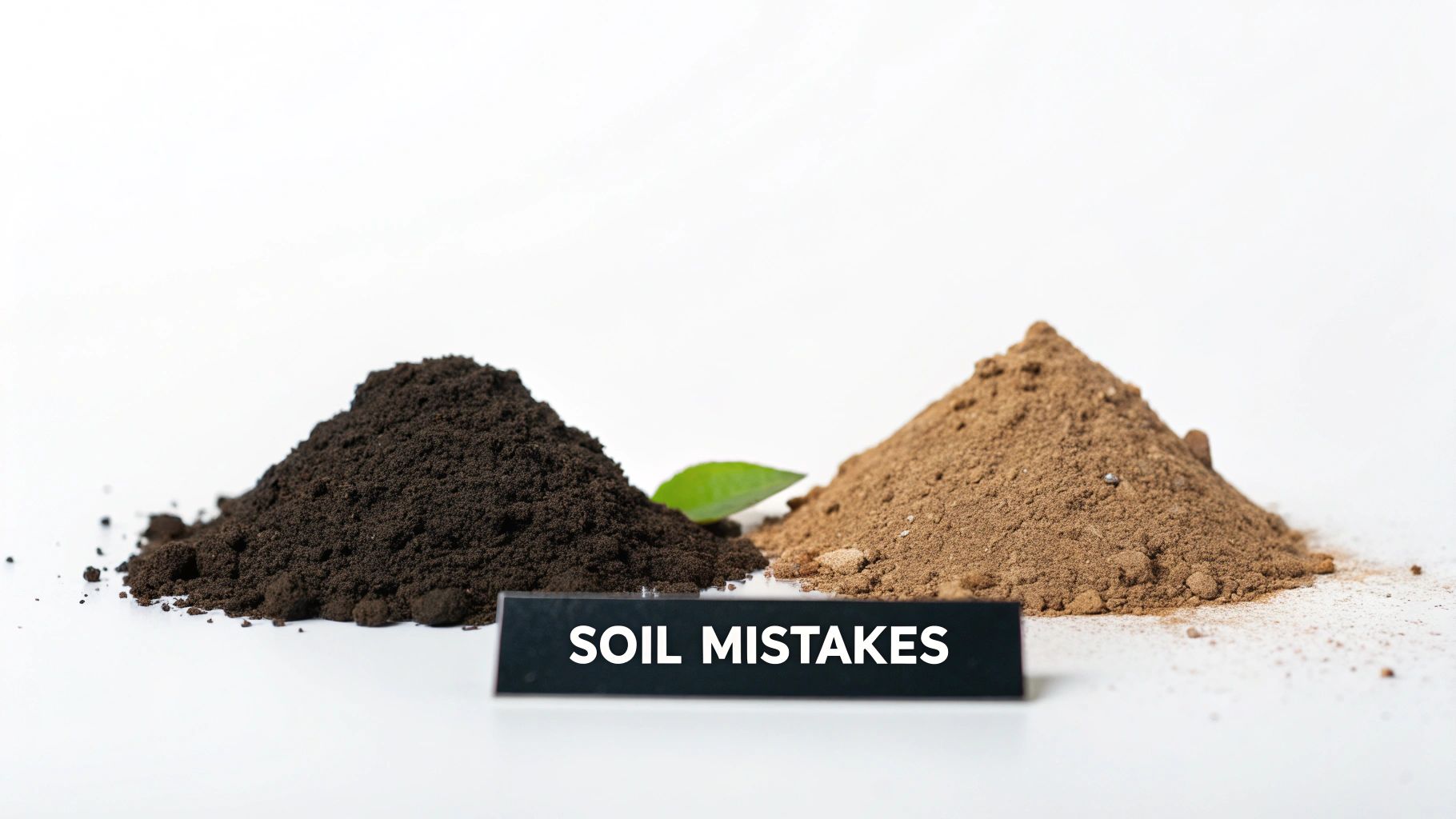
One of the most frequent blunders I see is with sand. New growers often grab fine play sand or beach sand, but this is a critical mistake. When wet, those tiny, uniform particles lock together and form a dense, almost concrete-like mass. It suffocates the roots and completely kills drainage. You absolutely must use coarse horticultural sand or builder's sand—its varied particle sizes are what create those all-important channels for air and water.
Going too heavy on organic matter like compost or peat moss is another classic error. It might seem like you're giving your plant extra nutrients, but what you're really doing is creating a sponge. Excess organic material holds onto way too much moisture for a desert dweller, setting the stage for root rot—the number one killer of potted cacti. If your mix feels heavy or stays damp for days after watering, that’s your cue to add more grit like pumice or perlite.
Overlooking The Importance Of pH
Soil pH is one of those "invisible" factors that's easy to ignore but incredibly important. We've known since the 1930s that a slightly acidic pH, somewhere between 5.0 and 6.5, is the sweet spot that mimics a cactus's native Sonoran Desert soil.
Consistently using high-pH tap water on a compost-heavy mix can push the soil into alkaline territory. This can cause a growth stall in up to 60% of plants after just a year, a problem that frustrates nearly a third of new hobbyists. You can learn more about cacti and succulent soil needs from university research.
A soil mix that feels right but performs poorly often has an underlying issue like compaction or incorrect pH. The "squeeze test" is your first line of defense, but observing how the soil behaves after potting is the ultimate test.
Finally, remember that your soil is just one part of the equation. Even the most perfect mix won't save a cactus planted in a pot with no drainage hole. Your container and your soil have to work together as a team. For a closer look at this crucial relationship, check out our guide on how to properly repot cacti, where we cover choosing the right pot to complement your custom soil blend.
Your Cactus Soil Questions, Answered
Alright, let's get into some of the common questions that pop up when you're mixing your own cactus soil. Think of this as clearing up the final details so you can mix with confidence.
Should I Bother Sterilizing My Homemade Mix?
This is a great question, and the answer is... it depends. If you're using anything straight from your garden, like soil or compost, then yes, sterilizing is a smart move. You don't want to accidentally introduce pests, fungus, or weed seeds to your potted cacti.
The easiest way to do this is to spread the moist soil on a baking sheet and pop it in the oven at 180°F (82°C) for about 30 minutes. Just be warned, it can get a little smelly!
However, if you're working with fresh, commercially bagged ingredients—think a new bag of coco coir, perlite, or pumice—the risk is way lower. Personally, I and many other growers often skip the sterilization step when using clean, new components right out of the bag.
How Often Should I Actually Repot My Cactus?
It's tempting to repot often, but most cacti are slow-pokes when it comes to growth and actually like being a little root-bound. Constant repotting can stress them out. As a general guide, plan on repotting them every 2 to 4 years.
Look for these tell-tale signs that it's time for a new home:
- The cactus is physically too big for its pot and looks like it might tip over.
- The soil looks hard as a rock or has shrunk away from the pot's edges.
- Water either pools on the surface forever or runs straight through without soaking in.
Repotting gives them a fresh start with nutrients and, crucially, brings back that light, airy soil structure their roots need to breathe.
A fresh batch of soil isn't just a bigger home; it's a complete reset for your cactus's root system, improving aeration and nutrient access that may have diminished over time.
Can I Use This Same Recipe For My Other Succulents?
You absolutely can! This gritty, fast-draining mix is a fantastic all-purpose recipe for the vast majority of succulents, from your rosette-forming Echeverias to your striped Haworthias.
All these plants share the same non-negotiable need for soil that doesn't hold onto water, which is the number one cause of root rot. While you might want to slightly adjust the recipe for super-fussy or delicate species, this blend is a reliable, go-to foundation for nearly any succulent you bring home.
Ready to put your new soil to good use? Find the perfect plant to add to your collection. Explore a stunning variety of healthy, large cacti at The Cactus Outlet and get your next favorite delivered right to you. Visit us at https://www.cactusoutlet.com.