
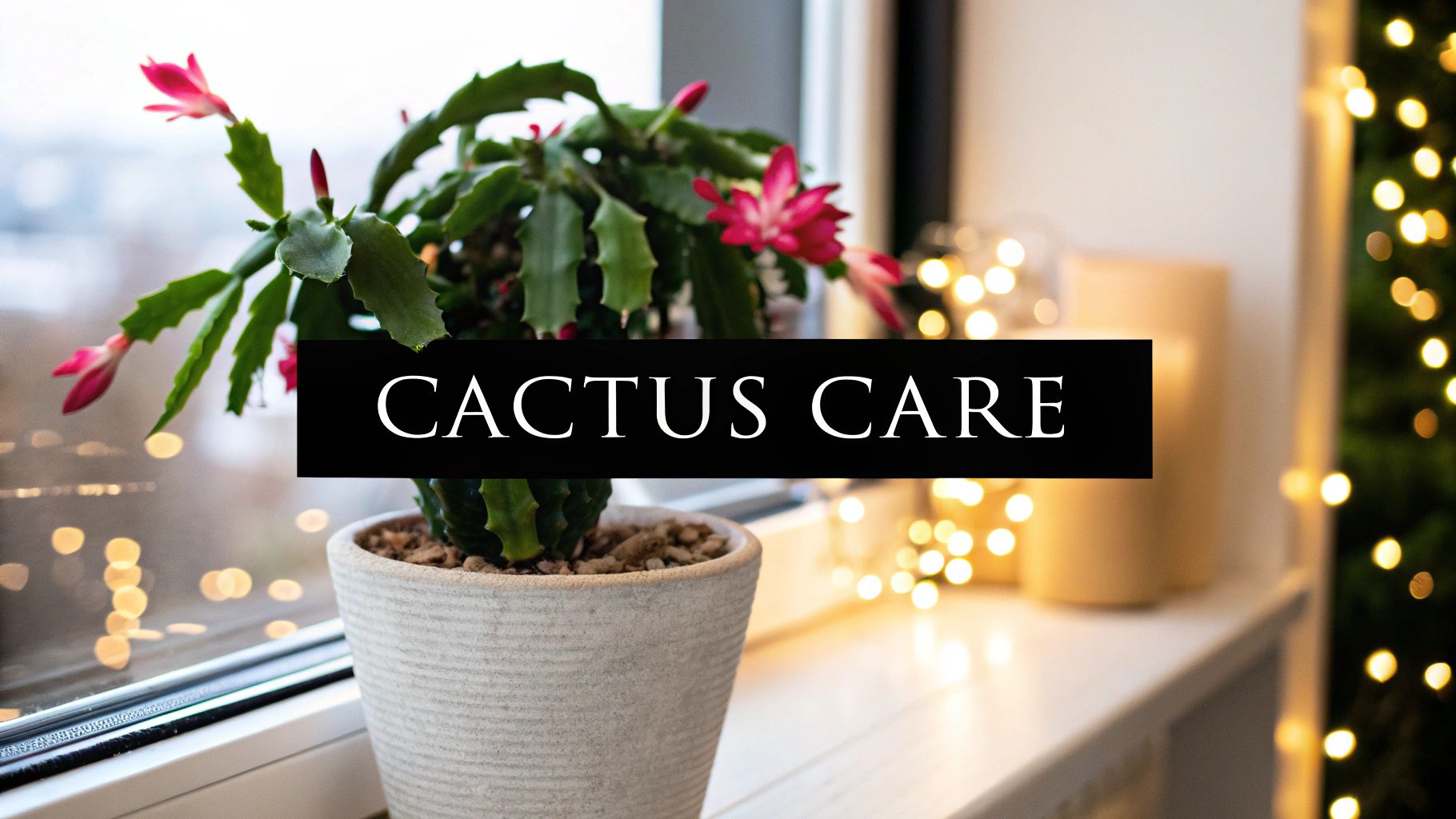

Forget everything you think you know about cacti. The key to a thriving Christmas cactus is to stop treating it like a desert plant and start thinking like a Brazilian rainforest. These plants aren't from arid plains; they're tropical epiphytes that crave bright, indirect light, consistent moisture (when they're growing), and soil that drains in a flash.
The real secret to getting those spectacular holiday blooms? You have to mimic the seasonal shifts of their native home by giving them cooler temperatures and longer nights in the fall.
Why Your Christmas Cactus Thinks It’s Still in Brazil
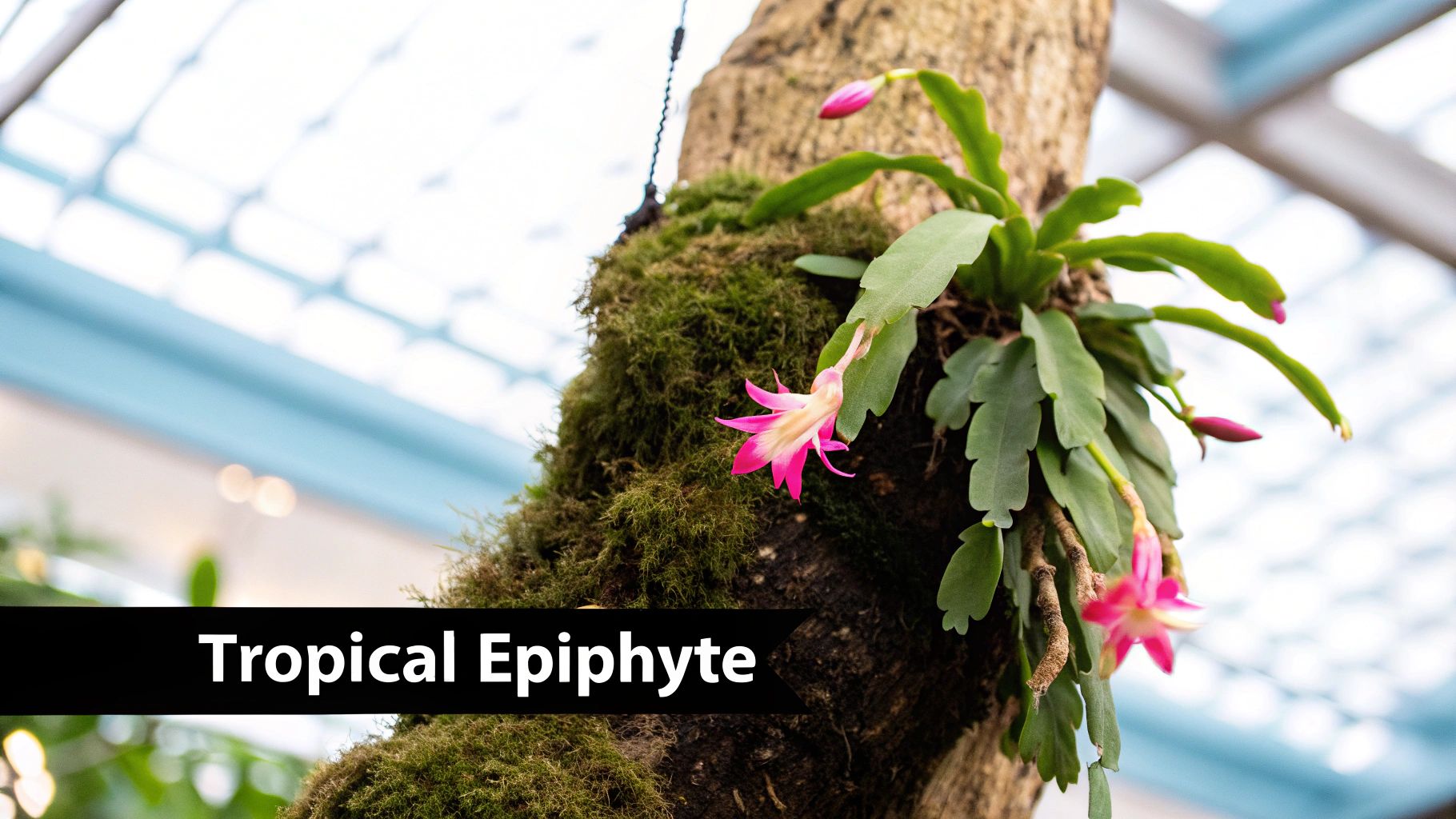
When people hear "cactus," they picture a sun-scorched desert. But the Christmas cactus (Schlumbergera) is the complete opposite. It’s a jungle cactus, hailing from the humid, shaded rainforests of Brazil. Once you grasp this, everything about its care clicks into place.
These plants are epiphytes, which is a fancy way of saying they grow on other plants, not in the ground. In the wild, you'd find them clinging to tree branches, with their roots tucked into bits of moss and decaying leaves. This unique lifestyle dictates all of their needs.
- Filtered Light: Living under a thick jungle canopy means they're used to dappled sunlight, not direct rays.
- High Humidity: The air in a rainforest is thick with moisture, a world away from a dry, desert climate.
- Superb Drainage: Rain washes over their roots and drains away instantly. They absolutely cannot stand to have "wet feet" in stagnant water.
Mimicking Its Natural Rhythm
To get that explosion of holiday color, you need to trick your plant into thinking it's time to flower back in Brazil. The trigger is the cooler, drier season with its shorter days. By recreating this "rest period" in your home with cooler temps and more hours of darkness, you set the stage for a stunning bloom cycle. This isn't just a houseplant you water once a week; it's a living thing with a distinct natural clock.
It's this appreciation for unique plants that has fueled a massive market boom. The global cactus plants market was valued at around USD 1.2 billion and is expected to hit nearly USD 2.5 billion by 2033, a testament to the growing love for diverse species like Schlumbergera.
The biggest mistake I see is people treating their Christmas cactus like a Saguaro. Think humid rainforest, not dry desert. Its needs are defined by where it comes from—the coastal mountains of South America, which you can learn more about in our guide to the cacti of South America.
To make things easier, here’s a quick-reference table that breaks down how to adjust your care routine with the seasons. Following this will help you align with your plant's natural rhythm and keep it thriving from one holiday to the next.
Christmas Cactus At-a-Glance Care Schedule
| Care Aspect | Growing Season (Spring/Summer) | Blooming Season (Fall/Winter) | Post-Bloom Rest (Late Winter/Early Spring) |
|---|---|---|---|
| Watering | Water thoroughly when the top inch of soil is dry. Keep consistently moist but not soggy. | Reduce watering. Let the top half of the soil dry out before watering again. | Water sparingly, only enough to prevent shriveling. |
| Light | 6-8 hours of bright, indirect sunlight. East-facing windows are ideal. | 12-14 hours of complete darkness per day. Bright, indirect light otherwise. | Resume normal bright, indirect light exposure. |
| Temperature | 65-80°F (18-27°C). Normal room temperature is perfect. | Cooler temps are crucial: 50-55°F (10-13°C) at night to set buds. | Return to normal room temperatures. |
| Feeding | Feed every 2-4 weeks with a balanced, water-soluble fertilizer. | Stop fertilizing once buds appear to avoid bud drop. | No fertilizer needed during the rest period. |
This schedule acts as your roadmap for the year. By respecting your Christmas cactus’s internal clock and rainforest origins, you'll be rewarded with a healthy plant and a breathtaking floral display right on time for the holidays.
Getting Light and Water Just Right
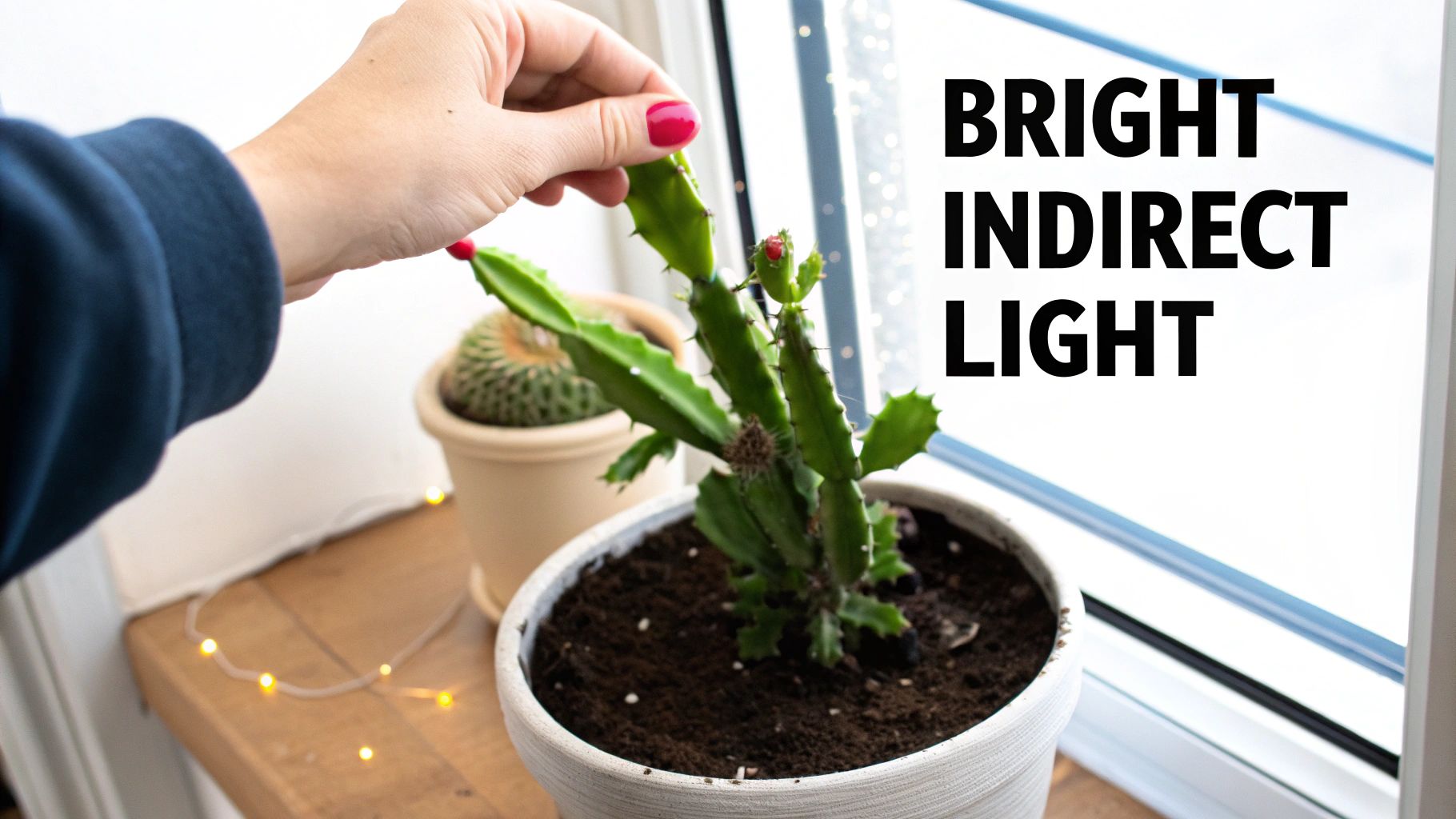
If there are two things that trip up new Christmas cactus owners, it's light and water. It's easy to get this wrong because these plants are not your typical desert dwellers; they're rainforest natives. Nailing this balance is the single biggest step you can take toward a happy plant that rewards you with blooms every year.
That common advice, "bright, indirect light," can feel pretty vague. So, let's get specific. Think about placing your plant near an east-facing window. This spot is often perfect, offering up gentle morning sun that won't scorch its delicate leaf segments.
Got a south or west-facing window? No problem. Those spots just get blasted with intense afternoon sun, so you'll want to pull the plant back a few feet from the glass. Another great trick is to hang a sheer curtain to diffuse that harsh light, giving your cactus the brightness it loves without the burn.
What Your Plant Is Telling You About Its Light
Your Christmas cactus will tell you exactly how it's feeling—you just have to learn its language.
If the leaf segments start looking a little reddish or purplish, that's your plant's version of a sunburn. It’s getting a bit too much direct sun. On the flip side, a plant that looks pale, stretched out, and a little sparse is literally reaching for more light. This is called etiolation, and it's a sure sign your cactus is starving for energy.
The goal is to find that sweet spot with enough light for strong growth and bud development, but not so much that it causes stress. Your plant’s color and shape are your best guides.
For a deeper look into dialing in the perfect brightness, check out our guide on how much sunlight a Christmas cactus needs.
How to Water Without a Rigid Schedule
Forget watering on a fixed schedule, like every Saturday. That's the fastest way to get into trouble. The best way to know when your cactus is thirsty is to simply check the soil.
Stick your finger about an inch deep into the pot. If it feels dry, it's time to water. If you feel any dampness at all, hold off for another day or two and check again. This one simple habit is the best defense against root rot, the most common killer of these plants.
When it is time to water, be thorough. Use room-temperature water (cold water can shock the roots) and soak the soil until you see water flowing freely from the drainage hole. The most important final step? Empty the saucer. Never, ever let your Christmas cactus sit in a puddle of water.
Keep in mind that its thirst will change with the seasons:
- Spring & Summer: During its active growing season, it will need more frequent watering.
- Fall: As you get it ready to bloom, you’ll cut back on water to encourage buds to form.
- Winter: After it finishes blooming, the plant goes into a rest period and needs much less water.
By listening to your plant and checking the soil, you’ll naturally adapt to its needs throughout the year.
Recreating Their Tropical Home Indoors
Okay, so you've got the watering and light down. That's half the battle. But if you want to go from a happy green plant to one that explodes with those incredible holiday flowers, you need to think about the atmosphere.
Your Christmas cactus comes from the rainforests of Brazil, and its internal clock is set to those conditions. To get it to bloom reliably, we need to mimic the subtle environmental shifts it would experience in the wild. This means getting a handle on temperature, humidity, and when you feed it. These three things work together to send signals to your plant, telling it when to grow and, more importantly, when to bloom.
The Magic of a Cool-Down
Temperature is more than just about keeping your plant alive; it's the number one trigger for setting flower buds. Christmas cacti are incredibly sensitive to temperature changes, and a specific drop in the fall is the "go" signal they need to start flowering. Without it, you can have the healthiest-looking plant in the world that just never blooms.
For most of the year, your normal indoor temperatures of 65–75°F (18–24°C) are perfectly fine. But when fall rolls around, it's time to orchestrate a strategic cool-down.
The real secret to a spectacular bloom is giving your cactus a consistent cool period. For about six weeks in the fall, you want to drop the nighttime temperatures into the 55–60°F (13–16°C) range. This is the most reliable way I've found to kickstart bud formation.
Don't worry, you don't need a special greenhouse for this. Moving your plant to a cooler spot, like a little-used guest room or even a basement that gets some light, works great. I've also had success just placing mine near a window that gets a bit chilly at night—just make sure it's not a freezing draft.
Beating Dry Indoor Air
It's easy to forget that these are jungle plants that crave humid air. The dry air blasted out by our central heating systems can really stress them out, and it's a common reason why they might suddenly drop all their flower buds. Misting is a popular suggestion, but honestly, it's a temporary fix that barely lasts a few minutes.
Here are a couple of much more effective, set-it-and-forget-it methods:
- Make a Pebble Tray: This is a classic for a reason. Grab a shallow tray or saucer, fill it with a layer of pebbles, and add water until it’s just below the top of the stones. Then, just set your plant's pot right on top. As the water evaporates, it creates a lovely little humid microclimate around the plant without ever making the soil soggy.
- Group Your Plants Together: Plants naturally release moisture from their leaves (a process called transpiration). When you cluster a few houseplants together, they all benefit by raising the humidity in their immediate vicinity.
These simple tricks create a much more stable and humid environment than sporadic misting ever could.
Feeding for Growth and Flowers
Fertilizer is the fuel your cactus needs for lush growth and a big bloom, but the timing is absolutely critical. If you feed it at the wrong time of year, you can actually prevent it from flowering. The trick is to match your feeding schedule to the plant's natural cycle.
During its active growing season in spring and summer, I feed mine every 2-4 weeks. A standard balanced, water-soluble fertilizer (like a 20-20-20 formula) works perfectly, just be sure to dilute it to half the recommended strength. This is when the plant is putting on new leaf segments, which are the structures that will eventually produce flowers.
Then, in late summer or early fall, you must stop fertilizing completely. This should happen right around the same time you start the cool-down treatment. Giving it fertilizer while it's trying to set buds will just confuse it, often causing it to drop them all. You can start feeding again once it has completely finished flowering and you spot the first signs of fresh spring growth.
Research has shown that to really encourage those blooms, Christmas cacti need that distinct cool-down period. This means keeping them between 12–15°C (55–59°F) starting around mid-September, and holding those temps until you see buds forming. Just remember they are still tropical plants and need to stay above 10°C (50°F) year-round to remain healthy. You can read more about the global trends in the cactus market to see how popular these plants have become.
Of course, all of this relies on having your cactus in the right kind of soil that can handle this routine. A well-draining medium is key. You can check out our deep dive into the ideal cactus and succulent soil mix for our specific recommendations. By putting together the right temperature cues, humidity, and a smart feeding plan, you'll be giving your Christmas cactus everything it needs to put on a real show.
Getting Your Christmas Cactus to Bloom (The Dormancy Trick)
"Why won't my beautiful, healthy Christmas cactus ever bloom?" It's a question I hear all the time. The plant looks great, it's growing new segments, but when the holidays roll around... nothing. The secret almost always lies in a step most people miss: a proper dormancy period.
These plants need a very specific set of environmental cues to tell them it's time to set flower buds. Without this "rest period," your cactus will just keep growing leaves, perfectly happy but flowerless. It's all about mimicking the changing seasons of its native Brazilian rainforest habitat.
This biological process is called photoperiodism. Christmas cacti are "short-day" plants, which is a fancy way of saying they need long, uninterrupted nights to kickstart their flowering cycle. When you combine those long nights with cooler temperatures, you’re basically telling the plant that winter is coming and it’s time to get ready to flower.
The Cool and Dark Method
To trigger blooming, your primary goal is to give the plant 13 to 16 hours of complete, uninterrupted darkness every single night. And I mean complete darkness. Even a quick flash from a lamp or a light from another room can reset its internal clock and stop the process in its tracks.
Start this routine in mid-September or early October, giving you a solid six to eight weeks before you want to see those gorgeous holiday flowers.
At the same time, you need to introduce a gentle chill. Find a spot where the plant will experience nighttime temperatures between 55-65°F (13-18°C). This combination of long nights and cool air is the magic formula for forcing buds to form.
Here are a couple of practical ways people achieve this at home:
- The Closet Trick: Simply move your plant into a dark closet, a spare bathroom, or a cool basement every evening. In the morning, bring it back out to its usual spot.
- The Cover-Up: If moving the plant every day is a hassle, just cover it with a large cardboard box or a thick, dark blanket each night. Just be sure to uncover it in the morning!
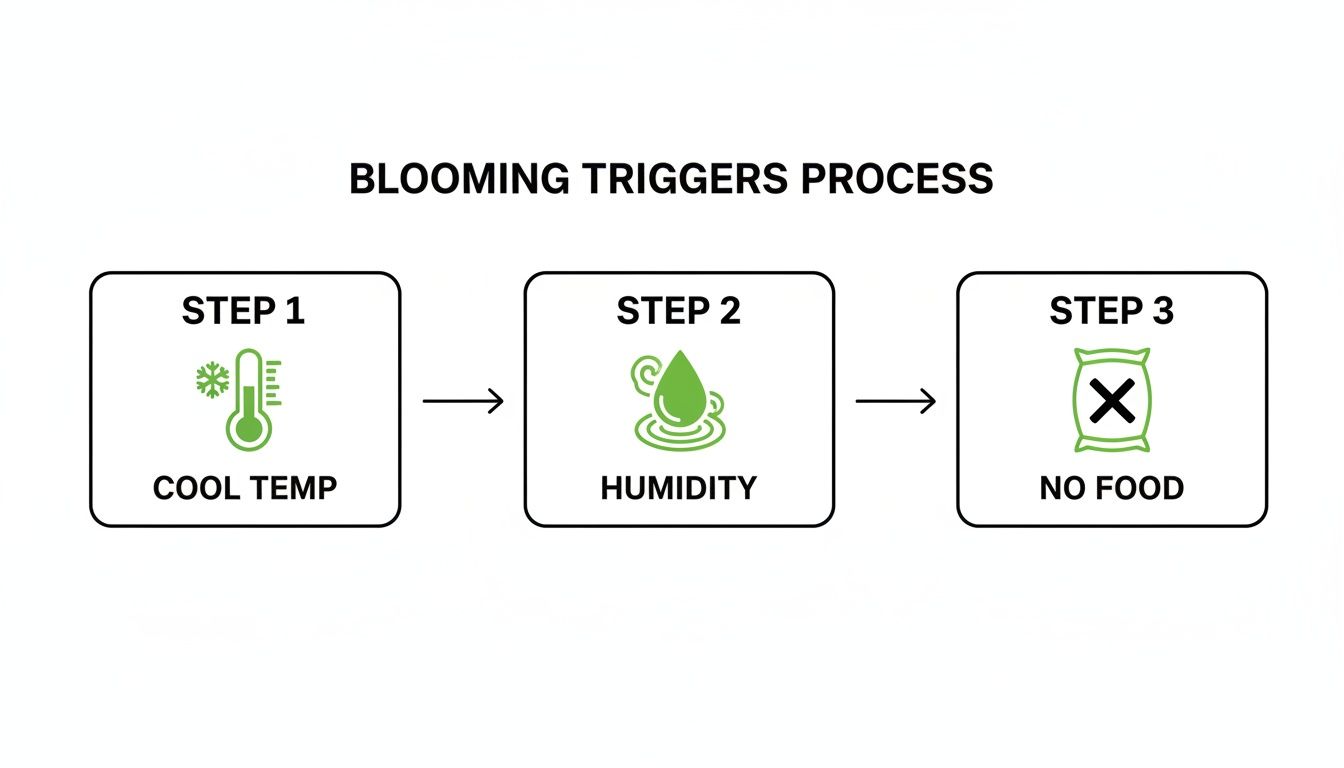
While you're doing this, you'll also want to drastically cut back on water and stop feeding entirely. Let the top half of the soil get completely dry before you give it just a little bit of water. No fertilizer at all during this time!
Waking It Up
After about six weeks of this special treatment, you should start seeing tiny pink or red flower buds appearing at the very tips of the segments. Success! As soon as you spot those first buds, you can stop the darkness routine and move your plant back to its permanent home.
A word of warning: Once a Christmas cactus sets its buds, it gets really sensitive to change. Any sudden shifts in light, temperature, or even watering can cause it to panic and drop all its precious buds. Find a good spot and leave it be.
Now you can go back to your normal watering routine, giving it a good drink whenever the top inch of soil feels dry. But hold off on the fertilizer a bit longer—wait until after the plant has finished blooming for the season.
This careful management is exactly how commercial growers create those incredible holiday displays, timing the blooms perfectly between late November and late January. Different varieties bloom at slightly different times, a detail growers have down to a science. You can actually get a peek into the commercial production techniques for holiday cacti to see just how they do it. By replicating these natural triggers at home, you can put on your own spectacular show, right on time for the holidays.
Troubleshooting Common Christmas Cactus Problems
So, you've followed all the steps, but your Christmas cactus still looks a little under the weather. Don't worry, it happens to even the most seasoned plant parents. Most of the time, your plant is just trying to tell you something, and a few simple tweaks are all it takes to get it back on track.
One of the most frustrating things to see is bud drop. You get excited about a flush of beautiful buds, only to find them on the floor before they ever open. This is almost always your cactus throwing a tantrum because of a sudden change.
Think about what might have changed recently. Did you move it? Is it suddenly next to a drafty door or a heat vent that just kicked on for the season? Even changing your watering schedule can stress it out. The trick is to keep things as stable as possible once you see those buds start to form. Consistency is everything.
Why Are the Leaves Limp or Wrinkled?
Limp or shriveled leaf segments are a classic sign of a watering problem. But here's the tricky part: it can mean the plant is too dry or too wet. You'll need to do a little detective work.
First, feel the soil. Stick your finger about an inch deep. If it feels dusty and bone-dry, your plant is thirsty. A good, thorough drink should have it looking plump again in a day or two.
But what if the soil is damp, or even soggy? That's a much bigger red flag. Limp leaves in wet soil usually point to root rot. The roots have been sitting in too much water, can't breathe, and have started to die off. Ironically, a plant with rotting roots can't absorb water, so it wilts even though it's soaking wet.
My Two Cents: If you suspect root rot, don't wait. You need to operate. Gently slide the plant out of its pot and look at the roots. Healthy ones are white and firm. If you see any that are black, mushy, or smell funky, trim them off with clean scissors. Repot the healthy remainder in a clean pot with fresh, well-draining soil and go easy on the water until it recovers.
Identifying and Treating Common Pests
Christmas cacti are pretty tough, but a few pests can still find their way onto them. Catching them early makes a world of difference. The two you're most likely to encounter are mealybugs and spider mites.
- Mealybugs: These annoying little critters look like tiny specks of white cotton. They love to hide out in the little nooks where the leaf segments connect, sucking the life out of your plant.
- Spider Mites: These are incredibly tiny and hard to see on their own. The giveaway is the very fine, silky webbing they spin between the segments. You might also notice tiny yellow or brown spots on the leaves.
For a small-scale invasion, a cotton swab dipped in 70% isopropyl alcohol is your best friend. Just dab it directly on the pests to kill them instantly. If you're dealing with a bigger problem, a good spray-down with insecticidal soap or neem oil is the way to go. Make sure you get everywhere—top and bottom of all the segments.
Common Christmas Cactus Issues and Solutions
Feeling overwhelmed? It’s okay. Most common issues are straightforward once you know the symptom. I've put together this quick-reference table to help you play plant doctor and figure out what your cactus needs.
| Symptom | Potential Cause(s) | Recommended Action |
|---|---|---|
| Flower Buds Dropping | Sudden changes in temperature, light, or watering; low humidity. | Maintain a consistent environment once buds form. Avoid drafts and moving the plant. |
| Limp, Wrinkled Leaves | Underwatering (dry soil) or overwatering (soggy soil/root rot). | Check soil moisture. Water thoroughly if dry; inspect roots and repot if soggy. |
| Red or Purple Tinged Leaves | Too much direct sunlight. | Move the plant to a spot with bright, indirect light, or filter the light with a sheer curtain. |
| White, Cottony Spots | Mealybug infestation. | Dab individual pests with rubbing alcohol or spray the entire plant with neem oil. |
| Fine Webbing on Plant | Spider mite infestation. | Increase humidity and spray the plant thoroughly with insecticidal soap or neem oil. |
With a little observation and these tips, you'll be able to read your plant's signals and respond like a pro, ensuring it stays healthy and vibrant for years to come.
Pruning and Propagating for a Fuller Plant
There's a real difference between a Christmas cactus that's just surviving and one that's truly thriving. A healthy plant isn't just green; it's lush, full, and has a great shape. Pruning is how you get there. It’s the single best thing you can do to turn a sparse, leggy plant into a dense, bushy powerhouse that’s loaded with blooms come winter.
The best time for a trim is right after the flowering season wraps up, typically in late winter or early spring. This timing takes advantage of the plant's natural rest period and encourages it to branch out. For every stem you snip, you’ll often get two new ones in its place. This simple math leads directly to a fuller plant and, ultimately, more flowers.
How to Prune Your Christmas Cactus
You don't need any fancy equipment for this job—just your hands. The idea is to remove one or two of the flat segments from the tips of the longer stems.
Resist the urge to grab scissors or a knife. The best way is to gently twist a segment right at the joint where it connects to the next. This creates a clean break that heals quickly and minimizes the risk of infection, much like how the plant would naturally shed segments in the wild. Focus on any stems that are looking a bit long or gangly to help the plant develop a more compact, balanced shape.
Don’t toss those trimmed pieces! Every segment you remove is a potential new plant just waiting to happen. Pruning is a zero-waste activity that lets you easily multiply your collection.
These little trimmings are perfect for propagation. It's one of the most satisfying parts of caring for these plants, allowing you to create new ones to share with friends and family.
A Simple Guide to Propagation
Making more Christmas cacti couldn't be easier, and it's a wonderful way to pass along a piece of a beloved plant. Those cuttings you just made are all you need to get started.
1. Let the Cuttings Heal Over
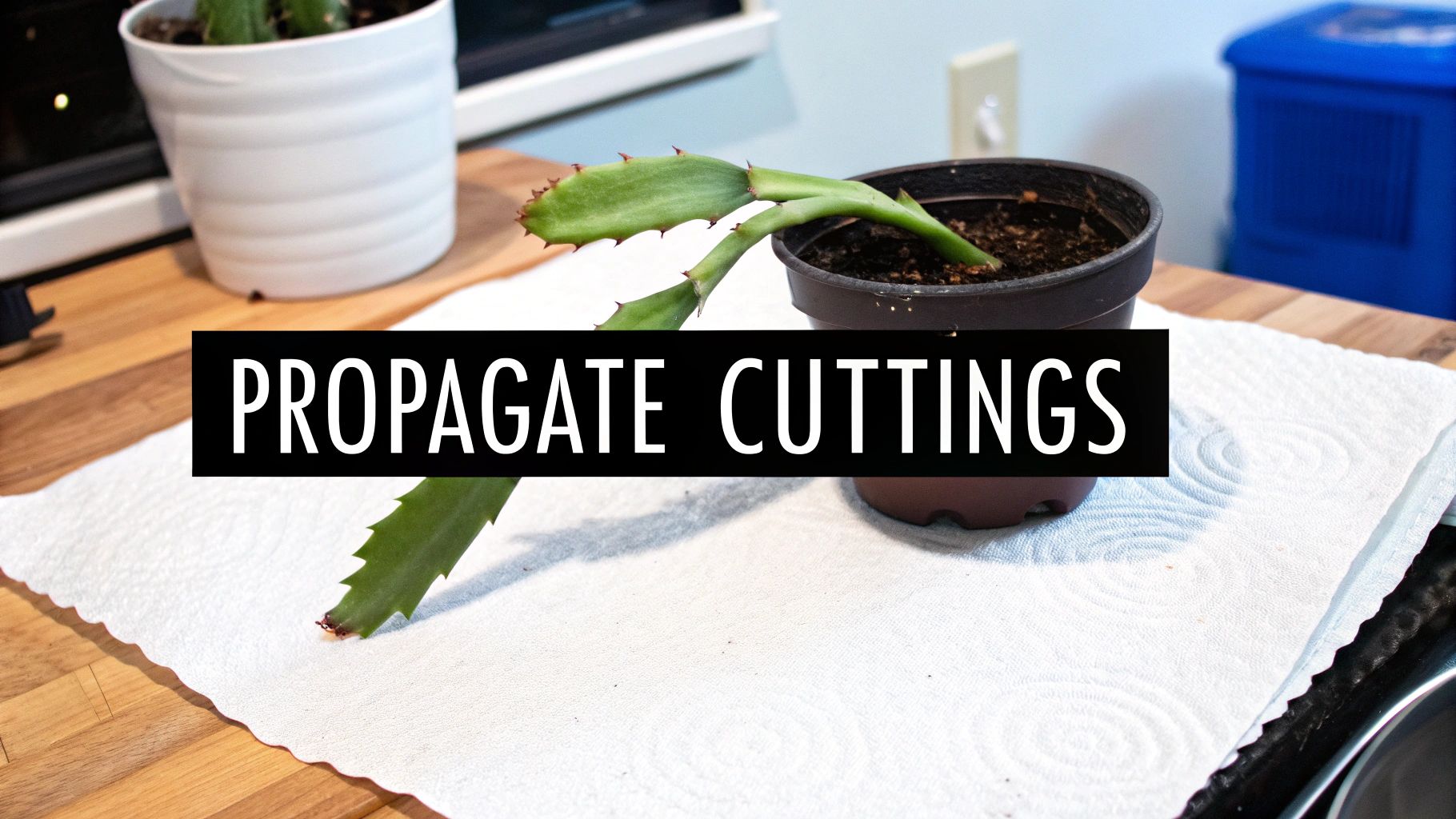
First things first: after twisting off a cutting (a Y-shaped piece with 2-3 segments is perfect), don't rush to plant it. Let the cuttings rest on a paper towel in a dry spot away from direct sun for a few days. You'll see the raw end dry out and form a callus. This step is vital—it’s what prevents the cutting from rotting in the soil.
2. Time to Plant
Once the ends have callused over, they're ready for soil. Get a small pot and fill it with the same well-draining mix you use for the parent plant. Poke the callused end of the cutting about an inch deep into the soil. You can fit several cuttings into a single pot if you like.
3. Create the Right Environment
Give the soil a light watering and move the pot to a location with bright, indirect light. To help things along, you can create a mini-greenhouse by loosely placing a clear plastic bag over the pot, which traps humidity and encourages rooting. Keep the soil just barely moist, and within a few weeks, you should have roots. The first sign of success? You'll spot tiny new segments beginning to grow from the tips.
Answering Your Christmas Cactus Questions
Even seasoned plant parents run into head-scratchers now and then. When it comes to Christmas cacti, a few common problems tend to pop up. Let's walk through the most frequent questions we hear and get your plant back on track.
Why Are My Christmas Cactus Leaves Limp?
Limp, rubbery leaves are almost always a sign of a watering problem. The tricky part is figuring out if it's too much water or not enough.
Your first move should be to check the soil. Stick your finger about an inch deep. If it feels dusty and bone-dry, the plant is just thirsty. Give it a good, thorough drink.
But if the soil feels damp, soggy, or waterlogged, you've probably overwatered. This is a more serious issue because it can lead to root rot. When roots rot, they can no longer absorb water, which ironically causes the plant to wilt even though it's sitting in wet soil.
Expert Tip: If you suspect root rot, don't be afraid to investigate. Gently slide the plant out of its pot. Healthy roots look white and firm. Rotted roots will be brown or black, feel mushy, and might even smell bad. If you find any, trim them off with clean scissors and repot the cactus in fresh, well-draining soil.
Why Is My Christmas Cactus Dropping All Its Flower Buds?
Ah, the dreaded bud drop. It's incredibly frustrating to see all those beautiful, promising buds fall off before they can open. This almost always happens because of a sudden change in the plant's environment. Once a Christmas cactus starts setting its buds, it gets a little fussy and really dislikes surprises.
The usual suspects are:
- Sudden temperature swings: Think drafts from a window, a blast from a heating vent, or being too close to an exterior door.
- A major change in lighting: Moving it from a dim corner to a bright, sunny window can be a real shock to its system.
- Watering inconsistency: Letting it go from bone dry to sopping wet will stress it out.
The best way to avoid this is to find a good spot for your cactus before it starts budding and then leave it there. Keep its conditions as stable as possible through the whole blooming season.
How Do I Tell a Christmas Cactus from a Thanksgiving Cactus?
They look incredibly alike, but there's one giveaway feature: the shape of their leaf segments (which are technically called cladodes).
A Thanksgiving cactus (Schlumbergera truncata) has very pointed, claw-like projections along the sides of its segments. On the other hand, a true Christmas cactus (Schlumbergera bridgesii) has segments with softer, more rounded, and scalloped edges.
While they tend to bloom around their namesake holidays, don't rely on that alone—their flowering schedule can shift depending on their care. The good news is that caring for a Christmas cactus and its Thanksgiving cousin is exactly the same.
Ready to start your own cactus journey or add a stunning new specimen to your collection? At The Cactus Outlet, we offer a wide variety of healthy, beautiful cacti shipped directly to your door. Explore our collection and find your perfect plant today at https://www.cactusoutlet.com.