

Choosing the right pot for your cactus is about so much more than just style—it’s one of the most important decisions you'll make for its long-term health. If you take away only one thing, let it be this: a porous pot with great drainage is almost always the winning combination. Materials like classic, unglazed terracotta are perfect because they let the soil breathe and dry out, preventing the dreaded root rot.
This simple setup closely mimics the arid, gritty soil cacti are used to in their native deserts, setting your plant up for success from day one.
Why Your Cactus Pot Is a Blueprint for Its Health
It helps to think of a cactus pot less as a decorative container and more as a complete life-support system. The right pot strikes a delicate balance between moisture control, aeration, and stability—the three pillars a desert plant needs to thrive indoors. Cacti have spent millennia adapting to harsh environments where water is fleeting and the soil drains in a flash. Our goal is to replicate that environment in a pot.
When you pick the right pot, you're working with your cactus's natural instincts, not fighting against them. A porous material like terracotta acts as a fantastic buffer, wicking away excess moisture and forgiving the occasional overzealous watering. Honestly, this single choice can be the difference between a happy, growing cactus and one that’s silently suffering from root rot below the soil.
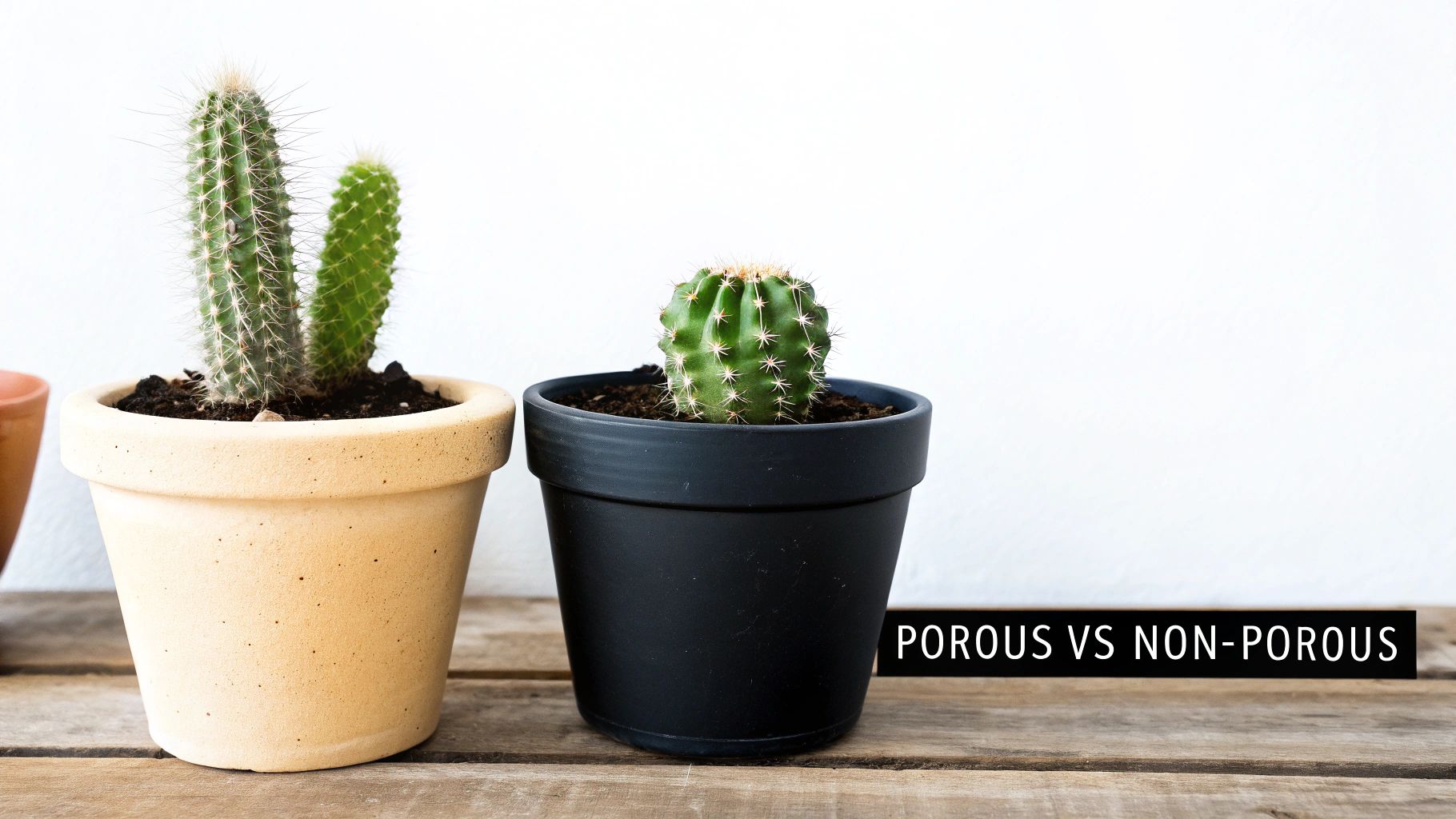
This little guide breaks down the decision-making process. Porosity is your best friend, but drainage is non-negotiable.
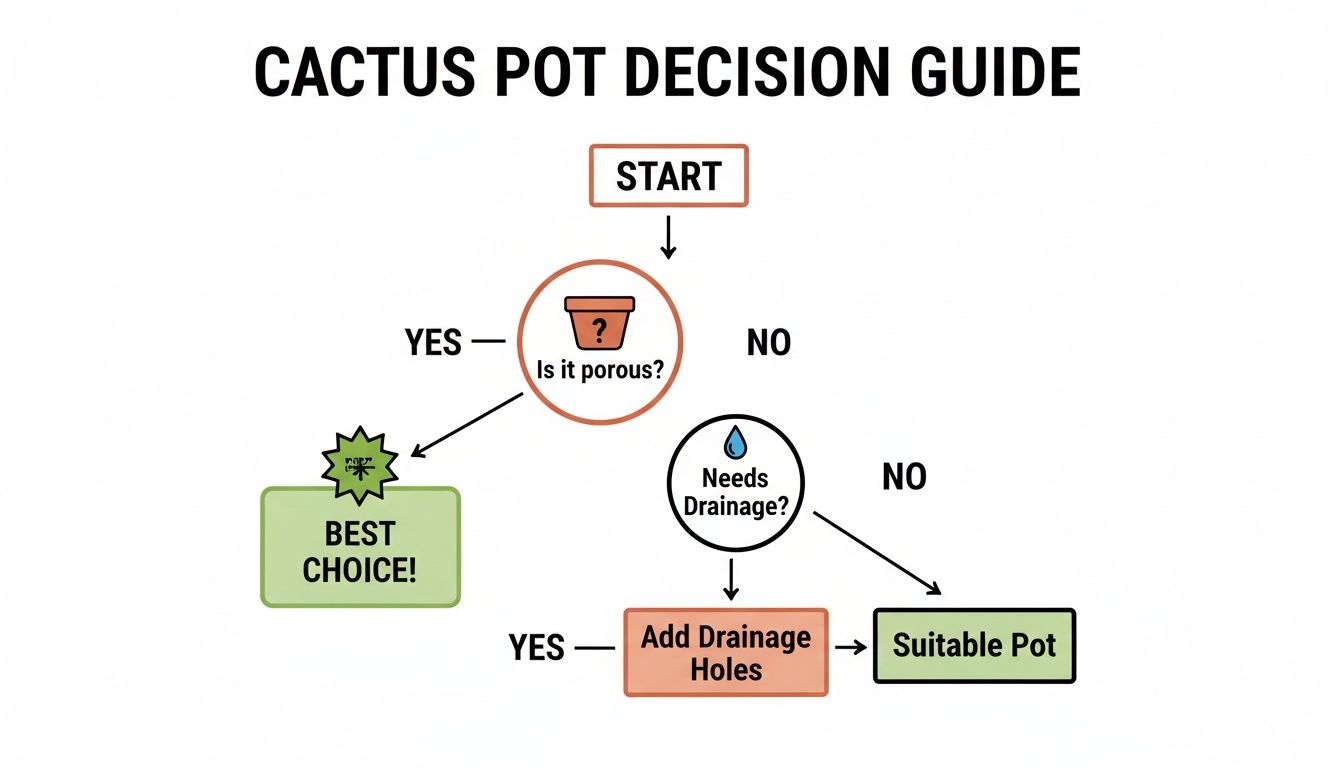
As the chart shows, a breathable pot is the gold standard. You can make a non-porous pot work, but only if its drainage is absolutely perfect.
Comparing Common Cactus Pot Materials
Let's put the most common materials side-by-side. Each one has pros and cons that directly affect how your cactus will do, and understanding them helps you match the pot to your plant, your home's environment, and even your own watering habits.
The most significant factor in pot selection is its ability to manage moisture. Cacti roots need to dry out relatively quickly, and the pot's material plays the leading role in this process.
To make this super clear, here’s a quick-reference table that lays out the key differences. Think of it as your starting point for understanding the trade-offs before we dive deeper into each material.
Cactus Pot Material At a Glance
A quick comparison of common cactus pot materials to help you make an informed choice based on breathability, water retention, and best-use scenarios.
| Material | Breathability | Water Retention | Best For |
|---|---|---|---|
| Unglazed Terracotta | Excellent | Low | Beginners and indoor growers due to its forgiving, moisture-wicking nature. |
| Glazed Ceramic | None | High | Experienced growers or outdoor cacti in very hot, dry climates. |
| Plastic | None | High | Budget-conscious growers who can carefully control watering schedules. |
| Concrete/Cement | Good | Moderate | Outdoor settings where durability and stability for large plants are needed. |
This table gives you the basics, helping you quickly narrow down which materials might be a good fit. Now, let’s get into the specifics of why these characteristics matter so much.
Why Pot Material Is Your Most Crucial Decision
It’s easy to get sidetracked by a pot's color or funky shape when you're looking for a new home for your cactus. But before you fall for aesthetics, let's talk about the single biggest factor for your plant's health: the material the pot is made of. Think of it like this—you wouldn't wear a sealed raincoat in the desert.
A cactus needs an "outfit" that breathes, something that feels like its native, arid home. The pot's material is what controls airflow and moisture around the roots, and getting that wrong is the fastest way to end up with a mushy, rotted plant. This isn't just a minor detail; it’s the bedrock of good cactus care.
The Classic Champion: Unglazed Terracotta
When in doubt, go with unglazed terracotta (or clay). It's the undisputed champion for cactus growers for a reason, especially if you're just starting out. The magic is in one simple word: porosity.
The walls of a terracotta pot are riddled with microscopic pores. Instead of trapping water, these pores actively pull excess moisture from the soil and let it evaporate right through the sides of the pot. It’s a game-changer.
This natural "breathing" process gives you a few major advantages:
- A Safety Net Against Overwatering: Terracotta is incredibly forgiving. If you get a little heavy-handed with the watering can, the pot helps the soil dry out much faster than a plastic or glazed pot ever could.
- Happy, Healthy Roots: Those same pores that let water out also let air in. This delivers oxygen straight to the root system, preventing the stagnant, suffocating conditions that rot-causing fungi absolutely love.
- It Feels Like Home: In the wild, desert soil dries out fast. Terracotta does a fantastic job of recreating that quick-drying environment right on your windowsill.
This isn't just theory. Horticultural studies and grower experience show that clay pots can slash soil moisture by 10–30% compared to non-porous pots on the same watering schedule. That's a huge buffer against the number one cactus killer, making terracotta the safest bet you can make. You can learn more about market trends for cactus plants to see why this choice is so critical for successful growing.
The Challenge of Glazed Ceramic and Plastic Pots
Of course, you’ll see plenty of stunning cacti sold in sleek glazed ceramic or basic plastic pots. They can work, but they bring a completely different set of rules to the table. Because they're non-porous, they're the plant equivalent of that sealed raincoat—nothing gets in, and more importantly, nothing gets out.
When you water a cactus in a glazed or plastic pot, every drop of moisture stays trapped inside. The only escape routes are through the plant's roots or evaporation from the tiny patch of soil on top. This creates a high-stakes environment where one mistake can leave the roots sitting in a swamp for days, which is a recipe for disaster.
A non-porous pot demands precision. It takes away the forgiving nature of terracotta, meaning your watering game and soil mix have to be perfect to keep root rot at bay.
Making Non-Porous Pots Work for You
So, what if you've already fallen hard for a beautiful glazed pot? Don't worry, it's not a lost cause. You can absolutely grow a thriving cactus in it, but you have to be much more strategic to make up for the pot's lack of breathability.
Here’s your game plan for success:
- Drainage is Everything: A big drainage hole isn't just a nice-to-have; it's completely non-negotiable. Without it, a non-porous pot is a death trap.
- Use an Ultra-Gritty Soil Mix: Your soil has to do all the work the pot can't. Amend your cactus mix with a ton of inorganic grit—pumice, perlite, or crushed granite are great—to create air pockets and help it dry out fast.
- Water Like a Surgeon: You have to master the "soak and dry" method. Don't even think about watering until the soil is bone-dry all the way to the bottom. If you're not sure, stick a wooden skewer or chopstick in the soil; if it comes out clean and dry, you're good to go.
- Size Matters—A Lot: Never "overpot" a cactus in a large glazed pot. All that extra soil will stay wet for way too long. Stick to a pot that’s just a little bigger than the root ball, leaving only an inch or so of space around the sides.
Why Drainage Is Everything
Once you've settled on a material, the next thing to look at is drainage. And let me be clear: this is a non-negotiable, make-or-break feature for any cactus pot. Cacti come from places where water disappears almost as fast as it arrives, so letting them sit in soggy soil is the quickest way to kill them. A pot without a drainage hole is a guaranteed recipe for root rot.
Think of it this way: a pot without a hole is like a bathtub with the drain plugged. No matter how carefully you pour the water in, it's eventually going to fill up and become a stagnant mess. That's exactly what happens at the bottom of a sealed pot. It creates a swampy, airless environment that will literally drown and decay your cactus's roots.
This isn't just my opinion—it's the golden rule of cactus care. Water has to be able to flow freely out of the pot to give your plant the dry-out period it craves between waterings.
Bigger and More is Better: What to Look for in a Drainage Hole
Now, just seeing a hole isn't quite enough. A single, tiny pinprick at the bottom of a big pot won't do the job. You need an exit route that’s big enough to let water rush out efficiently.
For a healthy cactus, find a pot with at least one large drainage hole, ideally around 1/2 inch (about 12mm) in diameter. A generous opening like this is much less likely to get clogged by a stray bit of soil, ensuring water can escape quickly after you give your plant a good soak.
Even better? A pot with several smaller holes. This design is fantastic because it provides multiple escape routes for water and boosts aeration around the roots. More holes mean more air, which is just as important as drainage for fighting off fungus and encouraging a strong, healthy root system.
The design of a pot's drainage system—hole size, number, and placement—is directly tied to your cactus's survival. Think of proper drainage as the foundation for a healthy plant.
That Common Drainage "Hack"? It's a Myth.
You've probably heard this tip before: if you have a beautiful pot with no holes, just add a layer of gravel or pebbles at the bottom to "create drainage." It sounds plausible, but this is one of the most persistent and damaging myths in gardening. This little trick actually makes things worse.
Adding a layer of rocks creates what’s known as a "perched water table." Water moves down through the soil, but when it hits that coarse gravel layer, it stops. It can't wick any further. Instead, it pools in the soil directly above the gravel, creating an even more concentrated zone of stagnant, saturated muck right where the roots are.
Essentially, you've just raised the swampy bottom of the pot, forcing your cactus's roots to sit in a bog. It’s the exact opposite of what you want. The only real solution is a pot with actual holes that let water leave the container entirely. If you're new to this, it's a crucial concept to grasp. You can get a deeper dive on this topic in our guide on why drainage is essential for succulents.
The science on this is pretty clear. Horticultural studies have shown that pots with at least one 8–12 mm drainage hole can cut the risk of root rot by approximately 40–60% compared to sealed containers. It just goes to show how a simple feature can make a huge difference. The takeaway is simple: always, always choose a pot with holes and fill it with a gritty, fast-draining soil mix. It’s the best combination for a happy cactus.
Finding the Right Fit: How to Choose the Perfect Pot Size and Shape
Once you've settled on a material and confirmed it has drainage, the next piece of the puzzle is picking the right size and shape. Finding the best pot for your cactus is a bit like playing Goldilocks—it can't be too big or too small. It has to be just right. This decision is more than just aesthetics; it directly controls how quickly the soil dries out and how your cactus's roots develop.
Think of it like buying shoes for a toddler. You want a little room to grow, but not so much that they're tripping over their own feet. A pot that’s way too big holds a huge amount of soil that will stay wet for far too long, creating the perfect recipe for root rot. On the flip side, a pot that’s too snug will cramp the roots, make the plant top-heavy, and dry out in a flash, leaving your cactus stressed and thirsty.
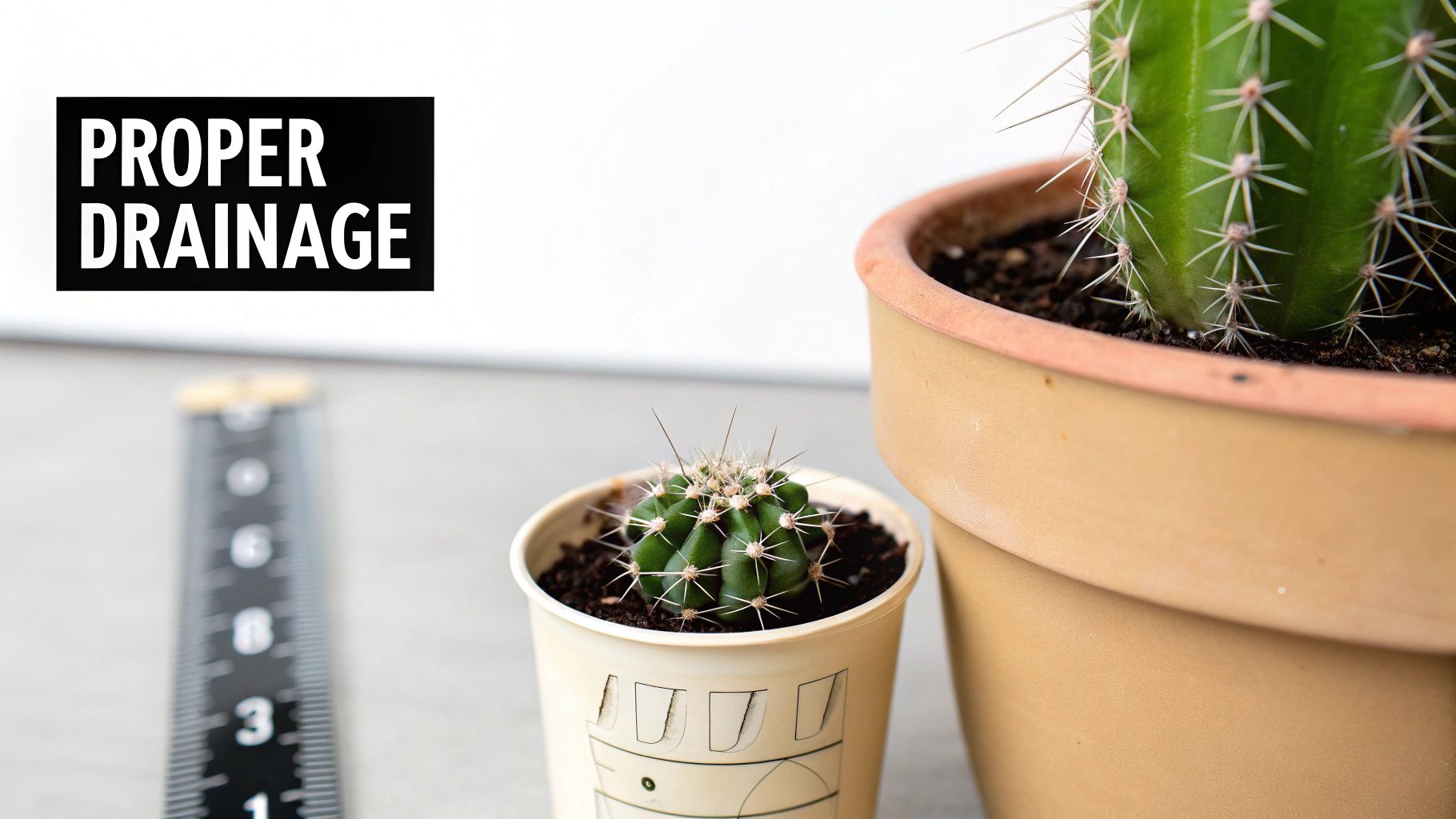
The Goldilocks Rule for Sizing a Cactus Pot
To take the guesswork out of it, here's a simple rule of thumb that works almost every time: choose a pot that’s about 10-20% wider than the cactus itself. So, if you have a cactus that measures 4 inches across, a 5-inch pot is your ideal target. This leaves a comfortable half-inch to an inch of space all the way around.
That small gap is the sweet spot. It holds just enough fresh soil to offer nutrients and room for new roots to explore without retaining a dangerous amount of moisture. When your cactus outgrows its home, our guide on how to repot cacti can walk you through the entire process, making the move a smooth one.
To make this even simpler, here is a quick reference table to help you match your cactus to the perfect pot.
Cactus Pot Sizing Guide
This table offers a practical guide to help you choose the right pot size based on the diameter of your cactus plant or its root ball.
| Cactus Diameter | Recommended Pot Diameter | Why It Works |
|---|---|---|
| 2 inches | 2.5 - 3 inches | Provides just enough space for a small plant's roots to grow without holding excess water. |
| 4 inches | 5 inches | The ideal "next step" size that encourages healthy growth without risking overly wet soil. |
| 6 inches | 7 - 8 inches | Gives an established cactus room to expand while ensuring the large soil volume still dries evenly. |
| 8 inches | 9 - 10 inches | Supports a mature plant, offering stability and sufficient nutrients for its size. |
| 10+ inches | 12+ inches | Accommodates large, specimen-sized cacti, balancing root space with the need for moisture control. |
Sticking to these guidelines helps you avoid the common pitfall of over-potting, which is a leading cause of problems for new cactus owners.
Why Pot Shape Matters More Than You Think
Beyond diameter, the actual shape of the pot plays a huge part in your cactus's health and stability. Not all cacti grow the same way, so their pot shouldn't be a one-shape-fits-all solution. A tall, skinny pot might look sleek, but it could be a terrible choice for most cacti.
For the vast majority of cacti, especially the round or barrel-shaped ones, a standard squat pot is your best bet. These pots are typically as wide as they are tall, giving them a stable, low center of gravity that prevents tipping. More importantly, this classic shape helps the soil dry out evenly from top to bottom.
On the other hand, tall and narrow "chimney" pots are deceptive. They create a deep column of soil where the bottom third can stay soggy long after the top looks bone-dry. This is a hidden danger zone where roots at the base can easily rot without you ever knowing.
Matching Pot Shape to Your Cactus's Style
While a standard pot is a great starting point, you can really level up your cactus care by tailoring the pot shape to the plant’s specific growth habit.
- For Columnar Cacti: Tall, upright growers like the Peruvian Apple Cactus often have deeper taproots to anchor themselves. A pot that is slightly deeper than it is wide gives these roots the vertical space they need and adds stability as the cactus grows taller.
- For Clustering Cacti: Many species, like those in the Mammillaria genus, produce offsets or "pups" and spread outwards. They do wonderfully in wide, shallow bowls. This shape provides plenty of surface area for them to expand without forcing you to use a pot with unnecessary, moisture-retaining depth.
- For Globular or Barrel Cacti: Your classic round cacti, like the Golden Barrel, are perfectly happy in standard pots. The symmetrical pot shape complements the plant’s form and ensures the soil dries uniformly around its dense, fibrous root ball.
Matching Your Pot to Your Growing Environment
The "best" pot for a cactus isn't a universal thing. The perfect container for a plant in cool, rainy Seattle could be a death sentence for one in a hot, dry Phoenix backyard. Where your cactus lives—be it on a sunny kitchen windowsill or a blistering patio—plays a huge role in what kind of pot will help it thrive.
This is where you graduate from general advice to a strategy tailored for your plant. A pot that performs beautifully indoors might dry out in a flash outside, while a pot suited for a dry climate could hold way too much water in a humid one.
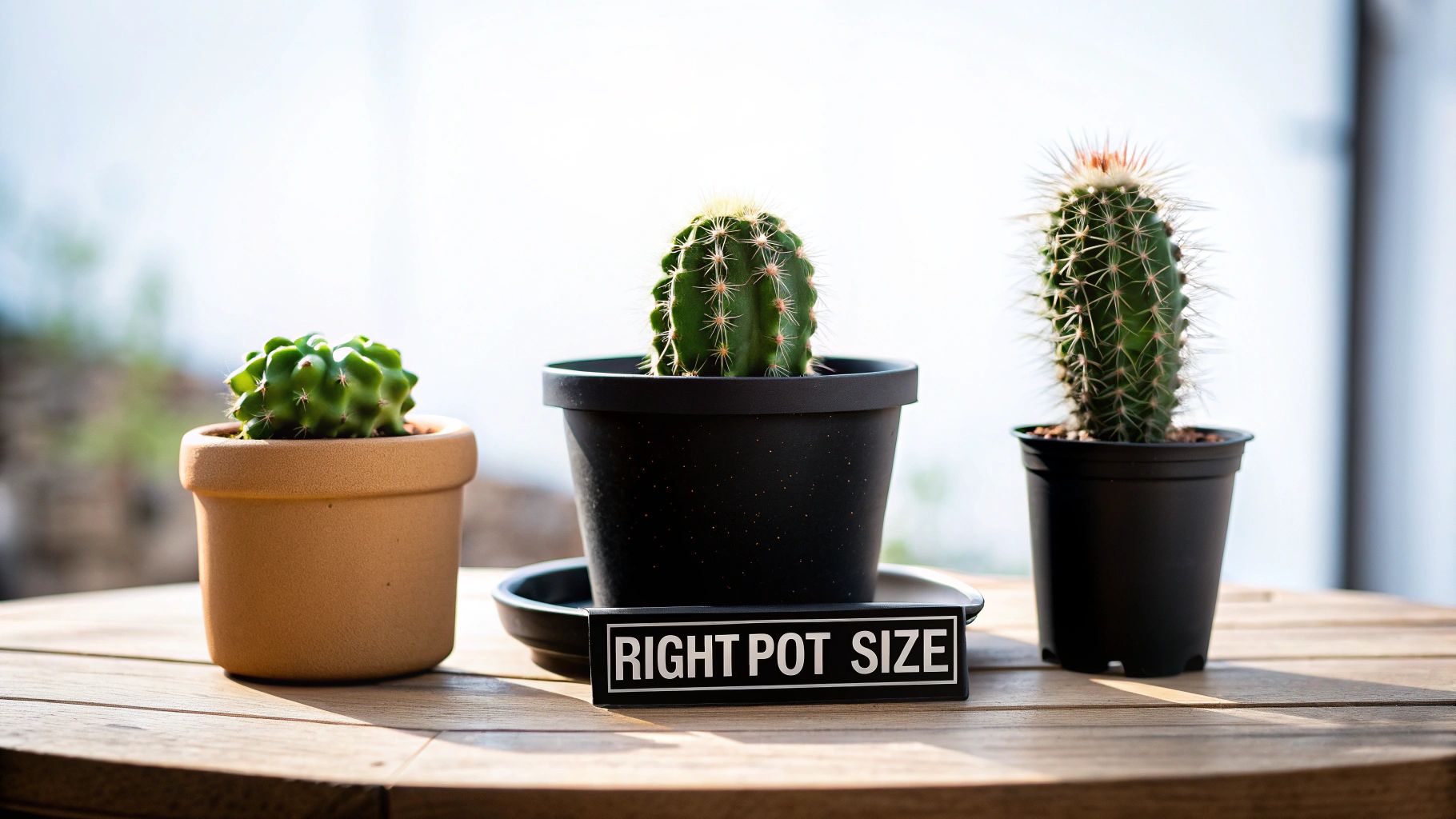
Indoor Cactus Pots: A Controlled Setting
When a cactus lives inside, you're in charge of the water, and the environment is pretty stable. Temperatures don’t swing wildly, and you don't have to worry about a surprise downpour. In this controlled setting, your biggest enemy is almost always accidental overwatering.
This is why unglazed terracotta is the undisputed champion for indoor growing. Its porous walls are like a built-in safety net, wicking away excess moisture and helping the soil dry out evenly. This breathability is incredibly forgiving and drastically lowers the risk of root rot, the number one killer of indoor cacti. Once you've picked the perfect pot, you can check out our guide on how to plant cactus in pots for a step-by-step walkthrough.
Outdoor Cactus Pots: Adapting to the Elements
Growing a cactus outside means dealing with a whole new set of variables: intense sun, wind, and rain. Your pot choice needs to act as a buffer against these extremes. The right pot really depends on your local climate.
For Hot, Dry Climates (like Arizona or Southern California):
In places with relentless heat and sun, a standard terracotta pot can sometimes be too good at its job. It can wick moisture away so fast that the roots barely get a chance to drink, forcing you to water far more often.
In this kind of environment, a light-colored glazed ceramic pot can actually be a better pick. The glaze slows down evaporation, conserving water, while the light color reflects sunlight, which helps keep the roots from overheating.
For Humid or Rainy Climates (like Florida or the Pacific Northwest):
If you live somewhere with high humidity or frequent rain, your main goal is to fight off excess moisture. In this case, unglazed terracotta is absolutely essential. You need the most breathable pot you can find to help the soil dry out quickly after a storm or on a muggy day. A glazed pot here would just trap water and almost guarantee rot.
Thinking about these environmental factors will help you pick the best pot for your specific situation. And to make sure your cactus looks great in its new home, you can find inspiration for pairing trendy houseplants to complement your furniture. A little forethought now means your cactus will have the perfect conditions to flourish for years to come.
Common Potting Mistakes and How to Avoid Them
We’ve all been there. You find the perfect cactus, pick out a beautiful pot, and a few weeks later, things start to look a little… sad. Even with the best intentions, a few common slip-ups can easily trip up even seasoned plant parents.
The good news? These mistakes are incredibly easy to sidestep once you know what to watch out for.
The Big Three Potting Pitfalls
First and foremost is the cardinal sin of cactus care: picking a pot with no drainage hole. It’s the single fastest way to kill a desert plant. Think of it this way—you’re basically forcing your cactus to wear wet socks 24/7. Water pools at the bottom with nowhere to go, suffocating the roots and creating a swampy breeding ground for rot. It’s a guaranteed recipe for disaster.
Another classic mistake is overpotting. It feels generous, right? Giving your little cactus a huge new home to grow into. In reality, you're creating a dangerous situation. All that extra soil holds a ton of moisture that the plant's small root system can't possibly drink up quickly enough. The roots just end up sitting in cold, damp soil for days on end, which is just as bad as having no drainage at all.
Finally, even the perfect pot can't save a cactus from poor watering habits. A major culprit is letting the pot sit in a saucer full of water after a thorough drink. This completely defeats the purpose of having a drainage hole in the first place, creating that same dreaded "puddle" at the root level.
Pro Tip: Always, always empty the saucer about 15-20 minutes after watering. This gives the soil enough time to absorb what it needs, but it prevents the roots from steeping in stagnant water.
A Simple Sanity Check
To keep things simple, just run through this quick mental checklist before and after you pot up your cactus:
- No Hole, No Go: Fallen in love with a decorative pot that doesn't have a hole? Use it as a "cachepot." Just keep your cactus in its plastic nursery pot and pop it inside the pretty one. Problem solved.
- The Saucer Rule: Don’t let your cactus sit in a puddle. Ever. Make it a habit to dump out any excess water from the saucer.
- Use the Right Stuff: Never use dense, all-purpose potting soil from the bag. It holds way too much water and will compact around the roots. Stick with a gritty, fast-draining cactus and succulent mix.
By consciously avoiding these three simple things—no drainage, oversized pots, and swampy saucers—you'll eliminate the vast majority of problems that plague cactus growers. It really is that simple.
Your Cactus Pot Questions, Answered
Even with all the guidelines, some specific questions always come up. I've pulled together some of the most common ones I hear from other cactus lovers to give you clear, straight-to-the-point answers.
Think of this as your quick troubleshooting guide for those real-world situations you'll run into as your collection grows. Nailing these details will give you the confidence to make the right call for every plant you bring home.
Can I Use a Pot Without a Drainage Hole?
My honest advice? Don't do it. A pot without a drainage hole is a recipe for disaster, especially if you're just starting out. It's the number one mistake I see, and it almost always leads to root rot.
Without an escape route, water pools at the bottom and turns the soil into a swamp. Cacti simply can't survive in those conditions. The risk is just too high, even for the most careful waterers.
If you’ve found a beautiful decorative pot that's missing a hole, all is not lost! Use it as a "cachepot." Just keep your cactus in its simple nursery pot and slip that inside the decorative one. You get the look you want without sacrificing your plant's health.
How Do I Know When It’s Time to Repot My Cactus?
Your cactus will give you some pretty clear hints when it's feeling cramped. Look for these signs:
- Roots on the Run: If you spot roots peeking out of the drainage hole, the plant is definitely looking for more space.
- A Little Wobbly: Does the cactus seem top-heavy or unstable? That often means the root system has outgrown the pot's footprint.
- Totally Root-Bound: When you gently slide the cactus out, is the first thing you see a tangled web of roots with barely any soil? That's a classic sign it's time for an upgrade.
As a rule of thumb, most slow-growing cacti are happy being repotted every 2-4 years. When you do move it, just go up one pot size—that means about 1-2 inches wider in diameter. A huge jump in size can hold too much moisture.
Are Terracotta Pots Always Better Than Glazed Pots?
For most of us growing cacti indoors, terracotta is the hands-down winner. Its porous clay acts like a sponge, wicking moisture away from the soil and letting air circulate around the roots. This "breathability" is its superpower, providing a fantastic buffer against overwatering.
Glazed ceramic pots, on the other hand, are sealed. They hold moisture in, much like plastic. You can make them work, but you'll need an extra-gritty soil mix and a very strict watering hand. Interestingly, a glazed pot can be a good choice for cacti living outdoors in very hot, dry climates, where it can help prevent the soil from drying out too quickly under the intense sun.
Ready to find the perfect home for your desert treasures? At The Cactus Outlet, we offer a curated selection of healthy, vibrant cacti ready to thrive in the right pot. Explore our collection and start building your dream garden today. Visit us at https://www.cactusoutlet.com.