
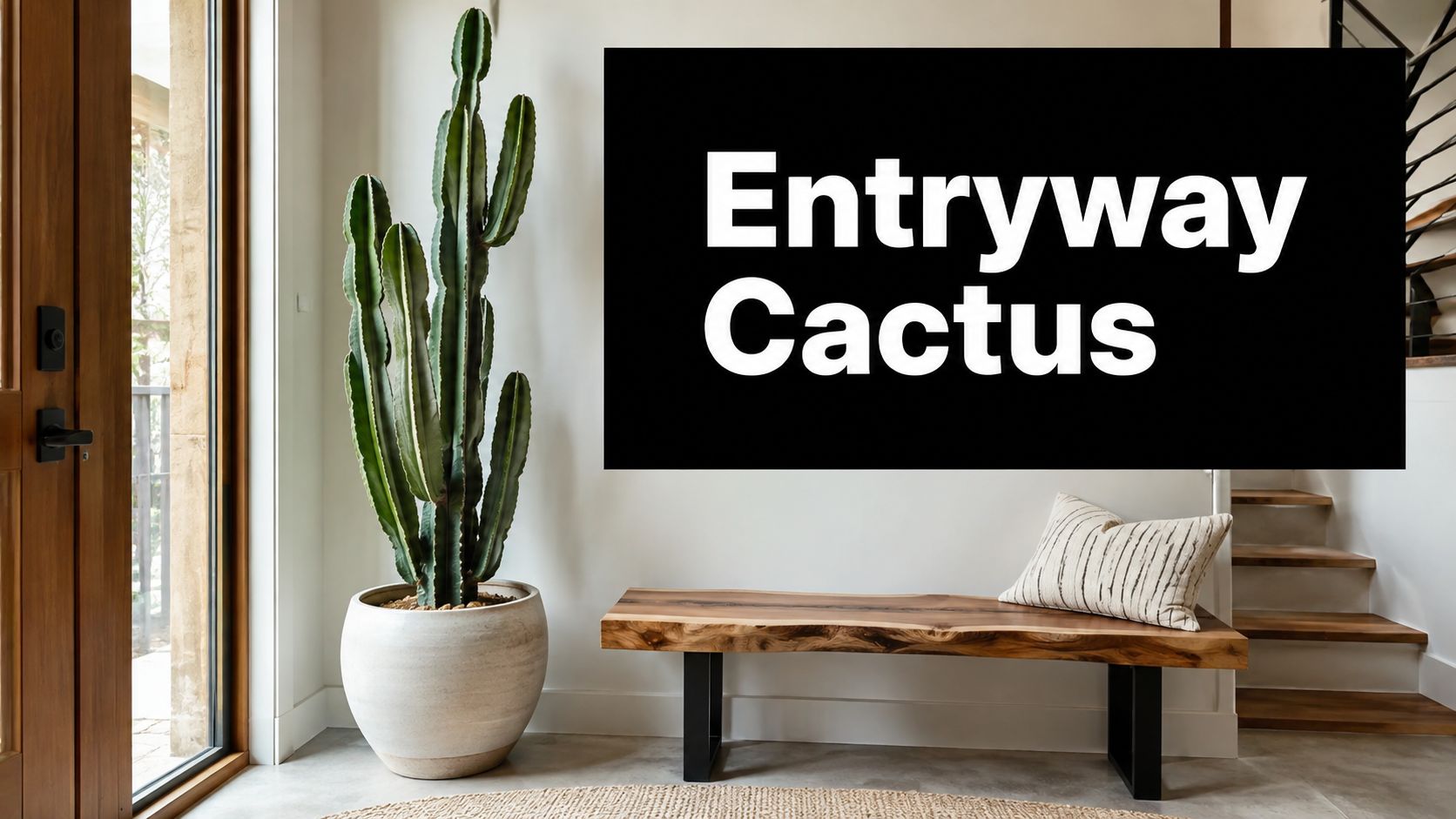

A large cactus isn't automatically a good entryway cactus. The popular advice, “choose the tallest sculptural plant you can find,” ignores the conditions that decide whether the specimen thrives or creates a daily obstacle. A dramatic cactus in the wrong foyer can stretch toward weak light, obstruct a door, snag clothing, or become a hazard for pets and children.
The best large cactus for an entryway is the largest specimen your space can safely support, not the largest plant available. Start with direct sun, doorway clearance, container footprint, household traffic, and delivery access. Then choose the species and mature form that fit those limits.
Why Most Entryway Cactus Advice Fails Homeowners
Most entryway recommendations begin with appearance. That approach works for a photograph, but it fails in a real home because a cactus responds to light, airflow, temperature, and physical contact, not to the room's style.
A saguaro demonstrates the problem. The National Park Service identifies it as the largest cactus in the United States, with mature plants reaching 40 to 50 feet and some specimens weighing 2 to 6 tons. Its growth is famously slow, taking about 10 years to reach just 1 inch, and it may not be considered an adult until roughly 125 years old. A dramatic saguaro display therefore depends on acquiring an already mature specimen, not waiting for a young plant to become an architectural focal point. The National Park Service explains saguaro size and growth.
That same scale makes a true saguaro a poor default for most indoor vestibules. A tall plant needs enough ceiling clearance, stable placement, and room for people to pass without brushing the trunk or arms. A narrow Victorian hallway and a double-height foyer may both look attractive with a columnar cactus, but they need completely different forms and containers.
Light is the first failure point
“Bright indirect light” is too vague for a large desert plant. Independent indoor-growing guidance puts general desert-cactus needs at about 4 to 6 hours of direct sun per day, with healthy growth commonly requiring roughly 5,000 to 15,000 lux or more for extended periods. A south-facing or strong west-facing entryway is the strongest indoor fit. Review the cactus light guidance before choosing a plant.
A north-facing vestibule may look bright to your eyes while supplying far less usable light to a sun-loving cactus. If you force a high-light species into that corner, it can become elongated and weak rather than compact and architectural.
Clearance and safety matter as much as style
The plant must stay outside the door swing, delivery route, handrail zone, and normal walking line. Spines near a door handle are a poor design decision, especially in a home with toddlers, dogs, or cats. Large agaves deserve the same caution because rigid leaf tips can be hazardous in tight corridors, even when the plant isn't technically a cactus.
Practical rule: If someone has to turn sideways to pass the pot, the specimen is too large for that location.
Five Practical Criteria for Choosing an Entryway Cactus
A mature cactus is a furniture-scale purchase, not a decorative accent. Measure the entryway before shopping, then judge each plant by light, growth, container stability, household risk, and the work required to maintain it.

1. Verify usable light
Use a light meter instead of judging the room by eye. Desert cacti generally need 4 to 6 hours of direct sun daily, and sustained healthy growth commonly calls for about 5,000 to 15,000 lux or more. The indoor cactus light guide gives the relevant exposure benchmarks.
A south- or strong west-facing glass entry can support a demanding columnar specimen. Reflected daylight in a foyer may be inadequate for the dense, upright growth expected from a desert statement plant. If the light falls short, choose a more tolerant cactus-adjacent plant or add suitable grow lighting.
2. Check mature height and working clearance
Measure the ceiling, door swing, delivery route, and usable walking path. Current height is a poor guide for a young plant. Allow room above the pot and around the eventual trunk or arm spread, especially if the specimen will be delivered in a rigid crate.
Double doors can accommodate a large vertical accent more easily than a single narrow entrance. Keep the plant clear of coats, parcels, handrails, and door hardware. A cactus that forces visitors to turn sideways is wrongly sized for the location.
3. Specify the container and protect the floor
The vessel must resist tipping and match the plant's root mass. For columnar cacti and trailing succulents, a desert-style planter should be at least 40 to 50 centimetres in diameter and 35 to 40 centimetres tall. Use this large desert planter benchmark when comparing vessels.
Choose functional drainage, a catch tray, and a base that will not scratch delicate flooring. Confirm the finished container weight before ordering. A mature cactus in a heavy ceramic or stone vessel may require two people, a furniture dolly, or a fixed position near the entrance.
4. Assess household risk
Count children, pets, and regular visitors when selecting the form. Dense spines make some specimens unsuitable for busy family entrances. Euphorbias bring a separate hazard because their sap can irritate skin and eyes. Use a smoother plant behind a barrier or furniture when safety takes priority over scale.
5. Plan access for care and delivery
You must reach the soil, rotate the plant, remove dust, and eventually repot it. Leave enough room to water without dragging a heavy vessel across the floor. Check doorway width, stair turns, elevator access, and the carrier's ability to place a mature specimen safely.
A narrow hall needs a compact upright form. A spacious foyer can accommodate a wider pot and a dolly. Order only after confirming the seller's packaging, delivery method, and responsibility for damage in transit.
Top Large Cactus Species Compared for Entryways
A dramatic cactus can fail at the front door. Light below the plant's threshold, a pot that blocks the opening, exposed spines, or a delivery crate that cannot clear the hallway matters more than the listing photo. Compare mature dimensions and handling demands before choosing a species.
Large Entryway Cactus Species Comparison
| Species | Mature Indoor Height | Min. Light (Foot-Candles) | Safety Profile | Growth Rate | Best Entryway Type |
|---|---|---|---|---|---|
| Saguaro | 40 to 50 feet outdoors at maturity, not practical for most interiors | Direct sun required | Strong spines and substantial scale concerns | Extremely slow | Large, sun-filled desert foyer or outdoor entrance |
| Peruvian Apple Cactus | About 6 to 12 feet indoors with strong light and pruning | High direct light | Spines require a clear traffic buffer | Faster than saguaro | Spacious south-facing foyer |
| San Pedro | About 4 to 8 feet indoors, depending on age and conditions | Intense light | Spines and tall growth require control | Relatively fast | Bright indoor threshold or patio |
| Euphorbia trigona | About 4 to 8 feet indoors | Bright light | Irritating sap and spine-like structures | Moderate | Bright foyer with controlled access |
| Euphorbia ammak | About 5 to 10 feet indoors | Bright light | Irritating sap and sharp structure | Moderate | Spacious modern entry |
| Mexican Fence Post | About 4 to 8 feet indoors | Direct sun preferred | Spines and narrow-path risk | Slow to moderate | Bright outdoor or enclosed patio entry |
| Golden Barrel Cactus | About 2 to 3 feet tall and 2 to 4 feet wide over 15 to 25 years | Bright light | Dense spines, compact footprint | Slow | Controlled display zone |
| Agave and Aloe forms | Depends on species, often 2 to 6 feet indoors | Bright light to direct sun | Leaf tips can be hazardous | Depends on species | Wide patio or protected foyer |
These indoor height ranges are planning benchmarks, not promises. A columnar cactus kept in weak light will produce poor growth and may become unstable, while a mature outdoor specimen may be impossible to move through a standard entry. Confirm the seller's actual height, width, pot dimensions, and current container weight.
The Peruvian Apple Cactus is my preferred vertical alternative when a client wants architectural height without waiting for a saguaro-scale plant. Its columnar outline suits a clean foyer, but strong light and a clear buffer from coats, bags, and passing shoulders are required. Review this large cactus types guide from The Cactus Outlet before comparing columnar forms and their mature scale.
San Pedro provides a similar upright profile and develops faster than a saguaro. That speed can become a liability in a small entrance. Choose it only where the ceiling, doorway clearance, and route to a bright window can accommodate future growth.
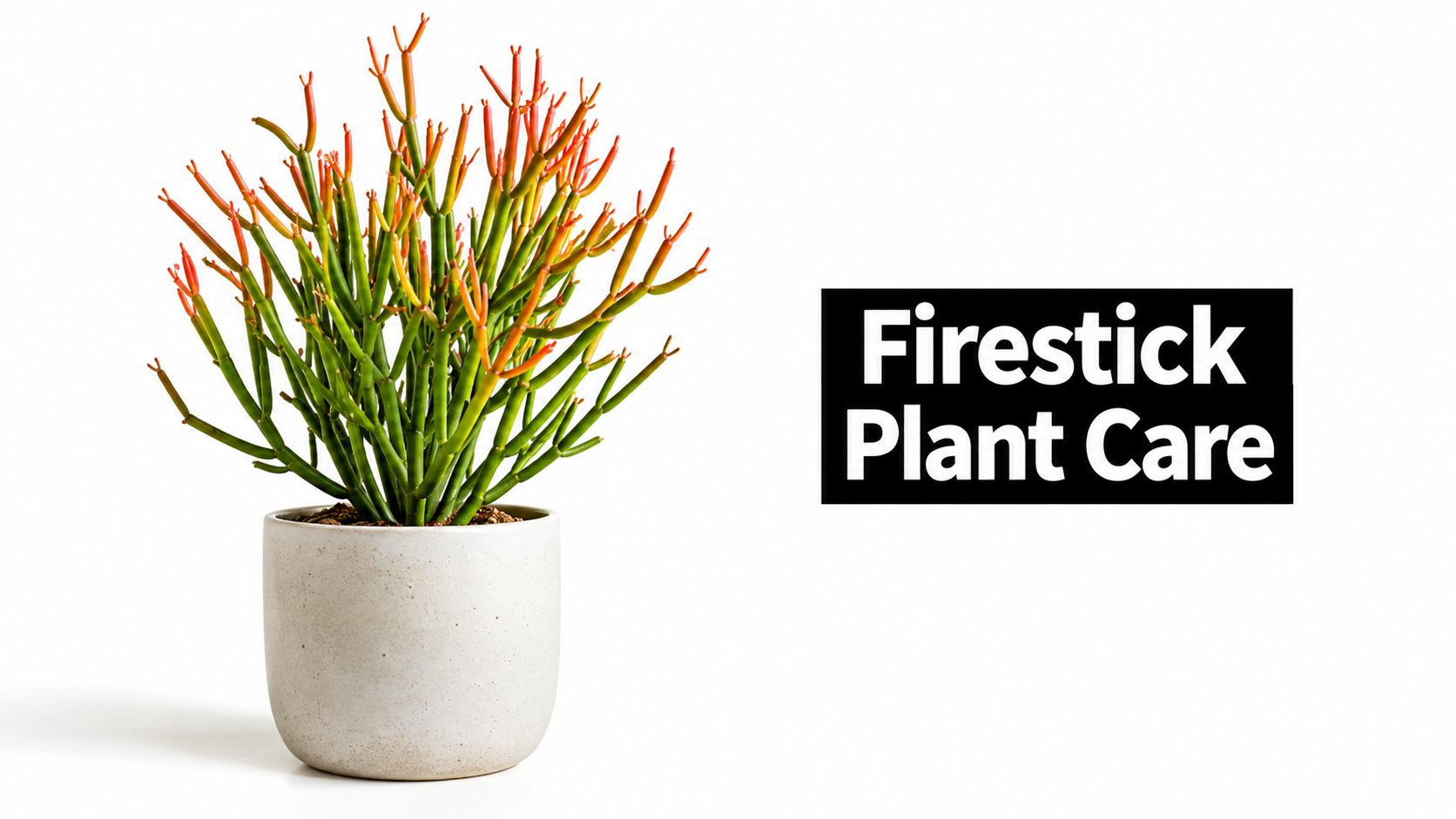
Euphorbia trigona and Euphorbia ammak provide branching architectural shapes, but they are not true cacti. Their irritating sap makes them poor choices for homes where children or pets can reach the plant. Place them behind a fixed barrier, or select a safer specimen with a less hazardous form.
The Mexican Fence Post suits a sunny patio, courtyard entrance, or enclosed sunroom. Its narrow column fits tighter footprints than a spreading cactus, yet the spines still rule out placement beside a narrow passage. Keep the walking line and door swing completely clear.
For compact displays, the golden barrel cactus offers the most useful size benchmark. Guidance for indoor placement describes a mature form of about 2 to 3 feet tall and 2 to 4 feet wide over 15 to 25 years, with a symmetrical habit and tolerance for low humidity and infrequent watering. See the golden barrel guidance for indoor footprint considerations. Its dense spines demand a deliberate display position, especially near children, pets, and delivery traffic.
A cactus also needs a practical arrival plan. Mature specimens may require a furniture dolly and two-person handling, and a heavy ceramic or stone pot should be positioned before the plant arrives. For a styled console or shelf, small pieces such as this cactus vase decor from Critelli can repeat the form without adding another hazardous floor plant. Keep all accessories outside the plant's clearance zone.
Matching a Cactus to Your Entryway Layout and Light
Start with the room, not the plant listing. A cactus that works in a glass-walled foyer may fail in a narrow vestibule, while a compact barrel can look intentional in a smaller entrance without forcing people around it.

Grand foyers with strong sun
A skylight, south-facing window, or strong west-facing glass gives you the widest selection. Use a tall columnar cactus, a saguaro alternative, or a branching architectural euphorbia if the room has enough ceiling height and the plant can sit away from the walking line.
A mature specimen earns its cost. The plant becomes a vertical anchor rather than a decorative object squeezed beside the door. A substantial vessel also looks proportionate in a double-height room, provided the floor and delivery route can support it.
Narrow vestibules with inconsistent light
Be more conservative. A tight entrance needs a compact footprint, predictable shape, and low contact risk. A golden barrel can work in a controlled display position, but don't place it where coats, bags, or children will brush against the spines.
If the vestibule lacks direct sun, use a supplemental grow light designed for indoor plants rather than pretending indirect light meets a desert cactus's needs. Mirrors can distribute visual brightness, but they don't replace usable light.
Covered porches and enclosed patios
A covered porch often offers stronger exposure than an indoor foyer but can introduce temperature swings and rain. Select a container with excellent drainage, and check local cold conditions before leaving a plant outdoors.
Use the USDA hardiness zone lookup guidance to check the climate before buying for an exposed entry. Prickly pear is listed for USDA Zones 8 to 11, with best performance in Zones 9 to 11 and cold injury risk below about −5°C. Check the prickly pear hardiness reference. Some cold-hardy cactus species can handle USDA Zones 4 to 8 when planted in sharply draining soil and kept dry during dormancy. Review the cold-tolerance guidance for drainage and winter dryness.
Use this three-step assessment:
- Measure light: Record direct sun and identify whether the plant will receive it consistently.
- Measure space: Check ceiling height, pot diameter, door swing, and the clear walking route.
- Match species: Choose the most architectural plant that meets both the light and safety limits.
For room-specific placement ideas, use The Cactus Outlet's guide to the best place for a cactus in the house.
Care and Acclimation for Large Entryway Specimens
A shipped cactus needs a controlled landing, especially when it arrives after spending time in darkness or under changing temperatures. Don't move it straight from a box into the strongest available sun. Set it in a bright, protected position and increase exposure gradually while inspecting for transit damage.
Withhold watering until the plant has settled and the growing medium is dry. The entryway's drafts, door openings, humidity, and light level should determine the next watering decision, not a fixed calendar. A plant near a frequently used exterior door may experience colder air and changing evaporation, while a humid interior can keep the soil wet longer.
Build the container correctly
Use a gritty, fast-draining mix with substantial inorganic material, and never compromise on drainage holes. Place the pot on a catch tray that protects the floor without sealing the drainage outlet.
Water slowly with a long-spout can, then allow excess water to leave the container fully. If the pot is too heavy to move, water carefully in place and check the tray afterward. A moisture meter can help, but the soil and plant condition still deserve the final judgment.

Manage rotation and seasonal change
Rotate the plant periodically so one side doesn't lean toward the window. Clean dust gently with a soft brush, and keep the plant away from the direct door swing and cold drafts.
Reduce watering during the darker, cooler part of the year. Inspect joints, folds, and sheltered areas for mealybugs, especially where dust and limited airflow collect around an entryway. Treat maintenance as part of the placement decision. If you can't reach the soil or inspect the plant without moving furniture, the location isn't operationally sound.
A low-maintenance cactus still needs the right light. Low water cannot compensate for a dark foyer.
Buying and Shipping Large Cacti Online
Buying a mature cactus online requires more planning than ordering a small tabletop plant. Ask whether the specimen ships potted or bare-root, how the nursery protects the trunk and arms, and whether the exact plant can be photographed before dispatch. Mature plants have individual scars, curves, and proportions, so a listing image may not represent the specimen you'll receive.
Prepare the route before delivery day. Clear the path from the doorstep to the final placement, remove fragile furniture, and arrange a plant caddy or dolly for a heavy container. Don't assume two people can safely carry an awkward, spined plant through a narrow doorway.
Inspect before placing
Open the shipment promptly and photograph the packaging and plant before discarding materials. Look for broken stems, crushed growing points, loose roots, and pot damage. Cosmetic marks on a mature specimen aren't automatically a serious problem, but structural damage requires documentation and prompt communication with the seller.
Oversized delivery may require more coordination than a standard parcel. Confirm access limitations, placement expectations, and the seller's process for transit issues before purchase. A specialist nursery should explain how the plant is packed and what acclimation it needs after arrival.
Use The Cactus Outlet's guide to buying a large cactus online when comparing listings, plant descriptions, and preparation requirements. The Cactus Outlet sells large cacti alongside agaves, aloes, euphorbias, and other succulents, so buyers can compare a true cactus with an architectural alternative before committing to the entryway.
Final Recommendations and Next Steps
For a bright, spacious foyer, choose a mature Peruvian Apple Cactus or another tall columnar form. It delivers the vertical impact most homeowners want without making a true saguaro the default solution. For a compact entry with controlled access, choose a golden barrel cactus. For a household with children or pets, prioritize a smooth, compact, low-contact alternative and keep euphorbias and sharply tipped agaves out of reach.
Before buying, confirm three filters:
- Light: Can the placement provide the direct exposure the species needs?
- Clearance: Will the pot stay outside the door swing and walking route?
- Safety: Can children, pets, coats, and packages pass without contacting spines or sap?
Then check the pot footprint, drainage, delivery access, and a safe acclimation position. Send The Cactus Outlet's plant specialists photos and dimensions of your entryway if you're comparing mature specimens and need a more precise recommendation.
The Cactus Outlet offers large cacti, agaves, aloes, euphorbias, and succulents for online shoppers planning premium entryway, patio, and landscaping displays. Visit The Cactus Outlet with your light conditions, measurements, and delivery constraints ready, then choose a specimen that fits the space rather than forcing the space to fit the plant.