
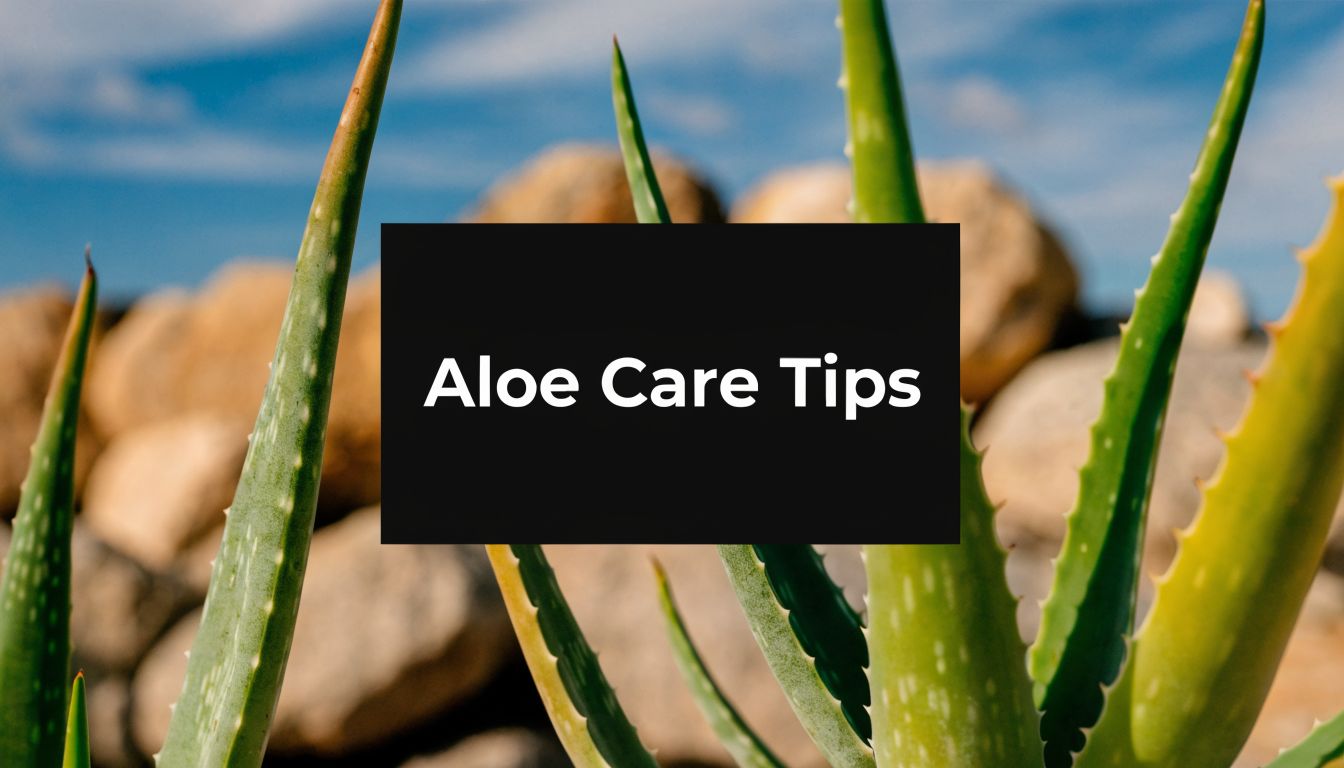

Most aloe advice starts with the same bad shortcut: treat every aloe like Aloe vera, put it in a sunny window, water it rarely, and expect success.
That’s exactly where many growers get into trouble.
“Aloe” is a whole plant group. Aloe vera is just one member of it. Some aloes stay neat and compact in a pot. Others become bold outdoor specimens with thicker leaves, sharper teeth, or very different tolerances for heat, cold, and soil texture. If you care for them all the same way, some will coast along, some will sulk, and some will rot.
For gardeners, collectors, and horticulturalists, the useful question isn’t “How do I care for aloe?” It’s “Which aloe do I have, and what does that particular plant want?” That shift matters. A reported rise in cultivation failures linked to misidentified succulents shows why species-level care makes a real difference.
More Than Just a Burn Plant Understanding the Aloe Family
When people say “aloe,” they usually mean the familiar kitchen-counter plant with soothing gel inside the leaves. But aloe and aloe vera aren’t identical terms. One is a broad family group, the other is a specific plant inside that group.
That matters because aloes do more than soothe minor skin irritation. They also serve as sculptural houseplants, drought-tolerant garden plants, and collector plants with wildly different forms. Some look like tight rosettes. Others branch into shrubby clumps. Some leaves are soft green, while others carry a bluish cast or strong marginal teeth.

Aloes also carry a long human history. Aloe vera’s documented history spans at least 5,000 years, with early evidence on Sumerian clay tablets from about 2200 to 2100 B.C. The Egyptian Papyrus Ebers around 1550 B.C. recorded twelve formulas for internal and external ailments, and the U.S. Pharmacopoeia officially recognized aloe vera in 1820 according to this history of aloe vera.
Aloe has been part medicine cabinet, part garden plant, and part trade crop for a very long time.
Why new growers get confused
The confusion usually starts at the garden center. Tags may say “aloe,” even when the plant is not Aloe vera. A young Aloe ferox, Aloe aristata, or another common species can resemble aloe vera enough to fool a beginner.
That’s why broad advice often feels inconsistent. One article says full sun. Another says bright indirect light. One grower swears aloe likes neglect. Another says it burns in afternoon exposure. They may all be talking about different plants.
A better way to think about it
Treat “aloe” the way you’d treat “rose” or “oak.” It names a larger group, not one single plant. Once you start noticing leaf thickness, spotting, teeth, growth habit, and mature size, aloe care becomes much easier and much more logical.
The Aloe Genus vs The Aloe Vera Species
Aloe is the family name in everyday conversation; Aloe vera is one particular member of that family.
A nursery analogy helps. If someone says “dog,” you don’t automatically picture only a Golden Retriever. The word covers a whole group. In the same way, when someone says “aloe,” they’re naming a genus with many species, not just the familiar medicinal one.

What botanically separates the two
The genus Aloe includes many distinct succulents that share some family traits. Most form fleshy leaves arranged in rosettes, store water, and prefer excellent drainage. But beyond that shared framework, they can differ a lot in size, texture, and growth habit.
Aloe vera, also called Aloe barbadensis miller, is one specific species. It became famous because its leaf gel has been widely associated with topical use, especially for minor burns and irritated skin. That fame has been so strong that many people now use “aloe” and “aloe vera” as if they mean the same thing.
They don’t.
Key takeaway: All Aloe vera is a type of aloe, but not all aloe is Aloe vera.
Why Aloe vera became the household name
Aloe vera’s popularity comes from a combination of practical traits. It grows well in containers, has thick leaves with accessible inner gel, and has a long history of medicinal use. That made it useful in kitchens, courtyards, and home gardens long before modern garden centers turned it into a standard houseplant.
Its native background also helps explain its behavior. Aloe vera originated in dry African regions, especially the Arabian Peninsula and Socotra, and later spread widely through trade and cultivation according to this overview of aloe vera history and distribution.
Why this distinction matters in real life
If you buy a plant labeled only “aloe,” you can’t safely assume it will behave exactly like Aloe vera. One aloe may stay manageable in a windowsill pot. Another may want stronger sun, more room, and a different soil texture. A garden designer choosing a bold specimen and a parent wanting a small kitchen aloe are not shopping for the same plant, even though both are shopping for “an aloe.”
That’s the root of good care. Correct name first. Correct care second.
Meet the Family Popular Aloe Species and How to ID Them
Nursery benches are full of plants tagged “aloe,” and that single word hides a lot of difference. One plant may stay happy in a bright kitchen pot for years. Another will outgrow that pot quickly, ask for stronger sun, and resent the extra water that Aloe vera often tolerates.
That is why identification matters before care. The name on the tag is your starting point, but the plant’s shape usually gives the clearer answer.
Five aloe types you’re likely to meet
Aloe vera
This is the familiar medicinal species, but it is only one member of a large genus. It usually grows as a stemless or short-stemmed rosette with thick, smooth-looking leaves in pale green to gray-green. The teeth along the leaf edge are present, yet fairly modest. Compared with many other aloes, it has a softer, plumper look, almost like a storage jar built to hold water.
For growers, that softer build matters. Aloe vera adapts well to containers, accepts bright indirect light better than some tougher species, and is usually the easiest choice if you want a practical houseplant rather than a dramatic outdoor specimen.
Aloe ferox
Aloe ferox looks built for harsher exposure. The leaves are broader, stiffer, and more heavily armed, and young plants may show spines on the leaf surfaces as well as the margins. As it matures, it becomes much larger and more commanding than Aloe vera.
In cultivation, this species usually wants more sun, more root room, and less fuss. If Aloe vera behaves like a reliable patio pot, Aloe ferox behaves more like a structural dry-garden anchor.
Aloe arborescens
This is the branching one many beginners do not expect. Instead of holding one neat rosette near the soil, it forms stems that divide and carry rosettes at their tips. Over time it develops into a shrub-like mass.
That growth habit changes how you use it. Aloe arborescens is rarely the right pick for a windowsill, but it shines where you want height, repeated form, and strong seasonal color from its flowers. It is also a better fit for larger planting areas and low-water landscape designs than for indoor shelf life.
Aloe aristata
Lace aloe stays much smaller and usually looks more decorative up close. The leaves are narrow, often dotted with white spots, edged with fine teeth, and tipped with a little bristle. Many new growers buy it assuming it will behave exactly like Aloe vera because it is compact and approachable.
It is compact, but it is not the same plant in practice. Its denser rosette and finer leaves can make overwatering show up faster, especially in low light. In a small pot, that difference matters.
Aloe polyphylla
Spiral aloe is the one people stop and stare at. The leaves arrange themselves in a precise spiral, clockwise or counterclockwise, and the symmetry looks engineered. It is one of the most recognizable aloes in cultivation.
It is also one of the least forgiving. Gardeners who succeed with Aloe vera often struggle with Aloe polyphylla because the conditions are different. This species prefers cooler roots, careful drainage, and a narrower margin for error.
Quick visual checks that actually help
When a tag says only “aloe,” start with structure before color. Color shifts with light and stress. Structure stays more reliable, like recognizing a dog breed by body shape rather than coat shade.
Look for these clues:
- Growth habit: one rosette, many offsets, or branching stems
- Leaf texture: smooth, spotted, rough, or heavily toothed
- Leaf posture: upright and cupped, wide and spreading, or stiff and rigid
- Leaf thickness: plump and gel-rich, or firmer and more armored
- Expected size: small pot plant, clumping mound, or large specimen for open ground
One more practical check helps. If the plant looks sharply armored, holds itself rigidly, and seems built for exposure, treat it less like Aloe vera and more like a sun-loving xeric succulent.
Common Aloe Species Comparison
| Species Name | Key Appearance | Typical Size | Ideal Use | Care Difficulty |
|---|---|---|---|---|
| Aloe vera | Thick pale green rosette, modest teeth | Small to medium | Indoor pots, kitchen garden, topical gel harvesting | Easy |
| Aloe ferox | Large rigid leaves, stronger teeth, bolder form | Medium to large | Xeriscapes, specimen planting | Moderate |
| Aloe arborescens | Branching stems with rosettes at tips | Medium to large | Hedges, dramatic dry gardens | Moderate |
| Aloe aristata | Compact spotted leaves, fine teeth, bristle tips | Small | Small pots, patios, gift plantings | Easy |
| Aloe polyphylla | Distinct spiral rosette | Medium | Collector plant, focal display | Challenging |
For a broader visual comparison of forms and varieties, this overview of different aloe plants is useful when you’re sorting through nursery stock.
Matching the plant to the job
Aloe vera is the practical all-rounder for many households. Aloe aristata suits smaller pots and growers who want an aloe look without much bulk. Aloe ferox and Aloe arborescens fit open, sunny sites where size and form are part of the point. Aloe polyphylla is for gardeners who enjoy precision and do not mind a narrower care window.
A good aloe choice starts with the job you need the plant to do. Countertop gel plant, compact potted collector piece, or bold outdoor specimen are three different roles. Once you see that, the aloe family makes much more sense.
From Ancient Remedy to Modern Decor Aloe Uses
Aloe has always lived two lives. One is practical. The other is visual.
For centuries, people kept Aloe vera close at hand because the leaves offered useful gel. Today, that same plant still sits on kitchen counters and patios for that reason. At the same time, the broader aloe family has become a design material. Garden designers use it for form. Collectors use it for texture. Decorators use it the way they’d use a ceramic sculpture that happens to grow.
Medicinal use belongs mainly to Aloe vera
Among aloe and aloe vera, the species typically referred to for topical use is Aloe vera. The inner gel is the part sought. The bitter yellow latex near the leaf rind is different, and it isn’t what you want on a casual home harvest.
Aloe’s skin-related reputation isn’t just folklore. Its anti-inflammatory activity is linked to over 75 bioactive compounds, including lupeol, salicylic acid, and plant steroids, while antioxidants such as vitamins A, C, and E support skincare use according to this summary of aloe vera compounds and mechanisms.
If you harvest a leaf for topical gel, keep the process simple:
- Choose an outer mature leaf close to the base.
- Cut it cleanly with a sterile blade.
- Stand the leaf upright briefly so the yellow latex drains away.
- Slice away the rind and use only the clear inner gel.
Use the clear gel, not the yellow sap. New growers often lump them together, but they behave very differently.
Aloes as living sculpture
This is the part most online guides miss. Many aloes are worth growing even if you never cut a single leaf.
A branching Aloe arborescens can anchor a dry border the way a shrub would. A mature Aloe ferox gives a planting bed a rugged, upright rhythm. A spiral aloe becomes a focal point instantly because its geometry catches the eye from across the garden. Indoors, smaller aloes work the same way. They add structure where softer foliage plants might look floppy or vague.
That’s why aloes fit so well into modern low-water landscape designs. They don’t just save water in the right setting. They also provide year-round form, which matters when flowers are seasonal but leaf architecture is always on display.
A practical divide
Use Aloe vera when you want an accessible household aloe with a long tradition of topical use. Choose other aloe species when your priority is shape, scale, flower display, or their ornamental value in an outdoor setting.
A good nursery helps you separate those goals before you buy. That alone prevents a lot of disappointment.
Thriving Aloes A Complete Care and Cultivation Guide
Aloes usually decline for a simple reason. Their leaves are built to store water, but their roots are built to dry out between soakings. Treat the roots like those of a moisture-loving houseplant, and trouble starts quickly.

If you keep one rule in mind, make it this one: aloes handle dryness better than stale, wet soil. That applies to Aloe vera, but it also applies to the broader aloe family. The difference is in degree. Some species tolerate a beginner’s uneven care quite well. Others punish small mistakes.
Light that matches the plant and the place
Indoors, most aloes need bright light to stay compact. A strong window, especially one with several hours of sun, usually works well. If the rosette starts stretching, leaning, or opening up like a loose hand instead of a tight star, the plant is asking for more light.
Outdoor light takes more judgment. A tag that says full sun is only a starting point. Coastal sun, high-desert sun, and hot afternoon sun in a paved courtyard are not the same experience for an aloe. Aloe vera often appreciates some protection in very hot inland settings, especially if it was raised in nursery shade. Aloe ferox and Aloe arborescens usually accept stronger exposure once established. A spiral aloe is less forgiving and often prefers bright conditions without punishing heat.
Move any aloe into stronger sun gradually. Sudden exposure can bleach or scorch the leaves, even on species that eventually handle bright conditions well.
Soil and pots that keep roots alive
Aloe roots want oxygen as much as water. That surprises new growers, because the leaves look so thick and durable. But below the soil line, aloe roots behave more like a plant that wants a quick drink and then open air around the root zone.
Use a fast-draining mix with a gritty feel. If the mix stays dense and wet for days, it is wrong for an aloe, even if the plant looks fine at first. Terracotta helps because it sheds moisture faster than plastic. A pot with a drainage hole is required. Decorative cachepots are fine only if the growing pot can come out and drain freely.
This is one of the biggest practical differences between Aloe vera and many common houseplants. Aloe vera is often sold beside tropical foliage plants, so beginners water it by the same routine. That is like feeding a desert tortoise as if it were a goldfish. The setting looks tidy, but the care does not match the plant.
Useful check: Push a finger well below the surface or use a wooden skewer. If the lower root zone still feels cool and damp, wait.
Watering without guesswork
Aloes prefer a thorough watering followed by a real drying period. Water until excess runs from the bottom, then stop. Do not return the next day with a small top-up just because the surface looks dry.
Read both the plant and the soil together:
- Firm, full leaves with dry soil: normal
- Soft lower leaves with wet soil: often a root problem
- A stretched plant with thin growth: usually a light problem first
- A brown or mushy base: often rot, act quickly
Beginners often confuse thirst with root failure because both can show up as limp leaves. The difference is the soil. Dry soil and slightly thinner leaves usually point to a plant ready for water. Wet soil and a collapsing center point to trouble below the surface. If you need a step-by-step diagnosis, this guide to Aloe vera root rot symptoms and recovery walks through the warning signs clearly.
A quick visual walkthrough can also help you see what healthy aloe care looks like in practice:
Temperature, pests, and the setbacks growers see most
Cold alone is not always the actual problem. Cold plus wet soil is the combination that damages many aloes. In winter, especially in containers, reduce watering and protect plants from soaking rain if frost is possible.
Check crowded leaf bases for mealybugs and scale. These pests like tight spaces where air movement is poor and water lingers after irrigation. A small colony is manageable. A hidden infestation inside a dense clump is harder to clean up.
Air circulation helps too. So does restraint. Overfeeding and overwatering produce soft growth that attracts trouble.
Species differences that actually change how you grow them
This is the part many aloe guides blur together. The basic rules stay similar across the genus, but the way you apply them should change with the species.
Aloe vera is a good choice for bright pot culture and routine household care. It stays manageable, adapts well to containers, and recovers from minor neglect better than many specialty species.
Aloe ferox wants more room and usually performs better as a long-term outdoor specimen in a warm climate. It develops into a much stronger architectural plant than Aloe vera and generally handles harsher sun once settled.
Aloe aristata, often called lace aloe, stays smaller and is easier to fit on a bright windowsill or patio table. It also tends to be more forgiving in mixed container displays, though it still needs drainage and restraint with water.
Aloe polyphylla, the spiral aloe, is where generic advice breaks down. It is admired for form, but it is not the aloe I suggest for a first purchase. Its care is more exact, especially around drainage, temperature, and siting.
So the key question is not just, "How do I grow aloe?" It is, "Which aloe am I growing, and what job do I want it to do?" A countertop Aloe vera, a patio clump of Aloe arborescens, and a specimen spiral aloe may all belong to the same genus, but they should not be treated as copies of the same plant.
Expanding Your Collection Propagation and Potting
Buying one aloe often leads to a second, then a third. The good news is that many aloes do part of the work for you by making offsets, usually called pups.
Pups are the practical way to multiply aloes because they are already miniature plants. They have a center growing point, and many already have roots of their own. That matters. A pup behaves like a young transplant. A detached leaf usually behaves like a detached leaf.
Propagating pups
Wait until the pup is large enough to handle without crushing it. I like to see a small but clear rosette and, if possible, a few roots. Then tip the plant from its pot or brush soil away from the base so you can see how the offset is attached.
Use a clean knife only if the pup will not separate with gentle pressure. Keep the cut small. You are trying to free a whole young plant, not slice off a piece of stem tissue and hope for the best. After separation, let the wound dry for a short time, then pot the pup into dry, gritty mix.
The aftercare is simple:
- Separate the offset with as many roots as possible
- Let the cut surface dry and callus
- Pot it into dry mix
- Wait before the first watering
- Keep it in bright shade until new growth starts
Species matter here. Aloe vera usually pups freely, so it is one of the easiest aloes for a home grower to divide and share. Lace aloe and many clumping species can also make propagation straightforward. Larger solitary species, or slower specialty types, may give you fewer chances. That is one reason a plant collector can divide Aloe vera often but may wait a long time for another species to produce a removable offset.
A pup is a starter plant. A leaf is usually just stored moisture.
Why leaf cuttings disappoint people
New succulent growers often assume aloe will propagate like jade or echeveria. Most aloe species do not. A leaf may sit for weeks, then collapse or rot because it lacks the tissue arrangement needed to form a reliable new plant.
That surprises people because aloe leaves look thick and capable. Thick does not always mean regenerative. A potato has buds built for regrowth. A cut aloe leaf usually does not.

Potting a new aloe the right way
Use a pot only slightly wider than the root ball. A large pot looks generous, but for aloe it often acts like a wet sponge around a small root system. Terracotta helps because the container itself dries faster than plastic.
Set the aloe at the same depth it grew before. Keep the crown above the mix. If you bury the base, water lingers where the leaves and stem meet, and that is where rot often begins.
When you are choosing a plant at the nursery, check a few basics:
- Leaf firmness: Leaves should feel solid, not soft and waterlogged.
- Base condition: Skip plants with dark, mushy tissue near the crown.
- Root hold: A little movement is normal, but the plant should not wobble heavily in the pot.
- Pest check: Look between tight leaves for white cottony clusters or small bumps.
One more species difference is worth knowing. Aloe vera settles into ordinary container life better than many collectors' aloes, so repotting mistakes are easier to recover from. Larger species typically grown outdoors need more root room and become awkward in undersized pots. Small decorative species can stay in shallow containers longer, but they still need sharp drainage. If you want to compare mixes before repotting, this guide to choosing the best potting soil for aloe explains what to look for.
The Cactus Outlet offers aloe plants among other desert-adapted succulents for containers and garden planting.
Aloe Safety and Frequently Asked Questions
Safety deserves plain language, because aloe advice online often treats the whole genus as if every plant were interchangeable with Aloe vera. They are not. A burn-soothing kitchen plant, a compact spotted windowsill aloe, and a large outdoor aloe may all belong to the same genus, yet that does not make them equally useful or equally safe.
Can I eat aloe from my plant
Use caution. Topical Aloe vera gel is widely used, but oral use of unpurified aloe latex that contains aloin can cause cramping and diarrhea and has raised safety concerns, as summarized by the NCCIH aloe vera safety page.
The part that confuses new growers is simple once you see it. The clear inner gel sits in the center of the leaf. The yellow to bitter layer closer to the rind is latex. Cutting a leaf from a plant on your windowsill does not separate those parts for you. It mixes them unless you know exactly what you are doing.
Species ID matters here. Aloe vera is the species people usually mean in discussions of gel use. Other aloes are grown mainly for foliage pattern, shape, or flowers. Treat them as ornamental unless you have reliable identification and a reason to do otherwise.
Why are my aloe leaves turning brown or red
Color change is often a stress signal, not a disease by itself. Strong sun introduced too fast can bronze or redden the leaves, much like skin that has not adjusted to brighter conditions. That response is common in many decorative aloes and can be more noticeable in species with thinner leaves than Aloe vera.
Brown, soft tissue is different. That points more often to excess moisture, especially near the base. If the crown feels mushy, check the roots and potting mix before you water again.
Why is my aloe floppy
A floppy aloe is a bit like a tent with loose stakes. The leaves lose support either because the plant has used up its stored water, or because damaged roots can no longer supply the leaves properly.
Dry soil and thinner leaves usually point to thirst. Wet soil plus limp leaves usually points to root trouble. Aloe vera often recovers from mild underwatering faster than many smaller collector species, which can decline quickly after roots stay wet too long.
How do I encourage flowering
Light and maturity matter more than fertilizer. Many aloes need brighter conditions and a seasonal rhythm to bloom well, especially cooler nights in part of the year.
This is one of the biggest practical differences between Aloe vera and other popular species. Aloe vera grown indoors may stay handsome for years without flowering much. By contrast, many garden aloes are grown as much for their flower spikes as for their leaves, and they bloom more reliably outdoors with stronger sun and room to mature.
Is every aloe useful the same way as Aloe vera
No. The genus is broad, and the plants fill different roles in a garden or home.
Use Aloe vera if your goal is the familiar medicinal species and an easy container aloe. Choose other aloes if you want compact rosettes, bold leaf markings, winter flowers, or a larger architectural plant for a dry bed. That one distinction saves gardeners from a lot of poor plant choices and a lot of one-size-fits-all care advice.
The Cactus Outlet carries aloe plants among other desert-adapted succulents for container growing and outdoor planting.