
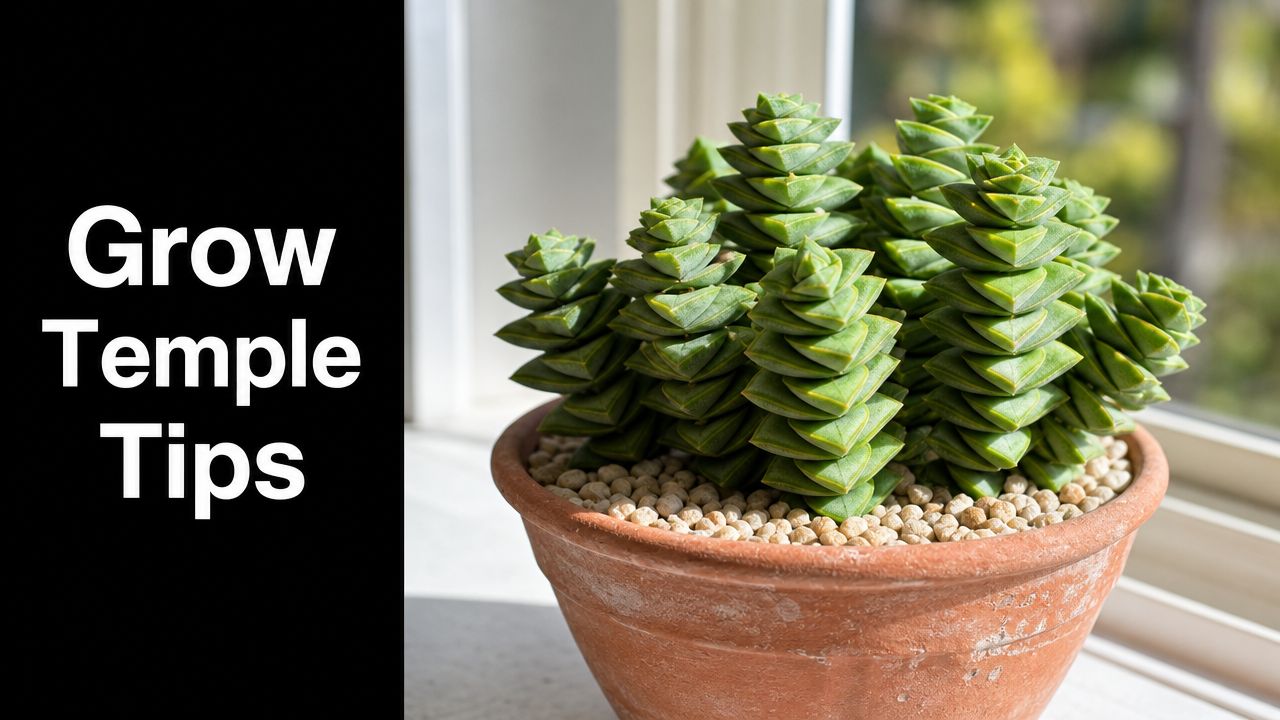

You spot the Buddha's Temple plant on a shelf and stop mid-scroll, or mid-step. It doesn't look grown so much as assembled, like someone stacked tiny green tiles into a square tower and somehow made it alive. The first reaction is usually the same. Awe, then hesitation.
Can I keep this thing looking like that?
That question matters because this isn't the kind of succulent people buy for generic greenery. They buy it for structure. They want the crisp, geometric silhouette. They want a plant that looks almost carved. What frustrates new owners is that many care guides only tell them how to keep it alive, not how to keep it beautiful.
The difference is light management.
A Buddha's Temple plant can survive in conditions that slowly ruin its form. It can stay alive while stretching, leaning, or opening up until that tight pagoda shape starts to blur. That's why this plant has a reputation for being fussy when the actual issue is simpler: people underestimate how much environment affects architecture.
Done right, it's not a mystery plant. It's a compact hybrid succulent with clear preferences, and once those are met, it becomes far more predictable than its rare appearance suggests. The trick is to grow it with intention, especially indoors where weak light and stale moisture do the most damage.
An Introduction to a Living Sculpture
A lot of prized succulents earn attention because of color. Buddha's Temple earns it through form.
Seen up close, the leaves stack so tightly that the plant looks engineered. Each layer sits above the last in a precise column, almost like a miniature pagoda or a folded accordion pressed into a square tower. That sculptural quality is what pulls collectors in, but it's also what makes care feel intimidating. If a plant's whole appeal is symmetry, every mistake shows.
New owners usually worry about the wrong thing first. They assume the challenge is complexity, as if this is one of those collector plants that demands constant intervention. In practice, the challenge is restraint. Too much water ruins it. Too little light loosens its form. Too much heat with stagnant air can start a decline from the base upward.
Practical rule: Treat Buddha's Temple like a display plant with strict preferences, not a forgiving windowsill succulent.
That sounds high-maintenance, but it isn't. It just means the plant rewards precision. Give it a fast-draining mix, stable light, and a pot that doesn't stay wet, and it tends to behave. Ignore those basics, and the stacked shape starts to unravel long before the plant dies.
What makes this plant so satisfying is that success is visible. You don't have to wait for dramatic growth to know you're doing it right. Tight internodes, firm leaves, upright posture, and clean stacking tell you the setup is working. That's part of the appeal. Buddha's Temple doesn't just grow. It reports back on your technique.
Identifying the Buddha's Temple Plant
Buddha's Temple is one of those succulents that people misidentify only until they've seen a real one. After that, the shape is hard to forget.

What the plant should look like
A true Buddha's Temple plant forms a compact square column of tightly layered leaves. The leaves are greyish-green to silvery green, and the stack should feel deliberate, almost architectural. Think of a pagoda made from fleshy leaf plates.
The overall impression should be dense, not airy. If the plant looks open, loose, or stretched between layers, the issue is usually growing conditions rather than identity. The leaves should appear pressed together in a way that gives the plant its signature temple-like profile.
A few quick identification cues help:
- Stacked leaves: The leaves sit in close, repeating layers rather than spreading outward like a rosette.
- Upright habit: It grows as a vertical column, not a trailing or mounding plant.
- Muted color: Expect a subdued grey-green tone rather than glossy, bright green growth.
- Architectural symmetry: Even small specimens usually look geometric.
For a broader look at how this plant fits among other collector favorites, this guide to different types of succulents and cacti is useful context.
Why it looks so unusual
This plant is unusual because it was created to be unusual. Crassula 'Buddha's Temple' is a documented hybrid succulent created by plant breeder Myron Kimnach in 1959. It is a cross between Crassula falcata and Crassula pyramidalis, engineered for its compact, architectural form, and it typically grows to about 15 cm (6 inches) tall, as noted in this horticultural listing for Crassula 'Buddha's Temple'.
That history explains a lot. You're not growing a random wild species with a broad natural range and many tolerated conditions. You're growing a selected ornamental hybrid valued for shape.
The more you understand it as a bred architectural plant, the more its care makes sense. Form isn't a bonus. Form is the whole point.
What buyers often mistake for “normal”
Many growers assume Buddha's Temple is supposed to sit still for long periods and then suddenly put on a little growth. That's part misconception, part poor setup. The plant is often called slow-growing, but that label can hide the actual issue. A plant can be alive and adding leaves while still losing compactness because the light isn't strong enough to preserve tight stacking.
So when you're identifying a healthy specimen, don't judge only by size. Judge by density, firmness, and symmetry.
Creating the Ideal Indoor Habitat
If you want a Buddha's Temple plant to keep its shape indoors, stop thinking in terms of “bright light” and start thinking in terms of shape-preserving light. That's the difference between a plant that survives and one that still looks collectible a year later.

Light that keeps the stack tight
The Royal Horticultural Society notes that Buddha's Temple thrives in temperatures between 18–24°C (65-75°F), is hardy in USDA zones 9a–11, and needs bright, filtered light to prevent sunburn while lower light can make it leggy, according to the RHS plant profile for Crassula 'Buddha's Temple'.
Indoors, “bright” often gets overstated. A room can feel sunny to you and still be too dim for this plant to hold its form. The practical strategy is simple:
- Best spot: A very bright window with strong ambient light and some gentle direct sun.
- What usually fails: A shelf far back from the window, even if the room seems bright.
- What to watch for: New growth that spaces out instead of stacking tightly, or a plant that starts leaning toward one side.
If you grow under glass or in a very bright window, rotate the pot occasionally so one face doesn't dominate. If summer heat intensifies, protect it from harsh midday exposure.
For growers building a more complete setup, this succulent plant care guide helps connect light, airflow, and watering into one routine.
A visual walkthrough can help if you're judging placement and setup in a real room.
Soil and container are not small details
Bad soil ruins more Buddha's Temple plants than bad intentions ever do. This plant wants oxygen around its roots. Heavy organic mixes stay wet too long, especially indoors where airflow is weaker and evaporation is slower.
Use a coarse succulent mix that drains fast and doesn't collapse into a dense mass after a few waterings. The pot matters just as much. A shallow terracotta pot works especially well because it sheds moisture faster and gives the plant a lower center of gravity.
Here's the setup that usually works best:
| Element | What works | What doesn't |
|---|---|---|
| Light | Very bright placement close to a window | Dim interior placement |
| Soil | Fast-draining gritty mix | Dense, peat-heavy soil |
| Pot | Shallow pot with drainage | Deep decorative cachepot with trapped moisture |
The misconception about growth rate
A lot of indoor growers think their plant is “naturally slow” when what they're really seeing is stalled structure. Under good conditions, Buddha's Temple can make visible progress while staying compact. What slows it down most is mediocre light paired with cautious overwatering.
That combination keeps the roots too damp and the top too weak. The plant doesn't crash quickly. It just stops looking sharp.
The Art of Watering and Feeding
“Water sparingly” is bad advice for Buddha's Temple because it's too vague to be useful. People hear it and do one of two things. They either keep the mix damp in tiny sips, which is the fastest path to rot, or they leave the plant dry so long that it starts to pucker and weaken.
This plant needs a soak-and-dry rhythm, not random restraint.
How to read the plant instead of the calendar
For optimal health, use the soak-and-dry method with a soil blend containing 50%–70% mineral grit such as pumice or perlite. Grower guidance also notes that bright light is ideal, but partial shade is wise when temperatures exceed 35°C (95°F) to prevent sunburn, as described by Mountain Crest Gardens in its Buddha's Temple care notes.
That matters because this succulent gives mixed signals compared with chunkier, more forgiving types. It doesn't always hold a huge reservoir of water the way some people expect. So instead of watering on a fixed schedule, look for signs.
Use this diagnostic approach:
- Slight wrinkling: The leaves may start to lose that firm, filled-out look. That's often your cue that the plant is ready.
- Firm, taut stack: Leave it alone. A full-looking plant in a cool room doesn't need a “maintenance sip.”
- Soft or yellowing lower tissue: Treat this as a warning sign. Wet roots, poor airflow, or a stale mix may already be involved.
- Mushy base: This is no longer a watering question. It's an emergency.
If you're unsure, check the potting mix and the plant together. Dry soil with a still-firm plant means you can usually wait. Wet soil with a stressed plant means waiting longer will only make it worse.
How to water without causing rot
When you water, water thoroughly. Wet the mix, let excess drain, and don't return to the pot with more water until the mix has dried fully. That dry-down period is part of the method, not an afterthought.
What doesn't work:
- Tiny splashes: They moisten the upper layer and encourage shallow, weak rooting.
- Frequent “just in case” watering: This keeps the root zone in the danger zone.
- Watering by habit: Weekend watering sounds tidy, but the plant doesn't care what day it is.
A simple routine is better:
- Check the mix well below the surface.
- Look at leaf firmness.
- Water thoroughly only when both the plant and mix suggest it's time.
- Let the pot drain completely.
Feeding without forcing growth
Buddha's Temple doesn't need aggressive feeding. In fact, pushing lush growth is usually the wrong goal because this plant is prized for tight form, not speed. A light hand works better than a strong fertilizer routine.
If you feed at all, keep it gentle and limited to active growth. Skip feeding a stressed, newly repotted, or overwatered plant. Nutrition won't fix a root problem.
Managing Growth Repotting and Propagation
Repotting Buddha's Temple isn't about giving it room to roam. It's about keeping a top-heavy plant upright in a container that dries properly.

Why shallow pots work better
According to Plant Lust's Buddha's Temple listing, mature plants can become top-heavy, typically reaching about 4–6 inches wide and 6–12 inches tall, and they have a shallow, underdeveloped root system. That's why a shallow pot gives better stability and faster drainage than a deep one.
This is one of the easiest trade-offs in succulent growing. A deep pot looks generous, but for this plant it's usually a liability. Extra depth holds moisture below the active root zone and increases the chance of a hidden wet pocket.
A safer repotting method
Repot when the mix has aged poorly, the plant is unstable, or the pot no longer supports the stem well. Handle it like a brittle ornament, not a rugged houseplant.
Use this sequence:
- Keep the mix dry first: A dry root ball is easier to remove cleanly.
- Support the stem gently: Hold the plant low, near the base, so you don't twist the stacked leaves.
- Clear old compacted mix: Remove loose old soil without aggressively tearing roots apart.
- Choose a shallow pot with drainage: Stability matters as much as space.
- Set the plant slightly firm, not buried deep: Don't smother the base.
- Wait before watering if roots were disturbed: Let damaged tissue settle first.
A Buddha's Temple plant that tips easily is telling you something. The container is wrong, the root system is shallow, or both.
Propagation takes patience and clean handling
Propagation is possible, but it isn't the kind of succulent that begs to be chopped casually. Offsets or healthy sections give the best chance of success if the plant produces them.
Good propagation habits matter more than speed:
- Use clean cuts: Ragged wounds invite rot.
- Let cut surfaces dry before planting: Freshly cut tissue placed straight into damp mix often fails.
- Start in a very open medium: You want air around the base while roots form.
- Go easy on water early: Moisture should support rooting, not saturate an unrooted piece.
If you want a deeper walkthrough for general technique, this guide on propagating succulents from cuttings covers the fundamentals well.
The biggest mistake in propagation is treating every succulent like jade or echeveria. Buddha's Temple is less forgiving. Cleanliness, airflow, and patience matter more here.
Troubleshooting Common Problems
When Buddha's Temple starts looking wrong, the shape usually tells the story before the color does. A good diagnosis comes from pattern, not panic.

Quick diagnosis table
| Symptom | Likely cause | What to do |
|---|---|---|
| Loose, stretched stacking | Insufficient light | Move it closer to stronger light and rotate for even growth |
| Leaning plant | One-sided light or unstable pot | Improve light angle and stabilize in a shallow pot |
| Yellowing or mushy lower leaves | Overwatering or poor drainage | Reduce watering and inspect the root zone and mix |
| Wrinkled leaves with a dry mix | Underwatering | Water thoroughly, then resume soak-and-dry |
| White fuzzy pests in crevices | Mealybugs | Isolate the plant and treat promptly |
| Scorched patches | Heat and harsh sun exposure | Shift to bright but filtered light during intense heat |
Problems that get mistaken for “slow growth”
Legginess isn't slow growth. It's distorted growth.
A lot of owners see spacing between leaves and think the plant is finally “taking off.” For Buddha's Temple, that's usually the opposite of what you want. The ideal growth is compact enough that new layers look stacked with intent. Once stretching happens, you can improve future growth, but the elongated section won't compress back into shape.
Rot versus thirst
These two get confused constantly because both can make the plant look tired.
Watch the texture:
- Thirst usually shows as wrinkling and a less full appearance while the tissue still feels structurally sound.
- Rot tends to show as softness, collapse, discoloration at the base, or a plant that seems unstable in the pot.
If rot is caught early, unpot the plant, remove compromised material, and let healthy tissue dry before resetting it into a fresher, much drier setup. If the center column has turned mushy, saving the whole specimen becomes much harder.
A wrinkled Buddha's Temple can often recover. A mushy one is already in a different category.
Pest pressure in tight leaf stacks
The same stacked form that makes this plant beautiful also creates hiding places. Mealybugs especially like tucked leaf joints where they stay out of sight.
Inspect the folds, not just the outer faces. A plant can look clean from above while harboring pests deep in the stack. Good airflow, regular checks, and prompt isolation make a big difference.
Styling and Acquiring Your Buddha's Temple
Buddha's Temple looks best when you don't crowd it. This isn't a filler plant for a mixed bowl where its geometry disappears among trailing stems and round rosettes. It works better as a solitary specimen where the silhouette gets breathing room.
How to style it well
A simple pot usually wins. Matte ceramic, terracotta, concrete-look finishes, and other restrained containers let the form do the work. Busy patterns fight with the leaf stack.
Placement matters just as much as the pot:
- Bright desk or shelf: Best when the plant sits near the light source, not as decor in the darker half of the room.
- Minimal grouping: Pair it with one or two simpler plants if you must, but avoid visual clutter.
- Eye-level display: The stacked leaf faces are easier to appreciate when the plant isn't viewed only from above.
This is one of those succulents that can make a small space feel curated without needing a large footprint.
What to look for when buying
A healthy Buddha's Temple plant should feel firm, compact, and balanced. The structure should look tight from top to bottom, not stretched open in the middle. Avoid specimens with obvious leaning, mush at the base, or signs of pest residue tucked in the leaf layers.
Before buying online or in person, check for:
- Compact form: The tighter the stack, the better the growing history.
- Clean leaf joints: No white fuzz, sticky residue, or hidden debris.
- Stable posture: Excess wobble can point to poor rooting or a badly chosen pot.
- No scarred burn patches on fresh growth: Minor cosmetic marks happen, but widespread damage suggests stress.
The best purchases are often the ones that look almost a little too neat to be real. With this plant, neat is exactly what you want.
If you're ready to add an architectural succulent to your collection, The Cactus Outlet is a strong place to shop. They specialize in cacti and succulents, offer detailed plant information, and focus on shipping healthy, well-packed specimens so collectors can buy with more confidence.