

You're probably doing what most buyers do at the start. You open a collection page, spot one strange sculptural plant that looks half cactus, half coral reef, then five minutes later you've got ten tabs open and no clear idea which Euphorbia fits your home, your budget, or your tolerance for plant drama.
That confusion makes sense. Euphorbias aren't a single look. Some are round and geometric, some grow into bold upright forms, and some look so unusual that online listings can feel more like collector catalogues than straightforward plant shopping. Add in questions about size, rooting, shipping, and sap safety, and a quick browse can turn into hesitation.
A good Euphorbia purchase starts with reading the listing the right way. Shape matters. Pot size matters. Rooting matters. Price tells you something, but not always what beginners assume it does. And with Euphorbia, safe handling matters just as much as care.
Welcome to the World of Euphorbias
Euphorbias pull people in because they don't look ordinary. A standard foliage plant blends into a room. A well-grown Euphorbia changes the whole feel of a shelf, patio, or entryway. It gives structure. It gives contrast. It gives you that rare plant look without always demanding rare-plant prices.
That's why the online market for Euphorbia plants for sale keeps attracting very different buyers. Collectors chase unusual forms. Interior decorators look for clean silhouettes. Exterior designers want drought-tolerant structure. Gift shoppers want something memorable that doesn't look generic. One genus can serve all of them, but only if the buyer understands what they're looking at.
Why shoppers hesitate
Most hesitation comes from three practical questions:
- Will it look like the photo when it arrives
- Is this a beginner plant or a collector plant
- Am I prepared to handle it safely
Those are the right questions. Euphorbias reward informed buying. They punish impulse buying less through difficulty than through mismatch. A tall columnar plant can overwhelm a small room. A tiny collectible can disappoint someone expecting a significant outdoor display. A crested form can be exactly right for one buyer and exactly wrong for someone who wanted a tidy, predictable grower.
Practical rule: Buy the growth habit first, then the species name, then the novelty factor.
What makes a better purchase
The strongest online buyers look for fit, not just rarity. They match the plant to light, space, handling comfort, and purpose. They also read listings with a nursery eye. They ask whether the plant is rooted, whether the form is stable, whether the photos show healthy tissue, and whether the seller explains enough for unpacking and aftercare.
That's where Euphorbia shopping gets easier. Once you understand the genus, the shapes, the online listing language, and the safety trade-offs, the whole category stops feeling mysterious and starts feeling enjoyable.
Decoding the Diverse Euphorbia Genus
Euphorbia is not a narrow plant group with a few lookalikes. It's one of the broadest and most commercially flexible genera a nursery can work with. The genus includes more than 2,000 species ranging from small annuals to large, long-lived perennials, which is one reason sellers can offer everything from compact houseplants to large architectural specimens, as noted in this Euphorbia growing guide.

Why this diversity matters to buyers
A large genus gives you a wider buying spectrum. That means more growth habits, more textures, and more ways to use the plant. Some buyers want a desk-sized oddity. Some want a sculptural floor specimen. Others need a plant that works in a dry garden bed where softer foliage would fail.
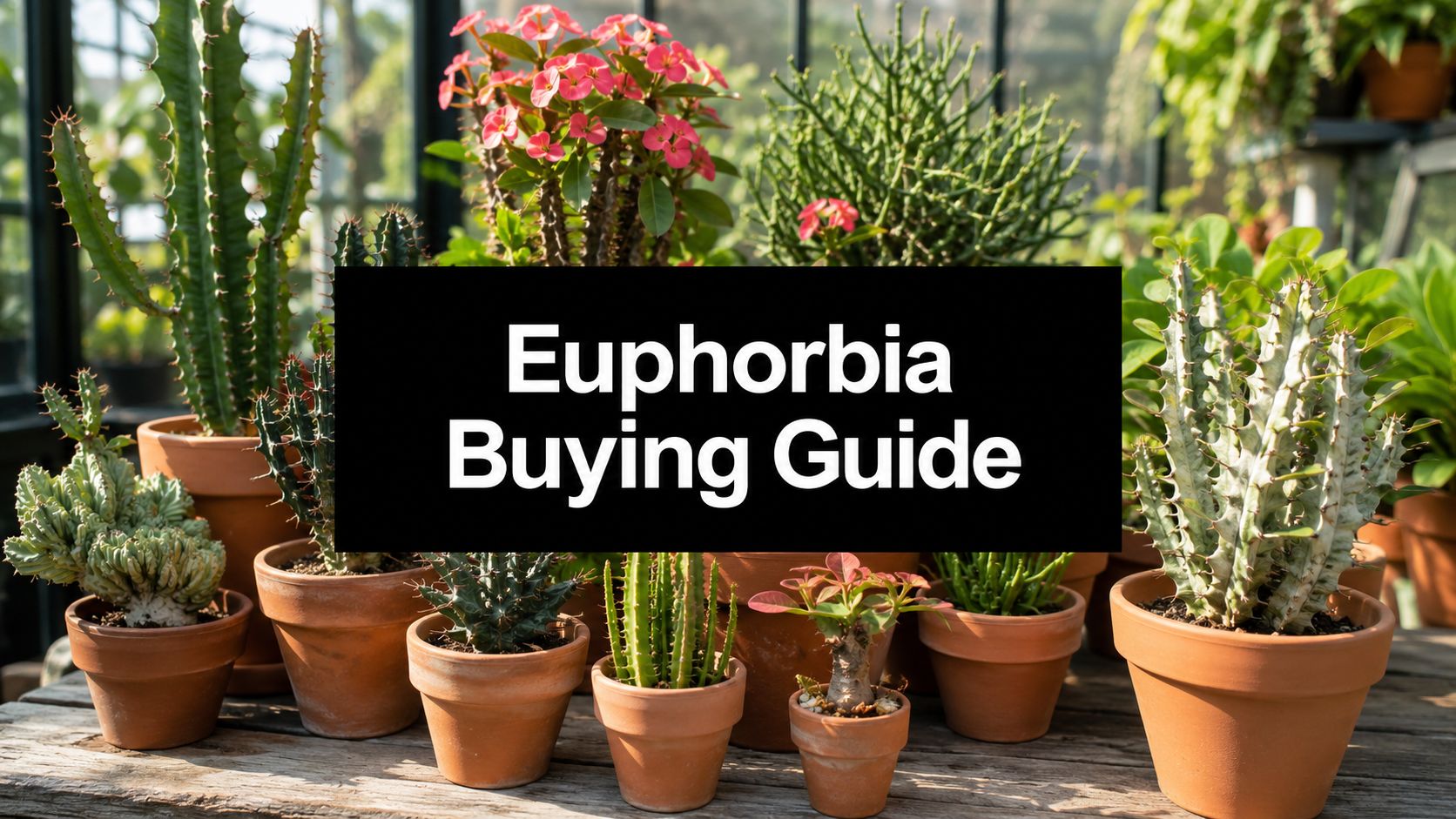
For a specialist retailer, that variety also means Euphorbia isn't one product type. It's a category made up of very different forms. You'll see listings that are columnar, branching, globular, crested, variegated, or low and spreading. If you treat them all the same, you'll buy badly.
Not all cactus-like plants are cacti
This is one of the most common online shopping mistakes. A lot of Euphorbias look like cacti at first glance, especially the upright ribbed species with spines. But they're not cacti.
The easiest practical distinction is this:
- Euphorbias produce a milky latex sap
- Cacti don't produce that same milky latex
- Cacti have areoles, which are the small specialized points where spines, flowers, or new growth emerge
- Many Euphorbias create a cactus-like silhouette without those cactus structures
You don't need to become a botanist to shop well. You just need to know that cactus-like appearance doesn't automatically mean cactus care, cactus handling, or cactus safety.
Euphorbia is one of the few plant groups where visual similarity can mislead a buyer right at the point of purchase.
What experienced sellers notice first
When seasoned growers scan a Euphorbia listing, they usually start with form and tissue quality, not the romance of the species name. They ask whether the plant is naturally branching, whether the ribs are symmetrical, whether the growth looks firm, and whether the listing reflects a stable specimen or a stressed one.
That's the right habit to copy. In this category, shape tells you a lot. So does posture. A healthy Euphorbia often has a certain confidence to it. The plant looks firm, balanced, and settled in its container. That visual steadiness is worth paying attention to long before you decide whether a species is rare or trendy.
Identifying Popular Euphorbia Varieties
Most shoppers don't need a botanical deep dive. They need a fast way to recognize what kind of Euphorbia they're seeing on a sales page and whether it suits the job. That's a design question first and a plant question second.

The main styles buyers gravitate toward
Some Euphorbias sell because they're dramatic. Others sell because they're compact, weird, and collectible. A good way to shop is to classify the plant by style before you focus on exact species.
| Euphorbia Styles at a Glance | Key Feature | Best For | Example Species |
|---|---|---|---|
| Columnar | Upright ribs and strong architectural shape | Statement indoor plant, patio focal point | Euphorbia ingens |
| Crested | Fan-like, sculptural growth | Collectors, design-forward displays | Euphorbia lactea cristata |
| Caudiciform or globular | Rounded body and compact habit | Desks, shelves, curiosity plants | Euphorbia obesa |
| Branching shrub-like | Multi-stem presence with broader silhouette | Bright rooms, large containers, dry gardens | Euphorbia royaleana |
| Landscape spurges | Lower, spreading, or bedding habit | Drought-tolerant borders and rock gardens | Various garden Euphorbias |
Columnar forms
Columnar Euphorbias are the plants people often mistake for cacti. They rise vertically, hold strong lines, and work well where you want height more than width. In a room, they act like living sculpture. In a garden, they can anchor a dry planting scheme.
What works. Buyers who have floor space, bright light, and a taste for bold structure usually love them.
What doesn't. They're a poor fit for cramped windowsills or homes where every plant gets bumped during cleaning.
Crested and monstrose forms
These are for buyers who want something unforgettable. Crested Euphorbias grow in folded, fan-like, often unpredictable shapes. Monstrose forms can twist, clump, or mutate in ways that make each specimen feel individual.
They're rarely the right first purchase for someone who wants a uniform look. They are, however, excellent for collectors and gift buyers who want a plant with personality. If you're comparing forms and want more visual reference, this guide to types of Euphorbia cactus helps clarify the differences.
A crested Euphorbia shouldn't be judged by symmetry. It should be judged by vigor, stability, and whether the shape appeals to you.
Compact collectible forms
Rounded species such as Euphorbia obesa appeal to buyers who want a specimen that feels rare without needing much room. These are often the plants that convert a casual succulent buyer into a Euphorbia collector. They sit well on shelves and small tables, and they reward close viewing.
The trade-off is presence. A compact collector plant can be fascinating up close and still disappear in a large room. If your goal is impact from across the space, go larger or go taller.
Landscape and utility types
Not every Euphorbia is a collector trophy. Some are practical workhorses for dry beds, gravel gardens, and hot exposures. Those buyers shop differently. They care less about novelty and more about habit, repeatability, and how the plant reads in a planting scheme.
For that use, consistency matters more than oddity. A clean, healthy, straightforward specimen often has more value than an unusual one.
How to Choose a Healthy Euphorbia Online
Buying live plants online is mostly about reading clues. A strong listing gives you enough visual and written information to judge health without touching the plant. A weak listing leaves you guessing.

What to inspect in the photos
Start with the body of the plant. Euphorbia tissue should look firm, not collapsed or exhausted. Color should look natural for the species. Surface marks can be harmless old scarring, but fresh-looking damage, mushy areas, or unexplained blackening deserve caution.
Use this quick checklist:
- Form first. Does the plant hold itself well, or does it look shrunken and unstable?
- Ribs and edges. On ribbed species, look for even structure rather than warped soft sections.
- Growth points. New growth should look clean, not chewed, rotted, or visibly distorted.
- Soil line. A stem that looks dark or compromised at the base can signal trouble.
- Pot relationship. A plant that appears settled in its pot usually inspires more confidence than one perched loosely in fresh mix.
How to read listing language
Certain phrases matter. “Well-rooted” suggests the plant has established enough to handle transition better than a fresh cutting. A clear species name matters because care and mature habit can vary widely. Pot size gives you context, but photos tell you more than the pot number alone.
If a listing is sparse, ask direct questions. A reputable seller should be able to clarify whether the plant is rooted, whether the listing photo is representative, and whether any blemishes are cosmetic or active health issues. If you want to compare how specialist cactus and succulent sellers present listings, browsing an online cactus store guide can help sharpen your eye.
Buyer check: If the seller avoids showing the base, the full silhouette, or more than one angle, pause before buying.
Red flags worth taking seriously
A few things shouldn't be brushed aside:
- Mushy tissue usually signals a more serious issue than cosmetic scarring.
- Pale, stretched growth can mean poor light and weak form.
- Visible pests are an obvious no.
- Heavy fresh damage from rough handling can complicate establishment after shipping.
Minor imperfections are normal in real plants. Hidden instability is not. The goal isn't finding a flawless specimen. It's finding a sound one.
Understanding Euphorbia Size and Price
Price in Euphorbia isn't random. It usually reflects a mix of species desirability, plant age, growth rate, form, and how difficult the specimen is to produce cleanly. Buyers get frustrated when they compare two plants by pot size alone. That's not how this category works.
One current retail example shows the spread clearly. A Baseball Plant (Euphorbia obesa) is listed from $28.29 to $61.00, while Euphorbia polygona selections run from $17.49 to $194.39, which shows how wide the value range can be within the genus on this Euphorbia sales collection.
What usually pushes the price up
Some factors are easy to understand. A larger plant took longer to grow. A cleaner specimen with strong form is harder to produce consistently. A variegated, crested, or otherwise unusual plant may command more because the form is less common and often more sought after.
Other factors are less obvious:
- Age and patience. Slow, compact plants can cost more than buyers expect because time is part of the product.
- Shape quality. A symmetrical obesa or a strong crest often has more appeal than an average specimen.
- Collector demand. Some plants attract buyers for their novelty, not just their size.
- Practical use. Buyers for general planting projects may favor dependable volume over one highly collectible specimen.
What different price bands often mean
At the lower end, you're often looking at smaller starter plants, younger specimens, or more straightforward forms. These are good for learning the genus, testing a spot in the house, or planting in quantity.
Mid-range plants are where many shoppers get the best balance. You often get enough maturity to appreciate the species without stepping into collector pricing.
At the upper end, buyers are usually paying for one or more of the following: size, rarity, stronger specimen quality, or an unusual form that isn't easy to replace.
Matching budget to purpose
Collectors and garden designers should shop differently. A collector may be happy buying one exceptional plant. A garden designer usually wants repeatable structure across several plants. A gift buyer may care most about appearance on arrival. An indoor decorator may want a mature silhouette that reads well immediately.
That's why price should be read as context, not just cost. A cheap plant can be the right buy. An expensive one can also be the right buy. The mistake is expecting them to perform the same role.
Essential Care and Critical Safety Warnings
Euphorbias are often sold as easy-care plants, and many are. But ease of care should never be confused with harmless handling. Often, sales content fails to clarify this.

Independent nursery guidance is clear that Euphorbia latex can irritate skin, burn eyes, and cause vomiting, which is why safe handling deserves the same attention as watering and light in this nursery safety note on Euphorbia.
What buyers need to know before unpacking
If your plant arrives with a broken tip or a snapped branch, sap may be present right out of the box. That's when careless handling causes trouble. Don't grab a damaged Euphorbia bare-handed and then rub your face or eyes. Don't let children or pets investigate the unpacking area.
Use a simple routine:
- Wear gloves before unwrapping or repositioning the plant
- Keep eye protection handy if you need to trim damaged growth
- Work on a clear surface so you're not rushing
- Wash hands and tools after handling, even if you wore gloves
- Dispose of broken pieces carefully where pets can't reach them
Basic care that prevents most problems
Most Euphorbias want what experienced succulent growers already respect. Bright light. Sharp drainage. Restraint with water. Too much water causes more trouble than too little, especially when a newly shipped plant is still settling.
A practical setup includes a fast-draining mix, a pot with drainage, and a bright location with airflow. If you like adding simple support tools to your indoor plant setup, you can shop Loyaltie for plant accessories that help organize care around container plants. Just remember that Euphorbias usually need restraint, not constant moisture.
If a Euphorbia declines, overwatering is often the first habit to question.
Pruning and repotting without regret
Repot only when the plant needs it. Don't move a Euphorbia into an oversized pot and then keep the mix wet. That combination causes more losses than people expect. When pruning, make clean cuts, expect sap, and let cut surfaces dry properly before exposing them to excess moisture.
Some specialty forms need extra attention because the shape can hide stress until it becomes obvious. If you enjoy crested plants, this visual look at Euphorbia lactea cristata is useful for understanding how ornamental form and care expectations intersect.
A short visual can also help reinforce handling habits before you start working with the plant.
Your Euphorbia Buying Checklist and FAQ
A smart Euphorbia purchase comes down to fit, condition, and readiness. Not every buyer needs a rare form. Not every striking photo represents the right plant for your shelf, patio, or project. Good buying feels calmer once you filter each listing through purpose and handling reality.
Shipping matters too. With succulent and cactus orders, careful packaging is part of plant quality. A seller should protect the plant so it arrives stable, dry enough for transit, and intact enough to settle in without immediate rescue work. If there's a problem on arrival, buyers should report it promptly and clearly, with photos and concise notes about the issue.
FAQ buyers often still ask
Are Euphorbias good for beginners
Many are, if the beginner is comfortable with bright light, sparse watering, and careful handling. They're not difficult in the usual sense. They just don't reward overattention.
Can I grow a Euphorbia indoors year-round
Yes, many buyers do. The key is strong light, drainage, and not treating the plant like a thirsty tropical houseplant. Indoors, placement matters more than enthusiasm.
Are they better for collecting or decorating
Both. Some species are compact and collectible. Others work as bold visual anchors in a room or courtyard. The right answer depends on whether you want close-up interest or room-scale impact.
What if I'm buying for a landscape project
Shop by habit and repeatability rather than novelty. For larger projects, consistency across specimens usually matters more than getting the most unusual individual plant.
Should I buy the rarest one first
Usually not. Start with a form you understand and a listing you can evaluate confidently. Rare plants are more enjoyable when you already know how you like to grow Euphorbias.
A buyer who understands the listing usually makes a better choice than a buyer who chases the rarest name.
Final buying checklist
- Match the form to the space. Columnar, globular, crested, and expansive garden forms all solve different problems.
- Check the photos for firmness and balance. Healthy structure matters more than perfect cosmetics.
- Read for rooting and plant description. A clear listing reduces surprises.
- Treat price as a signal. Cost can reflect age, rarity, form, or specimen quality.
- Plan your handling before delivery. Gloves, a clean workspace, and pet awareness should be ready in advance.
- Keep care simple after arrival. Bright light, drainage, and conservative watering prevent most avoidable issues.
If you're ready to browse The Cactus Outlet, go in with a short list: the growth habit you want, the size that fits your space, and the level of handling you're comfortable with. That approach leads to better plant choices, fewer surprises on arrival, and a collection that looks intentional from the start.